Introduction
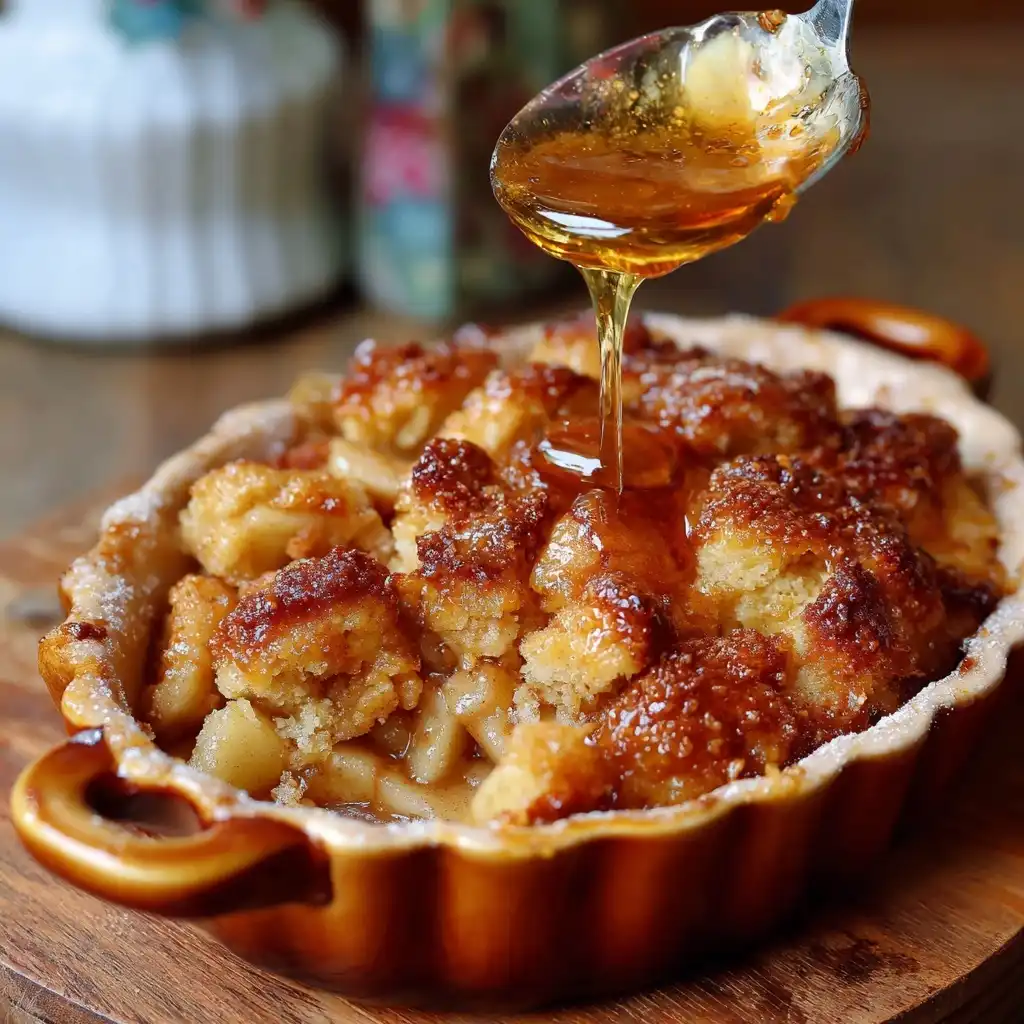
Brown Butter Apple Cobbler is a soul-warming, deeply aromatic twist on the classic American dessert—a harmonious marriage of rustic orchard fruit, rich nutty brown butter, and tender, golden-browned biscuit or cake-like topping. Unlike traditional cobblers that rely solely on melted butter or oil, this version elevates every component by browning the butter first—unlocking complex notes of caramel, toasted hazelnut, and subtle butterscotch that infuse both the filling and the topping with unparalleled depth. It’s not just comfort food; it’s *elevated* comfort—where each bite delivers layers of texture and flavor: soft-spiced apples yielding beneath a crisp, craggy, buttery crown, often served warm with a scoop of vanilla bean ice cream melting luxuriously into its steamy crevices. Whether served at a holiday gathering, a cozy Sunday supper, or as a weekend baking ritual, Brown Butter Apple Cobbler exudes warmth, nostalgia, and culinary intentionality—it’s dessert with a story, and that story begins long before the oven door closes.
The History
The cobbler’s roots stretch back to 17th-century England, where “coble” referred to a rough, uneven surface—aptly describing the rustic, clumpy biscuit or dumpling topping traditionally dropped over stewed fruit. Early American colonists adapted the dish out of necessity: lacking pie tins or refined pastry skills, they baked fruit fillings topped with simple doughs in cast-iron skillets or Dutch ovens over open hearths. By the 1800s, cobblers had become staples across Appalachia and the American South, evolving regionally—peach in Georgia, blackberry in Arkansas, and apple wherever orchards thrived. The innovation of *brown butter*, however, emerged much later—not as a colonial technique, but as a refined French-influenced method (beurre noisette) adopted by mid-century American chefs and home bakers seeking deeper flavor complexity. Its integration into apple cobbler gained momentum in the 1990s and early 2000s, championed by food writers like Dorie Greenspan and bloggers who celebrated “gourmet-ifying” heritage desserts. Today, brown butter apple cobbler symbolizes a thoughtful bridge between tradition and modern technique—honoring simplicity while embracing the transformative power of patience, heat control, and mindful ingredient transformation.
Ingredients Breakdown
Every element in this cobbler serves a precise sensory and structural purpose—nothing is arbitrary. Let’s explore the philosophy behind each component:
- Apples: A blend is essential. Fuji and Honeycrisp provide sweetness and juiciness; Granny Smith adds bright acidity and firmness to prevent mush; Braeburn contributes floral spice and holds shape beautifully. Aim for 6–7 medium apples (about 2.5 lbs / 1.1 kg), peeled, cored, and sliced ¼-inch thick—uniformity ensures even cooking.
- Brown Butter: Unsalted butter is non-negotiable for control over salinity. Browning transforms ~12 tbsp (170g) of butter until golden-brown solids form and the aroma shifts from milky to deeply nutty—this process develops over 6–9 minutes over medium-low heat. Reserve 2 tbsp of the browned butter (with its fragrant milk solids) for the topping; use the remaining 10 tbsp (plus any residual browned bits) in the filling for maximum flavor infusion.
- Sweeteners: A dual-sugar approach balances complexity: light brown sugar contributes molasses depth and moisture retention, while granulated sugar ensures clean sweetness and proper caramelization in the filling. Maple syrup (¼ cup, Grade A) adds earthy sweetness and enhances apple’s natural fructose without overpowering.
- Spices: Freshly grated nutmeg (½ tsp) is irreplaceable—pre-ground loses volatile oils within weeks. Cinnamon (1½ tsp, preferably Vietnamese or Sri Lankan for higher cinnamaldehyde content) provides warmth; a whisper of cardamom (¼ tsp, ground from pods) introduces citrusy-floral nuance that complements brown butter’s richness.
- Thickener: Tapioca starch (3 tbsp) is superior to cornstarch here—its neutral taste, high-heat stability, and glossy, clingy gel prevent weeping and create a lush, spoon-coating filling (not gluey or cloudy). Arrowroot may be substituted, but avoid flour—it can mute flavors and yield a pasty texture.
- Topping Flour Blend: All-purpose flour forms the base, but adding ¼ cup toasted oat flour (made by pulsing old-fashioned oats until fine) introduces malty, cereal notes that echo brown butter’s nuttiness. For tenderness, 2 tsp baking powder + ½ tsp baking soda (activated by buttermilk’s acidity) ensure lift without bitterness.
- Liquid Components: Full-fat buttermilk (¾ cup) provides tang, tenderness, and activates leaveners; cold heavy cream (2 tbsp) brushed over the topping pre-bake encourages deep browning and a delicate, crackled crust. A flaky sea salt finish (Maldon or fleur de sel) sprinkled just before baking enhances all other flavors via contrast.
Step-by-Step Recipe
- Brown the Butter (Start 30+ Minutes Ahead): Place 12 tbsp unsalted butter in a light-colored saucepan (for visibility). Melt over medium-low heat, swirling occasionally. Once foaming subsides (5–6 min), watch closely: butter will sputter, then clarify, then turn golden with amber specks forming on the bottom. At the first whiff of toasted nuts (~7–9 min total), immediately remove from heat. Pour into a heatproof bowl, scraping all browned bits. Cool 15 minutes—do not refrigerate (it must remain fluid enough to mix into filling).
- Prepare the Filling: In a large bowl, combine sliced apples, ¾ cup light brown sugar, ¼ cup granulated sugar, ¼ cup pure maple syrup, 1½ tsp cinnamon, ½ tsp freshly grated nutmeg, ¼ tsp ground cardamom, 1 tsp vanilla extract (real, not imitation), and 3 tbsp tapioca starch. Drizzle in 10 tbsp of the warm brown butter (reserving 2 tbsp). Gently toss with a silicone spatula until evenly coated and glossy. Let macerate 20 minutes—this draws out juice and allows starch to hydrate.
- Preheat & Prep Pan: Position oven rack in lower third. Preheat to 375°F (190°C). Grease a 9×13-inch ceramic or glass baking dish (or 10-inch cast-iron skillet) with softened brown butter residue or clarified butter. Pour apple mixture into dish, spreading evenly. Do not press down—maintain air pockets for steam circulation.
- Make the Topping Batter: In a food processor, pulse 1½ cups all-purpose flour, ¼ cup toasted oat flour, ¼ cup light brown sugar, 2 tsp baking powder, ½ tsp baking soda, and 1 tsp fine sea salt until combined. Add 6 tbsp cold unsalted butter (cut into ½-inch cubes) and pulse 8–10 times until pea-sized crumbs form. Transfer to a bowl. Whisk ¾ cup full-fat buttermilk and the reserved 2 tbsp brown butter (still liquid) in a small bowl. Pour wet ingredients over dry; stir with a fork *just until* no dry flour remains—batter will be shaggy and lumpy (overmixing = tough topping). Rest 5 minutes.
- Assemble & Bake: Spoon batter by heaping tablespoons over hot apple filling, spacing mounds evenly. Gently spread with an offset spatula *only if needed* to cover gaps—but preserve height for optimal rise. Brush entire surface with 2 tbsp cold heavy cream. Sprinkle generously with flaky sea salt. Bake 45–55 minutes: edges should bubble vigorously, topping deeply golden with cracked peaks, and internal temperature (inserted into center topping) reads 205–210°F (96–99°C). Rotate pan halfway through.
- Cool & Serve: Let rest on a wire rack for *at least 30 minutes* before serving—critical for filling to set and topping to firm. Serve warm (never piping hot) with vanilla bean ice cream, crème fraîche, or a drizzle of reduced apple cider syrup.
Tips
- Apple Selection Matters More Than You Think: Avoid Red Delicious or Golden Delicious—they turn mealy. Test ripeness: apples should feel dense and heavy for their size, with no soft spots or bruising. Store apples unwashed in cool, humid conditions (like a crisper drawer) up to 3 weeks—cold slows enzymatic breakdown.
- Browning Butter: Patience is Flavor: Never brown butter in a nonstick pan—it hides color changes. Use stainless steel or enamel. If butter smokes, it’s burned—discard and restart. To rescue slightly over-browned butter, whisk in 1 tsp cold cream off-heat to halt cooking and mellow bitterness.
- Maceration is Non-Negotiable: Skipping the 20-minute rest means raw starch and uneven sweetness. The released juices activate tapioca, preventing a runny cobbler. If your kitchen is very warm (>75°F/24°C), refrigerate macerated apples for 10 minutes before baking to keep butter in topping cold.
- Topping Texture Secrets: Cold butter = flaky, tender crumb. If your kitchen is hot, freeze cubed butter 10 minutes before pulsing. For extra height, gently fold 2 tbsp whipped egg white (soft peaks) into rested batter—adds airy lift without altering flavor.
- Oven Thermometer Required: Most home ovens run 25–50°F off. An inaccurate temp causes under-baked topping or scorched edges. Calibrate yearly.
- The “Cooling Rule”: Cutting too soon releases steam, collapsing the topping and thinning the filling. 30 minutes allows pectin and starch to fully gel. For make-ahead, bake fully, cool completely, then reheat covered with foil at 325°F (163°C) for 20–25 minutes.
- Visual Doneness Cues: Don’t rely solely on time. Look for: (1) Thick, slow bubbles breaking through filling at edges, (2) Deep amber, almost mahogany color on topping peaks, (3) A hollow sound when tapped lightly with a wooden spoon.
Variations and Customizations
This cobbler is a canvas—respect the core technique, but adapt boldly:
- Pear-Ginger Variation: Replace half the apples with ripe Bosc or Anjou pears. Add 2 tbsp finely grated fresh ginger and 1 tbsp crystallized ginger (minced) to filling. Substitute star anise (1 whole pod, removed before baking) for cardamom.
- Maple-Bourbon Version: Replace maple syrup with 3 tbsp pure maple syrup + 1 tbsp bourbon. Stir 1 tsp bourbon into brown butter before mixing into filling. Garnish with candied pecans.
- Vegan Adaptation: Use plant-based butter (Miyoko’s or Forager) for browning (ensure it contains no coconut oil, which burns easily). Replace buttermilk with ¾ cup unsweetened soy milk + 1 tbsp apple cider vinegar. Use arrowroot instead of tapioca. Top with oat crumble (oats, brown sugar, vegan butter, cinnamon).
- Gluten-Free Option: Swap flours for 1:1 GF blend (King Arthur or Bob’s Red Mill) + 1 tsp xanthan gum. Toast certified GF oats for oat flour. Ensure baking powder is GF-certified.
- Savory-Sweet Herb Twist: Add 1 tsp finely chopped fresh rosemary to brown butter while cooling. Reduce cinnamon to 1 tsp; add ¼ tsp black pepper. Pair with sharp cheddar cheese crumbles in topping.
- Individual Servings: Divide filling among six 6-oz ramekins. Top with 2 tbsp batter each. Bake at 375°F for 32–38 minutes. Perfect for portion control or elegant presentation.
- Overnight Refrigerator Method: Assemble filling and topping (unbaked) in dish, cover tightly, refrigerate up to 12 hours. Bake straight from fridge—add 8–10 minutes to time. Yields exceptionally cohesive texture.
Health Considerations and Nutritional Value
A single generous serving (1/9th of recipe, ~1.5 cups) contains approximately 420–460 calories, with nuanced nutritional attributes beyond typical dessert metrics:
- Fiber Powerhouse: Apples (with skin) provide ~5g dietary fiber per serving—primarily soluble pectin, clinically shown to support healthy cholesterol metabolism and gut microbiome diversity. Oat flour in topping adds beta-glucan, further enhancing satiety and blood sugar modulation.
- Antioxidant Richness: Apples contain quercetin (concentrated in skin), epicatechin, and vitamin C—all potent antioxidants linked to reduced oxidative stress. Brown butter contributes butyrate precursors and fat-soluble vitamins A, D, E, and K—enhanced by the presence of apple polyphenols that improve their bioavailability.
- Smart Fat Profile: While butter is saturated, browning creates beneficial compounds like lactones and diacetyl, and the controlled heat minimizes oxidized cholesterol formation. Using grass-fed butter increases conjugated linoleic acid (CLA), associated with anti-inflammatory effects in human studies.
- Reduced Refined Sugar: With 1 cup total sugars (vs. 1.5+ cups in many cobblers) and reliance on maple syrup’s lower glycemic index (54 vs. 65 for sucrose), blood sugar spikes are moderated—especially when paired with fiber-rich apples and protein from dairy in buttermilk.
- Considerations: Naturally high in carbohydrates (58g/serving), so those managing diabetes should pair with protein (e.g., Greek yogurt) and monitor portions. For sodium-sensitive individuals, reduce added salt by 50% and rely on flaky salt’s surface impact. Nut allergies? Omit oat flour or ensure certified nut-free facility processing.
- Nutrition Facts (Per Serving, Approximate): Calories: 445 | Total Fat: 22g (13g sat) | Cholesterol: 62mg | Sodium: 320mg | Total Carbohydrates: 58g (5g fiber, 39g sugars) | Protein: 5g | Vitamin C: 12% DV | Calcium: 8% DV | Iron: 6% DV | Potassium: 280mg.
Ingredients
For the Brown Butter Apple Filling:
- 12 tablespoons (170g) unsalted butter
- 6–7 medium apples (2.5 lbs / 1.1 kg), such as Fuji, Honeycrisp, Granny Smith, and Braeburn, peeled, cored, and sliced ¼-inch thick
- ¾ cup (150g) light brown sugar, packed
- ¼ cup (50g) granulated sugar
- ¼ cup (60ml) pure maple syrup (Grade A)
- 1½ teaspoons ground cinnamon
- ½ teaspoon freshly grated nutmeg
- ¼ teaspoon ground cardamom
- 1 teaspoon pure vanilla extract
- 3 tablespoons tapioca starch
For the Brown Butter Topping:
- 1½ cups (188g) all-purpose flour
- ¼ cup (25g) toasted oat flour (see Tips)
- ¼ cup (50g) light brown sugar, packed
- 2 teaspoons baking powder
- ½ teaspoon baking soda
- 1 teaspoon fine sea salt
- 6 tablespoons (85g) cold unsalted butter, cut into ½-inch cubes
- ¾ cup (180ml) full-fat buttermilk
- 2 tablespoons reserved brown butter (from above)
- 2 tablespoons cold heavy cream (for brushing)
- Flaky sea salt (Maldon or fleur de sel), for finishing
Directions
- Brown the butter: In a light-colored saucepan, melt butter over medium-low heat. Swirl occasionally. After foaming subsides (5–6 min), continue cooking until golden-brown specks form on the bottom and a rich, nutty aroma fills the kitchen (7–9 min total). Immediately pour into a heatproof bowl, scraping all browned bits. Cool 15 minutes—must remain fluid.
- Prepare filling: In a large bowl, combine apples, brown sugar, granulated sugar, maple syrup, cinnamon, nutmeg, cardamom, vanilla, and tapioca starch. Drizzle in 10 tablespoons of the warm brown butter. Toss gently until evenly coated. Let sit 20 minutes.
- Preheat oven to 375°F (190°C). Grease a 9×13-inch baking dish or 10-inch cast-iron skillet.
- Make topping: In a food processor, pulse flour, oat flour, brown sugar, baking powder, baking soda, and salt. Add cold butter; pulse until pea-sized crumbs form. Transfer to bowl. Whisk buttermilk and reserved 2 tbsp brown butter. Pour over dry ingredients; stir with fork until *just* combined (shaggy, lumpy batter). Rest 5 minutes.
- Assemble: Pour apple mixture into prepared dish. Spoon topping batter over filling in mounds. Gently spread only to cover gaps—preserve height. Brush with heavy cream. Sprinkle generously with flaky sea salt.
- Bake 45–55 minutes, until edges bubble thickly, topping is deeply golden with cracked peaks, and internal temperature reaches 205–210°F (96–99°C). Rotate pan halfway.
- Cool at least 30 minutes on a wire rack before serving. Serve warm with vanilla ice cream or crème fraîche.
FAQ
- Can I make this ahead?
- Absolutely. Assemble unbaked cobbler (filling + topping) up to 12 hours ahead; cover tightly and refrigerate. Bake straight from fridge—add 8–10 minutes to baking time. Fully baked cobbler keeps refrigerated for 4 days; reheat covered with foil at 325°F for 20–25 minutes.
- Why use tapioca starch instead of cornstarch?
- Tapioca starch creates a clear, glossy, clingy gel that withstands prolonged baking without breaking down or turning stringy. Cornstarch can become slimy or weep under high heat and acidity (from apples), while flour yields a cloudy, pasty texture and dulls flavor.
- My topping sank into the filling—what went wrong?
- Most likely: (1) Filling was still cold when topped (always use room-temp or slightly warm filling), (2) Batter was overmixed (creating gluten development and density), or (3) Oven wasn’t fully preheated—topping needs immediate heat to set.
- Can I freeze this cobbler?
- Yes—freeze *unbaked*. Assemble completely, wrap dish tightly in plastic + foil, freeze up to 3 months. Thaw overnight in fridge, then bake as directed (may need +5 minutes). Freezing baked cobbler is not recommended—texture suffers upon reheating.
- What’s the best way to toast oat flour?
- Spread old-fashioned oats on a parchment-lined baking sheet. Toast at 350°F (175°C) for 10–12 minutes, stirring once, until fragrant and pale gold. Cool completely, then pulse in a clean coffee grinder or food processor until fine. Store airtight for up to 2 weeks.
- Can I substitute almond milk for buttermilk?
- No—almond milk lacks the acidity and fat needed to activate leaveners and tenderize. Use soy or oat milk + 1 tbsp apple cider vinegar (let sit 5 minutes) for a closer approximation, but full-fat dairy buttermilk is strongly recommended for optimal rise and flavor.
- Is there a lower-sugar version?
- Reduce total sugar to ⅔ cup (½ cup brown + 2 tbsp granulated) and add 1 extra tbsp maple syrup for moisture. Increase spices slightly to compensate. Expect a less glossy, slightly looser (but still delicious) filling.
- Why does my brown butter taste bitter?
- Bitterness signals burning—milk solids carbonized. Always remove butter at the first sign of nutty aroma and golden-brown specks. If slightly bitter, whisk in 1 tsp cold cream off-heat to halt cooking and smooth flavor.
Summary
Brown Butter Apple Cobbler redefines a beloved classic through the alchemy of carefully browned butter—its deep, nutty complexity permeating tender spiced apples and a tender-yet-crisp oat-enriched topping, all balanced by smart technique and thoughtful ingredient synergy. It’s a dessert that honors heritage while embracing modern culinary science, delivering profound comfort without compromise.
With its layered textures, nuanced sweetness, and nourishing whole-food foundations—apples, oats, and real dairy—it satisfies deeply, invites customization, and earns its place not just on the dessert table, but in the repertoire of anyone who believes that the most meaningful meals begin with patience, respect for ingredients, and the quiet magic of heat transformed.