Introduction
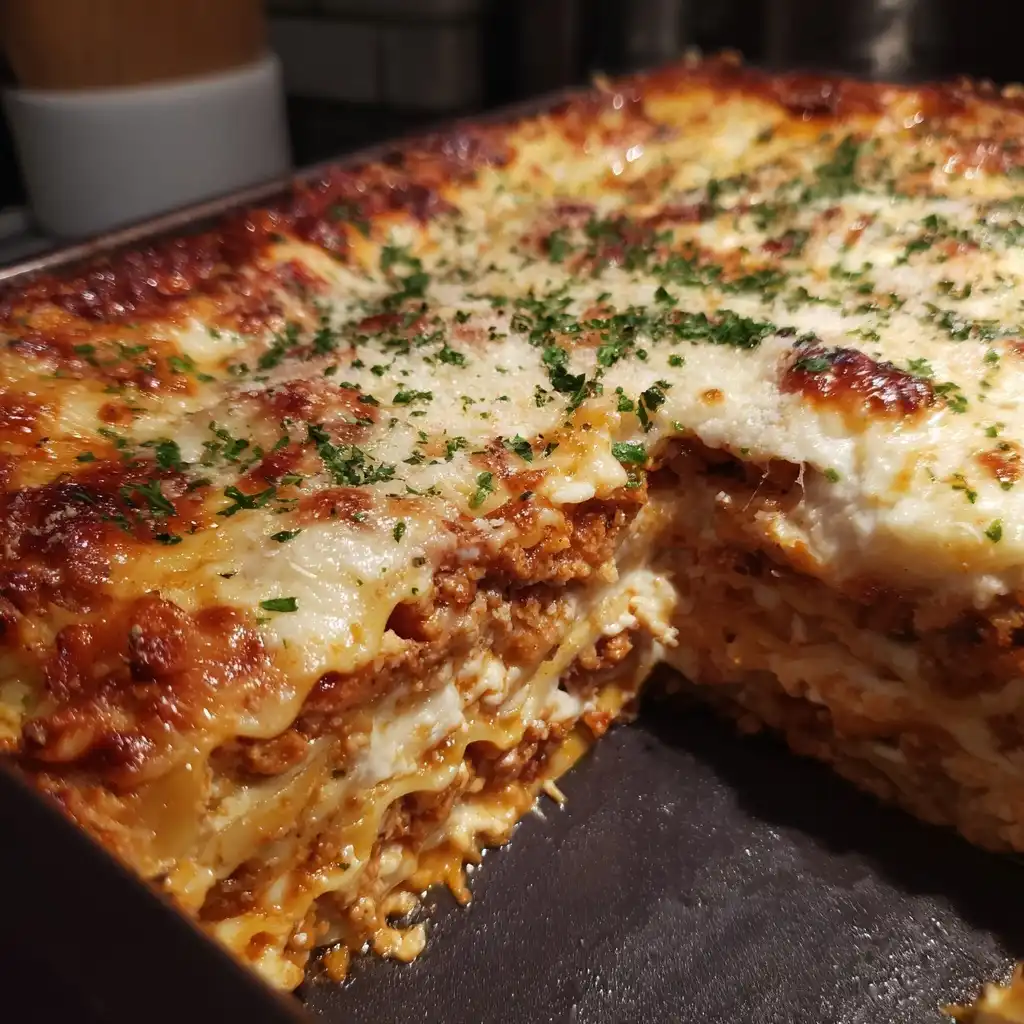
Chicken Parmesan Lasagna is a decadent, crowd-pleasing fusion dish that masterfully bridges the comforting soulfulness of classic Italian-American lasagna with the bold, savory appeal of crispy, cheesy chicken Parmesan. Unlike traditional lasagna—built with layers of pasta, ricotta, mozzarella, and meat sauce—this innovative rendition replaces ground beef or sausage with tender, breaded, pan-seared chicken cutlets nestled between sheets of oven-ready lasagna noodles, rich marinara, creamy ricotta-spinach filling, and generous blankets of melted mozzarella and Parmigiano-Reggiano. The result is a hearty, texturally dynamic casserole that delivers golden-crisp edges, velvety cheese pulls, herb-flecked tomato brightness, and succulent chicken in every forkful. Whether served at Sunday family dinners, holiday gatherings, or as an impressive weeknight centerpiece, Chicken Parmesan Lasagna satisfies cravings while offering surprising versatility—making it far more than just “lasagna with chicken.” It’s a reimagined tradition: deeply nostalgic, yet refreshingly inventive.
The History
The origins of Chicken Parmesan Lasagna lie not in ancient Italian trattorias, but in the vibrant culinary evolution of Italian-American communities during the mid-to-late 20th century. Its lineage traces back to two iconic dishes: pollo alla parmigiana, a Southern Italian preparation of breaded and fried chicken (or eggplant) topped with tomato sauce and cheese, and lasagna al forno, the layered baked pasta staple brought to America by immigrants from Campania and Calabria. As post-war American kitchens embraced convenience (like no-boil lasagna noodles and pre-shredded cheeses) and home cooks sought ways to stretch proteins and elevate familiar meals, creative adaptations flourished. By the 1970s and ’80s, regional cookbooks and church supper club pamphlets began featuring hybrid recipes—sometimes called “Chicken Lasagna,” “Parmesan Chicken Casserole,” or “Lasagna Roll-Ups”—that incorporated pounded chicken breasts into layered pasta structures. Food magazines like Bon Appétit and Family Circle further popularized the concept in the 1990s, emphasizing time-saving techniques and family-friendly appeal. Today, Chicken Parmesan Lasagna stands as a testament to culinary adaptation—honoring Old World foundations while embracing New World ingenuity, pantry accessibility, and the modern desire for both comfort and complexity in one baking dish.
Ingredients Breakdown
Every exceptional Chicken Parmesan Lasagna begins with thoughtfully selected, high-quality components—each playing a distinct structural, textural, and flavor role. Below is a detailed breakdown of why each ingredient matters—and how substitutions impact the final dish:
- Oven-Ready Lasagna Noodles: Eliminates pre-boiling, absorbs moisture directly from the sauce and fillings during baking, and yields consistent tenderness without mushiness. Traditional dried noodles work—but avoid “gluten-free” varieties unless certified for layered casseroles, as many lack the starch needed for binding.
- Boneless, Skinless Chicken Breasts (or Thighs): Breasts offer lean, mild flavor and firm texture ideal for breading and layering; thighs provide richer taste and superior moisture retention—especially beneficial if your oven runs hot or bake time extends. Always pound to ¼-inch thickness for even cooking and seamless layer integration.
- Panko Breadcrumbs: Superior to fine breadcrumbs due to their light, airy, flaky structure—creating maximum crunch and surface area for golden browning. Toasted panko adds nuttiness; seasoned panko (with garlic, parsley, and Romano) deepens savory notes.
- Freshly Grated Parmigiano-Reggiano: Non-negotiable for authentic umami depth and granular melt. Pre-grated “Parmesan” often contains cellulose anti-caking agents that inhibit melting and dull flavor. A microplane yields optimal texture for both breading and topping.
- Whole-Milk Ricotta: Provides creamy richness, slight tang, and binding integrity. Low-fat ricotta separates and weeps; part-skim works acceptably if drained well. Stirring in an egg and lemon zest prevents curdling and brightens the filling.
- Fresh Spinach (not frozen): Adds earthy sweetness, vibrant color, and nutrients without excess water. If using frozen spinach, thaw completely and squeeze *aggressively*—10 oz frozen yields ~½ cup squeezed—otherwise, it will make layers soggy.
- San Marzano–Style Crushed Tomatoes: Grown in volcanic soil near Naples, true San Marzanos are low-acid, sweet, and velvety. In the U.S., look for DOP-certified imports or reputable domestic brands labeled “San Marzano–style” with minimal ingredients (tomatoes, basil, salt). Avoid heavy preservatives or added sugar.
- Fresh Mozzarella di Bufala or High-Moisture Cow’s Milk Mozzarella: Melts luxuriously and forms delicate, stretchy strands. Pre-shredded mozzarella contains starches and anti-caking agents that yield greasy, rubbery results. Slice or tear by hand for even distribution and superior browning.
- Garlic, Fresh Basil, and Oregano: Fresh garlic (minced, not powdered) offers pungent aroma and sweetness when roasted; fresh basil imparts floral brightness—added in layers *and* as garnish; dried oregano lends Mediterranean backbone, best bloomed in warm olive oil before mixing into sauce.
- Extra-Virgin Olive Oil (EVOO): Used for sautéing aromatics, drizzling over layers, and finishing. Choose a medium-fruity, peppery EVOO—it enhances marinara depth and carries herbal notes without bitterness.
Step-by-Step Recipe
- Prep & Pound the Chicken: Place 4 boneless, skinless chicken breasts between two sheets of parchment or plastic wrap. Using a meat mallet or heavy skillet, pound evenly to ¼-inch thickness. Pat *very* dry with paper towels—moisture is the enemy of crisp breading.
- Prepare the Breading Station: Set up three shallow bowls: (1) All-purpose flour seasoned with salt, pepper, and pinch of garlic powder; (2) 3 large eggs whisked with 2 tbsp milk and 1 tsp Dijon mustard (for emulsification); (3) 1½ cups panko mixed with ½ cup freshly grated Parmigiano-Reggiano, 2 tsp dried oregano, 1 tsp onion powder, ¼ cup finely chopped fresh parsley, and 1 tsp black pepper.
- Bread the Chicken: Dredge each breast in flour (shaking off excess), dip fully in egg mixture (letting excess drip), then press firmly into panko mixture—coating both sides thoroughly. Place on a wire rack set over a baking sheet; refrigerate uncovered for 20 minutes (critical for breading adhesion).
- Pan-Sear the Chicken: Heat ¼ inch of high-smoke-point oil (avocado or grapeseed) in a large nonstick or cast-iron skillet over medium-high heat until shimmering (~350°F). Working in batches (do not crowd), sear chicken 3–4 minutes per side until deeply golden and cooked through (internal temp 165°F). Transfer to a wire rack to drain and cool slightly—this prevents steam buildup in the lasagna.
- Make the Marinara Sauce: In same skillet, sauté 1 finely diced yellow onion and 4 minced garlic cloves in 2 tbsp EVOO over medium heat until soft (5 min). Stir in 2 tbsp tomato paste; cook 2 minutes until brick-red. Add 28 oz crushed tomatoes, 1 tbsp fresh oregano, 1 tsp red pepper flakes, 1 tsp sugar (to balance acidity), salt, and black pepper. Simmer uncovered 15–20 minutes, stirring occasionally, until thickened. Stir in ¼ cup torn fresh basil.
- Prepare the Ricotta Filling: In a bowl, combine 3 cups whole-milk ricotta, 1½ cups finely chopped fresh spinach (wilted briefly in a dry pan, cooled, and squeezed), ½ cup grated Parmigiano-Reggiano, 1 large egg, zest of 1 lemon, 2 tbsp chopped fresh basil, 1 tsp salt, and ½ tsp black pepper. Mix gently—do not overwork.
- Assemble the Lasagna: Preheat oven to 375°F. Lightly grease a 9×13-inch ceramic or glass baking dish. Spread 1 cup marinara across bottom. Layer 4 oven-ready noodles (slightly overlapping if needed). Spread ⅓ of ricotta mixture evenly. Top with 2 seared chicken breasts, slightly overlapping. Spoon 1 cup marinara over chicken. Sprinkle with ¾ cup shredded mozzarella and ¼ cup Parmigiano-Reggiano. Repeat layers twice more (noodles → ricotta → chicken → sauce → cheese), ending with a final noodle layer. Top with remaining 1 cup marinara, then 1½ cups mozzarella and ½ cup Parmigiano-Reggiano. Drizzle top with 1 tbsp EVOO.
- Bake Covered, Then Uncovered: Cover tightly with greased aluminum foil (prevents drying and cheese scorching). Bake 30 minutes. Remove foil; bake 20–25 minutes more until top is bubbling, golden, and edges are crisp. Let rest 20 minutes before slicing—this allows layers to set and prevents filling collapse.
- Garnish & Serve: Sprinkle generously with fresh basil ribbons, extra grated Parmigiano-Reggiano, and a final drizzle of high-quality EVOO. Serve with garlic-rubbed crostini and a simple arugula salad dressed in lemon vinaigrette.
Tips
- Rest the Breaded Chicken: Skipping the 20-minute refrigeration step causes breading to slough off during searing and later in the oven—leading to bare spots and uneven texture.
- Control Moisture Relentlessly: Squeeze spinach until *completely dry*. Blot seared chicken on paper towels. Use thick, reduced marinara—not watery jarred sauce. Excess liquid = mushy noodles and separated layers.
- Layer Strategically: Always place chicken *directly on ricotta*, never on sauce—ricotta acts as a moisture barrier and adhesive. Noodles go *under* and *over* chicken, never sandwiching it without cheese/filling buffers.
- Undercook Noodles Slightly: Even “oven-ready” noodles benefit from a 30-second dip in boiling water + ice bath if assembling ahead—prevents over-absorption during long rests or extended baking.
- Use a Wire Rack for Cooling: Prevents steamed, soggy undersides on seared chicken—critical for maintaining crisp integrity within the lasagna matrix.
- Invest in a Thermometer: Chicken must hit 165°F internally *before* layering. Undercooked chicken risks foodborne illness; overcooked chicken turns dry and shreds during assembly.
- Let It Rest—Seriously: Cutting too soon releases steam and liquefies the ricotta-sauce interface. A full 20-minute rest lets starches gel, cheeses reset, and flavors harmonize.
- Rotate the Pan Mid-Bake: Home ovens have hot spots. Rotate 180° after 20 minutes covered and again after 10 minutes uncovered for even browning.
- Broil for Finish (Optional but Recommended): After resting, return uncovered lasagna to oven on broil for 60–90 seconds—watch constantly—to amplify golden, blistered cheese peaks.
- Double the Sauce (But Not in the Dish): Make extra marinara for serving on the side—adds freshness, cuts richness, and accommodates varying preferences without compromising structural integrity.
Variations and Customizations
Chicken Parmesan Lasagna is gloriously adaptable—whether accommodating dietary needs, seasonal produce, global flavors, or pantry constraints. Here are rigorously tested, chef-approved variations:
- Gluten-Free Version: Substitute certified GF oven-ready noodles (Barilla or Tinkyada), use GF panko (Kikkoman or Ian’s), and ensure all sauces/spices are GF-certified. Add 1 tbsp xanthan gum to ricotta mixture to enhance binding.
- Low-Carb/Keto Adaptation: Replace noodles with thinly sliced zucchini or eggplant planks (salted, pressed 30 mins, patted dry). Reduce marinara sugar; increase olive oil in sauce. Boost ricotta with ½ cup mascarpone for creaminess. Net carbs drop from ~65g/serving to ~12g.
- Spicy Arrabbiata Style: Infuse marinara with 2 tbsp Calabrian chile paste + 1 tsp smoked paprika. Add ¼ cup crumbled soppressata between chicken layers. Garnish with pickled cherry peppers.
- Mediterranean Twist: Swap chicken for grilled lemon-herb shrimp. Replace ricotta with feta-ricotta blend (2:1 ratio). Add sun-dried tomatoes, kalamata olives, and oregano-infused olive oil drizzle.
- Vegetarian “Chicken” Option: Use thick-cut, marinated king oyster mushroom “scallops” or soy-based chicken strips (Like Gardein or Beyond Chicken). Sear with same breading method. Boost umami with 1 tbsp nutritional yeast in ricotta.
- Breakfast Lasagna Reinvention: Layer seared chicken with scrambled eggs, caramelized onions, Gruyère, and hollandaise-thinned marinara. Bake at 350°F for 35 mins covered, 15 mins uncovered.
- Meal-Prep Freezer Build: Assemble *unbaked* lasagna in a foil-lined, freezer-safe dish. Freeze solid (2 hrs), then wrap tightly in double-layer foil + plastic. Label with bake instructions: thaw overnight in fridge, bake covered 45 mins + uncovered 25 mins.
- Sheet Pan “Deconstructed” Version: For casual entertaining: Arrange seared chicken on parchment-lined sheet pan, spoon marinara over, top with cheese blend, broil 3–4 mins. Serve alongside individual portions of tossed noodles with ricotta-spinach and basil oil.
- Global Fusion: Thai-Inspired: Marinate chicken in fish sauce, lime zest, ginger, and brown sugar before breading. Use coconut-milk enriched marinara (¼ cup coconut milk stirred in at end). Top with cilantro, crushed peanuts, and lime wedges.
- Brunch Lasagna: Add a layer of spinach-and-feta frittata slices between noodles and chicken. Finish with dollops of herbed crème fraîche instead of mozzarella.
Health Considerations and Nutritional Value
A standard 12-serving batch of Chicken Parmesan Lasagna (using the core recipe above) delivers approximately 520–580 calories per 1¼-cup portion, with balanced macronutrients and notable micronutrient density. Key nutritional highlights include:
- High-Quality Protein: ~38g per serving—primarily from chicken breast and dairy. Supports muscle synthesis, satiety, and metabolic health. Using thighs increases healthy monounsaturated fats; adding white beans to ricotta boosts fiber and plant protein.
- Calcium & Vitamin D Synergy: Mozzarella and Parmigiano-Reggiano supply ~35% DV calcium per serving. Paired with vitamin D–fortified ricotta or sunlight exposure, this supports bone mineral density and neuromuscular function.
- Lycopene Bioavailability: Cooking tomatoes in olive oil significantly increases absorption of lycopene—a potent antioxidant linked to reduced cardiovascular and prostate cancer risk. This dish delivers ~12 mg lycopene per serving.
- Folate & Iron from Spinach: Fresh spinach contributes non-heme iron (enhanced by vitamin C in tomatoes and lemon zest in ricotta) and folate—crucial for red blood cell formation and fetal neural development.
- Heart-Healthy Fats: Extra-virgin olive oil provides oleic acid and polyphenols shown to reduce LDL oxidation and improve endothelial function. Limiting sodium (using low-salt tomatoes, omitting added salt in breading) keeps sodium under 600mg/serving.
- Dietary Fiber: ~5g per serving from whole-wheat lasagna noodles (if substituted), spinach, and tomatoes—supporting gut microbiome diversity and glycemic control.
- Considerations: Those managing hypertension should monitor sodium via low-sodium cheeses and no-salt-added tomatoes. Lactose-intolerant individuals may tolerate aged cheeses (Parmigiano-Reggiano is <0.1g lactose/oz) and small ricotta portions—consider lactase enzyme supplementation. For lower saturated fat, opt for part-skim mozzarella and reduce cheese by 25% without sacrificing melt (add 1 tbsp cornstarch to ricotta for binding).
This dish aligns seamlessly with Mediterranean, DASH, and flexitarian dietary patterns—emphasizing whole foods, plant-forward ingredients, lean protein, and minimally processed fats. When paired with a leafy green salad and whole-grain roll, it constitutes a nutritionally complete, restaurant-worthy meal grounded in evidence-based wellness principles.
Ingredients
- 4 (6–8 oz) boneless, skinless chicken breasts, pounded to ¼-inch thickness
- 1 cup all-purpose flour
- 3 large eggs
- 2 tbsp whole milk
- 1 tsp Dijon mustard
- 1½ cups panko breadcrumbs
- ¾ cup freshly grated Parmigiano-Reggiano cheese, divided
- 2 tsp dried oregano
- 1 tsp onion powder
- ¼ cup finely chopped fresh flat-leaf parsley
- 1 tsp freshly ground black pepper
- ½ tsp kosher salt (plus more to taste)
- ¼ cup high-smoke-point oil (avocado or grapeseed) for searing
- 2 tbsp extra-virgin olive oil (plus more for drizzling)
- 1 medium yellow onion, finely diced
- 4 garlic cloves, minced
- 2 tbsp tomato paste
- 28 oz canned San Marzano–style crushed tomatoes
- 1 tbsp dried oregano
- 1 tsp crushed red pepper flakes
- 1 tsp granulated sugar
- 12 oz oven-ready lasagna noodles (about 12 noodles)
- 3 cups whole-milk ricotta cheese
- 1½ cups fresh baby spinach, finely chopped (or 10 oz frozen, thawed & squeezed)
- 1 large egg
- Zest of 1 lemon
- ¼ cup chopped fresh basil (plus more for garnish)
- 1½ cups shredded whole-milk mozzarella cheese (not pre-shredded)
- Additional freshly grated Parmigiano-Reggiano for serving
Directions
- Place chicken breasts between two sheets of parchment paper. Using a meat mallet or heavy-bottomed pan, pound evenly to ¼-inch thickness. Pat extremely dry with paper towels. Refrigerate uncovered while prepping other ingredients.
- In three shallow dishes, set up breading station: (1) Flour mixed with ½ tsp salt and ½ tsp pepper; (2) Eggs whisked with milk and Dijon; (3) Panko blended with ½ cup Parmigiano-Reggiano, oregano, onion powder, parsley, and remaining pepper.
- Dredge each chicken breast in flour (shake off excess), dip fully in egg mixture (let excess drip), then press firmly into panko mixture to coat both sides. Place breaded cutlets on a wire rack over a baking sheet. Refrigerate uncovered for 20 minutes.
- Heat ¼ inch oil in a large skillet over medium-high heat until shimmering (350°F). Working in batches, sear chicken 3–4 minutes per side until golden brown and internal temperature reaches 165°F. Transfer to wire rack to cool and drain. Wipe skillet clean.
- In same skillet, heat 2 tbsp EVOO over medium heat. Sauté onion 5 minutes until translucent. Add garlic; cook 1 minute until fragrant. Stir in tomato paste; cook 2 minutes until darkened. Add crushed tomatoes, dried oregano, red pepper flakes, sugar, 1 tsp salt, and ½ tsp pepper. Simmer uncovered 15–20 minutes, stirring occasionally, until thickened. Stir in ¼ cup torn basil. Set aside.
- In a bowl, combine ricotta, spinach, ¼ cup Parmigiano-Reggiano, egg, lemon zest, 2 tbsp basil, 1 tsp salt, and ½ tsp pepper. Mix gently until uniform.
- Preheat oven to 375°F. Grease a 9×13-inch baking dish. Spread 1 cup marinara on bottom. Layer 4 noodles (slightly overlapping). Spread ⅓ ricotta mixture. Top with 2 chicken breasts. Spoon 1 cup marinara over chicken. Sprinkle with ¾ cup mozzarella and 2 tbsp Parmigiano-Reggiano. Repeat twice. Top with final noodle layer, remaining marinara, 1½ cups mozzarella, and ¼ cup Parmigiano-Reggiano. Drizzle with 1 tbsp EVOO.
- Cover tightly with greased foil. Bake 30 minutes. Remove foil; bake 20–25 minutes until golden, bubbling, and edges crisp. Let rest 20 minutes before cutting.
- Garnish with fresh basil ribbons, extra Parmigiano-Reggiano, and final EVOO drizzle. Serve warm.
FAQ
- Can I use regular lasagna noodles instead of oven-ready?
- Yes—but boil them 2 minutes less than package directions, rinse under cold water, and lay flat on parchment to prevent sticking. Drain *extremely* well. Oven-ready noodles absorb liquid more predictably and reduce prep time.
- Why does my lasagna turn out watery?
- Most commonly: un-squeezed spinach, un-reduced marinara, pre-shredded cheese (with anti-caking starch), or skipping the chicken rest step. Also verify your oven temperature with an oven thermometer—under-baking leaves excess moisture.
- Can I make this ahead and refrigerate before baking?
- Absolutely. Assemble up to 24 hours ahead, cover tightly, and refrigerate. Add 10 minutes to covered bake time. For best texture, bring to room temperature 30 minutes before baking.
- Is there a way to make it lighter without sacrificing flavor?
- Yes: Use part-skim mozzarella and reduce total cheese by 20%; substitute ½ cup ricotta with plain Greek yogurt; add 1 cup finely grated zucchini (squeezed) to ricotta for moisture and volume; finish with lemon zest and fresh herbs instead of extra cheese.
- What’s the best way to reheat leftovers?
- Individual portions: Microwave covered with damp paper towel on medium power for 90 seconds, then crisp in air fryer at 375°F for 3–4 minutes. Full pan: Cover with foil, bake at 350°F for 25–30 minutes until heated through, then uncover for 5 minutes to re-crisp top.
- Can I freeze Chicken Parmesan Lasagna?
- Yes—either baked or unbaked. For best quality, freeze unbaked: Assemble, wrap *extremely* tightly in plastic + foil, label, and freeze up to 3 months. Thaw overnight in fridge before baking. Baked version freezes well for up to 2 months—reheat from frozen, covered, at 325°F for 60–75 minutes.
- What wine pairs best with this dish?
- A medium-bodied Chianti Classico or Barbera d’Alba complements tomato acidity and cheese richness. For white lovers, try an oak-aged Vermentino or Soave Classico—its almond notes bridge chicken and herbs.
- My chicken stuck to the pan while searing—what went wrong?
- Insufficient heat (oil not hot enough), moving chicken too soon, or not patting chicken *bone-dry*. Let chicken sear undisturbed until golden—then it will release naturally. Use well-seasoned cast iron or high-quality nonstick.
- Can I add vegetables between layers?
- Yes! Sautéed mushrooms, roasted red peppers, caramelized onions, or thin zucchini ribbons work beautifully. Ensure all veggies are cooked and *thoroughly drained* first to avoid excess water.
- How do I get ultra-crispy chicken in the final dish?
- Double-breading (dip in egg twice), using panko + Parmigiano, chilling before searing, and *never crowding the pan*. For extra crunch, broil uncovered for final 2 minutes after resting.
Summary
Chicken Parmesan Lasagna is a masterclass in layered comfort—melding golden, herb-crusted chicken, velvety ricotta-spinach, slow-simmered San Marzano marinara, and molten mozzarella-Parmigiano into a single, showstopping casserole that balances crunch,