Introduction
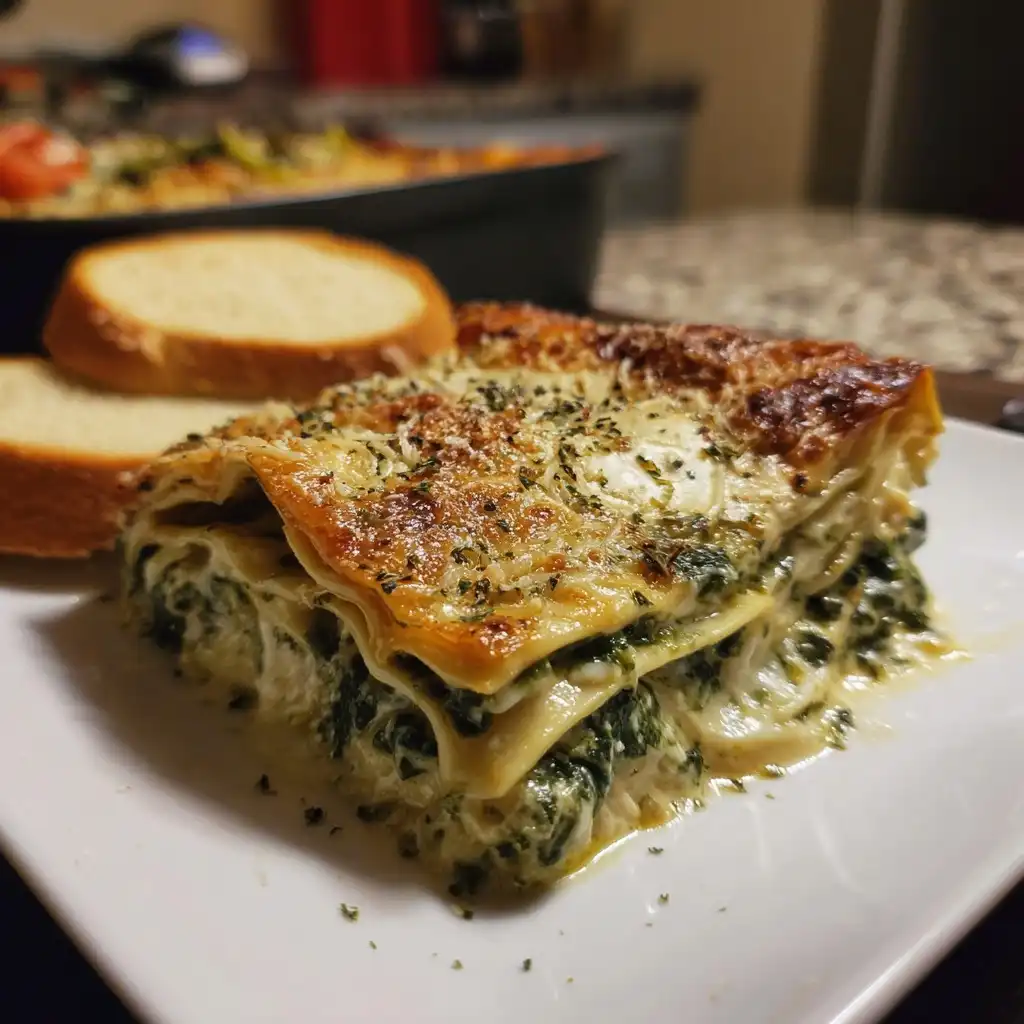
Creamy Pesto Spinach Lasagna is a luscious, modern twist on the beloved Italian classic—elevating traditional lasagna with vibrant herbaceous notes, velvety textures, and nutrient-dense layers. This dish masterfully marries the bold, aromatic punch of fresh basil pesto with the earthy sweetness of sautéed spinach and the rich creaminess of a luscious white sauce—no ricotta required. Unlike conventional versions that rely heavily on meat or heavy cheeses, this rendition celebrates plant-forward abundance while delivering deep umami, luxurious mouthfeel, and satisfying heft. Whether served at a Sunday family dinner, a holiday gathering, or meal-prepped for busy weeknights, it’s a showstopping centerpiece that balances indulgence with intention—comfort food reimagined for today’s palate and pantry.
The History
Lasagna’s origins trace back over 700 years to medieval Italy, where layered pasta dishes—often baked with cheese, spices, and sometimes minced meats—appeared in 13th-century cookbooks like the Liber de Coquina. The word “lasagna” itself derives from the Greek *laganon*, referring to flat sheets of dough, later adopted by the Romans as *lasanum* (a cooking pot), illustrating how form and function intertwined early on. While tomato-based red sauces didn’t enter the picture until after the Columbian Exchange (post-1500s), northern Italian regions like Liguria long celebrated pesto—a vibrant uncooked sauce born from mortar-and-pestle tradition using basil, pine nuts, garlic, olive oil, and grated Parmigiano-Reggiano. Spinach, introduced to Europe via Arab agricultural trade routes in the 12th century, became a staple green across Mediterranean kitchens for its versatility and iron-rich profile. The fusion of these three pillars—lasagna structure, Ligurian pesto, and verdant spinach—gained momentum in late 20th-century American and Canadian home cooking, propelled by culinary magazines, celebrity chefs like Giada De Laurentiis, and the rise of vegetarianism and “lightened-up” comfort food movements. Today’s Creamy Pesto Spinach Lasagna reflects a globalized, health-conscious evolution: it honors centuries-old techniques while embracing dairy alternatives, whole-grain noodles, and garden-fresh ingredients—making history not just edible, but alive with every bite.
Ingredients Breakdown
Every element in this lasagna serves a distinct sensory and structural role—no ingredient is an afterthought. Let’s explore each component with purpose and precision:
- Fresh Basil Pesto: The soul of the dish. Authentic pesto relies on high-quality extra-virgin olive oil (for fruitiness and peppery finish), young Genovese basil leaves (sweet, floral, low bitterness), raw garlic (for pungent depth—not cooked, to preserve brightness), toasted pine nuts (creamy nuttiness and subtle crunch), and finely grated Parmigiano-Reggiano and Pecorino Romano (the former adds umami richness; the latter lends salty, tangy complexity). A splash of fresh lemon juice brightens and stabilizes color.
- Fresh Baby Spinach: Chosen over frozen for superior texture and flavor control. Lightly wilted—not boiled—to retain vibrancy, chlorophyll integrity, and minimal water content (critical to prevent soggy layers). Its mild, slightly sweet earthiness complements pesto without competing.
- Creamy Béchamel Base: A silky, enriched white sauce built from scratch: unsalted butter (for flavor foundation), all-purpose flour (as thickener), whole milk (for body and fat content), a touch of nutmeg (warm, aromatic counterpoint), and a whisper of Dijon mustard (to enhance cheese melt and add subtle tang). This replaces ricotta, offering smoother layering, richer mouthfeel, and better binding.
- No-Boil Lasagna Noodles: Engineered to hydrate fully during baking—eliminating pre-cooking steps and reducing risk of mushiness. Look for durum wheat semolina varieties with consistent thickness for even absorption. Gluten-free options (brown rice or lentil-based) perform admirably when paired with adequate sauce hydration.
- Triple-Cheese Blend: A carefully calibrated trio: shredded low-moisture mozzarella (for superior stretch and browning), freshly grated Parmigiano-Reggiano (for savory depth and crust formation), and creamy fontina valdostana (melting beautifully while contributing buttery, nutty notes). Optional additions include crumbled goat cheese for tang or smoked provolone for complexity.
- Aromatics & Seasonings: Shallots (milder than onions, sweeter when caramelized), garlic (minced fine to distribute evenly), sea salt (for seasoning balance—not just salinity), freshly cracked black pepper (floral heat), and a final flourish of micro basil or lemon zest for freshness.
Step-by-Step Recipe
- Prep & Preheat: Position oven rack to center position. Preheat oven to 375°F (190°C). Lightly grease a 9×13-inch glass or ceramic baking dish with olive oil or butter. Have all ingredients measured and mise en place—this ensures seamless layering.
- Wilt the Spinach: In a large nonstick skillet over medium heat, warm 1 tbsp olive oil. Add 1 finely minced shallot; sauté 2 minutes until translucent. Stir in 2 minced garlic cloves; cook 45 seconds until fragrant. Add 10 oz (about 6 cups) fresh baby spinach in batches, stirring constantly until just wilted (≈90 seconds total). Transfer to a fine-mesh strainer; press firmly with a wooden spoon or spatula to extract ALL excess liquid. Cool completely—this step is non-negotiable for structural integrity.
- Make the Béchamel: In a heavy-bottomed saucepan, melt 4 tbsp unsalted butter over medium-low heat. Whisk in ¼ cup all-purpose flour; cook 1–2 minutes until golden and nutty (do not brown). Gradually whisk in 2½ cups warmed whole milk (warmed prevents lumps), ¼ tsp freshly grated nutmeg, ½ tsp sea salt, and ¼ tsp white pepper. Cook, whisking constantly, until thickened to a ribbon consistency (≈6–8 minutes). Remove from heat; stir in 1 tsp Dijon mustard. Let cool 5 minutes, then fold in 1 cup shredded mozzarella and ½ cup grated Parmigiano-Reggiano until smooth. Set aside.
- Prepare the Pesto: In a food processor, pulse 3 packed cups fresh basil leaves, ⅓ cup toasted pine nuts, 2 garlic cloves, ½ tsp sea salt, and ¼ tsp black pepper until finely chopped. With motor running, slowly drizzle in ½ cup extra-virgin olive oil until emulsified. Add juice of ½ lemon and ¾ cup grated Parmigiano-Reggiano + ¼ cup grated Pecorino Romano. Pulse to combine. Taste and adjust: more lemon for brightness, more cheese for savoriness, more oil for fluidity. Reserve ⅓ cup for garnish.
- Assemble with Precision: Spread ¾ cup béchamel evenly across bottom of prepared dish. Lay down 4 no-boil lasagna noodles (slightly overlapping if needed). Spread ⅓ of remaining béchamel (≈¾ cup) over noodles. Dollop ⅓ of pesto (≈⅓ cup) and gently swirl with a spoon. Scatter ⅓ of cooled spinach (≈1½ cups) evenly. Sprinkle with ⅓ of remaining cheese blend (≈⅔ cup). Repeat layers twice more (noodles → béchamel → pesto swirl → spinach → cheese), ending with a fourth noodle layer. Top with remaining béchamel, remaining pesto (reserve 1 tbsp), and final cheese blend. Drizzle with 1 tbsp olive oil.
- Bake with Care: Cover tightly with parchment-lined aluminum foil (parchment prevents cheese sticking). Bake 35 minutes. Remove foil; bake uncovered 15–20 minutes until top is deeply golden, bubbling at edges, and internal temperature reaches 165°F (74°C) in center. Rest uncovered 25 minutes minimum—this allows starches to set, layers to cohere, and steam to escape, preventing collapse upon slicing.
- Finish & Serve: Just before serving, drizzle reserved pesto over top. Garnish with lemon zest, micro basil, and additional flaky sea salt. Slice with a sharp chef’s knife dipped in hot water between cuts for clean edges.
Tips
- Squeeze Spinach Like Your Lasagna Depends On It: Excess moisture is the #1 cause of soupy, separated layers. After wilting, let spinach drain 2 minutes, then press vigorously in a strainer using the back of a ladle or potato masher—repeat if needed. For foolproof dryness, wrap in a clean kitchen towel and twist like a rope until no more liquid escapes.
- Toast Nuts Intelligently: Pine nuts burn in seconds. Toast in a dry skillet over medium-low heat, shaking constantly, until golden and fragrant (≈3–4 minutes). Transfer immediately to a plate to halt cooking. Substitute walnuts or almonds for budget-friendly, equally delicious results.
- Warm Your Milk: Cold milk hitting hot roux = lumps. Heat milk in microwave (2 minutes) or saucepan (until steaming but not boiling) before adding.
- No-Boil Noodle Hack: If your noodles are stubbornly stiff mid-bake, cover dish with foil again for final 10 minutes—or brush tops lightly with warm milk before baking to jumpstart hydration.
- Rest Is Non-Negotiable: Cutting too soon releases steam and destabilizes the delicate béchamel-spinach-pesto matrix. Set a timer: 25 minutes minimum. It firms up dramatically—and tastes better warm than piping hot.
- Layering Order Matters: Always start and end with sauce—not noodles—to protect pasta from drying out. Béchamel first creates a moisture barrier; final cheese layer forms the iconic crust.
- Freeze Like a Pro: Assemble unbaked lasagna, cover tightly with double-layer foil, and freeze up to 3 months. Thaw overnight in fridge before baking (add 10–15 minutes covered time).
- Reheat Without Rubbery Cheese: Individual slices: cover with damp paper towel, microwave 60–90 seconds. Full pan: 325°F oven, covered, 25–35 minutes until heated through.
Variations and Customizations
This recipe is a canvas—designed for creativity, dietary needs, seasonal shifts, and pantry improvisation:
- Vegan Version: Swap béchamel for cashew-based “cream”: blend 1½ cups soaked raw cashews, 1 cup unsweetened almond milk, 2 tbsp nutritional yeast, 1 tsp lemon juice, ½ tsp garlic powder, ½ tsp onion powder, ½ tsp salt. Use dairy-free pesto (nutritional yeast instead of cheese) and vegan mozzarella shreds. Layer with roasted zucchini ribbons or marinated artichoke hearts.
- Protein-Powered: Add 1½ cups cooked Italian lentils (seasoned with fennel, oregano, tomato paste) or 12 oz crumbled Italian sausage (browned and drained) between spinach and cheese layers. For poultry lovers, mix in shredded rotisserie chicken tossed with pesto.
- Gluten-Free: Use certified GF no-boil noodles (Tinkyada brown rice or Barilla GF). Ensure all cheeses and mustard are GF-certified. Boost structure with 1 tbsp psyllium husk mixed into béchamel.
- Herb & Green Swaps: Replace half the basil with baby arugula (peppery kick) or spinach (milder, deeper green). Try sun-dried tomato pesto, kale-walnut pesto, or cilantro-lime avocado pesto for global flair.
- Low-Carb/Keto: Layer thinly sliced zucchini or eggplant (salted, pressed, and roasted first) instead of noodles. Thicken béchamel with xanthan gum (¼ tsp) instead of flour.
- Summer Garden Edition: Fold in 1 cup roasted cherry tomatoes, ½ cup blanched peas, and ¼ cup fresh mint into pesto. Top with burrata instead of mozzarella before baking.
- Meal-Prep Friendly: Bake in four 8×4-inch loaf pans. Freeze individually wrapped portions. Reheat from frozen in toaster oven (350°F, 35–45 mins covered).
- Kid-Approved Mild: Omit garlic from pesto; use mild provolone instead of Pecorino; stir 1 tbsp cream cheese into béchamel for extra sweetness and smoothness.
Health Considerations and Nutritional Value
Creamy Pesto Spinach Lasagna delivers robust nutrition without compromising satisfaction—each layer contributes meaningful macro- and micronutrients:
- Spinach Power: One 10-oz package provides over 1,000% DV of vitamin K (essential for bone health and blood clotting), 150% DV vitamin A (vision and immunity), and significant folate, magnesium, and antioxidants like lutein and beta-carotene—all preserved through quick wilting rather than boiling.
- Pesto Benefits: Extra-virgin olive oil supplies heart-healthy monounsaturated fats and polyphenols (oleocanthal) with anti-inflammatory effects. Basil contains eugenol (natural analgesic) and volatile oils supporting respiratory health. Pine nuts offer zinc and magnesium for metabolic function.
- Dairy Wisdom: Using full-fat dairy enhances absorption of fat-soluble vitamins (A, D, E, K) from spinach and herbs. Opting for grass-fed cheese increases omega-3s and conjugated linoleic acid (CLA), linked to reduced inflammation.
- Portion Intelligence: A standard 12-serving pan yields ≈320–360 calories per slice (depending on cheese/noodle choices), with 18–22g protein, 8–10g fiber (with whole-grain noodles), and under 12g saturated fat. Pair with a simple arugula-lemon salad to boost volume and phytonutrient diversity.
- Dietary Accommodations: Naturally lower in sodium than many casseroles (no canned tomatoes or processed cheeses); easily adapted for low-FODMAP (swap garlic/shallots for garlic-infused oil and green onion tops); high-calcium for bone support; gluten-free options maintain integrity without sacrificing satiety.
- Mindful Indulgence: This isn’t “health food masquerading as lasagna”—it’s real food, rich in flavor and function. The emphasis on whole ingredients, minimal processing, and conscious fat sources makes it nourishing *and* deeply pleasurable—a cornerstone of sustainable, joyful eating.
Ingredients
- 10 oz fresh baby spinach (about 6 loosely packed cups)
- 1 tbsp extra-virgin olive oil, plus more for greasing
- 1 small shallot, finely minced (about ¼ cup)
- 2 garlic cloves, minced
- 4 tbsp unsalted butter
- ¼ cup all-purpose flour (or GF 1:1 blend)
- 2½ cups whole milk, warmed
- ¼ tsp freshly grated nutmeg
- ½ tsp fine sea salt, plus more to taste
- ¼ tsp white pepper
- 1 tsp Dijon mustard
- 1 cup shredded low-moisture mozzarella
- ½ cup grated Parmigiano-Reggiano
- 3 packed cups fresh basil leaves (stems removed)
- ⅓ cup pine nuts, toasted
- Juice of ½ lemon (about 1 tbsp)
- ¾ cup grated Parmigiano-Reggiano
- ¼ cup grated Pecorino Romano
- 12 no-boil lasagna noodles (regular or GF)
- 1 cup shredded mozzarella (for layering)
- ½ cup grated Parmigiano-Reggiano (for layering)
- ¼ cup grated fontina (or additional mozzarella)
- Flaky sea salt and freshly cracked black pepper, for finishing
- Lemon zest and micro basil, for garnish
Directions
- Preheat oven to 375°F (190°C). Lightly grease a 9×13-inch baking dish with olive oil or butter.
- In a large nonstick skillet over medium heat, warm 1 tbsp olive oil. Add shallot; sauté 2 minutes until soft. Stir in garlic; cook 45 seconds until fragrant. Add spinach in batches, stirring until just wilted (≈90 seconds total). Transfer to a fine-mesh strainer. Press firmly with a wooden spoon to remove ALL excess liquid. Let cool completely.
- In a saucepan, melt butter over medium-low heat. Whisk in flour; cook 1–2 minutes until golden. Gradually whisk in warmed milk, nutmeg, ½ tsp salt, and white pepper. Cook, whisking constantly, until thickened to coat the back of a spoon (6–8 minutes). Remove from heat; stir in Dijon. Cool 5 minutes, then fold in 1 cup mozzarella and ½ cup Parmigiano-Reggiano. Set aside.
- In a food processor, pulse basil, pine nuts, garlic, ½ tsp salt, and ¼ tsp pepper until finely chopped. With motor running, drizzle in ½ cup olive oil until smooth. Add lemon juice, ¾ cup Parmigiano-Reggiano, and ¼ cup Pecorino. Pulse to combine. Taste and adjust seasoning.
- Spread ¾ cup béchamel in bottom of dish. Layer 4 noodles. Spread ¾ cup béchamel over noodles. Dollop ⅓ of pesto (≈⅓ cup); swirl gently. Scatter ⅓ of spinach (≈1½ cups). Sprinkle with ⅓ of cheese blend (≈⅔ cup). Repeat two more times. Top with final 4 noodles. Spread remaining béchamel evenly. Dollop remaining pesto (reserve 1 tbsp) and sprinkle remaining cheese blend. Drizzle with 1 tbsp olive oil.
- Cover tightly with parchment-lined foil. Bake 35 minutes. Remove foil; bake uncovered 15–20 minutes until golden and bubbling. Internal temp should read 165°F (74°C). Rest uncovered 25 minutes.
- Drizzle with reserved pesto. Garnish with lemon zest, micro basil, and flaky salt. Slice and serve.
FAQ
- Can I use jarred pesto?
- Yes—but quality varies drastically. Choose refrigerated, oil-based pestos with minimal additives (no fillers, gums, or preservatives). Expect less brightness and more sodium. Stir 1 tsp lemon juice and 1 tbsp grated cheese into jarred pesto before using to revive flavor and texture.
- Why no ricotta? Isn’t that traditional?
- Ricotta can introduce graininess and excess moisture. Our béchamel delivers silkier texture, richer flavor integration, and superior binding—especially with delicate pesto and spinach. It also avoids potential curdling issues when layered with acidic ingredients.
- My lasagna turned out watery—what went wrong?
- Most commonly: insufficient spinach draining or cold milk in béchamel causing separation. Also check noodle hydration—if noodles weren’t fully submerged in sauce pre-bake, they may have released starch unevenly. Always squeeze spinach like you mean it!
- Can I make this ahead?
- Absolutely. Assemble up to 24 hours ahead; cover and refrigerate. Add 5–10 minutes to covered bake time. For longer storage, freeze unbaked (up to 3 months) or baked (up to 2 months)—thaw overnight before reheating.
- What’s the best cheese substitute for nut allergies?
- Omit pine nuts entirely—they’re not essential to pesto’s structure. Sunflower seeds or hulled pumpkin seeds (pepitas) toast beautifully and add creaminess. For cheese-free pesto, use 3 tbsp nutritional yeast + 1 tsp miso paste to mimic umami depth.
- Is there a way to reduce the carbs?
- Yes. Use oven-ready zucchini or eggplant ribbons (slice ⅛-inch thick, salt, press 15 minutes, pat dry, roast 10 minutes at 425°F). Or try shirataki rice lasagna sheets (rinse well, parboil 2 minutes, pat dry) for ultra-low-carb structure.
- How do I keep the top from burning?
- If browning too fast, tent loosely with foil during last 10 minutes. Alternatively, rotate pan front-to-back halfway through uncovered baking for even heat distribution.
- Can I add tomatoes?
- You can—but proceed with caution. Roasted cherry tomatoes (halved, seeded, roasted 20 minutes) work best. Avoid raw or canned tomatoes—their acidity and water content disrupt béchamel stability and pesto color. If adding, reduce béchamel by ¼ cup and increase spinach by ½ cup to absorb moisture.
Summary
Creamy Pesto Spinach Lasagna is a harmonious, restaurant-worthy casserole that transforms humble pantry staples into a layered masterpiece of herbaceous brightness, velvety richness, and garden-fresh vitality—baked to golden perfection and rested to flawless sliceability. It honors centuries of Italian technique while embracing modern wellness, dietary inclusivity, and bold, customizable flavor—proving that comfort food can be both deeply satisfying and thoughtfully nourishing.