Introduction
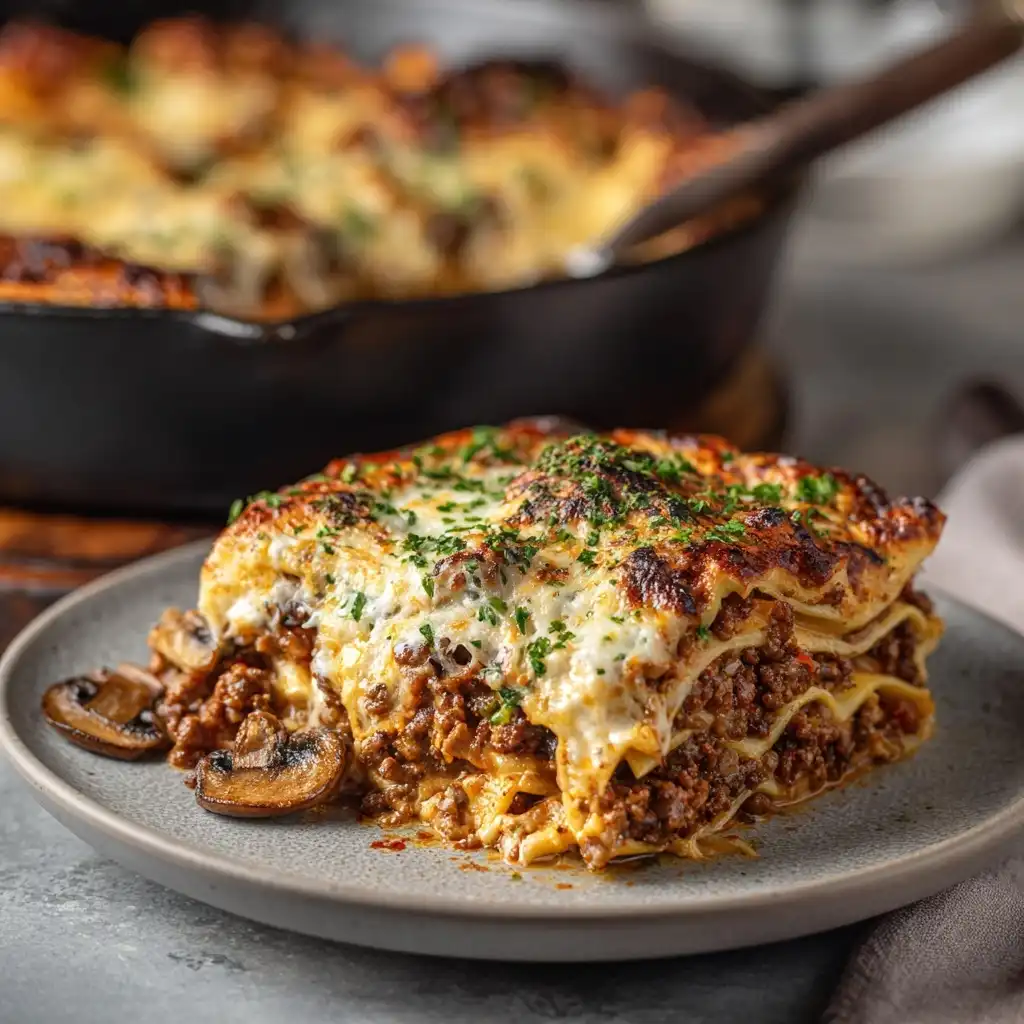
Beef and Mushroom Hearty Lasagna is a soul-warming, deeply flavorful twist on the classic Italian-American casserole—elevated with earthy mushrooms, slow-simmered savory beef, rich tomato-based sauce, and layers of tender pasta, creamy ricotta, and melted cheeses. Unlike traditional versions that rely solely on ground beef or sausage, this rendition embraces umami complexity by incorporating a medley of fresh and dried mushrooms (such as cremini, shiitake, and porcini), which add depth, meaty texture, and natural glutamates that amplify savoriness without overwhelming salt or fat. It’s a dish designed for comfort, celebration, and make-ahead convenience—equally at home on a Sunday family dinner table, served at holiday gatherings, or portioned and frozen for busy weeknight rescues. With its golden-brown crust, tender-yet-structured layers, and aromatic herb-infused fillings, this lasagna doesn’t just satisfy hunger—it lingers in memory long after the last bite.
The History
Lasagna’s origins trace back over 700 years to medieval Italy, where early iterations appeared in the 13th-century text De honesta voluptate et valetudine (“On Honorable Pleasure and Good Health”) by Bartolomeo Sacchi (known as Platina), describing layered pasta sheets with grated cheese and spices—no tomatoes, which hadn’t yet arrived from the Americas. The modern tomato-based lasagna emerged in Southern Italy during the 18th and 19th centuries, particularly in Naples and Campania, where ragù alla napoletana—a slow-cooked meat-and-tomato sauce—became foundational. As Italian immigrants settled across the U.S. in the late 19th and early 20th centuries, lasagna evolved further: American grocery access to ricotta (rather than traditional Neapolitan ricotta salata or mozzarella di bufala), the introduction of no-boil noodles, and regional adaptations like adding spinach or cottage cheese reflected resourcefulness and cultural fusion. The incorporation of mushrooms into lasagna is a more recent innovation—gaining traction in the 1980s and 1990s with the rise of farm-to-table cooking, vegetarian-influenced omnivore menus, and growing appreciation for umami-rich ingredients. Chefs and home cooks alike began pairing mushrooms with beef not only to stretch expensive ground meat but also to enhance mouthfeel, reduce overall saturated fat, and introduce nuanced forest-floor notes that harmonize beautifully with aged Parmigiano-Reggiano and slow-reduced tomato passata. Today, Beef and Mushroom Hearty Lasagna stands as a testament to culinary evolution—honoring tradition while embracing ingredient-driven creativity, sustainability-minded substitutions, and layered complexity that satisfies both nostalgic cravings and contemporary palates.
Ingredients Breakdown
Every element in this lasagna serves a precise sensory and structural purpose—no ingredient is arbitrary. Here’s a detailed functional breakdown:
- Ground Beef (85/15 blend): Provides rich marbling, deep beefy flavor, and binding fat that keeps the filling moist during baking. The 15% fat content ensures tenderness without greasiness—leaner blends risk dryness; fattier ones can pool oil.
- Mushroom Medley (cremini, shiitake, dried porcini): Cremini contribute meaty density and mild earthiness; shiitakes bring bold, smoky umami and chew; rehydrated porcini lend intense, woodsy aroma and gelatinous body to the sauce. Their combined water content is carefully evaporated to concentrate flavor—not steam away.
- San Marzano-style Whole Peeled Tomatoes (canned): Grown in volcanic soil near Naples, authentic San Marzanos offer low acidity, high sweetness, and thick flesh. We use whole peeled tomatoes—crushed by hand—to preserve texture and avoid added citric acid or calcium chloride found in pre-crushed varieties.
- Tomato Paste (double-concentrated): Cooked slowly in olive oil until brick-red and fragrant (“fond” development), it adds caramelized depth, body, and natural thickening power—far superior to ketchup or generic paste.
- Full-Fat Ricotta (whole-milk, small-curd): Not drained or strained—its natural whey contributes moisture and delicate tang. High-fat content ensures creaminess without graininess. Low-fat ricotta curdles and separates when baked.
- Parmigiano-Reggiano (freshly grated, minimum 24-month aged): Adds saline sharpness, granular richness, and enzymatic complexity. Pre-grated versions contain anti-caking agents (like cellulose) that inhibit melting and mute flavor.
- Fresh Mozzarella (low-moisture, whole-milk): Offers stretch, melt, and milky sweetness. Avoid “shredded mozzarella for pizza”—it’s coated in starch and won’t integrate smoothly.
- Onion, Carrot, Celery (soffritto base): Finely diced and gently sautéed in olive oil, this trinity builds aromatic foundation, sweetness, and subtle vegetal backbone—never overpowering, always supportive.
- Garlic & Fresh Herbs (basil, oregano, thyme, parsley): Garlic is added late to preserve pungency; basil and oregano go into the sauce for warmth; thyme complements mushrooms; parsley is folded into the ricotta at the end for brightness.
- Red Wine (dry, medium-bodied—Chianti or Sangiovese): Deglazes the pan, dissolves fond, and adds tannic structure and fruit-forward acidity that balances richness. Alcohol fully cooks off, leaving only complexity.
- Noodles (oven-ready, extra-thick): Engineered to absorb liquid without disintegrating—critical when layered with high-moisture fillings. Traditional boiled noodles can become gummy or slide apart if undercooked or overhydrated.
- Heavy Cream (optional but recommended): Swirled into the ricotta mixture, it adds silkiness, prevents cracking, and creates a luxurious mouthfeel—especially important when using high-protein, lower-moisture cheeses.
Step-by-Step Recipe
This recipe is structured for precision, repeatability, and optimal layer integrity—each step builds toward structural stability and balanced flavor release.
- Rehydrate Dried Porcini Mushrooms: Place ½ oz dried porcini in a heatproof bowl. Pour 1 cup boiling water over them. Steep 20 minutes. Strain liquid through a fine-mesh sieve lined with cheesecloth (reserve liquid); gently squeeze mushrooms to extract every drop. Chop finely. Reserve soaking liquid—it’s liquid umami gold.
- Sauté Aromatics & Mushrooms: In a heavy-bottomed Dutch oven or large stainless skillet, heat 3 tbsp extra-virgin olive oil over medium-low heat. Add 1 finely diced yellow onion, 1 finely diced medium carrot, and 1 finely diced rib of celery. Sweat 8–10 minutes until translucent but not browned. Add 4 minced garlic cloves; cook 1 minute until fragrant. Increase heat to medium-high. Add 12 oz sliced cremini mushrooms and 4 oz stemmed/shredded shiitakes. Cook undisturbed 4 minutes to develop fond, then stir and continue cooking until deeply browned and moisture has fully evaporated (~10–12 min). Stir in chopped rehydrated porcini and cook 2 more minutes.
- Bloom Tomato Paste & Deglaze: Push vegetables/mushrooms to edges. Add 3 tbsp double-concentrated tomato paste to center. Cook, stirring constantly, 3–4 minutes until dark brick-red and nutty—this caramelization unlocks profound depth. Pour in ½ cup dry red wine. Scrape bottom vigorously to lift all fond. Simmer 3 minutes until nearly dry.
- Brown & Braise the Beef: Add 1.5 lbs 85/15 ground beef in even crumbles (don’t stir immediately). Let sear 2 minutes, then break up and cook until no pink remains (~6–7 min). Drain excess fat if >1 tbsp remains. Stir in reserved porcini soaking liquid (¼ cup), 1 (28 oz) can San Marzano tomatoes (with juices, crushed by hand), 1 tsp kosher salt, ½ tsp black pepper, 1 tsp dried oregano, and ¼ tsp red pepper flakes. Bring to gentle simmer. Reduce heat to lowest setting, cover partially, and braise 1 hour 15 minutes—stirring every 20 minutes. Uncover last 15 minutes to thicken. Sauce should mound slightly on spoon—not runny, not stiff.
- Prepare Ricotta Mixture: In a large bowl, combine 3 cups full-fat ricotta, 1 cup freshly grated Parmigiano-Reggiano, ½ cup heavy cream, ¼ cup finely chopped fresh flat-leaf parsley, 1 tsp lemon zest, ½ tsp freshly grated nutmeg, 1 tsp kosher salt, and ¼ tsp white pepper. Fold gently with spatula until homogenous—do not whip or overmix (causes weeping).
- Assemble Lasagna (Critical Technique): Preheat oven to 375°F (190°C). Lightly grease a 9×13-inch heavy-gauge metal or ceramic baking dish. Spread 1 cup meat-mushroom sauce thinly on bottom (prevents sticking). Layer 4 oven-ready noodles (slightly overlapping if needed). Spread ⅓ of ricotta mixture evenly (approx. 1¾ cups). Spoon 1⅓ cups meat-mushroom sauce over ricotta. Sprinkle with ½ cup shredded low-moisture mozzarella. Repeat layers twice more (noodles → ricotta → sauce → mozzarella). Final layer: 4 noodles, remaining sauce (smoothed), remaining mozzarella, and final ¼ cup Parmigiano-Reggiano.
- Bake & Rest: Cover tightly with parchment-lined aluminum foil (parchment prevents cheese from sticking to foil). Bake 25 minutes. Remove foil. Bake uncovered 20–25 minutes until top is bubbling at edges and golden-brown in spots. Turn oven to broil (high) for final 2–3 minutes to deepen color—but watch closely! Let rest 35–40 minutes before cutting (non-negotiable: allows starches to set, layers to cohere, and cheese to re-emulsify).
Tips
- Resting Is Non-Negotiable: Cutting too soon causes collapse, sauce leakage, and blurred layers. Thirty-five minutes allows gluten networks in noodles to relax and thicken, dairy proteins to reset, and internal temperature to equalize. Use this time to prepare salad or garlic bread.
- Control Moisture Aggressively: Mushrooms exude copious water. Sauté them separately until *all* liquid evaporates—listen for the sizzle to change pitch from wet to dry. If sauce seems thin after braising, simmer uncovered 5–10 extra minutes. Wet fillings = mushy noodles.
- Layer Thickness Matters: Use an offset spatula to spread ricotta and sauce in *thin*, even layers—no thick globs. Thick ricotta pools, creating dense pockets; thick sauce overwhelms noodles. Aim for ¼-inch uniformity.
- Grate Your Own Cheese: Pre-shredded cheeses contain potato starch, cellulose, and anti-caking agents that repel moisture and prevent proper melt. Freshly grated Parmigiano and mozzarella fuse seamlessly and brown beautifully.
- Prevent Noodle Slippage: Press each noodle layer gently with fingertips to adhere to sauce below. Slight overlap at edges helps lock structure. If using no-boil noodles, ensure sauce fully covers them—uncovered edges dry out and harden.
- Broil Strategically: Only broil *after* full bake—and only 2–3 minutes. Position rack 6 inches from heating element. Rotate pan halfway. Over-broiling burns cheese before interior heats through.
- Make-Ahead Friendly: Assemble up to 24 hours ahead; refrigerate covered. Add 10 minutes to covered bake time. Or freeze unbaked lasagna (tightly wrapped in foil + plastic) up to 3 months. Thaw overnight in fridge before baking.
- Double Batch Smartly: Prepare double sauce and ricotta mix—freeze half sauce in portioned containers; freeze ricotta mix (without parsley) in airtight bags. Thaw overnight, stir in fresh herbs before assembling.
Variations and Customizations
This recipe is intentionally modular—designed to adapt gracefully to dietary needs, seasonal produce, pantry constraints, and flavor preferences—without sacrificing structural integrity or depth.
- Vegetarian Hearty Lasagna: Omit beef entirely. Double mushrooms (add oyster and lion’s mane for texture variety). Replace beef broth in sauce with roasted vegetable stock + 1 tsp soy sauce or tamari for umami. Add ½ cup cooked lentils or crumbled walnut-walnut “meat” (toasted walnuts pulsed with tamari, smoked paprika, and thyme) for protein heft.
- Gluten-Free Version: Use certified GF oven-ready lasagna noodles (Tinkyada or Barilla). Ensure tomato paste, wine, and cheese are GF-certified (some wines use gluten-containing finings). Thicken sauce with 1 tsp arrowroot slurry if needed.
- Low-Carb/Keto Adaptation: Replace noodles with blanched, pressed eggplant or zucchini planks (salted, weighted 30 min, patted dry). Reduce tomato quantity by ⅓; increase roasted red peppers and sun-dried tomatoes (oil-packed, drained) for sweetness without sugar. Boost cheese and cream ratios for satiety.
- Spice-Forward Variation: Add 1 tsp toasted cumin seeds + ½ tsp chipotle powder to soffritto. Stir in 2 tbsp chopped pickled jalapeños with final sauce layer. Garnish with cilantro and crumbled queso fresco instead of parsley/Parmigiano.
- Herb-Infused Luxury Version: Steep 2 sprigs fresh rosemary and 1 bay leaf in warm olive oil 10 minutes; strain and use for sautéing aromatics. Fold 2 tbsp chopped fresh tarragon into ricotta. Finish with micro basil and edible flowers.
- Game Meat Twist: Substitute 1 lb ground venison or bison for half the beef. Add 1 tbsp juniper berry–infused brandy during deglazing. Pair with wild blueberry reduction drizzle post-bake.
- Breakfast Lasagna Fusion: Layer with crème fraîche–herb ricotta, caramelized onions, roasted potatoes, and crispy pancetta. Top with fried eggs before serving.
- Instant Pot Shortcut: Sauté mushrooms/aromatics using Sauté function. Brown beef. Add wine, tomatoes, paste, and herbs. Pressure cook 25 minutes (Natural Release 15 min). Cool completely before assembling.
Health Considerations and Nutritional Value
A single 1¼-inch square (1/12th of the 9×13 pan) delivers approximately 425–460 calories, with thoughtful nutritional balance achieved through intentional ingredient selection and technique—not deprivation.
- Protein Powerhouse: ~28g high-quality complete protein per serving—beef provides heme iron, zinc, and B12; mushrooms contribute ergothioneine (a potent antioxidant) and selenium; dairy offers whey and casein for sustained satiety and muscle support.
- Smart Fat Profile: Primarily unsaturated fats from olive oil and cheese, with moderate saturated fat (12–14g/serving). Using 85/15 beef—not leaner—ensures juiciness without needing added oils or butter, reducing total fat by ~20% versus traditional recipes relying on butter-laden béchamel.
- Fiber & Phytonutrients: Mushrooms supply beta-glucans (immune-modulating polysaccharides) and chitin (prebiotic fiber). Tomatoes deliver lycopene—bioavailability increases 2–3x when cooked with olive oil. Onions and carrots contribute quercetin and carotenoids.
- Sodium Management: Total sodium ~580mg/serving—well below FDA’s 2,300mg daily limit. Achieved by omitting added salt in ricotta (relying on Parmigiano’s saltiness), using no-salt-added tomatoes, and balancing with potassium-rich veggies (mushrooms, tomatoes, herbs).
- Glycemic Impact: Moderate (GI ~55–60) due to complex carbs from whole wheat noodles (if substituted) and fiber-rich fillings. For lower impact, use lentil or chickpea pasta (adds 8g fiber/serving).
- Digestive Support: Fermented dairy (aged Parmigiano) contains beneficial bacteria. Parsley and lemon zest aid digestion and liver detox pathways. Slow-simmered sauce breaks down tomato acids, reducing reflux risk.
- Allergen Notes: Contains dairy (cow’s milk), gluten (wheat noodles), and nightshades (tomatoes, peppers). Dairy-free option: cashew-ricotta (soaked raw cashews + lemon + nutritional yeast + garlic) and vegan mozzarella shreds. Egg-free version possible with flax “eggs” in ricotta binder.
- Pregnancy & Immune Considerations: Pasteurized cheeses used; beef cooked to safe 160°F; mushrooms thoroughly heated—safe for immunocompromised individuals. Avoid raw sprouts or unpasteurized cheeses in variations.
Ingredients
- ½ ounce dried porcini mushrooms
- 1 cup boiling water
- 3 tablespoons extra-virgin olive oil, plus more for greasing
- 1 medium yellow onion, finely diced (about 1 cup)
- 1 medium carrot, finely diced (about ¾ cup)
- 1 rib celery, finely diced (about ½ cup)
- 4 garlic cloves, minced
- 12 ounces cremini mushrooms, stems removed, thinly sliced
- 4 ounces shiitake mushrooms, stems removed, thinly sliced
- 3 tablespoons double-concentrated tomato paste
- ½ cup dry red wine (Chianti, Sangiovese, or Barbera)
- 1.5 pounds 85/15 ground beef
- 1 (28-ounce) can San Marzano-style whole peeled tomatoes, with juices
- 1 teaspoon kosher salt, plus more to taste
- ½ teaspoon freshly ground black pepper
- 1 teaspoon dried oregano
- ¼ teaspoon red pepper flakes
- 3 cups full-fat whole-milk ricotta cheese
- 1 cup freshly grated Parmigiano-Reggiano cheese (finely grated, about 3 oz)
- ½ cup heavy cream
- ¼ cup finely chopped fresh flat-leaf parsley
- 1 teaspoon finely grated lemon zest
- ½ teaspoon freshly grated nutmeg
- ¼ teaspoon white pepper
- 12 oven-ready (no-boil) lasagna noodles (regular or whole wheat)
- 2 cups shredded low-moisture mozzarella cheese (about 8 oz)
Directions
- Place dried porcini mushrooms in a heatproof bowl. Pour boiling water over them. Let steep for 20 minutes. Line a fine-mesh sieve with two layers of cheesecloth and place over a bowl. Strain mushroom liquid, reserving liquid; gently squeeze mushrooms to extract all liquid. Chop mushrooms finely. Set aside.
- Heat olive oil in a large Dutch oven or heavy-bottomed skillet over medium-low heat. Add onion, carrot, and celery. Cook, stirring occasionally, until softened and translucent but not browned, about 8–10 minutes. Add garlic and cook until fragrant, about 1 minute.
- Increase heat to medium-high. Add cremini and shiitake mushrooms. Cook undisturbed for 4 minutes to allow browning, then stir and continue cooking until deeply browned and all liquid has evaporated (10–12 minutes total). Stir in chopped porcini and cook for 2 minutes more.
- Push vegetables and mushrooms to the sides of the pan. Add tomato paste to the center. Cook, stirring constantly, until dark brick-red and fragrant, about 3–4 minutes. Pour in red wine, scraping up any browned bits from the bottom. Simmer until wine is nearly evaporated, about 3 minutes.
- Add ground beef in even crumbles. Let sear undisturbed for 2 minutes, then break up and cook until no pink remains, about 6–7 minutes. Drain excess fat if more than 1 tablespoon remains.
- Stir in reserved porcini soaking liquid (¼ cup), crushed tomatoes (with juices), 1 teaspoon salt, ½ teaspoon black pepper, oregano, and red pepper flakes. Bring to a gentle simmer. Reduce heat to low, cover partially, and braise for 1 hour 15 minutes, stirring every 20 minutes. Uncover for the final 15 minutes to thicken sauce. Sauce should coat the back of a spoon. Taste and adjust seasoning.
- Meanwhile, prepare ricotta mixture: In a large bowl, combine ricotta, 1 cup Parmigiano-Reggiano, heavy cream, parsley, lemon zest, nutmeg, 1 teaspoon salt, and white pepper. Fold gently with a spatula until smooth and uniform. Do not overmix.
- Preheat oven to 375°F (190°C). Lightly grease a 9×13-inch baking dish with olive oil.
- Spread 1 cup of meat-mushroom sauce evenly across the bottom of the dish. Arrange 4 oven-ready noodles in a single layer (slight overlap is okay). Spread one-third (about 1¾ cups) of ricotta mixture evenly over noodles. Spoon 1⅓ cups meat-mushroom sauce over ricotta. Sprinkle with ½ cup mozzarella.
- Repeat layering two more times: noodles → ricotta → sauce → mozzarella. Top with final 4 noodles, remaining sauce, remaining mozzarella, and final ¼ cup Parmigiano-Reggiano.
- Cover tightly with aluminum foil, lining underside with parchment paper to prevent cheese from sticking. Bake for 25 minutes.
- Remove foil. Bake uncovered for 20–25 minutes, until bubbling around edges and golden brown in spots.
- Switch oven to broil (high). Broil 2–3 minutes—watch closely—until top is deeply golden and lightly blistered.
- Remove from oven. Rest uncovered for 35–40 minutes before cutting into 12 squares. Serve warm.
FAQ
- Can I use regular lasagna noodles instead of no-boil?
- Yes—but they must be fully cooked al dente (1–2 minutes less than package directions), rinsed under cold water, and thoroughly patted dry. Overcooked noodles turn to mush; wet noodles create steam pockets and separation. No-boil noodles are strongly recommended for foolproof layer cohesion.
- Why does my lasagna leak watery sauce when I cut it?
- Three likely causes: (1) Insufficient resting time—cutting before 35 minutes disrupts starch gelatinization; (2) Mushrooms not fully sautéed dry—excess water migrates during baking; (3) Sauce too thin—simmer uncovered longer before assembling. Always test sauce thickness: draw a line with a spoon—if it holds for 3 seconds, it’s ready.
- Can I freeze this lasagna?
- Absolutely. Assemble unbaked, wrap tightly in plastic wrap, then heavy-duty foil. Freeze up to 3 months. Thaw overnight in refrigerator before baking. Add 10 minutes to covered bake time. Do not thaw at room temperature.
- What if I don’t have San Marzano tomatoes?
- Substitute high-quality whole peeled tomatoes labeled “Pomodorino del Piennolo” or “DOP Certified.” Avoid pre-crushed or pureed tomatoes—they often contain calcium chloride (makes sauce gritty) and citric acid (adds harsh acidity). If only generic whole tomatoes available, add 1 tsp sugar and ½ tsp balsamic vinegar to balance acidity.
- Can I make this vegetarian without losing heartiness?
- Yes—substitute 1 cup cooked brown lentils + 1 cup chopped walnuts (toasted and pulsed) for the beef. Sauté extra mushrooms (add maitake and king oyster) and include 1 tbsp tamari + 1 tsp miso paste in sauce for deep umami. Boost herbs and roasted garlic.
- Why does my ricotta layer look grainy or curdled?
- Overmixing incorporates air and breaks down protein networks. Use gentle folding—not whisking. Ensure ricotta is at room temperature. Avoid low-fat ricotta—it lacks stabilizing fat and wheys out. Heavy cream and Parmigiano help emulsify.
- Can I prepare components ahead?
- Yes—sauce can be made 3 days ahead and refrigerated, or frozen 3 months. Ricotta mixture (without parsley) keeps 2 days refrigerated. Mushrooms can be sautéed and cooled 1 day ahead. Assemble day-of or night-before.
- Is there a dairy-free version that still feels indulgent?
- Yes—blend 2 cups soaked raw cashews + ½ cup nutritional yeast + ¼ cup lemon juice + 2 garlic