Introduction
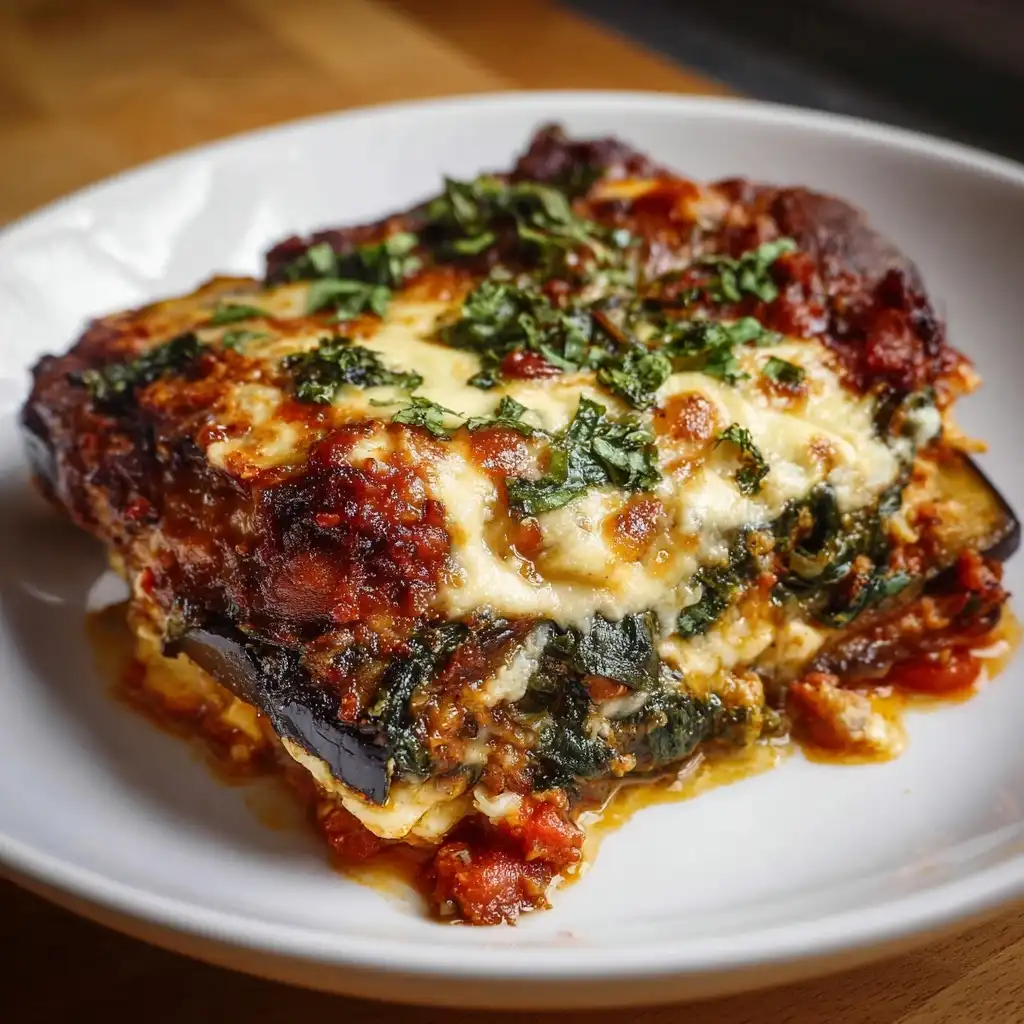
Roasted Eggplant and Spinach Lasagna is a vibrant, nutrient-dense, and deeply flavorful twist on the classic Italian comfort dish—reimagined for modern palates that value both richness and wellness. Unlike traditional lasagna built on layers of pasta sheets and ground meat, this version celebrates the earthy sweetness of roasted eggplant, the tender silkiness of wilted spinach, and the creamy tang of ricotta and mozzarella cheeses—all bound together with a slow-simmered, herb-infused tomato sauce. It’s a plant-forward masterpiece that doesn’t sacrifice indulgence; rather, it elevates it through thoughtful layering, caramelized depth from roasting, and balanced umami complexity. Whether you’re feeding a crowd, meal-prepping for the week, or seeking a showstopping vegetarian centerpiece for Sunday dinner, this lasagna delivers elegance, heartiness, and soul-warming satisfaction in every forkful.
The History
Lasagna’s origins trace back over 700 years—to 13th-century Italy, where early versions appeared in the medieval cookbook Liber de Coquina, featuring layered pasta sheets with grated cheese and spices, but no tomato (which wouldn’t arrive from the Americas until the 16th century). Eggplant, meanwhile, has ancient roots in South Asia and was introduced to the Mediterranean via Arab traders during the Middle Ages—becoming especially beloved in Sicilian and southern Italian cuisine, where its spongy texture made it ideal for absorbing olive oil, herbs, and rich sauces. The marriage of eggplant and lasagna emerged organically in post-war Italy, when resourcefulness inspired “pasta-less” alternatives during grain shortages—leading to dishes like melanzane alla parmigiana. Roasted Eggplant and Spinach Lasagna is a contemporary evolution of that tradition: honoring regional ingenuity while integrating global influences—like Greek-inspired feta accents, Middle Eastern za’atar garnishes, or North African harissa-spiked tomato bases—reflecting today’s interconnected culinary landscape. It also resonates with the rise of mindful eating movements, offering a hearty, fiber-rich, low-glycemic alternative to refined flour pasta without compromising on texture or satiety.
Ingredients Breakdown
Every component in this lasagna serves a distinct textural, aromatic, and nutritional role—no ingredient is merely filler. Let’s explore them in detail:
- Eggplant (2 large, ~2 lbs total): Japanese or globe varieties preferred for dense, creamy flesh and fewer seeds. Salting before roasting draws out excess moisture and bitterness while concentrating flavor—key for preventing sogginess and ensuring caramelized edges.
- Fresh spinach (16 oz / ~10 cups raw): Baby spinach is ideal for tenderness and mild sweetness; mature spinach works but requires longer wilting and more thorough squeezing. Rich in non-heme iron, folate, vitamin K, and lutein—its vibrant green color also adds visual contrast and phytonutrient diversity.
- Ricotta cheese (3 cups whole-milk, full-fat): Provides creamy body, subtle sweetness, and protein. Opt for artisanal, small-batch ricotta if possible—its delicate grain and clean tang elevate the entire filling. Low-moisture ricotta prevents pooling; if using watery ricotta, drain overnight in cheesecloth.
- Mozzarella (2 cups shredded, plus ½ cup fresh torn): Low-moisture mozzarella ensures superior melt and stretch, while fresh mozzarella adds luxurious creaminess and subtle milky notes in the top layer.
- Parmigiano-Reggiano (1 cup freshly grated): Adds umami depth, saltiness, and nuttiness—essential for balancing acidity and enriching the cheese matrix. Pre-grated versions contain anti-caking agents that inhibit melting and dull flavor.
- Tomato sauce (4 cups): A slow-cooked, San Marzano–based sauce with garlic, onion, basil, oregano, and a splash of red wine vinegar for brightness. No sugar needed—the natural sweetness of roasted eggplant and caramelized onions provides balance.
- Aromatics & Herbs: Yellow onion, garlic, extra-virgin olive oil, fresh basil (both chopped and whole leaves), oregano, and a whisper of red pepper flakes for gentle heat.
- Seasonings: Sea salt (Maldon or flaky), freshly cracked black pepper, and a pinch of freshly grated nutmeg—enhancing ricotta’s warmth and binding savory notes across layers.
- Optional Enhancements: Toasted pine nuts, lemon zest, crumbled feta, roasted red peppers, sun-dried tomatoes, or a drizzle of high-quality balsamic glaze pre-serving.
Step-by-Step Recipe
- Prep the Eggplant (1 hour ahead, includes salting & resting): Slice eggplants lengthwise into ¼-inch planks. Arrange on wire racks set over baking sheets. Generously sprinkle both sides with sea salt. Let rest 45–60 minutes to draw out water and bitter compounds. Rinse thoroughly under cold water, then pat *extremely* dry with clean kitchen towels or paper towels—this step is non-negotiable for optimal roasting.
- Roast the Eggplant (35–40 minutes): Preheat oven to 425°F (220°C). Brush both sides of each eggplant slice lightly with olive oil and arrange in a single layer on parchment-lined baking sheets. Roast for 18–20 minutes per side, flipping once, until deeply golden, slightly shrunken, and yielding to gentle pressure—edges should be crisp and caramelized. Cool slightly before handling.
- Wilt & Drain the Spinach (10 minutes): Heat 1 tbsp olive oil in a large Dutch oven over medium heat. Add minced garlic and sauté 30 seconds until fragrant. Add spinach in batches, stirring constantly until wilted. Transfer to a fine-mesh strainer set over a bowl; press firmly with the back of a spoon to extract *all* excess liquid. Let cool, then chop finely.
- Prepare the Ricotta Filling (10 minutes): In a large bowl, combine drained ricotta, ¾ cup grated Parmigiano-Reggiano, 1 cup shredded mozzarella, 1 tsp lemon zest, ¼ tsp freshly grated nutmeg, 1 tbsp chopped fresh basil, 1 tsp oregano, 1 tsp sea salt, and ½ tsp black pepper. Fold in the chopped spinach gently—do not overmix. Taste and adjust seasoning.
- Assemble the Lasagna (15 minutes): Preheat oven to 375°F (190°C). Lightly grease a 9×13-inch deep-dish baking dish (at least 3 inches deep). Spread 1 cup tomato sauce evenly across the bottom. Layer 4–5 roasted eggplant slices, slightly overlapping. Spoon ⅓ of ricotta-spinach mixture over eggplant, spreading gently. Drizzle with ½ cup sauce. Repeat two more times (eggplant → ricotta → sauce), finishing with a final layer of eggplant. Top with remaining 1 cup sauce, remaining ¼ cup Parmigiano-Reggiano, ½ cup shredded mozzarella, and torn fresh mozzarella.
- Bake & Rest (65–75 minutes total): Cover tightly with aluminum foil (tent it slightly to avoid sticking to cheese). Bake 45 minutes. Remove foil and bake uncovered 20–25 minutes until top is bubbling, golden, and lightly blistered. Let rest *at least 30 minutes* before slicing—this allows layers to set and prevents collapse. For best results, bake the day before and reheat gently at 325°F for 30–40 minutes.
Tips
- Salting is Sacred: Skipping the salting step leads to watery, bland eggplant—even with roasting. Don’t rush the rinse-and-dry phase; residual moisture causes steaming instead of caramelization.
- Roasting > Frying: Roasting concentrates flavor, reduces oil absorption by up to 60% versus frying, and yields firmer, more structured layers—ideal for stacking without slippage.
- Cheese Temperature Matters: Use ricotta and mozzarella at room temperature—cold cheese resists blending and creates uneven pockets in the filling.
- Sauce Consistency is Key: Your tomato sauce should coat the back of a spoon—not run off it. If too thin, simmer uncovered 10–15 minutes before assembling. If too thick, stir in 2 tbsp vegetable broth or tomato juice.
- Resting is Non-Negotiable: Cutting too soon releases steam and destabilizes layers, resulting in a soupy, fragmented slice. A full 30-minute rest transforms texture—firming edges while keeping centers luxuriously creamy.
- Layering Logic: Always start and end with eggplant—not sauce—to create structural “bookends.” This prevents bottom scorching and top sogginess.
- Freeze Smart: Assemble unbaked lasagna, wrap tightly in plastic + foil, and freeze up to 3 months. Thaw overnight in fridge, then bake covered 55 minutes + uncovered 25 minutes.
- Reheating Right: To retain moisture, cover with damp parchment + foil and warm at 325°F until center reaches 165°F (approx. 40–50 min). Finish uncovered 5 minutes for crisp top.
Variations and Customizations
This recipe is a canvas—not a constraint. Here are thoughtfully tested adaptations for dietary needs, seasonal availability, global inspiration, and pantry creativity:
- Vegan Version: Replace ricotta with blended silken tofu + lemon juice + nutritional yeast + garlic powder; use cashew mozzarella (soaked raw cashews, tapioca starch, lemon, salt); swap Parmigiano for almond-based “parm”; opt for oil-free roasting (use aquafaba spray) and boost umami with tamari and sun-dried tomato paste.
- Gluten-Free: Naturally compliant—no substitutions needed. Ensure all packaged ingredients (tomato sauce, spices) are certified GF.
- Protein-Boosted: Fold in 1 cup cooked lentils, crumbled tempeh “chorizo,” or shredded rotisserie chicken between layers. Add a layer of marinated grilled portobello caps for meaty texture.
- Mediterranean Twist: Stir ½ cup crumbled feta + ¼ cup chopped kalamata olives + 1 tbsp chopped oregano into ricotta. Top with toasted pine nuts and a final drizzle of lemon-infused olive oil.
- Spiced & Smoky: Add 1 tsp smoked paprika + ½ tsp cumin to ricotta; swirl 1 tbsp harissa into tomato sauce; finish with fresh cilantro and pickled red onions.
- Spring Garden Edition: Swap spinach for baby kale + asparagus ribbons + peas; add 2 tbsp fresh mint and chives to ricotta; top with edible flowers and lemon zest.
- Low-Carb/Keto: Replace eggplant with thinly sliced zucchini or yellow squash (salted and roasted same way); increase cheese ratio slightly and add ¼ cup heavy cream to ricotta for richness.
- Make-Ahead Mini Lasagnas: Layer in greased ramekins or muffin tins for individual servings—bake 25–30 minutes covered, 10 uncovered. Perfect for portion control or elegant dinner parties.
Health Considerations and Nutritional Value
Per generous serving (1/12 of recipe), this Roasted Eggplant and Spinach Lasagna delivers approximately 385 kcal, with 22g protein, 18g fat (mostly monounsaturated from olive oil and cheese), and 34g carbohydrates (8g fiber, 10g naturally occurring sugars). Its nutritional profile shines in several evidence-backed ways:
- Heart-Healthy Fats: Olive oil provides oleic acid and polyphenols shown to reduce LDL oxidation and improve endothelial function. Eggplant skin contains nasunin—a potent antioxidant anthocyanin linked to vascular protection.
- Fiber-Rich & Gut-Supportive: With nearly 8g fiber per serving (over 30% DV), it promotes satiety, stabilizes blood glucose, and feeds beneficial gut microbiota—especially when paired with fermented ricotta (if homemade) or a side of sauerkraut.
- Iron Absorption Optimized: Vitamin C from tomatoes and lemon zest enhances non-heme iron bioavailability from spinach—maximizing absorption by up to 300%. Pairing with healthy fats further supports fat-soluble vitamin uptake (A, K, E).
- Low Sodium (When Controlled): At just ~420mg sodium per serving (using unsalted tomato sauce and moderate cheese), it aligns with American Heart Association guidelines—far below typical restaurant lasagna (~900–1200mg).
- No Refined Carbs or Added Sugars: Eliminates common inflammatory triggers—ideal for those managing insulin resistance, PCOS, or metabolic syndrome.
- Calcium & Vitamin D Synergy: Cheese supplies bioavailable calcium; pairing with sunlight exposure or fortified plant milk at another meal supports bone mineral density.
- Considerations: Those with dairy sensitivities can adapt successfully (see Vegan variation). Individuals monitoring potassium (e.g., kidney disease) should consult a dietitian—though eggplant and spinach are moderate sources, not high. Lactose-intolerant individuals often tolerate aged cheeses (Parmigiano) and low-moisture mozzarella well due to minimal lactose content.
Ingredients
- 2 large globe or Japanese eggplants (about 2 lbs total)
- 1½ tbsp fine sea salt (for sweating)
- ¼ cup extra-virgin olive oil (plus more for brushing)
- 1 large yellow onion, finely diced
- 4 cloves garlic, minced
- 16 oz (10 cups) fresh baby spinach
- 3 cups whole-milk ricotta cheese (well-drained)
- 2 cups low-moisture mozzarella cheese, shredded (plus ½ cup fresh mozzarella, torn)
- 1 cup Parmigiano-Reggiano cheese, freshly grated
- 4 cups homemade or high-quality no-sugar-added marinara sauce (San Marzano-based preferred)
- ¼ cup fresh basil leaves, chopped (plus 12 whole leaves for layering)
- 1 tbsp fresh oregano, chopped
- 1 tsp freshly grated lemon zest
- ¼ tsp freshly grated nutmeg
- 1 tsp freshly cracked black pepper
- 1½ tsp fine sea salt (to taste)
- Pinch of red pepper flakes (optional)
Directions
- Sweat the Eggplant: Slice eggplants lengthwise into ¼-inch-thick planks. Arrange in a single layer on wire racks set over baking sheets. Sprinkle both sides generously with sea salt. Let sit at room temperature for 45–60 minutes. Rinse thoroughly under cold running water, then pat *completely dry* with clean kitchen towels—press firmly to remove all surface moisture.
- Roast the Eggplant: Preheat oven to 425°F (220°C). Line two large baking sheets with parchment paper. Lightly brush both sides of each eggplant slice with olive oil. Arrange in a single layer, leaving space between slices. Roast 18–20 minutes, flip carefully with a thin spatula, then roast another 18–20 minutes until deeply golden brown, slightly shrunken, and tender when pierced with a fork. Transfer to a cooling rack; let cool 10 minutes.
- Wilt the Spinach: Heat 1 tbsp olive oil in a large Dutch oven or heavy-bottomed pot over medium heat. Add garlic; sauté 30 seconds until fragrant. Add spinach in 3 batches, stirring constantly until each batch wilts (about 1 minute per batch). Remove from heat. Transfer spinach to a fine-mesh strainer set over a bowl. Press firmly with the back of a wooden spoon to extract *all* liquid. Let cool completely, then finely chop.
- Prepare Ricotta Filling: In a large mixing bowl, combine ricotta, ¾ cup Parmigiano-Reggiano, 1 cup shredded mozzarella, chopped spinach, ¼ cup chopped basil, oregano, lemon zest, nutmeg, 1 tsp salt, and ½ tsp black pepper. Gently fold with a spatula until fully incorporated. Taste and adjust seasoning—add more salt, pepper, or lemon zest as desired.
- Assemble: Preheat oven to 375°F (190°C). Grease a 9×13-inch, 3-inch-deep baking dish. Spread 1 cup marinara evenly across the bottom. Layer 4–5 roasted eggplant slices, slightly overlapping to cover surface. Dollop and spread ⅓ of ricotta mixture over eggplant. Drizzle with ½ cup marinara. Repeat two more times (eggplant → ricotta → sauce), ending with a fourth layer of eggplant. Top with remaining 1 cup marinara, remaining ¼ cup Parmigiano-Reggiano, ½ cup shredded mozzarella, and torn fresh mozzarella. Tuck 12 whole basil leaves around the top.
- Bake: Cover tightly with aluminum foil (tent slightly to prevent cheese from sticking). Bake 45 minutes. Carefully remove foil and bake uncovered 20–25 minutes until top is bubbling vigorously, golden brown, and lightly blistered at edges. Turn oven to broil for final 2 minutes if additional browning is desired (watch closely).
- Rest & Serve: Let lasagna rest on a wire rack for *minimum 30 minutes* before slicing—ideally 45–60 minutes for clean, defined layers. Cut into 12 rectangles using a sharp chef’s knife wiped clean between cuts. Serve warm, garnished with extra basil, lemon zest, and a drizzle of high-quality olive oil.
FAQ
- Can I make this lasagna ahead of time?
- Absolutely—and it’s highly recommended. Assemble up to 24 hours in advance, cover tightly, and refrigerate. Bake straight from the fridge (add 10 minutes to covered bake time). For longer storage, freeze unbaked (up to 3 months) or baked (up to 2 months). Thaw overnight before reheating.
- Why do I need to salt the eggplant? Can I skip it?
- Salting removes solanine (a natural compound contributing to bitterness) and draws out excess water—critical for achieving caramelized, non-soggy layers. Skipping it risks bland, mushy, or overly oily eggplant. Even “bitterless” varieties benefit from the texture improvement.
- My ricotta is watery—what do I do?
- Line a fine-mesh strainer with cheesecloth or coffee filter, place ricotta inside, and refrigerate uncovered for 4–24 hours. Discard liquid. Never use ricotta straight from the tub unless labeled “low-moisture.”
- Can I use frozen spinach?
- Yes—but thaw completely and squeeze *aggressively* in a clean towel until no water remains. One 10-oz box yields ~1 cup squeezed spinach—so you’ll need 2 boxes to replace 16 oz fresh.
- What’s the best cheese substitute for someone avoiding dairy?
- Our top-tested vegan ricotta uses 1½ cups blanched almonds + ½ cup water + 2 tbsp lemon juice + 2 tbsp nutritional yeast + 1 tsp white miso + ½ tsp garlic powder + ½ tsp salt—blended until ultra-smooth. For mozzarella, try Miyoko’s or homemade cashew version.
- Why does my lasagna leak liquid when I cut it?
- Most likely causes: insufficient draining of spinach or ricotta, skipping the eggplant salting step, cutting before full 30-minute rest, or using too-thin tomato sauce. Also check for over-layering—stick to 4 eggplant layers max in a standard 9×13 pan.
- Can I air-fry the eggplant instead of roasting?
- Yes—with adjustments. Brush slices lightly with oil, air-fry at 400°F (200°C) for 12–14 minutes, flipping halfway, until deeply golden and tender. Air-frying yields crispier edges but slightly less depth than oven-roasting—still delicious, just different.
- Is this lasagna suitable for freezing after baking?
- Yes—but texture will soften slightly upon thaw/reheat. For optimal quality, freeze *unbaked*. If freezing baked, cool completely, wrap tightly in double layers of plastic + foil, and reheat covered at 325°F until center reaches 165°F (approx. 1 hour).
- How do I reheat leftovers without drying them out?
- Place portion in an oven-safe dish, cover with damp parchment paper + foil, and warm at 325°F for 25–35 minutes. Uncover for final 5 minutes. Alternatively, microwave with a splash of water and damp paper towel—30-second bursts, stirring filling gently between.
- Can I add meat to this recipe?
- Yes—brown 1 lb Italian sausage or grass-fed ground beef with onions and garlic before adding tomato sauce. Simmer 15 minutes to meld flavors. Use as your base layer or alternate with ricotta. Reduce ricotta volume by ½ cup to balance moisture.
Summary
Roasted Eggplant and Spinach Lasagna is a masterclass in plant-forward comfort food—transforming humble vegetables into a sumptuous, layered revelation through strategic salting, slow roasting, and artisanal cheese blending. It delivers exceptional nutrition, restaurant-worthy depth, and adaptable versatility—all while honoring centuries of Mediterranean culinary wisdom.
With its velvety ricotta-spinach filling, caramelized eggplant “noodles,” vibrant herb-tomato sauce, and golden, blistered cheese crown, this lasagna isn’t just a meal—it’s a celebration of seasonal abundance, mindful preparation, and the profound satisfaction of food that nourishes body, mind, and memory alike.