Introduction
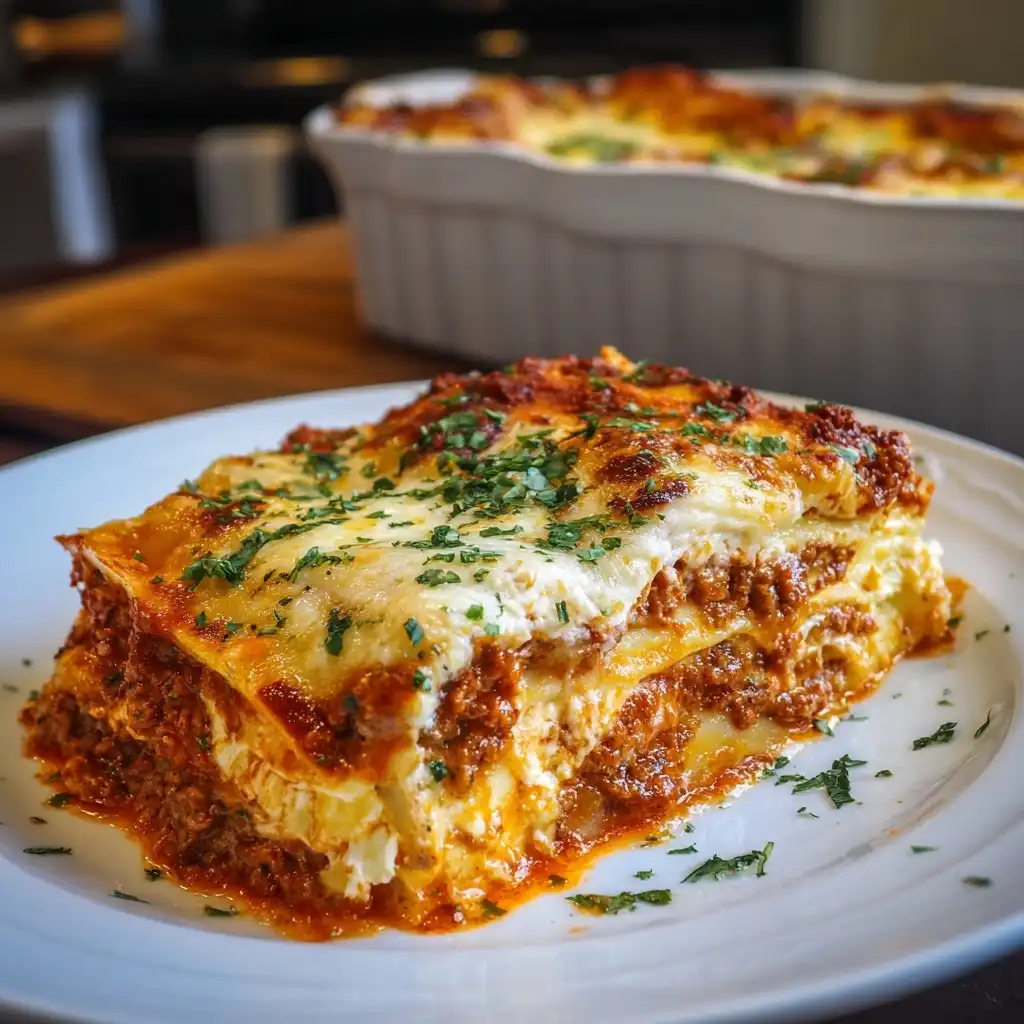
Baked Cream Cheese Lasagna is a rich, decadent, and comforting twist on the classic Italian-American favorite—reimagined with an indulgent, velvety cream cheese layer that transforms every bite into a luscious, creamy experience. Unlike traditional ricotta-based lasagnas, this version leverages the tangy sweetness, luxurious mouthfeel, and superior binding properties of full-fat cream cheese to create a cohesive, sliceable, oven-baked masterpiece that holds its shape beautifully while delivering deep layers of savory, cheesy, herbaceous, and slightly tangy flavor. Whether served at holiday feasts, potlucks, weeknight family dinners, or as a showstopping centerpiece for dinner parties, this recipe bridges the gap between nostalgic comfort food and modern culinary creativity—offering both familiarity and delightful surprise in every forkful.
The History
While lasagna itself traces its origins back to medieval Italy—with early versions appearing in 13th-century texts like the Liber de Coquina featuring layered pasta, spices, and cheeses—the modern American baked lasagna evolved significantly throughout the 20th century. As Italian immigrants adapted recipes using locally available ingredients (like mozzarella, cottage cheese, and later, ricotta), home cooks began experimenting with substitutions and enhancements. Cream cheese—first commercially produced by William A. Lawrence in Chester, New York in 1872—gained widespread popularity in the U.S. during the mid-1900s, particularly through iconic brands like Philadelphia. Its use in savory applications remained relatively niche until the 1970s–1990s, when regional cookbooks and church-published community recipe collections began documenting “cream cheese lasagna” variations—often as a Midwestern or Southern adaptation meant to add richness, prevent dryness, and improve structural integrity. By the 2010s, food bloggers and viral social media platforms amplified the trend, showcasing ultra-creamy, no-boil, make-ahead versions that prioritized texture, visual appeal, and crowd-pleasing reliability. Today, Baked Cream Cheese Lasagna stands as a beloved hybrid: honoring Italian layering traditions while embracing American innovation, pantry accessibility, and an unapologetically luxurious palate.
Ingredients Breakdown
Every element in this recipe serves a precise functional and flavor purpose—no ingredient is arbitrary. Below is a detailed analysis of each component’s role:
- Lasagna Noodles (oven-ready/no-boil): Specially formulated with pre-gelatinized starch to absorb liquid directly in the oven; eliminates prep time and ensures even cooking without mushiness. Traditional boiled noodles can be used—but require thorough draining and patting dry to avoid excess moisture.
- Full-Fat Cream Cheese (brick-style, not whipped): The star ingredient—must be at room temperature for seamless blending. Provides body, fat-soluble richness, mild acidity, and emulsifying power that binds the filling and prevents separation. Low-fat or neufchâtel versions yield a grainy, watery, or crumbly texture and are strongly discouraged.
- Ricotta Cheese (whole-milk, well-drained): Adds lightness, subtle sweetness, and protein structure. Draining for at least 30 minutes (in cheesecloth or fine-mesh strainer) is non-negotiable—excess whey causes sogginess and inhibits browning.
- Mozzarella (low-moisture, whole-milk, shredded): Melts smoothly, forms stretchy strands, and contributes essential browning via Maillard reaction. Fresh mozzarella (packed in water) is too wet and lacks browning capacity—reserve it only for garnish post-bake.
- Parmigiano-Reggiano (finely grated, not pre-grated): Delivers intense umami, nuttiness, and salt balance. Pre-grated versions contain anti-caking agents (e.g., cellulose) that impede melting and create greasy pools.
- Whole Eggs: Act as thermal binders—coagulating during baking to stabilize the creamy layers and ensure clean, firm slices.
- Fresh Garlic & Onion (minced, not powdered): Provide aromatic depth and pungent complexity that raw powders cannot replicate. Sautéing briefly in olive oil before mixing enhances sweetness and removes harsh edges.
- Fresh Basil & Oregano (not dried, unless specified): Bright, floral, and peppery notes that cut through richness. Dried herbs are acceptable in the meat sauce but should never replace fresh in the cheese mixture—they lack volatile oils and taste dusty or medicinal.
- San Marzano–Style Crushed Tomatoes (D.O.P.-certified preferred): Naturally low in acidity, high in sweetness and viscosity—ideal for building layered flavor without overwhelming tang. Avoid tomato puree or paste-heavy sauces unless balanced with grated carrot or a pinch of sugar.
- Olive Oil (extra-virgin, for finishing): Drizzled just before serving, it adds fruitiness, sheen, and aromatic lift—never added to the bake itself (it smokes at high temps).
Step-by-Step Recipe
- Preheat & Prep: Position oven rack to center position. Preheat oven to 375°F (190°C). Lightly grease a 9×13-inch glass or ceramic baking dish (not metal—metal conducts heat too aggressively and may cause uneven browning or scorching on edges).
- Prepare Meat Sauce (if using): In a large Dutch oven or heavy-bottomed pot, heat 2 tbsp olive oil over medium heat. Add 1 finely diced yellow onion and 4 minced garlic cloves; sauté 4–5 minutes until translucent and fragrant. Add 1 lb 85/15 ground beef (or blend of beef + Italian sausage), breaking up with a wooden spoon. Cook until no pink remains (~8 min), then drain excess fat thoroughly (leave ~1 tbsp for flavor). Stir in 1 (28 oz) can San Marzano-style crushed tomatoes, 2 tbsp tomato paste, 1 tsp dried oregano, 1 tsp dried basil, ½ tsp red pepper flakes (optional), 1 tsp kosher salt, and ½ tsp black pepper. Simmer uncovered for 25–30 minutes, stirring occasionally, until thickened and deep ruby-red. Cool completely (critical—warm sauce melts cream cheese prematurely).
- Drain Ricotta: Line a fine-mesh strainer with two layers of cheesecloth or a coffee filter; place over a bowl. Add 15 oz whole-milk ricotta and refrigerate uncovered for ≥30 minutes (up to 2 hours). Discard collected whey.
- Make Cream Cheese Filling: In a large mixing bowl, beat 16 oz full-fat brick cream cheese (room temp) with an electric hand mixer on medium for 90 seconds until smooth and glossy. Scrape bowl. Add drained ricotta, 1 cup grated Parmigiano-Reggiano, 2 large eggs, ¼ cup chopped fresh basil, 2 tbsp chopped fresh oregano, 1 tsp kosher salt, and ½ tsp freshly ground black pepper. Beat on low 30 sec, then medium 60 sec—just until homogenous (do NOT overmix or incorporate air; this causes bubbling and cracking). Fold in 2 cups shredded low-moisture mozzarella by hand with a spatula—gentle folding preserves meltability.
- Assemble Lasagna: Spread ¾ cup cooled meat sauce evenly across bottom of prepared dish. Layer 4 no-boil lasagna noodles (slightly overlapping if needed—no gaps). Top with ⅓ of cream cheese mixture (approx. 2 cups), spreading gently to edges with offset spatula. Spoon 1 cup meat sauce over cheese, smoothing lightly. Repeat layers twice more: noodles → cheese → sauce. Final layer: 4 noodles → remaining sauce (≈1 cup) → remaining 1 cup mozzarella → final ¼ cup Parmigiano-Reggiano. *Optional but recommended:* Tuck 4–6 fresh basil leaves beneath top cheese layer for aromatic steam infusion.
- Bake Covered: Cover tightly with double-layered aluminum foil (press edges to seal). Bake 45 minutes at 375°F.
- Bake Uncovered: Remove foil carefully (watch for steam). Increase heat to 400°F. Bake uncovered 15–20 minutes until top is deeply golden, edges bubble vigorously, and internal temperature reaches 165°F (measured at center with instant-read thermometer).
- Rest Imperative: Remove from oven and let stand, undisturbed, for **full 45 minutes** on a wire rack. This allows starches to set, proteins to relax, and residual heat to finish cooking—ensuring clean, non-slumping slices. Cutting earlier = soupy, separated layers.
- Finish & Serve: Just before serving, drizzle top with 1 tbsp extra-virgin olive oil and scatter 2 tbsp additional fresh basil ribbons. Cut with a sharp chef’s knife dipped in hot water between slices for pristine edges.
Tips
- Room-Temperature Rule: All dairy (cream cheese, ricotta, eggs, cheeses) must be fully room temperature (65–70°F) before mixing—cold ingredients cause lumps, poor emulsification, and uneven baking. Take them out 2 hours ahead; never microwave to “speed up.”
- No-Boil Noodle Hack: If noodles seem stiff or brittle, lay them flat on damp (not dripping) paper towels for 10 minutes before layering—this pre-hydrates gently without making them gummy.
- Sauce Consistency Check: Ideal meat sauce should mound slightly on a spoon—not run off. If too thin, simmer longer; if too thick, stir in 1–2 tbsp low-sodium broth or reserved tomato juice.
- Layering Precision: Use a ¼-cup measuring cup for cheese filling and ½-cup for sauce—consistency guarantees even distribution and prevents underfilled or overloaded zones.
- Prevent Browning Burn: If top browns too quickly during uncovered bake, tent loosely with new foil—but only after 10 minutes to allow initial caramelization.
- Cheese Grating Truth: Always grate your own cheese—pre-shredded contains potato starch or cellulose that repels moisture and creates oily puddles instead of melt.
- Altitude Adjustment: Above 3,000 ft? Add 1 extra tbsp ricotta and reduce uncovered bake time by 3–5 minutes—lower air pressure dries out faster.
- Visual Doneness Cues: Look for deep amber edges, visible cheese blistering, and a slight jiggle only in the very center (like set Jell-O)—not liquid sloshing.
- Cooling Surface Matters: Never rest on a cold countertop—use a wire rack to promote airflow underneath and prevent condensation buildup that softens the bottom crust.
- Leftover Magic: Extra cream cheese filling freezes beautifully for up to 3 months—thaw overnight in fridge and use in stuffed shells, manicotti, or veggie dips.
Variations and Customizations
This recipe is inherently adaptable—designed to accommodate dietary preferences, seasonal produce, pantry constraints, and global flavor inspirations—without sacrificing structural integrity or creamy excellence:
- Vegetarian Version: Replace meat sauce with roasted vegetable ragù—toss 1 diced eggplant, 1 zucchini, 1 red bell pepper, and 1 cup cremini mushrooms in 3 tbsp olive oil, 2 tsp smoked paprika, 1 tsp cumin, salt, and roast at 425°F for 30 minutes. Blend half with ¼ cup tomato paste and ½ cup vegetable broth for body; fold in whole roasted veggies.
- Spinach-Artichoke Fusion: Fold 10 oz thawed, squeezed-dry chopped spinach + 1 (14 oz) can quartered artichoke hearts (well-drained, chopped) + ¼ cup sun-dried tomatoes (oil-packed, finely minced) into cream cheese filling. Add ½ tsp lemon zest for brightness.
- Smoky Chipotle-Meatless: Use black bean & sweet potato sauce: purée 1 roasted sweet potato + 1 (15 oz) can black beans (rinsed) + 2 chipotles in adobo + 1 tsp cocoa powder + 1 tsp cinnamon. Simmer 15 min. Perfect with pepper jack in cheese layer.
- White Lasagna (Bianca): Skip tomato sauce entirely. Use béchamel enriched with roasted garlic and Gruyère, layered with cream cheese filling and sautéed wild mushrooms + caramelized leeks.
- Gluten-Free Adaptation: Substitute certified GF oven-ready lasagna noodles (Barilla or Tinkyada). Ensure all sauces and cheeses are GF-certified (some Parmesan contains wheat-based enzymes). Add 1 tsp xanthan gum to cream cheese filling for elasticity.
- Keto/Low-Carb Option: Replace noodles with thinly sliced zucchini or eggplant (salted, pressed 20 min, patted dry). Reduce ricotta to ½ cup and increase cream cheese to 24 oz. Add 2 tbsp almond flour to filling for binding.
- Mediterranean Twist: Layer with herbed feta cream cheese mix (sub ½ cup feta for part of Parm), Kalamata olives, roasted red peppers, and oregano-forward tomato sauce.
- Breakfast Lasagna: Swap meat sauce for sage-scented breakfast sausage gravy. Fill with cream cheese blend plus scrambled eggs, cheddar, and crispy pancetta. Bake at 350°F for 50 min covered / 15 min uncovered.
- Make-Ahead Mastery: Assemble up to 2 days ahead; cover tightly and refrigerate. Add 5–10 minutes to covered bake time. Or freeze unbaked (up to 3 months)—thaw overnight in fridge before baking (add 15–20 min total time).
- Mini Individual Servings: Use 8×8 dish or six 6-oz ramekins. Reduce covered bake to 35 min; uncovered to 12 min. Rest 25 min minimum.
Health Considerations and Nutritional Value
While Baked Cream Cheese Lasagna is undeniably indulgent, it offers meaningful nutritional benefits when prepared thoughtfully—and understanding its composition supports informed enjoyment:
- Protein Powerhouse: A standard 12-serving batch delivers ~22g protein per portion (primarily from dairy and meat), supporting muscle maintenance, satiety, and metabolic function. Eggs contribute complete amino acid profiles, including choline for brain health.
- Calcium & Vitamin D Synergy: Mozzarella and Parmigiano-Reggiano provide highly bioavailable calcium (≈30% DV/serving), while fortified ricotta or cream cheese may offer vitamin D—enhancing bone mineralization and immune modulation.
- Healthy Fat Profile: Full-fat dairy supplies conjugated linoleic acid (CLA) and butyrate—anti-inflammatory fatty acids linked to improved gut barrier function and reduced insulin resistance. Olive oil contributes monounsaturated fats and polyphenols.
- Tomato Lycopene Boost: Cooking tomatoes with fat (olive oil in sauce) increases lycopene bioavailability—a potent antioxidant associated with reduced risk of prostate cancer and cardiovascular protection.
- Considerations for Moderation: One serving contains ~480–580 kcal, 28–36g fat (16–20g saturated), and 650–850mg sodium. To align with heart-healthy guidelines (AHA), consider reducing sodium by using no-salt-added tomatoes, limiting added salt in sauce/filling, and boosting herbs/spices for flavor. Those managing cholesterol may opt for grass-fed beef (higher omega-3s) and supplement with soluble fiber (e.g., 1 tbsp ground flax in filling).
- Digestive Notes: Lactose content is moderate (cream cheese: ~1g/serving; ricotta: ~2g; mozzarella: ~0.5g)—many lactose-intolerant individuals tolerate aged cheeses better. For strict intolerance, use lactose-free ricotta and cream cheese (Green Valley brand), and omit fresh mozzarella (higher lactose).
- Glycemic Impact: Lasagna noodles contribute ~35g net carbs/serving. Pairing with a large side salad (vinaigrette-based) slows glucose absorption. GF or veggie-noodle versions lower glycemic load significantly.
- Pregnancy & Food Safety: Pasteurized cheeses are essential. Avoid raw sprouts or unpasteurized dairy additions. Ensure internal temperature reaches ≥165°F for 1+ minute to eliminate pathogens.
- Portion Mindfulness: Serve alongside steamed broccoli, garlicky sautéed greens, or a crisp arugula-lemon salad to increase volume, fiber, and micronutrient density without adding calories.
Ingredients
- 1 (9 oz) box oven-ready (no-boil) lasagna noodles (about 12 noodles)
- 16 oz full-fat brick cream cheese, softened to room temperature
- 15 oz whole-milk ricotta cheese, well-drained (see Tips)
- 3 cups shredded low-moisture mozzarella cheese, divided
- 1 cup finely grated Parmigiano-Reggiano cheese, divided
- 2 large eggs, room temperature
- ¼ cup fresh basil leaves, finely chopped (plus extra for garnish)
- 2 tbsp fresh oregano leaves, finely chopped
- 1 tsp kosher salt, plus more to taste
- ½ tsp freshly ground black pepper
- 2 tbsp extra-virgin olive oil (for sauce & finishing)
- 1 medium yellow onion, finely diced
- 4 garlic cloves, minced
- 1 lb 85/15 ground beef (or Italian sausage, or plant-based crumbles)
- 1 (28 oz) can San Marzano-style crushed tomatoes (preferably D.O.P.)
- 2 tbsp tomato paste
- 1 tsp dried oregano
- 1 tsp dried basil
- ½ tsp red pepper flakes (optional)
- 1 tsp sugar (optional, balances acidity)
Directions
- Preheat oven to 375°F (190°C). Grease a 9×13-inch glass or ceramic baking dish.
- In a large pot, heat olive oil over medium heat. Sauté onion and garlic until soft, ~5 minutes. Add ground meat; cook until browned, breaking apart. Drain excess fat, leaving ~1 tbsp.
- Stir in crushed tomatoes, tomato paste, dried herbs, red pepper flakes, salt, pepper, and sugar (if using). Simmer uncovered 25–30 minutes until thickened. Cool completely.
- Line a strainer with cheesecloth; add ricotta. Refrigerate 30+ minutes. Discard whey.
- In a large bowl, beat cream cheese with hand mixer until smooth (~90 sec). Add drained ricotta, 1 cup Parmigiano-Reggiano, eggs, fresh herbs, salt, and pepper. Mix on low, then medium—just until blended. Fold in 2 cups mozzarella.
- Spread ¾ cup cooled sauce in bottom of dish. Layer 4 noodles. Spread ⅓ cheese mixture (~2 cups) evenly. Top with 1 cup sauce. Repeat layers twice.
- Top with final 4 noodles, remaining sauce, remaining 1 cup mozzarella, and remaining ¼ cup Parmigiano-Reggiano.
- Cover tightly with double-layer foil. Bake 45 minutes.
- Remove foil. Increase oven to 400°F. Bake uncovered 15–20 minutes until golden and bubbling.
- Let rest 45 minutes. Drizzle with olive oil, garnish with fresh basil. Slice and serve.
FAQ
- Can I use regular boiled lasagna noodles?
- Yes—but they must be cooked to *al dente*, thoroughly drained, rinsed under cold water, and patted completely dry. Excess moisture will dilute the cream cheese filling and cause slumping. No-boil noodles are strongly recommended for foolproof results.
- Why did my lasagna turn out watery?
- Most commonly due to undrained ricotta, warm sauce layered onto cold cheese, underbaked noodles, or skipping the mandatory 45-minute rest. Also check for over-saucing—stick to the specified amounts and ensure sauce is thick before cooling.
- Can I prepare this the day before?
- Absolutely. Assemble completely, cover tightly with plastic wrap + foil, and refrigerate up to 48 hours. Add 5–10 minutes to the initial covered bake time. Do not add the final cheese topping until just before baking if refrigerating >12 hours.
- Is there a way to make it lighter without sacrificing texture?
- You may substitute 8 oz of the cream cheese with 8 oz full-fat Greek yogurt (strained overnight) for tang and protein—but retain 8 oz cream cheese for structure. Never replace all cream cheese—it’s irreplaceable for binding and richness.
- My cream cheese filling was lumpy. What went wrong?
- Cold cream cheese or insufficient beating time. Let it sit at room temperature for 2 hours minimum. Beat alone first until silky, then gradually incorporate other ingredients. A food processor yields smoother results than a hand mixer for stubborn batches.
- Can I freeze baked cream cheese lasagna?
- Yes—cool completely, wrap in parchment + foil, and freeze up to 3 months. Thaw overnight in fridge. Reheat covered at 350°F for 40 minutes, then uncovered at 375°F for 15 minutes until hot throughout (165°F internal).
- What’s the best cheese substitute for someone allergic to cow’s milk?
- For true dairy-free: use cashew cream cheese (soaked, blended, strained cashews + lemon + salt) and vegan mozzarella shreds (Miyoko’s or Violife). Note texture and browning will differ—add 1 tsp nutritional yeast to filling for umami depth.
- Why do I need to rest it so long?
- Resting allows starches in the noodles to fully hydrate and gelatinize, proteins in eggs and dairy to fully coagulate, and internal steam to redistribute. Cutting too soon breaks these bonds—resulting in soupy, unstructured layers.
- Can I add vegetables directly to the cheese layer?
- Yes—if finely diced and pre-cooked (e.g., sautéed spinach, roasted butternut squash, caramelized onions). Raw or watery veggies (zucchini, tomato) will weep and destabilize the filling. Always squeeze dry thoroughly.
- What wine pairs best with this dish?
- A medium-bodied Chianti Classico or Barbera d’Asti complements the richness and acidity. For white lovers, try an oak-aged Viognier or fuller Pinot Gris. Non-alcoholic: sparkling apple cider with rosemary sprig.
Summary
Baked Cream Cheese Lasagna redefines comfort food with its luxuriously creamy, perfectly structured layers—anchored by room-temperature full-fat cream cheese, meticulously drained ricotta, and slow-simmered, deeply flavored sauce—all built on reliable no-boil noodles and crowned with golden, blistered mozzarella and nutty Parmigiano-Reggiano.
It’s a masterclass in balance: rich yet bright, hearty yet harmonious, traditional yet boldly innovative—requiring patience (especially that sacred 45-minute rest), rewarding precision, and delivering unforgettable, sliceable satisfaction every single time.