Introduction
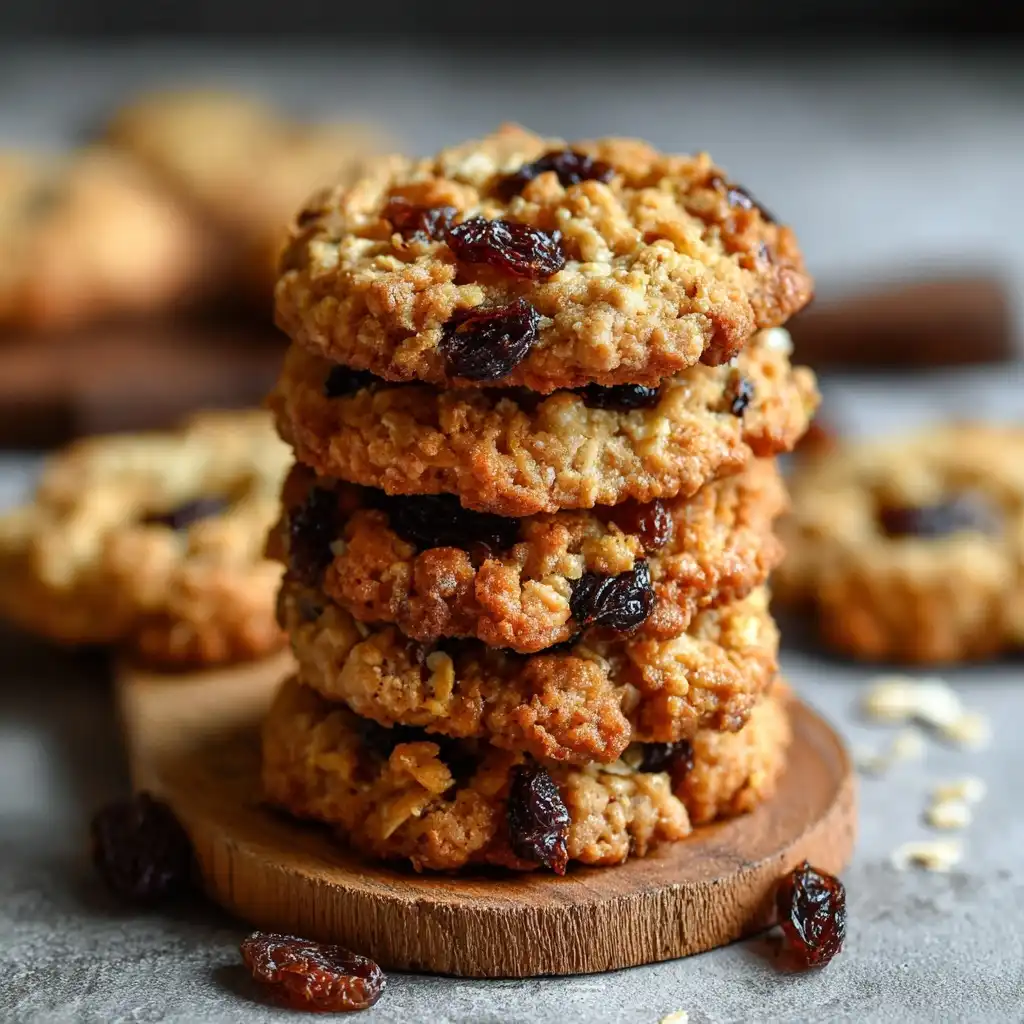
Oatmeal raisin cookies are a beloved classic—a warm, chewy, wholesome treat that bridges comfort and nutrition with every bite. Unlike their chocolate chip counterparts, these cookies offer a more nuanced flavor profile: earthy oats, plump sweet-tart raisins, warm spices, and just the right amount of buttery richness. They evoke nostalgia—baking with grandparents, school lunchbox staples, holiday cookie trays—but also hold up beautifully to modern culinary innovation: gluten-free adaptations, vegan swaps, protein-boosted versions, and even savory-sweet reinterpretations. Whether you’re seeking a satisfying snack, a post-workout energy boost, or a crowd-pleasing dessert that feels both indulgent and virtuous, oatmeal raisin cookies deliver with timeless appeal and remarkable versatility.
The History
The origins of oatmeal raisin cookies trace back to the early 20th century in the United States, emerging from the convergence of evolving pantry staples and home economics movements. While oats had long been consumed as porridge—especially in Scotland and Northern Europe—their incorporation into baked goods gained momentum after the 1877 invention of rolled oats by Ferdinand Schumacher’s German Mills American Oatmeal Company (later part of Quaker Oats). By the 1910s and 1920s, home economists and women’s magazines began publishing recipes featuring oats as a binding, textural, and economical ingredient—particularly during times of scarcity like World War I and the Great Depression, when flour was rationed and oats offered affordable bulk and satiety.
The raisin addition likely evolved from traditional British “oat cakes” and Scottish “oat biscuits,” which sometimes included dried fruit for natural sweetness and preservation. However, the modern oatmeal raisin cookie as we recognize it—with brown sugar, cinnamon, butter, eggs, and plump raisins—was codified in the 1930s–40s. The 1936 edition of The Joy of Cooking included an early version, and Quaker Oats’ promotional cookbooks throughout the 1940s popularized standardized methods, cementing the cookie’s place in American baking canon. Interestingly, oatmeal raisin cookies were officially designated the state cookie of New Jersey in 2002—a nod to the state’s historical ties to oat cultivation and food innovation. Over decades, they’ve endured not just as a nostalgic favorite but as a canvas for dietary evolution—from low-sugar diabetic-friendly iterations to keto-approved almond-flour hybrids—proving their cultural staying power isn’t accidental, but deeply rooted in adaptability, accessibility, and soul-soothing simplicity.
Ingredients Breakdown
Every exceptional oatmeal raisin cookie begins with intentionality—not just measurements, but understanding *why* each ingredient matters:
- Old-Fashioned Rolled Oats (not instant or quick-cooking): The backbone of texture and heartiness. Their coarse, flat structure absorbs moisture slowly, yielding chewiness without gumminess. Steel-cut oats are too dense and won’t soften properly; instant oats disintegrate and create paste-like cookies. Opt for certified gluten-free oats if needed—cross-contamination is common in standard brands.
- Raisins (golden or dark): Provide bursts of concentrated sweetness and acidity. Golden raisins (treated with sulfur dioxide and oil) are plumper and milder; dark raisins offer deeper molasses notes. Soaking them for 10–15 minutes in hot water, apple juice, rum, or even strong brewed tea plumps them further, prevents burning, and infuses subtle complexity. Always drain well before folding in.
- Brown Sugar (packed): Non-negotiable for moisture, chew, and caramelized depth. Its molasses content adds acidity (which activates baking soda), enhances browning via Maillard reactions, and contributes hygroscopic properties—meaning it attracts and retains water, keeping cookies soft for days. Dark brown sugar intensifies flavor; light brown offers subtlety.
- Granulated Sugar: Balances brown sugar’s intensity, aids in crisp edge formation, and contributes to structural stability and fine crumb. Too little leads to overly soft, spread-prone cookies; too much yields brittle, overly sweet results.
- Unsalted Butter (softened, not melted): Provides richness, tenderness, and leavening support (air pockets formed during creaming expand in heat). Salted butter introduces inconsistent sodium levels—critical when salt is separately measured for flavor control. For vegan versions, high-fat plant-based butters (e.g., Miyoko’s or Naturli’) work best—avoid coconut oil alone, as it lacks emulsifying proteins and causes greasiness.
- Eggs (large, room temperature): Act as binders, emulsifiers, and leaveners. The yolk adds fat and richness; the white contributes structure and slight lift. Cold eggs can cause batter to seize; room-temp ensures uniform incorporation. Flax or chia “eggs” (1 tbsp ground seed + 2.5 tbsp water per egg) work for vegan batches but yield denser, cakier textures.
- Vanilla Extract (pure, not imitation): Elevates all other flavors with its complex phenolic compounds. Alcohol-based vanilla carries aromatics more effectively than glycerin-based alternatives. For depth, add ¼ tsp of vanilla bean paste or scraped seeds.
- Leavening Agents (baking soda + optional baking powder): Baking soda (sodium bicarbonate) reacts with brown sugar’s acidity to produce carbon dioxide—essential for lift and spread control. Baking powder (a double-acting blend) adds insurance for extra height and tenderness, especially in high-oat, low-gluten formulations. Never substitute one for the other without recalculating acid balance.
- Spices (cinnamon, nutmeg, optional cloves or ginger): Warmth without heat. Cinnamon’s cinnamaldehyde pairs perfectly with oats’ nuttiness and raisins’ fruity notes. Freshly grated nutmeg adds floral brightness; pre-ground loses potency within weeks. Toast whole spices lightly in a dry pan before grinding for maximum aroma.
- Salt (fine sea or kosher): Not just for seasoning—it sharpens sweetness, balances bitterness, and strengthens gluten networks (even minimally in low-flour cookies). Under-salting flattens flavor; over-salting overwhelms. Use weight-based measurement for consistency.
- All-Purpose Flour (or whole wheat pastry flour for tenderness): Provides minimal structure—enough to hold shape without toughness. Too much flour = cakey or dry cookies; too little = excessive spread. Spoon-and-level method is essential; scooping compacts flour and adds up to 25% excess. For gluten-free versions, a 1:1 blend with xanthan gum (e.g., Bob’s Red Mill) works reliably—never sub in single flours like almond or coconut alone.
- Optional Add-Ins: Chopped walnuts or pecans (toasted for depth), crystallized ginger (for zing), orange zest (bright citrus lift), or a tablespoon of molasses (for robustness and moisture retention).
Step-by-Step Recipe
- Prep & Preheat: Position oven racks in upper and lower thirds. Preheat oven to 350°F (177°C). Line two large baking sheets with parchment paper or silicone baking mats—never grease directly, as excess fat causes uncontrolled spread.
- Soak Raisins: Place 1 cup raisins in a heatproof bowl. Cover with ½ cup boiling water (or apple cider, rum, or strong Earl Grey tea). Let steep 10–15 minutes. Drain thoroughly in a fine-mesh sieve, pressing gently to remove excess liquid. Set aside to air-dry for 5 minutes—this prevents clumping and steaming during baking.
- Cream Butter & Sugars: In a large bowl, beat 1 cup (227g) unsalted butter, softened to 65–68°F, with 1 cup (215g) packed light brown sugar and ½ cup (100g) granulated sugar using a stand mixer fitted with paddle attachment (or hand mixer on medium-high) for 3–4 minutes until pale, fluffy, and no graininess remains. Scrape bowl frequently. This step incorporates air critical for texture.
- Add Wet Ingredients: Beat in 2 large eggs (room temperature), one at a time, mixing fully after each addition (about 30 seconds per egg). Then add 2 tsp pure vanilla extract and mix until combined. Batter will look glossy and slightly ribbony.
- Whisk Dry Ingredients: In a separate medium bowl, whisk together 1½ cups (190g) all-purpose flour, 1 tsp baking soda, ½ tsp baking powder, 1½ tsp ground cinnamon, ¼ tsp freshly grated nutmeg, 1 tsp fine sea salt, and a pinch of ground cloves (optional). Whisk for 30 seconds to fully aerate and evenly distribute leaveners and spices.
- Combine Dry & Wet: Gradually add dry mixture to wet mixture in three additions, mixing on low speed just until no dry streaks remain after each (approx. 10–15 seconds). Overmixing develops gluten and causes toughness—even in low-flour cookies.
- Fold in Oats & Raisins: Using a sturdy spatula, fold in 3 cups (270g) old-fashioned rolled oats and the drained raisins (plus any optional nuts or add-ins) until uniformly distributed. Batter will be thick, sticky, and shaggy—not smooth.
- Chill Dough (Non-Negotiable): Cover bowl tightly and refrigerate for at least 60 minutes, ideally 2–4 hours (or up to 72 hours). Chilling solidifies butter, preventing overspread; hydrates oats for better texture; and deepens flavor through slow starch-sugar interactions. Skipping this step guarantees thin, greasy, lackluster cookies.
- Portion & Bake: Scoop chilled dough using a #24 ice cream scoop (≈2 tbsp per cookie) onto prepared sheets, spacing 3 inches apart. Gently flatten tops slightly with damp fingers or the bottom of a glass for even baking. Bake 12–15 minutes, rotating pans top-to-bottom and front-to-back halfway through, until edges are golden brown and set, centers look soft but not raw, and cookies appear puffed and slightly cracked on top. They will firm up as they cool.
- Cool Completely: Let cookies cool on baking sheets for 5 minutes—this sets their structure. Then transfer to wire racks to cool completely (≈30 minutes). This prevents steam from softening the base and ensures ideal chewiness.
Tips
- Temperature is Everything: Butter must be cool-room-temp—not melty or cold. Test by pressing a fingertip: it should leave a slight indentation without sliding. Eggs and even milk (if used) should be room temp to prevent seizing.
- Weigh Your Ingredients: Volume measurements for flour and oats vary wildly. A kitchen scale eliminates guesswork—especially critical for consistent spread and texture.
- Don’t Skip the Chill: Even 30 minutes helps, but 2+ hours transforms the cookie: richer flavor, chewier texture, perfect shape retention. For make-ahead, freeze scooped dough balls for up to 3 months—bake straight from frozen, adding 1–2 minutes.
- Rotate & Monitor: Ovens have hot spots. Rotating pans ensures even browning. Use visual cues—not just timer—as ovens vary. Cookies bake quickly at the end; check at 11 minutes.
- Underbake Slightly: Remove when centers look soft and just-set. They carryover-cook on the hot sheet. Overbaked cookies become dry and crumbly within hours.
- Parchment > Grease: Greased sheets cause unpredictable spreading and uneven browning. Parchment provides nonstick reliability and easy cleanup.
- Toast Your Nuts: If adding walnuts or pecans, toast at 350°F for 8–10 minutes until fragrant. Cool completely before chopping and folding in—warm nuts melt butter in dough.
- Revive Stale Cookies: Place in a sealed container with a slice of apple or bread overnight—the ethylene gas and ambient moisture rehydrates them beautifully.
- Scale Up Confidently: This recipe doubles seamlessly. Just ensure your mixer bowl isn’t overloaded—mix in batches if needed.
- Keep a Baking Journal: Note oven temp variance, altitude adjustments, ingredient brands, and chilling time. Small tweaks yield big improvements over time.
Variations and Customizations
Oatmeal raisin cookies are gloriously adaptable—here’s how to tailor them to dietary needs, flavor preferences, and seasonal inspiration:
- Vegan Version: Replace butter with 1 cup (227g) high-fat vegan butter (e.g., Melt or Forager); use flax eggs (2 tbsp ground flax + 5 tbsp water, rested 10 min); swap raisins for certified vegan dried fruit (some contain non-vegan glycerin); ensure oats and sugars are vegan-certified. Add 1 tbsp apple sauce for moisture retention.
- Gluten-Free: Substitute 1:1 gluten-free all-purpose flour blend *with xanthan gum included*. Add ½ tsp additional xanthan gum if blend doesn’t contain it. Use certified GF oats. Increase chill time to 3 hours for optimal structure.
- Lower-Sugar / Diabetic-Friendly: Reduce total sugar by ¼ cup, replace ¼ cup brown sugar with monk fruit–erythritol blend (like Lakanto Golden), and add 1 tbsp unsweetened applesauce. Use low-glycemic dried figs or chopped dates instead of raisins. Note: texture will be denser.
- Protein-Packed: Add 2–3 tbsp unflavored collagen peptides or whey protein isolate (vanilla works too) to dry ingredients. Boost with ¼ cup hemp hearts or pumpkin seeds. Reduce oats by 2 tbsp to compensate.
- Keto/Low-Carb: Replace oats with 1½ cups (120g) blanched almond flour + ½ cup (40g) golden flax meal; use erythritol + monk fruit sweetener blend (1:1 cup-for-cup); substitute raisins with ½ cup chopped sugar-free dried cranberries (check labels!) or toasted pecans. Expect softer, more delicate cookies—chill dough overnight.
- Spiced Chai Variation: Add 1 tsp ground cardamom, ½ tsp ground ginger, ¼ tsp black pepper, and 1/8 tsp ground cloves to dry ingredients. Steep raisins in strong chai tea instead of water.
- Lemon-Raisin Brightness: Add 1 tbsp finely grated lemon zest + 1 tsp lemon extract to wet ingredients. Soak raisins in lemon juice + zest-infused water. Optional: drizzle cooled cookies with lemon glaze (powdered sugar + lemon juice).
- Maple-Oat Crunch: Replace ¼ cup brown sugar with pure maple syrup (reduce another liquid by 1 tbsp), add 1 tsp maple extract, and fold in ½ cup maple-glazed pepitas.
- Overnight Oatmeal Cookie Bars: Press dough into a parchment-lined 9×13” pan. Bake at 325°F for 25–30 minutes until edges pull away. Cool completely before cutting into squares—dense, fudgy, and perfect for meal prep.
- Mini Cookie Bites: Scoop with a #60 scoop (1 tsp) and bake 8–10 minutes. Ideal for parties, lunchboxes, or portion control.
Health Considerations and Nutritional Value
A standard oatmeal raisin cookie (approx. 3″ diameter, ~30g) made with this recipe contains roughly:
- Calories: 120–140 kcal
- Total Fat: 6–7g (mostly unsaturated from oats and nuts)
- Carbohydrates: 18–20g (including 1–1.5g fiber from oats and raisins)
- Sugars: 10–12g (naturally occurring from raisins + added sugars)
- Protein: 2–3g
- Sodium: 110–130mg
Nutritional Highlights:
- Beta-Glucan Powerhouse: Oats contain soluble fiber beta-glucan, clinically proven to reduce LDL cholesterol, stabilize blood sugar, and promote satiety. One serving delivers ~0.75g—aim for 3g daily for cardiovascular benefits.
- Antioxidant-Rich Raisins: Concentrated polyphenols (e.g., resveratrol, quercetin) combat oxidative stress. Raisins also provide potassium (supports blood pressure) and boron (bone health).
- Whole Grain Goodness: Certified whole grain oats contribute B vitamins (especially B1/thiamine for energy metabolism) and magnesium (muscle/nerve function).
- Considerations: While nutrient-dense for a cookie, added sugars and saturated fat (from butter) warrant mindful portioning. Those managing diabetes should monitor carb counts and pair with protein/fat (e.g., almond butter dip). Gluten-sensitive individuals must verify oat certification. High-fiber content may cause bloating in those unaccustomed—start with half a cookie.
- Functional Upgrades: Boost nutrition further by adding ground flaxseed (omega-3s), chia seeds (fiber + calcium), or mashed banana (potassium + natural sweetness, reducing added sugar by ¼ cup).
Remember: Health isn’t binary. These cookies offer functional nutrients *within* a treat context—making them a far more nourishing choice than many ultra-processed snacks, especially when made with whole-food, minimally refined ingredients.
Ingredients
- 1 cup (227g) unsalted butter, softened to 65–68°F
- 1 cup (215g) packed light brown sugar
- ½ cup (100g) granulated sugar
- 2 large eggs, room temperature
- 2 teaspoons pure vanilla extract
- 1½ cups (190g) all-purpose flour (spooned & leveled)
- 1 teaspoon baking soda
- ½ teaspoon baking powder
- 1½ teaspoons ground cinnamon
- ¼ teaspoon freshly grated nutmeg
- 1 teaspoon fine sea salt
- 3 cups (270g) old-fashioned rolled oats (certified gluten-free if needed)
- 1 cup (165g) raisins (golden or dark), soaked & drained
- (Optional) ½ cup (60g) chopped toasted walnuts or pecans
Directions
- Preheat oven to 350°F (177°C). Line two large baking sheets with parchment paper or silicone baking mats.
- Place raisins in a heatproof bowl. Cover with ½ cup boiling water (or preferred soaking liquid). Steep 10–15 minutes. Drain thoroughly in a fine-mesh sieve, pressing gently. Spread on paper towel to air-dry 5 minutes.
- In a large bowl, beat butter, brown sugar, and granulated sugar with a stand mixer (paddle attachment) or hand mixer on medium-high for 3–4 minutes until light, fluffy, and no sugar grit remains. Scrape bowl.
- Beat in eggs one at a time, fully incorporating each (≈30 sec). Add vanilla; mix until combined.
- In a medium bowl, whisk flour, baking soda, baking powder, cinnamon, nutmeg, and salt for 30 seconds until fully combined and aerated.
- Gradually add dry ingredients to wet in three parts, mixing on low speed just until no dry streaks remain after each addition (10–15 sec). Do not overmix.
- Fold in oats, soaked raisins, and optional nuts with a spatula until evenly distributed. Dough will be thick and shaggy.
- Cover bowl tightly and refrigerate dough for at least 60 minutes, ideally 2–4 hours (or up to 72 hours).
- Scoop chilled dough using a #24 ice cream scoop (≈2 tbsp) onto prepared sheets, 3 inches apart. Gently flatten tops slightly with damp fingers.
- Bake 12–15 minutes, rotating pans top-to-bottom and front-to-back halfway through, until edges are golden and set, centers look soft but not raw, and tops show fine cracks.
- Cool on baking sheets for 5 minutes, then transfer to wire racks to cool completely (≈30 minutes) before storing.
FAQ
- Why did my cookies spread too much?
- Most common causes: butter too warm, insufficient chilling, too much sugar, or under-measured flour. Ensure butter is cool-room-temp (65°F), chill dough ≥60 min, and weigh flour. Also check baking soda freshness—expired leavener fails to set structure.
- Can I use quick oats instead of old-fashioned?
- Not recommended. Quick oats absorb liquid too rapidly, resulting in dense, gummy, or crumbly cookies. Instant oats dissolve entirely. Stick with old-fashioned for ideal chew and structure.
- How do I store oatmeal raisin cookies?
- Cool completely, then store in an airtight container at room temperature for up to 1 week. For longer storage, freeze in a single layer in freezer bags for up to 3 months. Thaw at room temp—no need to reheat.
- Can I make these dairy-free?
- Absolutely. Use high-fat vegan butter (not coconut oil alone), flax eggs, and dairy-free chocolate chips if adding. Ensure raisins and oats are dairy-free (rare issue, but check labels).
- My cookies turned out cakey—what went wrong?
- Overmixing after adding flour develops gluten; using too much flour (scooping vs. spooning); expired baking powder (if used); or substituting eggs with too much binder (e.g., excess flax gel). Also, baking at too low a temperature slows set-time, encouraging rise over spread.
- Can I use honey or maple syrup instead of sugar?
- Not 1:1. Liquid sweeteners add moisture and acidity, altering chemistry. For best results, use tested low-sugar variations (see Variations section) or reduce granulated sugar by ¼ cup and add 1 tbsp maple syrup + 1 tsp extra flour.
- Do I need a mixer?
- No—but it ensures proper creaming. By hand, use a sturdy wooden spoon and vigorous, prolonged beating (5+ minutes) until mixture is pale and fluffy. It’s labor-intensive but possible.
- Can I add chocolate chips?
- Yes! Fold in ½–¾ cup semi-sweet or dark chocolate chips along with raisins. For balance, reduce raisins to ¾ cup. Mini chips distribute more evenly.
- Why soak raisins?
- Hydration prevents burning, ensures plumpness, improves texture distribution, and allows infusion of flavor from soaking liquid—transforming raisins from chewy interruptions to harmonious bursts.
- Are oatmeal raisin cookies healthier than chocolate chip?
- Generally, yes—higher in fiber and lower in saturated fat (depending on butter/nut ratios). But “healthier” depends on ingredients and portions. A homemade version beats most store-bought cookies, regardless of type.
Summary
Oatmeal raisin cookies are a masterclass in humble elegance—where pantry staples transform into chewy, spiced, deeply comforting treats rich in fiber, antioxidants, and nostalgic warmth.
With meticulous attention to ingredient quality, temperature control, proper chilling, and thoughtful customization, they evolve effortlessly from classic favorite to dietary ally—proving that wholesome and delicious are never mutually exclusive.