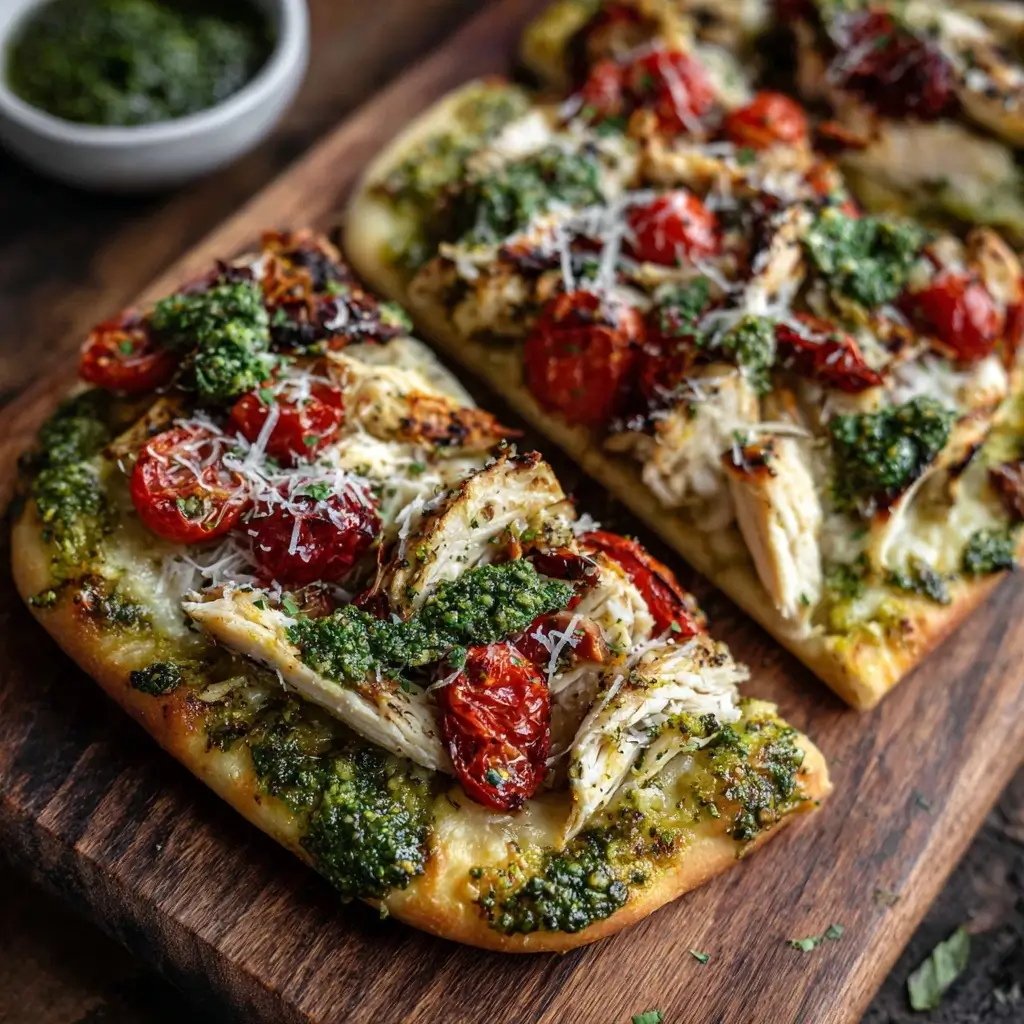
Pesto Chicken Flatbread: A Flavorful Fusion of Herbs, Chicken, and Crispy Flatbread
The History
The concept of flatbreads dates back thousands of years, with roots in ancient civilizations across the Mediterranean, Middle East, and South Asia. From naan in India to pita in the Levant, flatbreads have long served as versatile edible vessels for a variety of toppings. The modern fusion of Italian pesto and grilled chicken on flatbread, however, is a relatively recent culinary innovation, emerging from the global popularity of Mediterranean-inspired cuisine during the late 20th century.
Pesto, originating in Genoa, Italy, traditionally combines fresh basil, garlic, pine nuts, Parmesan cheese, and olive oil. Its vibrant green color and aromatic flavor made it an instant favorite worldwide. As chefs and home cooks began experimenting with new ways to use pesto beyond pasta, it found its way onto sandwiches, pizzas, and flatbreads. The idea of combining tender grilled chicken—rich in protein and mild in taste—with the bold herbal punch of pesto created a balanced and satisfying meal. Pesto chicken flatbread quickly gained traction in cafes, gourmet sandwich shops, and home kitchens, especially in North America and Western Europe, where fast yet flavorful meals are in high demand.
Today, this dish represents a delightful marriage of convenience and gourmet taste. It’s often featured on restaurant menus as a lunch special, food truck staple, or quick dinner option. Its adaptability has allowed it to evolve with dietary trends—offering gluten-free, vegetarian, and dairy-free versions—while still maintaining its core essence: a crisp or soft flatbread generously slathered with pesto, layered with juicy chicken, and enhanced with fresh vegetables and cheeses.
Ingredients Breakdown
Creating the perfect pesto chicken flatbread starts with selecting high-quality ingredients that complement each other in flavor, texture, and aroma. Below is a detailed breakdown of each component:
- Flatbread: Traditionally made from flour, water, yeast, salt, and sometimes olive oil, flatbread provides a sturdy yet tender base. Options include naan, lavash, pita, or store-bought pre-made flatbreads. For homemade versions, a simple dough using all-purpose or whole wheat flour works well. Gluten-free alternatives like almond flour or chickpea-based flatbreads are also excellent choices for those with dietary restrictions.
- Chicken: Boneless, skinless chicken breasts or thighs are ideal due to their tenderness and ability to absorb flavors. Marinating the chicken in olive oil, lemon juice, garlic, and herbs before grilling or pan-searing enhances juiciness and depth of taste. Pre-cooked rotisserie chicken can be used for quicker preparation.
- Pesto Sauce: Authentic basil pesto includes fresh basil leaves, garlic, pine nuts (or walnuts), grated Parmesan cheese, and extra virgin olive oil. Store-bought pesto is convenient, but homemade pesto offers superior freshness and allows customization—such as adding spinach for milder flavor or using nutritional yeast for a vegan version.
- Cheese: Mozzarella adds creaminess and melts beautifully when toasted. Feta, goat cheese, or shaved Parmesan offer tangy contrasts to the rich pesto. Dairy-free cheeses made from cashews or coconut oil work well for vegan adaptations.
- Vegetables: Sliced tomatoes, red onions, arugula, baby spinach, roasted red peppers, and avocado add freshness, color, and crunch. These not only enhance flavor but also contribute essential vitamins and fiber.
- Olive Oil and Seasonings: Extra virgin olive oil is brushed on the flatbread before cooking to achieve a golden crispness. Salt, black pepper, red pepper flakes, dried oregano, or a drizzle of balsamic glaze can elevate the final presentation.
Step-by-Step Recipe
- Prepare the Chicken: Begin by marinating 1 lb (450g) of boneless chicken breast in a mixture of 2 tbsp olive oil, 1 tbsp lemon juice, 2 minced garlic cloves, 1 tsp dried oregano, salt, and pepper. Let it sit for at least 30 minutes (or up to 4 hours in the refrigerator). Grill or pan-sear over medium-high heat for 5–6 minutes per side until fully cooked (internal temperature of 165°F/74°C). Allow to rest for 5 minutes, then slice thinly.
- Make or Prepare Pesto: If making homemade pesto, blend 2 cups fresh basil leaves, 1/3 cup pine nuts (toasted), 2 garlic cloves, 1/2 cup grated Parmesan, and 1/2 cup olive oil until smooth. Season with salt and pepper. Adjust consistency with more oil if needed. Alternatively, use 1/2 cup high-quality store-bought pesto.
- Preheat Cooking Surface: Heat a grill pan, skillet, or oven to 375°F (190°C). If using an oven, place a baking sheet inside to preheat for a crispier result.
- Assemble the Base: Lay out 4 flatbreads (about 8 inches each). Lightly brush both sides with olive oil. Spread 1–2 tablespoons of pesto evenly over each flatbread, leaving a small border for handling.
- Add Cheese: Sprinkle shredded mozzarella or crumbled feta over the pesto layer. This helps create a gooey, melty texture once heated.
- Layer the Chicken: Distribute the sliced grilled chicken evenly across the flatbreads, arranging it in a single layer for even coverage.
- Add Vegetables: Top with thin slices of tomato, red onion, roasted red peppers, and a handful of fresh arugula or spinach. For extra richness, add avocado slices just before serving to prevent browning.
- Cook the Flatbread: Place the assembled flatbreads on the preheated grill, skillet, or baking sheet. Cook for 3–4 minutes per side on the stovetop (covered for better melting), or bake in the oven for 8–10 minutes until edges are golden and cheese is bubbly.
- Final Touches: Remove from heat. Drizzle with additional pesto, a squeeze of lemon juice, or a swirl of balsamic glaze. Sprinkle with freshly cracked black pepper, red pepper flakes, or chopped fresh basil.
- Serve Immediately: Cut each flatbread into wedges using a pizza cutter or sharp knife. Serve warm with a side salad, roasted vegetables, or sweet potato fries.
Tips
- Don’t Overload the Flatbread: Too many toppings can make the flatbread soggy or difficult to eat. Stick to a balanced ratio of sauce, protein, cheese, and veggies.
- Use Fresh Basil for Pesto: Wilted or dry basil reduces the vibrancy of your pesto. Always use bright green, fragrant leaves for the best flavor.
- Toast Nuts Before Blending: Toasting pine nuts or walnuts before making pesto deepens their flavor and adds a nutty complexity.
- Prevent Sogginess: If preparing ahead, assemble flatbreads without wet ingredients (like tomatoes or greens) and add them just before cooking or serving.
- Grill Marks Add Appeal: For a professional touch, sear the chicken and flatbread on a ridged grill pan to get attractive char marks.
- Keep Chicken Juicy: Avoid overcooking the chicken. Use a meat thermometer and remove it from heat just before reaching 165°F as residual heat will continue cooking it.
- Warm Flatbreads First: Slightly warming the flatbread before spreading pesto makes it more pliable and improves texture.
- Double the Pesto: Make a large batch of pesto and freeze in ice cube trays for future use—perfect for quick meals later.
Variations and Customizations
The beauty of pesto chicken flatbread lies in its versatility. Here are numerous creative twists to suit different tastes and dietary needs:
- Vegan Version: Replace chicken with grilled tofu or tempeh. Use dairy-free pesto (without Parmesan) and vegan cheese. Nutritional yeast can mimic the umami of cheese.
- Gluten-Free Option: Use certified gluten-free flatbread or cauliflower crust. Ensure all sauces and seasonings are gluten-free as well.
- Low-Carb/Keto-Friendly: Substitute flatbread with low-carb tortillas or lettuce wraps. Increase healthy fats with avocado, olives, and extra olive oil.
- Mediterranean Twist: Add kalamata olives, sun-dried tomatoes, cucumber slices, and tzatziki drizzle for a Greek-inspired variation.
- Spicy Kick: Mix harissa paste or sriracha into the pesto, or top with pickled jalapeños and crushed red pepper flakes.
- Seafood Swap: Replace chicken with grilled shrimp or salmon for a luxurious seafood alternative.
- Breakfast Flatbread: Use scrambled eggs or fried egg instead of chicken, and add breakfast potatoes and cheese for a morning twist.
- Dessert Pesto? Not Exactly—But Try This: While savory pesto dominates, a sweet basil pesto with honey, almonds, and ricotta can be paired with grilled peaches or strawberries on flatbread for a unique dessert.
- Herb Variations: Experiment with cilantro, parsley, or arugula instead of basil for a different herbal profile.
- Nut Substitutions: Replace pine nuts with almonds, cashews, or pumpkin seeds for cost-effective or allergy-friendly options.
Health Considerations and Nutritional Value
Pesto chicken flatbread can be a nutritious meal when prepared with wholesome ingredients and portion control. Below is a general nutritional estimate per serving (1 flatbread, assuming 4 servings total):
| Nutrient | Amount (Approximate) |
|---|---|
| Calories | 450–600 kcal |
| Protein | 30–40g |
| Fat | 20–30g (mostly unsaturated from olive oil and nuts) |
| Saturated Fat | 5–8g |
| Carbohydrates | 35–50g |
| Fiber | 4–7g |
| Sugar | 4–6g (naturally occurring) |
| Sodium | 600–900mg (varies with cheese and store-bought ingredients) |
Health Benefits:
- Lean Protein: Chicken provides high-quality protein essential for muscle repair and satiety.
- Heart-Healthy Fats: Olive oil and nuts in pesto contain monounsaturated fats and antioxidants like vitamin E, which support cardiovascular health.
- Antioxidant-Rich Herbs: Basil contains flavonoids and volatile oils with anti-inflammatory properties.
- Fiber and Vitamins: Vegetables like spinach, tomatoes, and onions contribute fiber, vitamin C, potassium, and folate.
Considerations:
- Store-bought pesto and flatbreads may contain added sugars, preservatives, and excess sodium. Always check labels or opt for homemade versions.
- Cheese and olive oil, while healthy in moderation, are calorie-dense. Control portions to align with dietary goals.
- For lower sodium intake, use reduced-sodium cheese and make pesto with less added salt.
- Those with nut allergies should substitute pine nuts with seeds like sunflower or pumpkin.
Ingredients
- 4 flatbreads (naan, lavash, or homemade)
- 1 lb (450g) boneless, skinless chicken breast
- 2 tbsp olive oil (plus extra for brushing)
- 1 tbsp lemon juice
- 2 garlic cloves, minced
- 1 tsp dried oregano
- Salt and black pepper to taste
- 1/2 cup prepared basil pesto (homemade or store-bought)
- 1 cup shredded mozzarella or crumbled feta cheese
- 1 large tomato, thinly sliced
- 1/2 red onion, thinly sliced
- 1 cup fresh arugula or baby spinach
- 1 avocado, sliced (optional)
- Red pepper flakes (optional)
- Balsamic glaze or reduction (for drizzling)
- Fresh basil leaves (for garnish)
Directions
- In a bowl, combine olive oil, lemon juice, minced garlic, oregano, salt, and pepper. Add chicken breasts and coat evenly. Marinate for 30 minutes to 4 hours in the refrigerator.
- Heat a grill pan or skillet over medium-high heat. Cook chicken for 5–6 minutes per side until juices run clear and internal temperature reaches 165°F (74°C). Transfer to a cutting board, let rest 5 minutes, then slice thinly.
- If making homemade pesto: In a food processor, blend basil, pine nuts, garlic, Parmesan, and olive oil until smooth. Season with salt and pepper.
- Preheat oven to 375°F (190°C) or heat a skillet for stovetop cooking.
- Place flatbreads on a clean surface. Brush lightly with olive oil. Spread 1–2 tbsp pesto on each.
- Sprinkle cheese evenly over pesto layer.
- Arrange sliced chicken on top of the cheese.
- Add tomato, red onion, arugula, and avocado (if using).
- Transfer to oven or skillet. Cook for 8–10 minutes in oven or 3–4 minutes per side on stovetop until cheese is melted and flatbread is crispy.
- Remove from heat. Drizzle with balsamic glaze, sprinkle with red pepper flakes, and garnish with fresh basil.
- Cut into wedges and serve immediately.
FAQ
Can I make pesto chicken flatbread ahead of time?
Yes, you can prep components in advance—marinate the chicken, make pesto, and chop vegetables. However, assemble and cook just before serving to maintain texture and prevent sogginess.
Can I freeze pesto chicken flatbread?
It’s not recommended to freeze fully assembled flatbread as the texture deteriorates. However, pesto and cooked chicken can be frozen separately for up to 3 months.
Is pesto chicken flatbread healthy?
Yes, when made with lean chicken, whole grain flatbread, and fresh ingredients. It offers a good balance of protein, healthy fats, and fiber. Watch portion sizes and sodium content for optimal health benefits.
What can I use instead of chicken?
Try grilled shrimp, salmon, tofu, tempeh, chickpeas, or sautéed mushrooms for alternative proteins.
How do I store leftovers?
Store leftover flatbread in an airtight container in the refrigerator for up to 2 days. Reheat in a toaster oven or skillet to restore crispness. Do not microwave, as it can make the bread soggy.
Can I make this dairy-free?
Absolutely! Use dairy-free pesto (skip Parmesan or use nutritional yeast) and vegan cheese alternatives. Many store-bought vegan mozzarellas melt well when heated.
Why is my flatbread soggy?
This usually happens when too much sauce or wet ingredients (like tomatoes) are added. To prevent this, pat vegetables dry, use pesto sparingly, and toast the flatbread before assembling.
Summary
Pesto chicken flatbread combines the aromatic richness of basil pesto with tender grilled chicken, fresh vegetables, and melted cheese on a crispy flatbread base. A modern classic that’s easy to customize, nutritious, and perfect for any meal.