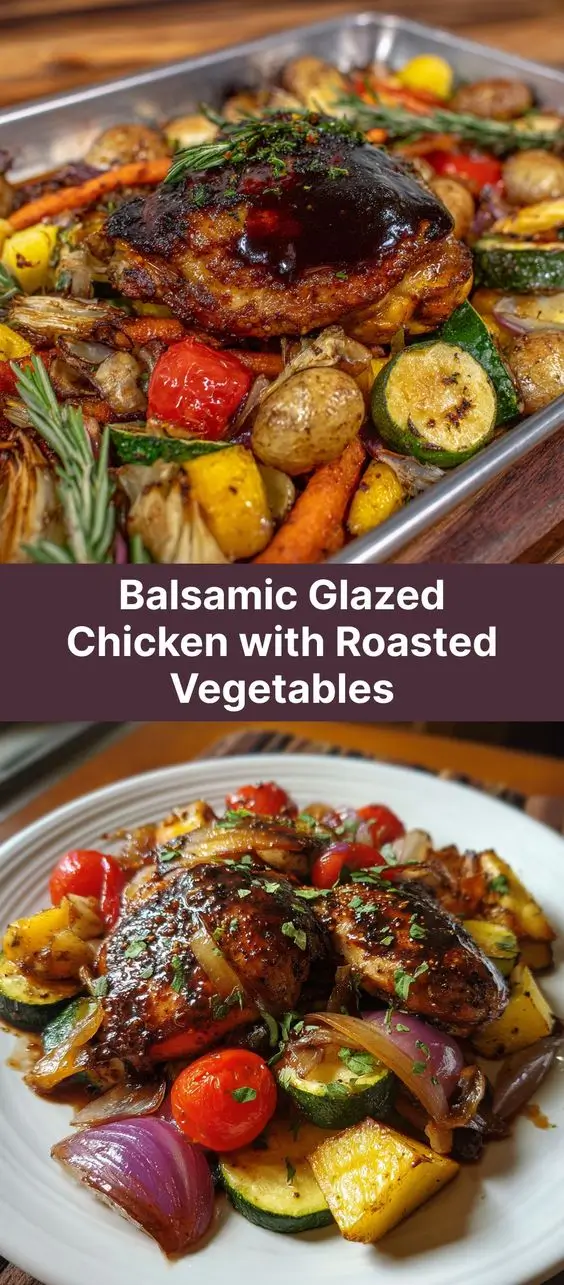
Balsamic Glazed Chicken with Roasted Vegetables
Balsamic Glazed Chicken with Roasted Vegetables is a harmonious blend of rich, tangy flavors and wholesome nutrition that makes it a go-to dish for both weeknight dinners and special occasions. This recipe combines tender chicken breasts marinated in a sweet-tart balsamic reduction with an array of colorful, oven-roasted vegetables. It’s not only visually appealing but also packed with flavor, nutrients, and ease of preparation. Whether you’re cooking for your family or hosting a dinner party, this meal delivers on every front—taste, presentation, and health.
The History
While there is no definitive historical origin for Balsamic Glazed Chicken with Roasted Vegetables as a singular dish, its components trace back to rich culinary traditions across Europe, particularly Italy and France. Balsamic vinegar itself has deep roots in Italian gastronomy, originating in Modena and Reggio Emilia during the Middle Ages. Traditionally made from grape must (crushed grape juice) aged for years in wooden barrels, authentic balsamic vinegar was once reserved for nobility and special celebrations.
The concept of glazing meats with reductions, including wine-based sauces, dates back to French haute cuisine, where chefs perfected techniques like reduction, deglazing, and emulsification. The pairing of poultry with roasted root vegetables became popular across Mediterranean regions due to their abundance, seasonal availability, and complementary textures and flavors. Over time, home cooks began blending these traditions—marinating chicken in balsamic vinegar and roasting it alongside seasonal produce—giving rise to modern interpretations like this one.
In recent decades, the fusion of Italian ingredients with American cooking styles has elevated dishes such as Balsamic Glazed Chicken into mainstream popularity. With growing interest in healthy, balanced meals, this recipe stands out as a nutritious, flavorful option embraced by food lovers and diet-conscious individuals alike.
Ingredients Breakdown
The magic of this dish lies in the careful balance of high-quality ingredients that contribute to its complex flavor profile and nutritional richness. Below is a detailed breakdown:
- Chicken Breasts: Boneless, skin-on or skinless chicken breasts are ideal for even cooking and maximum absorption of the balsamic marinade. They provide lean protein essential for muscle repair and satiety.
- Balsamic Vinegar: Aged balsamic vinegar offers a syrupy consistency and deep, fruity acidity. It forms the base of the glaze, contributing antioxidants like polyphenols and aiding digestion.
- Olive Oil: Extra virgin olive oil adds heart-healthy monounsaturated fats, enhances moisture, and helps caramelize the vegetables during roasting.
- Garlic: Freshly minced garlic brings pungency and depth, along with immune-boosting allicin compounds.
- Honey or Maple Syrup: Used to balance the tartness of balsamic vinegar, natural sweeteners add shine and help create a glossy glaze without refined sugars.
- Dijon Mustard: Adds complexity, slight heat, and emulsifying properties to the marinade, helping it cling to the chicken.
- Fresh Herbs: Rosemary, thyme, and oregano lend aromatic earthiness, enhancing the overall fragrance and providing anti-inflammatory benefits.
- Vegetables: A mix of bell peppers (red, yellow, orange), zucchini, red onion, cherry tomatoes, carrots, and broccoli florets ensures a rainbow of phytonutrients, fiber, and vibrant color.
- Salt & Black Pepper: Essential seasonings that enhance all other flavors without overpowering them.
- Optional Additions: Lemon zest, crushed red pepper flakes, capers, or olives can be added for extra brightness or spice.
<
Step-by-Step Recipe
- Prepare the Marinade: In a medium bowl, whisk together ⅓ cup balsamic vinegar, 3 tablespoons olive oil, 2 tablespoons honey (or maple syrup), 1 tablespoon Dijon mustard, 3 cloves minced garlic, 1 teaspoon dried thyme, 1 teaspoon dried rosemary, ½ teaspoon salt, and ¼ teaspoon black pepper. Set aside ¼ cup of this mixture for later use as a finishing glaze.
- Marinate the Chicken: Place 4 boneless chicken breasts in a large resealable bag or shallow dish. Pour the remaining marinade over the chicken, ensuring each piece is well-coated. Seal and refrigerate for at least 30 minutes, or ideally 2–4 hours for deeper flavor infusion.
- Preheat Oven: Preheat your oven to 400°F (200°C). Line a large baking sheet with parchment paper or lightly grease it with olive oil to prevent sticking.
- Prepare the Vegetables: Chop 2 bell peppers into 1-inch pieces, slice 1 medium zucchini and 1 red onion into rounds, halve 1 cup cherry tomatoes, peel and slice 2 carrots, and break 1 small head of broccoli into florets. Toss all vegetables in a large bowl with 2 tablespoons olive oil, 1 tablespoon balsamic vinegar, ½ teaspoon salt, ¼ teaspoon black pepper, and ½ teaspoon dried oregano.
- Arrange on Baking Sheet: Spread the vegetables evenly across one side of the prepared baking sheet. On the other side, place the marinated chicken breasts, shaking off excess marinade. Arrange them in a single layer with space between each piece for even roasting.
- Roast Initial Phase: Place the tray in the preheated oven and roast for 20 minutes. This allows the vegetables to begin caramelizing while the chicken starts cooking through.
- Glaze the Chicken: After 20 minutes, carefully remove the tray from the oven. Brush the reserved balsamic glaze generously over the top of each chicken breast. Flip the vegetables gently to ensure even browning.
- Continue Roasting: Return the pan to the oven and continue roasting for another 15–20 minutes, or until the chicken reaches an internal temperature of 165°F (74°C) and the vegetables are tender and slightly charred at the edges.
- Rest and Serve: Remove from the oven and let the chicken rest for 5 minutes. This allows juices to redistribute, resulting in more succulent meat. Optionally, sprinkle with fresh chopped parsley, a drizzle of extra virgin olive oil, or a few drops of balsamic reduction for garnish.
- Serve Hot: Divide the chicken and vegetables among plates and serve immediately. Pair with quinoa, brown rice, or crusty whole-grain bread if desired.
Tips
- Use High-Quality Balsamic Vinegar: Opt for traditionally aged balsamic vinegar for the best flavor. Avoid cheap versions filled with added sugar and corn syrup.
- Don’t Overcrowd the Pan: Ensure space between chicken and vegetables to allow proper air circulation and avoid steaming instead of roasting.
- Pound Chicken Evenly: If your chicken breasts vary in thickness, pound them to an even ¾-inch thickness using a meat mallet to ensure uniform cooking.
- Double the Glaze: Consider doubling the glaze recipe to have extra for drizzling at serving time—this elevates presentation and taste.
- Add Lemon Juice: A splash of fresh lemon juice in the glaze brightens the entire dish and cuts through richness.
- Check Doneness Accurately: Always use a meat thermometer to verify chicken doneness. Visual cues alone aren’t reliable.
- Rotate the Pan: Halfway through roasting, rotate the baking sheet in the oven (especially if your oven has hot spots) for even browning.
- Let It Rest: Never skip resting the chicken—it keeps it juicy and improves texture dramatically.
- Make Ahead Marinade: You can prepare the marinade up to 3 days in advance and store it in a sealed jar in the refrigerator.
- Batch Cook: This recipe scales beautifully. Double or triple it for meal prep; leftovers keep well for up to 4 days.
Variations and Customizations
This versatile recipe welcomes numerous adaptations based on dietary preferences, seasonal produce, or cultural twists:
- Protein Swaps: Substitute chicken with turkey cutlets, pork tenderloin, salmon fillets, or firm tofu for a plant-based version.
- Low-Sugar Option: Replace honey with monk fruit syrup or omit sweetener entirely for a keto-friendly alternative. The natural sugars in roasted vegetables will still provide some sweetness.
- Spicy Kick: Add ½ teaspoon crushed red pepper flakes or a dash of smoked paprika to the marinade for a warm, spicy undertone.
- Citrus Twist: Incorporate orange or blood orange juice into the glaze for a brighter, fruit-forward profile.
- Herb Variations: Use fresh tarragon, sage, or marjoram depending on availability and preference.
- Vegetable Rotations: Swap in sweet potatoes, Brussels sprouts, fennel, asparagus, or green beans depending on the season.
- Cheese Finish: Top with crumbled goat cheese, shaved Parmesan, or feta just before serving for creamy contrast.
- Asian Fusion: Replace balsamic with a mix of soy sauce, rice vinegar, ginger, and a touch of honey for an umami-rich twist.
- Mediterranean Style: Add Kalamata olives, sun-dried tomatoes, artichoke hearts, and oregano for a Greek-inspired rendition.
- Sheet Pan Upgrade: Include baby potatoes or whole shallots for a heartier meal-in-one format.
Health Considerations and Nutritional Value
Balsamic Glazed Chicken with Roasted Vegetables is not only delicious but also aligns well with various healthy eating patterns, including Mediterranean, heart-healthy, and balanced macronutrient diets.
Nutritional Highlights (per serving, approx. 1 chicken breast + 1.5 cups vegetables):
- Calories: ~380 kcal
- Protein: ~35g – supports muscle maintenance and satiety
- Fat: ~16g – primarily from heart-healthy olive oil (monounsaturated fats)
- Carbohydrates: ~22g – mostly complex carbs and fiber from vegetables
- Fiber: ~5g – promotes digestive health and stabilizes blood sugar
- Sugar: ~14g – naturally occurring from honey, balsamic, and vegetables (no refined sugars)
- Sodium: ~500mg – moderate; easily adjustable by reducing added salt
Key Health Benefits:
- Rich in Antioxidants: Balsamic vinegar contains polyphenols that combat oxidative stress and inflammation.
- Heart-Healthy Fats: Olive oil helps reduce LDL cholesterol and supports cardiovascular wellness.
- Blood Sugar Regulation: The combination of protein, fiber, and low-glycemic vegetables prevents spikes in glucose levels.
- Immune Support: Garlic, onions, and colorful vegetables provide vitamins C, A, and E, along with zinc and selenium precursors.
- Digestive Aid: Fermented balsamic vinegar may support gut microbiome balance.
- Weight Management Friendly: High protein and fiber content promote fullness and reduce overeating.
Considerations:
- Those managing diabetes should monitor honey usage or substitute with non-nutritive sweeteners.
- Individuals on low-sodium diets can reduce salt or use herbs and citrus for seasoning.
- Ensure gluten-free status by confirming Dijon mustard and balsamic vinegar are certified GF (some brands contain additives).
Ingredients
- 4 boneless, skinless chicken breasts (about 6 oz each)
- ⅓ cup balsamic vinegar (preferably aged)
- 3 tablespoons extra virgin olive oil
- 2 tablespoons honey or pure maple syrup
- 1 tablespoon Dijon mustard
- 3 cloves garlic, minced
- 1 teaspoon dried thyme
- 1 teaspoon dried rosemary (or 1 sprig fresh)
- 1 teaspoon salt, divided
- ½ teaspoon black pepper, divided
- 1 red bell pepper, chopped
- 1 yellow bell pepper, chopped
- 1 medium zucchini, sliced
- 1 red onion, sliced into wedges
- 1 cup cherry tomatoes, halved
- 2 medium carrots, peeled and sliced
- 1 small head broccoli, cut into florets
- ½ teaspoon dried oregano
- Fresh parsley, chopped (for garnish)
Directions
- In a mixing bowl, whisk together balsamic vinegar, olive oil, honey, Dijon mustard, garlic, thyme, rosemary, ½ teaspoon salt, and ¼ teaspoon black pepper. Reserve ¼ cup for glazing later.
- Place chicken breasts in a zip-top bag or dish and pour in the marinade (excluding reserved portion). Seal and refrigerate for 30 minutes to 4 hours.
- Preheat oven to 400°F (200°C). Line a large baking sheet with parchment paper.
- Toss all chopped vegetables with 2 tablespoons olive oil, 1 tablespoon balsamic vinegar, oregano, remaining ½ teaspoon salt, and ¼ teaspoon pepper.
- Remove chicken from marinade (shake off excess) and place on one side of the baking sheet. Arrange vegetables on the other side.
- Roast for 20 minutes. Remove from oven, brush chicken with reserved glaze, and flip/toss vegetables.
- Return to oven and roast for 15–20 more minutes, until chicken reaches 165°F internally and vegetables are tender and caramelized.
- Let chicken rest for 5 minutes. Garnish with fresh parsley and optional balsamic drizzle.
- Serve hot with grains or enjoy as-is for a low-carb option.
FAQ
Can I use frozen chicken?
It’s best to thaw chicken completely before marinating for optimal flavor absorption and even cooking. Cooking from frozen may result in uneven doneness.
Can I make this ahead of time?
Yes! Marinate the chicken and chop the vegetables up to 24 hours in advance. Store separately in the fridge. Roast just before serving.
How do I store leftovers?
Cool completely and store in airtight containers in the refrigerator for up to 4 days. Reheat in the oven or microwave.
Can I freeze this dish?
Yes, though roasted vegetables may soften upon thawing. Freeze in portions for up to 3 months. Thaw overnight and reheat in oven at 350°F.
Is balsamic vinegar healthy?
In moderation, yes. Authentic balsamic vinegar contains antioxidants, aids digestion, and may help regulate blood sugar when paired with protein and fiber.
What if I don’t have Dijon mustard?
You can substitute with whole grain mustard or even a bit of yellow mustard, though Dijon provides the best emulsifying and flavor-balancing properties.
Can I grill instead of roast?
Absolutely! Grill the marinated chicken over medium heat for 6–7 minutes per side. Roast vegetables in a foil packet or grill basket simultaneously.
Why did my glaze burn?
Honey and sugar in the glaze can burn at high temperatures. To prevent this, apply the glaze during the last 15–20 minutes of cooking and monitor closely.
Can I use chicken thighs?
Yes. Boneless, skin-on thighs work well but require slightly longer cooking (add 5–10 minutes). They offer richer flavor and juicier texture.
Are there vegan alternatives?
Yes! Use portobello mushrooms, tempeh, or seitan instead of chicken. Marinate and roast similarly for a plant-powered version.
Summary
Balsamic Glazed Chicken with Roasted Vegetables is a nutrient-dense, flavor-packed meal that brings together tender, tangy-sweet chicken and caramelized seasonal vegetables in one effortless sheet pan recipe. Perfect for healthy eaters, busy families, and gourmet enthusiasts alike, it’s a balanced, satisfying dish that nourishes the body and delights the palate.