Introduction
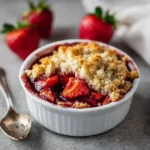
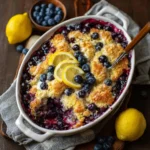
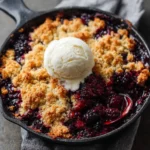
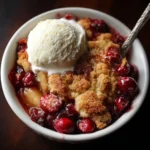
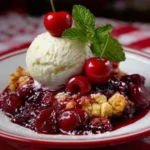
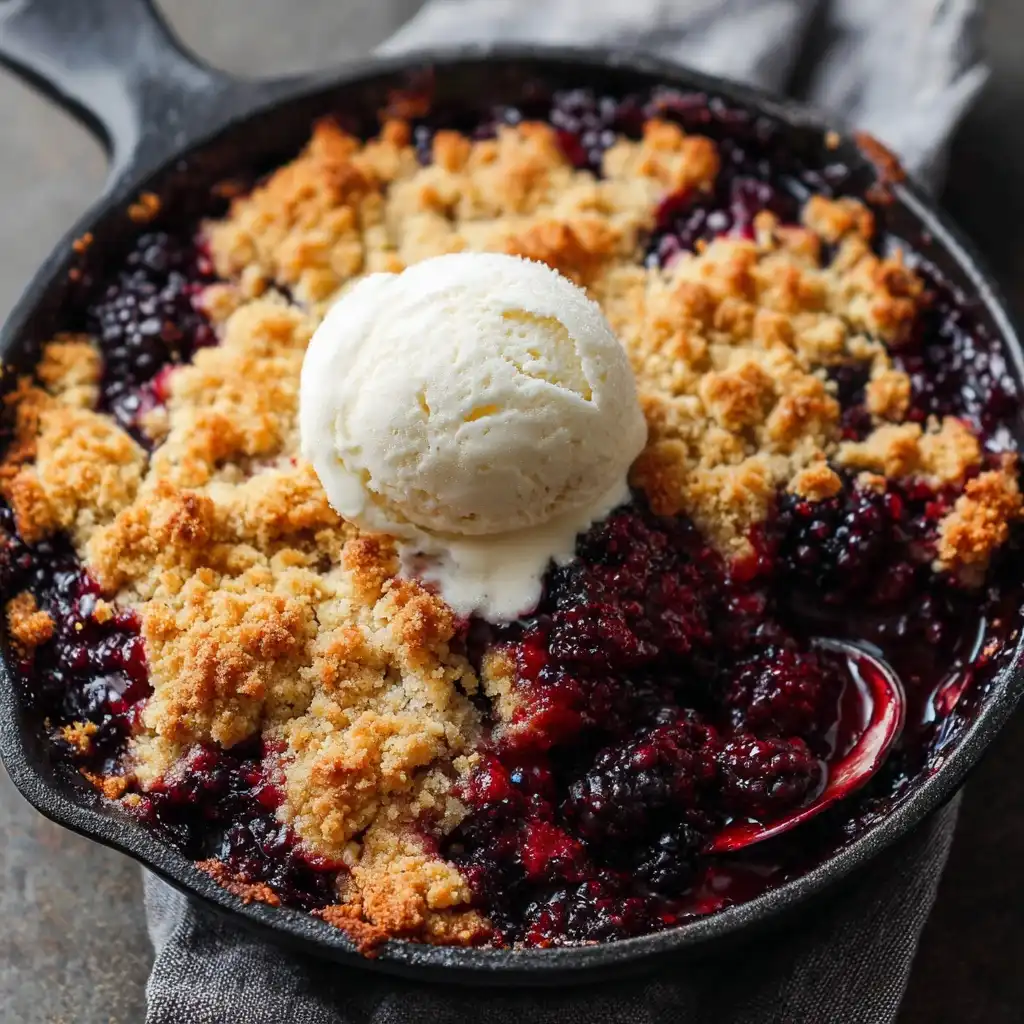
Blackberry Cobbler with Brown Sugar Crust is a soul-warming, rustic American dessert that marries the bright, tangy-sweet burst of fresh blackberries with a deeply caramelized, buttery, crumbly brown sugar topping. Unlike traditional cobblers with biscuit or cake-like crusts, this version features a distinctive streusel-style brown sugar crust—rich, crunchy, and subtly molasses-kissed—that bakes into golden, shattering clusters over a bubbling, jewel-toned berry filling. It evokes memories of summer harvests, front-porch gatherings, and generations-old family recipes passed down through stained index cards and handwritten notes. Whether served warm with a scoop of vanilla bean ice cream, drizzled with bourbon-infused whipped cream, or enjoyed plain with a splash of cold whole milk, this cobbler strikes a perfect balance between simplicity and sophistication—homestyle comfort elevated by thoughtful ingredient choices and time-honored technique.
The History
Cobbler’s origins trace back to 17th- and 18th-century England, where “coble” referred to a crude, uneven surface—describing the lumpy, cobblestone-like appearance of early fruit desserts topped with dumplings or rough pastry. When English settlers brought the concept to colonial America, scarce resources (especially refined white sugar and fine flour) led to improvisation: Native berries like blackberries, raspberries, and blueberries became staples, while frontier cooks substituted molasses, maple syrup, and later, brown sugar for expensive white sugar—giving rise to richer, more complex sweeteners in baked goods. By the mid-1800s, Southern and Appalachian home cooks had transformed the cobbler into a regional icon, often using cast-iron skillets and wood-fired ovens. The brown sugar crust variation likely emerged organically in the early-to-mid 20th century as brown sugar became widely available and prized for its moisture-retaining properties and deep flavor. Its popularity surged post-WWII, appearing in church cookbooks, county fair recipe contests, and women’s magazines like Good Housekeeping and Ladies’ Home Journal, where it was praised for its ease, affordability, and crowd-pleasing appeal. Today, Blackberry Cobbler with Brown Sugar Crust stands as both a nostalgic heirloom and a modern favorite—celebrated at farmers’ markets, featured in James Beard Award–winning bakeries, and reimagined by food bloggers experimenting with heritage grains, local honey, and even savory-herb infusions.
Ingredients Breakdown
Every element in this cobbler serves a precise purpose—no ingredient is arbitrary. Let’s explore the science and story behind each:
- Fresh Blackberries (6 cups): Opt for peak-season, locally grown berries—they’re higher in natural pectin (for ideal thickening), anthocyanins (for vibrant color and antioxidant power), and volatile esters (for intense floral-fruity aroma). Wild blackberries offer even more tannic structure and complexity but may be seedier; cultivated varieties like ‘Apache’ or ‘Navaho’ provide larger, sweeter, more uniform fruit. Always rinse gently and pat dry—excess water dilutes flavor and inhibits proper syrup development.
- Granulated Sugar (¾ cup): Provides baseline sweetness and aids in syrup formation. Less than typical cobblers because brown sugar contributes significant sweetness—and its acidity interacts with the berries’ natural tartness for brighter balance.
- Brown Sugar (1 ½ cups, packed): The star of the crust—and the soul of the recipe. Dark brown sugar (recommended) delivers robust molasses notes, deeper color, and extra moisture thanks to its higher invert sugar content. This moisture prevents the crust from drying out during baking and encourages caramelization. Light brown sugar works but yields a milder, less nuanced result.
- All-Purpose Flour (2 ¼ cups total): Divided between filling (¼ cup) and crust (2 cups). The small amount in the filling acts as a gentle thickener without clouding the syrup or creating gumminess. In the crust, flour provides structure and tenderness—too little = greasy crumble; too much = pasty, dense topping.
- Unsalted Butter (1 cup / 2 sticks, cold): Cut into ½-inch cubes. Cold fat is non-negotiable for flaky, shattery texture in the crust. As it melts in the oven, it creates steam pockets and coats flour particles, limiting gluten formation. Unsalted butter ensures precise control over sodium levels—critical when pairing with naturally salty dairy accompaniments like ice cream or clotted cream.
- Ground Cinnamon (1 ½ tsp) & Ground Nutmeg (¼ tsp): Warm, aromatic spices that complement blackberries’ earthy undertones without overpowering. Freshly grated nutmeg is strongly encouraged—it contains 3x the volatile oils of pre-ground, delivering unmistakable brightness.
- Coarse Kosher Salt (1 tsp + pinch): Enhances all other flavors, balances sweetness, and strengthens gluten minimally in the crust for just enough cohesion. The pinch added directly to the berry mixture draws out juices slowly and seasons the filling from within.
- Heavy Cream or Half-and-Half (¼ cup): Added to the crust mixture to hydrate the flour and dissolve sugars, while contributing fat and dairy sugars (lactose) that promote browning via the Maillard reaction. Avoid milk—it lacks sufficient fat and may yield a pale, bland crust.
- Optional Flavor Enhancers: 1 tbsp fresh lemon juice (brightens acidity), 1 tsp pure vanilla extract (added to filling after mixing), or 2 tbsp amaretto or bourbon (stirred into warm filling for depth).
Step-by-Step Recipe
- Preheat & Prep: Position oven rack in lower third. Preheat oven to 375°F (190°C). Generously butter a 9×13-inch glass or ceramic baking dish (or two 8-inch square dishes for portion control). Do not use dark metal pans—they encourage over-browning on the bottom.
- Prepare the Berry Filling: In a large stainless-steel or enameled Dutch oven (avoid aluminum—it can react with berries’ acids), combine 6 cups rinsed and drained blackberries, ¾ cup granulated sugar, ¼ cup all-purpose flour, 1 tsp coarse kosher salt, and optional lemon juice or vanilla. Gently fold with a silicone spatula until evenly coated—do not crush berries. Let sit 15 minutes at room temperature to macerate and release natural juices.
- Cook the Filling (Optional but Recommended): Place pot over medium-low heat. Cook, stirring frequently with a heat-resistant spoon, until berries soften slightly and release abundant syrup (about 8–10 minutes). The mixture should bubble gently—not boil vigorously—to preserve texture and prevent breaking down the fruit. Remove from heat and cool slightly (5 minutes) before transferring to prepared baking dish. This step ensures a jammy, cohesive filling and reduces excess liquid that could make the crust soggy.
- Make the Brown Sugar Crust: In a chilled medium bowl, whisk together 2 cups all-purpose flour, 1 ½ cups firmly packed dark brown sugar, 1 ½ tsp ground cinnamon, ¼ tsp freshly grated nutmeg, and remaining ¼ tsp kosher salt. Add cold cubed butter. Using a pastry cutter, two forks, or fingertips, work butter into dry ingredients until mixture resembles coarse crumbs with some pea-sized butter pieces remaining. Drizzle in ¼ cup heavy cream. Stir with a fork just until clumps begin to form and the mixture holds together when pinched—do not overmix. A few dry spots are acceptable; overworking creates toughness.
- Assemble: Pour warm (not hot) berry mixture into the buttered baking dish. Evenly scatter the brown sugar crumb mixture over the top, covering completely. For extra crunch and visual appeal, gently press the top layer with the back of a spoon to create slight indentations—this helps the crust set and promotes even browning.
- Bake: Place dish on a parchment- or foil-lined baking sheet (to catch potential bubbles and simplify cleanup). Bake 45–55 minutes, rotating halfway through, until the crust is deeply golden brown, crisp at the edges, and bubbling vigorously around the perimeter. Internal temperature of the filling should reach 205–210°F (96–99°C) for optimal thickening. If crust browns too quickly, tent loosely with foil for the final 10–15 minutes.
- Cool & Set: Remove from oven and place on a wire rack. Let rest undisturbed for at least 30 minutes—ideally 45–60 minutes. This allows the filling to fully thicken via natural pectin and starch gelatinization, and prevents the crust from collapsing into the syrup. Serve warm, never piping hot.
Tips
- Chill Your Tools: Chill your pastry cutter, bowl, and even your flour for 15 minutes before making the crust. Cold tools keep butter colder longer—essential for flakiness.
- Don’t Skip the Maceration: Allowing berries to sit with sugar draws out juice gradually, resulting in a glossy, intensely flavored syrup—not watery runoff.
- Measure Brown Sugar Correctly: Pack it firmly into the measuring cup with the back of a spoon—loose packing leads to inconsistent sweetness and texture.
- Use a Digital Thermometer: For foolproof doneness, insert an instant-read thermometer into the center of the filling (avoiding berries). 205°F signals perfect set; under 200°F means runny filling.
- Rotate Strategically: Rotate the pan 180° at the 25-minute mark—not just halfway—to counteract hot spots common in most home ovens.
- Rest Is Non-Negotiable: Cutting into the cobbler too soon causes structural collapse. That 30–60 minute rest transforms a soupy dessert into a sliceable, elegant treat.
- Boost Browning Naturally: Brush the crust lightly with cream or egg wash (1 yolk + 1 tsp cream) in the last 5 minutes for an ultra-glossy, mahogany finish.
- Storage Tip: Leftovers keep beautifully refrigerated for up to 5 days. Reheat individual portions in a toaster oven or air fryer at 325°F for 8–10 minutes—never microwave, which turns the crust rubbery.
Variations and Customizations
This recipe is wonderfully adaptable—whether you’re accommodating dietary needs, celebrating seasonal abundance, or simply craving creative flair:
- Mixed Berry Cobbler: Replace 2 cups of blackberries with equal parts ripe raspberries and sliced strawberries. Reduce granulated sugar to ½ cup—their natural sweetness intensifies when combined.
- Oat-Infused Brown Sugar Crust: Substitute ½ cup of the flour with old-fashioned rolled oats (not instant) for nutty texture and chew. Toast oats lightly first for enhanced aroma.
- Gluten-Free Version: Use a 1:1 certified gluten-free flour blend (like King Arthur or Bob’s Red Mill) for both filling and crust. Add ½ tsp xanthan gum to the crust mixture if your blend doesn’t include it.
- Vegan Adaptation: Swap butter for cold vegan butter (Miyoko’s or Earth Balance) and heavy cream for full-fat coconut milk. Ensure brown sugar is vegan (some brands use bone char—look for organic or “unrefined” labels).
- Nutty Crunch Variation: Fold ½ cup chopped toasted pecans or walnuts into the crust mixture before baking for rich, earthy contrast.
- Spiced Chai Twist: Add ½ tsp ground cardamom, ¼ tsp ground ginger, and a pinch of black pepper to the crust spices. Infuse the cream with a chai tea bag for 5 minutes before adding.
- Herbal Elegance: Stir 1 tbsp finely minced fresh rosemary or thyme into the berry filling—surprisingly harmonious with blackberries’ wine-like notes.
- Mini Mason Jar Cobblers: Portion filling and crust into 6–8 clean, heat-safe 12-oz mason jars. Bake at 375°F for 30–35 minutes—perfect for gifting or portion control.
Health Considerations and Nutritional Value
While undeniably indulgent, Blackberry Cobbler with Brown Sugar Crust offers meaningful nutritional benefits—especially when made mindfully. A standard serving (⅛ of a 9×13-inch pan, approx. 1 cup) contains roughly:
- Calories: ~380–420 kcal
- Total Carbohydrates: ~62–68 g (including 42–46 g naturally occurring sugars from fruit + brown/white sugar)
- Dietary Fiber: ~7–9 g (blackberries provide 8 g fiber per cup—more than many whole grains!)
- Vitamin C: ~35–40 mg (nearly 50% DV)—supports immunity and collagen synthesis
- Vitamin K: ~28 mcg (35% DV)—vital for blood clotting and bone health
- Manganese: ~0.9 mg (40% DV)—a cofactor in antioxidant enzyme systems
- Anthocyanins: Up to 200 mg per serving—potent flavonoids linked to reduced oxidative stress, improved cognitive function, and cardiovascular protection
Considerations for Health-Conscious Bakers:
- Sugar Reduction: Cut granulated sugar to ½ cup and brown sugar to 1 ¼ cups without sacrificing structure—berries’ natural pectin and acidity carry the flavor.
- Whole Grain Option: Substitute ½ cup of the flour with white whole wheat flour—adds fiber and B vitamins while retaining mild flavor.
- Lower-Fat Crust: Replace 2 tbsp butter with unsweetened applesauce—but expect slightly less crispness and deeper browning.
- Glycemic Note: Despite high sugar content, blackberries have a low glycemic load (~3 GL per cup) due to high fiber and polyphenols that slow glucose absorption—making this dessert more diabetes-friendly than many cakes or cookies when consumed in moderation.
- Allergen Alert: Naturally nut-free and soy-free (with standard butter). For dairy-free, see Vegan Adaptation above.
Remember: Nutrition is holistic. Enjoying this cobbler mindfully—with gratitude, shared joy, and balanced meals throughout the day—contributes to emotional well-being just as much as its antioxidants support physical health.
Ingredients
- 6 cups fresh blackberries (about 1 ½ lbs), rinsed, stemmed, and gently patted dry
- ¾ cup granulated sugar
- ¼ cup all-purpose flour (for filling)
- 1 ¼ tsp coarse kosher salt, divided (1 tsp for filling, ¼ tsp for crust)
- 2 cups all-purpose flour (for crust)
- 1 ½ cups firmly packed dark brown sugar
- 1 ½ tsp ground cinnamon
- ¼ tsp freshly grated nutmeg
- 1 cup (2 sticks) unsalted butter, very cold, cut into ½-inch cubes
- ¼ cup heavy cream or half-and-half
- Optional: 1 tbsp fresh lemon juice, 1 tsp pure vanilla extract, or 2 tbsp bourbon or amaretto
Directions
- Preheat oven to 375°F (190°C). Butter a 9×13-inch baking dish (or equivalent). Set aside.
- In a large bowl or Dutch oven, combine blackberries, ¾ cup granulated sugar, ¼ cup flour, and 1 tsp salt. Gently fold to coat. Let sit 15 minutes.
- (Optional but recommended) Transfer berry mixture to a saucepan. Cook over medium-low heat 8–10 minutes, stirring often, until syrupy and berries soften slightly. Cool 5 minutes.
- Pour warm berry mixture into prepared baking dish.
- In a separate chilled bowl, whisk 2 cups flour, brown sugar, cinnamon, nutmeg, and ¼ tsp salt. Add cold butter cubes. Cut in with a pastry cutter or fork until mixture resembles coarse crumbs with visible pea-sized butter bits.
- Drizzle in heavy cream. Stir with fork just until clumps form and mixture holds together when squeezed. Do not overmix.
- Evenly scatter crust mixture over berries. Gently press top with back of spoon to create light indentations.
- Place dish on a lined baking sheet. Bake 45–55 minutes, rotating at 25 minutes, until crust is deep golden and filling bubbles vigorously at edges.
- Remove from oven. Cool on wire rack for at least 30–60 minutes before serving.
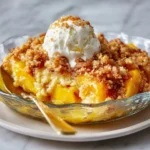
- Serve warm, optionally with vanilla ice cream, whipped cream, or a drizzle of local honey.
FAQ
- Can I use frozen blackberries?
- Yes—but do not thaw them first. Toss frozen berries directly with sugar and flour, then add an extra 1 tsp cornstarch to the filling to absorb excess ice crystals. Expect a 5–8 minute longer bake time.
- Why does my crust sink into the filling?
- Most commonly caused by: (1) Adding crust to piping-hot filling—always let it cool 5 minutes; (2) Under-baking—crust needs full time to set and crisp; (3) Overmixing crust—leads to gluten development and density; or (4) Skipping the initial maceration, causing a flood of juice.
- Can I prepare this ahead of time?
- Absolutely. Assemble up to 1 day ahead: fill dish, cover tightly with plastic wrap, refrigerate. Prepare crust separately, store in airtight container in fridge. Assemble and bake straight from fridge—add 5–8 minutes to bake time.
- My crust isn’t browning enough—even though it’s cooked through.
- Try increasing oven temperature to 385°F for the final 10 minutes—or brush top with cream/egg wash in the last 5 minutes. Also ensure your oven is properly calibrated (many run cool).
- Is there a way to make it less sweet?
- Reduce granulated sugar to ½ cup and brown sugar to 1 ¼ cups. Boost complexity with lemon zest, a pinch of black pepper, or herbal notes instead of relying solely on sugar.
- Can I double this recipe?
- Yes—use two 9×13-inch dishes and bake on separate racks (switch positions halfway). Do not double in one oversized pan—it will bake unevenly and require significantly longer time with risk of burnt edges.
- What’s the best way to store leftovers?
- Cover tightly and refrigerate up to 5 days. Reheat portions in a 325°F oven or air fryer for 8–10 minutes until warmed through and crust regains crispness. Avoid microwaving.
- Can I freeze blackberry cobbler?
- Freeze unbaked: Assemble completely, wrap tightly in plastic + foil, freeze up to 3 months. Thaw overnight in fridge, then bake as directed—add 10–15 minutes. Freezing baked cobbler is not recommended—the crust becomes soggy upon thawing.
Summary
Blackberry Cobbler with Brown Sugar Crust is a timeless, deeply flavorful dessert that celebrates summer’s bounty with rustic elegance—featuring plump, tart-sweet blackberries enveloped in a glossy, spiced syrup and crowned with a deeply caramelized, crunchy-streusel crust infused with molasses-rich brown sugar and warm spices.
Simple enough for weeknight magic yet impressive enough for holiday tables, it rewards careful attention to temperature, timing, and ingredient quality—and transforms humble pantry staples into a soul-satisfying, nutritionally resonant, and culturally cherished American classic.