Introduction
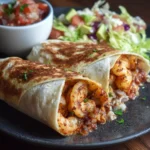
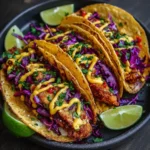
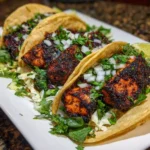
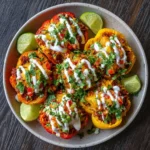
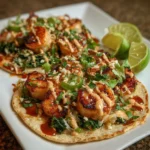
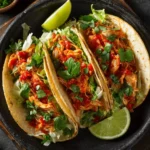
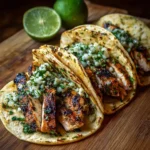
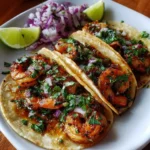
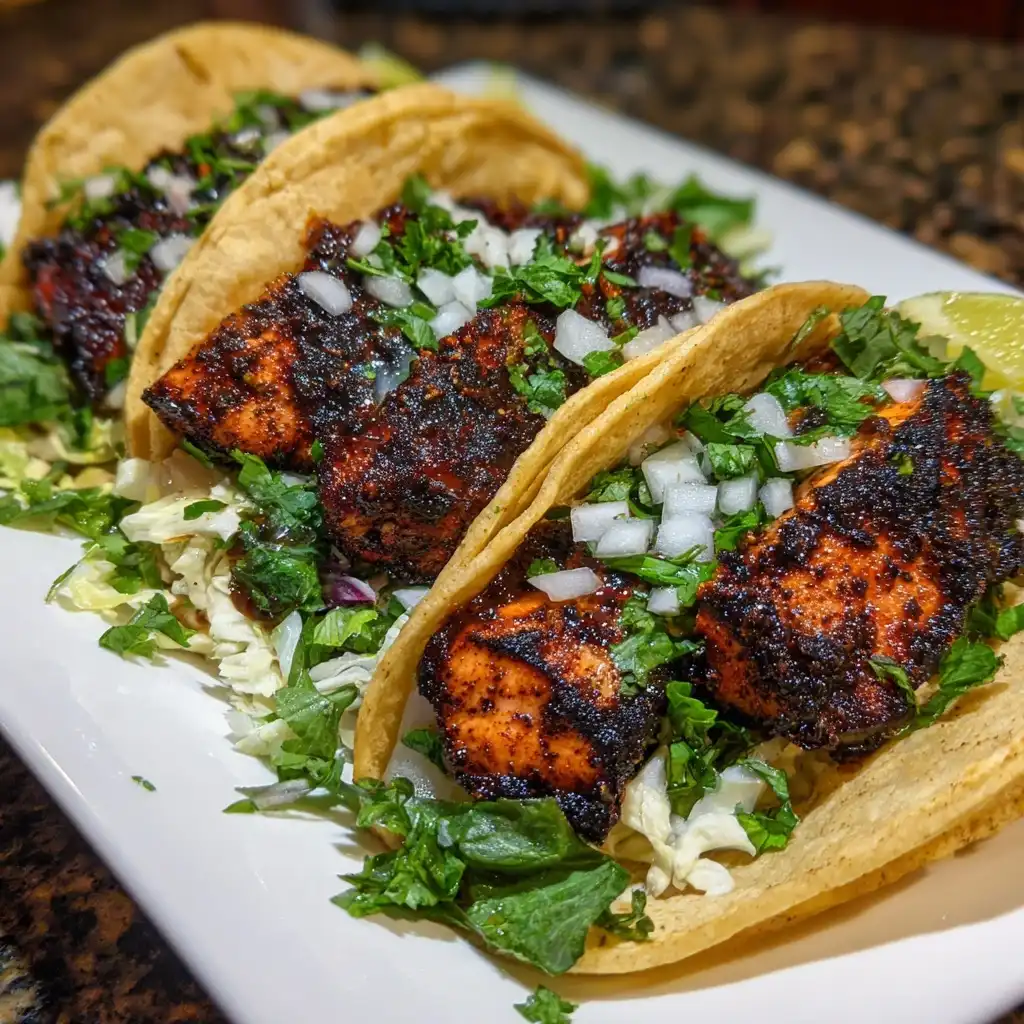
Blackened salmon tacos are a vibrant, bold, and nutritionally rich fusion dish that marries the fiery, aromatic crust of Cajun-inspired blackening with the fresh, zesty, and texturally dynamic world of Mexican street food. Unlike traditional fish tacos that often feature battered or grilled white fish, blackened salmon brings an assertive, mineral-rich depth, luxurious omega-3 richness, and a stunning contrast between its deeply caramelized, spice-rubbed exterior and tender, flaky, coral-pink interior. Served in warm corn tortillas and topped with bright, cooling, and crunchy accompaniments—think pickled red onions, avocado crema, charred corn, and cilantro-lime slaw—these tacos deliver a symphony of heat, acidity, creaminess, and smoke in every bite. They’re as at home on a weeknight dinner table as they are gracing a summer backyard gathering or a refined taco bar at a coastal brunch spot. This recipe is designed not only to honor the integrity of both culinary traditions but also to empower home cooks with confidence, clarity, and creative flexibility—because great blackened salmon tacos aren’t just delicious; they’re an experience rooted in technique, balance, and joyful customization.
The History
The origins of blackened salmon tacos lie at the intersection of two distinct yet complementary foodways: the iconic blackening technique born in 1970s New Orleans and the centuries-old tradition of Mexican fish tacos from Baja California. Blackening was famously popularized by Chef Paul Prudhomme at his legendary K-Paul’s Louisiana Kitchen in the late 1970s, where he developed a proprietary blend of dried herbs and spices—including paprika, cayenne, thyme, oregano, garlic powder, onion powder, and black pepper—and seared it onto proteins over extreme heat in a cast-iron skillet. Though traditionally applied to catfish or redfish, Prudhomme’s method proved equally transformative for salmon, whose higher fat content helps it retain moisture and develop an unparalleled crust without drying out. Meanwhile, fish tacos emerged from the coastal fishing villages of Ensenada in the early 20th century, where local fishermen wrapped simple, freshly caught, beer-battered and fried fish in soft corn tortillas and dressed them with cabbage, lime, and creamy white sauce. As American culinary borders blurred in the 1990s and 2000s—with chefs like Rick Bayless championing authentic Mexican flavors and food media spotlighting regional fusions—the marriage of blackened salmon with taco architecture became inevitable. Today, blackened salmon tacos represent a modern American classic: a respectful, flavorful homage to both Creole spice mastery and Baja’s fresh, minimalist ethos—refined through decades of restaurant innovation, food blog experimentation, and home cook adaptation.
Ingredients Breakdown
Every exceptional blackened salmon taco begins with intentionality—not just in selection, but in understanding *why* each ingredient matters. Below is a meticulous, chef-level breakdown of the core components:
- Salmon Fillets (Skin-On or Skin-Off): Opt for center-cut, wild-caught Alaskan or Pacific salmon (preferably line-caught) for superior flavor, firm texture, and optimal omega-3 profile. Look for deep ruby-red flesh, translucent sheen, and no fishy odor. Skin-on fillets provide structural integrity during high-heat searing and render crisp if cooked properly—but skin-off yields more surface area for crust adhesion. Portion at 5–6 oz per person (about 1.25″ thick) for even cooking.
- Blackening Spice Blend: The soul of the dish. A true blackening rub isn’t just “spicy”—it’s a layered, balanced amalgam of heat, earth, sweetness, and aroma. Key elements include smoked paprika (for depth and subtle smoke), sweet paprika (for color and mild sweetness), cayenne (for calibrated heat—start with ½ tsp per tablespoon blend and adjust), garlic and onion powders (umami and savory backbone), dried thyme and oregano (herbal complexity), ground black pepper (pungent bite), and a whisper of brown sugar or turbinado sugar (to aid caramelization and counter heat). No salt in the initial rub—salmon is seasoned separately just before cooking to control moisture draw.
- High-Smoke-Point Oil: Avocado oil (smoke point ~520°F) or refined peanut oil (~450°F) are ideal. They withstand the intense 450–500°F pan temperature required for proper blackening without smoking excessively or imparting off-flavors. Never use olive oil (too low smoke point) or butter (burns instantly).
- Authentic Corn Tortillas: Seek out fresh, hand-pressed, non-GMO blue or white corn tortillas—ideally from a local tortilleria or refrigerated section. Their pliability, earthy corn flavor, and ability to puff slightly when heated are irreplaceable. Avoid shelf-stable, preservative-laden versions; they tear easily and lack nuance. Warm them in a dry cast-iron comal or skillet until soft and pliable—never microwave.
- Avocado Crema: More than just “guac-thinned”: ripe Hass avocado blended with full-fat sour cream or Mexican crema, fresh lime juice, a touch of minced garlic, and flaky sea salt. The acidity cuts richness, the cream adds silkiness, and the avocado lends body and healthy fats—creating a cooling, unctuous counterpoint to the spice.
- Pickled Red Onions: Quick-pickled in apple cider vinegar, lime juice, agave or honey, toasted cumin, and a pinch of red pepper flakes. They add vibrant magenta color, bright acidity, subtle sweetness, and aromatic warmth—cutting through fat and balancing heat with precision.
- Charred Corn & Black Bean Salsa: Fresh corn kernels cut from the cob and quickly seared in a hot skillet until blistered and sweet, then folded with rinsed black beans, diced jicama or cucumber (for crunch), chopped epazote or cilantro, lime zest, and a splash of chipotle-in-adobo purée for smoky depth.
- Fresh Garnishes: Micro-cilantro or whole cilantro leaves (citrusy, floral lift), thinly sliced radishes (peppery crunch), crumbled cotija cheese (salty, tangy, slightly funky—*not* substituted with feta unless necessary), and extra lime wedges for finishing acidity.
Step-by-Step Recipe
- Prep the Salmon: Pat fillets *extremely* dry with paper towels—this is non-negotiable for crust formation. Place on a wire rack over a baking sheet and refrigerate uncovered for 20–30 minutes to further dehydrate the surface. Just before cooking, season *lightly* with kosher salt (½ tsp per 6 oz fillet)—only on the flesh side if skin-on.
- Make the Blackening Rub: In a small bowl, whisk together 2 tbsp smoked paprika, 1 tbsp sweet paprika, 1½ tsp cayenne (adjust to taste), 1 tsp each garlic powder, onion powder, dried thyme, and dried oregano, 2 tsp freshly ground black pepper, and ½ tsp brown sugar. Store extra in an airtight jar for up to 3 months.
- Coat the Salmon: Generously coat all sides of each fillet with the spice blend—press firmly to adhere. Let rest 5 minutes at room temperature while heating the pan.
- Heat the Skillet: Place a heavy 12-inch cast-iron skillet over medium-high heat for 2 minutes. Add 2 tbsp avocado oil and swirl to coat. Heat until oil shimmers and just begins to ripple—but *do not let it smoke*. This takes ~90 seconds. (Tip: Test with a wooden chopstick—if tiny bubbles form around it, you’re ready.)
- Blacken the Salmon: Carefully place fillets in the skillet—do not crowd; cook in batches if needed. Press gently with a spatula for 10 seconds to ensure full contact. Cook undisturbed for 3–3.5 minutes until a deep mahogany-black crust forms and edges begin to curl slightly. Flip using a thin, flexible metal spatula. Cook second side 2–2.5 minutes for medium (internal temp 125°F) or 3 minutes for medium-well (130°F). Transfer to a clean plate and rest 3 minutes—this allows juices to redistribute and crust to set.
- Warm the Tortillas: While salmon rests, heat tortillas one at a time in a dry, medium-hot cast-iron skillet for 30 seconds per side until puffed and flecked with golden spots. Stack in a cloth-lined basket or tortilla warmer to keep soft and steamy.
- Assemble Tacos: Spoon 2 tbsp warm avocado crema down the center of each tortilla. Flake 2–3 oz of blackened salmon (skin discarded if used) over the crema. Top generously with pickled red onions, charred corn–black bean salsa, a sprinkle of cotija, radish slices, and a handful of fresh cilantro. Finish with a generous squeeze of fresh lime juice and a light grind of black pepper.
Tips
- Dryness is Destiny: Moisture is the #1 enemy of crust. If your salmon looks glistening or wet—even after towel-drying—let it air-chill longer. A single droplet can cause steaming instead of searing.
- Cast Iron is Non-Negotiable: Only cast iron retains and distributes the intense, even heat needed for true blackening. Stainless steel or nonstick will fail—either overheating unevenly or failing to hold temperature under load.
- Don’t Peek, Don’t Poke: Resist flipping early or pressing repeatedly. Let the crust form uninterrupted. Use a timer and visual cues (darkening, slight curling at edges) rather than intuition.
- Ventilation is Vital: Blackening produces significant smoke. Turn on your range hood to maximum, open windows, and consider lighting a candle nearby (the flame draws smoke upward). For indoor safety, a portable air purifier with activated carbon filter helps immensely.
- Timing is Everything: Have *all* components prepped and within arm’s reach before heating the pan—crema made, onions pickled, corn charred, tortillas stacked, garnishes chopped. Blackening happens fast; assembly should be seamless.
- Rest Before Flaking: Resting ensures moist, cohesive flakes—not mushy or dry. Use a fish spatula or two forks to gently separate into large, elegant pieces—not shredded.
- Batch Cooking Hack: For gatherings, blacken salmon in advance, cool completely, then refrigerate up to 2 days. Reheat gently in a 325°F oven for 8–10 minutes—crust softens slightly but flavor remains intact. Assemble fresh.
- Tortilla Tenderizing Secret: Lightly brush warmed tortillas with melted, clarified butter or avocado oil and return to skillet for 15 seconds—adds richness and prevents cracking when folded.
Variations and Customizations
Blackened salmon tacos are gloriously adaptable—whether accommodating dietary needs, seasonal produce, pantry constraints, or global flavor inspirations. Here’s how to make them uniquely yours:
- Vegetarian/Vegan “Salmon” Option: Replace salmon with thick-cut king oyster mushroom “steaks” (gills scraped, pounded to ½” thickness), coated in blackening rub and pan-seared until deeply browned and meaty. Serve with cashew-based chipotle crema and roasted beet “tartare” for color and earthiness.
- Gluten-Free & Grain-Free: Naturally GF—just verify all spice blends and condiments are certified gluten-free (many cayennes contain wheat fillers). For grain-free, swap corn tortillas with large, pliable butter lettuce cups or grilled portobello caps.
- Low-Carb/Keto Adaptation: Use nori sheets as taco wrappers—lightly toasted for crispness—or serve as deconstructed “taco bowls” over cauliflower rice, shredded cabbage, and avocado ribbons.
- Global Twists:
- Yucatán-Inspired: Swap blackening rub for achiote paste + sour orange marinade; top with pickled red onions + habanero-scented orange supremes.
- Korean-Mex Fusion: Use gochujang-spiked blackening blend; garnish with quick kimchi slaw, sesame-ginger crema, and toasted sesame seeds.
- Mediterranean-Style: Rub with za’atar + sumac; top with tzatziki-style cucumber-yogurt sauce, lemon-dressed arugula, and crumbled feta.
- Seafood Swaps: Try blackened halibut (firmer, milder), swordfish (meaty, steak-like), or even shrimp (cook 1–2 min per side—no resting needed).
- Heat-Level Adjustments: Mild: Omit cayenne; increase smoked paprika + add ½ tsp ground coriander. Medium: Keep as written. Hot: Add ¼ tsp ground chipotle + ½ tsp cayenne. Fiery: Include 1 tsp crushed Aleppo pepper + ½ tsp ghost pepper powder (use gloves!).
- Seasonal Rotations:
- Spring: Top with fava bean–mint salsa, pea tendrils, and lemon-thyme crema.
- Summer: Add grilled peach slices, corn relish, and basil-infused avocado crema.
- Fall: Roasted delicata squash ribbons, apple-jalapeño slaw, and maple-cider reduction drizzle.
- Winter: Charred Brussels sprouts, pomegranate arils, and orange-cardamom crema.
- Breakfast Taco Version: Serve blackened salmon on warm corn tortillas with soft-scrambled eggs, chipotle hollandaise, pickled jalapeños, and microgreens—ideal for weekend brunch.
Health Considerations and Nutritional Value
Blackened salmon tacos are not only delicious—they’re a nutrient-dense powerhouse aligned with modern wellness frameworks including Mediterranean, DASH, and anti-inflammatory diets. A standard serving (one 5.5-oz salmon fillet + two 6-inch corn tortillas + ¼ cup avocado crema + ⅓ cup pickled onions + ½ cup corn–bean salsa + garnishes) delivers approximately:
- Calories: ~520–580 kcal (moderate and satiating)
- Protein: 38–42g (high-quality, complete protein supporting muscle synthesis and metabolic health)
- Healthy Fats: 28–32g total, with 3.5–4g EPA/DHA omega-3s (critical for brain function, cardiovascular protection, and reducing systemic inflammation)
- Fiber: 12–15g (from corn tortillas, beans, vegetables, and onions—supporting gut microbiome diversity and stable blood sugar)
- Vitamins & Minerals: Exceptionally rich in Vitamin D (salmon), Vitamin C (lime, onions, peppers), Folate (beans, corn), Potassium (salmon, avocado, tomatoes), Magnesium (tortillas, greens), and antioxidants like lycopene (tomatoes), anthocyanins (purple onions), and lutein (corn, avocado).
Key Health Notes:
- Sodium Management: The blackening rub contains no added salt, and cotija is used sparingly—total sodium hovers around 420mg per serving (well below the 2,300mg daily limit). Pickling liquid uses minimal salt; rely on lime and vinegar for brightness.
- Mercury Awareness: Wild Alaskan salmon has among the lowest mercury levels of all seafood—safe for weekly consumption, including for pregnant individuals (per FDA/EPA guidelines).
- Anti-Inflammatory Synergy: Omega-3s (salmon), polyphenols (onions, lime, cilantro), monounsaturated fats (avocado), and fiber work in concert to lower CRP and IL-6 markers.
- Dietary Inclusivity: Naturally dairy-free (if using coconut crema), nut-free, soy-free, and Whole30-compliant (omit beans and cheese; use compliant crema alternative).
- Portion Intelligence: The inclusion of high-volume, low-calorie toppings (slaw, onions, herbs) promotes satiety without caloric excess—making this ideal for weight-conscious or metabolic health goals.
Ingredients
- For the Blackened Salmon:
- 2 (6-oz) skin-on or skin-off wild-caught salmon fillets, center-cut, ~1.25″ thick
- 2 tbsp avocado oil (or refined peanut oil)
- 1½ tsp kosher salt (for seasoning fillets)
- ¼ cup Blackening Spice Blend (see breakdown above)
- For the Avocado Crema:
- 1 ripe Hass avocado
- ½ cup full-fat sour cream or Mexican crema
- 2 tbsp fresh lime juice (about 1 lime)
- 1 small garlic clove, minced
- ¼ tsp fine sea salt
- 2 tbsp finely chopped fresh cilantro
- For the Quick Pickled Red Onions:
- 1 medium red onion, very thinly sliced
- ½ cup apple cider vinegar
- ¼ cup fresh lime juice
- 2 tbsp agave nectar or raw honey
- 1 tsp toasted cumin seeds
- ¼ tsp red pepper flakes
- ½ tsp fine sea salt
- For the Charred Corn & Black Bean Salsa:
- 2 ears fresh corn, kernels cut off (or 1 cup frozen, thawed)
- 1 (15-oz) can black beans, rinsed and drained
- ½ cup finely diced jicama or English cucumber
- 2 tbsp finely chopped red bell pepper
- 1 tbsp minced epazote or cilantro
- 1 tsp lime zest + 1 tbsp lime juice
- 1 tsp chipotle-in-adobo purée (or ¼ tsp chipotle powder)
- ¼ tsp ground cumin
- ¼ tsp fine sea salt
- For Assembly:
- 8–10 (6-inch) fresh corn tortillas
- ½ cup crumbled cotija cheese
- 1 cup thinly sliced radishes
- ½ cup fresh cilantro leaves (stems removed)
- 2 limes, cut into wedges
- Optional: hot sauce, microgreens, toasted pepitas
Directions
- Prepare the Pickled Onions: In a heatproof bowl or jar, combine apple cider vinegar, lime juice, agave, cumin, red pepper flakes, and salt. Microwave on high for 45 seconds or heat in a small saucepan until simmering. Pour over sliced red onions. Stir, cover, and let sit at room temperature for at least 30 minutes (up to 5 days refrigerated).
- Make the Avocado Crema: In a blender or food processor, combine avocado, sour cream, lime juice, garlic, and salt. Blend until perfectly smooth. Stir in cilantro. Refrigerate until ready to use (up to 2 days).
- Char the Corn: Heat 1 tsp avocado oil in a stainless or cast-iron skillet over medium-high heat. Add corn kernels and cook, stirring occasionally, for 5–6 minutes until deeply blistered and golden. Cool slightly, then transfer to a mixing bowl.
- Build the Salsa: To the cooled corn, add black beans, jicama, bell pepper, epazote, lime zest, lime juice, chipotle purée, cumin, and salt. Gently fold to combine. Refrigerate for 15 minutes to meld flavors.
- Prep the Salmon: Pat fillets extremely dry. Place on a wire rack over a baking sheet; refrigerate uncovered for 20–30 minutes. Remove and season flesh side lightly with kosher salt.
- Coat & Rest: Generously apply blackening spice blend to all sides. Press gently to adhere. Let sit at room temperature for 5 minutes.
- Heat the Skillet: Place 12-inch cast-iron skillet over medium-high heat for 2 minutes. Add 2 tbsp avocado oil and heat until shimmering (≈90 seconds).
- Blacken the Salmon: Carefully place fillets in hot oil. Press gently for 10 seconds. Cook undisturbed for 3–3.5 minutes until deeply blackened and edges curl. Flip and cook second side 2–3 minutes depending on desired doneness. Transfer to plate; rest 3 minutes.
- Warm Tortillas: Heat dry skillet over medium heat. Warm each tortilla 30 seconds per side until soft, pliable, and lightly spotted. Stack in a cloth-lined basket.
- Assemble & Serve: Spread 2 tbsp avocado crema on each tortilla. Top with flaked salmon, 2–3 tbsp corn–bean salsa, 1 tbsp pickled onions, a pinch of cotija, radish slices, cilantro, and a generous squeeze of lime. Serve immediately with extra lime wedges and hot sauce on the side.
FAQ
- Can I bake or air-fry the salmon instead of pan-searing?
- While possible, it compromises authenticity and texture. Baking won’t yield the signature crust—only surface browning. Air-frying gives decent color but lacks the Maillard depth and smoky nuance. For best results, stick with cast-iron. However, if necessary: pat dry, coat in rub, spray generously with avocado oil, and air-fry at 400°F for 10–12 minutes (flip halfway). Expect a lighter crust.
- Why does my salmon stick or fall apart when flipping?
- Three main causes: (1) Pan wasn’t hot enough before adding fish—oil must shimmer; (2) You flipped too soon—wait until edges visibly darken and curl slightly; (3) You used a flimsy spatula—invest in a thin, rigid metal fish spatula for clean release.
- Can I make these ahead for meal prep?
- Absolutely. Blacken salmon up to 2 days ahead and refrigerate in an airtight container. Pickled onions last 2 weeks. Crema keeps 3 days. Salsa holds 4 days. Warm salmon gently before assembling. Tortillas are best warmed fresh—but can be par-cooked and reheated.
- Is there a substitute for corn tortillas?
- For authenticity and texture: no. Flour tortillas lack structure and corn flavor. However, for dietary needs: gluten-free almond flour tortillas (baked), coconut wraps, or grilled romaine leaves offer viable alternatives—but expect different mouthfeel and absorption.
- My blackening rub turned bitter—what went wrong?
- Bitterness signals burnt spices—usually from overheating the pan *before* adding oil, or cooking the salmon too long on high heat. Ensure oil is shimmering—not smoking—before adding fish, and reduce heat slightly if smoke appears mid-cook.
- How do I know when the salmon is done?
- Use a digital thermometer: 120–125°F for rare-medium-rare (translucent center), 125–130°F for medium (flaky but moist), 130–135°F for medium-well (firm, opaque). Visual cue: flesh separates easily with a fork and turns opaque pink—not gray or chalky.
- Can I freeze blackened salmon?
- Yes—but texture changes. Freeze cooled, un-assembled fillets in a single layer on parchment, then transfer to freezer bags (remove air). Thaw overnight in fridge. Reheat gently in oven (325°F, 10 min) or skillet (low heat, covered). Best used in salads or grain bowls post-thaw.
- What wine or beverage pairs best?
- Opt for high-acid, low-oak whites: Albariño (bright citrus & saline), Grüner Veltliner (white pepper & green apple), or chilled Rosé (strawberry & herb). For non-alcoholic: hibiscus-lime agua fresca or sparkling water with jalapeño slices and cilantro.
Summary
Blackened salmon tacos are a masterclass in contrast and harmony—uniting the bold, smoky, spice-rubbed sear of Southern technique with the fresh, zesty, texturally vibrant soul of Baja street food.
With wild salmon as its heart, handmade corn tortillas as its vessel, and layers of cooling crema, tangy pickles, and smoky-sweet salsa as its voice, this dish delivers extraordinary flavor, robust nutrition, and endless creative possibility—all in one unforgettable, handheld bite.