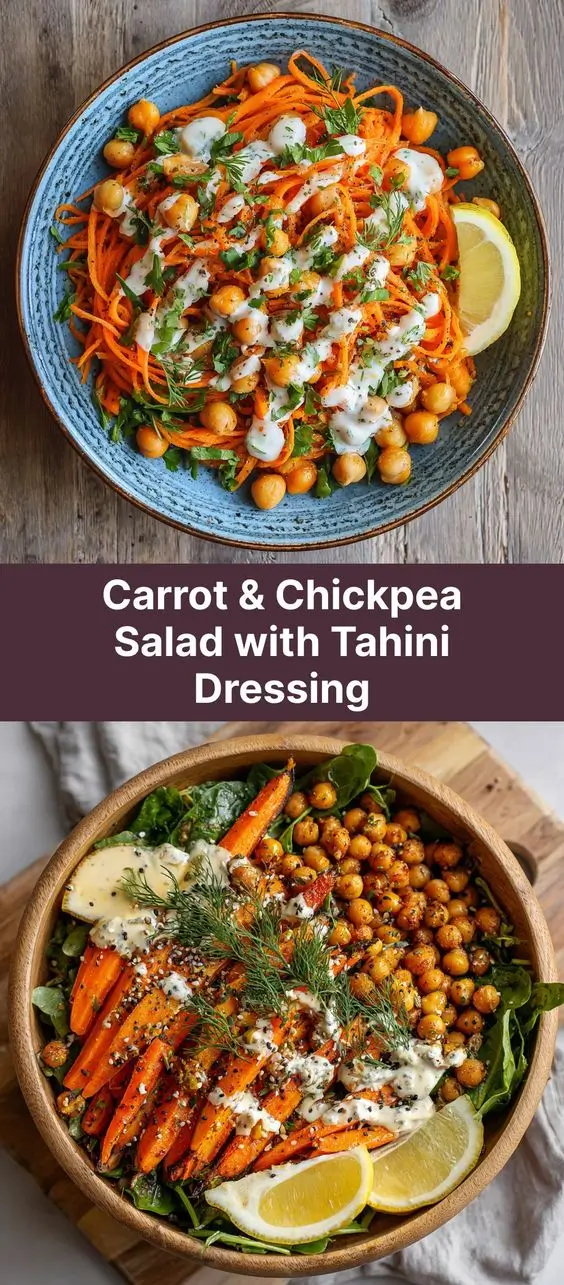
Carrot & Chickpea Salad with Tahini Dressing
The History
The Carrot & Chickpea Salad with Tahini Dressing is a modern fusion dish that draws inspiration from Middle Eastern, Mediterranean, and North African culinary traditions. While carrots have been cultivated for thousands of years—originally in Afghanistan before spreading across Europe and Asia—and chickpeas (also known as garbanzo beans) have long been a staple in Levantine and Indian cuisines, the pairing of these ingredients in a fresh salad format reflects contemporary trends toward plant-based, nutrient-dense meals.
Tahini, a paste made from ground sesame seeds, has roots dating back to ancient Babylon and was widely used throughout the Ottoman Empire. Its creamy texture and nutty flavor make it an ideal base for dressings in both savory and sweet dishes. Over time, health-conscious cooks and chefs began combining raw or lightly cooked vegetables with legumes and tahini-based sauces to create satisfying salads that are both energizing and nourishing.
In recent decades, this particular combination—carrots, chickpeas, and tahini—has gained popularity among vegetarians, vegans, and food enthusiasts seeking wholesome yet flavorful options. It’s now commonly found at farmers’ markets, health food cafes, and gourmet delis around the world. The dish embodies the principles of clean eating: minimal processing, whole ingredients, vibrant colors, and bold flavors drawn from natural sources.
Ingredients Breakdown
Understanding each ingredient helps elevate your appreciation and execution of this salad. Here’s a detailed look:
- Carrots: Freshly grated carrots provide sweetness, crunch, and a rich source of beta-carotene—a precursor to vitamin A essential for eye health and immune function. Opt for organic rainbow carrots if available; their varied hues add visual appeal and slightly different phytonutrient profiles.
- Chickpeas: Canned or home-cooked chickpeas bring plant-based protein, fiber, and a buttery texture. Rinsing them well removes excess sodium and prevents bitterness. For extra flavor, consider roasting them briefly before adding to the salad.
- Tahini: Made from hulled, toasted sesame seeds, tahini contributes healthy fats, calcium, and a luxurious creaminess. Choose high-quality, stirred-not-separated tahini for best results. Brands with no added oils or preservatives are preferred.
- Lemon Juice: Freshly squeezed lemon juice adds acidity, brightness, and enhances iron absorption from the chickpeas due to its vitamin C content. Avoid bottled juices which can taste flat or artificial.
- Garlic: Minced raw garlic infuses the dressing with pungency and antimicrobial properties. Use sparingly unless you enjoy a strong kick.
- Olive Oil: Extra virgin olive oil boosts heart-healthy monounsaturated fats and deepens the flavor profile. Drizzling a little more on top before serving enhances mouthfeel.
- Cumin: Ground cumin lends an earthy warmth characteristic of Middle Eastern spice blends. It also aids digestion and complements the nuttiness of tahini.
- Honey or Maple Syrup: A touch of sweetness balances the tartness of lemon. Use honey for a floral note or maple syrup for a vegan version.
- Fresh Herbs: Parsley, cilantro, or mint add freshness, color, and aromatic complexity. Cilantro offers a citrusy zing while parsley is more neutral and clean-tasting.
- Salt & Pepper: Essential seasoners that enhance all other flavors. Sea salt or kosher salt works best for even distribution.
- Optional Add-ins: Red onion, cucumber, bell pepper, raisins, toasted pine nuts, or crumbled feta cheese can be incorporated for additional texture and flavor layers.
Step-by-Step Recipe
- Prepare the Chickpeas: Drain and rinse one 15-ounce can of chickpeas thoroughly under cold water. Pat dry using a clean kitchen towel or paper towels to remove surface moisture. This step ensures they absorb the dressing better and don’t make the salad soggy. Optionally, toss them with a teaspoon of olive oil, a pinch of cumin, salt, and roast at 400°F (200°C) for 20–25 minutes until golden and slightly crisp for added texture.
- Grate the Carrots: Peel 4 large carrots and grate them using a box grater or food processor fitted with a shredding disc. Aim for fine-to-medium shreds so they hold the dressing well without becoming too pulpy. Place in a large mixing bowl.
- Make the Tahini Dressing: In a small bowl, whisk together 1/3 cup tahini, 1/4 cup freshly squeezed lemon juice, 1 minced garlic clove, 2 tablespoons extra virgin olive oil, 1 teaspoon ground cumin, 1 teaspoon honey or maple syrup, 1/2 teaspoon sea salt, and freshly cracked black pepper to taste. Whisk vigorously until smooth. If the mixture is too thick, gradually add 2–4 tablespoons of warm water, one at a time, until it reaches a pourable but creamy consistency.
- Combine Ingredients: Add the prepared chickpeas to the grated carrots. Pour the dressing over the mixture and gently fold everything together using a spatula or large spoon. Be careful not to overmix and break down the chickpeas.
- Add Fresh Herbs: Stir in 1/3 cup chopped fresh parsley or cilantro (or a mix), and optionally 2 tablespoons finely diced red onion for a mild bite. Adjust seasoning with more salt, pepper, or lemon juice as needed.
- Chill Before Serving: Cover and refrigerate the salad for at least 30 minutes to allow the flavors to meld. This resting period enhances overall taste and gives the carrots time to soften slightly while absorbing the dressing.
- Garnish and Serve: Transfer to a serving platter or individual bowls. Drizzle with a little extra olive oil or tahini, sprinkle with chopped herbs, toasted sesame seeds, or crumbled feta cheese. Serve chilled or at room temperature.
Tips
- Use Fresh Lemon Juice: Bottled lemon juice lacks vibrancy. Squeeze lemons just before making the dressing for maximum flavor and nutritional benefit.
- Balancing the Dressing: Tahini can seize up when mixed with acid. Always whisk lemon juice into tahini first, then slowly incorporate oil and water to emulsify properly.
- Prevent Bitterness: If your tahini tastes bitter, try adding a bit more honey or maple syrup to balance it out. High-quality tahini should be smooth and mildly nutty.
- Dry Chickpeas Thoroughly: Moisture is the enemy of flavor absorption. Drying chickpeas after rinsing helps them soak up the dressing instead of diluting it.
- Customize Texture: For a chunkier salad, coarsely grate the carrots. For a finer, almost slaw-like texture, use a food processor.
- Boost Umami: Add a splash of tamari, soy sauce, or a few drops of liquid aminos to deepen the savory notes in the dressing.
- Meal Prep Friendly: This salad keeps well in the fridge for up to 4 days in an airtight container. Store dressing separately if preparing more than a day ahead to maintain optimal texture.
- Serve With: Pair with warm pita bread, falafel, grilled chicken, or stuff into a wrap for a complete meal.
Variations and Customizations
This versatile recipe welcomes endless adaptations based on dietary needs, seasonal produce, or cultural influences:
- Vegan Version: Ensure the sweetener is maple syrup or agave instead of honey. Also omit any dairy-based garnishes like feta.
- Gluten-Free: Naturally gluten-free, but always check labels on canned goods and tahini to confirm no cross-contamination.
- Mediterranean Twist: Add diced cucumbers, cherry tomatoes, Kalamata olives, and crumbled feta. Replace cumin with dried oregano for a Greek flair.
- North African Style: Include harissa paste in the dressing, toss in dried apricots or dates, and sprinkle with preserved lemon zest and chopped mint.
- Spicy Kick: Mix in a dash of cayenne, smoked paprika, or a few drops of hot sauce. Alternatively, top with pickled jalapeños or fresh sliced chili peppers.
- Crunch Factor: Add toasted sunflower seeds, pumpkin seeds, slivered almonds, or crushed pistachios for extra texture and healthy fats.
- Root Veggie Blend: Combine shredded beets, parsnips, or jicama with the carrots for deeper flavor and color contrast.
- Herb-Forward: Use a combination of dill, tarragon, chives, and basil for a garden-fresh profile.
- Protein Boost: Mix in quinoa, lentils, grilled tofu, or chopped hard-boiled eggs to increase satiety.
- Sweet & Savory: Toss in raisins, currants, or pomegranate arils for bursts of sweetness that complement the earthy chickpeas and tahini.
Health Considerations and Nutritional Value
One serving (approximately 1.5 cups) of Carrot & Chickpea Salad with Tahini Dressing provides a powerhouse of nutrients:
| Nutrient | Amount per Serving | Health Benefit |
|---|---|---|
| Calories | ~320 kcal | Balanced energy for sustained fullness |
| Protein | 9 g | Supports muscle repair and satiety |
| Fiber | 8 g | Promotes digestive health and regulates blood sugar |
| Total Fat | 20 g | Mainly unsaturated fats from olive oil and tahini for heart health |
| Carbohydrates | 30 g | Complex carbs from legumes and vegetables |
| Vitamin A | Over 200% DV | From beta-carotene in carrots; vital for vision and immunity |
| Vitamin C | 25% DV | Antioxidant support and enhanced iron absorption |
| Iron | 18% DV | Plant-based iron; pair with vitamin C-rich lemon juice for better uptake |
| Calcium | 10% DV | Partially from tahini; supports bone health |
| Folate | 40% DV | Important for cell division and metabolism |
This salad is naturally low in cholesterol and saturated fat. It supports weight management due to its high fiber and moderate protein content, helping curb cravings. The glycemic load is low, making it suitable for diabetics when portion-controlled.
However, those with sesame allergies must avoid tahini or substitute with sunflower seed butter (though flavor will vary). Individuals monitoring sodium intake should use low-sodium chickpeas and adjust added salt carefully.
Due to its dense nutrient profile, this dish is excellent for athletes, pregnant women (with pasteurized ingredients), and anyone following plant-forward diets such as Mediterranean, flexitarian, or Whole30 (with compliant modifications).
Ingredients
- 4 large carrots, peeled and grated
- 1 (15 oz) can chickpeas, drained, rinsed, and patted dry
- 1/3 cup tahini (well-stirred)
- 1/4 cup freshly squeezed lemon juice (about 1–2 lemons)
- 1 medium garlic clove, finely minced
- 2 tbsp extra virgin olive oil (plus more for drizzling)
- 1 tsp ground cumin
- 1 tsp honey or pure maple syrup
- 1/2 tsp sea salt (or to taste)
- Freshly ground black pepper to taste
- 1/3 cup chopped fresh parsley or cilantro (or a mix)
- 2 tbsp finely diced red onion (optional)
- Warm water (2–4 tbsp, as needed for dressing consistency)
- Toasted sesame seeds, pine nuts, or feta cheese for garnish (optional)
Directions
- Place the grated carrots in a large salad bowl.
- In a separate bowl, prepare the dressing: whisk tahini and lemon juice together until smooth and slightly whipped. Add minced garlic, olive oil, cumin, honey/maple syrup, salt, and pepper. Whisk again until fully combined. Gradually add warm water, one tablespoon at a time, until the dressing reaches a creamy, pourable consistency.
- Add the chickpeas to the carrots. Pour the dressing over the mixture and gently stir to combine.
- Stir in chopped herbs and red onion (if using). Taste and adjust seasoning—more lemon for tang, salt for depth, or honey for balance.
- Cover and refrigerate for at least 30 minutes to let flavors develop.
- Before serving, give the salad a good stir. Drizzle with a little extra olive oil and garnish with toasted sesame seeds, chopped herbs, or crumbled feta if desired.
- Serve chilled or at room temperature as a side dish or light main course.
FAQ
Can I make this salad ahead of time?
Yes! This salad actually improves in flavor after sitting for a few hours. Prepare it up to 24 hours in advance and store covered in the refrigerator. If storing longer than a day, keep the dressing separate and toss just before serving to prevent sogginess.
Is this salad vegan?
Yes, if you use maple syrup instead of honey and skip any animal-based garnishes like feta cheese.
How do I keep the carrots from getting watery?
After grating, place carrots in a colander and sprinkle with a pinch of salt. Let sit for 10 minutes, then squeeze gently with paper towels to remove excess moisture. This step is optional but helpful for long-term storage.
Can I use pre-grated carrots?
You can, though they may be drier or contain preservatives. Freshly grated carrots offer superior texture and flavor.
What can I substitute for tahini?
While no substitute perfectly mimics tahini, almond butter or sunflower seed butter can work in a pinch. Note that the flavor will shift significantly.
Why did my dressing become thick or clumpy?
Tahini seizes when exposed to acid. Always mix tahini with lemon juice first and whisk continuously before adding oil and water. Adding warm water slowly helps achieve a silky texture.
Can I freeze this salad?
No, freezing will ruin the texture of the carrots and cause separation in the dressing. Best enjoyed fresh or refrigerated for short-term storage.
Is this salad kid-friendly?
Absolutely! Its bright color, mild sweetness, and creamy dressing appeal to children. Try shaping it into balls or serving with pita chips for dipping.
Can I roast the carrots instead of grating them?
Yes! Roast carrot chunks at 400°F (200°C) for 25 minutes until tender-crisp. Cool before combining with chickpeas and dressing for a warm grain-free salad option.
How can I turn this into a full meal?
Add cooked quinoa, farro, or brown rice for grains. Top with grilled salmon, chicken, or halloumi cheese for added protein. Serve with warm naan or pita bread.
Summary
Carrot & Chickpea Salad with Tahini Dressing is a vibrant, nutrient-packed dish that combines the natural sweetness of carrots with the hearty richness of chickpeas and the creamy elegance of tahini.
Easy to customize, rich in fiber and plant-based nutrition, and bursting with flavor, it’s perfect as a side, snack, or complete meal any time of year.