Chickpea & Sweet Potato Buddha Bowl
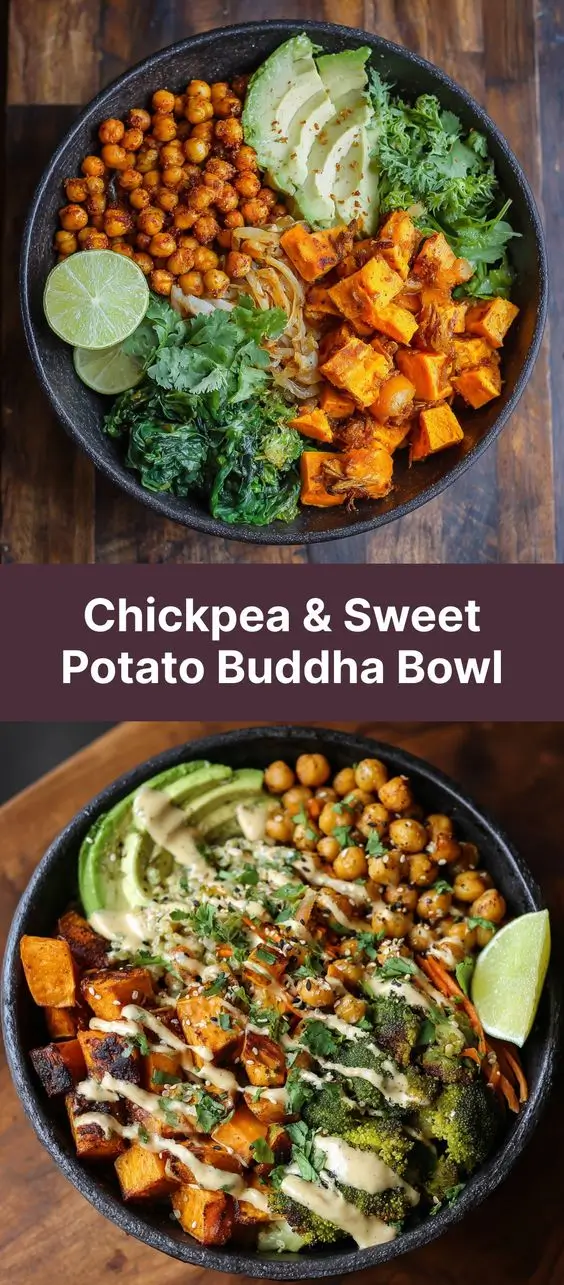
The Chickpea & Sweet Potato Buddha Bowl is more than just a meal—it’s a celebration of vibrant colors, bold flavors, and nourishing ingredients. This plant-powered bowl brings together the earthy sweetness of roasted sweet potatoes, the hearty texture of spiced chickpeas, and a rainbow of fresh vegetables, all nestled over a bed of wholesome grains. Whether you’re a long-time vegan, flexitarian, or simply looking to add more nutrient-dense meals to your diet, this Buddha bowl delivers on taste, texture, and nutrition. Packed with fiber, protein, complex carbohydrates, and essential vitamins, it’s a balanced dish that fuels your body and satisfies your palate.
The History
The concept of the Buddha bowl originated from the broader trend of grain bowls, which gained popularity in the United States during the early 2010s as part of the clean eating and wellness movements. While not directly linked to Buddhist cuisine, the name “Buddha bowl” evokes a sense of mindfulness, balance, and abundance—values often associated with a plant-based lifestyle and mindful eating. These bowls are inspired by traditional Asian rice bowls and Middle Eastern mezze platters, combining whole grains, legumes, vegetables, and sauces into a single, harmonious dish.
The Chickpea & Sweet Potato variation emerged as a favorite among health-conscious eaters due to its rich flavor profile and nutritional benefits. Sweet potatoes have been cultivated for thousands of years, originating in Central and South America, while chickpeas (also known as garbanzo beans) trace their roots back to the Mediterranean and Middle East. The fusion of these global ingredients reflects modern culinary trends that honor tradition while embracing innovation. Today, this particular combination has become a staple in vegetarian cafes, meal prep services, and home kitchens worldwide.
Ingredients Breakdown
What makes the Chickpea & Sweet Potato Buddha Bowl so nutritious and satisfying is the thoughtful selection of ingredients, each contributing unique textures, flavors, and health benefits:
- Sweet Potatoes: A rich source of beta-carotene (which converts to vitamin A), fiber, potassium, and antioxidants. Their natural sweetness balances the savory elements of the bowl.
- Chickpeas: High in plant-based protein and fiber, chickpeas help keep you full longer and support digestive health. When roasted, they develop a crispy exterior and nutty flavor.
- Quinoa or Brown Rice: These complex carbohydrates provide sustained energy and contain all nine essential amino acids (especially quinoa, making it a complete protein).
- Leafy Greens: Kale, spinach, or arugula add volume, fiber, iron, calcium, and a variety of phytonutrients.
- Avocado: Offers heart-healthy monounsaturated fats, creamy texture, and helps absorb fat-soluble vitamins from other ingredients.
- Cherry Tomatoes & Cucumber: Provide hydration, crunch, vitamin C, and lycopene (in tomatoes).
- Tahini Dressing: Made from sesame seed paste, tahini is rich in healthy fats, calcium, and magnesium. Whisked with lemon juice, garlic, and maple syrup, it creates a tangy, creamy dressing that ties everything together.
- Optional Toppings: Include pickled red onions, pumpkin seeds, sunflower seeds, shredded carrots, microgreens, or fresh herbs like cilantro and parsley for added flavor and texture.
Step-by-Step Recipe
Ingredients
- 2 medium sweet potatoes, peeled and cubed
- 1 can (15 oz) chickpeas, drained, rinsed, and patted dry
- 2 tablespoons olive oil
- 1 teaspoon ground cumin
- 1/2 teaspoon smoked paprika
- 1/2 teaspoon garlic powder
- 1/4 teaspoon turmeric (optional)
- Salt and black pepper to taste
- 1 cup uncooked quinoa (or brown rice)
- 2 cups water or vegetable broth
- 4 cups packed baby kale or spinach
- 1 ripe avocado, sliced
- 1 cup cherry tomatoes, halved
- 1/2 cucumber, diced
- 1/4 cup chopped fresh cilantro or parsley
- 2 tablespoons pumpkin seeds or sunflower seeds
Tahini Dressing
- 1/4 cup tahini (sesame seed paste)
- 3 tablespoons fresh lemon juice
- 1 tablespoon pure maple syrup or agave nectar
- 1 small garlic clove, minced
- 2–4 tablespoons water (to thin)
- Salt to taste
Directions
- Preheat oven and prepare sweet potatoes: Preheat your oven to 400°F (200°C). On a large baking sheet, toss the cubed sweet potatoes with 1 tablespoon of olive oil, salt, and pepper. Spread them in an even layer and roast for 25–30 minutes, flipping halfway through, until tender and caramelized at the edges.
- Roast the chickpeas: In a bowl, combine the dried chickpeas with remaining 1 tablespoon olive oil, cumin, smoked paprika, garlic powder, turmeric (if using), salt, and pepper. Toss well to coat. Add them to the same baking sheet (or a separate one if crowded) during the last 20–25 minutes of roasting. Roast until golden and slightly crispy. Let cool slightly—they’ll crisp up more as they cool.
- Cook the quinoa: While the vegetables roast, rinse the quinoa under cold water to remove saponins (which can make it bitter). In a saucepan, combine quinoa and water (or broth). Bring to a boil, then reduce heat to low, cover, and simmer for 15 minutes. Remove from heat and let sit, covered, for 5 minutes. Fluff with a fork.
- Prepare the tahini dressing: In a small bowl, whisk together tahini, lemon juice, maple syrup, minced garlic, and salt. Gradually add water, one tablespoon at a time, until the dressing reaches a smooth, pourable consistency.
- Assemble the bowls: Divide the cooked quinoa between four bowls. Top with a handful of leafy greens. Arrange roasted sweet potatoes and chickpeas evenly. Add slices of avocado, cherry tomatoes, cucumber, and any additional toppings like seeds or herbs.
- Drizzle and serve: Just before serving, generously drizzle each bowl with tahini dressing. Serve immediately, or store components separately for meal prep.
Tips
- Uniform Cutting: Cut sweet potatoes into even-sized cubes (about 3/4 inch) to ensure they cook evenly and don’t burn.
- Dry Chickpeas Well: Patting the chickpeas completely dry before seasoning helps them crisp up better in the oven—moisture is the enemy of crunch!
- Boost Flavor: For extra depth, add a pinch of cayenne or chili flakes to the chickpea spice mix, or finish the roasted chickpeas with a splash of apple cider vinegar.
- Meal Prep Friendly: This bowl keeps exceptionally well. Store components separately in airtight containers for up to 4 days. Assemble just before eating to maintain texture, especially the greens and avocado.
- Double the Batch: Roast extra sweet potatoes and chickpeas—they can be used in salads, wraps, or blended into dips later in the week.
- Toasting Seeds: Lightly toast pumpkin or sunflower seeds in a dry skillet over medium heat for 2–3 minutes until fragrant. It enhances their nuttiness.
- Acid Balance: Always taste your dressing before serving. If too thick, add more water. If too bitter, add a touch more sweetener or lemon juice to balance.
Variations and Customizations
The beauty of the Buddha bowl lies in its versatility. Feel free to adapt based on dietary needs, seasonal produce, or personal preferences:
- Grain-Free Option: Replace quinoa with cauliflower rice, massaged kale, or spiralized zucchini noodles.
- Protein Boost: Add baked tofu, tempeh, hard-boiled eggs (for vegetarians), grilled chicken, or a soft-boiled egg.
- Gluten-Free: Naturally gluten-free as written—just confirm all packaged ingredients (like broth) are certified GF if needed.
- Mediterranean Twist: Swap tahini dressing for tzatziki or hummus. Add kalamata olives, red onion, and feta cheese (optional).
- Spicy Version: Mix harissa or sriracha into the tahini dressing, or season chickpeas with cayenne and chipotle powder.
- Fall-Inspired: Use roasted butternut squash instead of sweet potato, and top with apples, walnuts, and a cinnamon-maple dressing.
- Asian-Inspired: Use brown rice, edamame, shredded cabbage, and a ginger-soy dressing. Top with sesame seeds and green onions.
- Kid-Friendly: Skip spicy spices, cut veggies smaller, and offer dressing on the side. Let kids build their own bowls!
Health Considerations and Nutritional Value
This Chickpea & Sweet Potato Buddha Bowl is a powerhouse of nutrition, offering a balanced macronutrient profile and a wide range of micronutrients essential for overall health.
Nutritional Highlights (per serving, approximately 1 bowl):
- Calories: ~500–600 kcal (depending on portion size and dressing amount)
- Protein: 15–18g (from chickpeas, quinoa, and seeds)
- Fiber: 12–15g (supports gut health and satiety)
- Healthy Fats: ~18g (primarily from avocado, olive oil, and tahini)
- Complex Carbohydrates: ~70g (slow-releasing energy from sweet potatoes and quinoa)
- Vitamin A: Over 200% DV (from sweet potatoes)
- Vitamin C: ~50% DV (from tomatoes, lemon juice, greens)
- Iron: ~25% DV (plant-based iron enhanced by vitamin C in the meal)
- Calcium & Magnesium: From tahini, greens, and seeds
Benefits:
- Supports Heart Health: Thanks to fiber, unsaturated fats, and potassium.
- Promotes Digestive Wellness: High fiber content encourages regularity and feeds beneficial gut bacteria.
- Blood Sugar Regulation: Low glycemic index ingredients and balanced macros help prevent spikes.
- Anti-Inflammatory Properties: Turmeric, garlic, and colorful vegetables contain compounds that combat inflammation.
- Weight Management: High volume, nutrient-dense, and satiating without being calorie-dense.
Considerations:
- For those managing kidney disease, monitor potassium intake from sweet potatoes, avocado, and tomatoes.
- Individuals with irritable bowel syndrome (IBS) may need to limit chickpeas and cruciferous greens; consider substituting lentils or white beans and using romaine lettuce instead.
- Ensure adequate B12 and iron absorption: Pair with a source of vitamin C (already present here) and consider fortified foods or supplements if following a strict vegan diet.
FAQ
Can I make this bowl ahead of time?
Yes! This recipe is ideal for meal prep. Cook grains, roast vegetables, and make dressing up to 4 days in advance. Store components separately and assemble when ready to eat.
How do I store leftovers?
Keep in airtight containers in the refrigerator for up to 4 days. Add avocado and dressing just before serving to prevent browning and sogginess.
Can I freeze this Buddha bowl?
It’s best not to freeze assembled bowls. However, roasted sweet potatoes and chickpeas freeze well for up to 3 months. Thaw and re-crisp in the oven before using.
Is this recipe vegan and gluten-free?
Yes, as written, it is both vegan and naturally gluten-free. Always check labels on packaged items like broth or tahini to confirm.
Why are my chickpeas not crispy?
Likely causes include excess moisture, overcrowding on the pan, or not roasting long enough. Make sure to dry them thoroughly, use parchment paper, and allow space between chickpeas for air circulation.
Can I use canned sweet potatoes?
No, canned sweet potatoes are too soft. Fresh or frozen (thawed and patted dry) sweet potatoes work best for roasting.
What can I substitute for tahini?
You can use almond butter, cashew butter, or sunflower seed butter for a similar creamy texture. Note: sunflower seed butter will darken the color.
Are Buddha bowls supposed to be hot or cold?
They can be served either way! Warm components (grains, roasted veggies) make a comforting hot meal, while chilled versions work well as a salad-style lunch.
Summary
The Chickpea & Sweet Potato Buddha Bowl is a nutrient-rich, flavorful, and customizable plant-based meal that combines roasted vegetables, protein-packed legumes, and wholesome grains with a creamy tahini dressing. Perfect for meal prep, weeknight dinners, or impressing guests, it’s a delicious way to embrace balanced, mindful eating.