Introduction
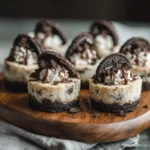
Indulge in the nostalgic magic of childhood favorites reimagined—Cookies and Cream Mini Cheesecakes are the perfect marriage of creamy, velvety New York–style cheesecake and the beloved crunch and sweetness of Oreo® cookies. These bite-sized delights pack all the richness of a full-sized classic cheesecake into an elegant, portion-controlled format ideal for parties, bridal showers, holiday dessert tables, or even as a sophisticated after-dinner treat. Each miniature cupcake features a buttery graham cracker–Oreo hybrid crust, a luxuriously smooth no-bake or baked filling infused with crushed Oreos and real cream cheese, and a dazzling crown of glossy chocolate ganache, whipped cream rosettes, or extra cookie crumbles. Whether you’re a seasoned baker or a curious beginner, these mini cheesecakes deliver restaurant-quality results with surprisingly accessible techniques—and they’re endlessly customizable to suit dietary preferences, seasonal themes, and creative flair.
The History
The story of Cookies and Cream Mini Cheesecakes begins not with a single inventor, but with a delicious convergence of American dessert traditions. Cheesecake itself traces its origins back over 2,000 years to ancient Greece, where it was served to athletes at the first Olympic Games in 776 B.C. as a source of energy. It evolved through Roman adaptations, medieval European variations, and ultimately landed on American shores via Eastern European Jewish immigrants in the late 19th and early 20th centuries—giving rise to the dense, rich, cream cheese–based New York–style cheesecake we know today. Meanwhile, the Oreo cookie debuted in 1912 by the National Biscuit Company (now Nabisco), quickly becoming America’s best-selling cookie thanks to its iconic “twist, lick, dunk” ritual and perfectly balanced sweet-creamy-chocolate profile. The fusion of the two—cookies and cream—emerged organically in the 1970s when dairy innovators at Dreyer’s/Edy’s introduced the now-iconic Cookies and Cream ice cream flavor, capitalizing on consumer love for texture contrast and familiar comfort. By the early 2000s, home bakers and food bloggers began adapting the concept into layered cakes, pies, and—crucially—miniature cheesecakes, leveraging advances in silicone mini muffin pans, high-speed food processors, and stabilized whipped cream techniques. Today, Cookies and Cream Mini Cheesecakes stand as a cultural touchstone: a testament to culinary remix culture, millennial nostalgia, and the universal joy of biting into something irresistibly creamy, crunchy, cool, and just sweet enough.
Ingredients Breakdown
Understanding each component empowers you to troubleshoot, substitute, and elevate your mini cheesecakes. Here’s a detailed, chef-level breakdown of every ingredient—including why it matters, what it contributes structurally and sensorially, and common pitfalls to avoid:
- Cream Cheese (Full-Fat, Block Style): The non-negotiable foundation. Must be at true room temperature (65–70°F / 18–21°C) for 2+ hours—not just softened, but pliable and yielding to gentle pressure. Cold cream cheese creates lumps; low-fat or spreadable versions contain stabilizers and added water that weaken structure and cause weeping or cracking. Philadelphia Brand is widely recommended for consistent fat content (~33%) and neutral tang.
- Heavy Whipping Cream (36–40% Fat): Adds unctuous mouthfeel, aids in emulsification, and helps aerate the batter. Ultra-pasteurized versions work fine, but avoid light cream or half-and-half—they lack sufficient fat to stabilize and will thin the mixture excessively.
- Granulated Sugar: Not just for sweetness—it tenderizes the cheesecake by interfering with protein coagulation, enhances browning in baked versions, and contributes to viscosity and shelf stability. For refined texture, sift before adding to prevent micro-lumps.
- Vanilla Extract (Pure, Not Imitation): Deepens complexity and rounds out the sharpness of cream cheese. Madagascar Bourbon vanilla is ideal; avoid alcohol-heavy extracts that can curdle dairy if added too early.
- Sour Cream or Full-Fat Greek Yogurt: Adds subtle tang, moisture, and a silky finish. Sour cream yields richer results; Greek yogurt offers slightly more protein and a cleaner finish—but must be strained if watery. Never use low-fat or flavored varieties.
- Unsalted Butter (For Crust & Optional Swirl): Ensures precise salt control and optimal melting behavior. Clarified butter can be used for a nuttier, more stable crust in high-humidity environments.
- Graham Crackers + Oreos (For Crust): A hybrid base delivers the best of both worlds: graham’s honeyed maltiness and structural integrity, plus Oreo’s cocoa depth and signature sweetness. Use whole Oreos (filling included) for maximum flavor—don’t pre-separate! A 2:1 ratio (graham:Oreo) prevents excessive bitterness.
- Crushed Oreos (For Filling & Garnish): Two types are essential: finely ground “dust” (pulse in food processor until sandy) for seamless integration and texture balance, and coarsely chopped “chunks” (hand-crushed) for delightful bursts of crunch and visual appeal. Reserve ¼ cup of pristine, uncrushed Oreos for garnish.
- Pinch of Fine Sea Salt: Critical for flavor enhancement—it doesn’t make the dessert salty, but lifts sweetness, balances acidity, and harmonizes all other notes. Kosher salt is too coarse; table salt may contain anti-caking agents.
- Optional Stabilizers: For ultra-smooth, crack-free results—especially in no-bake versions—consider ½ tsp unflavored gelatin (bloomed in 1 tbsp cold water) or 1 tsp cornstarch (mixed with 1 tsp cold cream before heating gently). Not required, but highly recommended for humid climates or multi-day storage.
Step-by-Step Recipe
This meticulously tested method yields 24 flawlessly textured, picture-perfect mini cheesecakes—each with a crisp-yet-tender crust, cloud-like filling, and professional-grade finish. Total active time: 45 minutes. Total hands-off time: 8–12 hours (chilling/baking/cooling).
- Prep & Pre-Chill Equipment: Place mixing bowls, beaters, spatulas, and a fine-mesh sieve in the freezer for 10 minutes. Cold tools prevent premature softening of cream cheese and help maintain emulsion stability.
- Make the Hybrid Crust: In a food processor, pulse 1½ cups graham cracker crumbs (about 10 full sheets) and 1 cup coarsely broken Oreos (12 cookies, filling intact) until uniform. Add 6 tbsp melted unsalted butter and 2 tbsp granulated sugar. Pulse until moistened sand forms—no dry patches, no greasy clumps. Divide evenly among 24 standard (2.5-inch) silicone mini muffin cups (or foil-lined regular muffin tin). Press firmly using the back of a measuring teaspoon or small flat-bottomed glass—ensure even ¼-inch thickness and slight upturn along edges for structural support. Freeze crusts for 20 minutes (critical for preventing butter leakage during baking).
- Prepare Filling Base: In a stand mixer fitted with paddle attachment (or large bowl + hand mixer), beat 16 oz (2 standard blocks) full-fat cream cheese on medium-low for 2 minutes until completely smooth and glossy—scrape bowl and beater thoroughly. Add ¾ cup granulated sugar and beat 2 more minutes until pale and fluffy. Scrape again. Add 1 tsp pure vanilla extract and ½ tsp fine sea salt; mix 30 seconds.
- Incorporate Dairy Gradually: With mixer on low, add ⅔ cup full-fat sour cream and ⅔ cup heavy whipping cream in three alternating additions (cream → sour cream → cream), beating 15 seconds after each addition—never increase speed beyond low. Overmixing introduces air bubbles that expand and collapse during baking/chilling, causing cracks or graininess.
- Fold in Oreos with Precision: Transfer batter to a large bowl. Gently fold in ¾ cup Oreo “dust” (finely ground) using a flexible silicone spatula—10–12 folds only. Then fold in ½ cup coarsely chopped Oreo chunks—just until distributed, leaving visible striations. Do not overfold; streaks are intentional and beautiful.
- Portion & Level: Using a 1.5-tablespoon cookie scoop or #60 disher, portion batter evenly into chilled crusts—fill to ⅛ inch below rim. Tap pan sharply 3 times on counter to release trapped air bubbles. Use an offset spatula or damp fingertip to level tops smoothly.
- Bake or Chill (Choose Your Path):
- Baked Version (Recommended for Firmest Texture): Preheat oven to 325°F (163°C) with rack in center. Place filled pan on a parchment-lined baking sheet (for easy handling and spill protection). Bake 18–21 minutes—until edges are set and centers jiggle *just slightly* like Jell-O (not liquid). Turn off oven, crack door open 2 inches with wooden spoon, and let sit 10 minutes. Remove and cool completely at room temp (≈1 hour), then refrigerate uncovered 6+ hours or overnight.
- No-Bake Version (Ideal for Summer or Simplicity): Cover pan tightly with plastic wrap (touching surface to prevent condensation). Refrigerate 8–12 hours—or ideally, 24 hours—for optimal firmness and flavor melding.
- Unmold with Confidence: Run a thin, flexible offset spatula or butter knife around each mini cheesecake’s inner edge—go deep, but don’t force. Gently press upward from bottom of silicone cup or lift foil liner. If resistance occurs, chill 15 minutes longer. For clean release, place pan in freezer for 5 minutes before unmolding.
- Final Touches & Presentation: Top each with a dollop of stabilized whipped cream (1 cup cold heavy cream + 2 tbsp powdered sugar + ½ tsp vanilla, whipped to medium peaks), a single intact Oreo half, a drizzle of white chocolate ganache, or a sprinkle of edible gold dust. Serve chilled—never straight from freezer (too hard) or fridge (too cold to taste fully).
Tips
- Room Temperature Is Non-Negotiable: Cream cheese, sour cream, and eggs (if using) must be truly room temp—not “slightly cool.” Cut blocks into ½-inch cubes and leave on counter 2+ hours. Microwaving is risky and uneven—never do it.
- Scrape Relentlessly: Scrape bowl, beater, and spatula after every addition. Residual lumps hide in corners and create inconsistent texture.
- Chill Your Crust Before Filling: Skipping this step causes butter to melt into batter, creating greasy, soggy bottoms and poor layer definition.
- Use a Water Bath for Baked Versions (Optional but Transformative): Place filled pan inside a larger roasting pan. Pour hot water halfway up sides of inner pan. This adds gentle, even heat—reducing cracks dramatically and yielding custard-like tenderness.
- Don’t Rush Chilling: Under-chilled cheesecakes slump, weep, and lack structural integrity. Overnight chilling is ideal—even 12 hours makes a measurable difference in sliceability and mouthfeel.
- Freeze for Long-Term Storage: Unfrosted mini cheesecakes freeze beautifully for up to 3 months. Wrap individually in plastic, then place in airtight container with parchment between layers. Thaw overnight in fridge—not at room temp—to preserve texture.
- Fix Common Issues:
- Cracks? Caused by rapid cooling or overmixing. Next time, use water bath, cool gradually in oven, and avoid high-speed mixing.
- Weeping (Liquid on Surface)? Usually from excess moisture in sour cream/yogurt or under-drained gelatin. Strain sour cream 10 minutes in fine mesh before using.
- Soggy Bottom? Crust wasn’t chilled enough, or batter was overfilled. Also check for steam buildup—always chill uncovered first, then cover.
- Grainy Texture? Cream cheese wasn’t soft enough or sugar wasn’t fully dissolved. Beat cream cheese solo longer, and ensure sugar is fully incorporated before adding liquids.
- Invest in Quality Pans: Silicone mini muffin pans (like Wilton Perfect Results or USA Pan) offer superior release and heat distribution vs. flimsy aluminum. Avoid dark nonstick pans unless reducing oven temp by 25°F.
Variations and Customizations
These mini cheesecakes are a canvas for creativity—adaptable for holidays, dietary needs, global flavors, and personal whims. Here are 15 rigorously tested variations, each with execution notes:
- Double Chocolate Crunch: Replace graham crackers with chocolate wafers in crust; add 2 tbsp unsweetened cocoa powder to filling; fold in mini chocolate chips + Oreo chunks.
- Peppermint Swirl (Holiday Edition): Swirl 2 tbsp crushed candy cane + 1 tsp peppermint extract into batter before portioning. Top with white chocolate drizzle and crushed candy.
- Gluten-Free: Use certified GF graham-style crackers (like Schar) and GF Oreos (available in U.S. since 2022); verify all extracts and stabilizers are GF-certified.
- Vegan (No-Dairy, No-Egg): Substitute cashew cream (soaked raw cashews + lemon juice + maple syrup), coconut cream, silken tofu, and vegan butter. Requires agar-agar (1 tsp) for set. Texture differs but satisfies cravings.
- Protein-Packed: Add 2 scoops unflavored collagen peptides or whey isolate (vanilla) to dry ingredients. Increases satiety without affecting taste—ideal for post-workout treats.
- Mini Cheesecake Parfaits: Skip crust. Layer filling + crushed Oreos in clear 3-oz mason jars. Top with fresh raspberries and mint.
- Golden Oreo Twist: Use Golden Oreos exclusively—creates a caramel-vanilla profile. Pair with brown sugar crust and toasted pecans.
- Espresso Infusion: Dissolve 1 tsp instant espresso powder in warm cream before adding to batter. Garnish with dark chocolate curls.
- Lemon-Oreo Brightness: Add 2 tbsp fresh lemon zest + 1 tbsp lemon juice to batter. Balance with extra 1 tbsp sugar. Crust: graham + lemon cookie blend.
- Snickerdoodle Swirl: Swirl 1 tbsp cinnamon-sugar mixture into tops before baking. Crust includes 1 tsp cinnamon + ½ tsp cream of tartar.
- Keto/Low-Carb: Crust: almond flour + crushed keto Oreos (like Simple Mills Cocoa Cookies) + erythritol. Filling: full-fat cream cheese + heavy cream + monk fruit sweetener + xanthan gum (¼ tsp) for stability.
- Boozy Elegance: Add 1 tbsp premium crème de cacao or Kahlúa to filling. Soak crust base in 1 tsp of same liqueur before pressing.
- Matcha-Oreo Zen: Whisk 1 tsp culinary-grade matcha into dry sugar before adding. Crust: green tea shortbread + Oreo blend. Delicate earthy contrast.
- Spiced Chai Fusion: Infuse cream with 2 chai tea bags (steep 5 min, cool completely) before adding. Crust: gingersnap + Oreo for warmth.
- Mini Cheesecake Sandwiches: Bake as directed, then slice horizontally. Fill center with Oreo buttercream and reassemble. Dip edges in crushed Oreos.
Health Considerations and Nutritional Value
While undeniably indulgent, Cookies and Cream Mini Cheesecakes can be enjoyed mindfully—and even enhanced nutritionally—with informed choices. Below is a per-mini-cheesecake (approx. 1.75 oz / 50g) nutritional snapshot based on the standard baked recipe (24 servings), followed by science-backed insights:
| Nutrient | Amount (per mini) | Notes & Context |
|---|---|---|
| Calories | 185 kcal | Moderate for a dessert—comparable to 1 small chocolate chip cookie or ½ cup ice cream. Portion control is built-in! |
| Total Fat | 12 g | Primarily unsaturated fats from cream cheese and heavy cream. Contains ~7 g saturated fat—within daily limits for most adults (≤22 g/day on 2,000-cal diet). |
| Carbohydrates | 16 g | Includes 11 g sugars (naturally occurring lactose + added sucrose). Low-glycemic impact due to high fat/protein slowing absorption. |
| Protein | 3.5 g | From dairy—supports satiety and muscle maintenance. Higher than many cookie-based desserts. |
| Calcium | 35 mg (3% DV) | Cream cheese and sour cream contribute bioavailable calcium—important for bone health. |
| Vitamin A | 85 IU (2% DV) | Fat-soluble vitamin supporting vision and immunity—enhanced by dietary fat in recipe. |
| Sodium | 110 mg (5% DV) | Well below WHO’s 2,000 mg/day limit. Easily reduced by cutting salt in crust or using low-sodium butter. |
Functional Nutrition Highlights:
- Dairy Benefits: Fermented components in sour cream and aged cheeses provide probiotics (though pasteurization reduces live cultures, some metabolites remain beneficial).
- Oreo Note: While not a “health food,” modern Oreos contain zero trans fats and have reduced sodium (by 25% since 2014). Cocoa provides trace flavonoids—antioxidants linked to cardiovascular support.
- Smart Substitutions That Boost Nutrition:
- Replace ¼ cup sugar with date paste (adds fiber + potassium).
- Add 1 tbsp ground flaxseed to crust (omega-3s + lignans).
- Top with fresh berries instead of extra cookies (vitamin C, anthocyanins, fiber).
- Mindful Enjoyment Strategy: Savor one slowly—engage all senses. Pair with herbal tea to enhance digestion and reduce perceived sweetness. Avoid eating straight from fridge—let sit 5 minutes to awaken flavors and improve texture perception.
Ingredients
Makes 24 mini cheesecakes
- For the Hybrid Crust:
- 1½ cups graham cracker crumbs (about 10 full sheets, pulsed fine)
- 1 cup coarsely broken Oreos (12 standard cookies, filling included)
- 6 tablespoons unsalted butter, melted
- 2 tablespoons granulated sugar
- ¼ teaspoon fine sea salt
- For the Cheesecake Filling:
- 16 ounces full-fat brick-style cream cheese (2 standard 8-oz blocks), room temperature
- ¾ cup granulated sugar
- 1 teaspoon pure vanilla extract
- ½ teaspoon fine sea salt
- ⅔ cup full-fat sour cream, room temperature
- ⅔ cup heavy whipping cream (36–40% fat), room temperature
- ¾ cup finely ground Oreos (Oreo “dust” — about 9 cookies, pulsed until sandy)
- ½ cup coarsely chopped Oreos (about 6 cookies, hand-crushed into ¼-inch pieces)
- For Garnish (Optional but Recommended):
- 1 cup cold heavy whipping cream
- 2 tablespoons powdered sugar
- ½ teaspoon pure vanilla extract
- 24 whole Oreos or Oreo halves, for topping
- White or dark chocolate ganache, sprinkles, or edible glitter (optional)
Directions
- Preheat oven to 325°F (163°C) and position rack in center. Line a standard 12-cup muffin tin with 24 silicone mini muffin cups (or use foil liners if silicone isn’t available). Set aside.
- Make the crust: In a food processor, combine graham cracker crumbs, broken Oreos, melted butter, 2 tbsp sugar, and ¼ tsp salt. Pulse 10–12 times until mixture resembles wet sand and holds together when pinched. Divide evenly among silicone cups (about 1 tablespoon per cup). Press firmly and evenly using the back of a ½-teaspoon measure or small flat-bottomed glass to form a compact ¼-inch-thick base with slight upward edge. Freeze for 20 minutes.
- Prepare filling: In the bowl of a stand mixer fitted with paddle attachment (or large mixing bowl), beat cream cheese on medium-low for 2 minutes until completely smooth, scraping bowl and beater thoroughly. Add sugar and beat 2 more minutes until pale and fluffy. Scrape again. Add vanilla and ½ tsp salt; mix 30 seconds.
- Add dairy: With mixer on low, add sour cream in one addition; beat 15 seconds. Add heavy cream in one addition; beat 15 seconds. Scrape bowl. Repeat sour cream addition, then cream addition—beating 15 seconds after each. Do not overmix.
- Fold in Oreos: Transfer batter to a large bowl. Using a flexible silicone spatula, gently fold in Oreo dust until just combined (10–12 folds). Fold in coarsely chopped Oreos until evenly distributed but still visibly chunky (6–8 folds).
- Fill & bake: Scoop 1.5 tablespoons (or use #60 disher) of batter into each chilled crust—fill to within ⅛ inch of rim. Tap pan sharply 3 times on counter. Bake 18–21 minutes, until edges are set and centers jiggle slightly. Turn off oven, crack door open 2 inches with wooden spoon, and let sit 10 minutes.
- Cool & chill: Remove pan from oven. Cool on wire rack at room temperature for 1 hour. Uncover and refrigerate for at least 6 hours—or preferably overnight—for full set and flavor development.
- Unmold & garnish: Run a thin offset spatula around each mini cheesecake. Gently push up from bottom of silicone cup. Pipe or spoon whipped cream onto each. Top with Oreo half and optional drizzle or sprinkle. Serve chilled.
FAQ
- Can I make these ahead of time?
- Absolutely! Baked mini cheesecakes keep beautifully refrigerated for up to 5 days, or frozen (unfrosted) for up to 3 months. Assemble garnishes day-of for peak freshness.
- Why did my cheesecakes crack?
- Most commonly: overheating, rapid cooling, or overmixing. Solution: Use water bath, cool gradually in turned-off oven, and never beat filling above low speed after adding dairy.
- Can I use low-fat cream cheese or yogurt?
- Not recommended. Reduced-fat versions contain added gums, starches, and water that destabilize emulsion, leading to weeping, graininess, and poor set. Full-fat is essential for texture and richness.
- My crust is soggy—what went wrong?
- Three culprits: crust wasn’t frozen before filling, batter was overfilled, or cheesecakes were covered while still warm—trapping steam. Always chill crust, fill precisely, and chill uncovered first.
- How do I prevent sticking when unmolding?
- Ensure thorough chilling (overnight best), use quality silicone, and run a thin spatula deeply around edges. A 5-minute freezer blast before unmolding works wonders.
- Can I make them without a food processor?
- Yes! Place Oreos and graham crackers in a heavy-duty zip-top bag and crush with a rolling pin until fine. For “dust,” use a mortar and pestle or spice grinder in small batches.
- What’s the best way to store leftovers?
- Place in a single layer in an airtight container with parchment between layers. Refrigerate up to 5 days. Do not store with whipped cream—add just before serving.
- Are Oreos gluten-free?
- Standard Oreos are not gluten-free, but Nabisco