Introduction
Crab cakes with lemon pea sauce are a culinary masterpiece that brings together the delicate sweetness of fresh crab meat with the bright, zesty tang of a homemade lemon-infused pea sauce. This elegant dish strikes the perfect balance between rich and refreshing, making it ideal for both casual weeknight dinners and special occasions like dinner parties or holiday meals. The golden-brown exterior of each crab cake gives way to a tender, flaky interior packed with flavor, while the vibrant green lemon pea sauce adds a luxurious creaminess without overwhelming the palate. Whether you’re a seafood enthusiast or simply looking to elevate your home cooking game, this recipe offers a delightful fusion of textures and tastes that will impress even the most discerning diners.
The History
The origins of crab cakes can be traced back to the coastal regions of the United States, particularly Maryland, where blue crabs have long been a staple of local cuisine. In the 1800s, Chesapeake Bay watermen began combining leftover crab meat with simple binders like breadcrumbs and eggs, then pan-frying them into patties—a thrifty yet delicious way to use every part of the catch. Over time, these humble creations evolved into gourmet fare, especially as restaurants in Baltimore and Annapolis began refining the recipe with herbs, spices, and careful handling techniques to preserve the crab’s natural sweetness. While traditional Maryland-style crab cakes emphasize minimal fillers and maximum crab content, modern interpretations now span the globe, incorporating regional ingredients and innovative sauces. The addition of lemon pea sauce is a contemporary twist rooted in French-inspired cuisine, where fresh peas and citrus are often paired to cut through richness and enhance seafood flavors. Today, crab cakes with lemon pea sauce represent a harmonious blend of American tradition and modern gastronomy, celebrated in fine dining establishments and home kitchens alike.
Ingredients Breakdown
Creating exceptional crab cakes begins with understanding each ingredient’s role in building flavor, texture, and structure. At the heart of this dish is fresh lump crab meat, preferably jumbo lump for its large, succulent pieces and sweet taste. It’s essential to pick through the crab meat carefully to remove any shells while preserving the integrity of the chunks. To bind the mixture without masking the crab’s flavor, we use a light hand with mayonnaise, which adds moisture and richness, along with a single large egg for cohesion. Dijon mustard contributes a subtle sharpness that enhances the overall depth, while Worcestershire sauce introduces umami complexity.
The seasoning blend includes Old Bay seasoning, a classic choice in Maryland crab dishes, complemented by freshly ground black pepper and a pinch of cayenne pepper for gentle heat. For body and absorption, panko breadcrumbs are preferred over regular breadcrumbs due to their airy texture, which helps prevent dense cakes. A small amount of finely minced shallot and celery provides aromatic nuance and slight crunch without overpowering the star ingredient.
For frying, unsalted butter and olive oil are combined—butter for flavor and browning, olive oil to raise the smoke point and prevent burning. On the sauce side, frozen or fresh green peas form the base of the lemon pea sauce, blended smooth with garlic, vegetable or chicken broth, and finished with heavy cream or Greek yogurt for silkiness. Fresh lemon juice and zest deliver the signature brightness, while chopped fresh mint or dill adds herbal lift. Optional garnishes include microgreens, extra lemon wedges, and a drizzle of cream.
Step-by-Step Recipe
- Prepare the Lemon Pea Sauce: In a medium saucepan, heat one tablespoon of olive oil over medium heat. Add one clove of minced garlic and sauté for about 30 seconds until fragrant. Stir in 1 cup of shelled green peas and cook for 2–3 minutes until bright green and slightly softened. Pour in ¼ cup of vegetable broth and simmer for another 5 minutes. Transfer the mixture to a blender, add 1 tablespoon of heavy cream, 1 teaspoon of lemon zest, 1 tablespoon of fresh lemon juice, and a few leaves of fresh mint. Blend until completely smooth, then season with salt and white pepper to taste. Set aside and keep warm.
- Chill the Crab Mixture Bowl: Place a mixing bowl in the refrigerator for 10–15 minutes before starting. Keeping everything cold prevents the mayonnaise from melting and helps maintain the crab cake structure.
- Mix the Crab Cake Ingredients: In the chilled bowl, gently combine 1 pound of lump crab meat, 3 tablespoons of mayonnaise, 1 beaten egg, 1 teaspoon of Dijon mustard, 1 teaspoon of Worcestershire sauce, 1½ teaspoons of Old Bay seasoning, ¼ teaspoon of cayenne pepper, 2 tablespoons of finely minced shallot, 2 tablespoons of finely diced celery, and ⅓ cup of panko breadcrumbs. Use a spatula or your hands (gently!) to mix just until combined—overmixing will break up the crab lumps and result in tough cakes.
- Form the Cakes: Divide the mixture into 6 equal portions. Gently shape each portion into a patty about ¾-inch thick and 2½ inches wide. Place them on a parchment-lined tray, cover loosely with plastic wrap, and refrigerate for at least 30 minutes (or up to 2 hours). Chilling firms up the cakes and reduces crumbling during cooking.
- Cook the Crab Cakes: Heat a large skillet over medium heat. Add a combination of 1 tablespoon unsalted butter and 1 tablespoon olive oil. Once the butter has melted and starts to foam slightly, carefully place the crab cakes in the pan, leaving space between them. Cook for 4–5 minutes per side, turning only once, until deeply golden brown and heated through. Avoid pressing down on the cakes, as this squeezes out moisture and breaks apart the layers.
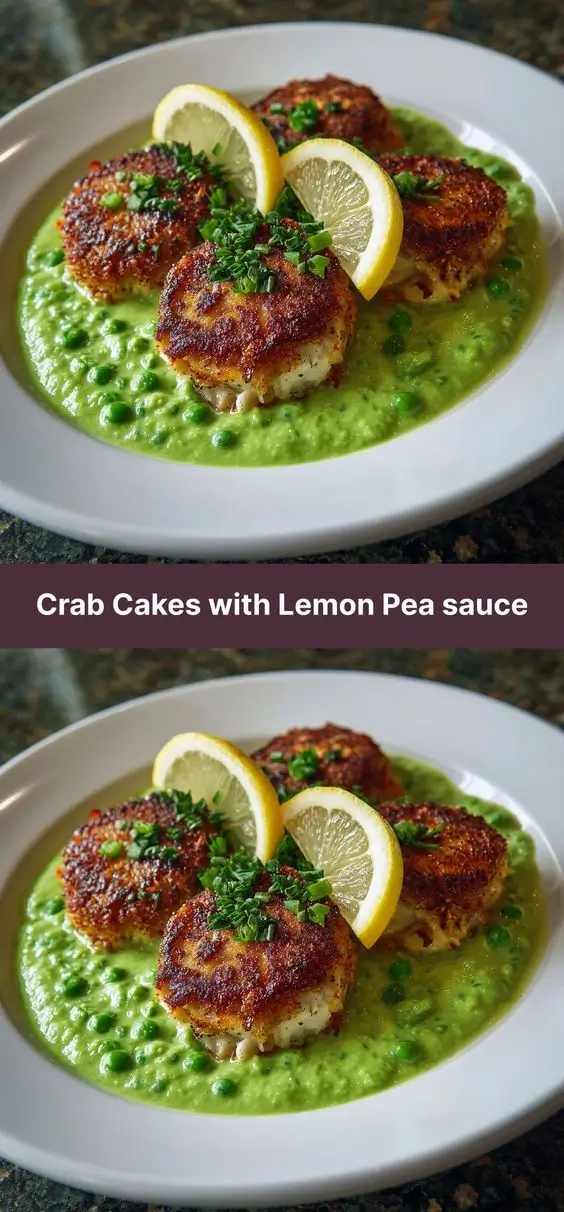
- Serve: Spoon a generous pool of warm lemon pea sauce onto each plate. Place two crab cakes atop the sauce. Garnish with additional lemon zest, a sprig of dill, microgreens, or a dollop of sour cream if desired. Serve immediately while hot.
Tips
- Use Fresh Crab Meat: Whenever possible, opt for fresh-picked lump crab meat rather than canned. If using pasteurized crab from a tub, drain it gently on paper towels to remove excess liquid but do not squeeze.
- Keep It Cold: Chill all components—including the bowl, utensils, and formed patties—to ensure the crab cakes hold their shape during cooking.
- Handle Gently: Fold the mixture delicately to preserve the large crab chunks. Overworking leads to a dense, meatloaf-like texture.
- Don’t Skip the Rest: Refrigerating the formed cakes is crucial—it allows the proteins and starches to set, reducing breakage when flipping.
- Perfect Browning: Use a non-stick or well-seasoned cast iron skillet. Make sure the pan is properly preheated before adding the cakes to achieve an even sear.
- Avoid Crowding: Cook in batches if necessary. Overcrowding lowers the pan temperature and causes steaming instead of searing.
- Baking Option: For a lighter version, bake the crab cakes at 375°F (190°C) for 15–18 minutes, flipping halfway through. Lightly spray or brush with oil to promote browning.
- Sauce Consistency: If the lemon pea sauce thickens too much upon standing, thin it with a splash of warm broth or cream before serving.
- Double the Sauce: The lemon pea sauce pairs wonderfully with grilled fish, chicken, roasted vegetables, or even as a dip for crusty bread—consider making extra!
- Make Ahead: You can prepare the crab mixture and shape the cakes up to one day in advance. Store covered in the fridge until ready to cook.
Variations and Customizations
This recipe is highly adaptable to different dietary needs and flavor preferences. For a gluten-free version, substitute the panko breadcrumbs with crushed gluten-free crackers, almond flour, or cooked quinoa. Those following a keto lifestyle can replace breadcrumbs entirely with grated Parmesan and increase the egg yolk content slightly for better binding.
To boost the herbal notes, consider adding chopped tarragon, parsley, or chives to the crab mixture. For a more Mediterranean flair, incorporate a touch of smoked paprika, capers, or sun-dried tomatoes. Spicy lovers might enjoy folding in finely diced jalapeño or a dash of hot sauce.
If crab is unavailable or cost-prohibitive, high-quality imitation crab (surimi) can work in a pinch, though the flavor and texture won’t match real crab. Alternatively, try substituting with cooked and flaked lobster meat or scallops for a luxurious twist.
For the sauce, swap peas with blanched asparagus tips or zucchini for a similar vibrant color and creamy texture. Vegan cooks can create a dairy-free lemon pea sauce using coconut milk or cashew cream instead of heavy cream, and omitting the egg in the crab cakes (using a flax egg or cornstarch slurry as binder).
For presentation, serve the crab cakes on a bed of arugula salad dressed in lemon vinaigrette, or alongside roasted fingerling potatoes and grilled asparagus. Mini crab cakes also make excellent appetizers—simply form smaller patties and serve with toothpicks and a ramekin of sauce for dipping.
Health Considerations and Nutritional Value
When prepared thoughtfully, crab cakes with lemon pea sauce can be part of a balanced, nutrient-rich diet. Crab meat is naturally low in fat and calories while being an excellent source of high-quality protein, providing around 17 grams per 3-ounce serving. It’s rich in essential nutrients such as selenium, vitamin B12, zinc, copper, and phosphorus, all of which support immune function, energy metabolism, and nervous system health. Additionally, crab contains omega-3 fatty acids, albeit in smaller amounts than oily fish like salmon, contributing to heart and brain health.
The lemon pea sauce enhances the dish’s nutritional profile significantly. Green peas are a good plant-based source of protein, fiber, vitamins A, C, and K, folate, and antioxidants like lutein. They also contain natural compounds that may help regulate blood sugar levels and support digestive health. The inclusion of lemon juice boosts vitamin C intake, aiding iron absorption and supporting collagen production. Fresh herbs like mint or dill contribute polyphenols and anti-inflammatory properties.
However, there are some considerations for those managing specific health conditions. Traditional crab cakes can be relatively high in sodium due to seasonings, Worcestershire sauce, and added salt—opting for low-sodium versions of these ingredients can reduce overall salt content. Mayonnaise and butter contribute saturated fats, so using reduced-fat mayo or increasing the proportion of Greek yogurt in the sauce can lower calorie and fat content without sacrificing creaminess.
For individuals concerned about cholesterol, moderate portion sizes (e.g., one serving of two cakes) and pairing with fiber-rich sides like quinoa or steamed greens can help maintain cardiovascular wellness. Pregnant women should ensure that crab is fully cooked and sourced from reputable suppliers to avoid contaminants like mercury, though crab is generally considered low-mercury seafood.
Overall, this dish offers a wholesome balance of lean protein, healthy fats, and phytonutrient-dense vegetables—especially when made with whole ingredients and minimal processing.
Ingredients
For the Crab Cakes:
- 1 pound (450g) fresh lump crab meat, picked over for shells
- 3 tablespoons mayonnaise (preferably full-fat for best texture)
- 1 large egg, lightly beaten
- 1 teaspoon Dijon mustard
- 1 teaspoon Worcestershire sauce
- 1½ teaspoons Old Bay seasoning
- ¼ teaspoon cayenne pepper (adjust to taste)
- ½ teaspoon freshly ground black pepper
- 2 tablespoons finely minced shallot
- 2 tablespoons finely diced celery
- ⅓ cup panko breadcrumbs (plus more if needed)
- Salt to taste (optional – taste first, as crab and seasonings may provide enough)
- 1–2 tablespoons unsalted butter (for cooking)
- 1–2 tablespoons olive oil (for cooking)
For the Lemon Pea Sauce:
- 1 tablespoon olive oil
- 1 clove garlic, minced
- 1 cup shelled green peas (frozen or fresh, thawed if frozen)
- ¼ cup vegetable or chicken broth
- 1 tablespoon heavy cream or plain Greek yogurt
- 1 tablespoon fresh lemon juice
- 1 teaspoon lemon zest
- 1 teaspoon chopped fresh mint or dill (plus more for garnish)
- Salt and white pepper to taste
Optional Garnishes:
- Lemon wedges
- Microgreens or arugula
- Extra herb sprigs
- Dollop of sour cream or crème fraîche
Directions
- In a medium saucepan, heat 1 tablespoon of olive oil over medium heat. Add the minced garlic and sauté for 30 seconds until fragrant. Stir in the green peas and cook for 2–3 minutes. Pour in the broth, bring to a simmer, and cook for 5 minutes until peas are soft.
- Transfer the pea mixture to a blender. Add heavy cream, lemon juice, lemon zest, and fresh mint. Blend until completely smooth. Season with salt and white pepper. Strain through a fine-mesh sieve if desired for ultra-smooth texture. Keep warm over low heat or reheat gently before serving.
- Place a large mixing bowl in the refrigerator to chill for 10–15 minutes.
- Remove bowl from fridge. Add crab meat, mayonnaise, beaten egg, Dijon mustard, Worcestershire sauce, Old Bay seasoning, cayenne pepper, black pepper, minced shallot, diced celery, and panko breadcrumbs.
- Gently fold ingredients together using a rubber spatula or clean hands. Mix only until evenly distributed—do not overmix.
- Divide the mixture into six equal portions. Shape each into a patty about ¾ inch thick and 2½ inches wide.
- Place patties on a parchment-lined baking sheet. Cover with plastic wrap and refrigerate for at least 30 minutes (up to 2 hours).
- Heat a large skillet over medium heat. Combine 1 tablespoon butter and 1 tablespoon olive oil in the pan. Once butter melts and sizzles slightly, add crab cakes (in batches if needed).
- Cook for 4–5 minutes per side, turning once, until golden brown and firm to the touch.
- Spoon lemon pea sauce onto serving plates. Top with two crab cakes each. Garnish with lemon zest, herbs, and optional accompaniments.
- Serve immediately.
FAQ
Can I use canned crab meat?
Yes, you can use high-quality canned lump crab meat, but fresh or pasteurized refrigerated crab is superior in flavor and texture. Drain canned crab well and check thoroughly for shell fragments.
How do I prevent my crab cakes from falling apart?
Use enough binder (egg and mayo), chill the mixture thoroughly, handle gently, and avoid flipping too early. Let them develop a good crust before turning.
Can I bake or air fry the crab cakes instead?
Absolutely. Bake at 375°F (190°C) for 15–18 minutes, flipping halfway. For air frying, preheat to 370°F, lightly spray with oil, and cook for 8–10 minutes, flipping once.
Is the lemon pea sauce freezable?
It can be frozen for up to 1 month, though the texture may separate slightly upon thawing. Re-blend and reheat gently, adding a splash of broth if needed.
Can I make the crab cakes ahead of time?
Yes! Form and chill the uncooked cakes up to 24 hours in advance. You can also fully cook, cool, and refrigerate them for up to 2 days—reheat gently in the oven to preserve texture.
What can I serve with crab cakes and lemon pea sauce?
Excellent pairings include wild rice pilaf, grilled asparagus, coleslaw, cucumber salad, or a crisp white wine like Sauvignon Blanc or Chardonnay.
Are crab cakes safe during pregnancy?
Yes, as long as the crab is fully cooked and comes from a reliable source. Pasteurized crab meat is generally considered safe, but consult your healthcare provider if unsure.
Summary
Indulge in perfectly seared crab cakes made with premium lump crab meat and seasoned with Old Bay, Dijon, and aromatic vegetables, served atop a velvety lemon pea sauce that bursts with freshness and elegance. This restaurant-worthy dish combines coastal tradition with modern flair, delivering a symphony of textures and flavors in every bite.