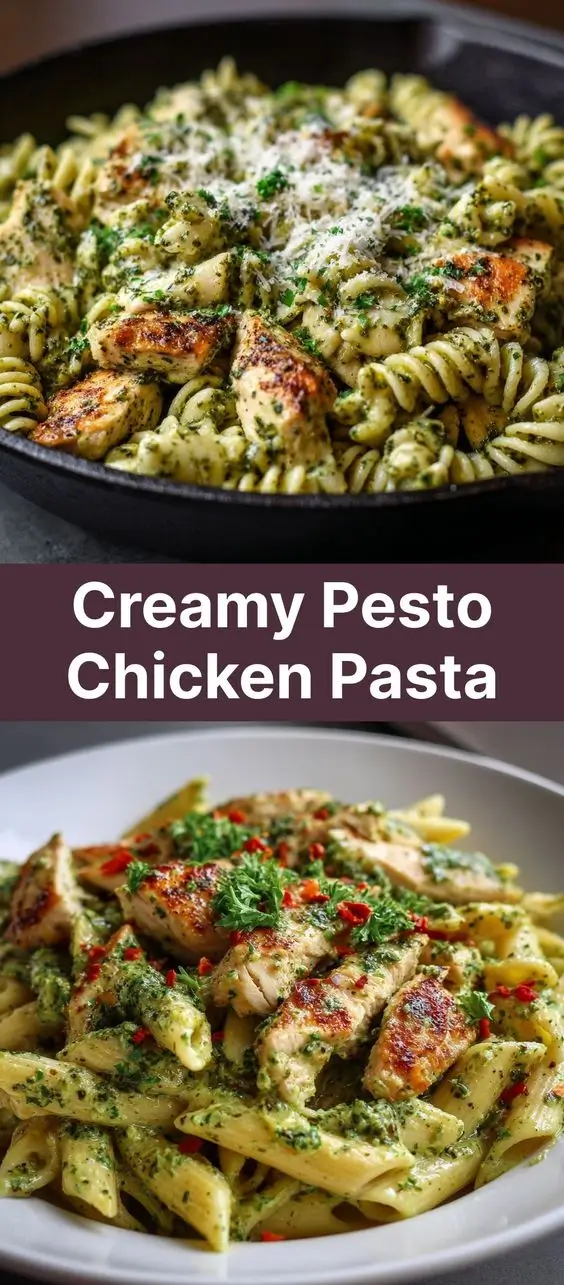
Creamy Pesto Chicken Pasta: A Luxurious Fusion of Flavors
There are few dishes that marry comfort and elegance as effortlessly as Creamy Pesto Chicken Pasta. This modern classic brings together the bold, herbal punch of fresh basil pesto with the rich creaminess of a velvety sauce, all wrapped around tender chicken breast and perfectly al dente pasta. Whether you’re cooking for a weeknight family dinner or hosting an intimate gathering, this dish delivers gourmet appeal without requiring hours in the kitchen. With its vibrant green hues, aromatic fragrance, and satisfying texture, it’s no wonder this recipe has become a staple in homes across the world.
The History
Pesto, at its core, hails from Genoa in the Liguria region of Italy, where traditional pesto alla genovese has been made for centuries using crushed garlic, fresh basil, pine nuts, Parmesan cheese, and extra-virgin olive oil—traditionally ground in a mortar and pestle. The word “pesto” comes from the Italian verb pestare, meaning “to pound” or “to crush,” a nod to its preparation method.
While the original pesto was served simply with trofie or trenette pasta, often accompanied by boiled potatoes and green beans, modern interpretations have taken flight globally. Enter the fusion era: creamy sauces, proteins like grilled chicken, and new pasta shapes began blending into the pesto tradition. The addition of cream to pesto-based dishes likely emerged from northern European and American culinary preferences for richer, silkier textures. Creamy Pesto Chicken Pasta is thus a delicious hybrid—a celebration of Italian heritage with contemporary global flair, popularized in the late 20th century through food media, restaurant menus, and home cooking blogs.
Ingredients Breakdown
The beauty of Creamy Pesto Chicken Pasta lies in the harmony of its components. Each ingredient plays a crucial role in building layers of flavor, texture, and richness:
- Chicken Breast: Lean, tender, and high in protein, chicken breast absorbs seasoning beautifully and provides a meaty contrast to the silky pasta.
- Pasta: Traditionally, fettuccine, penne, or fusilli work best due to their ability to hold onto thick sauces. Whole wheat or gluten-free varieties can be substituted based on dietary needs.
- Fresh Basil Pesto: Either homemade or high-quality store-bought, pesto is the soul of the dish. It delivers a burst of herbal freshness, garlicky depth, and nutty undertones from pine nuts or substitutes.
- Heavy Cream: Adds luxurious richness and smoothness, helping emulsify the sauce and coat every strand of pasta evenly.
- Garlic: Freshly minced garlic enhances the aromatic base, adding pungency that mellows when cooked.
- Chicken Broth: Thins the sauce slightly while boosting savory umami notes, preventing the cream from becoming too heavy.
- Parmasan Cheese: Freshly grated Parmesan adds saltiness, complexity, and helps thicken the sauce naturally through its proteins.
- Olive Oil: Used for sautéing, it carries flavors and contributes to the overall mouthfeel.
- Salt & Pepper: Essential seasonings that balance and elevate all other ingredients.
- Optional Add-ins: Sun-dried tomatoes, roasted red peppers, spinach, mushrooms, or cherry tomatoes can enhance color, texture, and nutrition.
Step-by-Step Recipe
- Prepare the Chicken: Season two boneless, skinless chicken breasts (about 6–8 oz each) with salt, black pepper, and a pinch of garlic powder. Heat 1 tablespoon of olive oil in a large skillet over medium-high heat. Sear the chicken for 5–6 minutes per side, or until golden brown and cooked through (internal temperature should reach 165°F). Remove from the pan, let rest for 5 minutes, then slice into thin strips or bite-sized pieces.
- Cook the Pasta: While the chicken rests, bring a large pot of salted water to a boil. Add 12 oz (340 g) of your preferred pasta—penne, fettuccine, or fusilli work wonderfully—and cook according to package instructions until al dente. Reserve ½ cup of pasta water before draining, then set aside.
- Build the Sauce Base: In the same skillet used for the chicken (to retain flavor), add another teaspoon of olive oil if needed. Reduce heat to medium, add 3–4 minced garlic cloves, and sauté for about 30 seconds until fragrant—do not let it burn.
- Add Liquids: Pour in ¾ cup of heavy cream and ½ cup of chicken broth. Stir gently and bring to a gentle simmer. Allow the mixture to reduce slightly for 2–3 minutes, stirring occasionally.
- Incorporate Pesto: Stir in ⅓ to ½ cup of fresh basil pesto (adjust to taste). Mix thoroughly until fully combined and the sauce turns a vibrant green. Let it simmer for another 2 minutes to meld flavors.
- Finish with Cheese: Gradually stir in ½ cup of freshly grated Parmesan cheese until melted and incorporated. The sauce should thicken slightly. If it becomes too thick, add reserved pasta water one tablespoon at a time to reach desired consistency.
- Combine Everything: Add the drained pasta to the skillet and toss well to coat every piece. Gently fold in the sliced chicken. Cook together for 1–2 more minutes so everything heats through and absorbs the sauce.
- Taste and Adjust: Season with additional salt, pepper, or a squeeze of lemon juice if desired. For brightness, a small amount of lemon zest can elevate the entire dish.
- Serve Immediately: Plate the pasta hot, garnish with extra Parmesan, a drizzle of pesto, chopped fresh basil, and cracked black pepper.
Tips for Perfection
- Don’t Overcook the Chicken: Use a meat thermometer to ensure juiciness. Overcooked chicken turns dry and chewy.
- Use High-Quality Pesto: Homemade pesto makes a noticeable difference, but if using store-bought, choose one with real ingredients and minimal preservatives. Avoid those with artificial colors or hydrogenated oils.
- Reserve Pasta Water: The starchy liquid helps bind the sauce to the pasta and adjust thickness without diluting flavor.
- Simmer, Don’t Boil: When combining cream and pesto, keep the heat low to prevent curdling or separation.
- Grate Your Own Cheese: Pre-grated cheeses contain anti-caking agents that hinder melting. Freshly grated Parmesan melts smoothly and tastes far superior.
- Brighten the Dish: Finish with a splash of lemon juice or zest to cut through the richness and enhance the herbal notes of the pesto.
- Let the Chicken Rest: Allowing seared chicken to rest ensures juices redistribute, keeping it moist when sliced.
Variations and Customizations
Creamy Pesto Chicken Pasta is highly adaptable. Here are some creative twists to suit different tastes and diets:
- Creamy Pesto Salmon Pasta: Replace chicken with flaked baked or pan-seared salmon for a heart-healthy omega-3 boost.
- Vegan Version: Omit chicken, use plant-based protein (like chickpeas or tofu), swap heavy cream for cashew cream or coconut milk, and use vegan pesto (without cheese) and nutritional yeast instead of Parmesan.
- Gluten-Free Option: Use gluten-free pasta such as brown rice, quinoa, or corn-based varieties. Ensure all other ingredients (especially pesto) are certified gluten-free.
- Dairy-Free Creamy Pesto: Substitute heavy cream with blended silken tofu or oat cream, and use dairy-free cheese alternatives.
- Extra Veggies: Stir in baby spinach, kale, zucchini ribbons, artichoke hearts, or grilled asparagus during the final mixing stage.
- Nut-Free Pesto: Replace pine nuts with sunflower seeds or omit nuts altogether for a safe option for allergies.
- Spicy Kick: Add red pepper flakes, harissa paste, or a dash of hot sauce to give the sauce some heat.
- Mushroom Lovers: Sauté cremini or shiitake mushrooms in the skillet before building the sauce for an earthy, umami-rich twist.
- Seafood Delight: Combine shrimp, scallops, or mussels with the pesto cream sauce for a luxurious seafood pasta.
Health Considerations and Nutritional Value
While undeniably indulgent, Creamy Pesto Chicken Pasta can be part of a balanced diet when enjoyed in moderation and adjusted for health goals.
Nutritional Highlights (per serving, approximately 1 serving = 1/4 of recipe):
- Calories: ~650–750 kcal (depending on cream and cheese amounts)
- Protein: 35–40g (excellent source from chicken and dairy)
- Fat: 30–40g (mostly unsaturated from olive oil and nuts in pesto; saturated fat from cream and cheese)
- Carbohydrates: 55–65g (from pasta; can be reduced with whole grain or legume-based pasta)
- Fiber: 3–5g (higher if using whole wheat pasta or adding vegetables)
- Vitamins & Minerals: Rich in vitamin A (from basil), vitamin K, calcium (from cheese), iron, and antioxidants.
Health Tips:
- Reduce Fat: Use half-and-half or whole milk instead of heavy cream, though the sauce will be less rich.
- Boost Fiber: Add leafy greens like spinach or kale, which wilt quickly into the warm sauce.
- Lower Sodium: Make homemade pesto with less salt, use low-sodium broth, and control added salt during cooking.
- Portion Control: Serve with a side salad or steamed vegetables to increase volume without excess calories.
- Omega-3s: Choose pesto made with walnuts or add flaxseed for heart-healthy fats.
Full Ingredient List
- 2 boneless, skinless chicken breasts (6–8 oz each)
- 12 oz (340 g) pasta (penne, fettuccine, or fusilli recommended)
- 1 tbsp olive oil (plus more if needed)
- Salt and freshly ground black pepper (to taste)
- ½ tsp garlic powder (optional, for seasoning chicken)
- 3–4 cloves garlic, minced
- ¾ cup heavy cream (or substitute for lighter options)
- ½ cup low-sodium chicken broth
- ⅓ to ½ cup fresh basil pesto (homemade or high-quality store-bought)
- ½ cup freshly grated Parmesan cheese (plus extra for garnish)
- ½ tsp red pepper flakes (optional)
- 1 tbsp lemon juice (optional, for brightness)
- ¼ cup reserved pasta water (as needed)
- Fresh basil leaves (for garnish)
Directions Recap
- Season and cook chicken in olive oil over medium-high heat until internal temperature reaches 165°F. Rest, then slice.
- Cook pasta in salted boiling water until al dente. Reserve ½ cup pasta water before draining.
- In the same skillet, sauté minced garlic in olive oil for 30 seconds.
- Pour in heavy cream and chicken broth. Simmer gently for 2–3 minutes.
- Stir in pesto until fully combined and vibrant green.
- Add Parmesan cheese gradually, stirring until melted and smooth.
- Adjust consistency with reserved pasta water as needed.
- Add cooked pasta and toss to coat completely.
- Fold in sliced chicken and heat through for 1–2 minutes.
- Season with salt, pepper, lemon juice, or red pepper flakes to taste.
- Garnish with extra Parmesan, fresh basil, and a drizzle of pesto before serving.
Frequently Asked Questions (FAQ)
Can I make Creamy Pesto Chicken Pasta ahead of time?
Yes, but it’s best served fresh. You can pre-cook the chicken and prepare the pesto in advance. Reheat gently on the stove with a splash of broth or water to revive the sauce.
How do I store leftovers?
Store in an airtight container in the refrigerator for up to 3–4 days. Reheat slowly on the stovetop with a bit of milk or broth to restore creaminess. Avoid microwaving at high power, as it may separate the sauce.
Can I freeze this dish?
Freezing is not ideal due to the dairy content—cream and cheese may separate upon thawing, resulting in a grainy texture. However, you can freeze the sauce alone (without pasta) for up to 2 months. Thaw in the fridge and reheat gently, then combine with freshly cooked pasta and chicken.
What can I use instead of heavy cream?
Options include half-and-half, whole milk (with a cornstarch slurry to thicken), evaporated milk, or full-fat coconut milk for a dairy-free alternative.
Is pesto healthy?
Traditional pesto contains healthy fats from olive oil and nuts, along with antioxidants from fresh basil. However, it’s calorie-dense, so portion control matters. Making it at home allows you to manage ingredients and sodium levels.
Why did my sauce separate?
Dairy-based sauces can break if overheated or exposed to high acidity. To prevent this, avoid boiling after adding cream, and introduce lemon juice at the end in small amounts. If separation occurs, whisk vigorously or blend briefly with an immersion blender.
Can I use frozen pesto?
Absolutely. Freeze homemade pesto in ice cube trays, then transfer to bags. Drop a cube directly into the sauce while warming—it will melt and integrate beautifully.
What wine pairs well with this dish?
A crisp white wine like Pinot Grigio, Sauvignon Blanc, or Vermentino complements the herbal and creamy elements. For red lovers, a light-bodied Pinot Noir works without overpowering the pesto.
Summary
Creamy Pesto Chicken Pasta blends the aromatic freshness of basil pesto with a luxuriously smooth cream sauce, tender chicken, and perfectly cooked pasta for a dish that’s both comforting and elegant. Easy to customize and rich in flavor, it’s a versatile favorite for any occasion.