Introduction
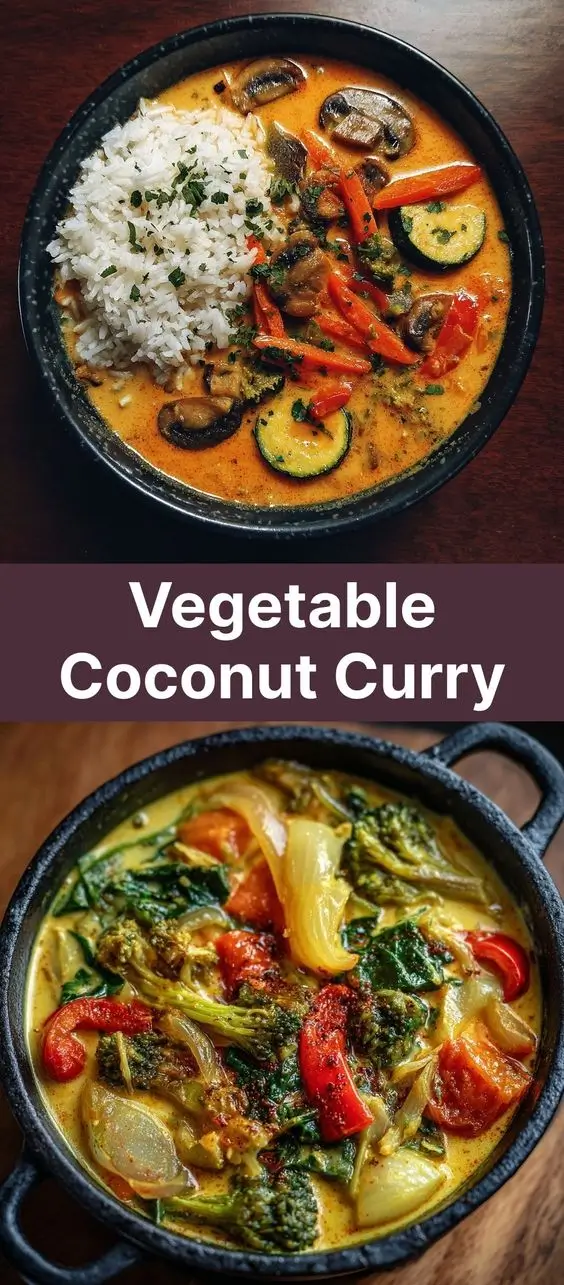
Vegetable Coconut Curry is a vibrant, aromatic dish that brings together the natural sweetness of fresh vegetables with the creamy richness of coconut milk. Originating from South and Southeast Asian cuisines, this curry has become a global favorite for its comforting flavor, versatility, and nourishing qualities. Whether served over steamed rice, quinoa, or enjoyed with warm naan bread, Vegetable Coconut Curry satisfies both the palate and soul. It’s a plant-based powerhouse that celebrates seasonal produce and bold spices, making it perfect for weeknight dinners, meal prepping, or impressing guests at dinner parties.
The History
The roots of Vegetable Coconut Curry trace back centuries to regions like India, Sri Lanka, Thailand, and Indonesia—places where coconut trees flourish and spices are integral to culinary traditions. In South India, especially in Kerala and Tamil Nadu, coconut milk has long been used as a base for curries, adding body and mellowing out fiery chilies. Thai cuisine adopted coconut milk in dishes such as kaeng som and green curry, blending it with lemongrass, galangal, and kaffir lime leaves. Over time, colonial trade routes introduced these flavors to other parts of the world, leading to fusion interpretations across the Caribbean, East Africa, and beyond. Today’s Vegetable Coconut Curry is often a harmonious blend of these global influences, combining traditional techniques with accessible ingredients to create a universally loved comfort food.
Ingredients Breakdown
The magic of Vegetable Coconut Curry lies in its balance of textures and flavors, achieved through carefully selected ingredients:
- Coconut Milk: Full-fat canned coconut milk provides a luxurious creaminess and carries fat-soluble spices effectively. Light coconut milk can be used for a thinner consistency, but full-fat yields richer results.
- Aromatics: Onions, garlic, and ginger form the foundational flavor trio. Sautéed until fragrant, they add depth and warmth.
- Curry Spices: Turmeric lends earthy bitterness and golden color; cumin adds smokiness; coriander offers citrusy notes; and chili powder or fresh chilies bring heat. Garam masala, added toward the end, contributes a complex, slightly sweet warmth.
- Fresh Vegetables: A colorful mix enhances both nutrition and texture. Common choices include bell peppers, carrots, potatoes, cauliflower, broccoli, zucchini, green beans, spinach, and peas. Root vegetables hold up well during simmering, while leafy greens wilt beautifully into the sauce.
- Liquid Base: Vegetable broth enriches the curry and helps prevent scorching. Some versions use tomato puree or diced tomatoes for acidity and brightness.
- Herbs and Finishing Touches: Fresh cilantro adds freshness, while a squeeze of lime juice brightens the final dish. Optional garnishes include toasted coconut flakes, cashews, or a dollop of plain yogurt.
Step-by-Step Recipe
- Prepare Ingredients: Wash, peel (if needed), and chop all vegetables into uniform sizes for even cooking. Mince garlic and ginger. Measure out spices and have coconut milk ready.
- Sauté Aromatics: Heat 2–3 tablespoons of oil (coconut, vegetable, or avocado) in a large pot or deep skillet over medium heat. Add chopped onions and cook for 5–7 minutes until soft and translucent.
- Add Garlic and Ginger: Stir in minced garlic and ginger, cooking for another minute until fragrant—be careful not to burn them.
- Bloom the Spices: Add ground turmeric, cumin, coriander, chili powder (and any other dry spices except garam masala). Stir constantly for 30 seconds to release essential oils and enhance flavor.
- Incorporate Hard Vegetables: Add dense vegetables like carrots, potatoes, and cauliflower. Stir to coat them in the spiced oil and cook for 3–4 minutes to begin caramelization.
- Pour in Liquids: Pour in 1 can (13.5 oz) of full-fat coconut milk and 1 cup of vegetable broth. Stir well to combine, scraping any browned bits from the bottom of the pan.
- Simmer: Bring the mixture to a gentle boil, then reduce heat to low. Cover and simmer for 15–20 minutes, stirring occasionally, until root vegetables are tender.
- Add Softer Vegetables: Stir in quicker-cooking vegetables like bell peppers, zucchini, green beans, and peas. Simmer uncovered for an additional 8–10 minutes.
- Finish with Greens and Garam Masala: Fold in spinach or kale until wilted. Remove from heat and stir in 1–2 teaspoons of garam masala for aromatic complexity.
- Season and Adjust: Taste and adjust seasoning with salt, pepper, and a splash of lime juice. For extra tang, add a teaspoon of tamarind paste or lemon juice.
- Garnish and Serve: Sprinkle with chopped cilantro, sliced green onions, or toasted nuts. Serve hot with basmati rice, jasmine rice, or flatbreads.
Tips
- Use Full-Fat Coconut Milk: Shake the can well before opening or whisk the separated cream and liquid back together for consistent texture.
- Bloom Spices Properly: Cooking spices in oil for just 20–30 seconds unlocks their full potential without burning.
- Don’t Rush the Sauté: Allowing onions to caramelize slightly builds a deeper flavor base.
- Control Thickness: If the curry is too thick, add more broth or water. If too thin, simmer uncovered to reduce or mash some vegetables to thicken naturally.
- Prevent Curdling: Avoid boiling coconut milk vigorously; keep the heat at a gentle simmer to maintain a smooth texture.
- Make Ahead Friendly: Flavors deepen when refrigerated overnight. Reheat gently on the stove with a splash of water.
- Freeze for Later: Cool completely and store in airtight containers for up to 3 months. Thaw in the fridge and reheat slowly.
Variations and Customizations
One of the greatest strengths of Vegetable Coconut Curry is its adaptability. Here are some popular variations:
- Thai-Inspired: Use red or green curry paste (1–2 tablespoons) instead of dry spices. Add lemongrass, kaffir lime leaves, and bamboo shoots. Finish with Thai basil.
- Indian-Style: Include mustard seeds, curry leaves, and fenugreek seeds for authentic South Indian flair. Serve with roti or dosa.
- Protein-Packed: Add chickpeas, lentils, tofu, tempeh, or paneer for extra protein. For non-vegetarian options, shredded chicken or shrimp work well.
- Low-Carb/Keto: Replace starchy vegetables like potatoes with cauliflower, mushrooms, and eggplant. Serve over cauliflower rice.
- Gluten-Free: Naturally gluten-free, but always check labels on broths and spice blends to ensure no cross-contamination.
- Spice Level Control: Omit chilies for mild curry, or add fresh bird’s eye chilies and extra cayenne for intense heat.
- Seasonal Twists: In summer, use zucchini, cherry tomatoes, and fresh corn. In winter, opt for squash, sweet potatoes, and parsnips.
Health Considerations and Nutritional Value
Vegetable Coconut Curry isn’t just delicious—it’s also packed with health benefits:
- Rich in Fiber: The abundance of vegetables and legumes supports digestive health and promotes satiety.
- Healthy Fats: Coconut milk contains medium-chain triglycerides (MCTs), which may support metabolism and heart health in moderation.
- Anti-Inflammatory Properties: Turmeric contains curcumin, a potent anti-inflammatory compound enhanced by black pepper (always add a pinch!)
- Vitamins and Minerals: Carrots provide beta-carotene (vitamin A), spinach offers iron and folate, and broccoli delivers vitamin C and K.
- Plant-Based Protein: When combined with lentils or legumes, this curry becomes a complete meal with balanced macronutrients.
- Low in Cholesterol: Entirely plant-based, making it heart-friendly and suitable for those managing cholesterol levels.
Note: While coconut milk is nutritious, it is calorie-dense. Portion control is advised for those monitoring caloric intake. Opt for reduced-fat versions if desired, though flavor and texture may be affected.
Ingredients
- 2 tablespoons coconut oil or vegetable oil
- 1 large onion, finely chopped
- 4 cloves garlic, minced
- 1 tablespoon fresh ginger, grated
- 1 teaspoon ground turmeric
- 1 teaspoon ground cumin
- 1 teaspoon ground coriander
- 1/2 teaspoon chili powder (adjust to taste)
- 1/2 teaspoon black pepper (freshly cracked preferred)
- 1 large carrot, sliced
- 1 medium potato, cubed
- 1 cup cauliflower florets
- 1 bell pepper, sliced
- 1 small zucchini, halved and sliced
- 1/2 cup green beans, trimmed and cut
- 1 cup frozen peas
- 2 cups baby spinach or kale
- 1 (13.5 oz) can full-fat coconut milk
- 1 cup vegetable broth
- 1–2 teaspoons garam masala
- 1 tablespoon lime juice
- Salt to taste
- Fresh cilantro, for garnish
- Cooked rice or naan, for serving
Directions
- Heat oil in a large pot or Dutch oven over medium heat. Add onions and sauté for 5–7 minutes until soft and golden.
- Add garlic and ginger; stir for 1 minute until fragrant.
- Stir in turmeric, cumin, coriander, chili powder, and black pepper. Cook for 30 seconds, stirring constantly.
- Add carrots, potatoes, and cauliflower. Stir to coat with spices and cook for 3–4 minutes.
- Pour in coconut milk and vegetable broth. Bring to a gentle simmer, then cover and cook for 15 minutes.
- Add bell pepper, zucchini, and green beans. Simmer uncovered for 8–10 minutes.
- Stir in peas and cook for 2–3 minutes until heated through.
- Remove from heat. Fold in spinach until wilted. Stir in garam masala and lime juice.
- Season with salt to taste. Add more lime or spice if desired.
- Garnish with fresh cilantro and serve hot with rice or naan.
FAQ
Can I use frozen vegetables?
Yes, frozen vegetables like peas, corn, and mixed medleys work well. Add them later in the cooking process to avoid mushiness.
Is this curry spicy?
It depends on your chili powder and quantity. You can make it mild, medium, or hot by adjusting the amount or omitting chilies altogether.
Can I make it oil-free?
Yes! Sauté aromatics in water or vegetable broth using a non-stick pan to reduce fat content.
How long does it last in the fridge?
Properly stored in an airtight container, it lasts 4–5 days. Flavors often improve the next day.
Why did my coconut milk separate?
High heat or acidic ingredients can cause separation. To prevent this, keep the heat low and add lime juice only at the end.
Can I use light coconut milk?
Yes, but the curry will be less creamy. Consider blending in a small amount of cashew butter for richness.
What can I substitute for fresh ginger?
Use 1/2 teaspoon ground ginger, though fresh offers superior flavor and zing.
Can I add fruit?
Absolutely! Mango, pineapple, or apple can add a delightful sweet-tart contrast, especially in Thai-inspired versions.
Summary
Vegetable Coconut Curry is a rich, fragrant, and nourishing dish that combines seasonal vegetables with creamy coconut milk and warming spices. Easy to customize and perfect for vegetarians, vegans, and omnivores alike, it’s a wholesome one-pot meal that delights the senses and supports overall wellness.