Introduction
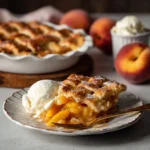
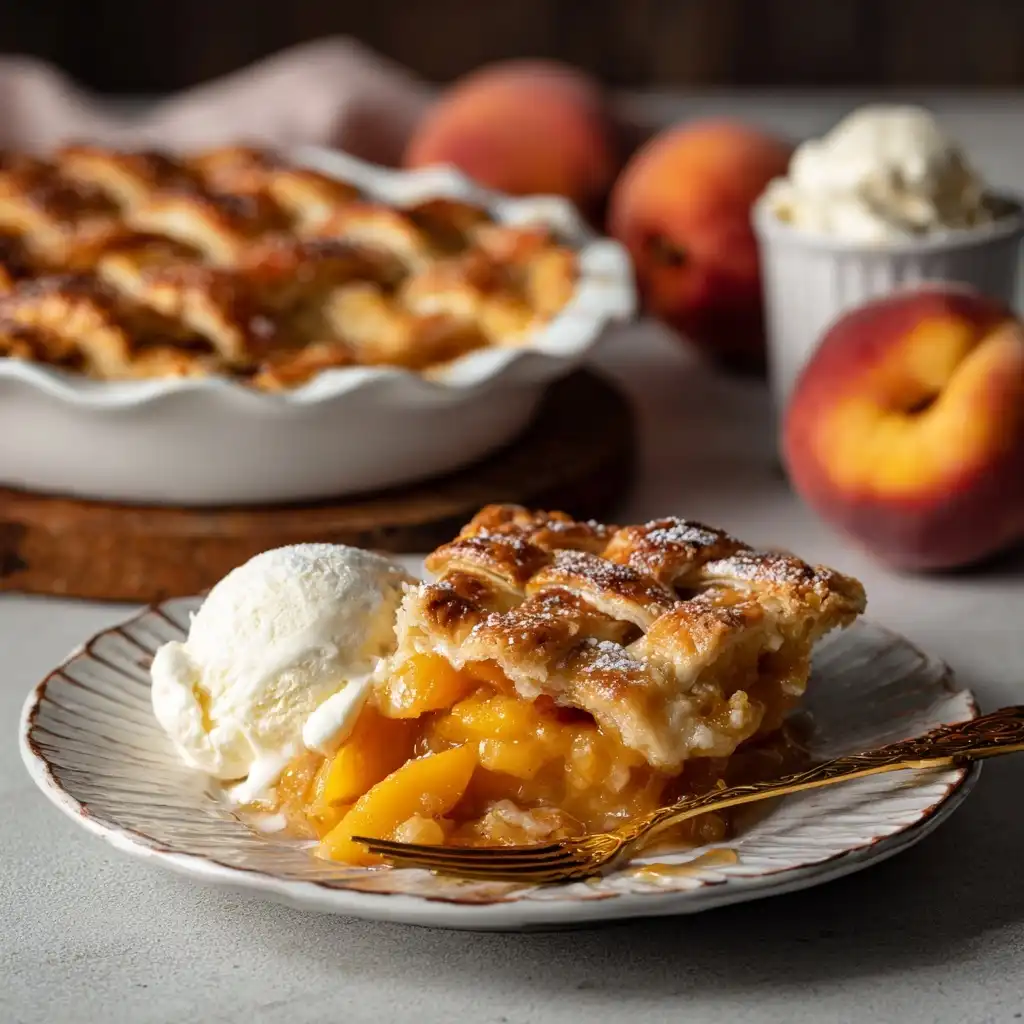
There’s something inherently comforting—and undeniably summery—about a freshly baked Fresh Peach Cobbler with Lattice Crust. This classic American dessert marries the sun-ripened sweetness of juicy, fragrant peaches with a tender, buttery, flaky crust that’s as beautiful as it is delicious. Unlike traditional cobblers with drop-biscuit or cake-like toppings, this version features an elegant, hand-woven lattice crust that not only adds visual charm but also allows steam to escape, ensuring a perfectly caramelized, glossy fruit filling and crisp, golden pastry edges. Whether served warm with a scoop of vanilla bean ice cream, drizzled with honey-cinnamon whipped cream, or enjoyed plain with a dusting of powdered sugar, this cobbler evokes nostalgia while feeling refreshingly modern—especially when made with peak-season, locally grown peaches.
The History
The origins of peach cobbler trace back to early American colonial times, when European settlers adapted familiar fruit desserts to the ingredients available in the New World. “Cobbler” likely derives from the archaic verb “to cobble,” meaning to assemble or patch together—reflecting the rustic, improvisational nature of the dish. Early versions were baked in cast-iron skillets over open fires or in Dutch ovens, often using biscuit dough dropped atop stewed fruit—a method practical for frontier kitchens without rolling pins or precise measuring tools. As Southern agriculture flourished, particularly in Georgia, South Carolina, and Tennessee, peaches became emblematic of regional identity, earning Georgia the nickname “The Peach State.” By the late 19th century, cobblers appeared regularly in community cookbooks, church fundraisers, and county fairs. The lattice crust—though more labor-intensive—emerged as a refined variation in mid-20th-century home baking, popularized by women’s magazines like Good Housekeeping and Ladies’ Home Journal, which celebrated both aesthetics and technique. Today, the Fresh Peach Cobbler with Lattice Crust stands as a beloved heirloom dessert: a bridge between heritage and hospitality, tradition and tenderness.
Ingredients Breakdown
Every exceptional cobbler begins with intentionality—not just in measurement, but in selection. Below is a detailed breakdown of why each ingredient matters, including sourcing tips, substitutions, and functional roles:
- Fresh, ripe peaches (6–7 medium, ~2½ lbs): The star of the show. Opt for freestone varieties like Elberta, Red Haven, or O’Henry—they release easily from the pit and hold their shape during baking. Ripe peaches should yield slightly to gentle palm pressure near the stem end and emit a floral, honeyed aroma. Underripe fruit lacks sweetness and pectin; overripe fruit turns mushy. Avoid canned or frozen unless absolutely necessary (see Variations).
- Granulated sugar (¾ cup, plus 1 tbsp for crust): Balances natural tartness and draws out juices for syrup formation. Adjust down to ½ cup if peaches are exceptionally sweet; increase slightly for tarter varieties. Organic cane sugar adds subtle molasses depth.
- Light brown sugar (¼ cup, packed): Contributes moisture, rich caramel notes, and enhances browning. Its molasses content interacts with fruit acids to deepen flavor complexity.
- Unbleached all-purpose flour (3 tbsp): Acts as a thickener without clouding the filling. Too much creates pastiness; too little yields a runny cobbler. For gluten-free options, use a 1:1 GF blend with xanthan gum.
- Ground cinnamon (1½ tsp) and freshly grated nutmeg (¼ tsp): Warm, aromatic spices that complement—not overpower—peach’s delicate perfume. Toast whole cinnamon sticks and grind them yourself for unparalleled fragrance.
- Lemon juice (1 tbsp) and lemon zest (from ½ lemon): Bright acidity cuts richness and preserves vibrant color. Zest adds volatile citrus oils essential for brightness.
- Salt (¼ tsp): A crucial “flavor amplifier”—it heightens sweetness and balances spice without tasting salty.
- Unsalted butter (2 tbsp, cold): Added directly to the hot filling before topping; melts into the fruit layer, enriching mouthfeel and promoting glossy, jammy texture.
- For the Lattice Crust: All-purpose flour (2½ cups), cold unsalted butter (1 cup, 2 sticks, cubed), full-fat sour cream (¼ cup), ice water (3–5 tbsp), granulated sugar (1 tbsp), and flaky sea salt (½ tsp). The sour cream lends tenderness and tang, while minimal water ensures a pliable yet sturdy dough—ideal for weaving.
- Egg wash (1 large egg + 1 tbsp cream + pinch of salt): Creates luminous, deep-golden crust with gentle sheen. Optional: sprinkle coarse turbinado sugar pre-bake for crunch and sparkle.
Step-by-Step Recipe
This recipe prioritizes clarity, precision, and practicality—designed for both first-time bakers and seasoned enthusiasts. Total active time: ~1 hour. Resting and chilling are non-negotiable for success.
- Prepare the Peaches (20 minutes): Bring a large pot of water to boil. Score an “X” on the bottom of each peach. Blanch for 45–60 seconds, then transfer immediately to an ice bath. Peel, halve, pit, and slice into ½-inch wedges. Toss gently in a large bowl with lemon juice and zest.
- Make the Filling (10 minutes): In a separate bowl, whisk together granulated sugar, brown sugar, flour, cinnamon, nutmeg, and salt. Pour over peaches and fold until evenly coated. Let sit at room temperature for 25 minutes—this macerates the fruit, drawing out juices and dissolving sugar fully. Stir occasionally. Preheat oven to 375°F (190°C) with rack positioned in lower third.
- Prepare the Crust Dough (20 minutes + 1 hour chill): In a food processor, pulse flour, sugar, and salt. Add cold, cubed butter; pulse until mixture resembles coarse crumbs with pea-sized butter bits. Add sour cream; pulse 3–4 times until just combined. Gradually add ice water, 1 tbsp at a time, pulsing only until dough begins to clump. Turn onto parchment; divide into two unequal disks (⅔ for bottom, ⅓ for lattice strips). Wrap tightly and refrigerate ≥1 hour (or up to 2 days).
- Assemble the Cobbler (15 minutes): Transfer macerated peaches (including all liquid) to a 9×13-inch ceramic or glass baking dish (do not drain!). Dot surface with cold butter pieces. Roll larger dough disk to ¼-inch thickness on lightly floured surface; carefully drape over filling. Trim edges, leaving ½-inch overhang. Tuck under and crimp decoratively. Chill 15 minutes.
- Weave the Lattice (15–20 minutes): Roll smaller dough disk to ⅛-inch thickness. Using a sharp knife or pastry wheel, cut into twelve ¾-inch-wide strips (6 vertical, 6 horizontal). Lay half strips evenly spaced across dough-covered filling, ½ inch apart. Fold back every other strip. Place remaining strips perpendicular. Unfold folded strips over new layer. Repeat folding/unfolding with alternate strips to create interwoven pattern. Trim excess; press edges firmly to seal. Chill 10 minutes.
- Bake to Perfection (55–65 minutes): Brush lattice generously with egg wash. Sprinkle with turbinado sugar. Place baking dish on a parchment-lined rimmed baking sheet (to catch drips). Bake 25 minutes. Rotate pan. Reduce heat to 350°F (175°C); bake 30–40 minutes more, until crust is deep golden brown, filling is bubbling vigorously at edges, and lattice is set (no raw dough visible). Internal filling temp should reach 205–210°F. Cool on wire rack ≥2 hours—this allows starches to set and prevents filling collapse.
Tips
- Peach Prep Pro-Tip: Use a serrated peeler for effortless, thin-skinned removal—even on slightly underripe fruit.
- Dough Temperature Matters: If butter softens during rolling, return dough to fridge for 10 minutes. Warm dough = greasy, tough crust.
- Lattice Confidence Builder: Practice weaving on parchment first. Keep unused strips chilled. If a strip breaks, patch with scrap dough and damp fingertip.
- Baking Sheet Strategy: Always bake on a sheet tray—it prevents oven spills and promotes even bottom heat.
- Cooling is Crucial: Cutting too soon releases steam, causing soggy crust and soupy filling. Two hours minimum; overnight is ideal for clean slices.
- Reviving Leftovers: Reheat individual portions in a toaster oven (not microwave) at 325°F for 8–10 minutes to restore crispness.
- Visual Doneness Cues: Bubbling = thickened filling. Deep gold = fully cooked crust. Slight shrinkage from edges = proper setting.
- Altitude Adjustment: Above 3,000 ft? Increase flour to 3½ tbsp and reduce sugar by 1 tbsp. Bake at 385°F initially, then lower as directed.
Variations and Customizations
This cobbler is gloriously adaptable—celebrating seasonal abundance and personal preference while preserving its soul. Explore these inspired twists:
- Peach-Blueberry Fusion: Replace 2 cups of peaches with equal weight of fresh blueberries (tossed with 1 tsp cornstarch extra). Adds pops of tartness and jewel-toned contrast.
- Bourbon-Vanilla Infusion: Stir 2 tbsp aged bourbon and 1 tsp pure vanilla bean paste into filling after maceration. Deepens warmth and sophistication.
- Herb-Infused: Add 1 tsp finely chopped fresh basil or thyme to filling—unexpected but harmonious with peach’s floral notes.
- Oat-Maple Crust: Substitute ½ cup old-fashioned oats (pulsed fine) and 2 tbsp pure maple syrup for part of the sugar and sour cream in crust dough. Earthy, nuanced, and naturally sweet.
- Vegan Version: Use coconut oil + vegan butter blend for crust; replace egg wash with almond milk + maple syrup glaze; thicken with arrowroot instead of flour; sweeten with coconut sugar.
- Gluten-Free Lattice: Use certified GF 1:1 flour blend with added xanthan gum (½ tsp per cup). Chill dough longer (1.5 hrs) for stability. Roll between parchment for easy transfer.
- Mini Individual Cobblers: Divide filling among six 6-oz ramekins. Top with small lattice squares. Bake 35–40 minutes at 375°F. Perfect for portion control or gifting.
- Spiced Rum Caramel Drizzle: Simmer ½ cup dark rum, ½ cup brown sugar, ¼ cup heavy cream, and 2 tbsp butter until thickened (5–7 min). Cool slightly; drizzle over servings.
Health Considerations and Nutritional Value
While traditionally indulgent, this Fresh Peach Cobbler can be thoughtfully aligned with wellness goals—without sacrificing joy. A standard serving (1/12th of recipe, approx. 1 cup with crust) contains roughly:
- Calories: 320–360 kcal (varies by butter/sugar adjustments)
- Carbohydrates: 48–52g (including 32–36g naturally occurring sugars from peaches + added sweeteners)
- Fiber: 3g (peaches contribute ~2g; whole-grain crust variations boost significantly)
- Protein: 4g (primarily from butter, flour, and egg wash)
- Fat: 13–15g (mostly unsaturated from butter; saturated fat ~8g)
- Vitamins & Minerals: Excellent source of Vitamin C (45% DV), Vitamin A (18% DV), potassium (12% DV), and antioxidants like chlorogenic acid and beta-cryptoxanthin—linked to reduced inflammation and eye health.
Wellness Notes: Peaches are low-GI (glycemic index ~42) and rich in polyphenols that support gut microbiota. To enhance nutritional density: opt for organic peaches (lower pesticide load), reduce added sugar by 25% if fruit is ultra-ripe, incorporate 1 tbsp ground flaxseed into crust flour, or serve with Greek yogurt instead of ice cream. Those managing diabetes should pair with protein/fat (e.g., nuts or cottage cheese) to slow glucose absorption. Note: While not “low-calorie,” this cobbler offers meaningful phytonutrients and mindful eating satisfaction—making it a nourishing treat, not just empty calories.
Ingredients
For the Filling:
- 6–7 medium ripe freestone peaches (about 2½ pounds), peeled, pitted, and sliced ½-inch thick
- 1 tablespoon fresh lemon juice
- 1 teaspoon finely grated lemon zest
- ¾ cup granulated sugar (adjust to taste)
- ¼ cup light brown sugar, packed
- 3 tablespoons unbleached all-purpose flour
- 1½ teaspoons ground cinnamon
- ¼ teaspoon freshly grated nutmeg
- ¼ teaspoon fine sea salt
- 2 tablespoons unsalted butter, cold and cubed
For the Lattice Crust:
- 2½ cups unbleached all-purpose flour, plus more for dusting
- 1 cup (2 sticks) unsalted butter, very cold and cut into ½-inch cubes
- ¼ cup full-fat sour cream
- 3–5 tablespoons ice water
- 1 tablespoon granulated sugar
- ½ teaspoon fine sea salt
For Finishing:
- 1 large egg
- 1 tablespoon heavy cream or whole milk
- Pinch of fine sea salt
- 1–2 tablespoons turbinado or coarse sugar (optional)
Directions
- Blanch and prepare peaches: Bring a large pot of water to rolling boil. Score an “X” on the base of each peach. Submerge 45–60 seconds, then transfer to ice water. Peel, halve, remove pits, and slice. Place in large bowl; toss with lemon juice and zest. Set aside.
- Macerate filling: In small bowl, whisk sugars, flour, cinnamon, nutmeg, and salt. Pour over peaches; gently fold until uniformly coated. Let stand at room temperature 25 minutes, stirring twice.
- Make crust dough: In food processor, pulse flour, 1 tbsp sugar, and salt. Add cold butter; pulse 10–12 times until pea-sized crumbs form. Add sour cream; pulse 3–4 times until shaggy. Add ice water 1 tbsp at a time, pulsing just until dough begins to clump. Turn onto parchment; divide into two disks (one ~10 oz, one ~5 oz). Wrap tightly; refrigerate ≥1 hour.
- Preheat & prep: Position oven rack in lower third. Preheat to 375°F (190°C). Line rimmed baking sheet with parchment.
- Assemble base: Pour peach mixture (with all juices) into 9×13-inch baking dish. Dot with cold butter. Roll larger dough disk to ¼-inch thickness on floured surface. Drape over filling; trim to ½-inch overhang. Tuck under and crimp edge decoratively. Refrigerate 15 minutes.
- Weave lattice: Roll smaller disk to ⅛-inch thickness. Cut into twelve ¾-inch strips. Lay 6 strips vertically across cobbler, spaced ½ inch apart. Fold back every other strip. Place 6 horizontal strips across. Unfold vertical strips over horizontals. Repeat folding/unfolding with alternate vertical strips to interweave. Trim ends; press gently to seal edges. Refrigerate 10 minutes.
- Bake: Whisk egg, cream, and salt. Brush lattice generously. Sprinkle with turbinado sugar. Place dish on prepared baking sheet. Bake 25 minutes. Rotate pan. Reduce oven to 350°F (175°C); bake 30–40 minutes more, until crust is deeply golden and filling bubbles thickly at edges.
- Cool completely: Transfer to wire rack. Cool ≥2 hours before serving. Best served same day or next day—reheat gently if desired.
FAQ
- Can I use frozen peaches?
- Yes—but thaw completely in a colander, then pat *very* dry with paper towels to prevent excess water. Increase flour to 4 tbsp and add 1 tsp lemon juice to compensate for lost brightness.
- Why does my lattice shrink or pull away during baking?
- Overworking dough or insufficient chilling causes gluten development and butter melt. Always chill assembled cobbler before baking, and handle dough minimally.
- My filling is too runny after baking. What went wrong?
- Common causes: under-maceration (juices didn’t concentrate), under-baking (filling didn’t reach 205°F), or excessive stirring post-bake. Let cool fully—filling thickens dramatically as it sets.
- Can I make the dough ahead?
- Absolutely. Dough disks keep refrigerated 3 days or frozen 3 months. Thaw overnight in fridge before rolling.
- Is there a dairy-free crust option?
- Yes: substitute cold refined coconut oil (¼ cup) + vegan butter (¾ cup) for dairy butter; use unsweetened almond milk + 1 tsp vinegar instead of sour cream and egg wash.
- How do I store leftovers?
- Cover tightly and refrigerate up to 4 days. Reheat in oven (325°F, 10 min) or air fryer (330°F, 5 min). Do not freeze fully assembled cobbler—the crust becomes mealy.
- Can I double this recipe?
- Yes—use two 9×13 dishes. Keep baking time identical; rotate pans halfway through second stage. Or bake one, then refrigerate second unbaked cobbler for up to 12 hours before baking.
- What’s the best way to peel peaches without blanching?
- Use a sharp Y-peeler—works well on ripe fruit. Alternatively, rub skin gently with a clean kitchen towel; it loosens naturally.
Summary
A Fresh Peach Cobbler with Lattice Crust is more than dessert—it’s a celebration of summer’s fleeting sweetness, crafted with patience, respect for ingredients, and time-honored technique. From the jewel-toned, spiced fruit filling to the artful, golden weave of buttery pastry, every element invites connection—to season, to place, and to people.
Whether you’re honoring family tradition or creating new memories at your own table, this cobbler delivers warmth, elegance, and soul-satisfying comfort—one luminous, bubbling slice at a time.