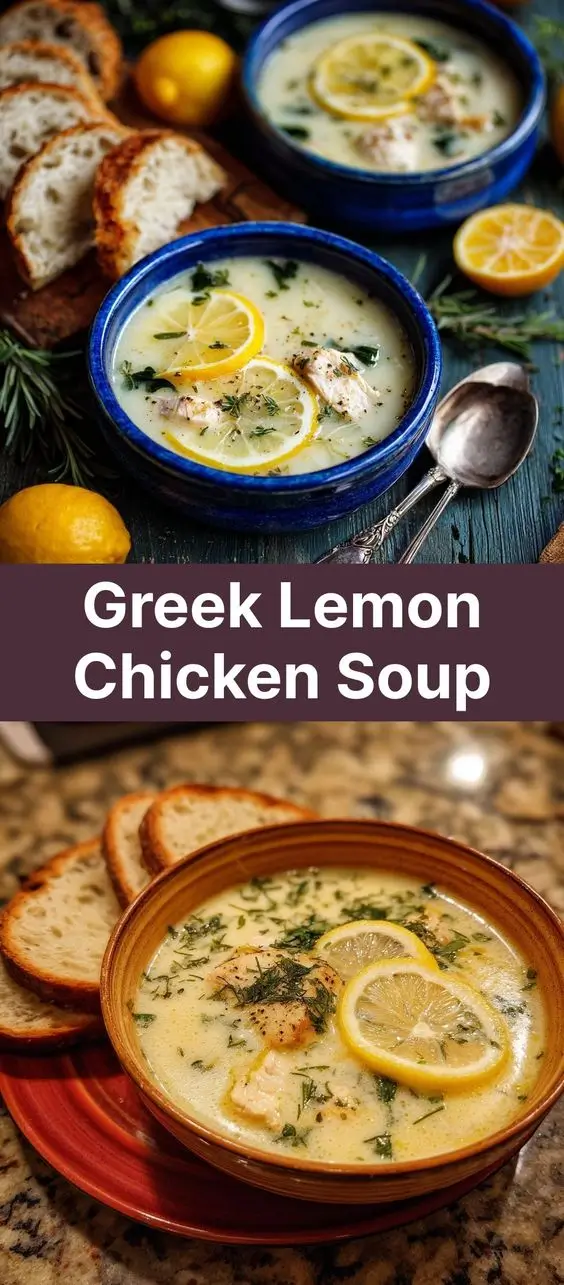
Greek Lemon Chicken Soup (Avgolemono)
Introduction
Greek Lemon Chicken Soup, known in Greece as Avgolemono, is a beloved traditional dish that embodies the essence of Greek comfort food. Unlike typical brothy soups, Avgolemono stands out for its velvety texture and bright, citrusy flavor—achieved without using cream. This elegant yet humble soup combines tender chicken, fluffy rice (or orzo), and a silky broth thickened with a unique emulsion of eggs and lemon juice. Served across Greece during holidays, family gatherings, and times of illness, it’s as nourishing as it is delicious. Whether you’re seeking a taste of Mediterranean heritage or a soothing bowl on a chilly day, this soup delivers both warmth and sophistication in every spoonful.
The History
The origins of Avgolemono trace back centuries and are deeply rooted in the culinary traditions of the Eastern Mediterranean, particularly within Greek, Sephardic Jewish, and Ottoman cuisines. The name itself comes from the Greek words “avgo” (egg) and “lemono” (lemon), highlighting the soup’s defining ingredients. While today it’s considered a hallmark of Greek home cooking, variations of egg-and-lemon-thickened soups appear in ancient Roman texts and medieval Arab cookbooks, suggesting a long history of culinary exchange across cultures.
In Greece, Avgolemono evolved into its current form during the 19th century, becoming especially popular in households where resourcefulness was key—using simple ingredients like leftover chicken, rice, and pantry staples to create something luxurious. It became a staple during Lent and religious fasting periods when meat was restricted, though chicken-based versions remained common year-round. Over time, the soup gained symbolic status as a restorative meal, often served to new mothers, the sick, or returning family members. Today, Avgolemono is celebrated not only in Greece but around the world as a signature dish of Greek cuisine, representing harmony between tangy, savory, and creamy elements—all achieved naturally, without dairy.
Ingredients Breakdown
Understanding each ingredient in Avgolemono helps appreciate how they contribute to the soup’s signature balance of richness and brightness:
- Chicken (bone-in or boneless): Provides deep flavor to the broth. Bone-in pieces add more body and gelatinous richness, while boneless thighs or breasts offer convenience and tenderness.
- Chicken broth: High-quality store-bought or homemade broth forms the base. Homemade yields superior flavor and clarity.
- Rice or orzo: Traditionally, short-grain white rice (like Arborio) is used, which breaks down slightly to thicken the soup naturally. Orzo (rice-shaped pasta) is a popular alternative, especially in northern Greece.
- Lemons: Freshly squeezed lemon juice is essential—not only for tartness but also for activating the egg proteins in the avgolemono sauce. The zest can be added for extra fragrance.
- Eggs: Large eggs act as the emulsifying agent, creating a smooth, creamy consistency when properly tempered with hot broth.
- Onion and garlic: These aromatics build the foundational flavor profile. Yellow onion adds sweetness, while garlic brings subtle pungency.
- Olive oil: Used to sauté vegetables; high-quality extra virgin olive oil enhances the Mediterranean character.
- Fresh dill (optional): A classic herb garnish that complements the lemon and chicken beautifully.
- Salt and pepper: Essential seasonings adjusted to taste throughout cooking.
- Carrots and celery (optional): Often included in the mirepoix-style aromatic base to deepen the broth’s complexity.
Step-by-Step Recipe
Ingredients
- 1.5 lbs (700g) boneless, skinless chicken breasts or thighs
- 8 cups (2 quarts / 1.9L) low-sodium chicken broth
- 1 cup (180g) medium-grain white rice OR orzo pasta
- 1 large yellow onion, finely chopped
- 2–3 cloves garlic, minced
- 2 tablespoons extra virgin olive oil
- 3 large eggs
- 1/2 cup (120ml) freshly squeezed lemon juice (about 3–4 lemons)
- Zest of 1 lemon (optional)
- 1 medium carrot, diced (optional)
- 1 stalk celery, diced (optional)
- 1 teaspoon salt (or to taste)
- 1/2 teaspoon black pepper
- 2 tablespoons chopped fresh dill (for garnish)
Directions
- Prepare the broth base: In a large pot or Dutch oven, heat the olive oil over medium heat. Add the chopped onion, carrot, and celery (if using). Sauté for 6–8 minutes until softened and fragrant, stirring occasionally. Add the garlic and cook for another 30 seconds until aromatic.
- Cook the chicken and rice: Pour in the chicken broth and bring to a gentle boil. Add the chicken pieces and reduce the heat to a simmer. Cook uncovered for 15 minutes, or until the chicken is fully cooked through. Remove the chicken, let it cool slightly, then shred into bite-sized pieces using two forks. Return the shredded chicken to the pot.
- Add rice or orzo: Stir in the rice (or orzo). Simmer for an additional 15–20 minutes (for rice) or 8–10 minutes (for orzo), until the grains are tender and the soup has thickened slightly. Skim off any foam or impurities that rise to the surface for a clearer broth.
- Prepare the avgolemono mixture: While the soup simmers, crack the eggs into a medium bowl and whisk thoroughly until smooth and pale yellow. Slowly add the freshly squeezed lemon juice while continuing to whisk. The mixture will begin to thicken slightly—this is normal. Set aside at room temperature.
- Temper the egg-lemon mixture: This is the most crucial step. Remove about 1 cup of the hot broth from the pot and very slowly drizzle it into the egg-lemon mixture, whisking constantly. This gradual warming prevents the eggs from scrambling. Repeat with a second cup of hot broth, still whisking continuously.
- Combine and finish: Slowly pour the tempered egg-lemon mixture back into the main pot of soup, stirring gently and continuously. Do not let the soup boil after this point—keep it at a very low simmer or turn off the heat entirely. Overheating will cause the eggs to curdle. The soup should become luxuriously creamy and slightly thickened.
- Season and serve: Taste and adjust seasoning with salt and pepper. Stir in lemon zest if desired. Ladle into warm bowls and garnish with chopped fresh dill. Serve immediately with crusty bread or pita on the side.
Tips
- Use fresh lemon juice only: Bottled lemon juice lacks brightness and may introduce off-flavors. Always use freshly squeezed juice for authentic taste.
- Room temperature eggs work best: Cold eggs are more likely to shock and curdle when mixed with hot liquid. Let them sit out for 15–20 minutes before use.
- Whisk vigorously during tempering: Continuous whisking ensures even heat distribution and prevents lumps.
- Don’t skip the tempering step: Adding the egg mixture directly to boiling soup will result in scrambled eggs. Tempering is non-negotiable for a smooth texture.
- Keep the heat low: Once the avgolemono mix is added, avoid boiling. Residual heat is sufficient to finish the soup.
- Thicken naturally: If your soup seems too thin, let it sit for 5–10 minutes off the heat—the starch from the rice will continue to thicken it.
- Make ahead tip: You can prepare the soup base (up to step 3) one day in advance. Store refrigerated and reheat gently before adding the egg-lemon mixture.
- Serve immediately: Avgolemono is best enjoyed fresh. Reheating can destabilize the emulsion, though gentle reheating on low is possible with care.
Variations and Customizations
Avgolemono is wonderfully adaptable. Here are some popular twists:
- Orzo instead of rice: In many regions of Greece, especially Macedonia and Crete, orzo is preferred. It gives a heartier, pasta-like texture.
- Vegetarian version: Omit the chicken and use vegetable broth. Add chickpeas or white beans for protein. Some traditional Jewish versions use matzo balls instead of meat.
- Dairy-free creaminess: Though traditional, some modern chefs experiment with blending silken tofu into the egg-lemon mix for added silkiness without altering flavor.
- Herb variations: Beyond dill, try adding a pinch of mint or parsley for a fresher profile.
- Spicy kick: Add a pinch of red pepper flakes when sautéing onions for subtle heat.
- Gluten-free option: Use certified gluten-free orzo or stick to rice, ensuring all broth and ingredients are GF-safe.
- Fat content adjustment: For a lighter version, use only egg whites and reduce the amount of olive oil.
- Citrus variations: Substitute part of the lemon juice with Meyer lemon, orange, or grapefruit juice for a nuanced twist—though purists may object!
Health Considerations and Nutritional Value
Avgolemono is inherently nutritious, combining lean protein, complex carbohydrates, and vitamin-rich ingredients. Here’s a breakdown per serving (approx. 1.5 cups, based on 6 servings):
- Calories: ~220–250 kcal
- Protein: ~20–25g (supports muscle repair and satiety)
- Carbohydrates: ~25–30g (mostly from rice/orzo; moderate glycemic impact)
- Fat: ~6–8g (primarily heart-healthy monounsaturated fats from olive oil)
- Vitamin C: High due to lemon juice—boosts immunity and aids iron absorption
- B vitamins: From eggs and chicken, supporting energy metabolism
- Iron and zinc: Found in chicken, important for immune function and oxygen transport
Considerations:
- Egg sensitivity: Individuals with egg allergies should avoid this soup or explore alternatives like cornstarch-thickened versions (though texture will differ).
- Lemon acidity: Those with acid reflux or GERD may need to reduce lemon juice or consume in moderation.
- Sodium control: Use low-sodium broth and adjust salt to taste, especially for those managing hypertension.
- Pregnancy note: Due to raw eggs being used (even when tempered), pregnant individuals concerned about salmonella may prefer fully cooked substitutes or pasteurized eggs.
- Storage: Refrigerate leftovers promptly. Reheat gently over low heat, stirring constantly. Freezing is not recommended—it breaks the emulsion upon thawing.
FAQ
Q: Why did my soup curdle?
A: Curdling usually happens when the egg-lemon mixture is added too quickly or the soup is boiling. Always temper the eggs slowly and keep the heat low after combining.
Q: Can I make Avgolemono without rice or orzo?
A: Yes, though the soup will be thinner. You could use small pasta, barley, or omit grains altogether for a lower-carb version (thicken slightly with a bit of cornstarch slurry if needed).
Q: Is Avgolemono served hot or cold?
A: Traditionally served hot, though some enjoy it warm or at room temperature. Never chilled, as it alters the delicate texture.
Q: Can I use lime instead of lemon?
A: Limes are more acidic and bitter; they’ll change the flavor significantly. Stick to lemon for authenticity.
Q: How long does it last in the fridge?
A: Up to 3 days in an airtight container. Reheat gently on the stove, never in the microwave, to preserve texture.
Q: Can I double the recipe?
A: Absolutely! Just ensure your pot is large enough and maintain proper ratios. Double the avgolemono mixture carefully, tempering in batches if necessary.
Q: What makes Avgolemono different from chicken noodle soup?
A: While both are comforting, Avgolemono uses an egg-lemon emulsion instead of cream or roux, giving it a uniquely tangy, silky quality absent in American-style chicken soup.
Summary
Greek Lemon Chicken Soup (Avgolemono) is a timeless, elegant dish that blends tender chicken, fluffy rice, and a luxuriously smooth broth enriched with eggs and lemon—no cream required. Celebrated for its bright flavor and comforting texture, it’s a testament to the beauty of simple, wholesome ingredients coming together in perfect harmony.