Introduction
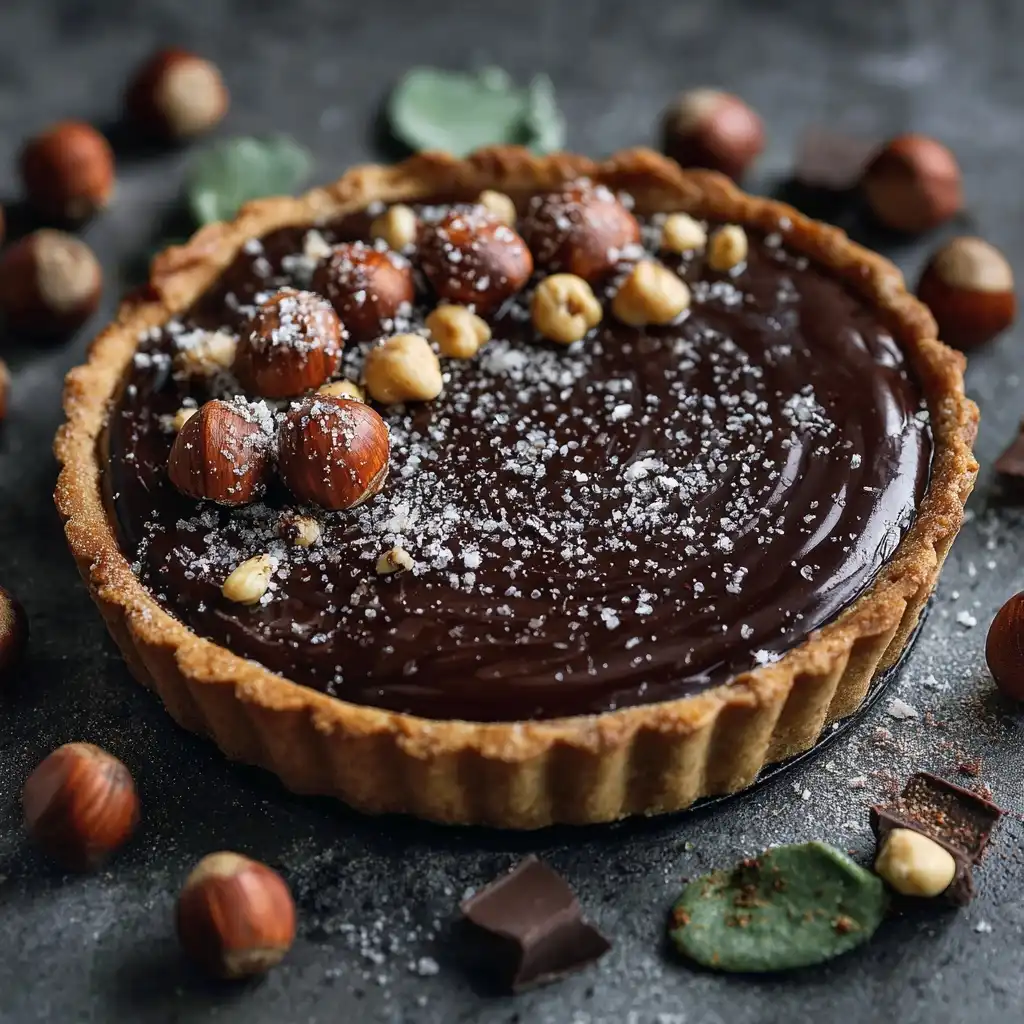
The Hazelnut Chocolate Tart is a luxurious, velvety dessert that marries the deep, bittersweet intensity of fine chocolate with the warm, nutty richness of roasted hazelnuts. Elegant yet approachable, this tart strikes a perfect balance between decadence and sophistication—ideal for special occasions, dinner parties, or quiet moments of self-indulgence. Its buttery shortcrust shell cradles a luscious, silken filling that’s both creamy and deeply flavorful, often elevated with a whisper of sea salt, a hint of espresso, or a splash of orange zest. Unlike overly sweet confections, this tart embraces complexity: the natural tannins of dark chocolate, the toasted depth of hazelnuts, and the subtle acidity of crème fraîche or sour cream all work in harmony to create a dessert that satisfies without cloying. Whether served at room temperature with a dollop of crème anglaise or chilled for a firmer, mousse-like texture, the Hazelnut Chocolate Tart commands attention—not just for its stunning appearance (often garnished with pralined hazelnuts, gold leaf, or delicate chocolate curls), but for its layered, resonant flavor profile that lingers long after the last bite.
The History
The Hazelnut Chocolate Tart traces its roots to the broader evolution of European pastry traditions—particularly those of France and Italy—where chocolate and nuts have shared a storied culinary kinship for centuries. While chocolate arrived in Europe from Mesoamerica in the 16th century, it wasn’t until the 19th century that solid chocolate bars and cocoa powder became widely available, enabling the rise of refined chocolate desserts. Hazelnuts—native to Southern Europe and especially abundant in Piedmont, Italy—have been prized since antiquity for their oil-rich flesh and distinctive aroma. The iconic Italian confection gianduja, invented in Turin around 1852 during a cocoa shortage, was a revolutionary blend of ground hazelnuts and melted chocolate—a direct ancestor of modern hazelnut-chocolate pairings. French pâtissiers soon adopted and refined this union, incorporating it into tarts, entremets, and gateaux. By the mid-20th century, chefs like Gaston Lenôtre and later Pierre Hermé elevated nut-chocolate combinations through precise technique and ingredient integrity—emphasizing single-origin chocolate, house-toasted and skinned hazelnuts, and laminated, enriched pastry doughs. The modern Hazelnut Chocolate Tart, as we know it today, emerged from this lineage: a contemporary reinterpretation that honors tradition while embracing innovation—such as using browned butter in the crust, infusing cream with toasted hazelnut praline, or incorporating malted milk powder for nuanced caramel notes. It stands not merely as a dessert, but as a testament to cross-cultural gastronomic dialogue, artisanal craftsmanship, and the timeless allure of two profoundly earthy, aromatic ingredients in perfect symbiosis.
Ingredients Breakdown
Every element of the Hazelnut Chocolate Tart plays a distinct, indispensable role—each selected not only for flavor but for functional contribution to texture, structure, and mouthfeel:
- Unsalted Butter (for crust & filling): Provides flakiness and tenderness in the pâte sucrée; in the filling, it adds sheen, smoothness, and emulsification stability. European-style butter (82–84% fat) is preferred for superior flavor and laminating capacity.
- All-Purpose Flour + Pastry Flour (or cake flour): All-purpose offers structure; blending in low-protein pastry flour yields a more tender, melt-in-the-mouth crust. Some recipes include a small percentage of almond flour for added nuttiness and moisture retention.
- Confectioners’ Sugar (not granulated): Ensures a fine, even crumb in the crust without graininess; also contributes to tenderness by inhibiting gluten formation.
- Egg Yolk (cold, for crust): Adds richness, color, and binding power—critical for preventing shrinkage during blind baking.
- Fine Sea Salt (Maldon or fleur de sel): Enhances sweetness, balances bitterness, and heightens all other flavors. A pinch in the crust and a light flake atop the finished tart are non-negotiable for dimension.
- High-Quality Dark Chocolate (68–72% cacao): The soul of the filling. Must be couverture-grade with high cocoa butter content for optimal melt, gloss, and depth. Single-origin varieties (e.g., Madagascar for bright fruit, Ecuador for floral notes, or Venezuela for raisin-and-spice nuance) allow customization of the tart’s personality.
- Toasted, Skinned Hazelnuts: Not merely chopped—they’re dry-toasted until deeply golden and fragrant, then rubbed in a clean kitchen towel to remove >95% of the bitter skins. This step is essential: raw or unskinned hazelnuts introduce astringency and grittiness.
- Hazelnut Praline Paste (or homemade praliné): Made by caramelizing sugar and folding in toasted hazelnuts, then grinding to a silky paste. This imparts intense, complex nuttiness and acts as a natural emulsifier and thickener—far superior to plain nut butter, which can separate or taste oily.
- Heavy Cream (36–40% fat): Heats evenly, carries fat-soluble flavors, and creates the ideal viscosity when combined with chocolate. Ultra-pasteurized versions are acceptable, but avoid “light” or “half-and-half”—they lack sufficient fat for proper setting and shine.
- Cream Fraîche or Crème Fraîche (full-fat): Adds gentle tang, velvety body, and pH balance that prevents chocolate from seizing. Its cultured acidity also improves shelf life and lends a subtle fermented depth reminiscent of traditional French tarts.
- Vanilla Bean (seeds scraped, pod reserved for infusion): Far superior to extract—offers floral, woody, and creamy top notes that complement both chocolate and hazelnut without dominating.
- Espresso Powder (instant, unsweetened): A mere ¼ tsp amplifies chocolate’s inherent bitterness and roast notes without imparting coffee flavor—an old pâtisserie secret for “rounding out” dark chocolate.
- Optional Flavor Enhancers: Orange zest (finely grated, no pith), a few drops of pure orange oil, a pinch of cardamom, or a splash of Amaretto or Frangelico—all used sparingly to add aromatic lift without compromising structural integrity.
Step-by-Step Recipe
- Prepare the Hazelnuts (Day Before or Morning Of): Preheat oven to 350°F (175°C). Spread 1 cup raw, skin-on hazelnuts on a parchment-lined baking sheet. Toast 12–15 minutes, shaking pan halfway, until deeply golden, fragrant, and skins blistered. Transfer immediately to a clean kitchen towel, fold towel over nuts, and rub vigorously for 60–90 seconds to loosen skins. Discard skins (don’t worry about perfection—aim for ~90% removal). Cool completely. Reserve ¼ cup whole for garnish; coarsely chop remaining.
- Make the Pâte Sucrée (Sweet Shortcrust Pastry): In a food processor, pulse 1¼ cups (160g) all-purpose flour, ¼ cup (30g) pastry flour, ½ cup (60g) confectioners’ sugar, and ¼ tsp fine sea salt until combined. Add ¾ cup (170g) cold, cubed unsalted butter and 1 large cold egg yolk. Pulse in 1-second bursts until mixture resembles coarse meal with some pea-sized butter pieces. Add 1–2 tbsp ice water *only if needed* (most European butters require none). Pulse just until dough begins to clump. Turn onto plastic wrap, flatten into a 1-inch disc, wrap tightly, and refrigerate ≥2 hours (or up to 48 hours).
- Blind Bake the Crust: Roll chilled dough on lightly floured surface to 12-inch circle, ⅛-inch thick. Gently transfer to 9-inch fluted tart pan with removable bottom. Trim excess, press dough firmly into edges and up sides, prick base with fork. Freeze 30 minutes. Preheat oven to 375°F (190°C). Line crust with parchment and fill with pie weights or dried beans. Bake 20 minutes. Remove weights and parchment; bake 12–15 minutes more until golden and dry. Cool completely on wire rack—do not skip cooling; residual heat will cause filling to split.
- Prepare Hazelnut Praliné (Optional but Highly Recommended): In a heavy-bottomed saucepan, heat ½ cup (100g) granulated sugar over medium heat, swirling (not stirring) until fully melted and amber (340–350°F). Off heat, carefully stir in ½ cup (60g) toasted, skinned hazelnuts. Pour onto silicone mat; cool 10 minutes. Break into shards, then process in food processor with 1 tbsp neutral oil until smooth paste forms (~4–5 minutes, scraping sides often). Store in airtight jar at room temp up to 3 weeks.
- Temper & Infuse the Chocolate Filling: Finely chop 10 oz (285g) high-quality dark chocolate; place in heatproof bowl. In a saucepan, combine 1 cup (240ml) heavy cream, ¼ cup (60g) cream fraîche, seeds from 1 vanilla bean, and reserved pod. Heat over medium-low until steaming (do not boil); remove from heat, cover, and steep 15 minutes. Strain cream into measuring cup, discarding pod. Reheat cream mixture to 185°F (85°C). Pour ⅓ over chocolate; whisk gently until melted and glossy. Repeat twice more, waiting until each addition is fully incorporated before adding next. Whisk in ¼ cup (60g) hazelnut praliné paste, 1 tsp espresso powder, and ¼ tsp flaky sea salt until homogenous. Optional: strain through fine-mesh sieve for ultimate silkiness.
- Assemble & Set: Pour warm filling into cooled tart shell. Tap pan gently on counter to release air bubbles. Smooth surface with offset spatula. Refrigerate uncovered ≥6 hours—or preferably overnight—for optimal texture (filling firms to a dense, fudgy-yet-creamy consistency). For clean slices, dip knife in hot water and wipe dry between cuts.
- Garnish & Serve: Just before serving, scatter reserved whole toasted hazelnuts around edge. Drizzle with warm dark chocolate ganache (equal parts cream and chocolate) or sprinkle with flaky sea salt. Optional: serve with crème fraîche quenelles, roasted hazelnut brittle, or a quenelle of orange-zest-infused chantilly.
Tips
- Toast Hazelnuts in Batches: Overcrowding the pan causes steaming instead of roasting—leading to pale, soggy nuts. Use two sheets if needed.
- Skin Removal Hack: If stubborn skins remain after towel-rubbing, return nuts to warm oven (200°F) for 5 minutes—skins will loosen further.
- Butter Temperature Is Non-Negotiable: For the crust, butter must be cold enough to hold shape when pinched—but not frozen. Too cold = shattering; too warm = greasy, tough dough.
- Never Skip the Chill: Resting dough relaxes gluten (preventing shrinkage) and rechills butter (ensuring flakiness). Skipping leads to a dense, misshapen shell.
- Blind Baking Precision: Underbaked crust = soggy bottom; overbaked = burnt, bitter edges. Golden-brown color—not pale beige or dark brown—is the target.
- Chocolate Melting Discipline: Never exceed 120°F (49°C) when melting chocolate directly—use gentle steam or double boiler. Overheating causes irreversible seizing or graininess.
- Emulsify with Patience: When adding hot cream to chocolate, always start with a small amount and whisk *slowly*. Rushing causes separation. If mixture looks broken, whisk in 1 tsp warm cream—one drop at a time—until re-emulsified.
- Refrigeration Matters: Filling sets best at 38–40°F (3–4°C). Standard fridge temps vary—use a thermometer. Avoid freezer unless absolutely necessary (may cause condensation and bloom).
- Cutting Technique: For flawless slices, use a thin, sharp chef’s knife dipped in near-boiling water and wiped *completely dry* before each cut. Wipe residue after every slice.
- Room-Temp Serving: Let tart sit at room temperature 15–20 minutes before serving. Too cold = muted flavor and waxy texture; too warm = filling slumps and loses definition.
- Storage Wisdom: Keep covered with inverted cake dome or parchment tent (not plastic wrap—traps condensation). Best consumed within 3 days. Crust softens over time; revive briefly in 325°F oven for 4 minutes before serving.
Variations and Customizations
The Hazelnut Chocolate Tart is a masterclass in adaptable elegance—its core formula welcomes thoughtful, technically sound variations that honor its essence while expressing seasonal, cultural, or dietary creativity:
- White Chocolate & Roasted Hazelnut Tart: Substitute 10 oz high-cocoa-butter white chocolate (32–34% cocoa solids) for dark. Reduce cream to ¾ cup; add 1 tbsp lemon juice to balance sweetness. Garnish with candied orange peel and crushed pistachios.
- Gluten-Free Version: Replace flour blend with 1 cup (120g) superfine almond flour + ½ cup (60g) certified GF oat flour + 2 tbsp tapioca starch. Add ¼ tsp xanthan gum. Ensure all other ingredients (vanilla, baking powder if used) are GF-certified.
- Vegan Adaptation: Crust: use cold coconut oil or vegan butter + 1 tbsp apple cider vinegar + ice water. Filling: replace dairy cream with full-fat coconut cream (refrigerated overnight, scoop only thick top layer); use vegan dark chocolate (check for dairy-free certification); substitute cream fraîche with cashew crème fraîche (soaked raw cashews + lemon juice + miso + nutritional yeast). Set with 1 tsp agar-agar dissolved in warm coconut cream.
- Spiced Hazelnut & Dark Chocolate Tart: Infuse cream with 1 star anise, 2 cardamom pods, and 1 cinnamon stick. Add ¼ tsp freshly ground black pepper to filling for surprising warmth and brightness.
- Smoked Hazelnut Variation: Cold-smoke toasted hazelnuts over applewood chips for 15 minutes pre-skinning. Imparts haunting, campfire-adjacent depth—ideal paired with 85% dark chocolate and flaky Maldon.
- Boozy Infusion: Stir 1 tbsp Frangelico, Amaretto, or aged rum into warm filling just before pouring. Alcohol volatilizes slightly during chilling, leaving only aromatic resonance—not boozy punch.
- Layered Entremet Style: Add a ¼-inch layer of hazelnut dacquoise (ground hazelnuts, egg whites, sugar) beneath the chocolate filling. Or insert a thin layer of salted caramel or orange curd between crust and ganache for textural and flavor contrast.
- Mini Tartlets: Press dough into 3-inch muffin tins lined with parchment. Blind bake 12–14 minutes. Fill with reduced-volume ganache (scale down by 60%). Perfect for weddings or tasting menus.
- Seasonal Fruit Accent: Top individual servings with poached pear slices (in ginger-scented syrup), blood orange segments, or roasted figs with thyme-infused honey.
- Textural Contrast Topping: Finish with hazelnut streusel (toasted hazelnuts + brown sugar + cold butter + flour), chocolate soil (crushed cocoa nibs + powdered sugar + melted chocolate), or feuilletine (crispy crepe flakes).
Health Considerations and Nutritional Value
While undeniably indulgent, the Hazelnut Chocolate Tart—when crafted with whole, minimally processed ingredients—offers meaningful nutritional benefits beyond mere pleasure. A standard 9-inch tart (yielding 12 servings) provides approximately 320–360 kcal per slice, with the following macro- and micronutrient highlights:
- Heart-Healthy Fats: Hazelnuts are exceptionally rich in monounsaturated fats (oleic acid)—comparable to olive oil—which help lower LDL cholesterol and improve arterial elasticity. Combined with cocoa butter’s stearic acid (a neutral saturated fat), the fat profile supports cardiovascular wellness when consumed in moderation.
- Antioxidant Powerhouse: Dark chocolate (≥70% cacao) delivers flavanols—epicatechin and procyanidins—that combat oxidative stress, reduce inflammation, and support endothelial function. Hazelnuts contribute vitamin E (alpha-tocopherol), selenium, and phytosterols, synergistically boosting antioxidant capacity.
- Dietary Fiber & Prebiotics: Hazelnuts provide ~3g fiber per ¼ cup, including prebiotic compounds that nourish beneficial gut bacteria. The crust’s whole-grain flour option (if substituted) further increases insoluble fiber for digestive regularity.
- Essential Minerals: Each serving supplies notable amounts of magnesium (supports nerve/muscle function), copper (aids iron absorption and collagen synthesis), manganese (bone health and antioxidant enzymes), and zinc (immune modulation).
- Low Glycemic Impact: With minimal added sugar (relying on chocolate’s natural bitterness and hazelnut’s inherent sweetness), the tart has a glycemic load of ~8–10—significantly lower than most cakes or cookies. Ideal for mindful carbohydrate management.
- Considerations & Mitigations: Sodium is naturally low (<120mg/slice) unless excessive salt is added—making it suitable for sodium-restricted diets. For lactose sensitivity, cream fraîche contains minimal lactose (<2g/cup) due to culturing; full substitution with coconut alternatives eliminates dairy entirely. Those managing diabetes should monitor portion size and pair with protein (e.g., Greek yogurt) to slow glucose absorption. Note: caffeine content is modest (~12mg/slice from dark chocolate)—less than a quarter of a brewed coffee—but sensitive individuals may prefer 85%+ chocolate with lower theobromine.
- Mindful Indulgence Principle: This tart exemplifies the “quality-over-quantity” philosophy: one intentional, sensorially rich slice delivers profound satisfaction, reducing the urge for second helpings. Its nutrient density makes it a far more physiologically supportive choice than ultra-processed, high-fructose desserts lacking bioactive compounds.
Ingredients
- For the Pâte Sucrée Crust:
- 1¼ cups (160g) all-purpose flour, spooned & leveled
- ¼ cup (30g) pastry flour or cake flour
- ½ cup (60g) confectioners’ sugar, sifted
- ¼ tsp fine sea salt
- ¾ cup (170g) unsalted butter, very cold, cubed
- 1 large egg yolk, cold
- 1–2 tbsp ice water (only if needed)
- For the Hazelnut Chocolate Filling:
- 1 cup (135g) whole raw hazelnuts, skin-on
- 10 oz (285g) high-quality dark chocolate (68–72% cacao), finely chopped
- 1 cup (240ml) heavy cream (36–40% fat)
- ¼ cup (60g) full-fat cream fraîche
- Seeds from 1 vanilla bean (pod reserved)
- ¼ cup (60g) hazelnut praliné paste (homemade or premium store-bought)
- 1 tsp instant espresso powder, unsweetened
- ¼ tsp flaky sea salt (e.g., Maldon)
- For Garnish (Optional but Recommended):
- ¼ cup reserved whole toasted, skinned hazelnuts
- Flaky sea salt
- Dark chocolate ganache (equal parts cream and chocolate, warmed)
- Orange zest (organic, unwaxed)
Directions
- Toast and Skin the Hazelnuts: Preheat oven to 350°F (175°C). Spread hazelnuts on a parchment-lined baking sheet. Bake 12–15 minutes, until deeply golden and fragrant. Transfer immediately to a clean kitchen towel; fold towel over nuts and rub vigorously for 60–90 seconds to remove skins. Discard skins. Cool completely. Reserve ¼ cup whole for garnish; coarsely chop remainder.
- Make the Crust: In a food processor, pulse flours, confectioners’ sugar, and salt until combined. Add cold butter and egg yolk. Pulse in 1-second bursts until mixture resembles coarse meal with visible pea-sized butter pieces. Add 1 tbsp ice water; pulse 3–4 times. If dough doesn’t begin to clump, add remaining water ½ tsp at a time. Pulse just until cohesive. Turn dough onto plastic wrap, flatten into a 1-inch disc, wrap tightly, and refrigerate ≥2 hours.
- Blind Bake: On a lightly floured surface, roll dough to 12-inch circle, ⅛-inch thick. Gently fit into 9-inch fluted tart pan with removable bottom. Trim excess, press firmly into edges and up sides, prick base with fork. Freeze 30 minutes. Preheat oven to 375°F (190°C). Line crust with parchment and fill with pie weights. Bake 20 minutes. Remove weights and parchment; bake 12–15 minutes more until golden and dry. Cool completely on wire rack.
- Infuse the Cream: In a saucepan, combine heavy cream, cream fraîche, vanilla seeds, and reserved pod. Heat over medium-low until steaming (do not boil). Remove from heat, cover, and steep 15 minutes. Strain, discarding pod.
- Prepare the Filling: Place chopped chocolate in heatproof bowl. Reheat strained cream mixture to 185°F (85°C). Pour ⅓ over chocolate; whisk gently until melted and glossy. Repeat twice more, waiting until each addition is fully incorporated. Whisk in praliné paste, espresso powder, and flaky salt until smooth. Optional: strain through fine-mesh sieve.
- Assemble & Chill: Pour filling into cooled tart shell. Tap pan gently on counter. Smooth surface. Refrigerate uncovered ≥6 hours—or preferably overnight.
- Serve: Let tart sit at room temperature 15–20 minutes. Garnish with reserved hazelnuts, flaky salt, and optional chocolate drizzle. Slice with hot, dry knife.
FAQ
- Can I use store-bought hazelnut butter instead of praliné?
- No—commercial hazelnut butters contain added oils, sugars, and stabilizers that prevent proper emulsification and cause greasiness or separation. Praliné is caramel-based and naturally thickening. If unavailable, make a quick version: toast & skin ½ cup hazelnuts, caramelize ½ cup sugar, combine, cool, and grind with 1 tsp neutral oil until smooth.
- Why does my filling look grainy or separated?
- Most commonly caused by overheating chocolate (>120°F) or adding cream that’s too hot or too cold. Always use a thermometer. If separation occurs, whisk in 1 tsp warm cream, one drop at a time, until glossy. Also ensure chocolate is finely chopped—large pieces melt unevenly.
- Can I freeze the baked tart?
- Yes—but with caveats. Freeze *un-garnished*, wrapped tightly in parchment + foil, for up to 1 month. Thaw overnight in refrigerator, then rest at room temp 30 minutes before serving. Freezing may slightly dull surface shine and cause minor texture softening, but flavor remains intact.
- Is there a way to make this without a food processor?
- Absolutely. For the crust: whisk dry ingredients, then cut in cold butter with a pastry cutter or two knives until pea-sized. Mix egg yolk and water, then stir with fork until dough begins to clump. For praliné: use a mortar and pestle (labor-intensive but effective) or high-powered blender with extra oil.
- What if I don’t have a tart pan with removable bottom?
- You can use a 9-inch pie plate—but expect more difficulty removing slices. To compensate: grease pan well, line with parchment collar (cut a strip 3 inches taller than pan, wrap around inside), and chill crust thoroughly before baking. Run thin knife around edge before unmolding.
- Can I use milk or semi-sweet chocolate?
- Technically yes—but strongly discouraged. Milk chocolate lacks sufficient cocoa solids for structure and introduces excess dairy solids that can cause graininess. Semi-sweet (typically 45–55% cacao) is too sweet and low in cocoa butter, resulting