Introduction
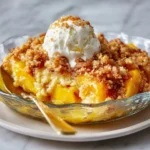
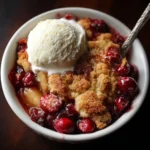
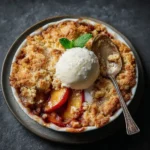
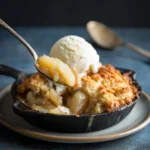
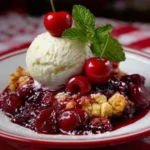
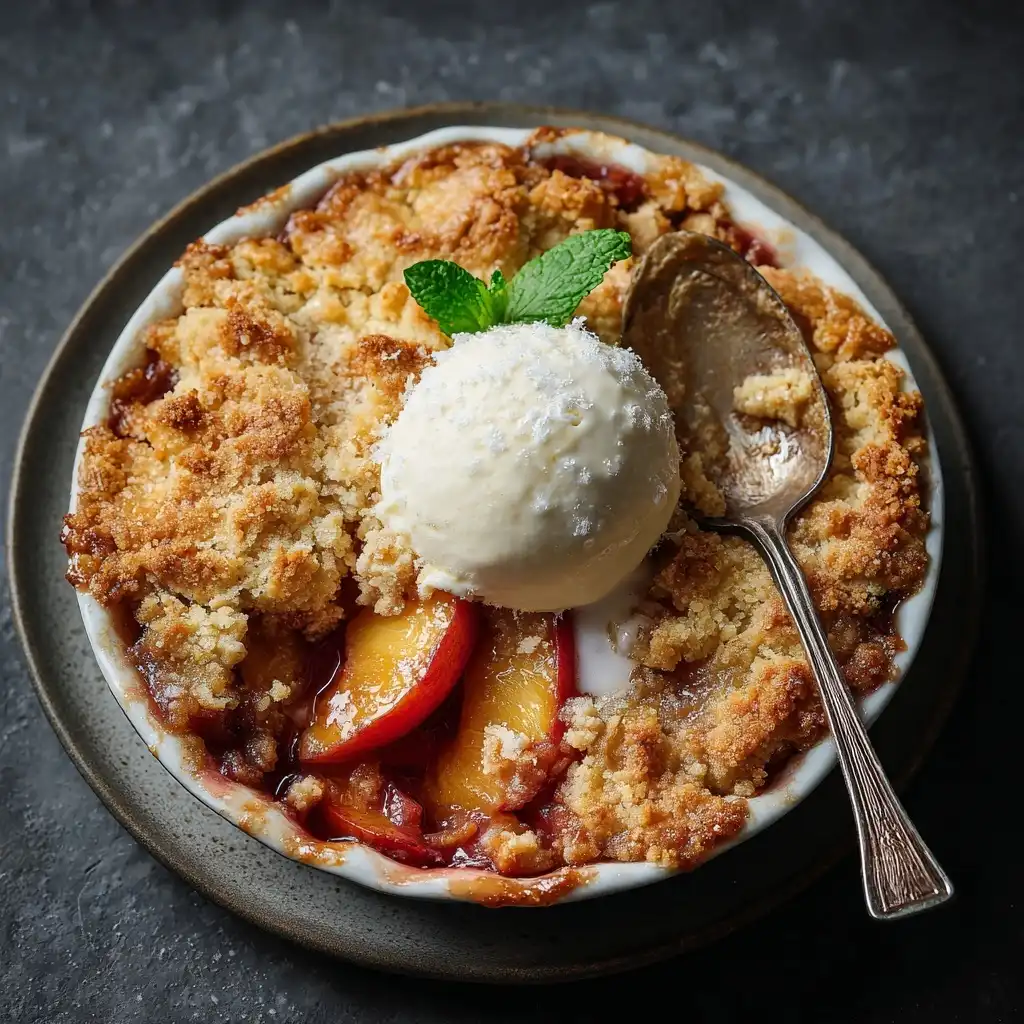
Honey Peach Cobbler is a soul-warming, rustic American dessert that marries the luscious sweetness of ripe summer peaches with the rich, floral depth of raw or local honey—baked beneath a golden, buttery, biscuit-like topping. Unlike traditional cobblers that rely heavily on granulated sugar and cornstarch, this version embraces natural sweetness and subtle complexity, offering a more nuanced, less cloying profile that highlights the fruit’s inherent brightness and texture. Whether served warm from the oven with a scoop of vanilla bean ice cream, drizzled with extra honey and a sprinkle of toasted almonds, or enjoyed cold the next morning with a splash of oat milk, Honey Peach Cobbler is both nostalgic and refreshingly modern—a celebration of seasonal abundance, mindful sweetness, and homestyle craftsmanship.
The History
The cobbler as a dessert form traces its roots to early American colonial kitchens in the 17th and 18th centuries, where resourceful cooks adapted English “cobbled” fruit desserts—so named for their rough, stone-like (or “cobbled”) top crusts—using whatever pantry staples were available: flour, butter, lard, and seasonal fruit. By the 19th century, cobblers had evolved into regional staples across the South and Midwest, often baked in cast-iron skillets over wood-burning stoves. Peaches, native to China but naturalized in the southeastern U.S. by the 1500s, became deeply embedded in Southern foodways—especially after commercial orchards flourished in Georgia, South Carolina, and Tennessee. Honey, long revered for its preservative qualities and medicinal value, was a common sweetener before refined sugar became widely affordable and accessible. Early Appalachian and Ozark recipes frequently substituted wildflower honey for cane sugar, lending warmth, aroma, and trace enzymes often lost in ultra-processed sweeteners. The Honey Peach Cobbler, therefore, represents a confluence of Indigenous horticulture, European baking tradition, African American culinary ingenuity (including techniques like skillet-baking and layering), and agrarian resilience—making it not just a dessert, but a living archive of American food history.
Ingredients Breakdown
Every ingredient in this Honey Peach Cobbler serves a distinct functional and sensory purpose—no element is arbitrary. Below is an in-depth analysis of each component:
- Fresh, Ripe Peaches (6–7 medium, ~2¼ lbs): The star. Choose freestone varieties (e.g., Elberta, Red Haven, or O’Henry) for easy pitting and minimal bruising. Ripeness is non-negotiable—peaches should yield slightly to gentle palm pressure and emit a heady, floral-fruity perfume. Underripe fruit lacks natural pectin and sugars needed for proper thickening and caramelization; overripe fruit turns mushy and loses structural integrity during baking. Skin-on is recommended—not only for added fiber and polyphenols (especially in the vibrant red blush), but also because peach skin contains chlorogenic acid, a potent antioxidant that stabilizes color and enhances flavor depth during roasting.
- Raw, Unfiltered Local Honey (¾ cup + 2 tbsp): Not merely a sweetener—honey is a dynamic flavor catalyst. Its enzymatic activity (invertase, diastase) gently breaks down starches and supports browning via Maillard reactions. Raw honey retains pollen, propolis, and trace minerals that contribute earthy, herbal, and mineral notes—complementing rather than masking peach. Clover honey offers mild floral balance; tupelo lends buttery richness; sourwood adds tangy complexity. Avoid pasteurized, ultra-filtered supermarket honey—it lacks aromatic volatiles and behaves more like syrup than true honey in baking.
- Unbleached All-Purpose Flour (1½ cups): Provides gluten structure for the biscuit topping while remaining tender when properly hydrated and minimally mixed. Organic, stone-ground flour adds nutty undertones and superior water absorption—critical for achieving flaky-yet-sturdy layers.
- Full-Fat Buttermilk (¾ cup): Adds acidity to activate baking soda, tenderness via lactic acid, and a subtle tang that cuts through sweetness. Cultured buttermilk (not powdered reconstituted) delivers live probiotics and deeper fermentation notes—enhancing digestibility and mouthfeel.
- Cultured Unsalted Butter (½ cup / 1 stick, very cold): Cold butter creates steam pockets during baking—essential for lift and flakiness. European-style butter (82–84% fat) yields richer, more laminated layers. Salt content is controlled separately to avoid over-salting delicate fruit.
- Baking Powder & Baking Soda (2 tsp + ¼ tsp): A dual-leavening system ensures reliable rise without bitterness. Baking powder provides initial lift; baking soda reacts instantly with buttermilk’s acid for early expansion and browning acceleration.
- Fine Sea Salt (1 tsp): Enhances all other flavors, balances sweetness, and strengthens gluten networks subtly. Himalayan pink or Celtic gray sea salt adds trace magnesium and potassium.
- Pure Vanilla Extract (1½ tsp, Madagascar Bourbon grade): Contains over 250 aromatic compounds—including vanillin, heliotropin, and guaiacol—that synergize with peach lactones and honey furanones. Alcohol-based extract (not imitation or paste) ensures optimal volatility and aroma release during baking.
- Lemon Zest (from 1 organic lemon) & Fresh Lemon Juice (1 tbsp): Brightens the entire profile, preserves peach color (citric acid inhibits enzymatic browning), and sharpens honey’s floral notes. Zest contributes limonene and beta-pinene—volatile oils that elevate perceived freshness.
- Ground Cinnamon (½ tsp) & Ground Cardamom (¼ tsp): Warm, aromatic spices that echo honey’s terroir and complement peach’s ester-rich bouquet. Cardamom’s eucalyptol and cineole notes add surprising sophistication without overpowering.
- Optional Garnishes: Toasted slivered almonds (adds crunch and vitamin E), crumbled goat cheese or mascarpone (for savory-sweet contrast), edible lavender buds (if honey is lavender-infused), or a microgreen salad of pea shoots or nasturtiums (for peppery brightness and visual elegance).
Step-by-Step Recipe
- Prep the Peaches (30 minutes ahead, ideally): Bring a large pot of water to boil. Score an “X” on the base of each peach. Blanch for 45 seconds, then immediately plunge into an ice bath. Peel, pit, and slice into ½-inch wedges. Toss gently with lemon juice and zest to prevent oxidation. Let drain in a fine-mesh colander over a bowl for 15 minutes—reserve ¼ cup of the fragrant peach juice for the filling.
- Build the Filling: In a large, non-reactive bowl (stainless steel or glass), combine drained peaches, reserved peach juice, ¾ cup honey, cinnamon, cardamom, and a pinch of salt. Fold with a silicone spatula until evenly coated. Let macerate at room temperature for 20 minutes—this draws out juices, dissolves honey fully, and begins natural pectin activation. Do not skip maceration—it’s key to cohesive, glossy syrup, not watery pooling.
- Preheat & Prep Pan: Position oven rack in lower third. Preheat oven to 375°F (190°C). Generously butter a 9×13-inch ceramic or enameled cast-iron baking dish (or two 8-inch round dishes for portion control). For best browning, avoid dark nonstick pans—they promote over-browning on edges before center sets.
- Make the Biscuit Topping: In a chilled metal bowl, whisk together flour, baking powder, baking soda, salt, and spices. Cut in cold cubed butter using a pastry cutter or two forks until mixture resembles coarse meal with visible pea-sized butter pieces. Stir in vanilla. Gradually pour in buttermilk while stirring with a fork—just until shaggy clumps form. Do not overmix; streaks of flour are acceptable. Let rest 5 minutes—this hydrates flour and relaxes gluten for tenderness.
- Assemble with Precision: Pour macerated peaches and syrup into prepared dish, spreading evenly. Using two spoons or a small ice cream scoop, drop 8–10 generous (¼-cup) mounds of dough onto the fruit, spacing them evenly. Gently press each mound to about ½-inch thickness—do not flatten completely; air pockets are essential for rise. Brush tops lightly with remaining 2 tbsp honey (thinned with 1 tsp warm water if too viscous) for luminous glaze and deeper caramelization.
- Bake with Strategy: Place dish on a parchment-lined baking sheet (to catch drips). Bake for 45–55 minutes. First 25 minutes: cover loosely with foil to prevent premature browning. Remove foil and continue baking until topping is deep golden brown, edges bubble vigorously, and center tests clean with a toothpick inserted between mounds (not into fruit). Internal fruit temperature should reach 205°F (96°C)—this ensures proper thickening. Rotate pan halfway through uncovered phase for even baking.
- Cool & Set (Critical Step): Remove from oven and let rest undisturbed for full 30 minutes. This allows residual heat to finish setting the syrup via pectin gelation and prevents topping from collapsing. Cutting too soon releases steam and causes structural failure.
- Serve Thoughtfully: Scoop with a wide, thin spatula to preserve layers. Serve warm—not hot—to preserve textural contrast. Accompany with cultured dairy (vanilla crème fraîche, honey-kissed Greek yogurt) or artisanal ice cream (maple-walnut, lavender-honey, or black pepper–infused).
Tips
- Peach Selection Mastery: Press near the stem end—not the cheek—for ripeness. A ripe peach will have a pronounced, sweet fragrance at room temperature. If peaches are underripe, place them in a brown paper bag with a ripe banana for 1–2 days; ethylene gas accelerates softening without sacrificing flavor.
- Honey Handling Wisdom: Never boil raw honey—it degrades delicate enzymes and volatile aromatics. Warm gently in a bowl over simmering water (not direct heat) if crystallized. Measure honey in a lightly oiled measuring cup for effortless release.
- Biscuit Tenderness Secret: Use a bench scraper to fold dough—not hands—to minimize warming butter. Chill dough mounds for 10 minutes before baking if kitchen is above 72°F (22°C). Cold dough = higher steam yield = better lift.
- Syrup Control Hack: If peaches release excessive liquid (common with early-season or canned), toss drained fruit with 1 tsp quick-cooking tapioca starch *before* adding honey—this binds excess water without clouding flavor.
- Oven Thermometer Necessity: Most home ovens run 25–40°F off. An oven-safe thermometer placed on the rack ensures precise temperature—critical for even browning and set syrup.
- Leftover Magic: Refrigerate covered for up to 5 days. Reheat individual portions in a toaster oven (not microwave) at 325°F for 12–15 minutes—topping regains crispness, fruit reheats gently. Or repurpose cold cobbler into breakfast: layer with granola, honey-yogurt, and fresh berries.
- Skillet Shortcut: For rustic charm and superior heat retention, bake in a preheated 12-inch cast-iron skillet. Reduce baking time by 5 minutes and monitor closely—the heavy metal conducts heat intensely.
Variations and Customizations
- Vegan Adaptation: Substitute cold coconut oil (refined for neutral taste) for butter; use almond or soy buttermilk (1 tbsp lemon juice + ¾ cup unsweetened plant milk); replace honey with high-quality date syrup or maple syrup (reduce by 1 tbsp—maple is sweeter). Add 1 tsp apple cider vinegar to mimic buttermilk tang.
- Gluten-Free Version: Use a 1:1 GF flour blend containing xanthan gum (e.g., King Arthur Measure for Measure or Bob’s Red Mill 1-to-1). Increase baking powder to 2¼ tsp and add ¼ tsp psyllium husk powder to improve elasticity and moisture retention.
- Stone Fruit Medley: Replace 2 peaches with equal parts ripe nectarines and plums (purple or Santa Rosa). Plum skins add gorgeous magenta hue and tannic balance to honey’s sweetness.
- Herbal Infusion: Steep 1 tbsp fresh thyme or rosemary in warm honey for 20 minutes before using. Strain and cool. The savory-herbal note creates stunning complexity against peach’s sweetness.
- Spiced Chai Cobbler: Add ¼ tsp ground ginger, ⅛ tsp ground cloves, and a 1-inch piece of fresh peeled ginger (grated fine) to the filling. Infuse honey with a chai tea bag for 10 minutes before mixing.
- Breakfast Cobbler: Reduce honey to ½ cup; add ¼ cup rolled oats and 2 tbsp chopped walnuts to topping. Serve with poached eggs and a drizzle of honey-thyme syrup for a savory-sweet brunch centerpiece.
- Deconstructed Individual Servings: Layer peach compote, crumbled shortbread, whipped honey mascarpone, and candied pecans in mason jars. Refrigerate overnight—ideal for picnics or elegant dinner parties.
- Smoked Peach Variation: Lightly smoke peeled, sliced peaches over applewood chips for 15 minutes before macerating. Imparts subtle campfire depth that pairs exquisitely with buckwheat honey.
Health Considerations and Nutritional Value
A 1-cup serving (approx. 1/8th of recipe) provides approximately:
- Calories: 295 kcal (moderate for dessert—lower than sugar-heavy counterparts)
- Total Carbohydrates: 52g (including 38g natural sugars from fruit and honey; 4g dietary fiber—16% DV)
- Protein: 4g (from flour, buttermilk, and trace enzymes in honey)
- Fat: 8g (mostly unsaturated from butter and peach skin oils)
- Vitamins & Minerals: 25% DV Vitamin C (peach), 18% DV Vitamin A (beta-carotene in skin), 12% DV Potassium (peach + honey minerals), plus manganese, copper, and antioxidants including chlorogenic acid, quercetin, and pinocembrin (in raw honey).
Key Health Notes:
- Glycemic Impact: Honey has a lower glycemic index (GI ~58) than table sugar (GI ~65) and contains fructose-glucose ratio favorable for slower absorption. Combined with high-fiber peaches and fat/protein from topping, this cobbler elicits a gentler blood sugar response than conventional desserts—ideal for mindful carbohydrate management.
- Antioxidant Synergy: Peach phenolics + honey flavonoids + lemon vitamin C create powerful redox-balancing effects—shown in studies to reduce oxidative stress markers more effectively than isolated compounds.
- Digestive Support: Raw honey’s prebiotic oligosaccharides feed beneficial gut bacteria (e.g., Bifidobacterium). Buttermilk’s live cultures further enhance microbiome diversity. Peach pectin acts as a gentle bulking agent.
- Considerations: Not suitable for infants under 1 year (botulism risk from honey spores). Those with fructose malabsorption may experience GI discomfort—substitute maple syrup. Diabetics should consult healthcare providers but may enjoy smaller portions paired with protein/fat to mitigate glucose spikes.
- Functional Upgrades: Boost nutrition by adding 2 tbsp ground flaxseed to topping (omega-3s, lignans) or stirring 1 tsp spirulina powder into honey (phycocyanin, iron). Top with pumpkin seeds for zinc and magnesium.
Ingredients
- 6–7 medium ripe freestone peaches (about 2¼ lbs), washed and dried
- 1 tbsp fresh lemon juice
- 1 tsp finely grated lemon zest (organic preferred)
- ¾ cup raw, unfiltered local honey, plus 2 tbsp for glaze
- ½ tsp ground cinnamon
- ¼ tsp ground cardamom
- ¼ tsp fine sea salt
- 1½ cups unbleached all-purpose flour
- 2 tsp aluminum-free baking powder
- ¼ tsp baking soda
- 1 tsp fine sea salt
- ½ cup (1 stick) cold unsalted butter, cubed
- 1½ tsp pure Madagascar bourbon vanilla extract
- ¾ cup full-fat cultured buttermilk
- Optional: 2 tbsp sliced almonds, toasted
Directions
- Preheat oven to 375°F (190°C). Butter a 9×13-inch baking dish and set aside.
- Bring a large pot of water to boil. Score an “X” on the bottom of each peach. Blanch for 45 seconds, then transfer to ice water. Peel, pit, and slice into ½-inch wedges. Toss with lemon juice and zest; drain in a colander 15 minutes, reserving ¼ cup juice.
- In a bowl, combine peaches, reserved juice, ¾ cup honey, cinnamon, cardamom, and ¼ tsp salt. Macerate 20 minutes at room temperature.
- In another bowl, whisk flour, baking powder, baking soda, and 1 tsp salt. Cut in cold butter until pea-sized. Stir in vanilla. Gradually add buttermilk, mixing with fork until shaggy clumps form. Rest 5 minutes.
- Pour peach mixture into prepared dish. Drop dough by ¼-cup portions evenly over fruit. Gently flatten each mound to ½-inch. Brush tops with remaining 2 tbsp honey (thinned if needed).
- Place dish on parchment-lined baking sheet. Cover loosely with foil. Bake 25 minutes. Remove foil; bake 20–30 more minutes until topping is deep golden and center bubbles vigorously.
- Let cool undisturbed for 30 minutes before serving. Garnish with toasted almonds if desired.
FAQ
- Can I use frozen peaches?
- Yes—but thaw completely and drain *excess* liquid (press gently in a towel). Add 1 tsp tapioca starch to filling to compensate for lost pectin. Flavor is excellent, though texture slightly softer than fresh.
- Why does my cobbler turn out soupy?
- Most often due to under-baking (center not reaching 205°F), skipping maceration (honey doesn’t fully integrate), or using overly juicy/underripe fruit. Also ensure you’re using full-fat buttermilk—low-fat versions add water without fat to emulsify.
- Can I make this ahead?
- Absolutely. Assemble filling and topping separately up to 1 day ahead; refrigerate covered. Bring topping to cool room temp (15 min) before assembling and baking. Or bake fully, cool, and reheat as directed.
- What’s the best honey to use?
- Choose raw, unfiltered, single-origin honey whose flavor complements peach: orange blossom (bright citrus), sourwood (tart berry), or wildflower (earthy-sweet). Avoid “honey blends” or those labeled “pure honey” without origin—often ultra-filtered and diluted.
- My topping is tough or dense. What went wrong?
- Overmixing the dough (develops gluten), using warm butter (melts before steam forms), or substituting low-protein flour (cake flour lacks structure). Also verify your baking powder is fresh—test by mixing ½ tsp with ¼ cup hot water; it should foam vigorously within 30 seconds.
- Is there a low-sugar version?
- Reduce honey to ½ cup and add 2 tbsp monk fruit–erythritol blend (like Lakanto). Increase lemon juice to 1½ tbsp and add 1 tsp apple cider vinegar to filling for brightness. Topping remains unchanged—fat and acid balance perceived sweetness.
- Can I freeze Honey Peach Cobbler?
- Yes—cool completely, wrap tightly in freezer paper + foil, and freeze up to 3 months. Thaw overnight in fridge, then reheat covered at 325°F for 30 minutes, uncovering last 10 minutes to crisp topping.
- What makes this cobbler different from a crisp or crumble?
- Cobbler features a biscuit or dumpling-style *drop-biscuit* topping—soft, slightly chewy, and cake-like. Crisps use oat-and-butter streusel; crumbles rely on flour-butter-sugar clusters. Texture, leavening, and structure are fundamentally distinct.
- Can I can or preserve this?
- No—cobblers are not safe for home canning due to low-acid fruit, dairy in topping, and variable density. Instead, freeze unbaked assembled cobbler for longest shelf life.
- Why use buttermilk instead of regular milk?
- Buttermilk’s acidity activates baking soda for optimal rise, tenderizes gluten, adds complex tang, and contributes lactic acid bacteria that subtly enhance flavor development during resting and baking.
Summary
Honey Peach Cobbler is a masterclass in seasonal harmony—where sun-ripened peaches, raw floral honey, and buttery biscuit dough converge into a dessert that’s simultaneously comforting and sophisticated, rustic and refined.
Rooted in centuries of American ingenuity and elevated by modern nutritional insight, it proves that indulgence and intentionality need not be mutually exclusive—every bite is a testament to terroir, tradition, and thoughtful craft.