Introduction
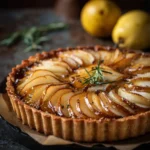
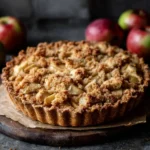
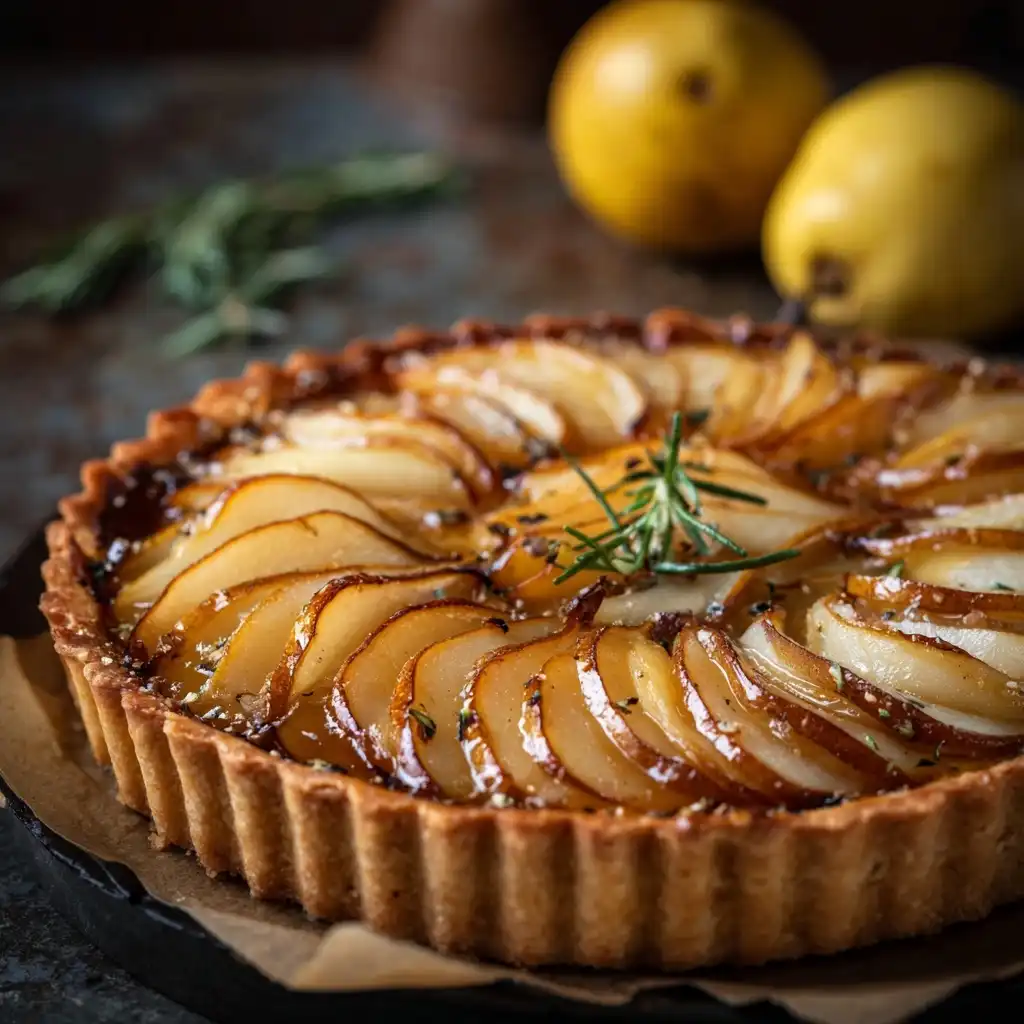
The Honey Roasted Pear Tart is a sublime marriage of rustic elegance and autumnal warmth—a dessert that bridges the gap between sophisticated patisserie and comforting home baking. With its buttery, flaky crust cradling tender, caramelized pears glistening under a delicate honey glaze, this tart exudes quiet luxury without demanding professional technique. Unlike overly sweet or cloying fruit tarts, it celebrates the natural sweetness and floral nuance of ripe pears, enhanced—not masked—by raw honey’s complex nectar notes and gentle acidity. It’s equally at home on a holiday dessert table alongside spiced cider as it is served with crème fraîche on a rainy Sunday afternoon. Its visual appeal—golden-brown pastry edges framing rosy, syrup-kissed pear slices arranged in concentric spirals—is matched only by its layered sensory experience: crisp-yet-tender crust, yielding fruit with subtle earthy depth, and a finish that lingers with warm honey, vanilla, and toasted almond undertones.
The History
While no single documented origin defines the Honey Roasted Pear Tart, its lineage traces through centuries of European fruit tart traditions—particularly those of France, England, and the Low Countries—where seasonal orchard fruits were preserved, roasted, or baked into open-faced pastries long before modern refrigeration. Pears have held symbolic and culinary significance since antiquity: cultivated in ancient Mesopotamia over 4,000 years ago, praised by Pliny the Elder for their “soothing” qualities, and later elevated in medieval monastic gardens across Europe. In 17th- and 18th-century France, tarte aux poires appeared in regional cookbooks, often featuring poached pears in red wine or baked with butter and sugar in shortcrust. The integration of honey—as both sweetener and preservative—predates refined sugar’s widespread availability; medieval English recipes frequently called for “honey-roasted” fruits to intensify flavor and extend shelf life. The modern iteration, however, reflects a 21st-century resurgence of whole-food sensibility: chefs and home bakers alike began substituting refined sugars with raw, local honey not only for ethical and flavor reasons but also to highlight terroir—allowing the floral character of orange blossom, tupelo, or wildflower honey to subtly shape the tart’s identity. This evolution mirrors broader culinary movements emphasizing seasonality, minimal intervention, and ingredient-driven storytelling—transforming a humble fruit tart into a canvas for regional agriculture and artisanal craftsmanship.
Ingredients Breakdown
Every element in this tart serves a precise functional and aesthetic role—no ingredient is merely decorative or conventional:
- All-Purpose Flour (with optional 10–15% pastry or cake flour): Provides structure and tenderness; the slight reduction in gluten-forming protein yields a more delicate, melt-in-the-mouth crust without compromising rollability.
- Unsalted Butter (cold, high-fat European-style preferred): The backbone of flakiness—its water content creates steam pockets during baking, while its fat coats flour particles to inhibit gluten development. Cold temperature is non-negotiable for texture integrity.
- Granulated Sugar (fine, not powdered): Adds subtle sweetness and aids in browning via the Maillard reaction; its crystalline structure also contributes to crust crispness.
- Sea Salt (flaky or fine gray sea salt): Enhances all other flavors, balances honey’s sweetness, and strengthens gluten slightly for better dough cohesion.
- Ice Water (filtered, precisely measured): Hydrates flour without activating excess gluten; temperature prevents butter from softening prematurely.
- Ripe but Firm Bartlett, Anjou, or Bosc Pears: Bartletts offer floral sweetness and buttery softness when roasted; Anjous provide balanced acidity and hold shape beautifully; Boscs bring spicy, honeyed notes and exceptional structural integrity—ideal for intricate arrangements. Underripe pears lack sweetness; overripe ones disintegrate.
- Raw, Unfiltered Local Honey (e.g., wildflower, clover, or orange blossom): Not just a sweetener—its enzymatic activity, trace minerals, and volatile aromatic compounds infuse the pears with nuanced complexity. Heat transforms its fructose and glucose into rich, glossy caramel notes without the harshness of boiled sugar syrups.
- Vanilla Bean Paste (not extract): Delivers visible specks and deeper, creamier, more persistent vanilla flavor than alcohol-based extracts—especially critical when paired with delicate pear essence.
- Lemon Zest (organic, finely grated) and Fresh Lemon Juice: Brightens honey’s richness, cuts through butterfat, and stabilizes pear color by inhibiting enzymatic browning.
- Ground Cardamom (freshly ground from pods): A signature accent—its citrusy, resinous warmth complements pear’s floral notes and honey’s earthiness without overpowering. Pre-ground loses potency within weeks.
- Almond Extract (pure, not imitation): Used sparingly (⅛ tsp), it echoes the subtle marzipan-like quality inherent in many pear varieties and deepens the overall aromatic profile.
- Heavy Cream or Crème Fraîche (for finishing): Adds luxurious mouthfeel and tangy contrast; brushed on crust edges pre-bake for golden sheen and added crispness.
- Coarse Demerara or Turbinado Sugar (for crust rim): Imparts textural crunch, visual sparkle, and a mild molasses note that harmonizes with roasted fruit.
Step-by-Step Recipe
- Prepare the Sweet Shortcrust Pastry (minimum 1 hour chilling required): In a food processor, pulse 1¼ cups (160g) all-purpose flour, 2 tbsp (25g) granulated sugar, and ½ tsp fine sea salt until combined. Add ½ cup (113g) cold, cubed unsalted butter and pulse 8–10 times until mixture resembles coarse meal with pea-sized butter pieces. Drizzle in 3–4 tbsp ice water, 1 tsp at a time, pulsing just until dough begins to clump. Turn onto parchment, gather into a disc, wrap tightly, and chill for ≥1 hour (or up to 3 days). For optimal results, freeze for 15 minutes before rolling.
- Roast the Pears (can be done 1 day ahead): Preheat oven to 375°F (190°C). Peel, halve, and core 3 medium firm-ripe Anjou pears. Slice each half lengthwise into ¼-inch thick fan-shaped pieces (6–8 per half), keeping slices attached at the stem end. In a bowl, whisk together ⅓ cup (115g) raw honey, 1 tsp vanilla bean paste, ½ tsp freshly ground cardamom, zest of ½ lemon, and 1 tsp lemon juice. Gently fold in pear slices, coating thoroughly. Arrange in a single layer on a parchment-lined rimmed baking sheet. Roast 25–32 minutes, rotating pan halfway, until pears are deeply golden at edges, plump but not mushy, and syrup has reduced to a glossy, viscous glaze. Cool completely—this step concentrates flavor and prevents soggy crust.
- Roll & Blind-Bake the Crust: On a lightly floured surface, roll chilled dough into a 12-inch circle (~¼ inch thick). Carefully transfer to a 10-inch tart pan with removable bottom. Trim excess, then crimp or flute edges. Prick base with fork. Line with parchment and fill with pie weights or dried beans. Chill 15 minutes. Bake at 375°F for 18 minutes. Remove weights and parchment; bake 8–10 minutes more until pale gold and dry to touch. Cool on wire rack 15 minutes—do not skip cooling, or honey glaze will pool.
- Assemble with Precision: Spoon any reserved pear syrup from roasting pan into a small saucepan. Simmer 2–3 minutes until slightly thickened; cool to room temperature. Spread a thin, even layer (≈2 tbsp) of cooled syrup over par-baked crust base. Arrange roasted pear slices in overlapping concentric circles, starting at outer edge and working inward, gently fanning each slice. Tuck any smaller pieces into center. Brush exposed pear surfaces lightly with remaining syrup.
- Final Bake & Finish: Reduce oven to 350°F (175°C). Bake tart 22–26 minutes—until crust is deep golden, pear edges are caramelized, and syrup bubbles gently at edges. Cool on rack for 45 minutes minimum (ideally 1.5 hours) to allow filling to set. Just before serving, warm 1 tbsp honey with ½ tsp lemon juice; brush over pears for extra luminosity. Sprinkle crust rim with 1 tsp Demerara sugar.
Tips
- Pear Selection is Paramount: Test ripeness by applying gentle pressure near the stem—if it yields slightly, it’s perfect. Refrigerate unripe pears at room temperature for 1–3 days to ethylene-ripen. Never use canned or poached pears—their texture and moisture content will ruin structural integrity.
- Honey Selection Matters More Than You Think: Avoid ultra-light, processed clover honey if you want complexity. Opt for raw, single-origin varietals: tupelo honey for floral brightness, buckwheat for robust molasses depth, or fireweed for delicate herbal notes. Always taste your honey first—it should taste clean, fragrant, and balanced, not fermented or musty.
- Chill, Then Chill Again: Dough must be cold before rolling *and* after shaping. Warm butter = greasy, tough crust. If dough softens during assembly, return tart to freezer for 10 minutes before final bake.
- Roasting Syrup is Liquid Gold: Don’t discard the concentrated syrup left on the baking sheet. Strain it, reduce further if needed, and store refrigerated for up to 2 weeks—use in salad dressings, yogurt swirls, or drizzle over goat cheese crostini.
- Prevent Soggy Bottoms Religiously: Par-baking is essential—but equally vital is brushing the *hot* crust base with a thin layer of beaten egg white immediately after removing weights. This creates an impermeable seal against fruit moisture.
- Knife Skills Make the Visual Impact: Use a very sharp, thin-bladed knife (e.g., a bird’s beak or tomato knife) for clean pear slicing. Keep slices attached at the stem end by cutting only ⅞ of the way through—this allows elegant fanning without disintegration.
- Cooling Is Non-Negotiable: Cutting into a warm tart causes pear juices to flood the crust and collapse the delicate layers. Let it rest at least 45 minutes—even longer enhances flavor melding and syrup setting.
- Reheating Without Ruining: To serve warm, place fully cooled tart on a parchment-lined baking sheet and heat in a 300°F oven for 8–10 minutes. Never microwave—the crust turns leathery and pears become rubbery.
Variations and Customizations
This tart is inherently adaptable—designed to reflect personal taste, seasonal abundance, and pantry creativity—without sacrificing its soul:
- Gluten-Free Version: Substitute 1:1 gluten-free all-purpose flour blend containing xanthan gum. Add 1 tsp psyllium husk powder to dough for elasticity. Use certified GF oats in a streusel topping if desired.
- Vegan Adaptation: Replace butter with high-fat, cultured vegan butter (e.g., Miyoko’s); use maple syrup or date syrup instead of honey (note: changes flavor profile significantly); bind dough with cold almond milk + 1 tsp apple cider vinegar instead of water.
- Herbal Infusion: Steep 2 tbsp fresh thyme or rosemary sprigs in warm honey for 20 minutes before roasting pears. Strain and proceed. Adds sophisticated savory lift—especially stunning with Bosc pears.
- Nutty Dimension: Toast ⅓ cup sliced almonds or chopped hazelnuts; sprinkle over pears before final bake. Or press toasted nuts into the par-baked crust rim before adding syrup.
- Spice Spectrum: Swap cardamom for ¼ tsp ground ginger + pinch of black pepper for warmth; or use star anise (1 pod, removed before roasting) for licorice depth; or add a whisper of saffron (3 threads bloomed in 1 tsp warm milk) to the honey syrup.
- Wine-Enhanced Roast: Replace 1 tbsp lemon juice with 1 tbsp dry white wine (e.g., Sauvignon Blanc) or pear brandy in the roasting syrup for additional aromatic complexity.
- Double-Crust Rustic Galette: Skip the tart pan. Roll dough into a 14-inch round, mound roasted pears in center, fold edges over, brush with cream, and sprinkle with coarse sugar. Bake at 375°F for 40–45 minutes.
- Breakfast or Brunch Twist: Add 1 beaten egg + 2 tbsp crème fraîche to cooled pear syrup; pour over par-baked crust before arranging pears. Adds custard-like richness and protein.
- Winter Citrus Fusion: Add segments of blood orange or cara cara orange between pear layers; their bright acidity and jewel-toned hue create stunning contrast.
- Smoked Honey Variation: Use small-batch smoked honey (applewood or cherrywood) for an unexpected, campfire-tinged sophistication—pair with black pepper and dark chocolate shavings.
Health Considerations and Nutritional Value
While undeniably a dessert, this Honey Roasted Pear Tart offers meaningful nutritional attributes when approached mindfully—far exceeding typical pastry fare:
- Pear Power: One medium pear provides ~6g dietary fiber (22% DV), predominantly pectin—a soluble fiber proven to support healthy cholesterol levels and gut microbiome diversity. Rich in vitamin C, copper, potassium, and flavonoids like quercetin and anthocyanins (especially in red-skinned varieties), pears contribute antioxidant and anti-inflammatory activity.
- Honey’s Bioactive Profile: Raw, unfiltered honey contains over 200 bioactive compounds—including polyphenols, enzymes (e.g., glucose oxidase), bee-derived peptides, and prebiotic oligosaccharides. Studies suggest modest consumption may support upper respiratory health, exhibit antimicrobial properties, and offer gentler glycemic impact than refined sugar (GI ≈ 58 vs. 65 for sucrose).
- Butter’s Fat-Soluble Nutrients: Grass-fed butter contributes vitamins A, D, E, and K2—essential for bone health, immune regulation, and cellular repair. Its short- and medium-chain fatty acids (e.g., butyrate) nourish colonocytes and may improve insulin sensitivity.
- Strategic Refinements: Reducing added sugar in the crust by 25%, using whole wheat pastry flour for 25% of total flour, or adding ground flaxseed (1 tbsp) boosts fiber and omega-3s without compromising texture. Omitting optional crust sugar entirely relies on honey’s natural sweetness.
- Portion Mindfulness: A standard 10-inch tart yields 10–12 servings. Pairing with plain Greek yogurt or crème fraîche increases satiety and protein, reducing likelihood of overconsumption. Enjoying one slice mindfully—with attention to aroma, texture, and flavor—enhances satisfaction more than larger, distracted portions.
- Considerations: Those managing diabetes should monitor portion size and pair with protein/fat (e.g., walnuts, cheese) to moderate glucose response. Individuals with fructose malabsorption may tolerate cooked pears better than raw, but should consult a dietitian regarding honey. Gluten-free versions require certified ingredients for celiac safety.
Nutritionally, a standard slice (1/12th of recipe) contains approximately: 245 kcal | 14g fat (8g sat) | 29g carbs (18g sugars, 3g fiber) | 2g protein | 65mg sodium. Values vary based on flour type, butter fat %, honey density, and pear variety.
Ingredients
- For the Sweet Shortcrust Pastry:
- 1¼ cups (160g) all-purpose flour, plus extra for dusting
- 2 tablespoons (25g) granulated sugar
- ½ teaspoon fine sea salt
- ½ cup (113g) cold unsalted butter, cut into ½-inch cubes
- 3 to 4 tablespoons ice water
- For the Honey-Roasted Pears:
- 3 medium firm-ripe Anjou, Bartlett, or Bosc pears (about 1 lb / 450g total)
- ⅓ cup (115g) raw, unfiltered honey (preferably local)
- 1 teaspoon pure vanilla bean paste
- ½ teaspoon freshly ground green cardamom
- Zest of ½ organic lemon
- 1 teaspoon fresh lemon juice
- Pinch of fine sea salt
- For Assembly & Finishing:
- 1 large egg yolk + 1 teaspoon heavy cream (for egg wash)
- 1 tablespoon raw honey + ½ teaspoon lemon juice (for final glaze)
- 1 teaspoon coarse Demerara or turbinado sugar
- Optional: 2 tablespoons toasted sliced almonds or crushed hazelnuts
Directions
- Make the pastry dough: In a food processor, combine flour, sugar, and salt. Pulse to mix. Add cold butter cubes and pulse 8–10 times until mixture resembles coarse cornmeal with visible pea-sized butter pieces. Drizzle in 3 tablespoons ice water and pulse just until dough begins to clump together. If too dry, add remaining water ½ teaspoon at a time. Turn dough onto a sheet of parchment paper, gather into a cohesive disc, flatten slightly, and wrap tightly. Refrigerate for at least 1 hour—or up to 3 days—or freeze for up to 2 months.
- Roast the pears: Preheat oven to 375°F (190°C). Line a rimmed baking sheet with parchment. Peel pears, halve lengthwise, and carefully core with a melon baller or small spoon. Slice each half lengthwise into ¼-inch thick slices, keeping slices attached at the stem end. In a medium bowl, whisk honey, vanilla paste, cardamom, lemon zest, lemon juice, and salt. Gently fold in pear slices to coat evenly. Arrange in a single layer on prepared sheet. Roast 25–32 minutes, rotating pan halfway through, until pears are deeply golden at edges, plump, and syrup is reduced and glossy. Transfer pears with spatula to a wire rack to cool completely—do not rush this step. Reserve all syrup in bowl.
- Blind-bake the crust: Position oven rack in center. Preheat oven to 375°F (190°C). On a lightly floured surface, roll chilled dough into a 12-inch circle, about ¼ inch thick. Carefully lift and drape over a 10-inch tart pan with removable bottom. Gently press into bottom and up sides. Trim excess dough flush with pan edge, then crimp or flute edges decoratively. Prick base all over with a fork. Line with parchment paper and fill with pie weights or dried beans. Refrigerate 15 minutes. Bake 18 minutes. Carefully remove weights and parchment. Return crust to oven and bake 8–10 minutes more, until pale golden and dry to touch. Cool on wire rack for 15 minutes.
- Assemble the tart: While crust cools, simmer reserved pear syrup in a small saucepan over medium-low heat for 2–3 minutes until slightly thickened and syrupy. Let cool to room temperature. Brush warm par-baked crust base with egg wash. Spread 2 tablespoons cooled syrup evenly over base. Arrange cooled pear slices in overlapping concentric circles, starting at outer edge and working inward, gently fanning each slice. Tuck smaller pieces into center. Brush exposed pear surfaces lightly with remaining syrup.
- Bake and finish: Reduce oven temperature to 350°F (175°C). Bake tart 22–26 minutes—until crust is deep golden brown, pear edges are caramelized, and syrup bubbles gently around perimeter. Cool on wire rack for at least 45 minutes (1.5 hours ideal). Just before serving, warm 1 tbsp honey with ½ tsp lemon juice; brush delicately over pears. Sprinkle crust rim with Demerara sugar. Optional: scatter toasted nuts over top.
FAQ
- Can I make the dough ahead?
- Absolutely. Dough keeps refrigerated for up to 3 days or frozen for 2 months. Thaw frozen dough overnight in fridge before rolling. Never roll frozen dough—it will crack and shatter.
- Why do my pears turn brown or grey after roasting?
- This indicates oxidation or overcooking. Always use lemon juice and zest in the roasting syrup to inhibit enzymatic browning. Also, avoid aluminum pans—use stainless steel or parchment-lined sheets. Over-roasting degrades pear cell structure and causes discoloration.
- Can I use canned pears?
- Not recommended. Canned pears are packed in syrup or juice, contain added preservatives (e.g., ascorbic acid), and have compromised texture—too soft for elegant arrangement and prone to weeping moisture into the crust.
- My crust shrinks during baking. What went wrong?
- Overworking dough develops gluten, causing contraction. Also, insufficient chilling allows butter to melt before setting structure. Always chill shaped crust 15+ minutes before blind-baking—and never stretch dough into pan; gently ease it in.
- Can I substitute maple syrup for honey?
- Yes, but expect significant flavor and textural shifts: maple adds woody, caramel notes and less acidity, resulting in a darker, denser glaze. Reduce maple by 1 tsp to compensate for higher water content. Not suitable for vegan versions requiring strict substitution logic.
- How do I store leftovers?
- Cover loosely with parchment (not plastic wrap, which traps condensation) and refrigerate for up to 4 days. Reheat as directed. Do not freeze assembled tart—the pears become watery and crust loses flakiness.
- What’s the best pear for beginners?
- Anjou—widely available year-round, reliably firm-sweet, holds shape impeccably during roasting, and has neutral enough flavor to let honey and spices shine without competing.
- Can I make mini tarts?
- Yes! Divide dough among twelve 4-inch tartlet pans. Reduce par-bake time to 12–14 minutes. Roast pears as directed, then arrange 2–3 slices per tartlet. Final bake: 14–16 minutes at 350°F.
- Why does my tart weep or get soggy the next day?
- Insufficient cooling before slicing is the #1 culprit—cutting releases trapped steam and juices. Also ensure thorough par-baking and consider the egg-white seal trick. Humid environments accelerate staling—store in a cool, dry pantry, not fridge, if consuming within 24 hours.
- Can I add cheese?
- Deliciously so. Spread 2 tbsp soft goat cheese or mascarpone over par-baked crust before adding syrup and pears. Or serve tart alongside a wedge of aged Gouda or Cambozola for a stunning sweet-savory pairing.
Summary
The Honey Roasted Pear Tart is a masterclass in balance—where the floral depth of raw local honey meets the buttery elegance of slow-roasted pears, all enrobed in a crisp, tender shortcrust that whispers tradition while tasting unmistakably modern. It rewards patience with profound flavor, celebrates seasonal fruit with reverence, and transforms simple ingredients into an unforgettable centerpiece rooted in history, science, and soul.
Whether served warm with crème fraîche on a frost-kissed November evening or chilled with ginger beer at a summer garden party, this tart doesn’t just satisfy a sweet tooth—it invites presence, honors craft, and reminds us that the most extraordinary desserts begin not in the kitchen, but in the orchard, the hive, and the quiet intention behind every measured spoonful.