Lemon Cream Cheese Pound Cake: A Zesty, Creamy Delight
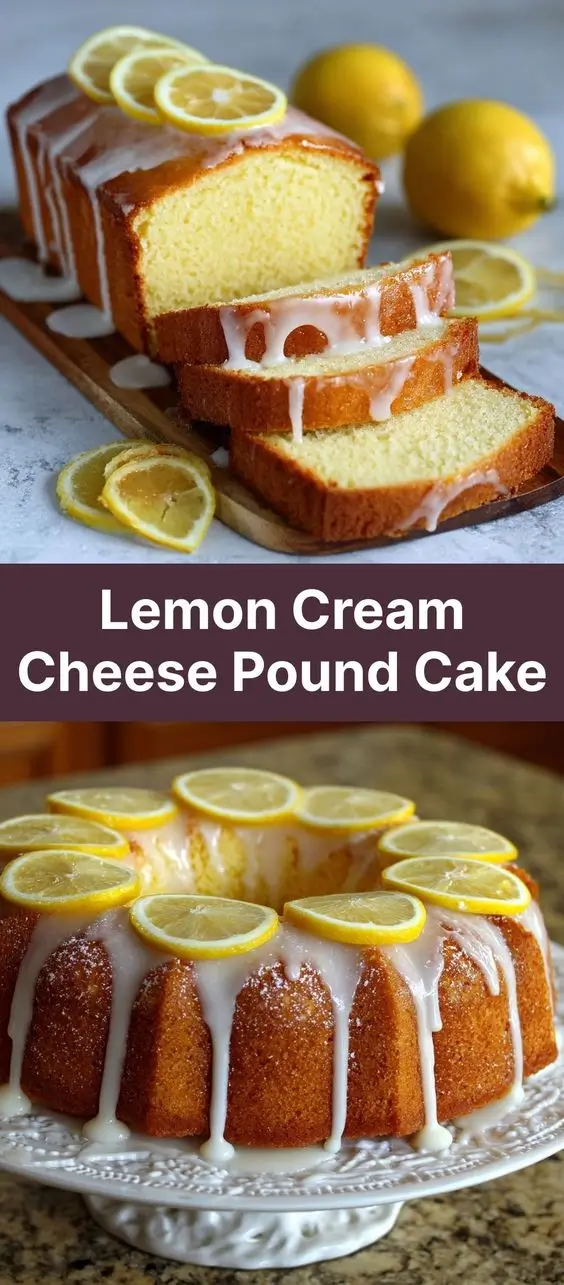
The Lemon Cream Cheese Pound Cake is a decadent fusion of traditional Southern pound cake and the bright, refreshing essence of citrus. With its moist crumb, tangy-sweet flavor, and luxurious cream cheese swirl, this dessert strikes the perfect balance between richness and refreshment. Whether served at afternoon tea, holiday gatherings, or as an elegant end to a dinner party, this cake never fails to impress.
The History: A Sweet Evolution of Two Classics
Pound cake dates back to early 18th-century Europe, where it earned its name from the original recipe calling for a pound each of flour, sugar, butter, and eggs. This dense, buttery cake was simple to remember and made with readily available ingredients. Over time, bakers began experimenting with add-ins and variations, leading to lighter textures and enhanced flavors.
Cream cheese, invented in the late 19th century by American dairy farmers, soon found its way into baked goods, particularly in cheesecakes and coffee cakes. Its rich, slightly tangy profile added moisture and depth to traditional recipes. By combining cream cheese into a classic pound cake batter—along with fresh lemon zest and juice—bakers created a modern twist that’s both indulgent and vibrant.
The Lemon Cream Cheese Pound Cake emerged as a favorite in American homes during the mid-20th century, especially in the South, where love for citrus and rich desserts runs deep. Today, it’s celebrated for its tender crumb, subtle tang, and bright aroma—a testament to how tradition and innovation can create something truly timeless.
Ingredients Breakdown: What Makes This Cake So Special?
- All-Purpose Flour: The structural backbone of the cake, providing the right density without being too heavy. Sifted to ensure a smooth batter.
- Granulated Sugar: Adds sweetness and helps aerate the batter when creamed with butter, contributing to a light texture.
- Unsalted Butter: High-fat content (around 80%) ensures a rich mouthfeel and golden crust. Using unsalted allows control over salt levels.
- Cream Cheese: Full-fat brick-style cream cheese (not spreadable) adds moisture, tenderness, and a delicate tang that cuts through the sweetness.
- Large Eggs: Act as emulsifiers, binding ingredients while adding structure and volume. Room temperature ensures even mixing.
- Fresh Lemon Juice: Provides acidity that enhances flavor and reacts with leavening agents for a slight rise. Use only freshly squeezed for maximum brightness.
- Lemon Zest: The aromatic oils in the lemon peel infuse the cake with intense citrus fragrance—this is where much of the flavor comes from.
- Sour Cream: Increases moisture and tenderness while adding a subtle tang that complements the cream cheese.
- Baking Powder & Baking Soda: Leavening agents that help the cake rise and achieve a soft crumb despite its dense nature.
- Salt: Enhances all other flavors and balances sweetness.
- Vanilla Extract: Adds warmth and depth, rounding out the sharpness of the lemon.
- Heavy Cream or Whole Milk (optional): Used to adjust consistency for ultra-moist results.
Step-by-Step Recipe: How to Make the Perfect Lemon Cream Cheese Pound Cake
Ingredients
- 3 cups (360g) all-purpose flour, sifted
- 2 ½ cups (500g) granulated sugar
- 1 cup (2 sticks / 226g) unsalted butter, softened
- 1 (8 oz / 227g) block full-fat cream cheese, softened
- 5 large eggs, room temperature
- ½ cup (120g) sour cream, room temperature
- ¼ cup (60ml) fresh lemon juice (about 2 medium lemons)
- 2 tablespoons finely grated lemon zest (from about 3 lemons)
- 1 teaspoon pure vanilla extract
- 1 ½ teaspoons baking powder
- ½ teaspoon baking soda
- ½ teaspoon fine sea salt
- ¼ cup (60ml) heavy cream or whole milk (optional, for extra moisture)
Directions
- Preheat and Prepare: Preheat your oven to 325°F (165°C). Generously grease a 10-cup Bundt pan or two 9×5-inch loaf pans with softened butter, then dust with flour, tapping out excess. Alternatively, use non-stick baking spray with flour.
- Cream Butter and Sugar: In the bowl of a stand mixer fitted with the paddle attachment, beat the softened butter and cream cheese together on medium speed until smooth and creamy (about 2 minutes). Gradually add the granulated sugar and continue beating for 4–5 minutes until light and fluffy, scraping down the sides as needed.
- Add Eggs One at a Time: Add the eggs one at a time, mixing well after each addition (about 30 seconds per egg). Ensure each egg is fully incorporated before adding the next. This builds structure and prevents curdling.
- Combine Wet Ingredients: In a small bowl, whisk together sour cream, lemon juice, lemon zest, and vanilla extract until smooth.
- Mix Dry Ingredients: In a separate medium bowl, sift together the flour, baking powder, baking soda, and salt. Whisk to combine evenly.
- Alternate Mixing: With the mixer on low speed, add the dry ingredients in three parts, alternating with the sour cream mixture in two parts, beginning and ending with dry ingredients. Mix just until combined—do not overmix. If using, add heavy cream or milk at the end and mix briefly to incorporate.
- Scrape and Fold: Remove the bowl from the mixer and use a silicone spatula to gently fold the batter from the bottom to ensure uniformity without deflating.
- Fill the Pan: Pour the batter into the prepared pan(s), smoothing the top with an offset spatula. Tap the pan gently on the counter 2–3 times to release air bubbles.
- Bake: Bake for 65–80 minutes (for Bundt) or 55–70 minutes (for loaf pans), or until a wooden skewer inserted into the center comes out clean or with a few moist crumbs. The top should be golden brown and spring back lightly when touched.
- Cool Properly: Let the cake cool in the pan on a wire rack for 15–20 minutes. Then carefully invert onto the rack to cool completely before glazing or slicing. Cooling too quickly can cause collapse; cooling too slowly can trap steam and make the crust soggy.
- Optional Glaze: While the cake cools, prepare a lemon glaze by whisking 1 cup powdered sugar with 2–3 tablespoons fresh lemon juice and 1 teaspoon lemon zest until smooth. Drizzle over the cooled cake.
Tips for Baking Success
- Room Temperature Ingredients: Cold ingredients don’t emulsify properly, leading to a dense or curdled batter. Take butter, cream cheese, eggs, and sour cream out 1–2 hours before baking.
- Don’t Overmix: Once flour is added, mix only until just combined. Overmixing develops gluten, resulting in a tough cake.
- Use Fresh Citrus: Bottled lemon juice lacks brightness and contains preservatives. Always use freshly squeezed juice and finely grated zest.
- Grease the Pan Well: A Bundt cake has intricate details—ensure every nook is coated to prevent sticking. Non-stick spray with flour works best.
- Oven Thermometer: Ovens often run hot or cold. Use an oven thermometer to ensure accurate temperature for even baking.
- Toothpick Test: Insert near the center but avoid the very middle if there’s a cream cheese swirl, as it may remain soft. Look for clean crumbs, not wet batter.
- Cooling Is Crucial: Allow proper cooling time to set the structure. Cutting too soon leads to crumbling.
- Storage Tip: Wrap tightly in plastic wrap once completely cool to retain moisture. It actually tastes better the next day!
Variations and Customizations
This versatile recipe welcomes creativity. Here are some delicious twists:
- Lemon Blueberry Cream Cheese Swirl: Gently fold 1 ½ cups fresh blueberries (tossed in 1 tbsp flour) into the batter. Create a marbled effect by dropping spoonfuls of sweetened cream cheese (½ cup cream cheese + 2 tbsp sugar + 1 tsp vanilla) into the batter and swirling with a knife.
- Limoncello-Infused: Replace 2 tablespoons of lemon juice with limoncello liqueur for a sophisticated adult version.
- Gluten-Free Option: Substitute all-purpose flour with a high-quality 1:1 gluten-free baking blend. Add ½ teaspoon xanthan gum if not included.
- Dairy-Free Adaptation: Use plant-based butter, dairy-free cream cheese (e.g., Kite Hill), and coconut yogurt instead of sour cream. Use almond milk in place of heavy cream.
- Lemon Poppy Seed: Add 2–3 tablespoons poppy seeds to the dry ingredients for a delightful crunch.
- Marbled Chocolate Version: Reserve 1 cup of batter, mix in 2 tablespoons cocoa powder and 1 tbsp sugar, then alternate layers with plain batter for a marbled effect.
- Mini Loaves or Muffins: Divide batter into greased mini loaf pans (3×5 inches) or muffin tins. Bake at 325°F for 30–40 minutes.
- Honey-Sweetened: Replace up to half the granulated sugar with honey, reducing liquid slightly (omit heavy cream).
Health Considerations and Nutritional Value
While undeniably rich, this cake can be enjoyed in moderation as part of a balanced diet. Here’s a nutritional estimate per slice (1/12 of a Bundt cake):
- Calories: ~420–450
- Total Fat: 22g (Saturated: 13g)
- Cholesterol: 125mg
- Sodium: 300mg
- Total Carbohydrates: 56g (Sugars: 38g, Fiber: 1g)
- Protein: 7g
Considerations:
- High in Sugar and Fat: This is a dessert meant for special occasions. Enjoy in small portions.
- Dairy Content: Contains butter, cream cheese, eggs, and sour cream—unsuitable for those with dairy allergies or strict vegan diets unless substituted.
- Gluten: Contains wheat flour. Use certified gluten-free flour for those with celiac disease.
- Lower-Sugar Option: Reduce sugar to 2 cups and use monk fruit sweetener blend, though texture may be slightly less tender.
- Heart-Healthy Tweaks: Use grass-fed butter and organic ingredients when possible. Serve with fresh berries for added antioxidants.
FAQ (Frequently Asked Questions)
Q: Can I make this cake ahead of time?
A: Absolutely! Bake it 1–2 days in advance. Store covered at room temperature. It often tastes better the next day as flavors meld.
Q: Can I freeze Lemon Cream Cheese Pound Cake?
A: Yes. Wrap the cooled, unglazed cake tightly in plastic wrap and aluminum foil. Freeze for up to 3 months. Thaw overnight in the fridge and bring to room temperature before serving. Glaze after thawing.
Q: Why did my cake crack on top?
A: Minor cracking is normal due to oven spring and the dense batter. However, excessive cracking may result from too-high oven temperature or overmixing. Try reducing heat by 25°F if cracking is severe.
Q: Can I use low-fat cream cheese or butter?
A: Not recommended. Low-fat versions contain more water and stabilizers, which can make the cake gummy or dense. Full-fat ingredients yield the best texture.
Q: My cake stuck to the pan. What went wrong?
A: Likely insufficient greasing or removing too early. Always grease thoroughly and wait 15–20 minutes before unmolding. For Bundt pans, consider using baking spray with flour.
Q: Can I bake this in a different pan?
A: Yes. Use two 9×5-inch loaf pans, a 9×13-inch sheet pan (reduce time to 45–55 min), or standard muffin tins. Adjust baking time accordingly.
Q: How do I get a stronger lemon flavor?
A: Increase lemon zest to 3 tablespoons, use lemon oil (¼ tsp), or brush the cooled cake with a lemon syrup (¼ cup sugar + ¼ cup water + 2 tbsp lemon juice, heated and cooled).
Q: Is this cake supposed to be dense?
A: Yes, pound cake is naturally denser than sponge or angel food cakes, but it should still be moist and tender—not heavy or dry. Proper creaming and not overbaking are key.
Summary
The Lemon Cream Cheese Pound Cake combines the buttery richness of a classic Southern pound cake with the zesty brightness of fresh lemon and the creamy tang of cream cheese for an unforgettable dessert experience.
Moist, flavorful, and beautifully textured, it’s perfect for any occasion—and even better the next day with a cup of tea or coffee.