Mini Cheesecakes (with Various Toppings): A Decadent Bite-Sized Delight
The History of Mini Cheesecakes
Cheesecake, in its many forms, dates back thousands of years to ancient civilizations. The earliest known version originated in Greece around 2000 BCE, where it was served to athletes during the first Olympic Games as a source of energy. Made from cheese, honey, and flour, this simple dessert laid the foundation for what would become a global favorite. As empires rose and fell, cheesecake traveled across Europe, evolving with local ingredients and culinary traditions.
By the time it reached America in the late 19th century, cheesecake had transformed significantly. The introduction of cream cheese by American dairy producers—most notably the Philadelphia brand in the 1870s—revolutionized the dessert. The rich, smooth texture of cream cheese became the hallmark of the New York-style cheesecake, which remains iconic today.
Mini cheesecakes emerged as a practical and elegant solution for parties, potlucks, and holiday gatherings. Their individual servings eliminate the need for slicing, reduce mess, and allow for creative customization—especially through toppings. Bakers began experimenting with flavors and garnishes, turning each mini cheesecake into a personalized treat. Today, mini cheesecakes are celebrated not only for their portability and portion control but also for their versatility in flavor profiles and decorative potential.
Ingredients Breakdown: What Makes Mini Cheesecakes Irresistible
The magic of mini cheesecakes lies in their balance of creamy filling, buttery crust, and flavorful toppings. Let’s break down each component:
Crust Ingredients
- Graham Cracker Crumbs: The classic base, offering a slightly sweet, nutty flavor and perfect crumb structure.
- Butter (unsalted): Adds richness and helps bind the crumbs together for a firm yet tender crust.
- Granulated Sugar: Enhances sweetness, especially important if using plain graham crackers.
- Optional Add-ins: Cinnamon, nutmeg, or finely chopped nuts can elevate the crust’s complexity.
Filling Ingredients
- Cream Cheese (full-fat, softened): The star ingredient—must be at room temperature to ensure a smooth, lump-free batter.
- Granulated Sugar: Sweetens the filling and contributes to a creamy texture when beaten properly.
- Large Eggs (room temperature): Provide structure and help the filling set without curdling.
- Sour Cream or Heavy Cream: Adds tanginess and silkiness; prevents cracking and enhances mouthfeel.
- Vanilla Extract: Deepens flavor and rounds out the sweetness.
- Lemon Zest or Juice (optional): Brightens the flavor and cuts through the richness.
- Flour or Cornstarch (a small amount): Helps stabilize the filling and prevent over-browning or splitting.
Topping Ingredients (varies widely)
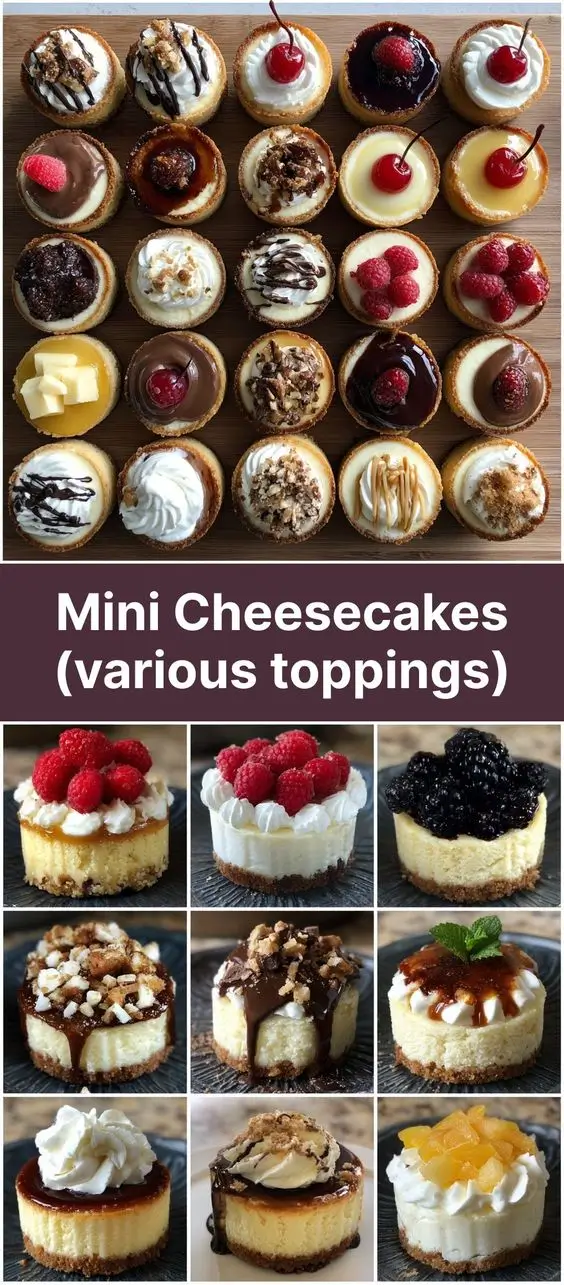
Toppings are where creativity shines. They can be added before baking, after chilling, or even layered within the filling. Common options include:
- Fresh fruit compotes (strawberry, blueberry, raspberry)
- Melted chocolate or chocolate ganache
- Caramel or salted caramel sauce
- Whipped cream or stabilized whipped topping
- Fruit curds (lemon, passionfruit, mango)
- Crushed cookies, nuts, or sprinkles for texture
- Marshmallow fluff or toasted meringue
Step-by-Step Recipe: How to Make Perfect Mini Cheesecakes
Yields: 12 standard mini cheesecakes
Prep Time: 25 minutes
Bake Time: 20–25 minutes
Chill Time: At least 4 hours (preferably overnight)
Ingredients
For the Crust:
- 1 ½ cups graham cracker crumbs (about 10 full sheets)
- ¼ cup granulated sugar
- 6 tablespoons unsalted butter, melted
For the Filling:
- 16 oz (2 packages) full-fat cream cheese, softened
- ⅔ cup granulated sugar
- 2 large eggs, room temperature
- ⅓ cup sour cream, room temperature
- 1 teaspoon pure vanilla extract
- 1 tablespoon all-purpose flour
- ½ teaspoon lemon zest (optional)
- Pinch of salt
Directions
- Preheat oven to 325°F (160°C). Line a 12-cup muffin tin with parchment paper liners or silicone molds. Parchment is recommended for easy removal.
- Make the crust: In a medium bowl, combine graham cracker crumbs, sugar, and melted butter. Mix until the crumbs are evenly moistened and resemble wet sand.
- Divide and press: Spoon about 1½ tablespoons of crust mixture into each liner. Press firmly using the bottom of a glass or a small measuring cup to create an even, compact layer.
- Chill crusts: Place the pan in the freezer for 10 minutes while you prepare the filling. This helps prevent crumbling.
- Prepare filling: In a large mixing bowl, beat softened cream cheese on medium speed until smooth and creamy (about 1 minute). Scrape down the sides.
- Add sugar and beat until well combined. Add sour cream and vanilla, mix until incorporated.
- Add eggs one at a time, beating just until blended after each addition. Overmixing introduces too much air, which can cause cracks.
- Mix in flour, salt, and lemon zest (if using) on low speed until just combined. Do not overbeat.
- Fill the cups: Divide the filling evenly among the prepared crusts, filling each liner about ¾ full. Tap the pan gently on the counter to release air bubbles.
- Bake: Place in the preheated oven and bake for 20–25 minutes. The centers should still jiggle slightly when gently shaken—this ensures they don’t overbake.
- Cool gradually: Turn off the oven, crack the door open, and let the cheesecakes sit inside for another 15 minutes. This slow cooling prevents cracking.
- Chill: Remove from oven and cool completely at room temperature. Then refrigerate for at least 4 hours, preferably overnight, to fully set.
- Add toppings: Once chilled, decorate with your choice of toppings. See variations below for inspiration.
Tips for Success
- Room Temperature Ingredients: Cold cream cheese and eggs lead to lumpy batter. Allow them to sit out for at least 1 hour before mixing.
- Avoid Overmixing: Mix only until ingredients are incorporated. Overbeating adds air, which expands during baking and causes cracks.
- Use Proper Liners: Parchment paper cupcake liners work best—they’re easy to peel and give a clean presentation. Avoid wax paper.
- Don’t Skip the Chill: Rushing the chilling process leads to soft, unstable cheesecakes. Overnight chilling yields the best texture.
- Water Bath Alternative: While full-sized cheesecakes benefit from a water bath, mini versions generally don’t need one due to their small size and even heat distribution.
- Smooth Tops: For flawlessly flat tops, tap the pan gently after filling to pop air bubbles.
- Uniform Scooping: Use a cookie scoop or measuring spoon to portion filling evenly for consistent baking.
Variations and Customizations
One of the greatest joys of mini cheesecakes is their adaptability. Here are some delicious variations:
1. Fruit-Top Mini Cheesecakes
- Strawberry Swirl: Swirl 1 tsp of strawberry jam into each unbaked cheesecake before baking.
- Blueberry Compote: Top chilled cheesecakes with warm blueberry compote (simmer 1 cup blueberries + 2 tbsp sugar + 1 tsp lemon juice until thickened).
- Raspberry Coulis: Blend fresh raspberries, strain seeds, and drizzle over each cheesecake.
2. Chocolate Lovers’ Edition
- Chocolate Crust: Substitute chocolate cookie crumbs (Oreos, minus filling) for graham crackers.
- Chocolate Chip: Fold ¼ cup mini chocolate chips into the filling before baking.
- Chocolate Ganache: Drizzle with warm ganache (½ cup heavy cream + 1 cup dark chocolate, melted).
3. Seasonal & Holiday Themes
- Pumpkin Spice: Replace ½ cup filling with pumpkin puree and add 1 tsp pumpkin spice.
- Peppermint Crunch: Add ¼ tsp peppermint extract to filling, top with crushed candy canes and chocolate ganache.
- Eggnog: Infuse filling with 2 tbsp eggnog and a pinch of nutmeg; top with whipped cream and cinnamon.
4. Nutty & Crunchy Twists
- Peanut Butter Cup: Press a mini peanut butter cup into the center of each crust before adding filling.
- Almond Joy: Use coconut-flavored crust, fill as usual, top with toasted coconut, chocolate drizzle, and a cherry.
- Praline Pecan: Top with homemade praline sauce and chopped toasted pecans.
5. No-Bake Options
For a quicker version, make no-bake mini cheesecakes using whipped cream and gelatin for stability. Combine whipped cream with sweetened cream cheese mixture and set in the fridge for 3+ hours.
Health Considerations and Nutritional Value
While mini cheesecakes are undeniably indulgent, understanding their nutritional profile can help with mindful enjoyment.
Nutritional Overview (per mini cheesecake, without topping)
- Calories: ~220–250
- Fat: 16–18g (mostly saturated from cream cheese and butter)
- Carbohydrates: 18–20g
- Sugar: 14–16g
- Protein: 4–5g
- Calcium: Good source due to dairy content
Dietary Modifications
- Gluten-Free: Use gluten-free graham crackers or almond flour crust.
- Lower Sugar: Substitute sugar with erythritol or monk fruit blend; use sugar-free jam for toppings.
- Dairy-Free: Use vegan cream cheese (like Kite Hill or Miyoko’s), dairy-free butter, and coconut cream instead of sour cream.
- Lighter Version: Use low-fat cream cheese and Greek yogurt in place of sour cream, though texture may be less rich.
- Keto-Friendly: Use almond flour crust, low-carb sweetener, and heavy cream. Top with berries sparingly.
Mindful Indulgence
Mini cheesecakes naturally promote portion control. Enjoy one as a satisfying dessert rather than multiple servings. Pair with fresh fruit or a small green salad to balance the meal.
Frequently Asked Questions (FAQ)
- Can I freeze mini cheesecakes?
- Yes! Freeze unfrosted mini cheesecakes in an airtight container for up to 2 months. Thaw in the fridge before adding toppings.
- Why did my mini cheesecakes crack?
- Cracking is usually due to overbaking, overmixing, or sudden temperature changes. Ensure you follow the cooling instructions carefully.
- Can I make them ahead of time?
- Absolutely. Prepare up to 3 days in advance and store covered in the fridge. Add fresh toppings like whipped cream or fruit just before serving.
- Do I need a water bath?
- No, mini cheesecakes are small enough to bake evenly without one. The risk of cracking is much lower than with full-sized versions.
- How do I get them out of the pan easily?
- Using parchment liners is key. Gently peel them away from the sides once chilled. Silicone molds also release easily.
- Can I use different crusts?
- Yes! Try Oreo, vanilla wafer, digestive biscuit, pretzel, or even a nut-based crust like pecan or almond.
- What’s the best way to store leftovers?
- Keep refrigerated in an airtight container for up to 5 days. Separate layers with parchment to prevent sticking.
- Can I make vegan mini cheesecakes?
- Yes! Use plant-based cream cheese, coconut cream, and a flax egg if needed. Set with agar-agar or cornstarch for stability.
Summary
Mini cheesecakes offer a perfect blend of creamy richness, buttery crust, and endless topping possibilities—all in a convenient, single-serving size. Whether you’re celebrating a holiday, hosting a dinner party, or simply treating yourself, these bite-sized delights never fail to impress.
With simple ingredients, easy preparation, and countless customizations, mini cheesecakes are the ultimate canvas for creativity in the kitchen—deliciously decadent, beautifully presentable, and always unforgettable.