Introduction
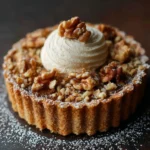
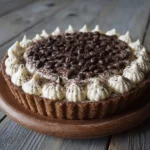
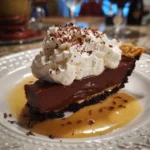
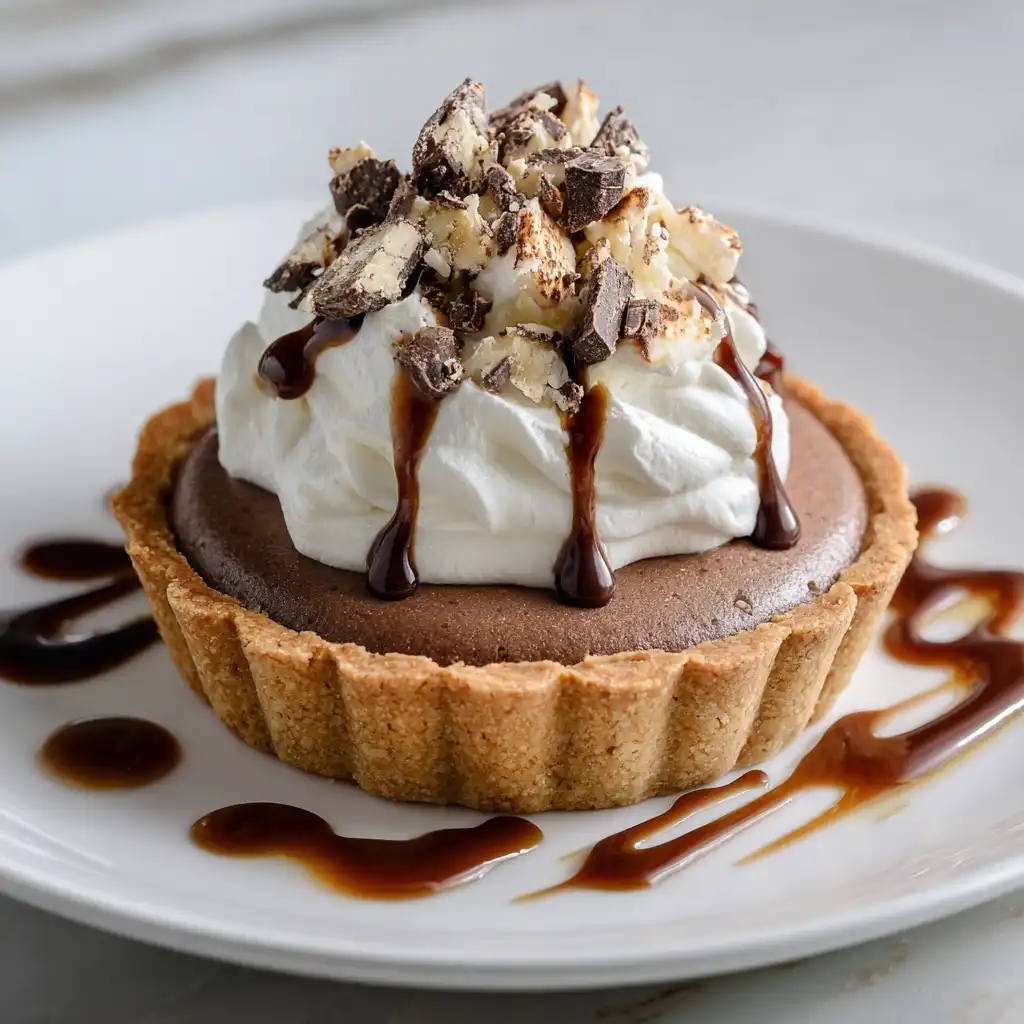
The Mocha Chocolate Tart is a luxurious, sophisticated dessert that marries the deep, velvety richness of premium dark chocolate with the bold, aromatic warmth of freshly brewed espresso—creating a harmonious balance of bitter, sweet, and caffeinated complexity. Elegant yet approachable, this tart transcends seasonal boundaries: it’s equally at home on a holiday dessert table, as an indulgent after-dinner finale during a dinner party, or as a weekend treat for chocolate aficionados seeking depth beyond mere sweetness. Unlike traditional chocolate cakes or mousses, the mocha tart features a crisp, buttery shortcrust pastry shell that provides structural integrity and textural contrast to its silken, bittersweet filling—making each bite a study in layered refinement. Its visual appeal—glossy surface, delicate cocoa dusting, optional gold leaf accents, or a whisper of whipped mascarpone—is matched only by its nuanced flavor profile: dark chocolate’s earthy tannins softened by cream, enriched with espresso’s caramelized notes and subtle acidity, and anchored by the gentle saltiness of high-quality butter in the crust. Whether you’re a seasoned pastry chef or a passionate home baker, mastering this tart offers both technical satisfaction and sensory reward—and once tasted, its haunting mocha resonance lingers long after the last crumb has vanished.
The History
The origins of the Mocha Chocolate Tart are not tied to a single documented moment but rather emerge from a confluence of culinary traditions spanning centuries and continents. The concept of “mocha” itself traces back to the historic port city of Al-Mukhā in Yemen—the 15th-century epicenter of coffee trade—where Arabica beans were exported globally, lending their name to any coffee-chocolate fusion (a linguistic evolution later cemented by 18th-century European chocolatiers who blended imported Yemeni coffee with cacao). Meanwhile, the tart format finds its roots in medieval European pastry-making: early versions of shortcrust—known as “coffyns” in 14th-century England—were sturdy, savory vessels for meats and fruits; only by the Renaissance did sugar become accessible enough to transform them into sweet receptacles. The true marriage of chocolate and coffee in tart form likely began in earnest in late 19th- and early 20th-century France, where patissiers at houses like Dalloyau and Lenôtre experimented with coffee-infused ganaches and bittersweet fillings for elegant tea service. The modern Mocha Chocolate Tart gained wider recognition in the 1980s and ’90s alongside the third-wave coffee movement and the rise of bean-to-bar chocolate artisans—chefs like Pierre Hermé (who famously elevated chocolate tarts with precise tempering and origin-specific cacao) and Alice Medrich (whose pioneering work in American chocolate baking emphasized texture and balance) helped codify techniques now standard in contemporary recipes. Today, the tart symbolizes a global palate: West African cacao, South American coffee, European pastry discipline, and North American innovation—all united in one stunning, sliceable composition.
Ingredients Breakdown
Understanding each ingredient’s functional and flavor role is essential to achieving consistency, texture, and depth in your Mocha Chocolate Tart. Below is a comprehensive, chef-level breakdown:
- Unsalted Butter (for crust & filling): Provides flakiness, tenderness, and rich mouthfeel. In the crust, cold butter creates steam pockets during baking, yielding lift and layers; in the filling, melted butter emulsifies the ganache, prevents seizing, and adds sheen and silkiness. Opt for European-style butter (82–84% fat) for superior flavor and structure.
- All-Purpose Flour (unbleached, preferably organic): Forms the gluten network in the crust. Too much handling develops excess gluten, causing toughness—hence the emphasis on minimal mixing and chilling. For gluten-free adaptations, a blend of brown rice flour, tapioca starch, and xanthan gum (1:1:0.25 ratio) replicates binding and tenderness.
- Confectioners’ Sugar (powdered sugar): Sweetens and tenderizes the crust without adding moisture that could activate gluten. Its fine particle size ensures even dispersion and contributes to the crust’s melt-in-the-mouth quality. Avoid cornstarch-heavy commercial blends if making a refined version—opt for pure cane-based versions.
- Cocoa Powder (unsweetened, Dutch-processed): Imparts deep chocolate flavor and color to the crust while contributing acidity-neutralized richness. Dutch processing removes bitterness and enhances solubility—critical for seamless integration into the dough. Natural cocoa can be substituted, but expect a sharper tang and lighter hue.
- Salt (fine sea salt or flaky Maldon): Not merely for seasoning—it heightens all other flavors, balances bitterness, and strengthens gluten slightly in the crust. A pinch in the filling cuts through fat and amplifies chocolate’s fruit-forward notes.
- High-Quality Dark Chocolate (70% cacao minimum, single-origin preferred): The soul of the tart. Look for couverture-grade chocolate with clean cocoa butter content (32–38%), minimal added lecithin, and tasting notes of red cherry, cedar, or toasted almond. Avoid chocolates with vegetable oil substitutes—they lack proper snap, bloom resistance, and aromatic complexity.
- Heavy Cream (36–40% milk fat): Acts as the solvent and emulsifier for the chocolate, creating the glossy, stable ganache base. Its high fat content ensures smooth melting and prevents graininess. Ultra-pasteurized cream works but may yield a slightly less vibrant mouthfeel than pasteurized varieties.
- Freshly Brewed Espresso (or very strong coffee): Not instant—this is non-negotiable. Espresso delivers concentrated, aromatic oils and acidity that brighten chocolate’s heaviness. Use a medium-dark roast with low acidity (e.g., Sumatran or Guatemalan) to avoid sourness. Cold-brew concentrate can substitute for a smoother, less acidic profile—but always reduce by half to preserve intensity.
- Vanilla Extract (pure, Madagascar Bourbon): Adds floral, creamy undertones that bridge coffee and chocolate. Alcohol-based extract helps distribute volatile aromatics evenly. Avoid imitation vanillin, which tastes flat and synthetic.
- Optional Enhancements: A teaspoon of instant espresso powder (added to melted chocolate) intensifies mocha depth without diluting texture; a tablespoon of dark rum or Kahlúa introduces caramelized warmth; orange zest (finely grated) lends a surprising citrus lift that complements both chocolate and coffee; a pinch of cinnamon or cardamom adds Middle Eastern nuance reflective of mocha’s historic origins.
Step-by-Step Recipe
This meticulously tested, professional-grade method yields a perfectly set, glossy, deeply flavored tart with a shatteringly crisp crust and luxuriously smooth filling—no cracks, no graininess, no separation.
- Prepare the Tart Shell (Minimum 2 hours ahead, preferably overnight): In a food processor, pulse 1 cup (125g) chilled unsalted butter (cut into ½-inch cubes), 1¾ cups (220g) unbleached all-purpose flour, ¼ cup (30g) Dutch-processed cocoa powder, ⅓ cup (40g) confectioners’ sugar, and ½ tsp fine sea salt until mixture resembles coarse meal with visible pea-sized butter pieces (~12 pulses). Add 3–4 tbsp ice water, 1 tbsp at a time, pulsing just until dough begins to clump. Do not overmix. Turn dough onto parchment, shape into a 1-inch-thick disc, wrap tightly, and refrigerate for at least 2 hours (or freeze up to 3 months).
- Roll & Blind-Bake the Crust: Preheat oven to 375°F (190°C) with rack in center. On a lightly floured surface, roll chilled dough to ⅛-inch thickness between two sheets of parchment. Carefully transfer to a 9-inch (23cm) fluted tart pan with removable bottom, gently pressing into corners and up sides. Trim excess, then chill crust in pan for 20 minutes. Line with parchment and fill with pie weights or dried beans. Bake for 18 minutes. Remove weights and parchment; prick base with fork. Return to oven for 12–14 minutes until deep golden brown and dry to touch. Cool completely in pan on wire rack (minimum 45 minutes).
- Prepare the Mocha Ganache Filling: Finely chop 12 oz (340g) 70% dark chocolate and place in heatproof bowl. In a small saucepan, combine 1 cup (240ml) heavy cream and ¼ cup (60ml) freshly brewed, cooled espresso (room temperature—not hot, to prevent seizing). Heat over medium-low until steaming and tiny bubbles form at edges (do not boil). Immediately pour hot cream mixture over chocolate. Let sit undisturbed for 3 minutes. Gently whisk from center outward in concentric circles until smooth, glossy, and fully emulsified (~1 minute). Stir in 2 tsp pure vanilla extract, 1 tsp instant espresso powder (optional but recommended), and ¼ tsp flaky sea salt. Strain through a fine-mesh sieve into a clean bowl to remove any unmelted particles or espresso sediment.
- Temper & Pour the Filling: Let ganache cool at room temperature for 15–20 minutes, stirring gently every 5 minutes, until it reaches 90–92°F (32–33°C)—warm to the touch but no longer fluid like syrup (use a digital thermometer for precision). This step ensures perfect set and shine. Pour evenly into cooled tart shell. Tap pan sharply on counter twice to release air bubbles. Smooth surface with offset spatula.
- Chill & Set: Refrigerate uncovered for minimum 4 hours—or ideally overnight—for complete, even setting. Do not freeze unless absolutely necessary (freezing may cause condensation and bloom upon thawing). For best slicing, bring tart to cool room temperature (15–20 minutes) before serving.
- Finishing Touches: Just before serving, dust lightly with unsweetened cocoa powder using a fine-mesh sieve. Garnish with espresso beans, edible gold leaf, or a quenelle of espresso-kissed crème fraîche. Serve with a warm cup of black coffee or a glass of ruby port.
Tips
These pro tips—refined through hundreds of test batches—address common pitfalls and elevate results from good to extraordinary:
- Butter Temperature Is Everything: For the crust, butter must be cold but pliable—straight from the fridge (35–40°F/2–4°C), never frozen or softened. Warm butter melts prematurely, causing greasiness and loss of flakiness. If dough feels sticky while rolling, return to fridge for 10 minutes.
- No Overworking the Dough: Gluten development = toughness. Mix only until clumps form. If dough cracks while rolling, let it warm slightly (2 minutes), then press seams together—don’t knead.
- Prevent Shrinkage: Chill the shaped crust in the pan before baking. Also, avoid stretching dough when fitting it—the tension will pull it back during baking.
- Blind-Baking Precision: Underbaked crusts become soggy; overbaked ones burn. Watch for deep golden color—not pale beige—and ensure the base feels completely dry and matte, not shiny or soft.
- Ganache Emulsion Mastery: Never stir vigorously or introduce cold utensils into warm ganache—this causes fat separation. Always pour hot cream over chocolate—not vice versa—and wait before stirring. If ganache appears split, add 1 tsp warm cream and whisk vigorously until re-emulsified.
- Espresso Timing Matters: Brew espresso 30 minutes before making ganache and cool to room temp. Hot espresso added directly will cause chocolate to seize instantly. For large batches, brew double strength and chill rapidly over ice bath.
- Thermometer Discipline: Ganache poured above 95°F (35°C) will soften the crust; below 85°F (29°C) may set too quickly and develop surface wrinkles. A Thermapen or similar instant-read thermometer is worth the investment.
- Cutting Clean Slices: Use a long, thin, heated knife (dip in hot water, wipe dry, then cut). Wipe and reheat between each slice. For presentation, serve on chilled plates.
- Storage Wisdom: Keep tart refrigerated in an airtight container for up to 5 days. Do not store near strong-smelling foods (cheese, onions)—chocolate absorbs odors readily. For longer storage, freeze whole tart (un-garnished) wrapped in plastic + foil for up to 2 months; thaw overnight in fridge, then rest at room temp 30 minutes before serving.
Variations and Customizations
The Mocha Chocolate Tart is a masterclass in adaptability—its core structure welcomes creative reinterpretation across dietary needs, flavor preferences, and cultural influences:
- Gluten-Free Version: Replace all-purpose flour with 1 cup (120g) GF all-purpose blend (Bob’s Red Mill 1-to-1 or King Arthur Measure for Measure), plus 2 tbsp almond flour for richness. Add ½ tsp xanthan gum if blend doesn’t include it. Chill dough 30 minutes longer—GF dough is more fragile.
- Vegan Mocha Tart: Use vegan butter (Miyoko’s or Forager), GF oat or almond flour crust, and dairy-free dark chocolate (≥70%, check for soy lecithin only). Substitute heavy cream with full-fat coconut cream (solid part only, chilled overnight). Infuse coconut cream with espresso instead of heating separately. Add 1 tsp apple cider vinegar to mimic buttermilk tang and improve set.
- White Chocolate Mocha Tart: Swap dark chocolate for 12 oz (340g) high-cacao white chocolate (33%+ cocoa butter). Reduce espresso to 2 tbsp (white chocolate lacks bitterness to balance coffee); add 1 tsp orange zest and 1 tbsp Grand Marnier for brightness. Dust with matcha instead of cocoa.
- Spiced Mocha Tart: Infuse cream with 1 star anise, 2 cardamom pods, and ½ cinnamon stick (simmer 5 min, steep 15 min, strain). Omit vanilla. Finish with candied ginger garnish.
- Boozy Mocha Tart: Stir 2 tbsp aged rum, bourbon, or Amaretto into warm ganache. For extra decadence, brush baked crust with 1 tsp warmed liqueur before filling.
- Layered Mocha Tart: After first ganache layer sets (2 hrs), spread a thin layer of espresso buttercream (butter, powdered sugar, cooled espresso, pinch salt), then top with second ganache pour for visual striation.
- Nutty Crunch Variation: Press ½ cup toasted hazelnuts or almonds into warm, unbaked crust before blind-baking. Or fold ⅓ cup crushed praline into ganache before pouring.
- Mini Tartlets: Use 3½-inch tartlet pans. Reduce blind-bake time to 12–14 mins; ganache chill time to 2.5 hours. Perfect for weddings or tasting menus.
- Decadent Salted Caramel Swirl: Drizzle ¼ cup homemade salted caramel (cooled to room temp) over poured ganache, then drag with toothpick for marbling effect before chilling.
Health Considerations and Nutritional Value
While undeniably indulgent, the Mocha Chocolate Tart offers meaningful nutritional benefits when crafted mindfully—especially with high-quality, minimally processed ingredients. Per standard slice (1/12 of 9-inch tart), approximate values are: Calories: 385, Total Fat: 25g (15g saturated), Carbohydrates: 36g (22g sugars), Protein: 4g, Fiber: 3g, Iron: 15% DV, Magnesium: 20% DV, Antioxidants: Very High (flavanols from dark chocolate and polyphenols from espresso). Dark chocolate ≥70% cacao contains epicatechin and procyanidins linked to improved endothelial function, reduced blood pressure, and enhanced cognitive blood flow—especially when paired with caffeine’s neuroprotective effects. Espresso contributes chlorogenic acid, associated with reduced oxidative stress and improved glucose metabolism. The crust’s butter provides bioavailable vitamin A and butyrate (a gut-health-promoting short-chain fatty acid), while cocoa powder supplies non-heme iron and theobromine—a gentler stimulant than caffeine. To optimize health alignment: choose organic, fair-trade chocolate to avoid cadmium and pesticide residues; use grass-fed butter for higher CLA (conjugated linoleic acid); reduce added sugar by opting for 85% chocolate and cutting confectioners’ sugar in crust by 1 tbsp; increase fiber by adding 1 tbsp ground flaxseed to dough. Note contraindications: those with GERD may experience reflux due to caffeine/chocolate; individuals on MAO inhibitors should avoid tyramine-rich aged cheeses but dark chocolate is generally safe in moderation; migraine sufferers should monitor personal triggers (caffeine withdrawal or phenylethylamine sensitivity). As with all desserts, portion control remains key—savoring one mindful slice delivers more satisfaction—and physiological benefit—than two rushed servings.
Ingredients
For the Chocolate Shortcrust Tart Shell:
- 1 cup (227g) unsalted butter, chilled and cubed
- 1¾ cups (220g) unbleached all-purpose flour
- ¼ cup (30g) Dutch-processed cocoa powder
- ⅓ cup (40g) confectioners’ sugar
- ½ teaspoon fine sea salt
- 3–4 tablespoons ice water
For the Mocha Chocolate Ganache Filling:
- 12 ounces (340g) high-quality dark chocolate (70–75% cacao), finely chopped
- 1 cup (240ml) heavy cream (36–40% fat)
- ¼ cup (60ml) freshly brewed espresso, cooled to room temperature
- 2 teaspoons pure Madagascar bourbon vanilla extract
- 1 teaspoon instant espresso powder (optional, for intensified mocha depth)
- ¼ teaspoon flaky sea salt (such as Maldon)
For Garnish (optional):
- Unsweetened cocoa powder, for dusting
- Edible gold leaf or cocoa nibs
- Fresh espresso beans or orange zest
- Espresso-kissed crème fraîche or mascarpone whipped with 1 tsp espresso and 1 tsp honey
Directions
- In a food processor, combine chilled butter, flour, cocoa powder, confectioners’ sugar, and salt. Pulse 10–12 times until mixture resembles coarse crumbs with visible butter pieces about the size of small peas.
- Add ice water 1 tablespoon at a time, pulsing just until dough begins to clump together. Stop as soon as the dough holds together when pinched—do not overmix. Turn mixture onto a sheet of parchment paper and gather into a cohesive disc. Wrap tightly and refrigerate for at least 2 hours or up to 3 days.
- Preheat oven to 375°F (190°C). Lightly flour work surface and rolling pin. Place chilled dough between two sheets of parchment and roll into a 12-inch circle, ⅛-inch thick. Carefully lift and drape over a 9-inch fluted tart pan with removable bottom. Gently press dough into bottom and up sides, trimming excess. Prick base all over with a fork, then refrigerate pan for 20 minutes.
- Line chilled crust with parchment paper and fill with pie weights or dried beans. Bake for 18 minutes. Remove weights and parchment, then bake another 12–14 minutes, until crust is uniformly deep golden brown and feels dry and matte—not shiny—to the touch. Cool completely in pan on a wire rack (at least 45 minutes).
- While crust cools, prepare ganache: Place chopped chocolate in a heatproof bowl. In a small saucepan, combine heavy cream and cooled espresso. Heat over medium-low until steaming and tiny bubbles appear at the edges (do not boil). Immediately pour hot mixture over chocolate. Let sit undisturbed for 3 minutes.
- Gently whisk ganache from center outward in slow, steady circles until completely smooth, glossy, and emulsified—about 60 seconds. Stir in vanilla extract, instant espresso powder (if using), and flaky salt. Strain through a fine-mesh sieve into a clean bowl.
- Let ganache cool at room temperature for 15–20 minutes, stirring gently every 5 minutes, until it reaches 90–92°F (32–33°C) on an instant-read thermometer—warm but no longer runny.
- Pour ganache into cooled tart shell. Tap pan firmly on counter twice to release air bubbles. Smooth surface with an offset spatula. Refrigerate uncovered for at least 4 hours—or preferably overnight—for full, even set.
- Before serving, allow tart to sit at cool room temperature for 15–20 minutes. Dust lightly with cocoa powder using a fine-mesh sieve. Slice with a hot, dry knife (wiped between cuts) and serve with desired garnishes.
FAQ
- Can I make the crust ahead of time?
- Yes! The dough disc can be refrigerated for up to 3 days or frozen for up to 3 months. Thaw frozen dough overnight in the fridge before rolling.
- Why did my ganache crack or separate?
- Most commonly caused by overheating chocolate, introducing cold utensils or liquids, or over-stirring. Always pour hot cream over chocolate—not the reverse—and avoid stirring until after the 3-minute rest. If separation occurs, gently re-warm over a double boiler while whisking in 1 tsp warm cream until smooth.
- Can I use cold brew instead of espresso?
- Absolutely—and often preferred for lower acidity. Use cold brew concentrate (not diluted), measured at same volume as espresso. Its smoother, chocolate-forward profile complements dark chocolate beautifully.
- My crust shrank while baking—what went wrong?
- Shrinkage happens when dough isn’t sufficiently chilled before baking or is stretched while fitting into the pan. Always chill shaped crust for 20 minutes, and gently ease—not pull—dough into corners.
- Is there a way to make this without a food processor?
- Yes. Use a pastry cutter or two forks to cut cold butter into dry ingredients until crumbly. Then use a bench scraper to gather dough, adding water gradually by hand. Work quickly to keep butter cold.
- Can I substitute milk or semisweet chocolate?
- You can—but expect significant changes. Milk chocolate yields a sweeter, softer, less stable filling prone to weeping; semisweet (55–60%) lacks sufficient cocoa solids for deep flavor and firm set. Stick to 70%+ for optimal balance and texture.
- How do I prevent a soggy bottom crust?
- Ensure crust is fully baked and cooled before filling. Blind-baking until deep golden and matte—not pale or shiny—is critical. Also, avoid over-chilling ganache before pouring; if too cool, it won’t adhere properly.
- Can I add nuts or fruit?
- Yes—with caveats. Toasted hazelnuts or almonds pressed into the warm, unbaked crust add crunch. For fruit, use freeze-dried raspberries or cherries—fresh fruit adds moisture and accelerates spoilage.
- What’s the best way to store leftovers?
- Refrigerate covered with parchment-lined lid or inverted bowl for up to 5 days. Do not store at room temperature—ganache will soften and lose structure. For longest freshness, freeze unfilled crust and ganache separately, then assemble day-of.
- Why does my tart have a white film on top?
- That’s cocoa butter bloom—harmless, tasteless, and caused by temperature fluctuations. It occurs when ganache is chilled too quickly or stored in humid conditions. To minimize, cool ganache gradually and store tart in a consistent, dry refrigerator compartment.
Summary
The Mocha Chocolate Tart is a masterful fusion of ancient coffee heritage and modern pastry science—a visually stunning, texturally dynamic dessert defined by its crisp, cocoa-enriched shortcrust and luxuriously smooth, espresso-infused dark chocolate ganache.
With meticulous attention to ingredient quality, temperature control, and technique—plus endless potential for customization—it delivers profound flavor, impressive make-ahead convenience, and genuine nutritional merit when prepared with intention and enjoyed with mindfulness.