Panna Cotta with Berry Sauce and Liqueur: A Luxurious Italian Dessert Experience
Introduction
Panna cotta, a silky, creamy Italian dessert that originated in the Piedmont region of Northern Italy, is renowned for its delicate texture and elegant simplicity. When paired with a vibrant, homemade berry sauce infused with a touch of liqueur, it transforms into a show-stopping finale to any meal. This version elevates the classic panna cotta by incorporating luscious layers of flavor—creamy vanilla-infused custard contrasted with a tart, aromatic berry compote kissed with spirits like Chambord, Grand Marnier, or Limoncello. Whether you’re preparing a romantic dinner, hosting a dinner party, or simply indulging in a moment of culinary luxury, this dessert delivers sophistication without overwhelming complexity. In this comprehensive guide, we’ll explore the history, ingredients, techniques, variations, health considerations, and tips needed to craft the perfect panna cotta with berry sauce and liqueur.
The History
The roots of panna cotta trace back to the early 20th century in the mountainous regions of Piedmont, particularly around the town of Alba. The name itself means “cooked cream” in Italian—“panna” meaning cream and “cotta” meaning cooked. Originally, it was a frugal dessert made by dairy farmers who wanted to use up excess cream from their cows. Gelatin was added to set the rich cream, often flavored with a hint of vanilla or citrus zest. Unlike custards that rely on eggs for thickening, panna cotta uses gelatin, making it lighter and more delicate.
It wasn’t until the mid-20th century that panna cotta gained popularity beyond rural Italy, thanks in part to tourism and the rise of Italian cuisine abroad. By the 1980s and 1990s, it had become a staple in upscale restaurants across Europe and North America. Today, it’s celebrated not only for its smooth texture but also for its versatility—chefs and home cooks alike experiment with flavors, colors, and accompaniments. The addition of fruit sauces, especially those enhanced with liqueurs, reflects modern interpretations that balance richness with acidity and depth.
Ingredients Breakdown
For the Panna Cotta:
- Heavy Cream (2 cups / 480 ml): The foundation of panna cotta, heavy cream provides the luxurious mouthfeel and rich base. Its high fat content ensures a velvety texture once set.
- Whole Milk (½ cup / 120 ml): Added to slightly lighten the mixture without sacrificing creaminess. Using whole milk maintains richness while helping control the overall fat level.
- Granulated Sugar (⅓ cup / 65 g): Sweetens the custard gently. Adjustments can be made based on personal taste or when pairing with very sweet or tart sauces.
- Vanilla Bean (1 whole) or 1 tsp Pure Vanilla Extract: Real vanilla bean adds tiny speckles and a floral, deep aroma. Split the pod lengthwise and scrape seeds into the cream for maximum flavor.
- Gelatin (2¼ tsp / 7 g, about 1 packet unflavored powdered gelatin): The setting agent. Gelatin gives panna cotta its signature jiggle. It must be bloomed properly in cold liquid before heating.
- Cold Water (3 tbsp / 45 ml): Used to bloom the gelatin. Cold water hydrates the granules so they dissolve smoothly into warm cream.
- Pinch of Salt: Enhances all other flavors subtly, balancing sweetness and richness.
For the Berry Sauce with Liqueur:
- Fresh or Frozen Mixed Berries (2 cups / 300 g): Use a combination such as raspberries, blackberries, strawberries, blueberries, or even currants. Fresh berries offer brighter flavor, while frozen work well year-round and often release more juice.
- Granulated Sugar (¼ to ½ cup / 50–100 g): Adjust depending on the tartness of your berries and desired sweetness. Start low and increase if needed.
- Lemon Juice (1 tbsp / 15 ml): Brightens the sauce, cutting through the sweetness and enhancing berry flavor.
- Cornstarch (1 tsp + 1 tbsp cold water): Used as a thickener. Mixed into a slurry to prevent lumps.
- Liqueur (2–3 tbsp / 30–45 ml): Adds complexity and elegance. Popular choices include Chambord (raspberry), Grand Marnier (orange), Framboise (fermented raspberry), Limoncello (lemon), or even Amaretto (almond).
- Optional Add-ins: A splash of balsamic vinegar (for strawberries), fresh mint leaves, or orange zest can elevate the profile further.
Step-by-Step Recipe
Making the Panna Cotta:
- Bloom the Gelatin: In a small bowl, sprinkle the gelatin over cold water. Let it sit undisturbed for 5–10 minutes until it becomes spongy and fully absorbed—the process known as “blooming.”
- Heat the Dairy: In a medium saucepan, combine heavy cream, milk, sugar, scraped vanilla seeds (and the pod, if using), and a pinch of salt. Warm over medium heat, stirring occasionally, just until the sugar dissolves and the mixture begins to steam (do not boil). Remove from heat.
- Infuse the Flavor: Cover the saucepan and let the mixture steep off the heat for 15–20 minutes if using a vanilla bean. This allows the vanilla flavor to fully permeate the cream.
- Add Gelatin: Remove and discard the vanilla pod. Reheat the cream mixture gently over low heat until steaming again. Add the bloomed gelatin and whisk continuously until completely dissolved—about 1–2 minutes. Do not let it boil, as high heat can weaken gelatin’s setting power.
- Strain (Optional but Recommended): For an ultra-smooth texture, strain the mixture through a fine-mesh sieve into a measuring cup or spouted bowl.
- Portion and Chill: Divide the mixture evenly among ramekins, glasses, or molds (typically 4–6 servings). Tap lightly on the counter to remove air bubbles. Cover with plastic wrap and refrigerate for at least 4 hours, preferably overnight, until firm and wobbly.
Making the Berry Sauce:
- Combine Berries and Sugar: In a saucepan, add berries, sugar, and lemon juice. Cook over medium heat, stirring frequently, until berries begin to break down and release juices—about 5–7 minutes.
- Thicken the Sauce: In a small bowl, mix cornstarch with cold water to create a slurry. Stir into the bubbling berry mixture. Continue cooking for another 2–3 minutes until the sauce thickens and turns glossy.
- Add Liqueur: Remove from heat and stir in the liqueur. Taste and adjust sweetness or acidity if needed. Let cool to room temperature, then cover and chill for at least 1 hour. The sauce will thicken further as it cools.
- Optional Straining: For a seedless sauce (especially desirable with raspberries or blackberries), press through a fine-mesh sieve to remove seeds and skins.
Assembly:
- To serve in glasses: Layer chilled panna cotta with berry sauce for a parfait effect.
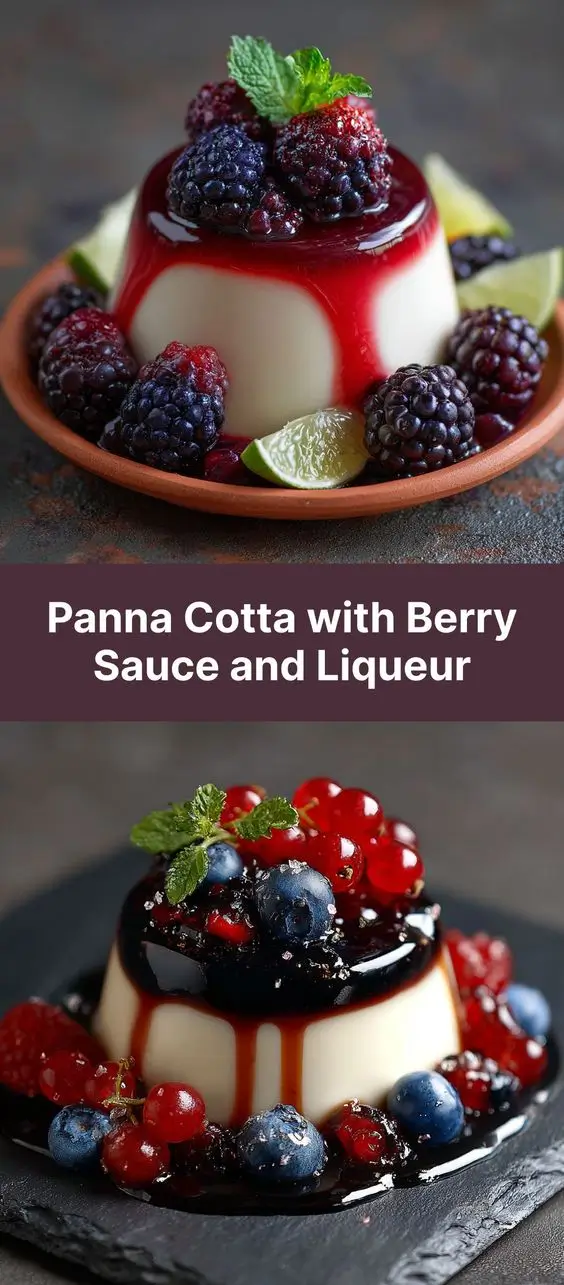
- To unmold: Dip ramekin briefly in hot water for 10 seconds, run a knife around the edge, and invert onto a plate. Top with a generous spoonful of berry sauce.
- Garnish with fresh berries, mint, or edible flowers for visual appeal.
Tips
- Use High-Quality Ingredients: Since panna cotta has few components, each one matters. Opt for real vanilla beans, premium cream, and fresh berries when possible.
- Don’t Boil the Gelatin Mixture: Excessive heat breaks down gelatin proteins, leading to a softer set. Keep temperatures gentle and consistent.
- Chill Thoroughly: Rushing the chilling process results in incomplete setting. Allow at least 4 hours; overnight is ideal.
- Room Temperature Before Serving: Take panna cotta out of the fridge 10–15 minutes before serving for optimal creaminess.
- Test Gelatin Strength: If unsure about your gelatin’s potency, consider using leaf gelatin (soak 2 leaves in cold water, then squeeze and dissolve) for more reliable results.
- Consistency Control: If the berry sauce becomes too thick after chilling, reheat gently with a splash of water or extra liqueur.
- Avoid Overmixing After Adding Gelatin: Vigorous stirring may incorporate air bubbles, affecting the final smoothness.
Variations and Customizations
- Flavored Panna Cottas: Infuse the cream with espresso, matcha powder, lavender, rosewater, almond extract, or citrus zest. Replace part of the cream with coconut milk for a tropical twist.
- Dairy-Free Version: Substitute heavy cream with full-fat coconut milk and use agar-agar instead of gelatin (1 tsp agar flakes boiled for 3–5 minutes). Note: Agar sets faster and firmer than gelatin.
- Low-Sugar Option: Use erythritol or monk fruit sweetener instead of sugar. Reduce or omit sugar in the berry sauce and rely on ripe berries’ natural sweetness.
- Layered Effects: Create stunning parfaits by alternating layers of different flavored panna cottas (e.g., vanilla, chocolate, coffee) with berry sauce.
- Alcohol Variations: Soak the panna cotta base with a tablespoon of liqueur after dissolving gelatin—perfect with amaretto, Kahlúa, or Baileys. Alternatively, soak the finished panna cotta with a simple syrup infused with liqueur.
- Fruit Swaps: Try mango coulis, passionfruit curd, peach compote, or fig jam instead of berry sauce.
- Savory-Herbal Notes: Add a sprig of thyme or basil to the berry sauce while cooking for an unexpected herbal note that pairs beautifully with summer berries.
- Smoked Panna Cotta: For a gourmet touch, smoke the cream lightly using a smoking gun or smoked tea infusion before adding gelatin.
Health Considerations and Nutritional Value
While undeniably decadent, panna cotta can be adapted to suit various dietary needs. A standard serving (1/6th of recipe) contains approximately:
| Nutrient | Amount per Serving (approx.) |
|---|---|
| Calories | 280–320 kcal |
| Total Fat | 22–26 g |
| Saturated Fat | 14–16 g |
| Cholesterol | 70–85 mg |
| Carbohydrates | 18–24 g |
| Sugars | 16–22 g |
| Protein | 3–4 g |
| Sodium | 30–50 mg |
Dietary Notes:
- Gluten-Free: Naturally gluten-free, provided all ingredients (especially liqueurs) are certified GF.
- Kosher: Can be made kosher with appropriate certification of gelatin (fish-based or kosher beef gelatin).
- Halal: Requires halal-certified gelatin or substitution with plant-based agar-agar.
- Lactose Intolerance: May not be suitable due to dairy content, though some tolerate small amounts. Lactose-free cream alternatives exist.
- Vegetarian/Vegan: Traditional panna cotta is vegetarian (contains animal-derived gelatin). Vegan versions require agar-agar and non-dairy cream.
- Caloric Density: High in saturated fat and sugar—best enjoyed in moderation, especially for individuals managing heart health, diabetes, or weight.
Despite its richness, panna cotta offers minimal lactose after straining and cooling, and when paired with antioxidant-rich berries, it contributes polyphenols and vitamin C. The inclusion of fruit increases fiber content slightly, particularly if seeds are retained in the sauce.
Ingredients
Panna Cotta:
- 2 cups (480 ml) heavy cream
- ½ cup (120 ml) whole milk
- ⅓ cup (65 g) granulated sugar
- 1 vanilla bean (or 1 tsp pure vanilla extract)
- 2¼ tsp (7 g) unflavored powdered gelatin
- 3 tbsp (45 ml) cold water
- Pinch of salt
Berry Sauce with Liqueur:
- 2 cups (300 g) mixed berries (fresh or frozen)
- ¼ to ½ cup (50–100 g) granulated sugar
- 1 tbsp (15 ml) lemon juice
- 1 tsp cornstarch + 1 tbsp cold water
- 2–3 tbsp (30–45 ml) liqueur (e.g., Chambord, Grand Marnier, Limoncello)
- Optional: fresh mint, orange zest, balsamic glaze
Directions
To Make Panna Cotta:
- In a small bowl, sprinkle gelatin over cold water. Let bloom for 5–10 minutes.
- In a saucepan, combine heavy cream, milk, sugar, vanilla seeds (and pod), and salt. Warm over medium heat until steaming and sugar dissolves (~5 min).
- Remove from heat, cover, and let steep for 15–20 minutes if using vanilla bean.
- Strain through a fine-mesh sieve for smoothness (optional).
- Pour into ramekins or serving glasses. Tap to settle. Cover with plastic wrap.
- Refrigerate for at least 4 hours, or overnight, until firmly set.
<4>Reheat gently until steaming. Discard vanilla pod. Add bloomed gelatin and whisk until fully dissolved (1–2 min).
To Make Berry Sauce:
- In a saucepan, combine berries, sugar, and lemon juice. Cook over medium heat until berries break down (~5–7 min).
- Prepare cornstarch slurry: mix 1 tsp cornstarch with 1 tbsp cold water.
- Stir slurry into berry mixture. Cook 2–3 minutes until thickened and glossy.
- Remove from heat. Stir in liqueur. Cool to room temperature, then chill for 1+ hour.
- Optional: Strain to remove seeds for a smoother sauce.
To Serve:
- Unmold by dipping ramekin in hot water for 10 seconds, running a knife around edges, and inverting onto a plate.
- Alternatively, serve directly in glass with layered sauce.
- Top with chilled berry sauce, fresh berries, mint, or a drizzle of extra liqueur.
- Enjoy within 3 days for best quality.
FAQ
- Can I make panna cotta without gelatin?
- Yes, use agar-agar as a vegetarian alternative. Dissolve 1 tsp agar flakes in the warm cream mixture and boil for 3–5 minutes to activate. It sets faster and firmer than gelatin.
- Why did my panna cotta not set?
- Possible causes: expired gelatin, insufficient blooming, boiling which deactivates gelatin, or inaccurate measurements. Ensure accurate ratios and proper technique.
- Can I freeze panna cotta?
- Not recommended. Freezing disrupts the emulsion and texture, resulting in separation and graininess upon thawing.
- How long does panna cotta last in the fridge?
- Up to 5 days when tightly covered. However, best consumed within 3 days for optimal texture and freshness.
- Can I use flavored liqueurs in the panna cotta itself?
- Absolutely! Add 1–2 tablespoons of liqueur after dissolving gelatin. Avoid exceeding 3 tbsp total alcohol, as it may interfere with setting.
- Is panna cotta safe during pregnancy?
- Yes, since it contains no raw eggs. However, limit alcohol content in sauce or substitute with fruit juice if preferred.
- Can I make this ahead of time?
- Perfect make-ahead dessert! Prepare both components 1–2 days in advance and assemble just before serving.
- What if I don’t have ramekins?
- Use wine glasses, mason jars, teacups, or silicone molds. Any heat-safe container works as long as it holds at least 6 oz.
- Can I double the recipe?
- Easily scalable. Just maintain the same ratios. Use a larger pan to bloom gelatin proportionally.
- Why is my berry sauce too runny?
- It may need more simmering time or additional slurry. Mix another ½ tsp cornstarch with water and stir in, then cook 1–2 minutes longer.
Summary
Panna cotta with berry sauce and liqueur is a harmonious blend of creamy elegance and fruity vibrancy, rooted in Italian tradition yet endlessly customizable for modern palates.
With careful attention to ingredient quality, temperature control, and creative flair, this dessert becomes a memorable centerpiece for any occasion—simple to prepare, sophisticated to serve.