Introduction
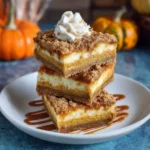
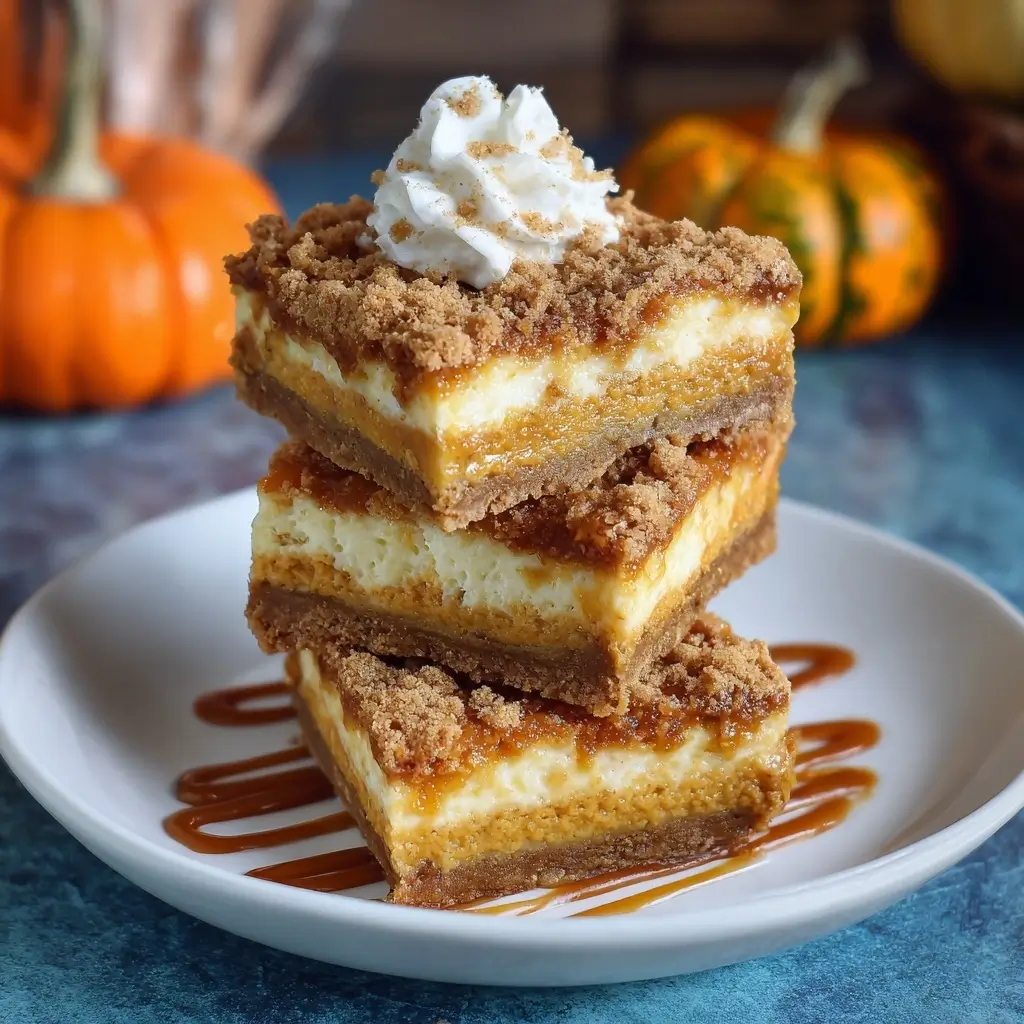
Pumpkin Cheesecake Bars are the ultimate fall dessert—creamy, spiced, and irresistibly comforting. Combining the rich tang of classic New York–style cheesecake with the warm, earthy sweetness of pure pumpkin purée and aromatic autumn spices, these bars deliver decadent flavor in an effortlessly elegant, portion-controlled format. Unlike traditional cheesecakes that require a water bath and hours of chilling, Pumpkin Cheesecake Bars bake in a single pan, set beautifully in the fridge, and slice cleanly for stress-free entertaining. Whether served at Thanksgiving dinner, Halloween parties, holiday cookie exchanges, or cozy Sunday gatherings, they evoke nostalgia while satisfying modern cravings for both indulgence and approachability. Their layered structure—featuring a buttery graham cracker crust, a velvety pumpkin-spiced cheesecake filling, and often a delicate cinnamon-sugar dusting or glossy maple glaze—creates textural harmony and visual appeal that makes them as Instagram-worthy as they are delicious.
The History
The origins of Pumpkin Cheesecake Bars trace back to the broader evolution of American cheesecake and pumpkin desserts—two iconic culinary traditions that converged in mid-20th-century home baking. Cheesecake itself has ancient roots (think Greek honey-sweetened cheese cakes served at Olympic games), but the creamy, dense, cream cheese–based version we know today emerged in the United States in the late 1800s, popularized by New York delis and later standardized by Philadelphia Cream Cheese marketing in the early 1900s. Meanwhile, pumpkin pie—a colonial adaptation of Native American squash preparations—became synonymous with Thanksgiving after Sarah Josepha Hale’s 1827 campaign to establish the national holiday and her inclusion of pumpkin pie in her 1846 cookbook Miss Leslie’s Directions for Cookery.
Bar-style desserts gained traction during the postwar era, fueled by convenience culture, the rise of boxed cake mixes, and the popularity of “sheet cake” formats ideal for potlucks and church suppers. The first documented “pumpkin cheesecake bar” recipes appeared in regional women’s magazines and community cookbooks in the 1960s and ’70s—often credited to home economists experimenting with hybrid desserts to simplify holiday baking. By the 1990s, food bloggers and test kitchens began refining the technique: stabilizing the filling with cornstarch or sour cream, perfecting crust-to-filling ratios, and introducing swirls of caramel or streusel toppings. Today, Pumpkin Cheesecake Bars represent a beloved fusion genre—honoring tradition while embracing innovation—and continue to evolve with plant-based adaptations, gluten-free alternatives, and global spice infusions like cardamom or black pepper.
Ingredients Breakdown
Understanding each component ensures consistent success and empowers confident customization:
- Graham Cracker Crust Base: Standard graham crackers provide structure, subtle molasses sweetness, and gentle crunch. Whole-wheat or honey graham variants deepen flavor; gluten-free graham-style crackers work seamlessly with certified GF labels. Melted unsalted butter binds the crumbs and adds richness—clarified butter can be used for higher smoke point and nuttier notes. A pinch of flaky sea salt enhances contrast and balances sweetness.
- Cream Cheese: Full-fat, brick-style, room-temperature cream cheese is non-negotiable. Low-fat or spreadable versions contain added stabilizers and excess moisture, leading to curdling, graininess, or poor setting. Philadelphia, Kraft, and store-brand full-fat bricks all perform reliably when properly softened (no microwaving—let sit 1–2 hours at room temp).
- Pumpkin Purée: 100% pure pumpkin—not pumpkin pie filling—is essential. Pie fillings contain added sugar, spices, and thickeners that throw off texture and seasoning balance. Canned pumpkin (like Libby’s) is consistently smooth and concentrated; homemade roasted pumpkin purée must be thoroughly drained (use cheesecloth or a fine-mesh strainer) to remove excess water, or it will cause cracking and weeping.
- Sweeteners: Granulated sugar provides structural integrity and aids in aeration during mixing. Brown sugar (light or dark) contributes molasses depth, moisture retention, and subtle caramel notes—ideal for balancing pumpkin’s earthiness. Some recipes include a touch of maple syrup or honey for nuanced complexity, though these increase moisture and require slight thickener adjustments.
- Eggs: Large eggs at room temperature emulsify the batter and provide lift and tenderness. Overmixing after adding eggs incorporates too much air, risking cracks during cooling. One extra yolk may be added for extra richness and silkiness.
- Sour Cream & Heavy Cream: Sour cream adds tang, moisture, and acidity that tenderizes proteins and prevents rubberiness. Heavy cream (or full-fat Greek yogurt) boosts unctuousness and helps create that signature “melt-in-your-mouth” mouthfeel. Avoid low-fat dairy substitutes—they lack fat content needed for stability and creaminess.
- Spices: Ground cinnamon, ginger, nutmeg, and cloves form the classic “pumpkin pie spice” quartet. Freshly grated nutmeg offers superior aroma; high-quality, recently ground spices prevent dusty or muted flavor. Allspice and cardamom are frequent gourmet additions. For heat lovers, a whisper of cayenne or black pepper creates intriguing warmth.
- Thickener: Cornstarch or instant clearjel is critical for preventing cracks, improving sliceability, and absorbing residual moisture. Too little leads to weeping; too much yields a chalky, gummy texture. Vanilla extract (preferably Madagascar bourbon) rounds out flavor and masks any raw egg scent.
Step-by-Step Recipe
- Prepare the Pan: Line a 9×13-inch metal baking pan with two overlapping sheets of parchment paper, leaving generous overhang on two opposite sides for easy lifting. Lightly grease the bottom and sides with butter or non-stick spray, then set aside.
- Make the Crust: In a food processor or sturdy zip-top bag, pulse or crush 1 ½ cups (about 12 full-sheet) graham crackers into fine, uniform crumbs (no large shards). Transfer to a medium bowl; whisk in ¼ cup granulated sugar and ¼ tsp fine sea salt. Pour in 6 tbsp (¾ stick) melted unsalted butter and stir with a fork until all crumbs are evenly moistened and resemble wet sand. Press firmly and evenly into the prepared pan using the bottom of a flat measuring cup or glass—ensure corners and edges are well-compacted. Chill uncovered in the freezer for 15 minutes (or refrigerator for 30) to set.
- Preheat & Prep Filling: Position oven rack to center position and preheat to 325°F (163°C). Allow all filling ingredients—cream cheese, sour cream, heavy cream, eggs, and pumpkin—to reach true room temperature (65–70°F); cold ingredients cause lumps and uneven emulsification.
- Cream the Base: In a large stand mixer fitted with the paddle attachment (or using a hand mixer and large bowl), beat the softened cream cheese on medium-low speed for 1–2 minutes until completely smooth and fluffy—scrape down bowl and paddle frequently. Add granulated sugar and brown sugar; beat 2–3 minutes until light and airy. Scrape down bowl thoroughly.
- Incorporate Wet Ingredients: Add pumpkin purée and beat on low speed just until combined (~30 seconds). Add sour cream and heavy cream; mix on low until fully incorporated and silky (~45 sec). Scrape bowl again.
- Add Flavor & Stabilizers: Whisk together 1 tsp vanilla extract, 1 ½ tsp ground cinnamon, ½ tsp ground ginger, ¼ tsp freshly grated nutmeg, ⅛ tsp ground cloves, ¼ tsp fine sea salt, and 2 tbsp cornstarch in a small bowl until no lumps remain. With mixer on lowest speed, gradually add spice mixture; mix only until just blended (~20 sec). Overmixing develops gluten or incorporates air—both lead to cracks.
- Incorporate Eggs Gently: Crack 3 large eggs into a small bowl; lightly whisk just to break yolks and whites. With mixer running on lowest speed, slowly drizzle eggs into batter in a thin, steady stream over 20–30 seconds. Stop mixer immediately once fully absorbed—do not whip. Scrape bowl one final time and stir by hand with a silicone spatula 5–6 folds to ensure homogeneity.
- Pour & Smooth: Carefully pour batter over chilled crust. Use an offset spatula or back of a spoon to gently spread into even layers, smoothing surface and tapping pan sharply 3–4 times on countertop to release trapped air bubbles (a major cause of cracks).
- Bake Low & Slow: Place pan on center oven rack. Bake 50–60 minutes—until edges are puffed and lightly golden, center jiggles *just slightly* like Jell-O (not liquidy), and internal temperature reads 150–155°F on an instant-read thermometer inserted 1 inch from edge. Do not overbake.
- Cool Gradually: Turn off oven. Crack oven door open 2–3 inches with a wooden spoon handle; let bars cool inside for 45 minutes. This gradual temperature drop prevents thermal shock and surface cracks. Remove from oven and cool completely on wire rack (≈1 hour).
- Chill Thoroughly: Cover pan loosely with plastic wrap (avoid touching surface) and refrigerate for *minimum* 8 hours—or preferably overnight (12–16 hours). This step is non-optional: it allows starches to fully set, flavors to meld, and texture to firm for clean slicing.
- Cut & Serve: Using parchment overhang, lift entire slab from pan onto cutting board. Trim uneven edges for presentation (save scraps!). With a sharp, thin-bladed knife wiped clean between cuts, slice into 12–16 bars (2×3 or 2×4 inch). For ultra-clean edges, dip knife in hot water and dry before each cut.
Tips
- Room-Temperature Rule: Never skip bringing dairy and eggs to room temperature—it’s the #1 factor in avoiding lumps, curdling, and separation. Plan ahead: take ingredients out 1.5–2 hours before baking.
- No Microwave Shortcuts: Softening cream cheese in the microwave—even for 5 seconds—creates uneven melting and greasy pockets. Instead, cut into ½-inch cubes and let sit on counter.
- Measure Dry Ingredients Correctly: Spoon flour, sugar, or crumbs into measuring cups and level with straight edge—don’t scoop directly from bag, which compacts and overmeasures.
- Crust Pressing Technique: Use the flat bottom of a dry 1-cup measuring cup—not your fingers—to press crust. It applies even pressure without warming the butter or creating thin spots.
- Crack Prevention Trio: (1) Don’t overmix after adding eggs, (2) bake in a water bath *only if* your oven runs hot—otherwise, rely on low temp + gradual cooling, and (3) add cornstarch—it’s the secret weapon for crack resistance.
- Thermometer Confidence: An instant-read thermometer eliminates guesswork. Target 150–155°F at the outer third of the pan—not center—for perfect doneness. Higher temps cause shrinkage and cracks.
- Chill Time Is Sacred: Rushing the chill results in soft, smeary bars that won’t hold shape. Overnight chilling also improves flavor depth and reduces “raw” notes.
- Knife Mastery: For picture-perfect slices: use a chef’s knife with a 8–10″ blade, dip in boiling water for 10 seconds, wipe *completely* dry, slice in one confident motion—no sawing. Repeat between cuts.
- Storage Wisdom: Keep covered tightly in fridge for up to 5 days. Freeze unfrosted bars individually wrapped in parchment + foil for up to 3 months—thaw overnight in fridge before serving.
- Rescue a Cracked Top: If cracks appear, don’t panic! They’re hidden under a glossy maple glaze, whipped cream rosettes, candied pepitas, or a dusting of cinnamon-sugar + toasted walnuts.
Variations and Customizations
From pantry staples to showstopping upgrades, these adaptations keep Pumpkin Cheesecake Bars endlessly exciting:
- Gluten-Free: Substitute certified GF graham crackers or gluten-free digestive biscuits for crust; verify cornstarch is GF (most are, but some contain wheat-derived dextrose). Add ¼ tsp xanthan gum to filling if using GF flour blends elsewhere.
- Vegan: Use vegan cream cheese (Kite Hill or Miyoko’s), coconut cream instead of sour cream/heavy cream, flax or aquafaba “eggs,” and date-sweetened crust. Chill 24+ hours for optimal firmness.
- Low-Sugar/Keto: Replace granulated and brown sugars with ¾ cup erythritol + 2 tbsp monk fruit blend; use almond flour crust (1 cup blanched almond flour + 2 tbsp coconut oil + 1 tbsp maple extract); add 1 tsp psyllium husk to filling for binding.
- Spiced Up: Add ¼ tsp ground cardamom, ⅛ tsp white pepper, or 1 tsp finely grated fresh ginger to spice blend. Toast whole spices before grinding for maximum aroma.
- Crunchy Toppings: Sprinkle crust with ¼ cup chopped toasted pecans or pepitas before baking. Or top cooled bars with spiced streusel (brown sugar, oats, cinnamon, butter) baked separately and cooled.
- Swirled Elegance: Before baking, dollop ¼ cup salted caramel sauce or maple syrup over batter and drag a toothpick in figure-8 patterns for marbled effect.
- Miniature Version: Use a lined 9×9-inch pan and reduce bake time to 40–45 minutes. Or make bite-sized bars in a 13×9-inch pan cut into 1-inch squares—ideal for dessert tables.
- Boozy Twist: Stir 2 tbsp bourbon or dark rum into filling after spices—reduce heavy cream by 1 tbsp to compensate. Garnish with orange zest and candied ginger.
- Chocolate Lover’s: Mix ¼ cup unsweetened cocoa powder into crust crumbs. Swirl 3 tbsp melted dark chocolate into batter before baking—or drizzle cooled bars with chocolate ganache.
- Protein-Powered: Blend in 2 scoops unflavored or vanilla collagen peptides or whey protein isolate—add 1 extra tbsp heavy cream to maintain moisture.
Health Considerations and Nutritional Value
While Pumpkin Cheesecake Bars are inherently indulgent, mindful ingredient choices and portion awareness enhance their role within a balanced diet. A standard 2×3-inch bar (1/12th of a full 9×13 recipe) contains approximately:
- Calories: 280–320 kcal
- Total Fat: 18–21g (11–13g saturated)
- Carbohydrates: 26–30g (18–22g sugars)
- Protein: 5–7g
- Fiber: 0.5–1g (increases to 2–3g with whole-grain graham or added flax)
- Vitamin A: ~120% DV (from beta-carotene in pumpkin)
- Calcium: ~8% DV (from dairy + fortified graham crackers)
- Vitamin D & B12: Small amounts from dairy sources
Nutritional Highlights: Pumpkin purée is rich in antioxidant beta-carotene (converted to vitamin A), supporting eye health and immune function. It also provides potassium, fiber (when not over-strained), and modest amounts of iron and magnesium. Cinnamon may support healthy blood sugar metabolism, while nuts or seeds in toppings add heart-healthy monounsaturated fats and vitamin E.
Mindful Modifications: To lower saturated fat, substitute half the butter in crust with avocado oil; replace ¼ cup cream cheese with strained Greek yogurt. Reduce added sugar by 25%—most palates adapt quickly, especially with robust spices. Boost nutrition with 2 tbsp ground flaxseed or chia in crust (adds omega-3s and fiber) or ¼ cup mashed white beans blended into filling (adds protein and creaminess without altering flavor).
Dietary Notes: Naturally cholesterol-containing due to eggs and dairy—those managing cholesterol should enjoy occasionally and pair with fiber-rich sides (roasted vegetables, apple slices). Lactose-intolerant individuals may tolerate small portions due to fermentation in sour cream/cream cheese—but lactose-free versions are widely available. Always check labels for hidden allergens (soy lecithin in chocolate, gluten cross-contamination).
Ingredients
Makes 12–16 bars
- 1 ½ cups (about 12 full-sheet) graham cracker crumbs (approx. 150g)
- ¼ cup (50g) granulated sugar
- ¼ tsp fine sea salt
- 6 tbsp (85g) unsalted butter, melted and slightly cooled
- 24 oz (680g) full-fat brick cream cheese, room temperature
- ¾ cup (150g) granulated sugar
- ½ cup (100g) packed light brown sugar
- 1 (15 oz / 425g) can pure pumpkin purée (not pie filling)
- 1 cup (240g) full-fat sour cream
- ½ cup (120ml) heavy cream (36–40% fat)
- 3 large eggs, room temperature
- 1 tsp pure vanilla extract
- 1 ½ tsp ground cinnamon
- ½ tsp ground ginger
- ¼ tsp freshly grated nutmeg
- ⅛ tsp ground cloves
- ¼ tsp fine sea salt
- 2 tbsp (16g) cornstarch
Directions
- Line a 9×13-inch metal baking pan with parchment paper, allowing overhang on two opposite sides. Lightly grease.
- In a bowl, combine graham crumbs, ¼ cup sugar, and ¼ tsp salt. Stir in melted butter until moistened. Press firmly into pan. Freeze 15 min.
- Preheat oven to 325°F (163°C).
- In stand mixer, beat cream cheese on medium-low until smooth (1–2 min). Add sugars; beat 2–3 min until fluffy. Scrape bowl.
- Add pumpkin; mix 30 sec. Add sour cream and heavy cream; mix 45 sec on low. Scrape bowl.
- In small bowl, whisk spices, ¼ tsp salt, and cornstarch. Add to mixer on lowest speed; mix 20 sec.
- Whisk eggs in small bowl. With mixer on lowest speed, drizzle in eggs over 30 sec. Stir by hand 5–6 folds.
- Pour over crust. Smooth surface. Tap pan sharply 4 times.
- Bake 50–60 min until edges puff and center jiggles slightly. Internal temp: 150–155°F.
- Turn off oven. Crack door open; cool inside 45 min.
- Cool completely on wire rack (~1 hr). Cover and chill ≥8 hrs (preferably overnight).
- Lift from pan using parchment. Trim edges. Slice with hot, dry knife. Serve chilled.
FAQ
- Can I use pumpkin pie filling instead of pure pumpkin?
- No—pie filling contains added sugar, spices, thickeners (like modified food starch), and preservatives that disrupt the precise chemistry of the cheesecake layer, resulting in overly sweet, gummy, or cracked bars. Stick with 100% pure pumpkin.
- Why did my bars crack?
- Most commonly: overmixing after adding eggs, baking too long or at too high temperature, cooling too quickly (skip the fridge right after oven!), or omitting cornstarch. Ensure room-temp ingredients, low-and-slow bake, and gradual cooldown.
- Can I freeze Pumpkin Cheesecake Bars?
- Absolutely. Cut into bars, wrap each individually in parchment, then place in airtight freezer bag or container. Freeze up to 3 months. Thaw overnight in refrigerator—do not thaw at room temperature to prevent sogginess.
- My crust turned out greasy or crumbly. What went wrong?
- Too much butter creates greasiness; too little causes crumbling. Measure butter precisely (use a kitchen scale if possible). Also ensure crumbs are *fine*—coarse pieces won’t bind. Press firmly and chill before baking.
- Can I make these dairy-free?
- Yes—with caveats. Use high-fat coconut cream (chilled, solid part only), vegan cream cheese (check melt-point stability), and flax eggs. Expect softer set—extend chill to 24 hours and serve chilled. Texture differs but remains delicious.
- How do I prevent sticking when cutting?
- Chill thoroughly, use a sharp thin knife, dip in hot water and dry *completely* before each cut, and avoid sawing motions. A bench scraper also works beautifully for clean, wide cuts.
- Can I add chocolate chips or nuts to the batter?
- Yes—but fold in gently *after* final mixing to avoid overworking. White chocolate chips pair especially well with pumpkin; toasted pecans add crunch. Avoid large chunks that sink.
- Is there a way to make them less sweet?
- Reduce granulated sugar to ½ cup and brown sugar to ⅓ cup. Compensate with extra ¼ tsp cinnamon and 1 tbsp sour cream for moisture balance. Most find this still luxuriously flavorful.
- What’s the best way to transport them?
- Keep fully chilled until departure. Place bars in rigid, lidded container with parchment between layers. Pack in insulated cooler with ice packs for trips >1 hour. Decorate upon arrival.
- Can I bake these in a springform pan?
- You can—but a 9×13 is strongly preferred. Springform pans risk leakage (especially with wet pumpkin batter) and uneven heating. If using, double-line bottom with foil and wrap exterior tightly with heavy-duty foil.
Summary
Pumpkin Cheesecake Bars are a harmonious marriage of creamy New York–style cheesecake and warmly spiced pumpkin pie—elevated by a buttery graham cracker crust, perfected through precise temperature control, gentle mixing, and patient chilling.
With endless customization options—from gluten-free and vegan adaptations to boozy swirls and crunchy toppings—these bars deliver nostalgic comfort, elegant simplicity, and crowd-pleasing versatility for every autumn occasion.