Introduction
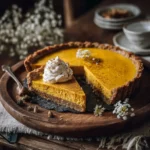
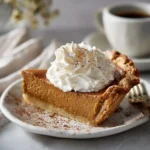
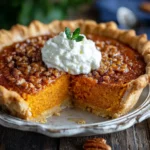
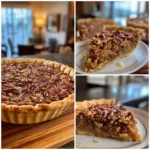
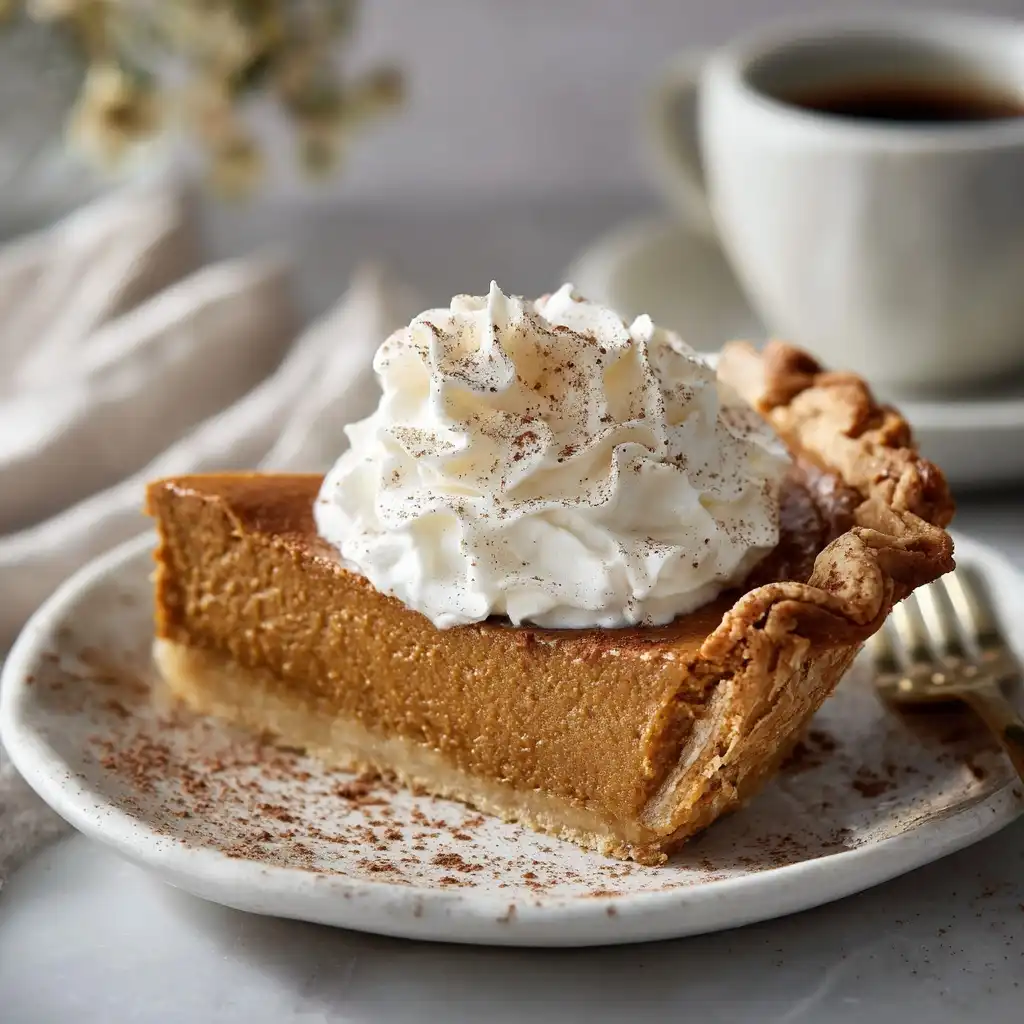
There’s something undeniably magical about the first bite of a perfectly spiced, velvety-smooth pumpkin pie—warm, comforting, and deeply nostalgic. When crowned with luxuriously rich brown sugar whipped cream, this classic American dessert transcends tradition and becomes an unforgettable sensory experience. Unlike standard whipped cream, the brown sugar version adds layers of caramelized depth, subtle molasses warmth, and a delicate crunch from finely dissolved sugars—elevating every forkful with textural contrast and nuanced sweetness. Whether served at Thanksgiving dinner, a cozy autumn gathering, or even as a soul-soothing solo treat on a rainy October afternoon, pumpkin pie with brown sugar whipped cream is more than dessert—it’s edible heritage, reimagined with intention and care.
The History
The story of pumpkin pie begins long before the first Pilgrim stepped ashore—rooted in Indigenous North American agriculture. For thousands of years, Native peoples cultivated Cucurbita pepo, the ancestor of modern pumpkins and squashes, using them for food, medicine, and ceremonial purposes. Early European colonists adopted these gourds but initially roasted or boiled them whole; the concept of baking pumpkin into a custard-like pie emerged gradually during the 17th and 18th centuries. The earliest known printed recipe resembling pumpkin pie appears in Amelia Simmons’ 1796 cookbook American Cookery, which called for stewed pumpkin mixed with eggs, milk, molasses, and spices—baked “in paste” (i.e., pastry crust). By the mid-1800s, canned pumpkin (introduced by Libby’s in 1929) democratized accessibility, cementing pumpkin pie as a national symbol of harvest, gratitude, and domestic abundance. Meanwhile, whipped cream itself traces back to 16th-century Europe, where it was dubbed “snow cream” and sweetened with honey or sugar. Brown sugar—unrefined cane syrup crystallized with molasses—gained prominence in colonial America due to its affordability and robust flavor. Its integration into whipped cream is a relatively modern innovation, gaining traction in high-end bakeries and food magazines of the 1990s and early 2000s as chefs sought deeper, more complex sweet finishes. Today, brown sugar whipped cream represents a thoughtful fusion: honoring ancestral ingredients while celebrating contemporary culinary refinement.
Ingredients Breakdown
Every exceptional pumpkin pie starts not with technique—but with discernment. Below is a meticulous, chef-level analysis of each ingredient’s role, origin considerations, and functional impact:
- Pumpkin Puree (100% Pure, Not Pie Filling): Must be unsweetened, unspiced, and free of added thickeners or preservatives. Opt for small-sugar-pumpkin varieties like Sugar Pie or Baby Bear for superior sweetness and dense, low-moisture flesh. Avoid large field pumpkins—they’re watery and bland. Homemade puree (roasted and strained) yields richer flavor and better texture control than even premium canned options—but high-quality organic canned (e.g., Farmer’s Market or Purely Pumpkin) offers remarkable consistency and convenience.
- Heavy Cream (36–40% Butterfat): Non-negotiable for stability and mouthfeel. Ultra-pasteurized cream may take longer to whip and yield slightly less volume; pasteurized (not ultra-pasteurized) is ideal. Always chill bowl and beaters for 15+ minutes pre-whipping—the colder the cream, the stiffer and longer-lasting the peaks.
- Brown Sugar (Light or Dark, Finely Ground): Light brown sugar delivers delicate caramel notes; dark brown imparts deeper molasses richness and a hint of bitterness that balances sweetness beautifully. For seamless incorporation, process granulated brown sugar in a spice grinder or blender until powdery—this prevents graininess and ensures full dissolution into the cream. Never substitute raw sugar or coconut sugar—they lack molasses content and won’t deliver the signature warm complexity.
- Spice Blend (Freshly Ground Preferred): Cinnamon (Ceylon preferred for floral nuance), ginger (microplaned fresh root adds bright heat), nutmeg (grated from whole seed for volatile oil potency), allspice (adds clove-like warmth), and a whisper of cardamom (for aromatic lift). Pre-ground spices lose up to 70% of volatile oils within 6 months—fresh grinding makes a measurable difference in aroma and balance.
- Eggs (Large, Pasture-Raised): Provide essential structure and emulsification. Pasture-raised eggs contribute deeper orange yolks rich in lutein and omega-3s, enhancing both color and nutritional density. Room temperature eggs integrate more smoothly into the custard base, minimizing curdling risk.
- Evaporated Milk (Not Sweetened Condensed): Adds concentrated dairy richness without excess sugar. Its reduced water content helps prevent weeping and promotes a silkier set. Full-fat is mandatory—low-fat versions destabilize the protein network and cause graininess.
- Unsalted Butter (European-Style, 82–84% Fat): Used in the crust for flakiness and depth. Higher fat content yields more tender, shatteringly crisp layers. Clarified butter (ghee) can be brushed over the baked crust for golden sheen and nutty aroma.
- Vanilla Extract (Double-Strength, Madagascar Bourbon): Adds roundness and bridges sweet and spicy notes. Alcohol-based extracts disperse more evenly than pastes or powders. Avoid imitation vanillin—it tastes flat and chemical under heat.
- Salt (Flaky Sea Salt, e.g., Maldon): Not just for seasoning—salt heightens sweetness perception and suppresses bitterness in spices. A pinch in the filling and a final flake atop the whipped cream creates a sophisticated sweet-savory counterpoint.
Step-by-Step Recipe
This method prioritizes precision, patience, and layered flavor development—not speed. Total active time: ~1 hour 15 minutes. Resting and chilling are non-optional steps integral to texture integrity.
- Prepare the Crust (Day Before Recommended): In a chilled food processor, pulse 1¼ cups all-purpose flour, ½ tsp fine sea salt, and ½ cup ice-cold cubed unsalted butter until mixture resembles coarse meal with pea-sized butter bits. Add 3–4 tbsp ice water, 1 tbsp at a time, pulsing just until dough begins to clump. Turn onto parchment, shape into a 6-inch disk, wrap tightly, and refrigerate ≥2 hours (or freeze up to 3 months). Chill ensures gluten relaxation and prevents shrinkage.
- Blind Bake the Crust: Preheat oven to 425°F (220°C). Roll chilled dough to 12-inch circle on floured surface. Fit gently into 9-inch deep-dish pie plate; trim edges, crimp decoratively, and freeze 15 minutes. Line with parchment, fill with pie weights or dried beans, and bake 17 minutes. Remove weights and parchment; prick bottom with fork. Reduce heat to 375°F (190°C); bake 12–15 minutes more until golden and dry. Cool completely on wire rack—warm crust = soggy bottom.
- Make the Filling (Warm & Whisked, Not Blended): In a heavy-bottomed saucepan, combine 1¾ cups pumpkin puree, ¾ cup brown sugar, 1 tsp ground cinnamon, ½ tsp ground ginger, ¼ tsp freshly grated nutmeg, ¼ tsp ground allspice, ⅛ tsp ground cloves, 1 tsp vanilla extract, and ½ tsp fine sea salt. Warm over medium-low heat, stirring constantly, for 4–5 minutes until fragrant and slightly thickened (≈140°F). This step blooms spices and concentrates flavor. Remove from heat; cool 10 minutes.
- Temper the Eggs: In separate bowl, whisk 2 large eggs + 1 yolk until uniform. Slowly drizzle in ¼ cup warm evaporated milk while whisking vigorously to prevent scrambling. Then, gradually whisk warm pumpkin mixture into egg-milk blend in a thin stream—never reverse. Finally, whisk in remaining 1¼ cups evaporated milk until fully homogenized. Strain through fine-mesh sieve into large measuring cup—removes any cooked egg bits or spice grit.
- Bake Low & Slow: Place pie plate on preheated baking sheet (catches spills + ensures even bottom heat). Pour filling into cooled crust. Bake at 350°F (175°C) for 55–65 minutes. Pie is done when edges are puffed and set, center jiggles *just slightly* like gelatin (not liquid), and internal temperature reads 175°F (80°C) on instant-read thermometer. Overbaking causes cracking and graininess.
- Cool & Set (Critical!): Transfer pie to wire rack. Cool at room temperature ≥4 hours—preferably overnight. Refrigerate uncovered 8+ hours before serving. This slow cooling allows proteins to fully coagulate and starches to retrograde, yielding clean slices and creamy texture.
- Whip the Brown Sugar Cream (Just Before Serving): Chill stainless steel bowl and whisk attachment 15 min. Pour 1½ cups very cold heavy cream into bowl. Sift in ¼ cup finely ground light or dark brown sugar and ½ tsp vanilla. Begin whisking on low 1 minute to incorporate; increase to medium-high. Whip 2–3 minutes until soft peaks form—do not overwhip (grainy, broken texture). Fold in 1 pinch flaky sea salt. Serve immediately or refrigerate ≤2 hours (re-whip gently if softened).
Tips
- Crust Confidence: If your dough cracks while rolling, don’t panic—patch with scraps and press firmly. Chill patched areas 10 minutes before baking.
- No-Crack Guarantee: Place pie on lowest oven rack and avoid opening the oven door for first 45 minutes. After baking, turn off oven, crack door open 2 inches, and let pie cool inside for 30 minutes—gradual temperature drop prevents thermal shock.
- Texture Troubleshooting: Weeping (liquid pooling)? Caused by overbaking or rapid cooling. Grainy filling? Eggs were too cold or added too fast. Dense texture? Underbaked or insufficient spice blooming.
- Whipped Cream Wisdom: For make-ahead stability, add ½ tsp unflavored gelatin (bloomed in 1 tsp cold water, then microwaved 5 sec) to cream before whipping. It holds peaks for 24+ hours without separation.
- Flavor Amplifiers: Infuse cream with a split vanilla bean (scraped seeds + pod, warmed gently, then cooled and strained) or steep 1 star anise in warm cream for 10 minutes before chilling.
- Slicing Perfection: Dip sharp knife in hot water and wipe dry between cuts. Serve pie slightly cool—not fridge-cold—for optimal creaminess.
- Leftover Love: Store leftover pie covered in fridge up to 5 days. Revive texture by warming individual slices at 300°F for 8 minutes before topping with fresh cream.
Variations and Customizations
This foundational recipe invites creativity—while preserving structural integrity and seasonal authenticity:
- Vegan Pumpkin Pie: Replace eggs with ¼ cup aquafaba (chickpea brine) + 2 tbsp cornstarch; use full-fat coconut milk (canned, stirred well) instead of evaporated milk; crust made with vegan butter or refined coconut oil. Whip coconut cream (chilled overnight) with brown sugar and maple syrup.
- Ginger-Spiked Pie: Add 1 tbsp finely minced candied ginger + ¼ tsp ground white pepper to filling for bright, peppery heat. Garnish with crystallized ginger pieces.
- Maple-Brown Sugar Cream: Substitute 1 tbsp pure maple syrup for 1 tbsp brown sugar in whipped cream; enhances earthiness and adds subtle woodsy notes.
- Streusel-Topped Pie: Skip whipped cream. Top baked, cooled pie with oat-brown sugar streusel (½ cup oats, ⅓ cup brown sugar, 3 tbsp cold butter, ¼ tsp cinnamon) and broil 1–2 minutes until golden.
- Mini Mason Jar Pies: Pre-bake mini tart shells (4 oz jars). Fill with warm filling, chill 6 hours, top with cream. Perfect for portion control and gifting.
- Boozy Brown Sugar Cream: Add 1 tbsp bourbon or dark rum to cream before whipping—complements molasses notes beautifully. Reduce sugar by 1 tsp to balance alcohol’s perceived sweetness.
- Gluten-Free Crust: Use 1:1 GF flour blend with ½ tsp xanthan gum. Add 1 tbsp apple cider vinegar to water for tenderness. Blind bake 2–3 minutes longer.
- Chai-Spiced Variation: Replace standard spices with 1½ tsp chai spice blend (cardamom, black pepper, fennel, coriander, ginger) + ½ tsp black tea powder (Assam, finely ground) for tannic complexity.
- Savory-Sweet Herb Finish: Garnish finished slice with micro mint, edible chrysanthemum petals, or a few leaves of fresh rosemary (lightly torch-brushed for smoky aroma).
Health Considerations and Nutritional Value
When prepared mindfully, pumpkin pie with brown sugar whipped cream delivers meaningful nutrition—not just comfort. A standard slice (1/8 of 9-inch pie, topped with ¼ cup whipped cream) contains approximately:
- Calories: 385 kcal (moderate for dessert; 15–20% of daily intake)
- Vitamin A (as beta-carotene): 280% DV—supports vision, immunity, and skin health. Pumpkin is one of nature’s richest sources.
- Fiber: 3.2 g (12% DV)—from pumpkin and whole-grain crust options; aids digestion and satiety.
- Potassium: 320 mg—helps regulate blood pressure and fluid balance.
- Antioxidants: Pumpkin contains zeaxanthin and lutein (eye-protective carotenoids); cinnamon and ginger provide polyphenols with anti-inflammatory effects.
- Calcium & Vitamin D: Evaporated milk contributes bioavailable calcium (220 mg, 17% DV); fortified versions add vitamin D.
Dietary Adaptations:
- Lower-Sugar Option: Reduce brown sugar in filling to ½ cup; replace ¼ cup with monk fruit–erythritol blend (1:1 ratio). Whipped cream uses 2 tbsp sugar + 1 tsp stevia glycerite.
- Higher-Protein Boost: Add 1 scoop unflavored collagen peptides to warm filling before straining—adds 10g clean protein, zero taste impact.
- Heart-Healthy Swaps: Use avocado oil in crust instead of butter; swap half evaporated milk for silken tofu purée (blended smooth) to reduce saturated fat by 35%.
- Allergen Notes: Naturally nut-free and soy-free (verify cream/canned pumpkin labels). For dairy-free, choose coconut-based alternatives—but note texture and flavor shifts.
- Mindful Indulgence Tip: Pair slice with a small handful of walnuts (omega-3s) and a cup of antioxidant-rich hibiscus tea to enhance nutrient absorption and glycemic response.
Key reminder: Nutrition is contextual. Enjoyed occasionally as part of a balanced diet rich in vegetables, whole grains, and lean proteins, this dessert contributes joyful ritual, cultural connection, and phytonutrient diversity—not just calories.
Ingredients
For the Flaky All-Butter Pie Crust:
- 1¼ cups (160g) all-purpose flour, plus extra for dusting
- ½ teaspoon fine sea salt
- ½ cup (113g) unsalted butter, very cold and cubed
- 3–4 tablespoons ice water
For the Spiced Pumpkin Filling:
- 1¾ cups (420g) 100% pure pumpkin puree (not pie filling)
- ¾ cup (150g) light or dark brown sugar, packed
- 1 teaspoon ground cinnamon
- ½ teaspoon ground ginger
- ¼ teaspoon freshly grated nutmeg
- ¼ teaspoon ground allspice
- ⅛ teaspoon ground cloves
- 1 teaspoon pure vanilla extract
- ½ teaspoon fine sea salt
- 2 large eggs + 1 large egg yolk, room temperature
- ¼ cup (60ml) evaporated milk, room temperature
- 1¼ cups (300ml) evaporated milk, cold
For the Brown Sugar Whipped Cream:
- 1½ cups (360ml) heavy cream (36–40% fat), very cold
- ¼ cup (30g) light or dark brown sugar, finely ground in spice grinder
- ½ teaspoon pure vanilla extract
- Pinch of flaky sea salt (e.g., Maldon)
Directions
- Make the Crust: In a food processor, pulse flour and salt. Add cold butter; pulse until mixture resembles coarse crumbs with visible pea-sized butter pieces. Drizzle in ice water, 1 tablespoon at a time, pulsing just until dough begins to clump together. Turn dough onto a sheet of parchment paper, gather into a disk, wrap tightly, and refrigerate for at least 2 hours or up to 3 days.
- Roll and Blind Bake: On a lightly floured surface, roll chilled dough into a 12-inch circle. Carefully transfer to a 9-inch deep-dish pie plate. Trim overhang to ½ inch, fold under, and crimp edges decoratively. Freeze crust for 15 minutes. Preheat oven to 425°F (220°C). Line crust with parchment and fill with pie weights or dried beans. Bake 17 minutes. Remove weights and parchment; prick bottom with fork. Reduce oven to 375°F (190°C) and bake 12–15 minutes more, until golden and dry. Cool completely on a wire rack.
- Prepare Filling Base: In a medium saucepan, combine pumpkin puree, brown sugar, cinnamon, ginger, nutmeg, allspice, cloves, vanilla, and salt. Warm over medium-low heat, stirring constantly, for 4–5 minutes until fragrant and slightly thickened. Remove from heat; let cool 10 minutes.
- Temper Eggs: In a bowl, whisk eggs and egg yolk. Whisk in ¼ cup evaporated milk. Gradually whisk in warm pumpkin mixture until smooth. Strain through a fine-mesh sieve into a large measuring cup. Whisk in remaining 1¼ cups cold evaporated milk until fully combined.
- Bake the Pie: Place pie plate on a baking sheet. Pour filling into cooled crust. Bake at 350°F (175°C) for 55–65 minutes, until edges are set and center jiggles slightly. Internal temperature should read 175°F (80°C). Do not overbake.
- Cool Thoroughly: Cool pie on wire rack for 4 hours at room temperature. Refrigerate uncovered for at least 8 hours—or preferably overnight—to fully set.
- Whip the Cream: Just before serving, chill mixing bowl and whisk attachment for 15 minutes. Combine cold heavy cream, ground brown sugar, vanilla, and salt in bowl. Whip on medium-high speed for 2–3 minutes until soft peaks form. Do not overwhip.
- Serve: Slice pie with a hot, clean knife. Top each slice generously with brown sugar whipped cream. Optional: sprinkle with flaky sea salt or freshly grated nutmeg.
FAQ
- Can I use fresh pumpkin instead of canned?
- Absolutely—and highly recommended for peak flavor! Choose sugar pie or cheese pumpkins. Roast halves (cut-side down) at 375°F for 45–60 minutes until tender. Scoop flesh, purée in blender until silky, then strain through cheesecloth or fine sieve for 2 hours to remove excess water. Yield: ~2 cups purée per 3-lb pumpkin.
- Why does my pie crack? How do I prevent it?
- Cracking occurs from rapid temperature shifts or overbaking. Ensure gradual cooling: after baking, turn off oven, crack door open 2 inches, and let pie sit inside for 30 minutes. Also, avoid opening the oven during the first 45 minutes. If cracks appear, hide them artfully with whipped cream and a dusting of cinnamon!
- Can I make the pie ahead and freeze it?
- Yes—with caveats. Fully baked, completely cooled pie freezes well for up to 1 month. Wrap tightly in plastic, then foil. Thaw overnight in fridge, then bring to room temperature 30 minutes before serving. Do not freeze whipped cream—prepare fresh. Note: Texture remains excellent, but crust may soften slightly.
- My brown sugar whipped cream deflated after 30 minutes. What went wrong?
- Overwhipping is the usual culprit—cream turns grainy and collapses. Stop at soft peaks. Also ensure cream, bowl, and beaters are thoroughly chilled. For extended stability, add ½ tsp bloomed gelatin (see Tips section) or use powdered sugar (which contains cornstarch) in place of granulated brown sugar.
- Is there a way to make this gluten-free?
- Yes. Use a 1:1 gluten-free flour blend (with xanthan gum included) for the crust. Add 1 tablespoon apple cider vinegar to the ice water to boost tenderness. Blind bake as directed—GF crusts benefit from an extra 2–3 minutes of baking. Confirm all other ingredients (vanilla, baking powder if used) are certified GF.
- Can I reduce the sugar without ruining texture?
- You can safely reduce brown sugar in the filling to ½ cup without compromising structure—pumpkin’s natural sweetness carries well. For the whipped cream, reduce to 2 tablespoons sugar and add 1 tsp maple syrup for moisture and flavor depth. Never omit salt—it’s essential for flavor balance.
- What’s the best way to store leftovers?
- Cover pie tightly with plastic wrap or an inverted bowl and refrigerate up to 5 days. Keep whipped cream separate—store in airtight container up to 2 days. Re-whip gently before serving if needed. For longest freshness, freeze unbaked pie filling (portioned) for up to 3 months—thaw overnight before pouring into pre-baked crust and baking.
- Can I use coconut milk instead of evaporated milk?
- Full-fat canned coconut milk works as a 1:1 substitute for dairy-free versions—but expect a subtle coconut flavor and slightly denser set. Shake can vigorously before measuring. Avoid “lite” versions—they lack sufficient fat for proper texture.
- Why strain the filling?
- Straining removes any undissolved spice particles, cooked egg bits, or fibrous pumpkin strings—ensuring glassy smoothness and professional mouthfeel. It’s the single most impactful step for luxury texture.
- Can I add chocolate to this pie?
- Yes—elegantly. Stir 2 ounces finely chopped bittersweet chocolate (70%) into warm filling just before straining. Or create a chocolate-bottomed variation: brush pre-baked crust with melted chocolate, chill until set, then add pumpkin filling. The cocoa deepens spice complexity without overwhelming.
Summary
Pumpkin pie with brown sugar whipped cream is a masterclass in seasonal harmony—where ancient squash, colonial ingenuity, and modern technique converge into a dessert that satisfies soul and senses alike. Every element, from the flaky, buttery crust to the spiced, velvety filling and the molasses-kissed, cloud-like cream, is thoughtfully calibrated for balance, depth, and nostalgic resonance.
Whether you’re honoring generations of tradition or reimagining it with dietary adaptations, global spices, or garden-fresh ingredients, this recipe serves not just as instructions—but as an invitation to slow down, savor intentionality, and share something profoundly warm, rich, and human.