Introduction
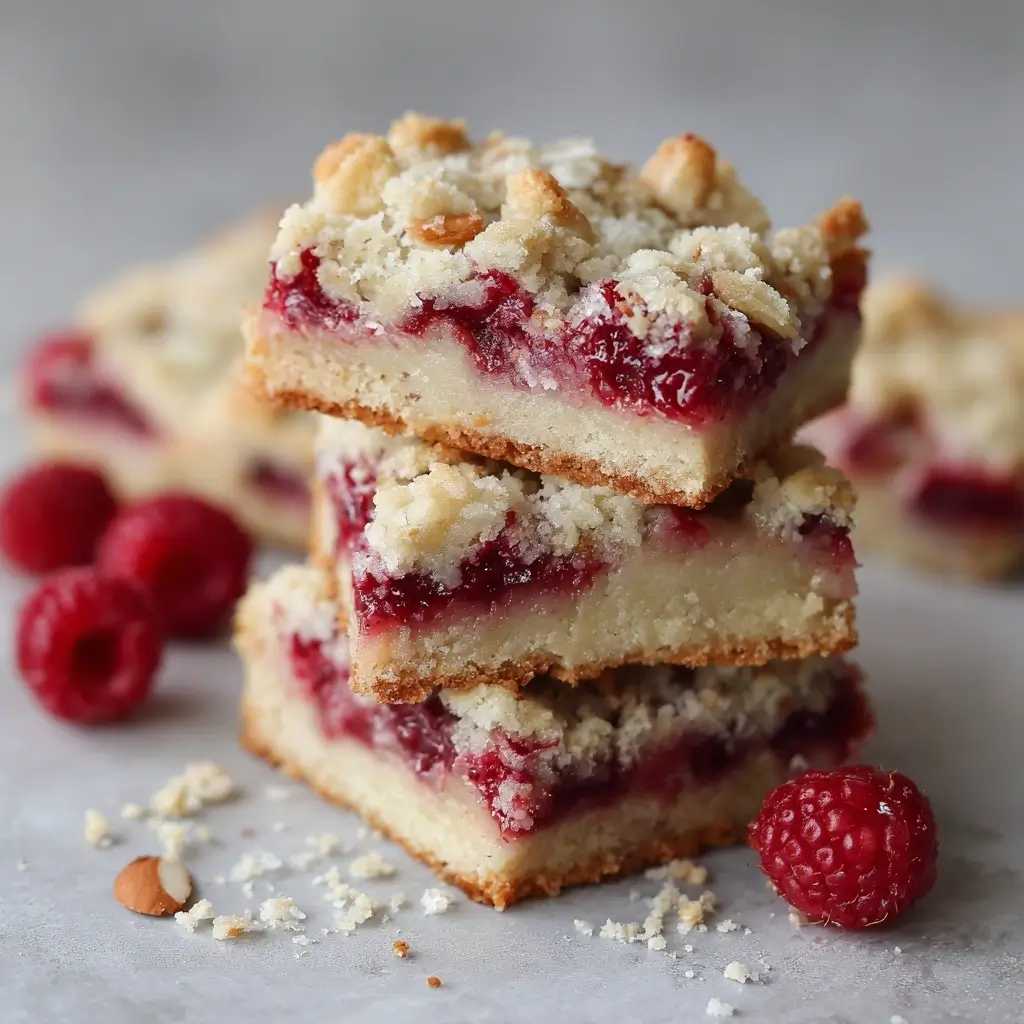
Raspberry Almond Crumb Bars are a delightful fusion of buttery, nutty shortbread and tangy raspberry jam, all layered into an easy-to-make bar form that’s perfect for picnics, potlucks, or afternoon tea. These bars strike the perfect balance between sweet and tart, with a crumbly, melt-in-your-mouth texture that makes them irresistible. Whether you’re baking for a special occasion or simply treating yourself to something homemade and delicious, these bars offer a sophisticated flavor profile without requiring advanced baking skills. Their portable nature and ability to be made ahead of time make them a go-to dessert for busy bakers who still want to impress.
What sets Raspberry Almond Crumb Bars apart is their dual-layered structure: a rich, almond-infused base and topping sandwich a vibrant layer of raspberry preserves. The use of almond flour not only adds a luxurious depth of flavor but also lends a tender, slightly dense crumb that contrasts beautifully with the juicy fruit center. These bars are often compared to classic Linzer cookies or coffee cake in bar form, combining old-world European influences with modern American baking convenience. With just one bowl and a square pan, you can create a dessert that looks and tastes like it came from a gourmet bakery.
The History
The origins of crumb-based desserts like Raspberry Almond Crumb Bars can be traced back to European traditions, particularly German and Austrian baking customs where nut-based pastries and fruit-filled tarts have long been staples. The concept of a “streusel” — a crumbly mixture of butter, sugar, flour, and often nuts — has been used for centuries to top cakes, coffees, and pies across Central Europe. In particular, the Linzertorte, one of the oldest known cake recipes (dating back to the 17th century in Austria), features a lattice-top tart made with ground almonds and red currant or raspberry jam — a clear ancestor of today’s crumb bars.
As European immigrants brought their culinary traditions to North America, these recipes evolved. The rise of home baking in the early 20th century, coupled with the popularity of sheet cakes and bar cookies during the Great Depression (due to their economical use of ingredients and ease of sharing), helped transform traditional European pastries into accessible American desserts. By the mid-1900s, cookbooks began featuring “fridge cakes” and “no-roll bars,” which required minimal effort and equipment — ideal for new kitchens equipped with electric mixers and standard-sized ovens.
Raspberry Almond Crumb Bars as we know them today likely emerged in the late 20th century, when specialty ingredients like almond flour became more widely available and home bakers began experimenting with nut flours for gluten-free and low-carb alternatives. The combination of almond meal with butter and sugar created a richer, more aromatic base than traditional all-purpose flour alone, while the addition of fresh or preserved raspberries provided a bright, acidic contrast. Today, these bars are celebrated not only for their flavor but also for their versatility — easily adapted to dietary needs and seasonal fruit availability.
Ingredients Breakdown
To achieve the perfect texture and flavor in Raspberry Almond Crumb Bars, each ingredient plays a crucial role. Here’s a detailed breakdown:
- All-Purpose Flour: Forms the structural base of the crust and crumb topping. It provides gluten development necessary for holding the buttery dough together while still allowing it to remain tender. For a lighter texture, some bakers prefer to substitute part of the flour with cornstarch or cake flour.
- Almond Flour (or Almond Meal): Adds a distinct nutty flavor and moist, delicate crumb. Almond flour is finely ground blanched almonds, whereas almond meal may include the skin, giving a coarser texture and deeper color. Using high-quality, fresh almond flour prevents bitterness and ensures even distribution throughout the dough.
- Unsalted Butter: Should be cold when cutting into the dry ingredients for the crust, then softened for the mixing phase. Cold butter creates steam during baking, contributing to flakiness, while properly softened butter binds the crumbs effectively. Unsalted butter allows control over sodium content and enhances the pure dairy flavor.
- Granulated Sugar: Provides sweetness and helps with browning. It also contributes to the crispness of the baked crust. Some recipes use a portion of brown sugar for added moisture and molasses notes, though granulated sugar is preferred here for a clean, balanced sweetness that doesn’t overpower the raspberries.
- Brown Sugar (light or dark): Adds moisture, chewiness, and a subtle caramel undertone. When combined with butter, it creates a richer, more complex base layer. Dark brown sugar intensifies the molasses flavor, which pairs well with almonds.
- Vanilla Extract: Enhances overall flavor complexity with its warm, floral notes. Pure vanilla extract is recommended over imitation for a more authentic taste. A splash of almond extract (¼ tsp) can be added alongside vanilla to amplify the nuttiness.
- Salt: Balances sweetness and enhances other flavors. Even a small amount of fine sea salt or kosher salt is essential to prevent the bars from tasting flat.
- Ground Cinnamon (optional): Adds warmth and complements both the almond and raspberry components. While not traditional in all versions, a pinch deepens the flavor profile subtly.
- Fresh or Frozen Raspberries: Used either whole or mashed to create a fresh jam-like layer. Fresh berries provide brighter acidity, while frozen berries release more liquid and thicken upon cooking. If using frozen, do not thaw completely to avoid excess moisture.
- Raspberry Jam or Preserves: Offers a convenient, consistent filling with ideal thickness. Seedless raspberry jam gives a smoother texture, while seeded adds rustic appeal and fiber. High-pectin jams set better and reduce seepage during baking.
- Lemon Juice and Zest: Brightens the filling and cuts through richness. Lemon zest adds aromatic oils that enhance the fruitiness, while juice boosts acidity and helps preserve color.
- Egg (sometimes used in the base): Occasionally included in enriched versions to bind the base and give it a cookie-like texture. Not always necessary, especially if aiming for a crumbly, shortbread consistency.
- Cornstarch or Tapioca Starch (for thickening): Helps absorb excess moisture from the raspberry layer, preventing soggy bottoms. Especially useful if using fresh berries or low-sugar jams.
Step-by-Step Recipe
Follow this detailed guide to bake perfectly textured Raspberry Almond Crumb Bars with a golden crust, gooey center, and crunchy streusel topping.
- Preheat Oven and Prepare Pan: Preheat your oven to 350°F (175°C). Line an 8×8-inch or 9×9-inch square baking pan with parchment paper, leaving overhang on two opposite sides for easy removal after baking. Lightly grease any exposed pan surfaces to ensure the bars don’t stick.
- Make the Crust Mixture: In a large mixing bowl, combine 1 cup (120g) all-purpose flour, ¾ cup (75g) almond flour, ½ cup (100g) granulated sugar, ¼ cup (50g) packed light brown sugar, ¼ teaspoon salt, and optionally ½ teaspoon ground cinnamon. Whisk thoroughly to distribute ingredients evenly.
- Incorporate the Butter: Add ½ cup (1 stick or 113g) cold unsalted butter, cut into small cubes. Using a pastry cutter, fork, or your fingertips, work the butter into the dry ingredients until the mixture resembles coarse sand with some pea-sized clumps. Do not overmix; the goal is a crumbly texture that holds together when pinched.
- Press the Base Layer: Transfer about two-thirds of the crumb mixture into the prepared pan. Press it firmly and evenly across the bottom using the back of a spoon or a flat measuring cup. Apply steady pressure to avoid cracks and ensure uniform thickness. This base will become the foundation of your bars.
- Partially Bake the Crust (Optional): For extra stability and to prevent sogginess, bake the crust alone for 12–15 minutes until lightly golden around the edges. Remove from oven and let cool slightly while preparing the filling. (Note: Skipping this step works too, but increases risk of a softer base.)
- Prepare the Raspberry Filling: In a medium saucepan, combine 1½ cups fresh or frozen raspberries, ¼ cup granulated sugar, 1 tablespoon lemon juice, 1 teaspoon lemon zest, and 1 tablespoon cornstarch mixed with 1 tablespoon water (slurry). Cook over medium heat, stirring frequently, until the mixture bubbles and thickens (about 6–8 minutes). Press through a fine-mesh sieve to remove seeds if desired, then let cool slightly. Alternatively, use ¾ cup high-quality seedless raspberry jam, gently warmed to make spreading easier.
- Add the Filling: Pour or spread the cooled raspberry mixture evenly over the pre-baked (or raw) crust. Use an offset spatula or the back of a spoon to create a smooth surface without disturbing the base.
- Create the Streusel Topping: Take the remaining one-third of the crumb mixture and add 1–2 tablespoons additional flour or almond flour if too wet. Sprinkle it evenly over the raspberry layer in a loose, clumpy fashion. Avoid pressing down — you want pockets of crispy, golden crumbs after baking.
- Bake the Bars: Place the pan in the center of the preheated oven. Bake for 30–35 minutes (for 8×8 pan) or 25–30 minutes (for 9×9 pan), rotating halfway through, until the topping is golden brown and the filling is bubbling at the edges. A toothpick inserted near the center should come out mostly clean, though jam residue is expected.
- Cool Completely: Let the bars cool in the pan on a wire rack for at least 1 hour. Then, lift them out using the parchment overhang. Chill in the refrigerator for another 30–60 minutes to firm up the filling and allow clean slicing.
- Cut into Bars: Use a sharp knife dipped in hot water and wiped dry between cuts for neat squares. Wipe the blade frequently to prevent smearing. Cut into 12–16 bars depending on size preference.
- Serve or Store: Serve at room temperature with a dusting of powdered sugar, a dollop of whipped cream, or a scoop of vanilla ice cream. Store leftovers covered in the fridge for up to 5 days or freeze for longer preservation.
Tips
- Chill Ingredients When Possible: Keeping butter cold before incorporating helps maintain flakiness. If the dough becomes too soft during mixing, chill it briefly before pressing into the pan.
- Don’t Skip the Parchment Paper: This simple step makes removing the bars intact infinitely easier and prevents sticking, especially important given the sticky raspberry layer.
- Use a Food Processor (Optional): For faster mixing, pulse the dry ingredients and butter in a food processor until crumbly. Be careful not to over-process into a dough.
- Thicken the Filling Properly: Always use a thickener like cornstarch or tapioca starch when making a fresh berry compote. Without it, the bars may leak and become messy when cut.
- Avoid Overbaking: The bars continue to set as they cool. Remove them from the oven when the edges are golden and the center appears just set — overbaking leads to dry, hard textures.
- Enhance Almond Flavor Safely: Add ¼ teaspoon pure almond extract to the crust for intensified nuttiness, but avoid bitter almond oil unless labeled safe for consumption.
- Let Them Rest Before Cutting: Patience pays off. Cooling and chilling allow the jam layer to re-solidify so slices hold their shape.
- Dip Knife in Hot Water: For pristine edges, run your knife under hot water, wipe dry, and slice slowly with gentle downward pressure.
- Adjust Sweetness Based on Jam: If using a very sweet store-bought jam, reduce sugar in the filling or crust accordingly to avoid cloying results.
- Double the Batch: These bars freeze exceptionally well. Wrap individually in plastic and store in an airtight container for up to 3 months. Thaw at room temperature before serving.
Variations and Customizations
Raspberry Almond Crumb Bars are incredibly versatile. Try these creative twists to suit different tastes, seasons, or dietary preferences:
- Fruit Variations: Swap raspberries for blackberry, strawberry, cherry, blueberry, or apricot preserves. Mixed berry combinations also work beautifully. For tropical flair, try mango or passionfruit curd layered thinly beneath the raspberry jam.
- Nut Substitutions: Replace almond flour with hazelnut, pecan, or walnut flour for different flavor profiles. Hazelnut pairs especially well with chocolate drizzle.
- Gluten-Free Version: Substitute all-purpose flour with a 1:1 gluten-free baking blend (ensure it contains xanthan gum). Combine with certified gluten-free oat flour or sorghum flour for improved texture.
- Dairy-Free/Vegan Option: Use plant-based butter (like Miyoko’s or Earth Balance) in place of dairy butter. Ensure the vegan butter is firm when cold for proper crumb formation. Replace honey-containing jams with agave-sweetened preserves if needed.
- Low-Sugar or Keto-Friendly: Use erythritol or monk fruit sweetener instead of sugar. Choose sugar-free raspberry jam or make your own with low-glycemic sweeteners and chia seeds as a thickener. Use almond flour as the primary flour to keep carbs low.
- Chocolate Lover’s Twist: Mix mini chocolate chips into the crumb mixture or drizzle melted dark chocolate over the cooled bars. You can also add cocoa powder (2–3 tablespoons) to the base for a marbled effect.
- Luxury Upgrade: Infuse the butter with rose petals or lavender before making the crust. Or layer in a thin ribbon of white chocolate ganache under the jam for decadence.
- Mini Bars or Thumbprints: Press the crust into a muffin tin lined with paper liners, fill with jam, and top with a small dollop of crumb mixture. Bake for 18–22 minutes for bite-sized treats.
- Layered Bars: Create a checkerboard effect by alternating raspberry and lemon curd layers. Or swirl a spoonful of Nutella into the jam before adding the topping.
- Seasonal Themes: Add orange zest and cranberry preserves for winter holidays. Use peaches and basil in summer. For fall, try apple butter with cinnamon-spiced crumbs.
Health Considerations and Nutritional Value
While Raspberry Almond Crumb Bars are undeniably indulgent, understanding their nutritional makeup can help you enjoy them mindfully. A typical bar (based on a 9×9-inch pan yielding 16 servings) contains approximately:
- Calories: ~200–250 kcal per bar
- Fat: 12–15g (mostly from butter and almond flour; includes healthy monounsaturated fats from almonds)
- Saturated Fat: 6–8g (moderate; consider using grass-fed butter for better fatty acid profile)
- Carbohydrates: 22–28g (including natural sugars from fruit and added sugars)
- Dietary Fiber: 2–3g (enhanced if using whole grain flour or adding oats)
- Protein: 3–4g (from almond flour and egg if used)
- Sodium: 80–120mg
- Vitamins & Minerals: Good source of vitamin E (from almonds), manganese, and antioxidants (from raspberries, including ellagic acid and vitamin C)
Health Notes:
- Heart-Healthy Fats: Almond flour contributes beneficial fats that support cardiovascular health when consumed in moderation.
- Antioxidant-Rich: Raspberries are packed with polyphenols and anthocyanins, compounds linked to reduced inflammation and improved cognitive function.
- Blood Sugar Impact: Due to added sugars and refined flour, these bars have a moderate glycemic index. Diabetics or those managing insulin sensitivity should consume in small portions or opt for low-sugar adaptations.
- Portion Control: Despite being nutrient-dense in certain areas, these are calorie-concentrated. Stick to one bar per serving and pair with protein (e.g., Greek yogurt) to slow sugar absorption.
- Allergen Alert: Contains tree nuts (almonds) and dairy (butter). Not suitable for individuals with allergies unless modified with sunflower seed flour and vegan butter.
- Pregnancy and Lactation: Safe to eat in moderation. Ensure all ingredients are pasteurized (especially butter and eggs if used). Fresh fruit fillings provide folate and fiber beneficial during pregnancy.
Ingredients
- 1 cup (120g) all-purpose flour
- ¾ cup (75g) almond flour (finely ground, blanched)
- ½ cup (100g) granulated sugar
- ¼ cup (50g) packed light brown sugar
- ¼ teaspoon salt
- ½ teaspoon ground cinnamon (optional)
- ½ cup (1 stick or 113g) cold unsalted butter, cubed
- 1½ cups fresh or frozen raspberries (or ¾ cup seedless raspberry jam)
- ¼ cup (50g) granulated sugar (for filling)
- 1 tablespoon lemon juice
- 1 teaspoon lemon zest
- 1 tablespoon cornstarch + 1 tablespoon water (slurry)
- 1 teaspoon pure vanilla extract
- Optional: ¼ teaspoon almond extract
- Powdered sugar, for dusting
Directions
- Preheat oven to 350°F (175°C). Line an 8×8-inch baking pan with parchment paper, leaving overhang on two sides. Lightly grease the pan if needed.
- In a large bowl, whisk together all-purpose flour, almond flour, granulated sugar, brown sugar, salt, and cinnamon (if using).
- Cut in cold butter using a pastry cutter or fingers until the mixture resembles coarse crumbs with some clumps.
- Transfer about 2/3 of the mixture to the prepared pan. Press firmly and evenly into the bottom to form a solid crust.
- Bake for 12–15 minutes until lightly golden. Remove and let cool slightly.
- While the crust bakes, prepare the filling: In a saucepan, combine raspberries, ¼ cup sugar, lemon juice, lemon zest, and cornstarch slurry. Cook over medium heat, stirring constantly, until thickened (6–8 minutes). Strain if desired, then let cool.
- Spread the raspberry filling evenly over the pre-baked crust.
- Sprinkle the remaining crumb mixture over the jam layer in an even, clumpy layer. Do not press down.
- Bake for 30–35 minutes, or until the topping is golden brown and the filling is bubbling at the edges.
- Cool completely in the pan on a wire rack (about 1 hour), then refrigerate for 30–60 minutes to firm up.
- Using the parchment overhang, lift the bars out of the pan. Cut into squares with a sharp knife dipped in hot water.
- Dust with powdered sugar before serving. Store in an airtight container in the fridge for up to 5 days.
FAQ
Can I use frozen raspberries?
Yes, frozen raspberries work perfectly. Do not thaw completely — cook them directly from frozen to retain structure. You may need to simmer a few minutes longer to reach desired thickness.
Can I make these ahead of time?
Absolutely! These bars actually improve in texture after resting. Make up to 2 days in advance and store covered in the refrigerator. Bring to room temperature before serving.
Why did my bars turn out soggy?
This usually happens due to insufficient thickening of the filling or cutting too soon. Always use cornstarch or tapioca, and allow ample cooling/chilling time before slicing.
Can I freeze Raspberry Almond Crumb Bars?
Yes! Freeze uncut bars in the pan wrapped tightly in plastic and foil for up to 3 months. Thaw overnight in the fridge before slicing. Individual bars can be frozen and stored in containers for quick grab-and-go treats.
Is almond flour necessary?
While you can make a version without it, almond flour is key to the signature flavor and texture. For nut-free, try sunflower seed flour (watch for discoloration) or increase all-purpose flour with a touch of toasted oat flour.
Can I use a different pan size?
Yes. A 9×9-inch pan yields thinner bars with shorter bake time (reduce by 5–7 minutes). A 9×13-inch pan requires doubling the recipe for best results.
Can I skip the pre-bake step?
You can, but the base may be softer and more prone to absorbing moisture. If skipping, chill the pressed crust for 20 minutes before adding filling.
Are these bars gluten-free?
Only if you use gluten-free flour. Regular all-purpose flour contains gluten. Substitute with a quality GF blend for dietary needs.
How do I prevent crumbling when cutting?
Chill thoroughly before slicing, use a hot knife, and wipe it clean between cuts. Allowing the filling to fully set is critical.
Can I use store-bought jam?
Yes! High-quality seedless raspberry jam is a great shortcut. Warm it slightly for easier spreading. Avoid low-sugar or pectin-heavy varieties that may not meld well.
Summary
Raspberry Almond Crumb Bars are a harmonious blend of buttery almond crust, tart raspberry filling, and golden crumb topping — easy to make and impossible to resist. Perfect for sharing, storing, and customizing, they’re a timeless treat that bridges tradition and modern baking elegance.