Introduction
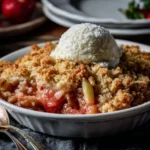
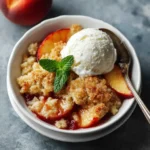
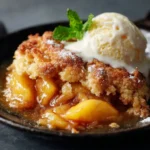
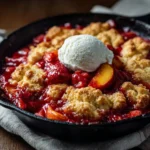
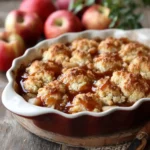
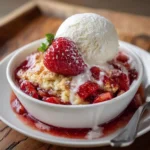
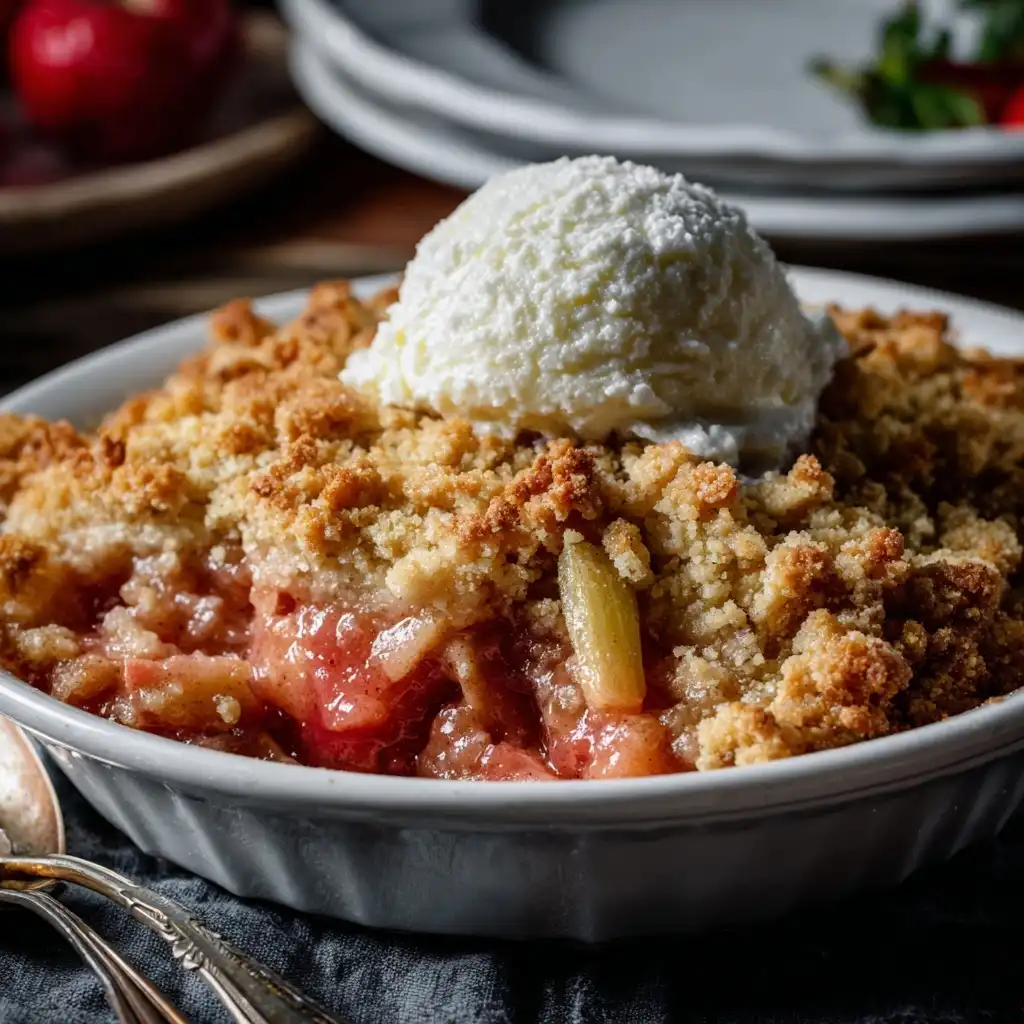
Rhubarb cobbler with crumb topping is a beloved classic dessert that captures the essence of rustic American baking—tart, sweet, comforting, and deeply nostalgic. With its vibrant pink stalks peeking through a golden, buttery crumb crust, this dessert strikes the perfect balance between bold acidity and rich, caramelized sweetness. It’s more than just a treat—it’s a seasonal celebration of spring’s earliest harvest, a canvas for creativity in the kitchen, and a warm invitation to gather around the table. Whether served piping hot from the oven with a scoop of vanilla ice cream melting into its juicy filling or enjoyed slightly cooled with a dollop of whipped cream, rhubarb cobbler embodies home, heritage, and heartfelt hospitality.
The History
The origins of rhubarb cobbler trace back to early 19th-century America, where resourceful settlers adapted British “crumble” and “pie” traditions using locally available, often underutilized ingredients. Rhubarb—though botanically a vegetable—was cultivated as a fruit substitute long before its culinary popularity surged. Native to Siberia and introduced to Europe in the 14th century via Arab traders, rhubarb arrived in North America by the late 1700s. By the 1820s, it was widely grown in New England gardens, prized for its ability to thrive in cool climates and its early spring emergence when few other fruits were available.
The term “cobbler” itself likely derives from the verb “to cobble”—meaning to assemble or patch together—reflecting the dessert’s humble, improvised construction: a stewed fruit base topped with biscuit-like dough, dropped “cobbled” pieces, or later, a streusel-style crumb topping. The crumb-topped variation gained traction in the early-to-mid 20th century, especially during the Great Depression and WWII, when ingredients like flour, sugar, and butter were rationed but stretchable and forgiving recipes—like crumb cobblers—offered maximum flavor and satisfaction per ingredient. Cookbooks from the 1930s–50s, including those by Irma Rombauer (*The Joy of Cooking*, 1931) and regional community cookbooks from Minnesota, Wisconsin, and the Pacific Northwest, frequently feature rhubarb cobblers, often with notes like “use last year’s brown sugar” or “add a splash of orange juice if you have it.” Today, the rhubarb cobbler with crumb topping remains a staple at church suppers, county fairs, and family reunions—especially across the Upper Midwest and Pacific Northwest—where rhubarb grows prolifically in backyard patches and heritage gardens.
Ingredients Breakdown
Every exceptional rhubarb cobbler begins with intentional, high-quality ingredients—and understanding their roles unlocks both consistency and creativity.
- Rhubarb: Fresh, firm, ruby-red to rosy-pink stalks are ideal. The color correlates strongly with anthocyanin content (natural antioxidants) and often—with proper ripeness—offers deeper, more complex tartness than pale green varieties. Avoid woody, fibrous, or excessively thick stalks; trim and discard all leaves (which contain toxic oxalic acid). Stalks should snap crisply when bent.
- Sugar: A combination of granulated and brown sugar is recommended. Granulated sugar ensures clarity and controlled sweetness in the filling, while brown sugar (light or dark) contributes moisture, molasses depth, and caramel notes that beautifully complement rhubarb’s sharpness. Some bakers even add a touch of turbinado or demerara for crunch and mineral nuance in the crumb.
- Thickener: Cornstarch is the gold standard for rhubarb fillings—neutral flavor, reliable clarity, and strong gelling power at high heat. Tapioca starch (instant or pearl) offers a glossier, more syrupy set and better freeze-thaw stability. Flour works in a pinch but can yield a cloudy, slightly pasty texture and requires longer bubbling to eliminate raw taste.
- Acid & Brightness: A small amount of lemon juice or zest not only enhances rhubarb’s natural tang but also stabilizes color (preventing dull grayish hues), balances sweetness, and brightens the entire profile. Orange juice or zest adds a subtle floral-citrus lift that pairs exquisitely with rhubarb’s earthy undertones.
- Crumb Topping Base: All-purpose flour provides structure; whole wheat or oat flour can be substituted partially (up to 25%) for nuttiness and fiber—but too much compromises tenderness. Cold unsalted butter is non-negotiable: its water content creates steam pockets for flakiness, while its fat coats flour particles to inhibit gluten formation and yield tender, melt-in-your-mouth crumbs.
- Crumb Enhancers: Old-fashioned rolled oats add chew and heartiness; chopped toasted nuts (pecans, walnuts, or almonds) contribute richness and textural contrast; coarse sugar (e.g., sanding sugar or turbinado) delivers sparkle and crunch; and a whisper of spice—cinnamon, cardamom, ginger, or even black pepper—can elevate complexity without overwhelming.
- Vanilla & Salt: Pure vanilla extract (not imitation) adds warmth and aromatic sophistication. Fine sea salt or kosher salt is essential—not just for seasoning, but to heighten sweetness perception, deepen flavor layers, and balance acidity at every stage.
Step-by-Step Recipe
- Prep & Preheat: Position oven rack in the lower third. Preheat oven to 375°F (190°C). Lightly grease a 9×13-inch metal or ceramic baking dish (or 10-inch cast-iron skillet for rustic charm). Have all ingredients measured and ready.
- Prepare the Rhubarb: Wash stalks thoroughly under cold water. Trim off both ends (discard leaves completely—never consume). Cut into uniform ½-inch to ¾-inch diagonal pieces—this ensures even cooking and prevents mushiness. Place in a large mixing bowl.
- Make the Filling: To the rhubarb, add ¾ cup granulated sugar, ⅓ cup packed light brown sugar, ¼ cup cornstarch, 1 tbsp fresh lemon juice, 1 tsp finely grated lemon zest, 1 tsp pure vanilla extract, and ¼ tsp fine sea salt. Gently fold with a silicone spatula until rhubarb is evenly coated. Let sit 10–15 minutes—this draws out juices and begins the maceration process, helping the thickener disperse fully.
- Transfer & Level: Pour the rhubarb mixture into the prepared baking dish. Use the spatula to spread evenly and smooth the surface. Set aside while preparing the crumb.
- Make the Crumb Topping: In a medium bowl, whisk together 1¼ cups all-purpose flour, ½ cup old-fashioned rolled oats, ½ cup packed light brown sugar, ¼ cup granulated sugar, 1½ tsp ground cinnamon, ¼ tsp ground ginger (optional), and ½ tsp fine sea salt. Add 10 tbsp (1¼ sticks) very cold unsalted butter, cut into ½-inch cubes. Using a pastry cutter, two forks, or your fingertips (work quickly to keep butter cold), cut or rub the butter into the dry ingredients until the mixture resembles coarse meal with some pea-sized clumps. For extra texture, stir in ½ cup coarsely chopped toasted pecans or walnuts and 2 tbsp turbinado sugar.
- Top Generously: Sprinkle the crumb mixture evenly over the rhubarb filling in a thick, rustic layer—no need to pat down. Aim for clumps ranging from fine crumbs to walnut-sized pieces for visual appeal and varied texture.
- Bake with Strategy: Place dish on a parchment- or foil-lined baking sheet (to catch any potential bubbling over). Bake for 45–55 minutes. At 30 minutes, check for doneness cues: filling should be visibly bubbling vigorously around the edges and thickened (a spoon dipped in should coat the back lightly); crumbs should be deep golden brown and fragrant. If top browns too quickly, loosely tent with aluminum foil.
- Cool & Set: Remove from oven and place on a wire rack. Resist cutting! Let cool for *at least 45 minutes*—ideally 1–2 hours. This critical resting time allows the filling to fully set, preventing a runny cobbler and letting flavors meld. The crumb will crisp further as it cools.
- Serve Thoughtfully: Scoop with a sturdy spoon or ice cream scoop. Serve warm or room temperature. Classic pairings include high-quality vanilla bean ice cream, freshly whipped cream (sweetened lightly with honey or maple syrup), or crème fraîche for tangy contrast.
Tips
- Selecting Rhubarb: Peak season is April–June. Look for firm, glossy, deeply colored stalks with no browning or limpness. Smaller-diameter stalks tend to be more tender and less fibrous.
- Don’t Skip the Maceration: Allowing the rhubarb to rest with sugar and cornstarch ensures even thickening and prevents a watery bottom layer.
- Cold Butter is Key: If your kitchen is warm, chill the cubed butter for 10 minutes before cutting in—or freeze for 5 minutes. Warm butter melts too quickly, yielding greasy, dense crumbs instead of tender, flaky ones.
- Texture Control: For chunkier crumbs, use a fork or fingers; for finer, more uniform crumbs, pulse briefly in a food processor (but stop before it becomes paste!).
- Oven Thermometer Recommended: Oven temperatures vary widely. An accurate oven thermometer ensures proper setting and browning—underbaking leads to soupiness; overbaking dries out the crumb.
- Even Baking Tip: Rotate the pan halfway through baking if your oven has hot spots—especially important for consistent crumb browning.
- Resting is Non-Negotiable: Cutting too soon releases trapped steam and liquefies the gelatinized filling. Patience yields sliceable, cohesive servings.
- Storage Wisdom: Store covered at room temperature for up to 2 days, or refrigerate for up to 5 days. Reheat individual portions gently in the microwave (20–30 sec) or oven (325°F for 10–15 min) to revive warmth and aroma.
- Freezing Success: Bake, cool completely, then wrap tightly in plastic + foil. Freeze up to 3 months. Thaw overnight in fridge, then reheat covered at 325°F until warmed through (25–35 min), uncovering last 5 minutes to crisp topping.
Variations and Customizations
This recipe is gloriously adaptable—whether accommodating dietary needs, celebrating seasonal abundance, or simply indulging curiosity.
- Strawberry-Rhubarb Fusion: Replace 1½ cups of rhubarb with 1½ cups hulled, quartered fresh strawberries (or frozen, thawed and drained). Reduce granulated sugar by 2 tbsp—their natural sweetness offsets rhubarb’s tartness beautifully. Add ½ tsp almond extract with the vanilla for an elegant nuance.
- Ginger-Spiced Cobbler: Add 1 tbsp finely grated fresh ginger (or 1½ tsp ground ginger) to the filling. Include ¼ tsp ground cardamom in the crumb. Garnish with candied ginger pieces before baking.
- Oatmeal-Crumb Upgrade: Substitute ½ cup of the all-purpose flour with certified gluten-free rolled oats (if needed) or increase oats to ¾ cup total for extra chew and rusticity. Toast oats first for enhanced nuttiness.
- Nut-Free & Allergen-Conscious: Omit nuts entirely. Boost texture with toasted sunflower or pumpkin seeds, or add 2 tbsp shredded unsweetened coconut to the crumb.
- Vegan Adaptation: Use cold vegan butter (e.g., Miyoko’s or Melt) and replace brown sugar with coconut sugar or organic cane sugar (verify vegan status). Ensure cornstarch is non-GMO and vegan-certified. For egg-free binding in richer versions, add 1 tsp ground flaxseed mixed with 2½ tsp water to the filling.
- Gluten-Free Version: Swap all-purpose flour for a 1:1 certified gluten-free blend (e.g., Bob’s Red Mill or King Arthur). Add ½ tsp xanthan gum if not included in blend. Use certified GF oats. Note: GF crumbs may be slightly more delicate—handle gently when sprinkling.
- Lemon-Rhubarb Zing: Double the lemon juice (2 tbsp) and zest (2 tsp), and add 1 tsp lemon verbena or lemongrass-infused simple syrup to the filling for extraordinary brightness.
- Maple-Brown Sugar Crumb: Replace brown sugar in crumb with ⅓ cup pure maple syrup (reduce granulated sugar by 1 tbsp) and add 1 tbsp maple sugar for crystalline crunch.
- Herbal Accent: Stir 1 tsp finely chopped fresh rosemary or lavender buds (culinary grade) into the crumb mixture for an unexpected, aromatic sophistication.
- Boozy Twist: Add 1 tbsp orange liqueur (Cointreau) or aged rum to the filling along with the vanilla. Soak dried cherries or cranberries in it first for extra dimension.
Health Considerations and Nutritional Value
While rhubarb cobbler is undeniably a dessert, its core ingredient offers notable nutritional benefits—making mindful preparation key to balancing indulgence and wellness.
Rhubarb Highlights: Low in calories (~26 kcal per ½ cup raw), rhubarb is rich in dietary fiber (1.8g per cup cooked), vitamin K (45% DV—essential for bone health and blood clotting), calcium (125mg/cup—unusual for a fruit-like vegetable), and antioxidants like lutein, zeaxanthin, and anthocyanins (linked to reduced inflammation and cardiovascular support). Its high oxalate content means those with kidney stone predisposition should moderate intake—but pairing with calcium-rich dairy (e.g., ice cream or yogurt) helps bind oxalates in the gut.
Nutritional Profile (per standard serving, approx. 1/9 of recipe):
Calories: ~320–360 kcal
Total Fat: 12–14g (mostly from butter—saturated fat ~7–8g)
Carbohydrates: 55–60g (Sugars: 32–36g, including natural fructose from rhubarb and added sugars)
Fiber: 3–4g (enhanced with oats or whole grain flour)
Protein: 3–4g
Vitamin K: ~35–40% DV
Calcium: ~8–10% DV
Potassium: ~300mg
Mindful Modifications:
- Reduce added sugar by ¼–⅓ cup total—rhubarb’s tartness shines through, and modern palates often prefer less sweetness.
- Increase fiber by adding 2 tbsp ground flax or chia seeds to the crumb, or substituting ¼ cup of flour with almond flour.
- Boost nutrients with 1–2 tbsp black sesame seeds or hemp hearts stirred into the crumb.
- Use grass-fed butter for higher CLA (conjugated linoleic acid) and omega-3s.
- Serve smaller portions (⅔ cup) alongside protein-rich accompaniments like Greek yogurt or cottage cheese to slow sugar absorption.
As with all desserts, enjoyment is part of holistic well-being—savoring slowly, sharing generously, and honoring seasonal, whole-food ingredients transforms rhubarb cobbler from mere treat to nourishing ritual.
Ingredients
Makes one 9×13-inch cobbler (9–12 servings)
For the Rhubarb Filling:
- 6 cups fresh rhubarb stalks (about 1 lb / 450g), trimmed and cut into ½-inch diagonal pieces
- ¾ cup granulated sugar
- ⅓ cup packed light brown sugar
- ¼ cup cornstarch (or 3 tbsp tapioca starch for glossier set)
- 1 tablespoon fresh lemon juice
- 1 teaspoon finely grated lemon zest
- 1 teaspoon pure vanilla extract
- ¼ teaspoon fine sea salt
For the Crumb Topping:
- 1¼ cups all-purpose flour (or GF 1:1 blend)
- ½ cup old-fashioned rolled oats (certified GF if needed)
- ½ cup packed light brown sugar
- ¼ cup granulated sugar
- 1½ teaspoons ground cinnamon
- ¼ teaspoon ground ginger (optional)
- ½ teaspoon fine sea salt
- 10 tablespoons (1¼ sticks / 140g) very cold unsalted butter, cut into ½-inch cubes
- ½ cup coarsely chopped toasted pecans or walnuts (optional but recommended)
- 2 tablespoons turbinado or sanding sugar (for sparkle and crunch)
Directions
- Preheat oven to 375°F (190°C). Lightly grease a 9×13-inch baking dish (or 10-inch cast-iron skillet).
- In a large bowl, combine rhubarb, granulated sugar, brown sugar, cornstarch, lemon juice, lemon zest, vanilla, and salt. Gently fold until evenly coated. Let stand 10–15 minutes.
- Pour rhubarb mixture into prepared dish and spread evenly.
- In a medium bowl, whisk together flour, oats, brown sugar, granulated sugar, cinnamon, ginger (if using), and salt. Add cold butter cubes. Using a pastry cutter or fingertips, work butter into dry ingredients until mixture resembles coarse crumbs with some pea-sized clumps. Stir in nuts and turbinado sugar.
- Sprinkle crumb mixture evenly over rhubarb in a generous, textured layer.
- Place dish on a parchment- or foil-lined baking sheet. Bake 45–55 minutes, until filling bubbles thickly at edges and crumbs are deep golden brown. Tent loosely with foil if topping browns too quickly.
- Remove from oven and cool on a wire rack for at least 45 minutes—preferably 1–2 hours—to allow filling to fully set.
- Serve warm or at room temperature, garnished with vanilla ice cream, whipped cream, or crème fraîche.
FAQ
- Can I use frozen rhubarb?
- Yes! Thaw completely in a colander, then press out excess liquid with paper towels—frozen rhubarb releases significantly more water. You may need to increase cornstarch by 1 tsp. No need to adjust sugar unless thawed rhubarb seems unusually tart.
- Why is my cobbler runny?
- Common causes: insufficient baking time (filling must bubble vigorously for 5+ minutes), under-measured thickener, using flour instead of cornstarch/tapioca, skipping the maceration step, or cutting into it before full cooling. Also ensure your oven is properly calibrated.
- Can I prepare this ahead of time?
- Absolutely. Assemble filling and crumb separately up to 1 day ahead; refrigerate filling (covered) and store crumb in an airtight container at room temp. Assemble and bake just before serving. Alternatively, bake fully, cool, and reheat as directed.
- What’s the best way to reheat leftovers?
- Individual portions: Microwave 20–30 seconds. Full dish: Cover with foil and bake at 325°F for 20–25 minutes, then uncover for 5 minutes to recrisp topping.
- Can I double the recipe?
- Yes—use two 9×13-inch dishes or a very large (12×17-inch) rimmed sheet pan. Increase baking time by 5–10 minutes and rotate pans halfway through.
- Is rhubarb leaf toxicity a real concern?
- Extremely real. Rhubarb leaves contain dangerously high levels of soluble oxalates and anthraquinone glycosides, which can cause kidney failure, respiratory distress, and even death. Never consume rhubarb leaves—even boiled or baked. Only stalks are safe and edible.
- How do I know when rhubarb is ripe and ready to pick?
- Rhubarb is ready when stalks are 10–15 inches long, firm, and vibrantly colored (red or pink). Harvest by gently pulling stalks downward and sideways from the base—don’t cut, to avoid crown damage. Never harvest more than ⅔ of a plant in one season to preserve root health.
- Can I make this dairy-free?
- Yes—substitute cold vegan butter (check melt point) and ensure all sugars and starches are dairy-free certified. Coconut oil is not recommended as sole fat—it lacks the water content needed for optimal crumb texture.
- What’s the difference between a cobbler, crisp, and crumble?
- Historically nuanced: “Cobbler” originally meant biscuit-dropped or pie-crust-topped fruit desserts; “Crisp” (U.S.) typically uses oats in the topping; “Crumble” (U.K.) refers specifically to a streusel-style topping without oats. Today, “rhubarb cobbler with crumb topping” reflects an American hybrid—celebrating tradition while embracing evolution.
- How long does it keep?
- At room temperature (covered): up to 2 days. Refrigerated (tightly covered): up to 5 days. Frozen (baked and cooled, wrapped airtight): up to 3 months. Thaw overnight in fridge before reheating.
Summary
Rhubarb cobbler with crumb topping is a timeless, versatile, and deeply satisfying spring dessert that harmonizes the vibrant tartness of fresh rhubarb with a rich, spiced, buttery crumb crust—baked to golden perfection and best enjoyed warm with creamy accompaniments.
Rooted in American ingenuity and seasonal abundance, it invites customization—from strawberry-fusion and ginger-spiked variations to vegan, gluten-free, and nutrient-boosted adaptations—making it as meaningful to bake today as it was to generations before us.