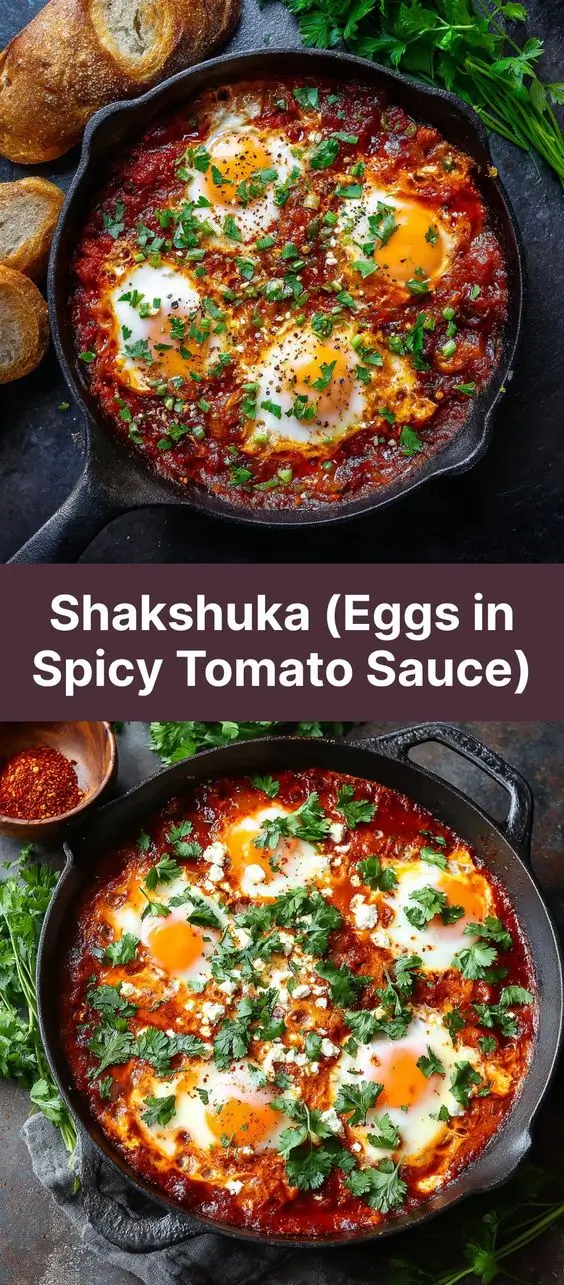
Shakshuka (Eggs in Spicy Tomato Sauce): A Flavorful Journey Through a Mediterranean Classic
The History of Shakshuka: A Dish Born from Tradition and Togetherness
Shakshuka, a vibrant and hearty dish featuring eggs poached in a rich, spiced tomato sauce, has roots that trace back to North Africa, particularly Tunisia. The name “shakshuka” is believed to derive from the Arabic word “š-šuška,” meaning “mixture” or “all mixed up,” which perfectly describes its rustic, harmonious blend of ingredients. Originally created as a humble peasant meal, it was designed to make the most of readily available vegetables, spices, and eggs—offering sustenance without extravagance.
Over time, shakshuka spread across the Middle East and became especially popular in Israel, where it evolved into a national favorite and is now commonly served for breakfast, brunch, or even dinner. Its adaptability allowed various cultures to put their own spin on the recipe—adding local herbs, different types of peppers, or unique spice blends. Today, shakshuka enjoys global acclaim, celebrated by food lovers and chefs alike for its bold flavors, ease of preparation, and plant-forward appeal. It stands as a testament to how simple ingredients, when combined with care and tradition, can create something truly extraordinary.
Ingredients Breakdown: What Makes Shakshuka So Irresistible?
The beauty of shakshuka lies in its simplicity and depth—all achieved through a few key components that work together to build layers of flavor. Each ingredient plays a vital role:
- Tomatoes: Ripe, juicy tomatoes form the base of the sauce. Canned whole peeled tomatoes are often preferred for consistency, especially off-season, as they offer a deeper, more concentrated flavor. San Marzano tomatoes are ideal due to their sweetness and low acidity.
- Onions: Yellow or white onions provide a sweet, aromatic foundation. When sautéed slowly, they caramelize slightly, adding richness to the sauce.
- Bell Peppers: Red bell peppers add natural sweetness and body. Some variations include green or yellow peppers for complexity. In traditional Tunisian versions, roasted peppers may be used for a smoky touch.
- Garlic: Fresh garlic brings pungency and warmth. It’s typically added after the onions and peppers have softened to prevent burning.
- Olive Oil: High-quality extra virgin olive oil is essential—not just for sautéing but also for finishing. It adds fruitiness and helps carry the fat-soluble flavors of spices.
- Spices: This is where shakshuka gets its soul. Common spices include:
- Paprika: Sweet or smoked paprika adds color and depth.
- Cumin: Earthy and warm, cumin is a cornerstone of North African cuisine.
- Chili Flakes or Cayenne Pepper: For heat. Adjust to taste.
- Optional additions: Coriander, turmeric, cinnamon, or harissa paste for extra complexity.
- Eggs: Large, fresh eggs are gently cracked into the simmering sauce and poached until the whites are set but the yolks remain runny—a luscious contrast to the robust sauce.
- Herbs: Fresh parsley or cilantro are typically sprinkled on top before serving for brightness. Sometimes fresh basil or dill is used depending on regional preferences.
- Salt and Black Pepper: Crucial for balancing and enhancing all other flavors.
- Lemon Juice (optional): A splash at the end can lift the entire dish, cutting through the richness.
Step-by-Step Recipe: How to Make Authentic and Delicious Shakshuka at Home
Making shakshuka is straightforward and requires only one pan—usually a large cast-iron skillet or heavy-bottomed pot. Follow these detailed steps for a foolproof, restaurant-quality result.
- Prepare Your Ingredients: Dice one medium onion and two red bell peppers. Mince 3–4 garlic cloves. Drain and roughly chop two 14-oz cans of whole peeled tomatoes (or use fresh, blanched, and peeled ripe tomatoes).
- Heat the Oil: In a large skillet over medium heat, add ¼ cup of extra virgin olive oil. Allow it to warm for about 30 seconds.
- Sauté the Onions and Peppers: Add the diced onions and bell peppers. Season lightly with salt. Cook, stirring occasionally, until softened—about 8–10 minutes. You want them tender and slightly caramelized, not browned.
- Add Garlic and Spices: Stir in the minced garlic, 1½ teaspoons ground cumin, 1½ teaspoons paprika (smoked if desired), and ½ teaspoon chili flakes (adjust to your heat preference). Cook for another 1–2 minutes until fragrant—be careful not to burn the garlic.
- Incorporate Tomatoes: Pour in the chopped tomatoes with their juices. Use a wooden spoon to break them down further. Increase heat to bring the mixture to a gentle boil.
- Simmer the Sauce: Reduce heat to low and let the sauce simmer uncovered for 20–25 minutes, stirring occasionally. The sauce should thicken and deepen in color. If it seems too watery, continue cooking; if too thick, add a splash of water or vegetable broth.
- Season Well: Taste and adjust seasoning with salt, black pepper, and additional spices if needed. For extra tang, stir in 1 tablespoon of lemon juice or red wine vinegar.
- Create Wells for Eggs: Once the sauce is rich and thickened, use a spoon to make small indentations or wells throughout the sauce—typically 4 to 6, depending on skillet size.
- Add the Eggs: Carefully crack one egg into each well. Try to space them evenly so they don’t run into each other.
- Cook the Eggs: Cover the skillet with a lid and cook over low to medium-low heat for 8–12 minutes, depending on how runny you like your yolks. Peek occasionally—the whites should be fully set, while the yolks remain soft and glossy.
- Finish with Freshness: Remove from heat. Sprinkle generously with chopped fresh parsley or cilantro. Drizzle with a little extra olive oil for shine and flavor.
- Serve Immediately: Place the skillet in the center of the table for a communal dining experience. Serve directly from the pan with crusty bread, pita, or couscous for soaking up every drop of sauce.
Tips for Perfect Shakshuka Every Time
- Use Quality Tomatoes: The sauce lives and dies by the tomatoes. Opt for high-quality canned tomatoes like San Marzano DOP when fresh ones aren’t in season.
- Don’t Rush the Sauté: Take your time softening the onions and peppers—they form the flavor base. Low and slow wins here.
- Balance the Heat: Start with less chili and add more later. You can always increase spice, but you can’t take it away.
- Adjust Thickness: If your sauce is too thin, keep simmering. Too thick? Add a splash of water, broth, or even a bit of tomato juice.
- Cover While Cooking Eggs: Trapping steam helps cook the eggs evenly without drying out the sauce.
- Avoid Overcooking Eggs: Keep an eye on them. For the classic shakshuka experience, yolks should be jammy and luscious.
- Cast Iron is Ideal: It distributes heat evenly and retains warmth—perfect for bringing the dish straight to the table.
- Rest Before Serving: Let the dish sit for 2–3 minutes after removing from heat. This allows flavors to meld and makes serving safer.
Variations and Customizations: Make Shakshuka Your Own
One of the greatest strengths of shakshuka is its versatility. Here are some creative and delicious ways to personalize your dish:
- Green Shakshuka: Replace tomatoes with blended tomatillos, green chilies, and fresh herbs like cilantro and scallions for a tangy, herbal twist.
- Spicier Version: Add harissa paste (1–2 tablespoons), fresh jalapeños, or a dash of hot sauce for intense heat.
- Creamy Twist: Stir in crumbled feta cheese, goat cheese, or labneh before adding eggs—or sprinkle on top at the end for a salty, creamy contrast.
- Vegetable Add-Ins: Enhance nutrition and texture with zucchini, eggplant, spinach, mushrooms, or roasted sweet potatoes.
- Meat Lovers’ Version: Brown ground lamb, spicy merguez sausage, or chorizo before adding onions for a heartier, meaty shakshuka.
- Smoky Flavor: Use fire-roasted canned tomatoes or add a pinch of smoked paprika or liquid smoke for a barbecue-like depth.
- Dairy-Free & Vegan Option: Skip the eggs and add chickpeas or tofu cubes instead. Simmer until heated through. Top with avocado for creaminess.
- Breakfast Boost: Mix in cooked potatoes or hash browns for a full breakfast skillet feel.
- International Twists:
- Greek Style: Add oregano, Kalamata olives, and feta.
- Middle Eastern: Include turmeric, coriander, and a drizzle of tahini.
- Mediterranean Herb: Stir in fresh basil, marjoram, or mint.
Health Considerations and Nutritional Value
Shakshuka isn’t just delicious—it’s also packed with nutrients, making it a wholesome choice for any meal of the day.
Nutritional Highlights:
- Rich in Antioxidants: Tomatoes are high in lycopene, a powerful antioxidant linked to reduced risk of heart disease and certain cancers. Cooking tomatoes actually increases lycopene bioavailability.
- Good Source of Protein: Eggs provide high-quality, complete protein with all essential amino acids, helping to keep you full and support muscle health.
- Healthy Fats: Olive oil delivers monounsaturated fats, known to support heart health and reduce inflammation.
- Fiber-Rich: Bell peppers, onions, and tomatoes contribute dietary fiber, promoting digestive health and stable blood sugar.
- Vitamins and Minerals: Abundant in vitamin C (from peppers and tomatoes), vitamin A (from tomatoes and paprika), B vitamins (from eggs), iron, and potassium.
- Low Carb-Friendly: Naturally low in carbohydrates, especially when served without bread—ideal for keto or low-carb diets (just monitor tomato quantity).
Considerations:
- Sodium Content: Canned tomatoes and added salt can increase sodium. Use low-sodium canned tomatoes and control added salt to manage intake, especially for those with hypertension.
- Cholesterol: Eggs contain dietary cholesterol, but current research suggests moderate egg consumption (up to one per day) does not significantly impact heart disease risk for most people.
- Spice Sensitivity: The chili content may irritate individuals with acid reflux or sensitive stomachs. Reduce or omit chili flakes as needed.
- Allergies: Contains eggs—obviously not suitable for egg allergies. Always check labels on canned goods for potential allergens or additives.
Overall, shakshuka is a balanced, nutrient-dense dish that aligns well with Mediterranean diet principles—emphasizing vegetables, healthy fats, and lean protein.
Ingredients
- ¼ cup extra virgin olive oil
- 1 large yellow onion, diced
- 2 red bell peppers, diced
- 4 garlic cloves, minced
- 2 (14 oz) cans whole peeled tomatoes (preferably San Marzano), with juices
- 1½ tsp ground cumin
- 1½ tsp paprika (sweet or smoked)
- ½ tsp chili flakes (adjust to taste)
- Salt and freshly ground black pepper, to taste
- 1 tbsp lemon juice or red wine vinegar (optional)
- 6 large eggs
- Fresh parsley or cilantro, chopped (for garnish)
- Crusty bread, pita, or couscous (for serving)
- Optional: crumbled feta cheese, harissa paste, or sliced avocado
Directions
- Heat olive oil in a large cast-iron skillet or heavy-bottomed pan over medium heat.
- Add diced onions and bell peppers. Season with a pinch of salt and cook for 8–10 minutes, stirring occasionally, until soft and translucent.
- Stir in minced garlic, cumin, paprika, and chili flakes. Cook for 1 minute until fragrant.
- Pour in the canned tomatoes with their juices. Break them apart with a wooden spoon. Bring to a gentle boil.
- Reduce heat to low and simmer uncovered for 20–25 minutes, stirring occasionally, until sauce thickens and deepens in color.
- Season with salt, pepper, and lemon juice. Taste and adjust spices as needed.
- Use the back of a spoon to create 6 small wells in the sauce.
- Crack one egg into each well carefully.
- Cover the skillet with a lid and cook for 8–12 minutes, until egg whites are set but yolks are still runny.
- Remove from heat. Garnish with chopped parsley or cilantro and a drizzle of olive oil.
- Serve hot, directly from the pan, with crusty bread or your choice of side.
FAQ
Can I make shakshuka ahead of time?
Yes! You can prepare the tomato sauce up to 3 days in advance and store it in the refrigerator. Reheat it gently on the stove before adding the eggs. However, the eggs are best cooked fresh just before serving.
Can I freeze shakshuka?
The tomato sauce freezes very well for up to 3 months. However, do not freeze the dish with eggs already cooked in, as the texture will become rubbery upon thawing. Freeze only the sauce, then reheat and add fresh eggs when ready to serve.
What can I serve with shakshuka?
Classic pairings include warm pita bread, challah, crusty sourdough, couscous, quinoa, or bulgur. A side salad with cucumber, tomato, and lemon dressing complements it beautifully.
Is shakshuka gluten-free?
Yes, the dish itself is naturally gluten-free. Just ensure that any accompaniments like bread or broth are certified gluten-free if needed.
Can I use other vegetables?
Absolutely! Eggplant, zucchini, mushrooms, spinach, or kale can be added during the sauté stage. Pre-cook denser veggies like eggplant to avoid excess moisture.
How do I reheat leftover shakshuka?
Reheat gently on the stovetop over low heat to avoid overcooking the eggs. Add a splash of water if the sauce has thickened too much.
Why are my eggs overcooked?
Too-high heat or leaving the lid on too long can overcook the eggs. Use low heat and check frequently after 8 minutes. Remove from heat just before the yolks reach your desired doneness, as residual heat will continue cooking them.
Can I bake shakshuka in the oven?
Yes! After adding the eggs, transfer the skillet to a preheated 375°F (190°C) oven and bake for 10–15 minutes until eggs are set. This method offers even cooking and is great for larger batches.
Summary
Shakshuka is a vibrant, aromatic dish of eggs poached in a spicy tomato and pepper sauce, rooted in North African tradition and beloved across the globe for its bold flavors and simplicity.
Wholesome, nutritious, and endlessly customizable, it’s a perfect meal for any time of day—celebrating fresh ingredients, rich spices, and the joy of sharing food from one pan.