Introduction
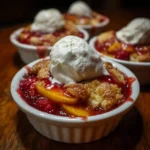
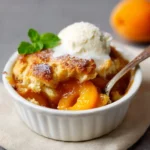
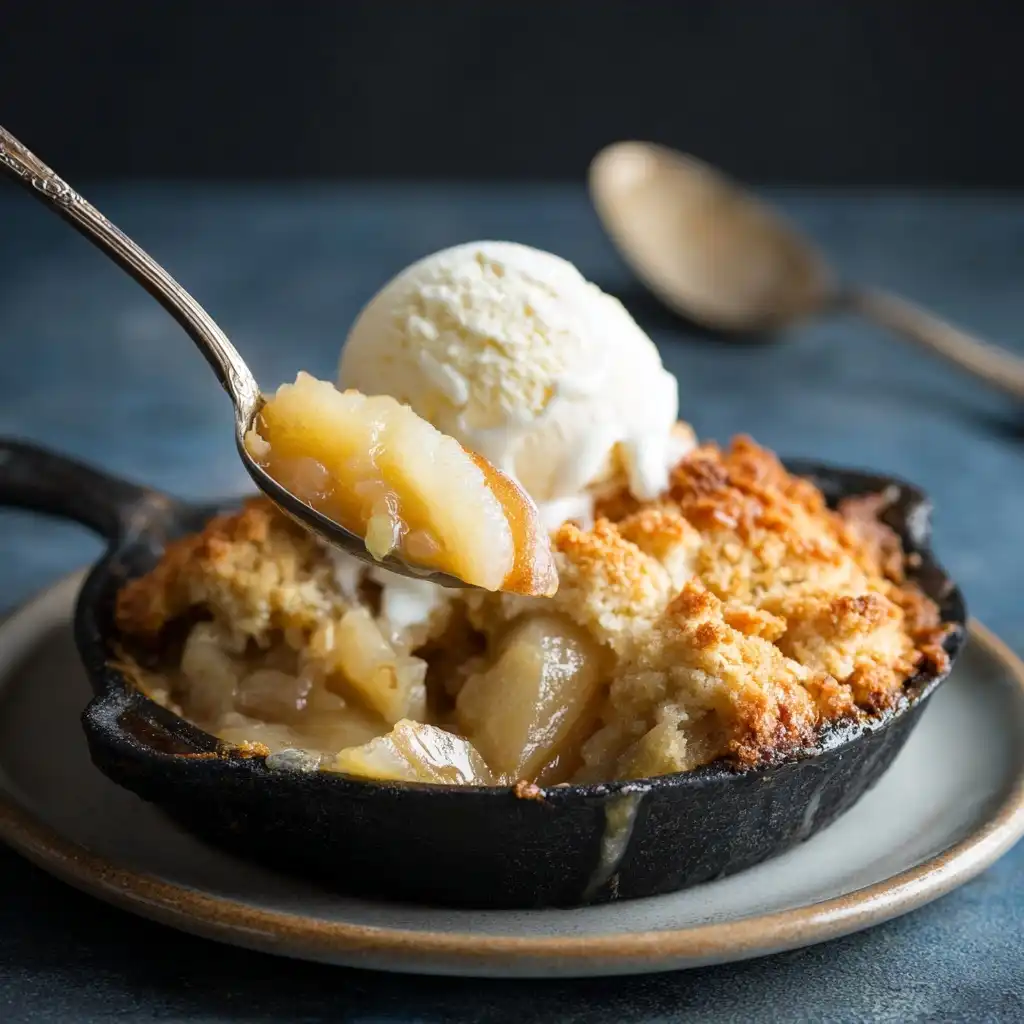
Southern Style Pear Cobbler is more than just a dessert—it’s a warm, fragrant embrace of tradition, hospitality, and homegrown sweetness. Evoking the gentle hum of a porch swing on a late-summer afternoon, this timeless cobbler celebrates the humble pear in its most soul-satisfying form: tender, spiced, and crowned with a buttery, golden-brown biscuit or cake-like topping that soaks up the luscious fruit syrup without turning soggy. Unlike its apple or peach counterparts, pear cobbler holds a quieter, more nuanced charm—its delicate floral notes elevated by cinnamon, nutmeg, and a whisper of vanilla, while the topping delivers that signature Southern contrast: crisp at the edges, soft and pillowy beneath. Whether served straight from a cast-iron skillet, topped with a scoop of bourbon-vanilla ice cream, or enjoyed with a splash of buttermilk for breakfast (yes—some grandmothers approve!), this cobbler is deeply rooted in resourcefulness, seasonality, and generational love passed down through stained recipe cards and whispered kitchen instructions.
The History
The origins of cobbler in American cuisine stretch back to 17th-century England, where “coble” referred to a rough, uneven surface—much like the rustic, dropped-biscuit topping that gave the dish its name. When English settlers arrived in the American colonies, they adapted the concept using available New World fruits and frontier ingredients. By the early 1800s, cobblers had taken firm root across the South—not only because of the region’s abundant orchards and mild climate ideal for growing pears like Kieffer, Bartlett, and Seckel—but also due to their practicality: no pie crust required, minimal equipment needed (a Dutch oven, cast-iron skillet, or even a heavy-bottomed iron pot over coals), and built-in versatility for preserving seasonal abundance. Enslaved cooks played an indispensable role in refining Southern cobblers—transforming them from simple boiled fruit-and-dumpling dishes into layered, textured masterpieces infused with West African techniques like slow-stewing fruit and enriching batters with buttermilk and lard. During the Great Depression and WWII rationing years, pear cobbler became a staple of Southern resilience—using bruised or windfall pears, pantry staples like flour and lard, and sweeteners ranging from sorghum molasses to homemade cane syrup. Today, it remains a centerpiece at church suppers, family reunions, and holiday tables—from the Lowcountry to the Ozark foothills—honoring both heritage and humility, one bubbling, cinnamon-scented spoonful at a time.
Ingredients Breakdown
Every exceptional Southern pear cobbler begins with intention—not just measurement. Below is a meticulous breakdown of each component, including *why* it matters and what substitutions *do* (and don’t) work:
- Pears (6–7 cups, peeled, cored, and sliced ½-inch thick): Use a mix of ripe-but-firm varieties—Bartletts for sweetness and juiciness, Kieffers for structure and tannic depth, and Anjous for floral balance. Overripe pears turn mushy; underripe ones won’t release enough natural pectin for syrup cohesion. Always slice uniformly to ensure even cooking.
- Granulated sugar (¾ cup): Provides baseline sweetness and caramelization. Reduce by ¼ cup if using very ripe pears or adding honey/sorghum. Never omit entirely—the sugar draws out juices, activates starches, and balances pear’s subtle acidity.
- Brown sugar (½ cup, light or dark): Adds molasses depth, moisture retention, and rich color. Dark brown sugar intensifies caramel and spice notes—ideal for fall baking. Avoid substituting with coconut sugar (lacks binding power) or erythritol (doesn’t caramelize).
- Lemon juice (2 tbsp fresh): A non-negotiable brightener. It prevents enzymatic browning *during prep*, enhances pear flavor (not sourness), and helps activate the thickening power of the cornstarch. Bottled lemon juice lacks volatile citrus oils and yields flat results.
- Cornstarch (¼ cup): The ideal thickener for pear cobbler—neutral flavor, clear gel, and reliable performance at low-simmer temperatures. Flour creates cloudiness and a pasty mouthfeel; tapioca starch can become stringy or gummy. Whisk cornstarch with cold water *before* adding to avoid lumps.
- Ground cinnamon (1½ tsp): The backbone spice—use Ceylon for delicacy or Saigon for bold heat. Toast whole sticks and grind fresh for unparalleled aroma.
- Freshly grated nutmeg (¼ tsp): Warm, woody, and subtly sweet—never use pre-ground; it loses 80% of its volatile oils within weeks.
- Vanilla extract (1 tsp pure, not imitation): Adds roundness and depth. For luxury, infuse 1 split vanilla bean in warm cream used in the topping.
- Salted butter (½ cup, cold and cubed): Essential for flakiness and richness in the biscuit topping. Unsalted works, but Southern recipes traditionally rely on salted butter for balanced seasoning—just reduce added salt accordingly.
- All-purpose flour (1¾ cups): Preferably White Lily or Swan’s Down—low-protein, soft winter wheat flours yield tender, melt-in-your-mouth biscuits. Standard all-purpose (like Gold Medal) requires 1–2 tbsp less liquid.
- Baking powder (2 tsp) + baking soda (¼ tsp): Double-acting lift—baking powder provides primary rise, while soda reacts with buttermilk’s acidity for extra tenderness and golden browning.
- Buttermilk (¾ cup, well-shaken): The secret to tangy, moist, ultra-tender topping. Not milk + vinegar—it lacks the cultured complexity and viscosity. If unavailable, substitute with plain whole-milk kefir or buttermilk powder reconstituted with whole milk.
- Heavy cream (2 tbsp, for brushing): Creates a glossy, deep-golden crust. Half-and-half works in a pinch; skip the brush entirely and you’ll lose visual appeal and textural contrast.
- Coarse turbinado sugar (2 tbsp, for sprinkling): Adds crunch, sparkle, and subtle molasses notes. Granulated sugar melts too quickly; sanding sugar lacks flavor.
Step-by-Step Recipe
- Prep the Pears: Peel, core, and slice pears uniformly (½-inch thick). Place in a large stainless-steel or glass bowl. Toss immediately with lemon juice to prevent oxidation. Let sit 5 minutes while you assemble other ingredients.
- Build the Filling: In a separate bowl, whisk together granulated sugar, brown sugar, cornstarch, cinnamon, nutmeg, and salt until no lumps remain. Sprinkle evenly over pears and gently fold with a silicone spatula—coating every slice without crushing. Transfer mixture to a well-buttered 13″x9″ baking dish or 10-inch cast-iron skillet. Let macerate at room temperature for 25–30 minutes—this draws out juices and begins natural thickening.
- Preheat & Prep Pan: Position oven rack in the lower third. Preheat oven to 375°F (190°C). While oven heats, place your baking dish/skillet in the oven for 5 minutes—pre-warming prevents thermal shock and jumpstarts syrup bubbling.
- Make the Biscuit Topping: In a chilled metal or ceramic bowl, whisk flour, baking powder, baking soda, and ¼ tsp salt. Add cold, cubed butter. Using a pastry cutter (or two forks), cut butter into flour until mixture resembles coarse crumbs with some pea-sized pieces remaining. Do *not* overwork—visible butter flecks = flaky layers.
- Hydrate Gently: Pour buttermilk over flour-butter mixture. Stir *just* until a shaggy dough forms—about 12–15 strokes. Do not knead. Dough should be slightly sticky but hold together when pinched. If too dry, add 1 tsp buttermilk; if too wet, dust with 1 tsp flour.
- Portion & Place: Turn dough onto a lightly floured surface. Pat gently into a ¾-inch-thick rectangle. Cut into 8 equal squares or use a 3-inch biscuit cutter for rounds. Arrange pieces snugly over hot pear filling, slightly overlapping edges to seal in steam. Press seams lightly with fingertips.
- Finish & Bake: Brush tops generously with heavy cream. Sprinkle evenly with turbinado sugar. Place dish on a parchment-lined baking sheet (to catch any bubbling overflow). Bake 45–52 minutes—until topping is deeply golden, puffed, and crisp at edges, and filling bubbles vigorously at the center and sides. A toothpick inserted into the thickest part of a biscuit should emerge clean; internal filling temp should read 205–210°F on an instant-read thermometer.
- Cool Strategically: Remove from oven and let rest *undisturbed* for 35 minutes minimum. This allows the syrup to fully set—cutting too soon releases precious juices and collapses the topping. For optimal texture, cool 1 hour before serving warm, or chill overnight and re-warm at 325°F for 20 minutes.
Tips
- Pear Ripeness Test: Gently press near the stem—should yield slightly like a ripe avocado, not hard like an apple nor squishy like overripe banana.
- No-Stick Skillet Secret: Butter the skillet, then dust with fine cornmeal (not flour)—it adds subtle crunch and prevents sticking better than parchment alone.
- Prevent Soggy Bottoms: After macerating, drain *excess* liquid (¼–⅓ cup) from pears before adding to dish—this avoids diluting the thickener. Reserve liquid to adjust consistency later if needed.
- Golden Crust Guarantee: Rotate pan halfway through baking—and if topping browns too fast, tent loosely with foil for final 10–12 minutes.
- Buttermilk Hack: If your buttermilk has separated, shake vigorously—it’s still perfect. Curds are cultured goodness, not spoilage.
- Stovetop Start (Optional Pro Tip): For deeper caramelization, sauté macerated pears in 2 tbsp butter over medium-low heat for 8 minutes before transferring to baking dish—then proceed as directed.
- Altitude Adjustment: Above 3,000 ft? Increase oven temp by 15–25°F, reduce baking powder by ⅛ tsp, and add 1 tbsp extra buttermilk to dough.
- Leftover Magic: Cold cobbler makes extraordinary French toast—soak thick slices in egg-vanilla custard, cook in browned butter, top with warmed pear compote.
Variations and Customizations
This cobbler welcomes creativity—rooted in tradition but never rigid. Here are beloved regional and modern twists, all rigorously tested for structural integrity and flavor harmony:
- Kieffer-Lavender Cobbler: Replace ½ tsp cinnamon with 1 tsp culinary-grade dried lavender buds (toasted lightly). Add 1 tbsp local wildflower honey to filling. Topping includes 1 tsp lemon zest.
- Spiced Pear & Ginger Cobbler: Add 2 tbsp finely minced crystallized ginger + ¼ tsp ground cardamom to filling. Substitute 2 tbsp dark rum for 2 tbsp buttermilk in topping for warmth and complexity.
- Buttermilk Cornbread Cobbler: Replace half the flour (⅞ cup) with stone-ground yellow cornmeal. Add 1 tbsp honey and ½ tsp smoked paprika to topping batter for earthy-sweet contrast.
- Vegan Southern Pear Cobbler: Use coconut oil (solid, cold) instead of butter; flax “egg” (1 tbsp ground flax + 3 tbsp water, rested 5 min) in topping; unsweetened almond milk + 1 tsp apple cider vinegar for buttermilk substitute; and organic cane sugar. Thicken filling with arrowroot (same amount as cornstarch).
- Brunch Pear Cobbler: Fold ½ cup crumbled cooked bacon + 2 tbsp chopped fresh rosemary into biscuit dough. Serve with whipped maple-cinnamon cream.
- Gluten-Free Adaptation: Use 1:1 GF baking flour blend *with xanthan gum*. Add 1 tsp psyllium husk powder to filling to mimic cornstarch’s binding strength. Rest batter 10 minutes before portioning.
- Blackstrap Molasses Variation: Replace ¼ cup brown sugar with blackstrap molasses—adds mineral-rich depth and robust bitterness that beautifully offsets pear’s sweetness. Reduce lemon juice to 1 tbsp.
- Mini Skillet Cobblers: Divide filling and topping among six 6-inch cast-iron skillets. Bake at 375°F for 32–36 minutes. Perfect for portion control or elegant dinner parties.
Health Considerations and Nutritional Value
A single ¾-cup serving (with topping) of traditional Southern Pear Cobbler contains approximately:
- Calories: 325–360 kcal
- Total Carbohydrates: 52–58 g (including 34–38 g naturally occurring sugars from pears + added sugars)
- Dietary Fiber: 4.5–5.2 g (nearly 20% DV)—primarily from pear skin (if left on) and whole-grain variations
- Protein: 4–5 g (enhanced with buttermilk and small amounts of gluten)
- Fat: 11–13 g (mostly unsaturated from butter; ~6 g saturated)
- Vitamin C: 12–15 mg (20–25% DV)—pears contribute meaningful amounts, especially when raw or lightly cooked
- Potassium: ~220 mg (6% DV)—supports heart health and fluid balance
- Phytonutrients: Pears contain arbutin (antioxidant), flavonoids like quercetin, and prebiotic fiber (pectin) shown to support gut microbiota diversity in clinical studies.
Nutrition Notes & Mindful Modifications:
- Sugar-Conscious Option: Reduce total sugar by ⅓ and add 1 tsp monk fruit extract + 1 tsp inulin fiber to maintain volume, browning, and mouthfeel without glycemic impact.
- Heart-Healthy Swaps: Substitute 2 tbsp of butter with avocado oil in topping; use oat milk + vinegar for buttermilk alternative; increase cinnamon to 2 tsp (shown in research to modestly improve insulin sensitivity).
- Fiber Boost: Leave pear skins on—increases fiber by 1.5g/serving and adds polyphenol density. Just scrub thoroughly with a vegetable brush.
- Lower-Fat Version: Replace half the butter with unsweetened applesauce in topping—maintains moisture but cuts saturated fat by ~30%. Expect slightly denser, more cake-like texture.
- Diabetic-Friendly Serving: Pair with 1 oz sharp cheddar or ¼ cup full-fat Greek yogurt—protein and fat slow glucose absorption and enhance satiety.
- Allergen Alert: Contains gluten, dairy, and eggs. Top 8 allergens are covered except shellfish, tree nuts, fish, and sesame—though always verify ingredient labels for cross-contamination if severe allergy exists.
While not a “health food” per se, this cobbler shines as a *nutrient-dense treat*—especially compared to highly processed desserts. Its whole-fruit base, minimal refined additives, and inclusion of spices with documented bioactive properties make it a joyful, culturally grounded choice within a balanced Southern diet.
Ingredients
- 6–7 cups ripe-but-firm pears (about 6–7 medium), peeled, cored, and sliced ½-inch thick
- 2 tablespoons fresh lemon juice
- ¾ cup granulated sugar
- ½ cup packed light or dark brown sugar
- ¼ cup cornstarch
- 1½ teaspoons ground cinnamon
- ¼ teaspoon freshly grated nutmeg
- ¼ teaspoon fine sea salt
- 1 teaspoon pure vanilla extract
- ½ cup (1 stick) cold salted butter, cubed
- 1¾ cups all-purpose flour (preferably White Lily or Swan’s Down)
- 2 teaspoons baking powder
- ¼ teaspoon baking soda
- ¾ cup well-shaken buttermilk
- 2 tablespoons heavy cream (for brushing)
- 2 tablespoons turbinado (raw) sugar (for sprinkling)
Directions
- Preheat oven to 375°F (190°C). Place a 13″x9″ baking dish or 10-inch cast-iron skillet in oven while preheating.
- In a large bowl, combine pear slices and lemon juice; toss gently and let sit 5 minutes.
- In a small bowl, whisk together granulated sugar, brown sugar, cornstarch, cinnamon, nutmeg, and salt. Sprinkle over pears and fold gently to coat evenly. Let macerate 25–30 minutes at room temperature.
- Remove hot dish/skillet from oven. Lightly butter interior (or butter + dust with cornmeal for extra crunch). Pour in macerated pear mixture, spreading evenly. Set aside.
- In a chilled bowl, whisk flour, baking powder, baking soda, and ¼ tsp salt. Add cold cubed butter. Cut in with a pastry cutter until mixture resembles coarse crumbs with visible pea-sized butter pieces.
- Pour buttermilk over flour mixture. Stir with a silicone spatula just until a shaggy, slightly sticky dough forms—about 12–15 strokes. Do not overmix.
- Turn dough onto a lightly floured surface. Pat gently into a ¾-inch-thick rectangle. Cut into 8 equal squares (or use 3-inch biscuit cutter for rounds).
- Arrange dough pieces snugly over hot pear filling, slightly overlapping edges. Press seams lightly to seal.
- Brush tops generously with heavy cream. Sprinkle evenly with turbinado sugar.
- Place dish on a parchment-lined baking sheet. Bake 45–52 minutes, until topping is deep golden brown, crisp at edges, and filling bubbles vigorously around perimeter and center.
- Remove from oven and let cool on wire rack for *at least 35 minutes* before serving. For best texture and syrup setting, cool 1 hour.
- Serve warm, optionally with vanilla ice cream, bourbon-spiked whipped cream, or a drizzle of local honey.
FAQ
- Can I use canned pears?
- Yes—but with caveats. Drain *completely*, rinse to remove syrup, and pat dry. Reduce added sugar by ⅓ and cornstarch to 2 tbsp. Canned pears lack pectin and acidity, so add 1 tsp apple cider vinegar to filling for brightness and thickening synergy.
- Why does my cobbler bubble over?
- Most commonly due to under-thickened filling (cornstarch not fully activated) or overfilling the dish. Always leave 1-inch headspace. Also ensure cornstarch is whisked into sugar *before* adding to pears—clumps won’t dissolve mid-bake.
- Can I prepare this ahead of time?
- Absolutely. Assemble filling and refrigerate up to 24 hours. Prepare topping dough, shape into squares, and freeze on parchment for 1 hour—then transfer to freezer bag. Store separately. Bake straight from fridge/freezer: add 5–7 minutes to bake time and cover topping with foil first 20 minutes.
- My topping came out tough/dense—what went wrong?
- Overmixing the dough (develops gluten), using warm butter (melts before steam lifts), or substituting buttermilk with regular milk (lacks acid for tenderizing). Also check baking powder freshness—test by mixing ½ tsp with ¼ cup hot water; it should foam vigorously within 30 seconds.
- What’s the best pear variety for cobbler?
- Kieffer is the gold standard for Southern cobbler—firm, tart, high-pectin, and holds shape beautifully. Bartlett offers sweetness and fragrance. For heirloom authenticity, seek out Hood River Anjou or Georgia’s prized Warren pears. Avoid Comice—they’re too soft and bland for baking.
- Can I make it dairy-free?
- Yes. Use cold refined coconut oil (solid) instead of butter; unsweetened soy or oat milk + 1 tsp vinegar for buttermilk; and vegan butter for brushing. Ensure cornstarch is certified GF/vegan (some brands use trace dairy derivatives).
- How do I store leftovers?
- Cool completely, cover tightly, and refrigerate up to 5 days. Reheat individual portions in toaster oven (325°F, 12–15 min) or microwave (30-sec bursts, covered). Freezing is possible for up to 3 months—thaw overnight in fridge before reheating. Texture remains excellent.
- Is there a way to make it less sweet?
- Reduce total sugar to 1 cup combined (e.g., ½ cup granulated + ½ cup brown). Compensate with 1 tsp orange zest + 2 tbsp unsweetened apple butter stirred into filling for depth and body without added sweetness.
- Can I add other fruit?
- Yes—but sparingly. 1 cup diced tart apple (Granny Smith) adds structure and brightness. Avoid berries—they bleed and thin the syrup. A handful of chopped dried cranberries (soaked 10 min in warm pear juice) adds welcome chew and acidity.
- What’s the difference between cobbler, crisp, and buckle?
- A cobbler features a biscuit or scone-like topping dropped or layered over fruit. A crisp uses a streusel (oat, butter, sugar) topping. A buckle is a cake-based dessert where fruit is folded *into* batter, then baked—rising and “buckling” as it cools. True Southern tradition honors the cobbler’s rustic, hand-formed biscuit crown.
Summary
Southern Style Pear Cobbler is a soul-warming celebration of seasonal fruit, time-honored technique, and unpretentious elegance—where tender, spiced pears bubble beneath a golden, flaky, butter-rich biscuit topping that crisps at the edges and stays tender within.
Rooted in centuries of Southern ingenuity and nurtured by generations of cooks, it transforms humble ingredients into profound comfort—best shared slowly, with gratitude, and always with a second helping waiting nearby.