Spaghetti Squash with Garlic & Herb Sauce: A Flavorful, Healthy Comfort Meal
The History of Spaghetti Squash and Its Rise in Modern Cuisine
Though not as ancient as traditional pasta or wheat-based noodles, spaghetti squash has a surprisingly rich history rooted in North American agriculture. Native to Mexico and Central America, the Cucurbita pepo species—which includes spaghetti squash—has been cultivated for thousands of years by Indigenous peoples. However, it wasn’t until the 20th century that spaghetti squash gained popularity in the United States, particularly during the mid-1900s. It began appearing more frequently in American gardens and markets, but its true rise came with the health food movement of the late 20th and early 21st centuries.
As low-carb, gluten-free, and plant-based diets surged in popularity—fueled by growing awareness of nutrition and chronic disease prevention—spaghetti squash emerged as a superstar alternative to traditional pasta. Dubbed “nature’s pasta” due to its unique flesh that separates into long, noodle-like strands when cooked, it became a staple in kitchens worldwide. The garlic and herb sauce pairing, inspired by classic Mediterranean flavors, complements the mild taste of the squash perfectly, making this dish a modern favorite among health-conscious eaters and food lovers alike.
Ingredients Breakdown: What Makes This Dish Shine
The beauty of spaghetti squash with garlic and herb sauce lies in its simplicity and nutrient-dense components. Each ingredient plays a vital role in creating a balanced, aromatic, and satisfying meal.
- Spaghetti Squash: The star of the dish. Low in calories, high in fiber, and rich in vitamins A and C, this winter squash provides a neutral base that absorbs flavors beautifully.
- Extra Virgin Olive Oil: Used both for roasting and in the sauce, it adds heart-healthy monounsaturated fats and a smooth, rich mouthfeel.
- Garlic: Freshly minced garlic delivers pungent, savory depth. When sautéed gently, it becomes sweet and aromatic without bitterness.
- Fresh Herbs: Typically parsley, basil, oregano, and thyme. These contribute bright, herbal notes and are packed with antioxidants and anti-inflammatory compounds.
- Shallots or Yellow Onion: Adds sweetness and complexity to the sauce base.
- Lemon Juice: A splash enhances freshness and balances the richness of the oil and roasted squash.
- Salt and Black Pepper: Essential seasonings that elevate all other flavors.
- Optional Add-ins: Nutritional yeast (for a cheesy, umami flavor), red pepper flakes (for heat), cherry tomatoes, spinach, mushrooms, or grilled chicken for added protein.
Step-by-Step Recipe: Crafting the Perfect Bowl
- Preheat the Oven: Set your oven to 400°F (200°C). Line a large baking sheet with parchment paper or lightly grease it with olive oil.
- Prepare the Spaghetti Squash: Carefully cut the squash in half lengthwise using a sharp chef’s knife. Use a sturdy cutting board and twist the knife gently if needed. Scoop out the seeds and stringy pulp with a spoon—save the seeds for roasting if desired!
- Season and Roast: Drizzle the cut sides with olive oil, then sprinkle with salt and pepper. Place the halves face-down on the baking sheet to allow steam to escape and the flesh to roast evenly. Bake for 35–45 minutes, depending on size, until tender when pierced with a fork.
- Prepare the Garlic & Herb Sauce: While the squash roasts, heat 3 tablespoons of olive oil in a skillet over medium-low heat. Add finely chopped shallot or onion and sauté for 3–4 minutes until translucent. Add minced garlic and cook for another 1–2 minutes, stirring constantly to prevent burning. Remove from heat and stir in chopped fresh herbs (parsley, basil, oregano), lemon juice, salt, and pepper. Optional: add red pepper flakes or nutritional yeast at this stage.
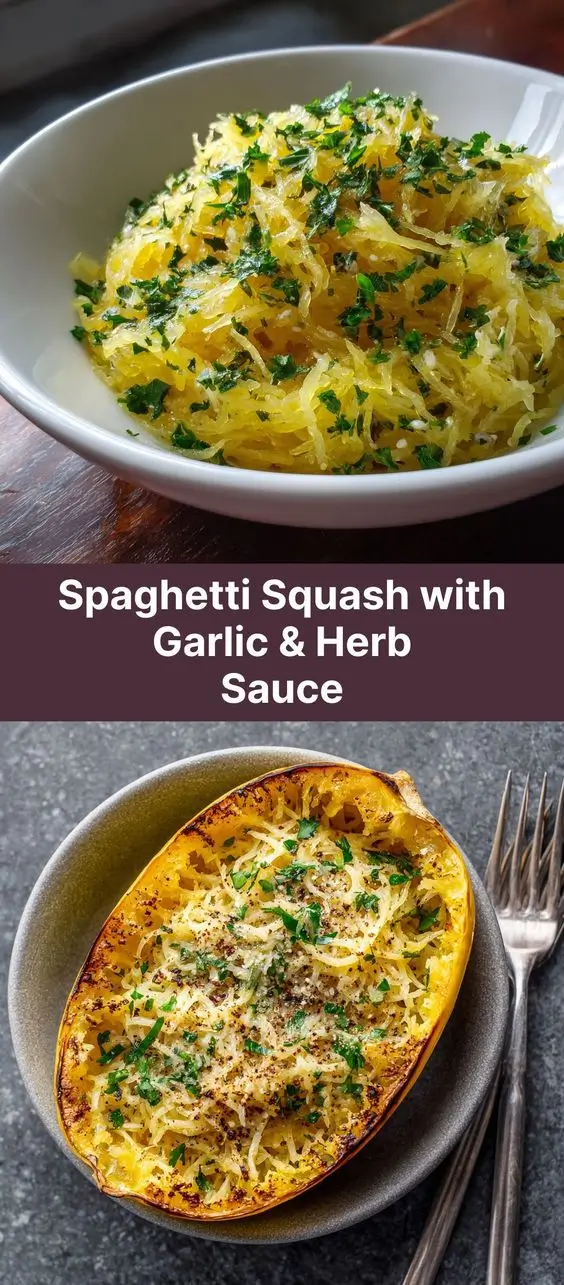
- Shred the Squash: Once cooled slightly, use a fork to scrape the inside of each squash half. Long, golden-yellow strands will separate naturally—this is your “pasta.” Transfer the strands to a large mixing bowl.
- Toss with Sauce: Pour the warm garlic and herb sauce over the squash noodles. Toss gently to coat every strand. For deeper flavor infusion, return the mixture to the skillet and warm over low heat for 2–3 minutes.
- Serve Immediately: Divide into bowls. Garnish with extra herbs, a drizzle of olive oil, lemon zest, or vegan Parmesan if desired.
Pro Tips for the Best Results
- Choose the Right Squash: Look for firm, heavy squashes with dull, unblemished skin. Avoid those with soft spots or cracks.
- Roast Face-Down: Placing the squash cut-side down prevents drying and promotes even cooking through steaming.
- Don’t Overcook the Garlic: Burnt garlic turns bitter. Keep the heat low and monitor closely.
- Use Fresh Herbs: Dried herbs can work in a pinch, but fresh ones deliver superior brightness and aroma.
- Let It Rest: Allow the roasted squash to cool for 5–10 minutes before shredding—it’s easier to handle and less watery.
- Boost Umami: Add a splash of vegetable broth or a teaspoon of white miso paste to the sauce for deeper savoriness.
- Meal Prep Friendly: Roast the squash ahead of time and store shredded strands in an airtight container for up to 4 days. Reheat and toss with freshly made sauce when ready to serve.
Variations and Customizations: Make It Your Own
This recipe is incredibly versatile. Whether you’re vegan, vegetarian, keto-curious, or just looking to experiment, here are some delicious twists:
- Creamy Version: Stir in a few tablespoons of cashew cream, coconut milk, or Greek yogurt for a richer texture.
- Protein-Packed: Top with grilled shrimp, baked tofu, chickpeas, or shredded rotisserie chicken.
- Veggie Boost: Sauté mushrooms, zucchini, bell peppers, or spinach and fold them into the sauce before tossing with squash.
- Mediterranean Twist: Add sun-dried tomatoes, kalamata olives, artichoke hearts, and crumbled feta (or vegan feta).
- Pesto Fusion: Swirl in homemade or store-bought basil pesto for an herby upgrade.
- Asian-Inspired: Swap garlic and herbs for ginger, soy sauce, sesame oil, and green onions. Top with edamame and sesame seeds.
- Baked Casserole Style: Mix everything together, top with breadcrumbs and Parmesan, and bake at 375°F for 15–20 minutes until golden.
- Spicy Arrabbiata Style: Add crushed tomatoes, extra red pepper flakes, and a pinch of smoked paprika for an Italian-inspired kick.
Health Considerations and Nutritional Value
Spaghetti squash with garlic and herb sauce isn’t just delicious—it’s a powerhouse of nutrition suitable for a wide range of dietary needs.
Nutrition Highlights (per serving, approx. 1 cup cooked squash + sauce):
- Calories: ~120–150 (without added proteins or cheese)
- Carbohydrates: 15g (mostly complex carbs and fiber)
- Fiber: 2–3g, supporting digestive health and satiety
- Protein: 1–2g (can be increased with add-ins)
- Fat: 7–9g (primarily healthy unsaturated fats from olive oil)
- Vitamin A: High—supports vision and immune function
- Vitamin C: Moderate—acts as an antioxidant and boosts collagen production
- Potassium: Helps regulate blood pressure
- Low Glycemic Index: Ideal for diabetics and blood sugar management
Dietary Benefits:
- Gluten-Free: Naturally safe for celiac disease or gluten sensitivity.
- Low-Carb/Keto-Friendly: With only about 10g net carbs per cup, it fits well within moderate low-carb plans.
- Vegan/Vegetarian: Easily adaptable and plant-based by default.
- Heart-Healthy: Olive oil and fiber contribute to improved cholesterol levels and cardiovascular wellness.
- Weight Management: High water and fiber content promote fullness without excess calories.
Note: Be mindful of portion sizes if using additional oils, cheeses, or high-calorie toppings. Balance the dish with lean proteins and leafy greens for a complete meal.
Full Ingredients List
- 1 medium spaghetti squash (about 2.5–3 lbs)
- 3 tbsp extra virgin olive oil (divided)
- Salt and freshly ground black pepper (to taste)
- 1 small shallot or ½ yellow onion, finely diced
- 4 cloves garlic, minced
- ½ cup mixed fresh herbs (parsley, basil, oregano—chopped)
- 1 tbsp fresh lemon juice (about ½ lemon)
- ¼ tsp red pepper flakes (optional)
- 1–2 tbsp nutritional yeast (optional, for cheesy flavor)
- Additional garnishes: lemon zest, microgreens, vegan Parmesan, pine nuts
Directions
- Preheat oven to 400°F (200°C). Prepare a baking sheet with parchment paper.
- Cut spaghetti squash in half lengthwise and scoop out seeds.
- Drizzle cut sides with 1 tbsp olive oil, season with salt and pepper, and place face-down on the baking sheet.
- Roast for 35–45 minutes until fork-tender. Let cool slightly.
- In a skillet, heat remaining 2 tbsp olive oil over medium-low heat.
- Add shallot and sauté for 3–4 minutes until soft. Add garlic and cook 1–2 minutes more—do not brown.
- Remove from heat. Stir in herbs, lemon juice, salt, pepper, red pepper flakes, and nutritional yeast if using.
- Using a fork, shred the roasted squash into strands and transfer to a large bowl.
- Pour warm garlic-herb sauce over squash and toss well to combine.
- Warm gently in the skillet for 2–3 minutes if desired. Adjust seasoning.
- Serve hot, garnished with extra herbs, a drizzle of oil, or lemon zest.
Frequently Asked Questions (FAQ)
Can I microwave spaghetti squash instead of roasting?
Yes! Cut the squash in half, remove seeds, place cut-side down in a microwave-safe dish with 2 tablespoons of water, and microwave on high for 8–12 minutes, depending on size. Check for tenderness. Microwaving is faster but may yield a slightly softer texture.
How do I store leftovers?
Store in an airtight container in the refrigerator for up to 4 days. Reheat in a skillet over medium heat or in the microwave. The sauce may separate slightly—just stir well.
Can I freeze spaghetti squash?
Yes, though the texture may become softer upon thawing. Freeze shredded squash in freezer-safe bags for up to 3 months. Thaw in the fridge overnight and reheat gently. Best used in soups, casseroles, or saucy dishes rather than served alone.
Is spaghetti squash really like pasta?
While it doesn’t have the chewiness of wheat pasta, spaghetti squash mimics the strand-like shape and works wonderfully with sauces. Its mild flavor makes it a perfect canvas for bold seasonings like garlic and herbs.
Why is my squash watery?
Overcooking or not roasting face-down can lead to excess moisture. After shredding, let it sit in a colander for 5 minutes to drain, or give it a gentle press with a paper towel.
Can I make this oil-free?
Yes! Replace olive oil with vegetable broth for sautéing. The sauce will be lighter but still flavorful, especially with lemon and herbs enhancing the taste.
Are the seeds edible?
Absolutely! Rinse, dry, toss with a little oil and salt, and roast at 325°F for 15–20 minutes until crisp. They’re nutritious and taste similar to pumpkin seeds.
Summary
Spaghetti squash with garlic and herb sauce is a wholesome, flavorful, and adaptable dish that brings the comfort of pasta night to a healthier level. Packed with nutrients, easy to customize, and bursting with Mediterranean flair, it’s a must-have recipe for any home cook.