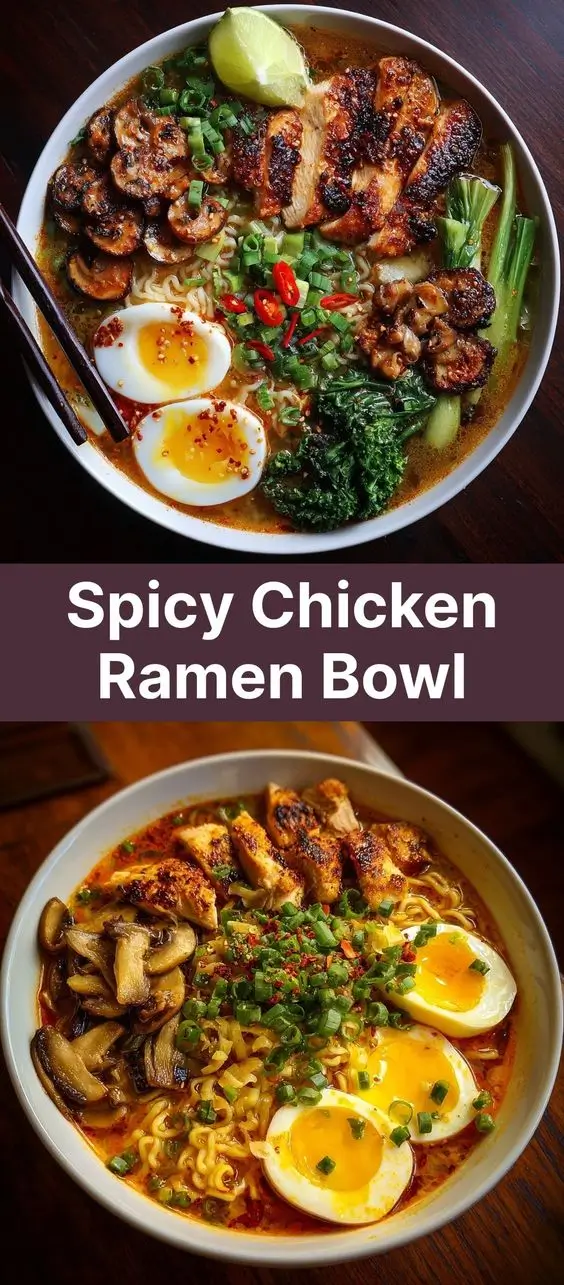
Spicy Chicken Ramen Bowl: A Flavor-Packed Comfort Masterpiece
The History of Spicy Chicken Ramen Bowl
Ramen, as we know it today, traces its roots back to Japan in the late 19th century, though its origins are deeply influenced by Chinese noodle soups. The word “ramen” is derived from the Chinese term “lamian,” meaning hand-pulled noodles. Over time, ramen evolved into a distinctly Japanese dish, gaining widespread popularity after World War II when returning soldiers brought their love for hearty noodle meals back home. Street vendors began selling affordable and satisfying bowls of ramen, which quickly became a staple in Japanese cuisine.
While traditional ramen comes in varieties like shoyu (soy sauce-based), miso, shio (salt-based), and tonkotsu (pork bone broth), modern interpretations have expanded dramatically. Enter the Spicy Chicken Ramen Bowl—a bold fusion that marries the umami depth of Asian broths with fiery heat and tender chicken protein. This version reflects contemporary global tastes, particularly the rising demand for spicy, flavorful comfort food. It’s a popular choice not only in specialty ramen shops across Tokyo, Los Angeles, and New York but also among home cooks looking to recreate restaurant-quality meals with accessible ingredients.
The “spicy” twist often draws inspiration from Sichuan cuisine, Korean gochujang, or even Thai chili pastes, blending international flavors into a single steaming bowl. As dietary preferences evolve, this dish has also adapted to include gluten-free noodles, plant-based proteins, and low-sodium options, proving its versatility and enduring appeal.
Ingredients Breakdown: What Makes This Bowl So Irresistible?
The magic of a perfect Spicy Chicken Ramen Bowl lies in the harmony of textures and layers of flavor. Here’s a detailed breakdown of each component:
- Boneless Chicken Thighs (or Breast): Chicken thighs are preferred for their juiciness and ability to absorb marinades without drying out during cooking. However, breast meat works well if you’re watching fat intake.
- Fresh Ramen Noodles: These wheat-based noodles offer the ideal springy texture. Dried ramen can be used, but fresh yields superior mouthfeel. For gluten-free diets, substitute with rice noodles or soba (buckwheat).
- Chicken Broth: High-quality, low-sodium broth forms the base. Homemade stock adds richness, but store-bought works fine when enhanced properly.
- Soy Sauce: Adds saltiness and umami. Use light soy for color control or tamari for a gluten-free alternative.
- Miso Paste (White or Red): Fermented soybean paste deepens the broth with savory complexity. White miso is milder; red offers more punch.
- Gochujang (Korean Chili Paste): The heart of the spice. It brings heat, sweetness, and fermented depth. Substitute with sambal oelek or sriracha if unavailable.
- Garlic and Ginger: Freshly minced garlic and grated ginger provide aromatic warmth and pungency essential to the flavor profile.
- Sesame Oil: Used sparingly at the end, it imparts a nutty aroma and rounds out the spiciness.
- Vegetables: Common additions include sliced bok choy, mushrooms (shiitake or cremini), green onions, corn kernels, bean sprouts, and nori (seaweed sheets).
- Soft-Boiled Eggs: Jammy yolks enrich the broth and add creaminess. Marinated in soy and mirin for extra flavor.
- Toppings: Sesame seeds, chili flakes, cilantro, lime wedges, and pickled vegetables elevate both taste and presentation.
Step-by-Step Recipe: Crafting the Perfect Spicy Chicken Ramen Bowl
Follow these detailed steps to create a restaurant-worthy Spicy Chicken Ramen Bowl in your own kitchen.
Preparation Time:
30 minutes | Cooking Time: 40 minutes | Total Time: 70 minutes | Servings: 4
Ingredients
- 1 lb (450g) boneless, skinless chicken thighs, cut into bite-sized pieces
- 8 cups (2 liters) low-sodium chicken broth
- 2 tbsp soy sauce (or tamari)
- 1 tbsp miso paste (white or red)
- 2–3 tbsp gochujang (adjust to taste)
- 4 cloves garlic, minced
- 1 tbsp fresh ginger, grated
- 2 tbsp vegetable oil (for sautéing)
- 1 tbsp sesame oil (for finishing)
- 12 oz (340g) fresh ramen noodles (or 4 packs dried)
- 2 cups bok choy, chopped
- 1 cup shiitake mushrooms, sliced
- 1 cup corn kernels (fresh or frozen)
- 4 soft-boiled eggs (6-minute boil, then chilled and peeled)
- 4 green onions, thinly sliced
- 2 tbsp sesame seeds
- Optional: nori sheets, chili oil, lime wedges, cilantro
Directions
- Marinate the Chicken: In a bowl, toss chicken pieces with 1 tbsp soy sauce, 1 tsp ginger, and 1 minced garlic clove. Let sit for 15–20 minutes while preparing other ingredients.
- Cook the Chicken: Heat 1 tbsp vegetable oil in a large pot over medium-high heat. Add chicken and cook until browned and cooked through (about 6–8 minutes). Remove and set aside.
- Build the Broth Base: In the same pot, add remaining oil. Sauté remaining garlic and ginger for 30 seconds until fragrant. Stir in gochujang and miso paste, cooking for another 30 seconds to bloom the spices.
- Add Liquids: Pour in chicken broth and soy sauce. Bring to a gentle simmer. Allow flavors to meld for 10 minutes over low heat.
- Cook Vegetables: Add mushrooms and bok choy, simmering for 5 minutes until tender. Stir in corn and cook another 2 minutes. Taste and adjust seasoning—add more gochujang for heat or soy for saltiness.
- Cook Noodles: In a separate pot, prepare ramen noodles according to package instructions. Drain and rinse briefly under cold water to stop cooking. Divide evenly among four large bowls.
- Reintroduce Chicken: Return cooked chicken to the broth and warm through for 2–3 minutes.
- Finish the Broth: Just before serving, stir in sesame oil for aroma and depth.
- Assemble Bowls: Ladle hot broth with chicken and vegetables over noodles. Place a soft-boiled egg (halved) on top of each bowl.
- Garnish Generously: Sprinkle with green onions, sesame seeds, nori strips, and optional chili oil or lime juice. Serve immediately.
Tips for the Ultimate Spicy Chicken Ramen Experience
- Bloom Your Spices: Always cook gochujang and miso in oil for 30 seconds before adding liquids. This enhances flavor and removes raw edge.
- Don’t Overcook Noodles: Ramen noodles should be al dente—overcooking makes them mushy. Rinse after boiling to prevent sticking.
- Customize Heat Levels: Start with 1 tbsp gochujang and increase gradually. You can always add more spice, but you can’t take it away!
- Make Ahead Broth: Prepare the broth base up to 2 days in advance and refrigerate. Reheat and add fresh components just before serving.
- Perfect Soft-Boiled Eggs: Boil eggs for exactly 6–7 minutes. Plunge into ice water immediately. Peel under running water.
- Marinate Eggs: For extra flavor, soak peeled soft-boiled eggs in a mix of 3 parts soy sauce, 1 part mirin, and 1 part water for 1–4 hours.
- Use Tongs for Presentation: When placing noodles in bowls, use tongs to create a neat nest shape—elevates visual appeal.
- Balance the Bowl: Ensure every bowl gets an equal share of chicken, veggies, egg, and broth for consistent flavor in every bite.
Variations and Customizations
The beauty of the Spicy Chicken Ramen Bowl is its adaptability. Here are creative ways to tailor it to different tastes and dietary needs:
- Vegetarian/Vegan Version: Replace chicken with tofu (pressed and pan-seared), mushrooms, or tempeh. Use vegetable broth and vegan miso. Skip the egg or use a plant-based alternative.
- Low-Carb/Keto Option: Swap ramen noodles for spiralized zucchini (zoodles), shirataki noodles, or kelp noodles. Reduce sugar-heavy sauces like gochujang; use homemade low-carb alternatives.
- Gluten-Free Adaptation: Use tamari instead of soy sauce, ensure miso is gluten-free (some contain barley), and choose certified GF ramen or rice noodles.
- Seafood Twist: Substitute chicken with cooked shrimp, scallops, or flaked salmon. Add a splash of fish sauce for oceanic umami.
- Thai-Inspired Fusion: Replace gochujang with red curry paste. Add coconut milk for creaminess and top with fresh basil and crushed peanuts.
- Sichuan Style: Incorporate sichuan peppercorns (toasted and ground) for numbing heat (mala flavor). Drizzle with chili oil and top with pickled mustard greens.
- Extra Creamy Broth: Stir in 1–2 tbsp of creamy peanut butter or tahini for richness and body. Especially good with chicken.
- Kid-Friendly Mild Version: Omit gochujang entirely. Use mild miso and add a touch of honey for sweetness. Top with fun extras like cheese or dumplings.
- Meal Prep Friendly: Store broth, cooked chicken, and toppings separately. Assemble and reheat individual portions throughout the week.
Health Considerations and Nutritional Value
A well-balanced Spicy Chicken Ramen Bowl can be nutritious, depending on ingredient choices and portion control.
Nutritional Highlights (Per Serving – Approximate)
| Calories | ~580 kcal |
|---|---|
| Protein | 32g |
| Fat | 18g (mostly unsaturated from oils and chicken) |
| Carbohydrates | 70g |
| Dietary Fiber | 5g |
| Sodium | ~900mg (can vary widely based on broth and sauces) |
Health Benefits
- High-Quality Protein: Chicken provides all essential amino acids, supporting muscle repair and immune function.
- Probiotics from Miso: Fermented miso may support gut health and digestion.
- Antioxidants: Garlic and ginger have anti-inflammatory and immune-boosting properties.
- Vegetable Power: Bok choy, mushrooms, and corn contribute vitamins A, C, K, fiber, and potassium.
- Healthy Fats: Sesame oil contains monounsaturated fats and antioxidants like sesamol.
Considerations
- Sodium Content: Traditional ramen can be high in sodium. Use low-sodium broth, limit added soy sauce, and boost flavor with herbs, citrus, and spices instead.
- Refined Carbs: Standard ramen noodles are made from refined wheat. Opt for whole grain, buckwheat, or legume-based noodles for more fiber and balanced blood sugar.
- Spice Sensitivity: Gochujang and chili oils may trigger acid reflux or IBS symptoms in some individuals. Adjust accordingly.
- Allergens: Contains wheat (noodles), soy (soy sauce, miso), eggs, and sesame. Modify for allergies using substitutes.
Frequently Asked Questions (FAQ)
1. Can I make this ramen in a slow cooker?
Yes! Brown the chicken first, then add all broth ingredients except noodles and delicate veggies. Cook on low for 6–8 hours. Add bok choy and mushrooms in the last 30 minutes. Cook noodles separately and assemble before serving.
2. How do I store leftovers?
Store broth with chicken and vegetables in one container, noodles in another, and toppings separately. Reheat broth gently, add fresh noodles, and garnish. Avoid storing assembled bowls—noodles will become soggy.
3. Is gochujang the same as doenjang?
No. Gochujang is a spicy, sweet, fermented chili paste. Doenjang is a salty, earthy soybean paste similar to miso. They serve different purposes—use gochujang for heat, doenjang for depth.
4. Can I use instant ramen packets?
You can, but discard the flavor packets (they’re high in sodium and MSG). Use the noodles and enhance the broth with your own spices, miso, and gochujang for better quality and flavor control.
5. How do I make the broth clearer and less oily?
To clarify broth, avoid boiling vigorously—simmer gently. Skim off any foam or fat with a spoon. Strain through a cheesecloth-lined sieve for crystal-clear results.
6. What can I use instead of ramen noodles?
Try udon, soba, rice noodles, glass noodles, or even spiralized vegetables. Each brings a unique texture and dietary benefit.
7. Can I freeze this soup?
Freeze the broth and chicken mixture for up to 3 months. Do not freeze noodles or eggs—they’ll degrade in texture. Thaw overnight and reheat before assembling.
8. Why are my soft-boiled eggs rubbery?
Overcooking is the culprit. Stick to 6–7 minutes for a jammy yolk. Immediately cool in ice water to stop residual cooking.
Summary
The Spicy Chicken Ramen Bowl is a vibrant, soul-warming dish that combines tender chicken, rich spicy broth, springy noodles, and fresh toppings for an unforgettable meal. Packed with flavor, customizable for diets, and easy to scale, it’s comfort food elevated to an art form.