Introduction
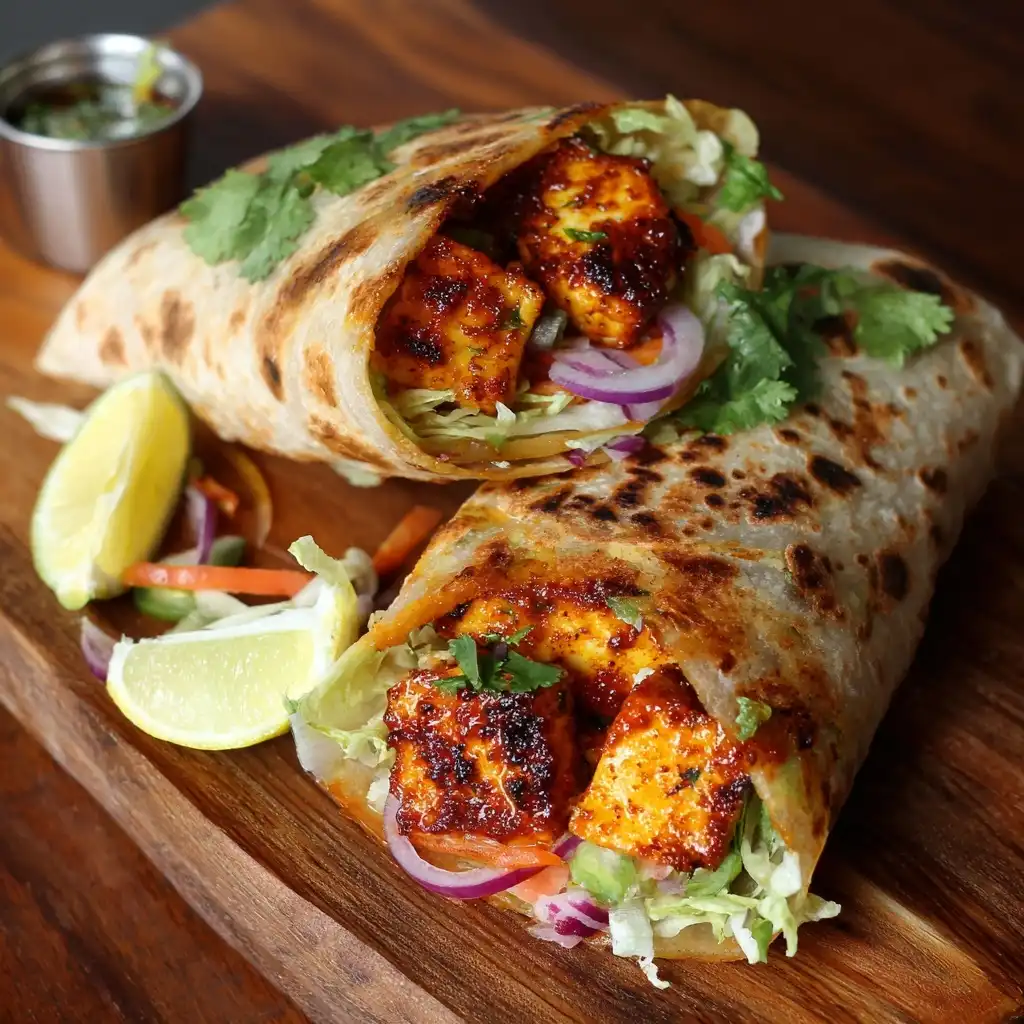
The Spicy Paneer Kathi Roll is a beloved Indian street food icon that seamlessly marries the creamy richness of fresh paneer with the fiery, aromatic complexity of North Indian spices—all wrapped snugly in a soft, lightly charred paratha or rumali roti. Originating from the bustling bylanes of Kolkata, this handheld delight has evolved from a humble kebab roll into a gourmet vegetarian sensation enjoyed across cities, college campuses, food trucks, and fine-dining menus alike. Unlike its meat-based Kathi Roll cousins, the paneer variant celebrates India’s deep-rooted dairy tradition while offering a protein-packed, plant-forward alternative that appeals to vegetarians, flexitarians, and spice enthusiasts without compromise. Its irresistible appeal lies in its textural harmony—the squeaky tenderness of paneer cubes, the crisp bite of onions and capsicum, the subtle chew of fresh coriander, and the smoky finish imparted by tandoori-style grilling—all bound together by a vibrant, heat-laced masala that lingers just long enough to invite another bite.
The History
The Kathi Roll traces its roots to the 1930s in Kolkata’s iconic Nizam’s restaurant—a legendary eatery founded by the visionary brothers Nizamuddin and Niazuddin in the New Market area. Initially created as a practical solution for hurried British colonial officers and local professionals seeking a portable, satisfying meal, the original Kathi Roll featured skewer-grilled kebabs (hence “kathi,” meaning “skewer” in Bengali) wrapped in flaky, layered parathas. Over decades, the concept democratized and diversified: chicken, mutton, and egg versions gained traction, but it wasn’t until the late 1980s and early 1990s—amid rising vegetarian consciousness and urban demand for quick yet wholesome meals—that innovative vendors began substituting succulent chunks of cottage cheese for meat. Paneer, already central to Punjabi and Bengali home cooking, proved ideal: mild in flavor yet highly absorbent of spices, firm enough to hold up on the griddle, and culturally resonant across regions. By the 2000s, the Spicy Paneer Kathi Roll had become a staple at roadside stalls from Mumbai to Delhi, Bangalore to Guwahati—and today, it enjoys global recognition, appearing on menus from London’s Brick Lane to New York’s Jackson Heights, often reimagined with fusion twists like mint-cilantro chutney swirls, quinoa-infused wraps, or vegan cashew-based “paneer.” Its journey reflects not only culinary adaptation but also India’s dynamic negotiation between tradition, innovation, and inclusivity.
Ingredients Breakdown
Every exceptional Spicy Paneer Kathi Roll hinges on the intentional selection and synergy of its components—each ingredient playing a distinct sensory role:
- Paneer: Use full-fat, fresh, non-squeezed paneer (ideally homemade or sourced from a reputable dairy). Its high moisture content ensures melt-in-the-mouth tenderness when cooked, while its neutral pH allows bold spices to shine without curdling. Avoid pre-packaged, vacuum-sealed paneer stored for more than 3 days—it turns rubbery and loses its characteristic milky sweetness.
- Base Masala: A triad of finely minced ginger, garlic, and green chilies forms the aromatic foundation. Ginger adds warmth and digestive zing; garlic lends depth and umami; green chilies (like Serrano or Indian Jwala) deliver clean, vegetal heat—not just burn.
- Spice Quartet: Garam masala (warm, roasted notes), Kashmiri red chili powder (vibrant color + moderate heat), turmeric (earthy bitterness + anti-inflammatory properties), and coriander powder (citrusy, floral backbone) are toasted lightly before grinding to unlock volatile oils and prevent raw bitterness.
- Aromatics & Veggies: Finely diced red onion offers sharp crunch and sulfur-rich pungency; julienned bell pepper (capsicum) contributes sweetness, vitamin C, and structural integrity; shredded cabbage adds cool contrast and fiber; and fresh cilantro leaves lend bright, soapy-anise top notes essential for authenticity.
- Acid & Finish: A splash of fresh lemon juice added *after* cooking preserves brightness and balances fat; a drizzle of roasted cumin powder (bhuna jeera) imparts nutty earthiness and aids digestion.
- Wrap Medium: Traditional choices include whole-wheat paratha (flaky, rich, slightly buttery), rumali roti (ultra-thin, tissue-like, subtly smoky), or multigrain lavash for modern health-conscious adaptations. Each must be warm, pliable, and lightly oiled to prevent tearing during rolling.
- Chutneys: A dual-chutney system is non-negotiable—tangy tamarind-date chutney (imli-akhrot) for sweet-sour depth and cooling mint-coriander chutney (pudina-hara dhania) for herbal freshness and heat modulation.
Step-by-Step Recipe
- Prep the Paneer: Cut 250g fresh paneer into ¾-inch cubes. Lightly press between two paper towels for 60 seconds to remove surface moisture—this prevents splattering and promotes even browning. Optional but recommended: lightly coat cubes in 1 tsp cornstarch mixed with ½ tsp garam masala—creates a delicate crust when pan-fried.
- Temper the Spices: Heat 1 tbsp mustard oil (or ghee for richness) in a heavy-bottomed kadhai or non-stick skillet over medium flame. Add ½ tsp cumin seeds and ¼ tsp fenugreek seeds (methi). Let them sputter for 15 seconds until fragrant—this “tadka” unlocks enzymatic compounds that deepen flavor and aid digestibility.
- Sauté Aromatics: Add 1 tbsp finely grated ginger, 1 tbsp minced garlic, and 2–3 slit green chilies. Sauté for 90 seconds until raw smell disappears but no browning occurs—overcooking burns ginger’s delicate volatiles.
- Bloom Dry Spices: Reduce heat to low. Stir in 1 tsp Kashmiri chili powder, ½ tsp turmeric, 1 tsp coriander powder, and ½ tsp garam masala. Toast gently for 45 seconds—spices should release aroma but not darken. Immediately add 2 tbsp water to halt cooking and create a slurry.
- Cook the Paneer: Increase heat to medium-high. Add paneer cubes and stir gently to coat. Sauté for 3–4 minutes, turning occasionally, until golden flecks appear and edges begin to caramelize slightly. Avoid vigorous stirring to retain texture.
- Add Vegetables: Fold in ½ cup finely diced red onion, ½ cup julienned green bell pepper, and ¼ cup shredded purple cabbage. Cook for 2 minutes—just until onions soften at edges but retain crunch. Overcooking leads to sogginess.
- Season & Finish: Sprinkle with ½ tsp roasted cumin powder, ¼ tsp black salt (kala namak) for eggy minerality, and freshly ground black pepper. Squeeze juice of ½ lemon. Toss once, then switch off heat. Garnish generously with 2 tbsp chopped cilantro and 1 tbsp finely sliced red onion rings for visual pop and bite.
- Warm the Wrap: Heat each paratha on a dry tawa for 20 seconds per side until pliable and faintly blistered. Brush lightly with ghee or butter for sheen and flexibility.
- Assemble with Precision: Spread 1 tbsp mint-coriander chutney in a 3-inch-wide stripe down the center of the warm paratha. Spoon ⅓ of the hot paneer mixture evenly over chutney. Top with 1 tsp tamarind chutney, 1 tbsp finely shredded lettuce (optional for crunch), and a pinch of sev or crushed papdi for textural contrast. Fold bottom flap up over filling, then fold in both sides snugly, and roll tightly away from you—applying gentle pressure to seal.
- Grill for Signature Char: Place seam-side down on a preheated flat griddle or tawa. Press gently with a spatula and cook for 45–60 seconds per side until golden-brown grill marks appear and wrap becomes slightly crisp—this step elevates the roll from “good” to “legendary.”
- Serve Immediately: Slice diagonally, secure with a wooden skewer if needed, and serve piping hot with extra chutneys on the side and a wedge of lime.
Tips
- Paneer Texture Hack: For ultra-tender paneer that doesn’t crumble, soak cubes in warm milk (not water) for 10 minutes before cooking—milk proteins reinforce structure without diluting flavor.
- Heat Control Mastery: Use Kashmiri chili for color and mild heat; reserve dried red chilies (soaked & ground) or green chilies for adjustable fire. Always taste masala before adding paneer—you can always add heat, but you can’t remove it.
- No-Sog Wrap Secret: Never assemble rolls ahead of time. If catering, keep fillings and wraps separate until final 2 minutes. Store parathas stacked between parchment sheets with a damp cloth cover—never sealed in plastic.
- Ghee vs. Oil Decision: Mustard oil gives authentic pungent depth (ideal for traditional stalls); ghee adds luxurious mouthfeel and caramelization (best for premium presentations); sunflower oil works for neutral base (recommended for first-timers).
- Chutney Shelf Life: Mint-coriander chutney stays vibrant for 3 days refrigerated (add ¼ tsp citric acid or lemon juice to preserve color); tamarind-date chutney lasts 2 weeks—its acidity acts as natural preservative.
- Grill Marks Matter: Preheat your tawa for full 5 minutes on medium-high. A properly heated surface sears instantly, locking in juices and creating crispness without drying out the interior.
- Leftover Magic: Cold paneer filling makes excellent stuffing for dosas, omelets, or baked samosas—or blend with yogurt and herbs for a spicy raita dip.
- Authentic Garnish Hierarchy: Prioritize fresh ingredients: raw onion rings > roasted cumin > lemon wedge > cilantro > optional sev. Skip store-bought “chaat masala” blends—make your own with black salt, amchur, cumin, and dried mango powder for superior tang and aroma.
Variations and Customizations
The Spicy Paneer Kathi Roll is inherently adaptable—its framework invites regional, dietary, and creative reinterpretation while retaining its soul. Here are rigorously tested variations that maintain authenticity while expanding versatility:
- Punjabi Tandoori Paneer Roll: Marinate paneer in hung curd, kasuri methi, smoked paprika, and charcoal smoke (dhungar method) for 30 minutes before grilling. Serve with sarson ka saag chutney and toasted corn kernels.
- South Indian Twist: Replace paratha with appam or neer dosa; swap garam masala for curry leaves, mustard seeds, and grated coconut; use coconut oil for tempering; garnish with banana chips.
- Vegan Kathi Roll: Substitute paneer with pressed, marinated tofu or homemade soy-chickpea “nutri-paneer”; use cashew cream instead of yogurt-based chutneys; wrap in sorghum (jowar) roti for gluten-free integrity.
- Low-Carb/Keto Version: Ditch the roti entirely—serve spiced paneer filling in large butter lettuce cups or collard green wraps; boost fats with avocado slices and hemp seeds; use almond flour-based “paratha” for texture lovers.
- Breakfast Kathi Roll: Add scrambled eggs or spiced mashed potatoes (aloo paratha style) to the filling; include a thin layer of tomato chutney and a sprinkle of black pepper and chaat masala.
- Dessert-Inspired Roll: For novelty menus: use sweetened paneer (mithai-style), cardamom-saffron masala, rose petal jam, and pistachio crumble—wrapped in malai paratha brushed with honey-ghee.
- Global Fusion Rolls: Korean-inspired (gochujang-spiked paneer + kimchi slaw + sesame oil finish); Mexican (chipotle paneer + pickled red onions + avocado crema); Mediterranean (za’atar paneer + tabbouleh + tahini drizzle).
- Festival Editions: Diwali special with saffron-kesar paneer and edible silver leaf (varak); Holi-themed with beetroot-dyed pink paratha and hibiscus chutney; Ramadan iftar roll with dates, walnuts, and warm cinnamon syrup.
Health Considerations and Nutritional Value
A traditionally prepared Spicy Paneer Kathi Roll (approx. 1 medium-sized roll, ~220g) delivers a balanced, nutrient-dense profile when made mindfully:
- Caloric Profile: ~380–420 kcal—moderate for a complete meal, especially when paired with a light salad or buttermilk.
- Protein Powerhouse: Paneer contributes ~14–16g high-biological-value protein (all 9 essential amino acids), supporting muscle synthesis and satiety. Pairing with whole-wheat paratha adds complementary plant protein (gluten + albumin), enhancing net protein quality.
- Smart Fats: Using mustard oil or ghee provides monounsaturated fats (MUFA) and butyric acid (in ghee), supporting gut lining integrity and anti-inflammatory pathways—far superior to refined vegetable oils.
- Fiber & Phytonutrients: Bell peppers supply 150% DV vitamin C; red onions offer quercetin (a potent flavonoid antioxidant); cilantro delivers linalool and vitamin K; turmeric’s curcumin enhances bioavailability when combined with black pepper (piperine)—a synergy built right into the recipe.
- Digestive Intelligence: Ginger and cumin stimulate gastric enzymes; black salt (kala namak) contains trace minerals and sulfur compounds aiding digestion; lemon juice boosts hydrochloric acid production.
- Considerations for Specific Needs:
- Diabetics: Opt for multigrain or oat paratha (lower glycemic index); reduce added sugar in chutneys; increase fiber with grated carrots or spinach.
- Hypertension: Limit added salt; rely on black salt, lemon, and roasted cumin for sodium-free savoriness; avoid packaged chutneys high in sodium preservatives.
- Lactose Sensitivity: Paneer is naturally very low in lactose (<0.1g per 100g)—most tolerate it well. For strict avoidance, use tofu or nut-based paneer alternatives.
- Weight Management: Portion control is key—stick to one roll + vegetable side. Avoid excessive ghee brushing or fried toppings like papdi/sev unless used sparingly as garnish.
- Myth Busting: Contrary to popular belief, paneer is not “fattening”—its fat is primarily conjugated linoleic acid (CLA), linked to improved metabolic health in clinical studies. Likewise, spicy foods do not “damage” the stomach; capsaicin actually reduces gastric acid secretion and may protect against H. pylori infection.
Ingredients
For the Spiced Paneer Filling:
- 250g fresh, full-fat paneer, cut into ¾-inch cubes
- 1 tbsp mustard oil or ghee (for authentic flavor) or refined sunflower oil (neutral option)
- ½ tsp cumin seeds (jeera)
- ¼ tsp fenugreek seeds (methi)
- 1 tbsp fresh ginger, finely grated
- 1 tbsp garlic, finely minced
- 2–3 green chilies (Serrano or Jwala), slit lengthwise
- 1 tsp Kashmiri red chili powder (for color & mild heat)
- ½ tsp turmeric powder (haldi)
- 1 tsp coriander powder (dhania)
- ½ tsp garam masala (homemade preferred)
- ½ cup red onion, finely diced
- ½ cup green bell pepper (capsicum), julienned
- ¼ cup purple cabbage, finely shredded
- ½ tsp roasted cumin powder (bhuna jeera)
- ¼ tsp black salt (kala namak)
- Freshly ground black pepper, to taste
- Juice of ½ lemon
- 2 tbsp fresh cilantro leaves, roughly chopped
- 1 tbsp red onion rings, for garnish
For the Wrap & Assembly:
- 3 medium whole-wheat parathas (or rumali roti / multigrain lavash)
- 3 tbsp mint-coriander chutney (freshly made)
- 1½ tbsp tamarind-date chutney (imli-akhrot)
- Optional: 1 tbsp sev or crushed papdi, for crunch
- Optional: 1 tbsp shredded iceberg or romaine lettuce
- Ghee or butter, for brushing parathas
Directions
- Prepare the Paneer: Pat paneer cubes dry with a clean kitchen towel. For enhanced texture, toss gently with 1 tsp cornstarch and ½ tsp garam masala. Set aside.
- Temper the Whole Spices: Heat oil or ghee in a heavy-bottomed skillet or kadhai over medium flame. Add cumin and fenugreek seeds. Sizzle for 15–20 seconds until fragrant and cumin begins to darken slightly.
- Sauté Aromatics: Add grated ginger, minced garlic, and slit green chilies. Sauté for 1 minute 30 seconds, stirring constantly, until raw aroma fades but no browning occurs.
- Bloom Ground Spices: Reduce heat to low. Stir in Kashmiri chili powder, turmeric, coriander powder, and remaining ½ tsp garam masala. Toast for 45 seconds, then immediately add 2 tbsp water to form a smooth paste and stop cooking.
- Cook the Paneer: Raise heat to medium-high. Add paneer cubes and gently toss to coat thoroughly. Sauté for 3–4 minutes, turning carefully, until golden spots appear and paneer feels slightly resilient—not hard or rubbery.
- Incorporate Vegetables: Add diced red onion, julienned capsicum, and shredded cabbage. Stir-fry for 2 minutes—just until onions turn translucent at edges but retain bite.
- Final Seasoning: Remove from heat. Stir in roasted cumin powder, black salt, black pepper, and lemon juice. Fold in fresh cilantro and red onion rings. Taste and adjust—more lemon for brightness, more roasted cumin for earthiness.
- Warm the Parathas: Heat a tawa or griddle over medium flame. Warm each paratha for 20 seconds per side until soft and pliable. Lightly brush one side with ghee or butter.
- Assemble Each Roll: Lay warm paratha flat. Spread 1 tbsp mint-coriander chutney centrally. Spoon ⅓ of hot paneer mixture over chutney. Drizzle ½ tsp tamarind chutney on top. Add optional lettuce and sev.
- Roll Tightly: Fold bottom edge up over filling. Fold left and right flaps inward. Roll firmly away from you, applying gentle downward pressure to seal.
- Grill for Crispness: Place rolled kathi roll seam-side down on preheated tawa. Press lightly with a spatula and cook 45–60 seconds per side until golden-brown grill marks develop and exterior crisps slightly.
- Serve Immediately: Slice diagonally with a sharp knife. Secure with a bamboo skewer if serving takeaway. Accompany with extra chutneys, lime wedges, and a small bowl of chilled mint water (pudina paani).
FAQ
- Can I make this ahead of time?
- Yes—with caveats. The spiced paneer filling can be refrigerated for up to 2 days in an airtight container. Reheat gently in a pan with 1 tsp water to restore moisture. Parathas are best made fresh or warmed just before assembly—stale or cold wraps crack and leak. Never pre-roll and refrigerate; condensation ruins texture.
- Why does my paneer turn rubbery?
- Rubbery paneer results from either overcooking (exceeding 5–6 minutes on high heat) or using aged, low-moisture paneer. Always opt for fresh, moist paneer; press *only* surface water; and cook just until golden flecks appear—not browned or hardened.
- Can I air-fry the Kathi Roll?
- Air-frying works for reheating or crisping pre-assembled rolls—but not for initial cooking. The Maillard reaction and char require direct conductive heat (tawa/griddle). For best results: pan-grill the roll, then briefly air-fry at 180°C for 2 minutes to enhance crispness without drying.
- What’s the best substitute for mustard oil?
- If mustard oil’s pungency is too strong, use cold-pressed coconut oil for South Indian flair, or ghee for richness and caramelization. Avoid olive oil—it smokes at low temperatures and imparts off-flavors.
- Is this dish gluten-free?
- Traditional paratha contains wheat flour and is not gluten-free. To make it GF: use besan (chickpea flour) paratha, multigrain GF roti, or large collard green leaves. Ensure all spice blends and chutneys are certified gluten-free (many commercial garam masalas contain wheat fillers).
- How spicy is “spicy” in this recipe?
- This version registers ~4,500–6,000 SHU on the Scoville scale—similar to a mild jalapeño. Adjustability is built-in: reduce green chilies from 3 to 1, omit Kashmiri chili powder, or add 1 tbsp plain yogurt to filling for immediate heat mitigation.
- Can I freeze the filling?
- Freezing is not recommended—paneer releases water upon thawing, becoming grainy and separating from spices. Instead, prepare double batches and refrigerate for 48 hours. For longer storage, freeze *uncooked* paneer cubes in marinade (without vegetables) for up to 1 month—thaw overnight, then cook fresh.
- What makes a Kathi Roll different from a regular wrap or sandwich?
- Three defining traits: (1) The use of a *griddled flatbread* (not tortilla or pita), (2) *Hot, freshly cooked filling* assembled moments before serving—not cold leftovers, and (3) The *signature char-grill finish*, which creates a crisp shell while keeping interiors steamy and aromatic. These elements define its street-food soul.
- Can kids enjoy this roll?
- Absolutely—with simple tweaks: omit green chilies, reduce Kashmiri chili to ½ tsp, add 1 tsp grated apple for natural sweetness, and increase mint chutney ratio. Many children love the creamy paneer and crunchy veggies—making it a stealthy way to pack in nutrients.
- Which chutney is non-negotiable?
- Both are essential—but if forced to choose one, the mint-coriander chutney is irreplaceable. Its cooling effect modulates heat, enhances herbaceous fragrance, and provides enzymatic support (cilantro’s apiol aids digestion). Tamarind chutney adds dimension, but the mint chutney is the soul.
Summary
The Spicy Paneer Kathi Roll is far more than fast food—it’s a culinary chronicle of Indian ingenuity, where centuries-old dairy traditions meet street-smart practicality and bold, balanced flavor science. Every element—from the squeak of paneer to the whisper of roasted cumin—is calibrated to delight the senses while nourishing the body with protein, antioxidants, and digestive wisdom.
Whether crafted on a Kolkata sidewalk or your home kitchen tawa, this roll embodies the joy of mindful indulgence: unapologetically spicy, deeply comforting, endlessly customizable, and authentically Indian in spirit and substance.