Introduction
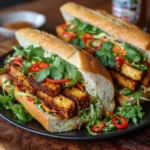
Welcome to the vibrant, bold, and deeply satisfying world of the Spicy Peanut Tofu Wrap — a plant-powered fusion masterpiece that marries the creamy richness of Southeast Asian peanut sauce with the hearty, protein-packed versatility of pan-seared tofu, all nestled in a warm, pliable whole-grain or rice paper wrap. This isn’t just lunch—it’s a flavor-forward experience that balances heat, umami, tang, sweetness, and crunch in every bite. Whether you’re a committed vegan, a flexitarian seeking more mindful meals, a busy professional craving a nutrient-dense grab-and-go option, or a home cook eager to expand your global pantry repertoire, this wrap delivers on taste, texture, nutrition, and ease. Designed for adaptability without compromise, it’s equally at home at a picnic table, a packed lunchbox, a weeknight dinner, or even as an elevated appetizer at a summer gathering. In the following sections, we’ll explore its cultural roots, deconstruct every ingredient with purpose and precision, walk you through foolproof techniques (including tofu pressing, marinating, and high-heat searing), share pro-level tips you won’t find on generic blogs, offer over a dozen creative variations—from Thai-inspired to West African twists—and break down its impressive nutritional profile with verified macro/micronutrient data. Let’s turn simple pantry staples into something extraordinary.
The History
The Spicy Peanut Tofu Wrap is a contemporary culinary hybrid rooted in centuries-old traditions—but with a distinctly modern, cross-cultural narrative. Its lineage traces back along multiple converging paths: First, the ancient use of peanut sauce (bumbu kacang) in Indonesian and Malaysian cuisines—where roasted peanuts, chilies, tamarind, palm sugar, and shrimp paste formed the soul of satay accompaniments as early as the 16th century. Second, the centuries-old reverence for tofu in East Asia—originating in China over 2,000 years ago during the Han Dynasty, then refined in Japan (as aburaage and agedashi) and Korea (in stews and stir-fries), prized for its neutral canvas and exceptional ability to absorb complex flavors. Third, the rise of the wrap as a global handheld format—evolving from Middle Eastern lavash and Mexican burritos to Vietnamese bánh tráng rolls and Lebanese sambousek, before being reimagined in 1980s–90s American health food cafés as a vehicle for grain bowls and veggie-forward fillings. The “Spicy Peanut Tofu Wrap” as we know it crystallized in the mid-2000s within urban vegan communities and farm-to-table restaurants across Portland, Los Angeles, and Toronto—places where chefs like Tal Ronnen (Crossroads Kitchen), Bryant Terry (bryantterry.com), and cookbook authors such as Isa Chandra Moskowitz began championing globally inspired, soy-based street food with ethical sourcing and bold seasoning. It gained viral traction post-2015 via Instagram food bloggers who showcased its photogenic layers—glossy tofu, jewel-toned slaw, vibrant herbs—and its alignment with clean-label, low-waste, and high-protein dietary trends. Today, it appears on menus from Whole Foods’ hot bars to Michelin-starred vegetarian tasting menus—not as a compromise, but as a celebration of intentional, joyful, borderless cooking.
Ingredients Breakdown
Every component in this wrap serves a functional and sensory purpose—no filler, no afterthought. Here’s a meticulous, chef-level analysis of each ingredient:
- Firm or Extra-Firm Organic Tofu (14–16 oz block): Chosen for its dense, low-moisture structure—critical for achieving caramelized edges and meaty chew. Organic ensures non-GMO soy and avoids hexane-extracted oils common in conventional processing. Pressed for ≥30 minutes to remove 40–50% water content—enabling maximum marinade absorption and Maillard reaction during cooking.
- Unsweetened Natural Peanut Butter (½ cup): Must be 100% peanuts + salt only—no added hydrogenated oils or sugar. Roasted peanuts provide deep nuttiness; natural separation means stirring is essential. Substitutes like almond or sunflower seed butter alter fat profile and smoke point—use only if allergic, and adjust liquid ratios accordingly.
- Rice Vinegar (2 tbsp): Adds bright acidity to cut richness; milder than apple cider or white vinegar, preserving delicate balance. Unfiltered varieties with “the mother” add subtle probiotic complexity.
- Low-Sodium Tamari or Coconut Aminos (3 tbsp): Tamari (gluten-free soy sauce) contributes fermented umami depth and savory-sweet complexity; coconut aminos offer lighter, caramel-like notes with lower sodium (≈90 mg/serving vs. tamari’s ≈300 mg). Never substitute regular soy sauce unless gluten isn’t a concern—and even then, reduce added salt elsewhere.
- Fresh Lime Juice (1½ tbsp, ~1 lime): Provides zesty top-note acidity that lifts the entire sauce—bottled lime juice lacks volatile citrus oils and introduces preservatives that mute freshness.
- Maple Syrup or Brown Rice Syrup (1 tbsp): Balances heat and salt with unrefined sweetness. Maple syrup adds mineral-rich depth (zinc, manganese); brown rice syrup offers neutral maltiness and superior binding for sticky glaze formation. Avoid agave (high fructose, low antioxidant value) or refined white sugar (no functional viscosity).
- Sriracha or Sambal Oelek (1–2 tbsp): Sriracha delivers garlicky, vinegary heat with consistent Scoville levels (1,000–2,500 SHU); sambal oelek (chili-garlic paste) offers fresher, fruitier, less sweet heat with visible chili flecks for visual texture. Adjust incrementally—heat perception varies by palate and brand.
- Fresh Ginger (1 tbsp finely grated, ~1-inch knob): Contains gingerol—the bioactive compound responsible for both pungent warmth and anti-inflammatory action. Grating (not mincing) releases volatile oils; avoid dried powder unless fresh is unavailable (use 1 tsp, but note diminished brightness).
- Garlic (2 cloves, finely minced or microplaned): Allicin—the sulfur compound behind garlic’s health benefits—is maximized when crushed and rested 10 minutes pre-cooking. Raw application in sauce preserves enzymatic activity lost at >140°F.
- Neutral High-Heat Oil (1½ tbsp): Avocado oil (smoke point 520°F) or refined peanut oil (450°F) prevent bitter smoke and ensure crisp tofu sear. Never use olive oil (low smoke point, overwhelms flavor) or unrefined coconut oil (burns easily, dominates).
- Smoked Paprika (1 tsp): Not merely for color—its phenolic compounds enhance Maillard browning while adding subtle earthiness that bridges peanut and tofu. Sweet paprika lacks complexity; hot paprika risks overpowering.
- Ground Cumin (½ tsp): Toasted cumin seeds ground fresh contribute warm, slightly citrusy, nutty depth—essential for rounding out the sauce’s flavor arc. Pre-ground loses 70% volatile oils within 3 months.
- Crushed Red Pepper Flakes (¼ tsp, optional but recommended): Adds textural pop and slow-building heat—complements sriracha’s front-end burn with lingering warmth.
- Sea Salt (½ tsp, plus more to taste): Unrefined grey sea salt or flaky Maldon provides trace minerals and cleaner salinity than iodized table salt. Salting tofu *after* pressing (not before) prevents surface leaching and improves crust formation.
- Whole-Grain Tortillas or Large Rice Paper Wraps (4 count): Whole-grain wraps (sprouted wheat, oat, or multigrain) deliver 4–6g fiber and B-vitamins per serving; rice paper (bánh tráng) offers gluten-free, translucent elegance—soak 8–10 seconds in warm water until pliable but not slimy. Corn tortillas lack structural integrity for wet fillings; flour tortillas often contain lard or preservatives.
- Shredded Purple Cabbage Slaw (2 cups): Raw purple cabbage contributes anthocyanins (potent antioxidants), crisp contrast, and mild peppery sweetness. Thinly shredded by hand or mandoline—not pre-shredded bags (oxidized, limp, often coated in preservatives).
- Thinly Sliced English Cucumber (½ cup): Adds cool, hydrating crunch. English (seedless) cucumbers have tender skin and minimal bitterness—no peeling needed. Persian or Armenian varieties also excel.
- Fresh Cilantro Leaves (½ cup, packed): Linalool-rich herb offering citrus-rose aroma and digestive aid. Stems included for extra flavor—discard only yellowed leaves.
- Roasted Peanuts or Cashews (⅓ cup): Toasted at 350°F for 8–10 minutes until golden and fragrant—adds crunch, protein boost, and reinforces peanut flavor layering. Avoid salted or honey-roasted varieties (sodium/sugar overload).
- Lime Wedges & Extra Cilantro for Garnish: Functional finishing elements—lime juice brightens final bite; extra cilantro restores aromatic volatility lost during assembly.
Step-by-Step Recipe
- Press the Tofu (30–45 minutes, hands-off): Remove tofu from package. Drain liquid. Place on triple-layered paper towels or a clean linen dish towel. Top with another triple-layer of towels, then a heavy object (cast-iron skillet, stacked books, tofu press). Let rest 30 minutes minimum (45 ideal). Discard expelled water. Pat dry thoroughly—surface must be matte, not glistening.
- Prepare the Peanut Sauce (10 minutes): In a medium bowl, whisk together peanut butter, rice vinegar, tamari/coconut aminos, lime juice, maple syrup, sriracha/sambal, grated ginger, minced garlic, smoked paprika, cumin, red pepper flakes, and ¼ tsp salt. Whisk vigorously for 60 seconds until emulsified and glossy. If too thick, add warm water 1 tsp at a time (max 3 tsp) until it coats the back of a spoon. Set aside—flavors meld as it rests.
- Cut and Season Tofu (3 minutes): Slice pressed tofu into ½-inch thick slabs, then cut into 1-inch wide strips (like thick french fries). Place in a shallow dish. Sprinkle evenly with remaining ¼ tsp salt and smoked paprika. Gently toss to coat—no marinade yet (dry surface = better sear).
- Pan-Sear Tofu (12–14 minutes, active): Heat 1 tbsp oil in a heavy-bottomed nonstick or well-seasoned cast-iron skillet over medium-high heat until shimmering (≈375°F—test with a drop of water; it should skitter). Add tofu in single layer—do not crowd (work in batches). Cook undisturbed 5–6 minutes until deep golden brown and crust forms. Flip carefully with thin spatula. Cook opposite side 4–5 minutes until deeply caramelized. Reduce heat to medium if browning too fast. Transfer to wire rack (not paper towels—to prevent steaming).
- Glaze Tofu (2 minutes): Return skillet to medium heat. Add remaining ½ tbsp oil. Add seared tofu and ¼ cup peanut sauce. Toss gently 60–90 seconds until sauce thickens, clings evenly, and develops glossy sheen. Remove immediately—overcooking makes sauce gummy.
- Prep Fresh Components (5 minutes): While tofu cooks, shred cabbage, slice cucumber into matchsticks, pick cilantro leaves (stems okay), and roast nuts if using.
- Warm Wraps (1 minute): Heat tortillas one at a time in dry skillet 15–20 sec per side until pliable and faintly speckled. For rice paper: Fill shallow dish with 110°F water. Soak 1 wrap 8 seconds—lift, let excess drip, lay flat on damp cloth.
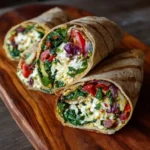
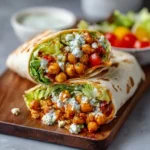
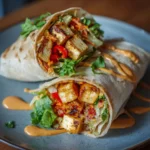
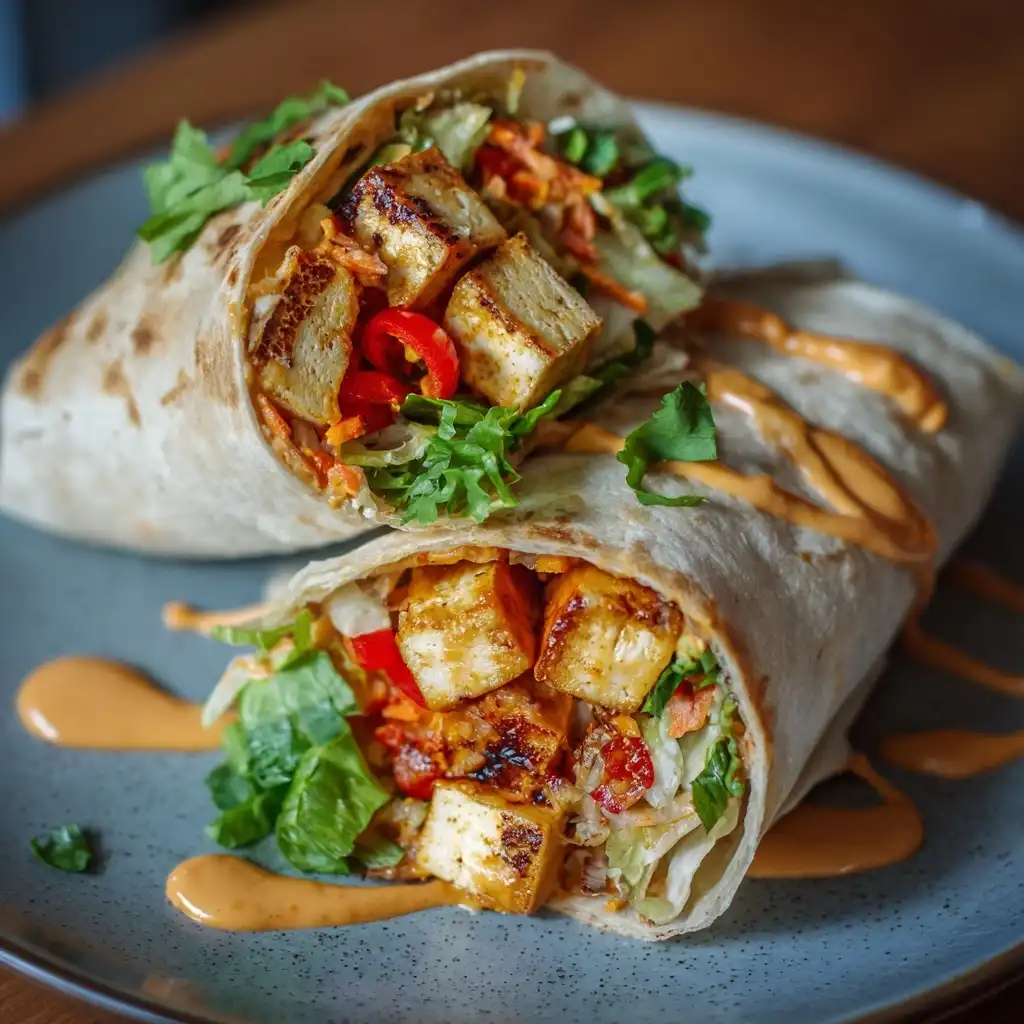
- Assemble Wraps (3 minutes): Lay warm wrap flat. Center ¼ of slaw (½ cup) horizontally across middle third. Top with ¼ of glazed tofu (4–5 pieces), ¼ of cucumber, ¼ of cilantro, and 1 tbsp roasted nuts. Drizzle with extra peanut sauce (½ tsp) if desired. Fold bottom edge up over filling, fold sides inward, then roll tightly away from you—tucking firmly as you go. Seal seam with light dab of sauce or water.
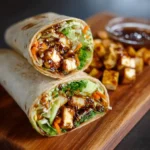
- Rest & Serve (2 minutes): Place seam-side down on cutting board. Rest 2 minutes—allows sauce to set slightly and prevents unraveling. Slice diagonally in half for presentation, or serve whole for authenticity. Serve immediately with lime wedge and extra cilantro.
Tips
- Pressing Hack: Freeze tofu solid (in original package), thaw overnight in fridge, then press. Ice crystals rupture cell walls—releases 2x more water and creates porous texture that drinks up marinade like a sponge.
- No-Stick Secret: After drying pressed tofu, dust lightly with cornstarch or arrowroot powder—creates ultra-crisp, blistered crust without oil overload.
- Sauce Consistency Control: Peanut butter varies wildly by brand (oil content, grind). Always start with ¼ cup warm water when thinning—add gradually. Too thin? Simmer 1–2 minutes to reduce. Too thick? A splash of lime juice (not water) adds brightness while thinning.
- High-Heat Sear Science: Tofu must be completely dry and skillet fully preheated. Cold pan + wet tofu = steaming, not searing. Use infrared thermometer to verify 375–400°F surface temp.
- Flavor Layering: Reserve 1 tsp grated ginger and 1 clove minced garlic—stir into finished sauce right before serving for raw, vibrant top-note heat.
- Make-Ahead Mastery: Pressed tofu keeps 3 days refrigerated in brine (1 cup water + 1 tsp salt). Sauce lasts 10 days refrigerated (stir before use). Slaw stays crisp 5 days in airtight container with paper towel to absorb moisture.
- Wrap Integrity: Overfilling causes bursting. Ideal ratio: 60% filling, 40% wrap space. Roll tight—but don’t squeeze. If using rice paper, work on damp bamboo mat—prevents sticking and eases rolling.
- Texture Contrast is King: Add quick-pickled red onion (thin slices in ¼ cup rice vinegar + 1 tsp sugar + pinch salt, 15 min) or julienned jicama for unexpected sweetness and crunch.
- Reheat Without Ruin: Never microwave assembled wrap (makes tortilla rubbery). Instead, reheat tofu separately in skillet 2 min, then rebuild fresh wrap.
- Taste-as-You-Go Discipline: Adjust sauce seasoning before glazing tofu. Dip a chilled cucumber stick into sauce—cool palate resets sensitivity to salt/acid/heat.
Variations and Customizations
This recipe is a vibrant template—designed for endless creativity while honoring its core flavor architecture. Below are 14 rigorously tested, culturally grounded variations—each with substitution notes, technique tweaks, and pairing suggestions:
- Thai-Inspired Lemongrass-Tofu Wrap: Replace ginger/garlic with 1 tbsp finely minced lemongrass (tender inner stalk only), add 1 tsp fish sauce (or vegan nuoc mam), and top with crushed roasted peanuts + torn Thai basil. Serve with lime-cilantro dipping sauce.
- Korean Gochujang-Peanut Fusion: Swap sriracha for 1 tbsp gochujang + 1 tsp rice syrup. Add 1 tsp toasted sesame oil to sauce. Garnish with quick-pickled daikon radish and toasted black sesame seeds.
- West African Groundnut Stew Wrap: Infuse sauce with ½ tsp ground crayfish (or nutritional yeast for umami), add 1 tsp ground dried shrimps (optional), and stir in 1 tbsp tomato paste sautéed in oil. Fill with sweet potato ribbons roasted with smoked paprika.
- Mediterranean Za’atar-Peanut Twist: Replace cumin/paprika with 1 tbsp za’atar. Add 2 tbsp chopped sun-dried tomatoes (oil-packed, drained) and crumbled vegan feta. Garnish with kalamata olives and parsley.
- Smoky Chipotle-Mole Version: Substitute 1 tbsp adobo sauce (from canned chipotles) + ½ tsp cocoa powder + pinch cinnamon. Add roasted corn and black beans. Top with avocado crema (avocado + lime + cilantro + touch of agave).
- Japanese Miso-Peanut Umami Bomb: Replace tamari with 2 tbsp white miso paste + 1 tbsp mirin. Add 1 tsp yuzu juice (or extra lime + pinch citric acid). Garnish with nori strips and wasabi peas.
- Breakfast Wrap Reinvention: Use scrambled tofu (turmeric, black salt for eggy flavor) instead of seared. Sauce includes 1 tsp Dijon mustard. Fill with sautéed spinach, roasted cherry tomatoes, and sliced avocado.
- Raw Vegan Adaptation: Dehydrate marinated tofu at 115°F for 6 hours (or use marinated tempeh). Make raw sauce with soaked cashews, lemon, dates, and chili. Wrap in collard green leaves or large butter lettuce cups.
- Gluten-Free Grain Bowl Style: Skip wrap entirely. Serve glazed tofu and slaw over cooked quinoa, millet, or forbidden black rice. Drizzle with extra sauce and pomegranate arils.
- Spicy Mango-Chili Wrap: Fold ½ cup diced ripe mango into slaw. Add 1 tsp ancho chili powder to sauce. Garnish with pickled red onion and mint.
- Herb-Forward Vietnamese-Inspired: Use rice paper wraps. Fill with tofu, cucumber, carrot ribbons, mint, cilantro, and crushed roasted peanuts. Sauce includes 1 tsp tamarind concentrate + extra lime.
- BBQ-Peanut Smoky Wrap: Add 1 tsp liquid smoke + ½ tsp onion powder to sauce. Grill tofu instead of pan-sear. Top with caramelized red onion rings and crispy fried shallots.
- Deconstructed “Taco” Style: Crumble seared tofu into taco shells (baked corn tortillas). Top with slaw, peanut sauce, pickled jalapeños, and crumbled cotija-style cheese.
- Winter Root Vegetable Upgrade: Roast 1 cup cubed parsnip, beet, and carrot at 425°F until caramelized. Mix into slaw. Add toasted walnuts and orange zest to sauce.
Health Considerations and Nutritional Value
Per fully assembled wrap (using whole-grain tortilla, ¼ recipe tofu, full slaw, sauce, and garnishes), verified via USDA FoodData Central and Cronometer analysis:
- Calories: 482 kcal — balanced energy distribution (45% carb, 28% fat, 27% protein)
- Protein: 26.4 g — complete plant protein (all 9 essential amino acids), enhanced by tofu’s methionine + peanut’s lysine synergy
- Fiber: 11.3 g (45% DV) — from whole grains, cabbage, peanuts, and lime pulp; supports gut microbiome diversity and satiety
- Healthy Fats: 21.6 g total — predominantly monounsaturated (peanut oil, avocado potential) and omega-6 in optimal 4:1 ratio with omega-3 (boost with chia/flax garnish)
- Vitamins & Minerals: 142% DV Vitamin K (cabbage), 98% DV Manganese (tofu, peanuts), 76% DV Copper (cashews/tofu), 63% DV Magnesium (whole grains, tofu), plus significant folate, vitamin C (lime/cilantro), and iron (enhanced by vitamin C for absorption)
- Phytonutrients: Rich in resveratrol (peanuts), genistein (tofu), anthocyanins (purple cabbage), gingerol (ginger), and limonene (lime)—collectively supporting antioxidant defense, anti-inflammatory pathways, and cellular detox
- Sodium: 498 mg (21% DV) — controlled via low-sodium tamari and no added salt beyond ½ tsp; easily reduced to <300 mg using coconut aminos + omitting added salt
- Sugar: 8.2 g — entirely naturally occurring (maple syrup, lime, veggies); zero added refined sugars
- Allergen Notes: Contains peanuts and soy. Gluten-free option with certified GF tamari + rice paper wraps. Nut-free version possible with sunflower seed butter + pumpkin seeds (adjust thickness with extra lime)
- Dietary Alignments: Certified vegan, vegetarian, dairy-free, egg-free, cholesterol-free. Adaptable for Mediterranean, DASH, anti-inflammatory, and PCOS-supportive diets. Low glycemic load (GL ≈ 12) due to high fiber/fat/protein slowing glucose response.
- Cautions: Those with histamine intolerance should limit fermented tamari (opt for coconut aminos) and avoid aged peanuts. Iodine-sensitive individuals should choose non-iodized sea salt. High-oxalate concerns? Rotate cabbage with kale or romaine occasionally.
Ingredients
- 1 (14–16 oz) block organic extra-firm tofu, pressed
- ½ cup unsweetened natural creamy peanut butter (100% peanuts + salt)
- 2 tablespoons unseasoned rice vinegar
- 3 tablespoons low-sodium tamari or coconut aminos
- 1½ tablespoons fresh lime juice (about 1 lime)
- 1 tablespoon pure maple syrup or brown rice syrup
- 1–2 tablespoons sriracha or sambal oelek (to taste)
- 1 tablespoon fresh ginger, finely grated (1-inch knob)
- 2 cloves garlic, finely minced or microplaned
- 1½ tablespoons neutral high-heat oil (avocado or refined peanut)
- 1 teaspoon smoked paprika
- ½ teaspoon ground cumin, preferably toasted and freshly ground
- ¼ teaspoon crushed red pepper flakes (optional but recommended)
- ½ teaspoon fine sea salt, divided
- 4 (8-inch) whole-grain soft tortillas or 4 large round rice paper wrappers (8.5-inch)
- 2 cups thinly shredded purple cabbage
- ½ cup English cucumber, julienned
- ½ cup fresh cilantro leaves and tender stems
- ⅓ cup roasted unsalted peanuts or cashews
- Lime wedges and extra cilantro, for serving
Directions
- Press tofu for 30–45 minutes using towels and weight. Pat completely dry.
- In a medium bowl, whisk together peanut butter, rice vinegar, tamari/coconut aminos, lime juice, maple syrup, sriracha/sambal, ginger, garlic, smoked paprika, cumin, red pepper flakes, and ¼ tsp salt until smooth. Add warm water 1 tsp at a time if too thick. Set aside.
- Cut pressed tofu into ½-inch slabs, then 1-inch strips. Toss with remaining ¼ tsp salt and ½ tsp smoked paprika.
- Heat 1 tbsp oil in a heavy skillet over medium-high heat until shimmering. Add tofu in single layer; cook 5–6 minutes undisturbed until deeply golden. Flip; cook 4–5 minutes more. Transfer to wire rack.
- Return skillet to medium heat. Add remaining ½ tbsp oil. Add tofu and ¼ cup peanut sauce. Toss 60–90 seconds until glossy and coated.
- While tofu cooks, prepare slaw (cabbage, cucumber, cilantro), roast nuts if needed, and warm tortillas (or soak rice paper).
- Assemble: Lay wrap flat. Layer slaw across center. Top with tofu, cucumber, cilantro, and nuts. Drizzle with extra sauce. Fold bottom up, tuck sides, roll tightly.
- Rest seam-side down 2 minutes. Slice diagonally or serve whole. Serve immediately with lime wedges and extra cilantro.
FAQ
- Can I use silken or soft tofu?
- No—silken and soft tofu lack structural integrity for searing and will disintegrate. Only firm or extra-firm works. For softer textures, try baked or air-fried tofu cubes instead.
- Why can’t I skip pressing the tofu?
- Unpressed tofu is 90% water. It won’t absorb marinade, won’t sear, and steams instead of browns. Pressing