Introduction
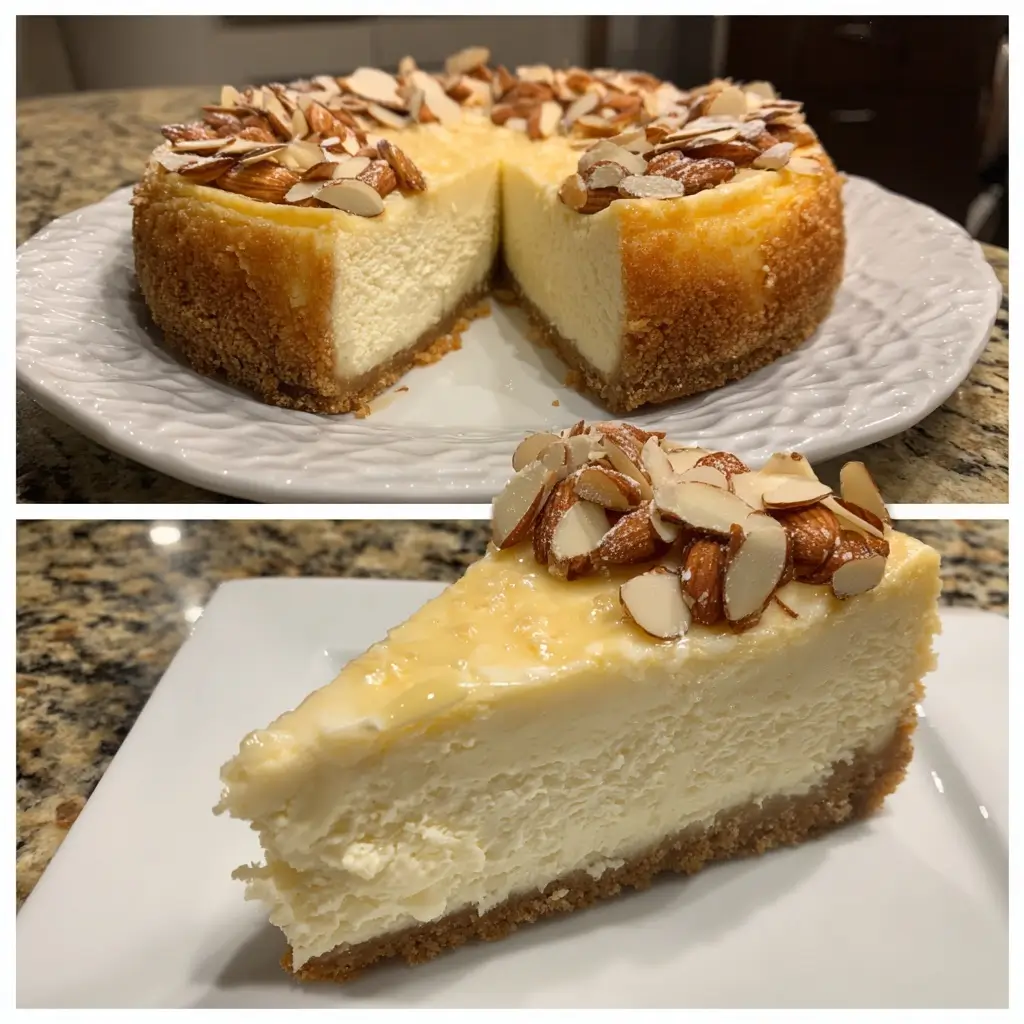
Welcome to the ultimate guide to crafting a luscious, velvety, and deeply aromatic Vanilla Almond Cheesecake—a dessert that marries the creamy richness of classic New York–style cheesecake with the warm, nutty sophistication of toasted almonds and the pure, fragrant elegance of premium vanilla. This isn’t just another cheesecake; it’s a meticulously balanced confection where every component—from the crisp, buttery almond-infused crust to the cloud-like, slow-baked filling and the delicate almond-vanilla glaze—has been thoughtfully engineered for texture, depth, and harmony. Whether you’re a seasoned baker seeking refinement or a home cook eager to impress with a showstopping, restaurant-worthy treat, this recipe delivers both reliability and artistry. Its subtle yet unmistakable almond presence—never overpowering, always complementary—elevates the familiar comfort of cheesecake into something uniquely refined, elegant, and deeply satisfying.
The History
The evolution of the Vanilla Almond Cheesecake is a delicious tapestry woven from centuries of culinary tradition and transatlantic innovation. At its core lies the ancient lineage of cheesecakes, dating back to ancient Greece, where simple mixtures of cheese, honey, and wheat were served at Olympic games as early energy foods. Roman adaptations spread the concept across Europe, and by the Middle Ages, European bakers were experimenting with regional cheeses, nuts, and spices. Almonds—prized since antiquity for their richness, versatility, and symbolic associations with prosperity and purity—were frequently ground into pastes (marzipan), slivered for garnish, or infused into dairy-based desserts across Spain, Italy, and the Ottoman Empire. Meanwhile, Madagascar Bourbon vanilla, cultivated since the 1840s using hand-pollination techniques developed by Edmond Albius, became the gold standard for aromatic depth and complexity.
The modern American cheesecake emerged in the late 19th and early 20th centuries with the advent of cream cheese—first commercially produced by William Lawrence in Chester, NY, in 1872—and was popularized by establishments like Lindy’s in New York City. The fusion of these two iconic ingredients—vanilla and almond—gained momentum in mid-century American baking, inspired by California’s burgeoning almond industry and the rise of gourmet dessert culture. Cookbooks from the 1950s and ’60s began featuring “almond-cream cheese” variations, often using almond extract or crushed nuts in the crust. However, the contemporary Vanilla Almond Cheesecake—as a fully integrated, multi-layered expression—represents a 21st-century renaissance: one that honors tradition while embracing precision baking science, whole-food integrity (e.g., using real almond paste instead of artificial flavorings), and global flavor sensibilities. Today, it stands as a beloved staple at artisanal bakeries, wedding dessert tables, and mindful home kitchens alike—a testament to how time-honored ingredients, when treated with reverence and technique, can evolve into something both nostalgic and refreshingly new.
Ingredients Breakdown
Every element of this Vanilla Almond Cheesecake has been selected not only for flavor but for functional performance—ensuring structural integrity, optimal texture, and layered aromatic nuance. Below is a comprehensive, chef-level breakdown of each ingredient’s purpose, sourcing notes, and substitution rationale:
- Full-Fat Cream Cheese (32 oz / 900 g, room temperature): The foundational base. Must be full-fat (not low-fat or whipped) for proper emulsification, density, and tang. Philadelphia brand is widely reliable, but high-quality local or European varieties (e.g., Kiri or Saint André) add nuanced lactic depth. Temperature is non-negotiable—cold cream cheese causes lumps and overmixing; overly warm cheese leads to curdling. Let sit uncovered at room temperature (68–72°F) for 2–3 hours before use.
- Heavy Cream (¾ cup / 180 ml, cold): Adds luxurious silkiness and fat content without thinning the batter. Cold cream helps stabilize the mixture during mixing and contributes to a smoother, less dense crumb. Ultra-pasteurized cream works but may yield slightly less airy results than pasteurized; avoid half-and-half or milk—they lack sufficient fat and introduce excess water.
- Sour Cream (¾ cup / 180 g, full-fat, room temperature): Provides acidity to balance sweetness, enhances tenderness via protein denaturation, and contributes to that signature slight tang and moist crumb. Opt for brands with live cultures (e.g., Daisy or Nancy’s) for superior flavor complexity. Never substitute with Greek yogurt unless strained thoroughly—its higher protein and lower fat alter texture significantly.
- Granulated Sugar (1¼ cups / 250 g): Sweetens, aids in aeration during creaming, and contributes to browning and structure. Fine granulation ensures even dissolution. For refined elegance, consider organic cane sugar or turbinado—but reduce by 1 tbsp if using less-processed sugars, as they contain trace molasses that can affect pH and set.
- Eggs (4 large, room temperature, plus 1 yolk): Eggs provide binding, leavening (via steam expansion), and richness. The extra yolk adds emulsifying lecithin and deepens color and mouthfeel. Room temperature prevents thermal shock and promotes homogeneity. Always add eggs one at a time, mixing *just until incorporated*—overmixing introduces air bubbles that expand and collapse during baking, causing cracks.
- Pure Vanilla Extract (2 tbsp / 30 ml) + Vanilla Bean Paste (1 tbsp / 15 g): A dual-vanilla strategy for maximum impact. The extract delivers volatile top notes and immediate aroma, while the paste—made from real scraped beans, seeds, and thickening agents—provides visual speckling, deeper bass notes, and heat-stable flavor compounds. Madagascar Bourbon is ideal; Mexican or Tahitian vanillas offer floral or fruity accents. Avoid imitation extracts—they taste sharp and medicinal when baked.
- Almond Extract (1½ tsp / 7.5 ml, pure, not imitation): The soul of the almond profile. Pure extract is distilled from bitter almond oil (benzaldehyde) and ethanol—intensely aromatic but used sparingly to avoid medicinal bitterness. Imitation versions often contain synthetic benzaldehyde without supporting esters, resulting in flat, harsh flavor. For ultra-authenticity, supplement with 2 tbsp finely ground blanched almonds (toasted) added directly to the batter.
- Unsalted Butter (6 tbsp / 85 g, melted and cooled): Used exclusively in the crust for richness, flakiness, and binding. Melted (not clarified) to ensure even distribution; cooled to lukewarm so it doesn’t melt the graham cracker crumbs or prematurely soften the cream cheese base. European-style butter (82–84% fat) yields a more tender, flavorful crust.
- Almond Flour (1 cup / 96 g, ultra-fine, blanched): Not almond meal—this is finely ground from skinless almonds, yielding a light, dry, subtly sweet flour with no grit. It adds nutty flavor, moisture retention, and gluten-free structure to the crust. Sift before measuring to prevent clumping. Toasting it lightly (350°F for 5–7 minutes, cooled completely) intensifies aroma dramatically.
- Graham Cracker Crumbs (1½ cups / 150 g, about 12 full sheets): Provides structure, caramel notes, and textural contrast. Use plain, cinnamon-free graham crackers for neutrality. Pulse in a food processor until fine—no visible shards. For enhanced almond synergy, replace ¼ cup of crumbs with finely ground toasted sliced almonds.
- Sea Salt (¾ tsp fine, plus pinch for crust): Critical for flavor amplification and balancing sweetness. Fine sea salt dissolves evenly; avoid coarse flakes in the batter. A tiny pinch in the crust enhances the almond and butter notes without perceptible saltiness.
- Optional Garnish Elements: Toasted almond slices (blanched, tossed in melted butter and flaky sea salt, baked at 325°F for 8–10 min), candied vanilla beans (thin strips simmered in simple syrup with scraped seeds), edible dried lavender buds (for floral contrast), or a glossy almond-vanilla mirror glaze (see Variations section).
Step-by-Step Recipe
This method prioritizes control, consistency, and crack prevention—leveraging proven techniques including the water bath, gradual temperature ramp-up, and precise cooling protocol. Allow 2 days for optimal results (bake Day 1, chill overnight, serve Day 2).
- Prepare the Springform Pan (Day Before Baking): Wrap the *exterior* of a 9-inch (23 cm) heavy-duty springform pan tightly with *two overlapping layers* of heavy-duty aluminum foil—ensure full coverage from base to top rim to prevent water seepage. Place on a large, rimmed baking sheet (like a half-sheet pan) for stability. Set aside.
- Make the Almond-Graham Crust: In a medium bowl, whisk together graham cracker crumbs, almond flour, 2 tbsp granulated sugar, and a pinch of fine sea salt. Pour in melted, cooled butter and stir with a fork until all crumbs are evenly moistened and the mixture resembles wet sand. Press firmly and evenly into the bottom *and 1 inch up the sides* of the prepared pan using the bottom of a flat measuring cup or glass. Chill uncovered for at least 30 minutes (or freeze for 15 min) to set.
- Pre-Bake the Crust: Preheat oven to 350°F (175°C). Bake chilled crust for 10 minutes. Remove, gently prick base with a fork to prevent bubbling, and cool completely on a wire rack (≈30 min). Reduce oven temperature to 325°F (160°C) for cheesecake baking.
- Prepare the Water Bath: Fill a large roasting pan (larger than your springform) with 1–2 inches of *hot tap water* (≈120°F)—not boiling, to avoid sudden steam surges. Place the prepared, cooled crust inside the roasting pan *before* adding batter. Have a kettle of just-boiled water ready for topping up later.
- Cream the Base: Using a stand mixer fitted with the paddle attachment (or hand mixer on medium-low), beat cream cheese on medium speed for 1 minute until smooth and lump-free. Scrape down bowl and beater. Add sugar and beat 2 minutes until pale and fluffy—do not rush this step; it incorporates vital air. Scrape again.
- Incorporate Dairy Gradually: Add sour cream and heavy cream in *two alternating additions*, beating on low speed for 15 seconds after each, just until blended. Scrape bowl thoroughly. Overmixing at this stage causes whey separation and cracking.
- Add Eggs with Precision: Beat in eggs *one at a time*, mixing on low for *only 10 seconds* after each addition until just combined and yolk disappears. Add extra yolk last, same protocol. Pause to scrape bowl after each egg. Batter should be homogeneous but still slightly glossy—not stiff or frothy.
- Infuse Flavor Thoughtfully: With mixer on lowest speed (or by hand with a silicone spatula), fold in vanilla extract, vanilla bean paste, almond extract, and ¼ tsp fine sea salt. Mix *no more than 15 seconds*. Overmixing here develops gluten-like proteins in the dairy, increasing risk of toughness and fissures. Optional: Gently fold in 2 tbsp finely ground toasted almonds.
- Strain & Pour: Strain batter through a fine-mesh sieve into a large pouring pitcher or spouted bowl to eliminate any undissolved sugar granules or micro-lumps. Slowly pour into the chilled crust, smoothing top with an offset spatula. Tap pan firmly on counter *twice* to release large air bubbles.
- Bake with Thermal Control: Carefully place roasting pan with springform into preheated 325°F oven. Immediately pour enough *just-boiled water* into the roasting pan to reach halfway up the springform’s sides (≈1.5 inches). Close oven door gently—avoid jostling. Bake for 1 hour 15 minutes. The cake is done when edges are puffed and set, center is *slightly* jiggly (like firm Jell-O) but not sloshy, and internal temperature reads 150–152°F (65–67°C) on an instant-read thermometer inserted 1 inch from edge.
- Gradual Cooling (Critical Step): Turn oven OFF. Crack oven door open 1 inch with a wooden spoon. Let cake cool *in the water bath* for 1 hour. Then, carefully lift springform out of water bath, remove foil, and run a thin knife around inner edge to loosen. Cool on wire rack for another hour at room temperature.
- Chill Overnight: Refrigerate uncovered for *minimum 12 hours*, ideally 24–48 hours. This slow, cold hydration allows starches and proteins to fully relax, yielding unparalleled sliceability and flavor melding. Do not cover until fully chilled—condensation causes surface stickiness.
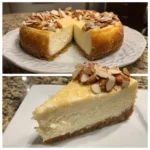
- Unmold & Serve: Run warm knife around perimeter again. Release springform collar. Slide thin metal spatula under crust to lift onto serving plate. Garnish as desired. For clean slices, dip knife in hot water and wipe dry between cuts.
Tips
- Room Temperature Is Non-Negotiable: All dairy and eggs must be truly room temperature (68–72°F), not just “out of the fridge for 30 minutes.” Use a thermometer for accuracy—especially critical for cream cheese and eggs. Cold ingredients cause lumps, poor emulsification, and uneven baking.
- Foil Wrapping Technique Matters: Use *heavy-duty* foil. Fold corners like wrapping a present—tight, seamless, and double-layered. Test for leaks by filling wrapped pan with water and letting sit for 5 minutes before baking day.
- Straining Is Your Secret Weapon: Don’t skip straining the batter. It removes micro-lumps, undissolved sugar, and air bubbles—directly preventing surface imperfections and ensuring silkiness.
- Thermometer > Visual Cues: Rely on internal temperature (150–152°F at 1″ from edge) over jiggle tests alone. Underbaked centers weep; overbaked ones crack and dry out. An instant-read thermometer is indispensable.
- Patience in Chilling Transforms Texture: Rushing the chill leads to soft, crumbly slices and muted flavors. The 24-hour minimum allows proteins to fully hydrate and set, while volatile compounds mellow and harmonize.
- Knife Discipline Prevents Tears: Use a long, thin, non-serrated knife. Heat in near-boiling water for 10 seconds, dry *thoroughly*, slice with gentle downward pressure (no sawing), and repeat for each cut. Wipe blade clean between slices.
- Almond Toasting Elevates Everything: Toast almond flour *and* sliced almonds separately at 325°F for 5–7 minutes until fragrant and golden. Cool completely before use—this deepens nuttiness exponentially and avoids raw, grassy notes.
- Acid Balance Prevents Curdling: If substituting sour cream, add ½ tsp lemon juice or white vinegar to your alternative (e.g., full-fat yogurt) and let sit 5 minutes before using. Acid stabilizes dairy proteins during heating.
- Altitude Adjustments: Above 3,000 ft: Reduce sugar by 1 tbsp, increase flour in crust by 1 tsp, and bake at 335°F for first 20 minutes, then reduce to 315°F. Water bath remains essential.
- Freezing for Longevity: Unfrosted, fully chilled cheesecake freezes beautifully for up to 3 months. Wrap *tightly* in plastic wrap, then foil. Thaw overnight in fridge—never at room temperature—to preserve texture.
Variations and Customizations
This Vanilla Almond Cheesecake serves as a luminous canvas for creative interpretation—each variation preserving the core harmony while introducing exciting new dimensions. All modifications maintain structural integrity and bake-time compatibility.
- Almond-Vanilla Mirror Glaze: Combine ½ cup heavy cream, ¼ cup glucose syrup (or light corn syrup), and 1 tbsp gelatin bloomed in 3 tbsp cold water. Heat cream mixture to 212°F (100°C), remove from heat, stir in gelatin until dissolved, then whisk in 1 cup white chocolate (chopped, tempered) and 1 tsp each pure vanilla and almond extract. Cool to 90°F (32°C), then pour over *fully chilled* cheesecake. Creates a stunning, reflective, jewel-like finish with subtle nutty sweetness.
- Roasted Almond & Honey Swirl: Before pouring batter, prepare a swirl by combining ⅓ cup roasted, finely chopped almonds, 3 tbsp warmed local honey, and 1 tsp almond extract. Drop spoonfuls over batter and drag with a toothpick in figure-eights for elegant marbling.
- Vanilla-Bean Almond Crème Anglaise: Serve slices with a silken, pourable sauce: infuse 1 cup whole milk and 1 split vanilla bean (seeds scraped in) over low heat for 15 minutes. Whisk into 4 egg yolks + ¼ cup sugar; cook gently in double boiler to 170°F (77°C), strain, stir in 2 tbsp cold unsalted butter and ½ tsp almond extract. Chills to perfect drizzling consistency.
- Gluten-Free Adaptation: Replace graham crackers with 1½ cups certified GF almond graham-style cookies (e.g., Schär or Pamela’s) or a blend of ¾ cup almond flour + ¾ cup GF oat flour + 2 tbsp coconut sugar. Ensure all extracts and additives are GF-certified.
- Vegan Version (Dairy & Egg-Free): Use soaked raw cashews (2 cups, drained), ⅓ cup coconut oil (refined for neutral flavor), ⅓ cup maple syrup, ¼ cup almond milk, 3 tbsp almond butter, 2 tbsp vanilla, 1½ tsp almond extract, 2 tbsp lemon juice, and 1 tsp apple cider vinegar. Blend until ultra-smooth, pour into GF almond-oat crust, and bake in water bath at 325°F for 60–70 minutes. Chill 12+ hours.
- Mini Individual Cheesecakes: Use lined muffin tins (with foil or parchment collars). Reduce bake time to 22–26 minutes; check at 20 min. Cool in pan 15 min, then refrigerate uncovered 2+ hours before unmolding. Perfect for parties or portion control.
- Boozy Infusion: Add 2 tbsp high-quality amaretto or Frangelico to the batter along with extracts. Reduce heavy cream by 1 tbsp to compensate for added liquid. Enhances complexity without compromising set.
- Floral Accent Variation: Steep 1 tsp dried culinary lavender or 2 small fresh lavender sprigs in warm heavy cream for 20 minutes before straining and adding to batter. Pair with candied violets for garnish—creates a sophisticated Provence-inspired profile.
- Chocolate-Almond Fusion: Press ½ cup finely chopped dark chocolate (70%) into the pre-baked crust before filling. Or fold ⅓ cup chocolate-hazelnut spread (e.g., Nutella) into batter in ribbon pattern. Complements almond’s richness with deep cocoa bitterness.
- Seasonal Fruit Integration: Top chilled slices with a vibrant compote: simmer 1 cup sliced apricots or peaches with 2 tbsp honey, 1 tsp lemon juice, ½ tsp vanilla, and 1 tsp almond extract until jammy (12–15 min). Cool completely before serving.
Health Considerations and Nutritional Value
While inherently indulgent, this Vanilla Almond Cheesecake can be approached mindfully—with transparency, informed substitutions, and contextual awareness. A standard slice (1/12th of 9-inch cake, ≈180 g) provides approximately:
- Calories: 420–460 kcal
- Total Fat: 32–36 g (18–20 g saturated)
- Carbohydrates: 28–32 g (22–26 g sugars)
- Protein: 7–9 g
- Fiber: 1.2–1.5 g (primarily from almond flour and graham crumbs)
- Key Micronutrients: Calcium (12% DV), Phosphorus (15% DV), Vitamin E (8% DV from almonds), Riboflavin (B2), and Choline (from eggs).
Nutritional Highlights & Considerations:
- Almond Flour Benefits: Naturally gluten-free, rich in monounsaturated fats (heart-healthy), vitamin E (potent antioxidant), magnesium, and plant-based protein. Its low glycemic index helps moderate blood sugar response compared to refined flours.
- Cream Cheese Reality Check: High in saturated fat and sodium; however, full-fat dairy is associated with better satiety signaling and nutrient absorption (e.g., fat-soluble vitamins A, D, E, K). Choosing grass-fed or cultured varieties may offer elevated CLA (conjugated linoleic acid) and probiotic potential.
- Sugar Mindfulness: Granulated sugar is used purposefully for texture and browning. For reduction, decrease by up to ¼ cup (50 g) without major structural compromise—though flavor balance shifts toward tang. Natural alternatives like coconut sugar or monk fruit blends require testing for browning and moisture effects.
- Portion Perspective: Enjoyed occasionally as part of a balanced diet, this dessert contributes meaningful nutrients alongside pleasure. Pairing with fresh seasonal fruit or a small handful of raw almonds increases fiber and phytonutrient density.
- Dietary Modifications: Gluten-free, nut-allergy safe (if almonds omitted and substituted with sunflower seed flour), and lower-carb options exist (see Variations). Vegan and keto versions require significant reformulation but are achievable with appropriate binders and sweeteners.
- Mindful Indulgence Principle: Nutrition extends beyond macros—it includes joy, cultural connection, stress reduction, and social nourishment. This cheesecake, made with care and shared with love, holds intrinsic value that transcends its calorie count.
Ingredients
Makes one 9-inch cheesecake (12–14 servings)
- For the Crust:
– 1½ cups (150 g) graham cracker crumbs (about 12 full sheets)
– 1 cup (96 g) ultra-fine blanched almond flour, toasted and cooled
– 2 tablespoons (25 g) granulated sugar
– ¼ teaspoon fine sea salt
– 6 tablespoons (85 g) unsalted butter, melted and cooled to lukewarm - For the Filling:
– 32 ounces (900 g) full-fat brick-style cream cheese, cubed and at true room temperature (68–72°F)
– 1¼ cups (250 g) granulated sugar
– ¾ cup (180 g) full-fat sour cream, at room temperature
– ¾ cup (180 ml) cold heavy cream (≥36% fat)
– 4 large eggs + 1 large egg yolk, at room temperature
– 2 tablespoons (30 ml) pure Madagascar Bourbon vanilla extract
– 1 tablespoon (15 g) vanilla bean paste
– 1½ teaspoons (7.5 ml) pure almond extract
– ¾ teaspoon fine sea salt
– Optional: 2 tablespoons finely ground toasted blanched almonds - For Garnish (Optional):
– Toasted almond slices, flaky sea salt
– Fresh raspberries or blackberries
– Candied vanilla bean ribbons
– Light dusting of powdered sugar or edible gold leaf
Directions
- Preheat oven to 350°F (175°C). Prepare a 9-inch springform pan: wrap exterior tightly with two layers of heavy-duty aluminum foil, covering base and extending up sides. Place on a large rimmed baking sheet.
- In a bowl, whisk graham crumbs, toasted almond flour, 2 tbsp sugar, and pinch of salt. Stir in melted butter until mixture resembles wet sand. Press firmly into bottom and 1 inch up sides of pan. Chill 30 minutes or freeze 15 minutes.
- Bake crust 10 minutes. Remove, prick base with fork, and cool completely on wire rack (≈30 min). Reduce oven to 325°F (160°C).
- Fill large roasting pan with 1–2 inches hot tap water (≈120°F). Place cooled crust inside roasting pan.
- Using stand mixer with paddle, beat cream cheese on medium 1 minute until smooth. Add sugar; beat 2 minutes until pale and fluffy. Scrape bowl.
- Add sour cream and heavy cream in two alternating batches, beating on low 15 seconds after each. Scrape bowl.
- Add eggs one at a time, beating on low 10 seconds after each until just incorporated. Add yolk last. Scrape bowl thoroughly after each addition.
- Fold in vanilla extract,