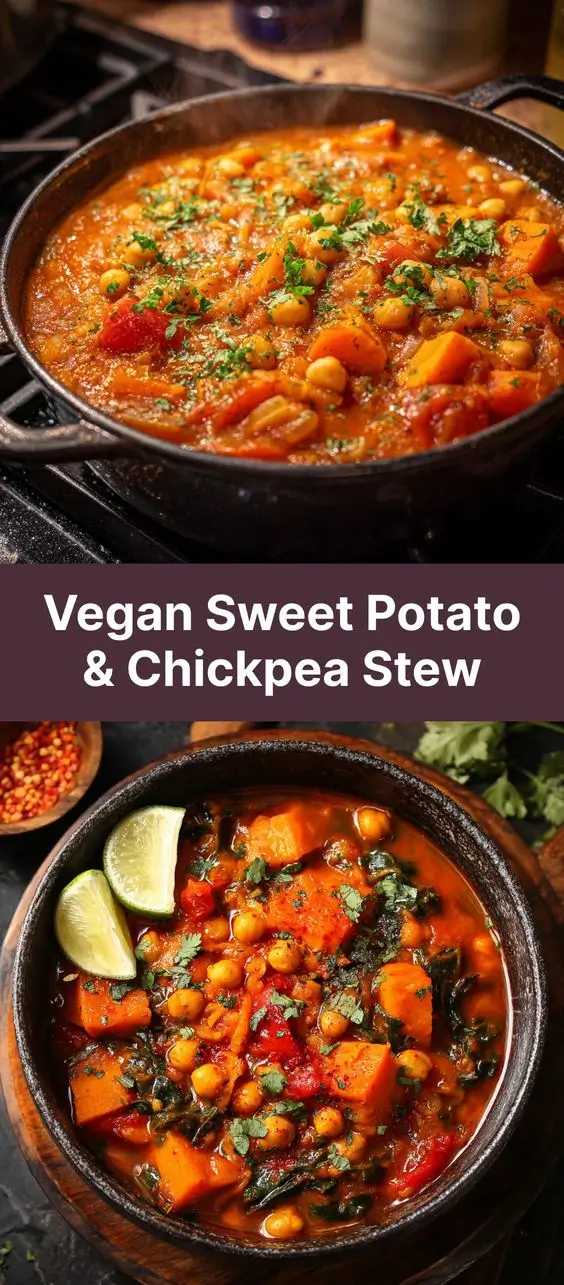
Vegan Sweet Potato & Chickpea Stew: A Hearty, Nutrient-Rich Comfort Dish
If you’re searching for a wholesome, satisfying, and entirely plant-based meal that warms both the body and soul, look no further than this Vegan Sweet Potato & Chickpea Stew. Bursting with earthy flavors, creamy textures, and a blend of aromatic spices, this stew is perfect for chilly evenings, meal prepping, or impressing guests with your culinary skills. Whether you’re a long-time vegan or simply exploring more plant-forward meals, this dish delivers on taste, nutrition, and simplicity.
The History
The roots of combining legumes and root vegetables in stews go back centuries across various cultures, particularly in regions like West Africa, the Middle East, India, and the Mediterranean. In these areas, chickpeas (also known as garbanzo beans) have long been a staple due to their protein content, affordability, and versatility. Similarly, sweet potatoes—native to Central and South America—have spread globally and become integral in African, Caribbean, and Southern American cuisines.
While there isn’t one single origin point for a “sweet potato and chickpea stew,” the fusion of these ingredients reflects modern global culinary trends that celebrate cross-cultural exchange. Contemporary vegan cooking has embraced such combinations to create hearty, meat-free dishes that don’t sacrifice flavor or satiety. This particular recipe draws inspiration from North African tagines, Indian dals, and West African groundnut stews, blending warm spices like cumin, turmeric, and smoked paprika into a rich, aromatic base.
In recent years, as plant-based diets gain popularity for health, environmental, and ethical reasons, recipes like this have emerged as centerpieces in vegan households—offering balanced nutrition, deep flavor profiles, and comforting textures without relying on animal products.
Ingredients Breakdown
Every ingredient in this Vegan Sweet Potato & Chickpea Stew plays a vital role—not just in flavor, but also in texture, nutrition, and overall harmony. Here’s a detailed breakdown:
- Sweet Potatoes: The star vegetable, providing natural sweetness, vibrant color, fiber, and a wealth of vitamins including A (in the form of beta-carotene), C, and B6. Their soft, creamy texture when cooked adds body to the stew.
- Chickpeas: Packed with plant-based protein and dietary fiber, canned or cooked dried chickpeas add heartiness and help keep you full longer. They absorb the surrounding flavors beautifully while maintaining a slight bite.
- Onion and Garlic: These aromatics form the flavor foundation. Sautéed until fragrant, they bring depth and complexity to the entire dish.
- Fresh Ginger: Adds warmth and a subtle zing. It complements the sweetness of the potatoes and enhances digestion.
- Olive Oil: Used sparingly for sautéing, it provides healthy monounsaturated fats and helps bloom the spices properly.
- Tomato Paste: Concentrated tomato flavor that deepens the stew’s richness and adds a touch of umami. It also helps thicken the sauce slightly.
- Vegetable Broth: The liquid base—preferably low-sodium so you can control the salt level. Choose organic or homemade if possible for best flavor.
- Canned Diced Tomatoes: Introduce acidity and moisture, balancing the sweetness of the potatoes. Fire-roasted tomatoes can add an extra smoky dimension.
- Coconut Milk: Full-fat canned coconut milk lends creaminess and a tropical undertone. Its fat content carries the spices well and gives the stew a luxurious mouthfeel.
- Spices (Cumin, Coriander, Turmeric, Smoked Paprika, Cinnamon): Each spice contributes uniquely:
- Cumin: Earthy and warm, enhances savory notes.
- Coriander: Citrusy and slightly sweet, balances heavier elements.
- Turmeric: Offers a golden hue and anti-inflammatory benefits.
- Smoked Paprika: Imparts a subtle smokiness, mimicking slow-cooked depth.
- Cinnamon: Just a pinch elevates warmth without making the dish taste dessert-like.
- Kale or Spinach: Leafy greens boost the nutrient profile with iron, calcium, and antioxidants. Added at the end to retain color and texture.
- Lemon Juice: Brightens the final dish, cutting through richness and enhancing other flavors.
- Optional Add-ins: Red lentils (for thickening), harissa paste (for heat), nutritional yeast (for cheesy umami), or fresh herbs like cilantro or parsley.
Step-by-Step Recipe
Ingredients
- 2 tablespoons olive oil
- 1 large yellow onion, diced
- 4 cloves garlic, minced
- 1 tablespoon fresh ginger, grated
- 2 large sweet potatoes (about 3 cups), peeled and cubed into ½-inch pieces
- 2 tablespoons tomato paste
- 1 teaspoon ground cumin
- 1 teaspoon ground coriander
- ½ teaspoon ground turmeric
- ½ teaspoon smoked paprika
- ¼ teaspoon ground cinnamon
- ¼ teaspoon cayenne pepper (optional, for heat)
- 1 can (15 oz) diced tomatoes (fire-roasted preferred)
- 3 cups low-sodium vegetable broth
- 1 can (15 oz) chickpeas, drained and rinsed
- 1 cup full-fat coconut milk
- 2 cups chopped kale or spinach (stems removed)
- Juice of ½ lemon
- Sea salt and freshly ground black pepper, to taste
- Fresh cilantro or parsley, chopped (for garnish)
Directions
- Sauté Aromatics: Heat olive oil in a large pot or Dutch oven over medium heat. Add the diced onion and cook for 5–7 minutes, stirring occasionally, until translucent and beginning to caramelize.
- Add Garlic and Ginger: Stir in the minced garlic and grated ginger, cooking for another 1–2 minutes until fragrant—be careful not to burn them.
- Bloom the Spices: Reduce heat to low. Add cumin, coriander, turmeric, smoked paprika, cinnamon, and cayenne (if using). Stir constantly for about 1 minute to toast the spices and release their essential oils.
- Incorporate Tomato Paste: Push the onions and spices to one side of the pot. Add tomato paste to the cleared space and let it sizzle for 30 seconds before mixing it into the onion mixture. Cook for another minute to deepen its flavor.
- Add Sweet Potatoes: Stir in the cubed sweet potatoes, coating them evenly with the spiced mixture.
- Pour in Liquids: Add the diced tomatoes (with juices), vegetable broth, and drained chickpeas. Stir well to combine.
- Simmer Until Tender: Increase heat to bring the mixture to a boil. Then reduce to a gentle simmer, cover, and cook for 20–25 minutes, stirring occasionally, until the sweet potatoes are fork-tender.
- Stir in Coconut Milk: Once the potatoes are soft, stir in the coconut milk. Simmer uncovered for another 5–10 minutes to allow the flavors to meld and the stew to thicken slightly.
- Add Greens: Fold in the chopped kale or spinach and cook for 3–4 minutes until wilted and vibrant green.
- Finish with Lemon Juice: Remove from heat. Stir in lemon juice, then season with sea salt and black pepper to taste. Start with ½ teaspoon salt and adjust as needed.
- Garnish and Serve: Ladle into bowls and top with fresh cilantro or parsley. Serve hot with optional sides (see variations).
Tips for the Perfect Stew
- Uniform Cutting: Cut sweet potatoes into even-sized cubes to ensure consistent cooking—no mushy or undercooked pieces.
- Don’t Skip Blooming Spices: Toasting the spices in oil unlocks their full aroma and prevents a raw, dusty taste.
- Use Full-Fat Coconut Milk: Light versions will result in a thinner, less creamy stew. Shake the can well before opening or stir thoroughly if separated.
- Balance Sweetness: If the stew tastes too sweet after cooking, add a splash more lemon juice or a dash of apple cider vinegar to balance it.
- Low and Slow Simmer: Avoid boiling vigorously once coconut milk is added, as it may separate. Gentle simmering preserves texture.
- Rest Before Serving: Let the stew sit for 10–15 minutes off the heat. Flavors deepen and harmonize during resting time.
- Make It Ahead: This stew tastes even better the next day! Store in the fridge and reheat gently on the stove.
Variations and Customizations
This recipe is highly adaptable—perfect for experimenting based on dietary needs, seasonal produce, or pantry availability.
- Protein Boost: Add cooked red lentils (½ cup dry, rinsed) with the broth, or toss in some crumbled tempeh or tofu cubes.
- Spicier Version: Add a chopped fresh chili (like jalapeño or serrano) with the onions, or stir in 1–2 teaspoons harissa paste or sriracha along with the tomatoes.
- Root Vegetable Swap: Replace sweet potatoes with carrots, parsnips, or regular potatoes. Or use a mix for variety.
- Greens Rotation: Swap kale with Swiss chard, collard greens, or baby spinach. Adjust cooking times accordingly (tougher greens need more time).
- Curry Twist: Turn this into a coconut curry by adding 1–2 tablespoons of red or yellow curry paste with the spices.
- Grain-Inclusive: Stir in cooked quinoa, brown rice, or millet directly into the stew for a complete one-pot meal.
- Oil-Free Option: Sauté onions and spices in water or broth instead of oil for a whole-food, plant-based (WFPB) version.
- Nutty Flavor: Stir in 2 tablespoons of almond butter or cashew butter at the end for added richness and a nod to West African peanut stews.
- Herb Variations: Use fresh thyme, rosemary, or bay leaves during simmering (remove before serving).
Health Considerations and Nutritional Value
This Vegan Sweet Potato & Chickpea Stew is not only delicious but also nutritionally robust, supporting overall wellness with a balance of macronutrients and micronutrients.
Key Health Benefits:
- High in Fiber: Both sweet potatoes and chickpeas are excellent sources of dietary fiber, promoting digestive health, gut microbiome balance, and stable blood sugar levels.
- Rich in Antioxidants: Beta-carotene (from sweet potatoes) supports eye health and immune function. Turmeric contains curcumin, a powerful anti-inflammatory compound.
- Plant-Based Protein: Chickpeas provide about 15 grams of protein per cup, helping meet daily needs on a vegan diet.
- Heart-Healthy Fats: Coconut milk contains medium-chain triglycerides (MCTs), which may support metabolism. Olive oil contributes heart-friendly monounsaturated fats.
- Low Glycemic Impact: Despite the natural sugars in sweet potatoes, the high fiber and protein content help prevent blood sugar spikes—especially when paired with leafy greens and legumes.
- Supports Weight Management: High volume, low calorie density, and high satiety make this stew ideal for those managing weight.
- Gluten-Free and Allergen-Friendly: Naturally free from gluten, dairy, eggs, and nuts (unless modified), suitable for many special diets.
Nutritional Estimate (Per Serving, serves 6):
| Calories | 320 kcal |
| Protein | 10 g |
| Fat | 14 g (mostly unsaturated) |
| Carbohydrates | 42 g |
| Dietary Fiber | 9 g |
| Sugars | 10 g (naturally occurring) |
| Vitamin A | Over 200% DV (from beta-carotene) |
| Vitamin C | 45% DV |
| Iron | 18% DV |
| Potassium | 25% DV |
Note: Values are approximate and may vary based on specific ingredients used (e.g., light vs. full-fat coconut milk, added grains, etc.).
FAQ
Can I freeze this stew?
Yes! This stew freezes exceptionally well. Cool completely, then store in airtight containers or freezer bags for up to 3 months. Thaw overnight in the fridge and reheat on the stove over low heat, adding a splash of broth or water if needed.
How long does it last in the refrigerator?
Stored in a sealed container, the stew will keep for 5–6 days. Flavors often improve on day two!
Can I make this in a slow cooker?
Absolutely. Sauté onions, garlic, ginger, and spices first (in a pan), then transfer to a slow cooker. Add all remaining ingredients except greens and lemon juice. Cook on low for 6–8 hours or high for 3–4 hours. Stir in greens and lemon juice before serving.
Is canned coconut milk unhealthy?
Not necessarily. Full-fat canned coconut milk is high in saturated fat, but primarily composed of MCTs, which are metabolized differently than long-chain fats. Enjoy in moderation as part of a balanced diet. For lower fat, use light coconut milk—but expect a thinner texture.
Can I use dried chickpeas instead of canned?
Yes, but they must be soaked and cooked beforehand. Use 1½ cups of cooked chickpeas to replace one 15-oz can. Dried beans offer better texture control and reduced sodium.
Why did my coconut milk separate?
Coconut milk can “break” or separate if boiled too rapidly or exposed to high acid (like too much lemon). To prevent this, keep the heat low after adding it and add acidic ingredients off the heat.
What can I serve with this stew?
Excellent served over:
- Cooked brown rice, basmati rice, or quinoa
- Millet or couscous
- Warm flatbread (naan, pita, or roti)
- With a dollop of vegan yogurt or tahini sauce on top
Summary
This Vegan Sweet Potato & Chickpepea Stew is a nourishing, flavorful, and versatile dish that combines the natural sweetness of potatoes with the protein-rich goodness of chickpeas in a spiced coconut-tomato broth.
Perfect for weeknight dinners, meal prep, or sharing with loved ones, it’s a celebration of plant-powered comfort food that’s as good for your body as it is for your taste buds.