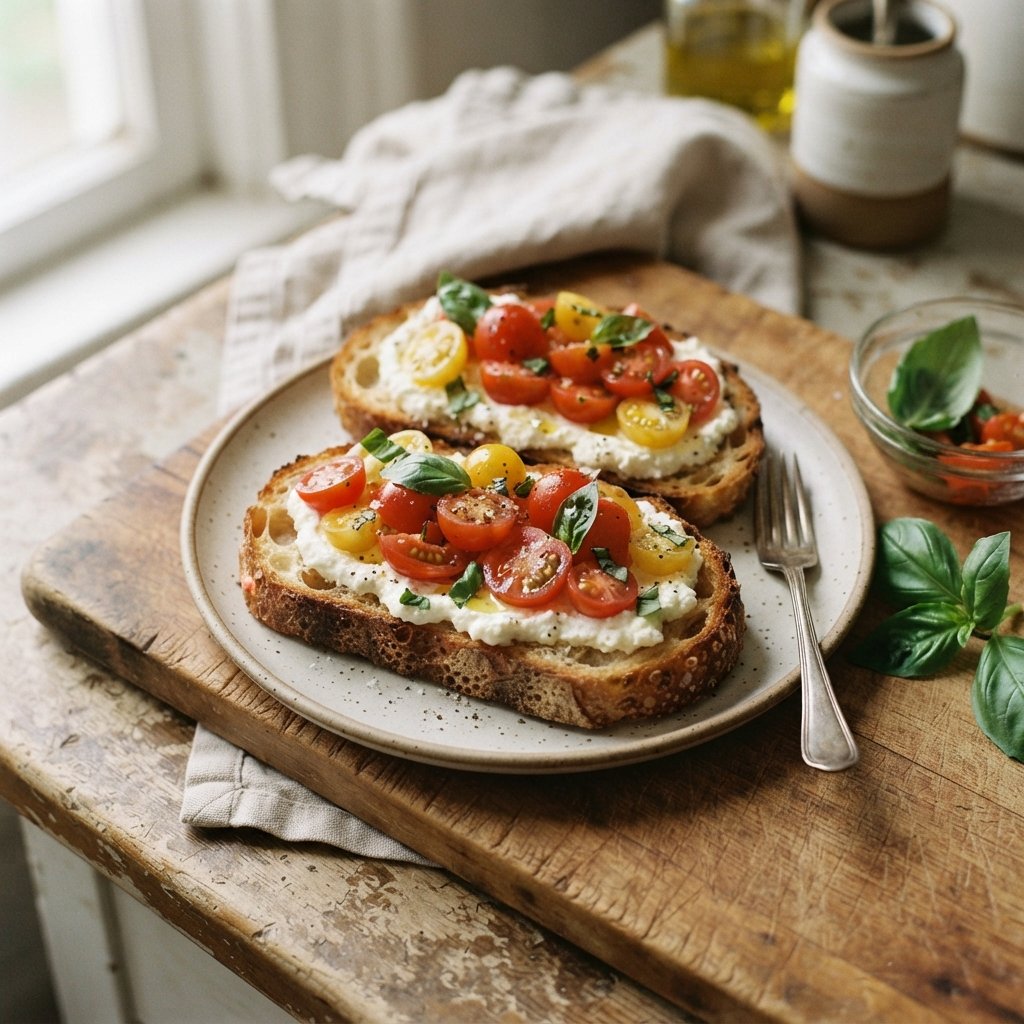
Introduction
In the fast-paced rhythm of modern life, finding a meal that balances simplicity, nutrition, and profound satisfaction can often feel like a daunting task. We frequently find ourselves oscillating between overly complicated recipes that demand hours of preparation and processed convenience foods that leave us feeling sluggish and unsatisfied. However, there exists a golden middle ground—a culinary sweet spot where minimal effort yields maximum flavor and nourishment. The 5-Ingredient Ricotta and Tomato Sourdough Toast is not merely a breakfast option; it is a testament to the philosophy that great food does not require a long ingredient list. It is a celebration of quality over quantity, where each component shines brightly without being overshadowed by unnecessary additives or complex techniques.
This dish has surged in popularity across cafes and home kitchens alike, becoming a staple for those who appreciate the art of slow food even within a quick timeframe. The creamy texture of rich ricotta cheese contrasts beautifully with the acidic brightness of ripe tomatoes, all resting upon a foundation of crunchy, tangy sourdough bread. When drizzled with high-quality olive oil and seasoned with a pinch of sea salt, the result is a symphony of flavors that feels both rustic and refined. Whether you are looking for a quick morning fuel, a light lunch, or an elegant appetizer for guests, this toast delivers on every front. It invites you to slow down, savor the moment, and appreciate the inherent beauty of whole, unprocessed ingredients coming together in perfect harmony.
The History
To truly appreciate the 5-Ingredient Ricotta and Tomato Sourdough Toast, one must delve into the rich historical tapestry of its individual components. Each element carries a legacy that spans centuries and continents, contributing to the cultural significance of this simple dish. The story begins with sourdough, the oldest form of leavened bread known to humanity. Evidence suggests that sourdough fermentation dates back to ancient Egypt around 3700 BCE, where wild yeast and lactobacilli were captured from the environment to leaven dough. This natural fermentation process not only preserved the bread but also enhanced its digestibility and flavor profile, creating the characteristic tang that defines sourdough to this day. In many European cultures, sourdough starters were passed down through generations like family heirlooms, symbolizing sustenance and community.
Ricotta cheese, the creamy heart of this toast, has its roots in ancient Italy. The name “ricotta” translates to “recooked,” referring to the traditional method of producing it from the whey leftover from making other cheeses like mozzarella or provolone. It was a ingenious way for Italian peasants to minimize waste and maximize nutrition, turning a byproduct into a delicate, sweet cheese rich in protein. Similarly, the tomato, now synonymous with Italian cuisine, has a journey of its own. Originating in the Americas, tomatoes were brought to Europe by Spanish explorers in the 16th century. Initially feared as poisonous due to their relation to the nightshade family, they eventually became the cornerstone of Mediterranean cooking. The combination of bread, cheese, and tomatoes echoes the tradition of bruschetta, which originated in central Italy as a way for farmers to test their olive oil harvest on grilled bread. This toast is a modern evolution of that peasant tradition, elevating humble ingredients into a gourmet experience.
Ingredients Breakdown
Understanding the quality and role of each ingredient is crucial to mastering this recipe. Since there are only five components, there is nowhere for poor quality to hide. Each item must be selected with care to ensure the final dish reaches its full potential.
1. Sourdough Bread
The foundation of this toast is the bread. True sourdough is leavened naturally without commercial yeast, resulting in a complex flavor profile and a chewy crust with an airy crumb. Look for a loaf that feels heavy for its size, indicating proper hydration and fermentation. The acidity of the sourdough cuts through the richness of the cheese, providing a necessary balance. Avoid sliced sandwich bread, as it lacks the structural integrity to hold the toppings without becoming soggy. A thick slice from a artisanal boule is ideal.
2. Whole Milk Ricotta Cheese
Ricotta provides the creamy texture that binds the toast together. Whole milk ricotta is preferred over part-skim varieties because the higher fat content contributes to a smoother mouthfeel and richer taste. Fresh ricotta from a local cheesemaker is superior to mass-produced tubs, which often contain stabilizers and fillers. The cheese should be white, moist, and slightly sweet, offering a neutral canvas that allows the other flavors to emerge.
3. Ripe Tomatoes
The tomato brings acidity, sweetness, and juiciness to the dish. The variety matters significantly; heirloom tomatoes offer complex flavors and vibrant colors, while vine-ripe Roma tomatoes provide a firmer texture with fewer seeds. Avoid out-of-season tomatoes that are mealy or lack scent, as they will detract from the overall experience. The goal is to capture the essence of summer sunshine in every bite, so seasonal sourcing is key.
4. Extra Virgin Olive Oil
Olive oil is not just a lubricant here; it is a primary flavor component. A high-quality extra virgin olive oil adds fruity, peppery notes that enhance the natural flavors of the tomatoes and cheese. Look for oil harvested within the last year, stored in dark glass to prevent oxidation. The finish should be clean and pleasant, without any rancidity. This liquid gold ties all the solid ingredients together, adding moisture and luxury.
5. Sea Salt and Black Pepper
While technically two items, salt and pepper are counted as the final seasoning element. Flaky sea salt provides a satisfying crunch and bursts of salinity that elevate the sweetness of the tomatoes. Freshly cracked black pepper adds a subtle heat and aromatic depth. Avoid fine table salt, which dissolves too quickly, and pre-ground pepper, which loses its potency. These final touches are the difference between a good toast and a great one.
Step-by-Step Recipe
Preparing this toast is an exercise in precision and timing. While the steps are few, executing them with attention to detail ensures the best texture and flavor balance. Follow this comprehensive guide to create the perfect slice.
Step 1: Preparation of Ingredients
Begin by washing your tomatoes thoroughly under cool running water. Pat them dry with a clean kitchen towel to remove excess moisture. Slice the tomatoes into rounds or halves, depending on the size of the fruit and your aesthetic preference. If the tomatoes are very juicy, you may wish to remove some of the seeds to prevent the toast from becoming soggy. Next, scoop the ricotta cheese into a small bowl and let it come to room temperature. Cold cheese can be stiff and difficult to spread evenly, so allowing it to warm slightly ensures a silky layer on the bread.
Step 2: Toasting the Sourdough
Preheat your oven broiler or prepare a toaster. If using an oven, place the sourdough slices on a baking sheet and brush them lightly with a tiny amount of olive oil. This helps achieve a golden-brown crispness. Broil for 2 to 3 minutes, watching closely to prevent burning, until the edges are dark and the surface is crunchy. If using a toaster, select a setting that yields a firm toast capable of supporting the weight of the toppings. The goal is a sturdy vessel that remains crisp even after the toppings are applied.
Step 3: Assembling the Base
Once the bread is toasted and still warm, spread a generous layer of ricotta cheese over the surface. Use the back of a spoon to create swirls and peaks, which adds visual appeal and allows for varying thickness in each bite. Do not skimp on the cheese; it should cover the bread from edge to edge. The warmth of the bread will slightly soften the cheese, making it more pliable and aromatic.
Step 4: Adding the Tomatoes
Arrange the tomato slices neatly over the ricotta layer. You can overlap them slightly for a full coverage look or scatter them casually for a rustic appearance. Press them gently into the cheese so they adhere well. If you have sliced the tomatoes thickly, this adds a substantial texture; if thinly, they integrate more seamlessly with the cheese. Ensure the distribution is even so every bite contains both tomato and ricotta.
Step 5: Seasoning and Finishing
Drizzle the extra virgin olive oil over the top in a circular motion, ensuring the tomatoes and cheese are lightly coated. This adds shine and flavor. Immediately follow with a pinch of flaky sea salt and a few cracks of fresh black pepper. The salt should be visible on the surface, providing texture. Serve immediately while the bread is still warm and the cheese is creamy. Delaying service may result in the bread absorbing moisture from the tomatoes, compromising the crunch.
Tips
To elevate your 5-Ingredient Ricotta and Tomato Sourdough Toast from good to exceptional, consider these professional tips and tricks. These insights address common pitfalls and offer ways to enhance the dining experience.
- Temperature Matters: Always allow your ricotta to sit out for 15 minutes before spreading. Cold cheese straight from the refrigerator can tear the bread and lacks the aromatic release that comes when it is slightly warmed.
- Prevent Sogginess: Tomatoes contain a high water content. To prevent your toast from becoming soggy, salt the tomato slices lightly and let them sit on a paper towel for five minutes before assembling. This draws out excess liquid.
- Bread Thickness: Slice your sourdough loaf at least one inch thick. Thin slices may burn before they crisp thoroughly or may break under the weight of the toppings. A thick slice provides a satisfying chew.
- Oil Quality: Taste your olive oil before using it. If it tastes flat or fatty, it will diminish the dish. A peppery, grassy oil complements the acidity of the tomatoes.
- Garlic Rub: For an optional flavor boost, rub a cut clove of raw garlic on the warm toast before adding the ricotta. This adds a subtle pungency that pairs wonderfully with the cheese.
- Herb Garnish: While this is a 5-ingredient recipe, adding fresh basil or oregano leaves as a garnish does not count towards the core structure but adds significant aromatic value.
Variations and Customizations
While the classic five-ingredient version is perfection in its simplicity, there is ample room for creativity and customization based on dietary needs, seasonal availability, or personal taste preferences. Here are several ways to adapt the recipe.
Sweet Variation
For a breakfast twist, swap the black pepper for a drizzle of honey or maple syrup. Add sliced figs or strawberries instead of tomatoes. The ricotta pairs beautifully with sweet fruits, creating a dessert-like toast that is still nutritious.
Protein Boost
To make this meal more filling, add a poached or fried egg on top of the tomatoes. The runny yolk mixes with the ricotta and olive oil to create a rich sauce. Alternatively, top with prosciutto or smoked salmon for a savory, salty kick.
Vegan Adaptation
For a plant-based version, substitute the dairy ricotta with an almond or cashew-based ricotta alternative. These nut-based cheeses mimic the texture well and provide healthy fats. Ensure the bread is vegan-friendly as some sourdoughs may contain dairy or honey.
Spicy Kick
If you enjoy heat, sprinkle red pepper flakes or chili oil over the top instead of black pepper. This adds a warming sensation that contrasts nicely with the cool creaminess of the cheese.
Seasonal Twists
In the autumn, roast the tomatoes beforehand to concentrate their sweetness. In the spring, add pea shoots or microgreens for a fresh, grassy element. Adapt the toppings to what is freshest at your local market.
Health Considerations and Nutritional Value
Beyond taste, this toast offers a robust nutritional profile that supports overall well-being. Understanding the health benefits of each component can help you feel good about what you are eating.
Sourdough Digestibility: The long fermentation process of sourdough bread breaks down gluten and phytic acid, making it easier to digest than standard commercial bread. It also has a lower glycemic index, preventing sharp spikes in blood sugar levels.
Ricotta Protein and Calcium: Ricotta cheese is an excellent source of high-quality protein, which is essential for muscle repair and satiety. It is also rich in calcium, supporting bone health, and contains vitamins A and B12.
Tomato Antioxidants: Tomatoes are loaded with lycopene, a powerful antioxidant linked to reduced risk of heart disease and cancer. They are also high in Vitamin C, potassium, and folate, contributing to immune function and heart health.
Healthy Fats: Extra virgin olive oil is a cornerstone of the Mediterranean diet, known for its monounsaturated fats which support heart health and reduce inflammation. It also aids in the absorption of fat-soluble vitamins from the tomatoes.
Caloric Balance: This meal is relatively moderate in calories but high in satisfaction due to the fiber and protein content. It provides sustained energy without the heaviness associated with processed breakfast foods.
Ingredients
- 2 thick slices of artisanal sourdough bread
- 1 cup of whole milk fresh ricotta cheese
- 2 medium ripe tomatoes, sliced
- 2 tablespoons of high-quality extra virgin olive oil
- Sea salt and freshly cracked black pepper to taste
Directions
- Preheat your oven broiler or set up your toaster for a medium-dark setting.
- Wash and slice the tomatoes into even rounds, removing excess seeds if necessary to reduce moisture.
- Toast the sourdough slices until they are golden brown, crunchy, and firm to the touch.
- While the bread is warm, spread a generous layer of room-temperature ricotta cheese over each slice.
- Arrange the tomato slices evenly on top of the ricotta layer.
- Drizzle the extra virgin olive oil over the tomatoes and cheese.
- Season generously with flaky sea salt and freshly cracked black pepper.
- Serve immediately while the toast is still warm and the textures are distinct.
FAQ
Can I make this toast ahead of time?
It is best served immediately. However, you can toast the bread and slice the tomatoes up to an hour in advance. Assemble just before eating to maintain the crunch of the bread.
Is this recipe gluten-free?
Traditional sourdough contains gluten. To make this gluten-free, use a certified gluten-free sourdough loaf available at many specialty bakeries.
Can I use cottage cheese instead of ricotta?
Yes, though the texture will be different. Cottage cheese is lumpier and less creamy. For a closer match, blend the cottage cheese until smooth before spreading.
How do I store leftover ricotta?
Keep leftover ricotta in an airtight container in the refrigerator for up to five days. Ensure it is covered with whey or water to maintain freshness.
What type of tomato is best?
Heirloom tomatoes offer the best flavor during summer. In winter, cherry tomatoes roasted briefly or high-quality vine-ripe tomatoes are good alternatives.
This 5-Ingredient Ricotta and Tomato Sourdough Toast combines creamy cheese, acidic tomatoes, and crunchy bread for a perfect meal.
It is a quick, nutritious, and delicious option that proves simplicity is the ultimate sophistication in cooking.