Introduction
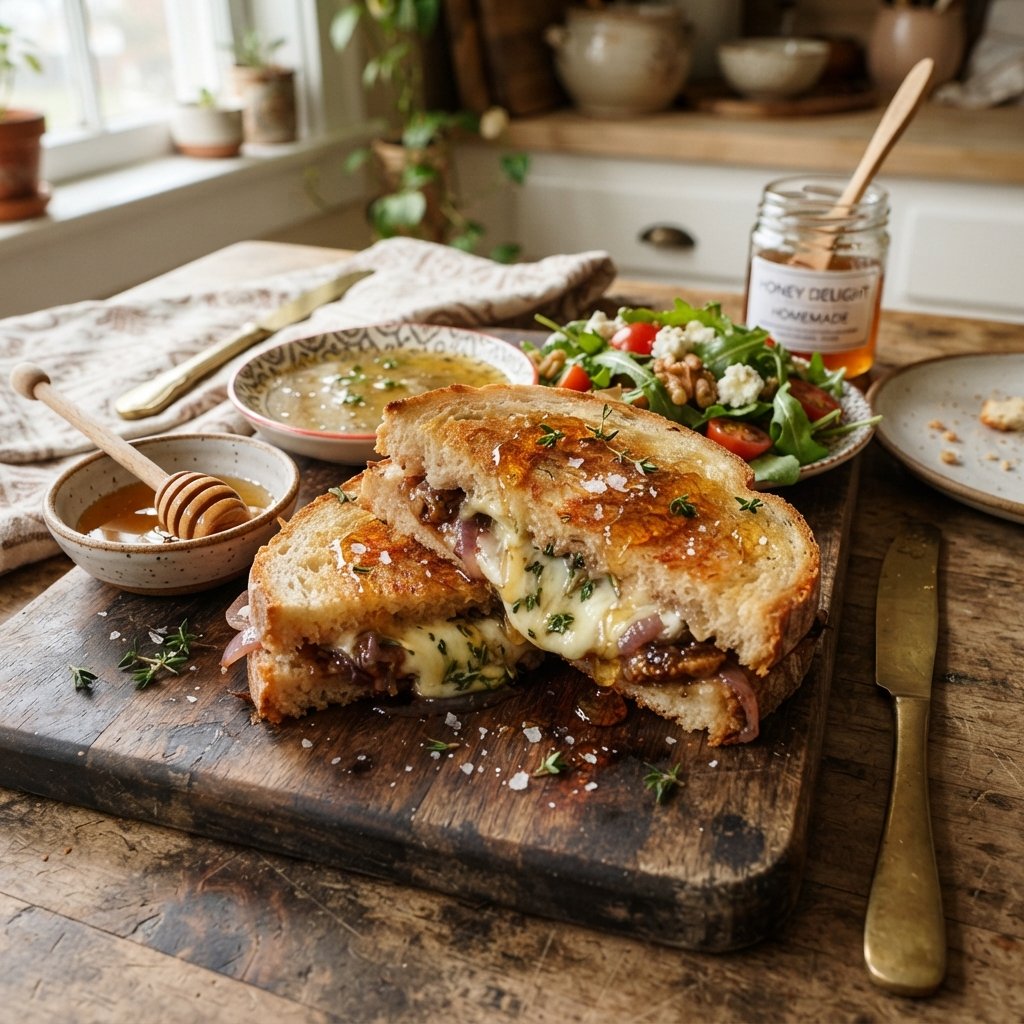
There is something profoundly comforting about the simple act of biting into a perfectly grilled cheese sandwich. The crunch of the toasted bread giving way to the molten, gooey interior is a sensory experience that transcends age and culture. However, for the modern gastronome seeking to elevate this classic comfort food, the traditional combination of cheddar and white bread no longer suffices. Enter the Sweet & Savory Goat Cheese Grilled Cheese with Honey Delight, a culinary masterpiece that bridges the gap between humble nostalgia and sophisticated palates.
This recipe is not merely a sandwich; it is a study in contrast. The tangy, earthy creaminess of fresh goat cheese provides a robust savory foundation, while the floral sweetness of high-quality honey introduces a luxurious finish that caramelizes beautifully against the heat of the pan. When paired with the right artisanal bread, the result is a harmonious blend of textures and flavors that feels both indulgent and refined. Whether you are preparing a quick lunch for yourself or hosting an elegant brunch for friends, this dish promises to deliver satisfaction in every bite.
The allure of this dish lies in its simplicity masked by complexity. While the ingredient list remains approachable, the interplay between the salty cheese, the sweet honey, and the buttery crust creates a depth of flavor typically reserved for much more labor-intensive dishes. It is a testament to the idea that great cooking does not require complicated techniques, but rather a respect for high-quality ingredients and an understanding of how flavors complement one another. Prepare yourself to transform your kitchen into a sanctuary of aroma and taste as we delve into the art of making the ultimate Sweet & Savory Goat Cheese Grilled Cheese.
The History
The Origins of Grilled Cheese
The concept of melting cheese between slices of bread dates back centuries, but the modern grilled cheese sandwich as we know it gained significant traction during the Great Depression in the United States. During this era of economic hardship, cheese and bread were among the few affordable foods available to the masses. It was not until the 1920s, when sliced bread was invented, and the 1930s, when electric griddles became common, that the sandwich became a household staple. Initially, it was often made with open faces under a broiler, but the closed sandwich method fried in butter or margarine became the standard by the 1940s.
The Rise of Goat Cheese
Goat cheese, or chèvre, has a history that stretches back to ancient civilizations in the Mediterranean and Middle East. It was one of the earliest forms of cheese made by humans, valued for its digestibility and distinct flavor profile compared to cow’s milk cheese. For centuries, it remained a regional specialty in France and parts of Europe. However, in the late 20th century, goat cheese experienced a surge in popularity globally, moving from specialty markets to mainstream grocery stores. This democratization of chèvre allowed home cooks to experiment with its unique tangy properties in various dishes, including melted applications.
The Sweet and Savory Fusion
The combination of sweet and savory flavors is not a modern invention; ancient Roman cuisine often mixed honey with cheese and meats. However, the specific trend of adding honey to grilled cheese sandwiches is a relatively recent phenomenon in contemporary gastronomy. As food culture evolved in the 2000s and 2010s, chefs began experimenting with “gourmet” twists on comfort foods. The pairing of honey with sharp or tangy cheeses became a popular motif in cheese boards, which naturally translated into hot sandwiches. This recipe represents the culmination of that historical evolution, merging the Depression-era survival food with ancient flavor pairings to create a modern delicacy.
Ingredients Breakdown
To achieve the perfect balance of flavors, one must understand the role each component plays in the final construction of the sandwich. Selecting the right version of each ingredient is crucial for maximizing the sensory experience.
The Bread
The structure of your grilled cheese depends entirely on the bread. While white sandwich bread offers nostalgia, it lacks the structural integrity to hold the heavier goat cheese and honey without becoming soggy. A sturdy sourdough loaf is highly recommended due to its tangy flavor profile which complements the goat cheese, and its thick crust which provides a satisfying crunch. Alternatively, a rustic country white or a seeded multigrain bread can add nutty undertones that pair well with the honey. The slices should be thick enough to withstand the heat but thin enough to allow the heat to penetrate and melt the cheese efficiently.
The Goat Cheese
Not all goat cheeses are created equal. For this recipe, you want a fresh, creamy chèvre log rather than an aged, crumbly variety. The fresh cheese melts into a luscious, velvety texture that coats the bread, whereas aged goat cheese tends to separate and become oily when heated. Look for a plain variety without added herbs or garlic, as you want the natural tang of the milk to shine through against the sweetness of the honey. If the cheese is too cold from the refrigerator, it may not melt evenly, so temperature management is key.
The Honey
Honey is the star of the show in this sweet and savory dynamic. A generic processed honey blend may lack the complexity needed to stand up to the strong flavor of the goat cheese. Opt for a raw, unfiltered honey or a variety with distinct floral notes, such as clover, orange blossom, or wildflower. The viscosity of the honey is also important; it should be thick enough to drizzle without running off the sandwich entirely. Infused honeys, such as those with a hint of chili or lavender, can also add an extra layer of sophistication to the dish.
The Fat
Traditionally, grilled cheese is made with butter, and for good reason. Butter contains milk solids that brown beautifully, creating the iconic golden crust and nutty aroma. Salted butter is preferred as it enhances the overall flavor profile, reducing the need for additional seasoning. However, for a higher smoke point, some cooks prefer mayonnaise on the outside of the bread. For this specific recipe, high-quality European-style butter with a higher fat content is recommended to ensure a rich, crispy exterior that contrasts with the soft interior.
Step-by-Step Recipe
Creating this masterpiece requires patience and attention to heat management. Follow these detailed steps to ensure your grilled cheese is golden, melted, and perfectly balanced.
- Preparation of Ingredients: Begin by removing the goat cheese from the refrigerator at least 15 minutes before cooking. Allowing it to come closer to room temperature ensures it melts evenly without requiring excessive heat that might burn the bread. Slice your bread to your desired thickness, ideally around half an inch.
- Buttering the Bread: Spread a generous layer of softened butter on one side of each slice of bread. Ensure you cover the surface all the way to the edges. This buttered side will face the pan, creating the crispy crust. Do not skimp on the butter, as it is essential for the texture.
- Assembling the Sandwich: Place one slice of bread butter-side down on a clean cutting board. Spread the goat cheese evenly over the non-buttered side. Be generous, but leave a small border to prevent excessive oozing. Drizzle the honey over the goat cheese. You can also place the honey on the inside of the top slice of bread if you prefer less direct contact with the heat.
- Heating the Pan: Place a cast-iron skillet or a heavy-bottomed non-stick pan over medium-low heat. It is crucial to avoid high heat, which will burn the bread before the cheese has a chance to melt. Allow the pan to preheat for a minute.
- Cooking the First Side: Place the assembled sandwich into the pan, butter-side down. Press down gently with a spatula to ensure even contact with the hot surface. Cook for approximately 3 to 4 minutes. Watch closely for the color to turn a deep golden brown.
- Flipping and Finishing: Carefully flip the sandwich using a spatula. Cook the second side for another 3 to 4 minutes. If you find the bread is browning too quickly before the cheese melts, reduce the heat and cover the pan with a lid for a minute to trap steam and assist the melting process.
- Resting and Serving: Once both sides are golden and the cheese is visibly molten, remove the sandwich from the pan. Let it rest on a cutting board for one minute. This allows the cheese to set slightly so it does not spill out immediately upon cutting. Slice diagonally and serve while warm.
Tips
- Low and Slow: The most common mistake in making grilled cheese is using heat that is too high. Goat cheese has a different melting point than cheddar. Patience is key; low heat ensures the interior melts completely while the exterior achieves a perfect crisp without charring.
- Warm the Honey: If your honey has crystallized or is too thick, gently warm it in a microwave for 10 seconds before drizzling. This makes it easier to spread evenly over the cheese without tearing the bread.
- The Lid Trick: If you are struggling to get the cheese fully melted, place a lid on the skillet for the last minute of cooking. The trapped heat acts like a mini oven, speeding up the melting process without burning the bottom slice.
- Quality Matters: Since there are so few ingredients in this recipe, the quality of each one is magnified. Invest in good artisanal bread and real butter rather than spreads to notice a significant difference in the final taste.
- Clean Cuts: To prevent the cheese from sticking to your knife when slicing, wipe the blade with a hot damp cloth between cuts. This ensures clean, presentation-worthy halves.
Variations and Customizations
While the classic combination is divine, this recipe serves as a versatile canvas for further culinary experimentation. Here are several ways to customize your Sweet & Savory Goat Cheese Grilled Cheese.
Add Fresh Fruit
Thinly sliced pears or apples add a crisp texture and natural sweetness that complements the honey. Place the fruit slices directly on top of the goat cheese before closing the sandwich. The fruit will soften slightly during cooking, releasing juices that mingle with the cheese.
Introduce Crunch
For added texture, consider sprinkling toasted walnuts or pecans over the cheese. The nuttiness pairs exceptionally well with honey and goat cheese, creating a trifecta of flavor often found in gourmet salads. Ensure the nuts are chopped finely so they do not prevent the sandwich from closing properly.
Spicy Twist
If you prefer a kick of heat, use hot honey instead of regular honey, or add a few slices of jalapeño to the interior. The combination of spicy, sweet, and tangy is incredibly popular in modern cuisine and adds a dynamic edge to the comfort food vibe.
Meaty Additions
For a heartier meal, add thin slices of prosciutto or crispy bacon. The saltiness of the cured meat balances the sweetness of the honey perfectly. Cook the bacon beforehand and layer it inside the sandwich along with the cheese.
Balsamic Glaze
Drizzling a small amount of balsamic glaze over the honey adds acidity and depth. This variation leans more into the Italian flavor profile and works particularly well if you are using sourdough bread.
Health Considerations and Nutritional Value
While this dish is undoubtedly indulgent, understanding its nutritional profile can help you enjoy it as part of a balanced diet. Goat cheese is generally easier to digest than cow’s milk cheese for many people due to lower levels of lactose and different protein structures. It is also a good source of protein and calcium, essential for muscle repair and bone health.
Honey, while a sugar, contains antioxidants and trace enzymes that processed sugar lacks. However, it should still be consumed in moderation. The bread provides carbohydrates for energy, and using whole grain or sourdough can offer a lower glycemic index compared to white bread. The butter adds saturated fat, which is necessary for hormone production but should be monitored if you are watching your cholesterol intake.
To make this dish healthier, consider using a light spray of olive oil instead of butter for the exterior, or choose a dense whole-grain bread to increase fiber content. Adding spinach or arugula inside the sandwich can also boost the vitamin content without altering the flavor profile significantly. As with any comfort food, portion control and frequency of consumption are the primary factors in maintaining overall health.
Ingredients
- 2 slices of thick-cut artisanal bread (Sourdough recommended)
- 4 ounces of fresh creamy goat cheese (Chèvre)
- 2 tablespoons of high-quality raw honey
- 2 tablespoons of salted butter, softened
- Optional: Pinch of black pepper or sea salt flakes
- Optional: Fresh thyme leaves for garnish
Directions
- Spread the softened butter evenly on one side of each bread slice.
- On the non-buttered side of one slice, spread the goat cheese generously.
- Drizzle the honey over the goat cheese layer.
- Top with the second slice of bread, buttered side facing out.
- Heat a skillet over medium-low heat.
- Place the sandwich in the skillet and cook for 3-4 minutes until golden brown.
- Flip carefully and cook the other side for 3-4 minutes.
- Remove from heat, let rest for 1 minute, slice, and serve warm.
FAQ
Can I use vegan cheese for this recipe?
Yes, you can substitute the goat cheese with a vegan almond or cashew-based cheese that mimics the tangy flavor profile. However, the melting properties may vary, so keep the heat low to prevent the vegan cheese from separating.
What if I don’t have goat cheese?
Feta cheese is the closest substitute in terms of tanginess, though it is saltier and crumblier. Brie is another excellent option that melts beautifully, though it is milder in flavor. You may need to adjust the amount of honey depending on the saltiness of the substitute.
Can I make this in an air fryer?
While possible, it is not recommended. The air fryer may dry out the bread before the cheese melts properly. The skillet method allows for better control over the browning and melting process. If you must use an air fryer, brush the bread with oil and cook at a lower temperature for a longer time.
How do I store leftovers?
Grilled cheese is best eaten fresh. However, if you have leftovers, store them in an airtight container in the refrigerator for up to 2 days. Reheat in a skillet to restore crispiness; microwaving will make the bread rubbery.
Is this recipe suitable for children?
Yes, but you may want to reduce the amount of honey slightly if they prefer less sweetness. Also, ensure the cheese is melted completely to avoid hot spots that could burn a child’s mouth.
Summary
This gourmet grilled cheese marries creamy tangy goat cheese with golden honey for a perfect sweet and savory balance.
Enjoy this elevated comfort food classic that transforms simple ingredients into a luxurious culinary experience.