Korean Beef Bulgogi Bowls: A Flavorful Journey into Korean Cuisine
Korean cuisine has captivated palates around the world with its bold flavors, vibrant colors, and balanced textures. Among its most beloved dishes is Bulgogi, a savory-sweet marinated beef dish that translates to “fire meat” in Korean. Originating from traditional grilling techniques over an open flame, bulgogi has evolved into a modern favorite served in many forms—including the convenient and satisfying Korean Beef Bulgogi Bowl. This one-bowl meal combines tender strips of marinated beef with steamed rice, fresh vegetables, and a symphony of sauces that bring together sweet, salty, umami, and spicy notes. Whether you’re new to Korean cooking or a seasoned foodie, this comprehensive guide will walk you through everything you need to know about creating authentic, restaurant-quality Korean Beef Bulgogi Bowls right in your kitchen.
The History of Bulgogi
The roots of bulgogi trace back over a thousand years to the Goguryeo era (37 BCE–668 CE), where thinly sliced meats were grilled on large iron plates—a precursor to today’s tabletop grills. Originally known as maekjeok, the dish was enjoyed by royalty and nobility before becoming more accessible during the Joseon Dynasty (1392–1897). The name “bulgogi” itself emerged in the early 20th century, combining “bul” (fire) and “gogi” (meat), reflecting its preparation method over flames.
In ancient times, the marinade consisted mainly of soy sauce, garlic, and sesame oil—simple ingredients available to most households. However, with increased trade and agricultural development, especially the cultivation of pears and Asian pears, fruit-based marinades became popular for tenderizing the meat. The introduction of black pepper and other spices via Silk Road exchanges further enhanced the flavor profile.
Modern bulgogi gained widespread popularity after the Korean War, when economic growth led to greater meat consumption. With the rise of Korean barbecues and global interest in Korean culture—fueled by K-pop, K-dramas, and Korean films—bulgogi has become an international sensation. Today’s version often features a sweeter marinade influenced by American tastes and readily available ingredients like brown sugar and honey, making it even more appealing to Western audiences while still honoring its cultural heritage.
Ingredients Breakdown: What Makes Bulgogi So Special?
The magic of Korean Beef Bulgogi lies not just in technique but in the harmonious blend of ingredients that create depth, tenderness, and complexity. Let’s take a closer look at each component:
- Soy Sauce: The backbone of the marinade, providing saltiness and umami. Use low-sodium soy sauce if you want better control over salt levels.
- Asian Pear or Kiwi: These fruits contain natural enzymes (like actinidin in kiwi and zingibain in pear) that break down proteins, resulting in incredibly tender beef. Grated pear also adds subtle sweetness without overpowering the dish.
- Brown Sugar or Honey: Adds caramelization and balance to the salty and savory elements. Some recipes use rice syrup or mirin for a more authentic taste.
- Sesame Oil: Imparts a nutty aroma and rich finish. Always add toward the end of cooking or in the marinade—it doesn’t withstand high heat well and can turn bitter.
- Garlic & Ginger: Essential aromatics that build flavor foundation. Freshly minced delivers the best results.
- Sesame Seeds: Toasted sesame seeds enhance texture and nuttiness, often sprinkled on top before serving.
- Beef: Traditionally made with ribeye or sirloin due to their marbling and tenderness. Thin slicing against the grain ensures quick cooking and chew-free bites.
- Green Onions: Provide freshness and mild onion flavor, added both during cooking and as garnish.
- Rice: Steamed short-grain white rice (such as sushi rice or Calrose) is classic, though brown rice or cauliflower rice work for healthier alternatives.
- Gochujang (Optional): Fermented red chili paste adds heat and depth for those who enjoy a spicier twist.
Each ingredient plays a role—not only in flavor but also in chemistry. For instance, the acidity from the pear helps denature proteins, while sugars aid in Maillard browning during searing. Together, they transform simple beef into something truly extraordinary.
Step-by-Step Recipe: How to Make Korean Beef Bulgogi Bowls at Home
Creating delicious Korean Beef Bulgogi Bowls isn’t complicated, but attention to detail makes all the difference. Follow these steps for mouthwatering results every time.
Preparation Time:
Marinating: 2 hours to overnight
Cooking: 15 minutes
Total: ~2 hours 15 minutes (mostly inactive)
Servings:
4 people
Ingredients:
- 1.5 lbs (680g) ribeye or sirloin steak, thinly sliced
- 1/2 cup soy sauce (low sodium preferred)
- 1/4 cup water
- 1/4 cup brown sugar (or honey)
- 3 tablespoons sesame oil
- 4 cloves garlic, minced
- 1 tablespoon fresh ginger, grated
- 1 medium Asian pear, peeled and grated (about 1/2 cup; apple or kiwi may substitute)
- 4 green onions, thinly sliced (white and green parts separated)
- 1 teaspoon black pepper
- 1 tablespoon toasted sesame seeds
- 4 cups cooked white rice (short-grain recommended)
- Optional toppings: sautéed mushrooms, spinach, shredded carrots, kimchi, fried egg, nori strips
- Optional sauce drizzle: gochujang mixed with honey or sriracha mayo
Directions:
- Prepare the Beef: Slice the beef thinly (about 1/8 inch thick) against the grain. If the meat is difficult to slice, partially freeze it for 30–60 minutes to firm it up.
- Make the Marinade: In a large bowl, whisk together soy sauce, water, brown sugar, sesame oil, minced garlic, grated ginger, grated pear, half of the sliced green onions (white parts), black pepper, and sesame seeds until fully combined.
- Marinate the Beef: Add the sliced beef to the marinade and mix thoroughly, ensuring each piece is coated. Cover and refrigerate for at least 2 hours, but ideally 4–12 hours for maximum flavor penetration and tenderness.
- Cook the Rice: While the beef marinates, prepare 4 cups of steamed rice using a rice cooker or stovetop method. Keep warm until serving.
- Sauté the Beef: Heat a large skillet or wok over medium-high heat. Add 1 tablespoon of neutral oil (like vegetable or canola). Once hot, drain excess marinade from the beef (reserve for basting if desired) and add the beef in a single layer. Avoid overcrowding—cook in batches if needed.
- Stir-Fry Until Caramelized: Cook for 2–3 minutes per side, stirring occasionally, until the beef is browned and the sauce begins to caramelize. Add reserved marinade sparingly and cook another minute until glossy and slightly reduced. Stir in the remaining green onion greens just before removing from heat.
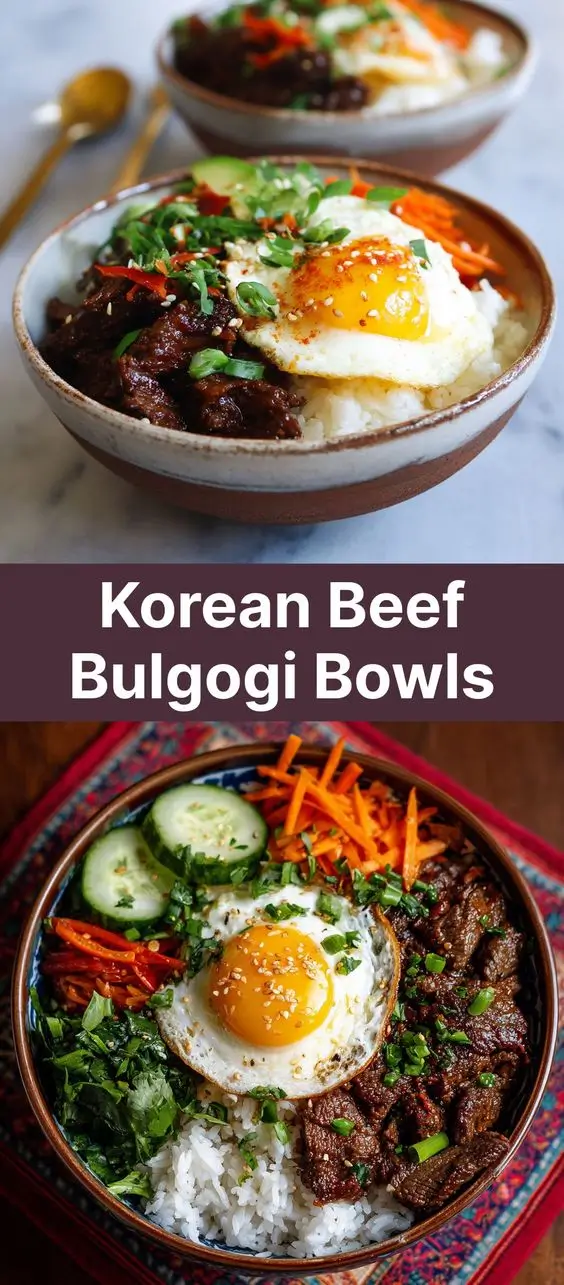
- Assemble the Bowls: Divide the hot rice among four bowls. Top evenly with the cooked bulgogi beef. Garnish with additional sesame seeds, sliced green onions, and any desired toppings such as kimchi, sautéed veggies, or a soft-boiled or sunny-side-up egg.
- Serve Immediately: Drizzle with optional sauces like gochujang-honey mix or spicy mayo. Serve hot and enjoy the explosion of flavors!
Tips for Perfect Korean Beef Bulgogi Bowls Every Time
- Slice Against the Grain: Cutting perpendicular to the muscle fibers shortens them, making the meat much more tender when chewed.
- Don’t Skip the Fruit: Even if you don’t taste the pear directly, its enzymatic action is crucial for achieving melt-in-your-mouth texture. Kiwi works similarly but use less (1–2 tablespoons) as it’s more potent.
- Reserve Some Marinade: Before adding raw meat, set aside a small amount of clean marinade to brush onto the beef while cooking for extra shine and flavor (do not reuse marinade that touched raw meat unless boiled first).
- Avoid Overcooking: Bulgogi should be juicy, not dry. Since the slices are thin, they cook quickly—overcooking leads to toughness.
- Use High Heat: A good sear creates caramelization, which enhances the overall flavor. Make sure your pan is properly preheated.
- Toast Sesame Seeds: Lightly toast sesame seeds in a dry pan for 1–2 minutes until fragrant and golden. This boosts their nutty flavor significantly.
- Let It Marinate Overnight: Longer marination equals deeper flavor and more tender meat. Overnight is ideal, especially for thicker cuts.
- Baste While Cooking: Pour a little reserved marinade into the pan during the last minute of cooking to glaze the beef beautifully.
Variations and Customizations
One of the beauties of Korean Beef Bulgogi Bowls is their adaptability. You can easily tweak the recipe to suit dietary preferences, seasonal ingredients, or creative inspirations.
- Vegetarian/Vegan Option: Replace beef with portobello mushrooms, tofu, or seitan. Marinate the same way—mushrooms absorb flavors wonderfully and develop a meaty texture when seared.
- Spicy Bulgogi: Add 1–2 tablespoons of gochujang (Korean chili paste) or a dash of gochugaru (red pepper flakes) to the marinade for heat lovers.
- Pineapple Twist: Substitute pineapple juice or puree for part of the pear. The bromelain enzyme also tenderizes meat and adds tropical sweetness.
- Different Proteins: Try chicken (dak bulgogi), pork (dwaeji bulgogi), or even salmon for unique takes on the classic.
- Bowls with a Fusion Flair: Serve over quinoa, soba noodles, or lettuce wraps for low-carb options. Add avocado, mango, or pickled radishes for a modern fusion touch.
- Kids’ Version: Reduce soy sauce slightly and increase honey for a milder, sweeter profile kids love. Serve with mild kimchi or skip it altogether.
- Meal Prep Friendly: Cook a large batch and store components separately—marinated beef freezes well for up to 3 months. Reheat gently in a skillet.
- Bibimbap Style: Turn your bowl into a deconstructed bibimbap by arranging seasoned vegetables (spinach, bean sprouts, zucchini, carrots) around the rice before topping with beef and a fried egg.
Health Considerations and Nutritional Value
Korean Beef Bulgogi Bowls can be part of a balanced diet when prepared thoughtfully. Here’s a nutritional breakdown per serving (approximate, based on standard recipe):
- Calories: ~650–750 kcal
- Protein: ~35–40g (excellent source from beef)
- Fat: ~20–25g (mostly unsaturated from sesame oil)
- Carbohydrates: ~80–90g (primarily from rice and sugar)
- Sodium: ~900–1200mg (can be reduced with low-sodium soy sauce)
- Fiber: ~2–4g (increases with added vegetables)
- Vitamins & Minerals: Good sources of iron, zinc, B vitamins (especially B12), selenium, and manganese.
Health Tips:
- Lower Sodium: Opt for reduced-sodium soy sauce or coconut aminos. Rinse beef briefly after marinating if concerned about salt content (though this removes some flavor).
- Reduce Sugar: Cut back on brown sugar or replace with monk fruit sweetener or erythritol for lower glycemic impact.
- Boost Fiber: Add more non-starchy vegetables like bok choy, broccoli, bell peppers, or Brussels sprouts.
- Leaner Meat: Use trimmed sirloin instead of ribeye for less saturated fat. Ground beef can also be used but adjust cooking time accordingly.
- Heart-Healthy Fats: Sesame oil contains antioxidants and beneficial fatty acids, but use in moderation due to calorie density.
- Bone Broth Boost: Replace water in the marinade with low-sodium beef bone broth for added collagen and minerals.
While bulgogi is not inherently a “low-calorie” dish, portion control and smart substitutions make it suitable for various lifestyles, including intermittent fasting plans, flexitarian diets, and athletic nutrition regimens requiring high protein intake.
FAQs About Korean Beef Bulgogi Bowls
Q: Can I make bulgogi without a grill?
A: Absolutely! While traditionally grilled, bulgogi is commonly pan-fried or stir-fried at home. A heavy skillet or wok gives excellent results.
Q: How long does cooked bulgogi last in the fridge?
A: Properly stored in an airtight container, cooked bulgogi lasts 3–4 days. Reheat gently in a skillet to preserve texture.
Q: Can I freeze marinated beef?
A: Yes, marinated beef freezes very well. Portion it out in freezer bags and thaw overnight in the refrigerator before cooking.
Q: Why is my beef tough even after marinating?
A: Possible reasons include under-marinating, using a lean cut that dries out easily, or overcooking. Ensure thin slicing and quick searing for best results.
Q: Is bulgogi gluten-free?
A: Traditional soy sauce contains wheat. Use tamari or certified gluten-free soy sauce to make it gluten-free.
Q: Can I use frozen beef?
A: Yes, but slice it while partially frozen for easier handling. Fully thaw before marinating for optimal absorption.
Q: What sides go well with bulgogi bowls?
A: Classic pairings include kimchi, pickled vegetables (danmuji), seaweed soup (miyeokguk), cucumber salad, and steamed edamame.
Q: Can I make this in a slow cooker?
A: Yes, though texture will differ. Cook on low for 4–6 hours, then broil briefly to caramelize. Best for shredded-style bulgogi.
Summary
Korean Beef Bulgogi Bowls combine tender, sweet-savory marinated beef with fluffy rice and vibrant toppings for a satisfying, globally inspired meal that’s both easy to make and deeply flavorful. Rooted in centuries-old tradition yet adaptable to modern tastes and dietary needs, this dish brings the warmth of Korean hospitality straight to your table.