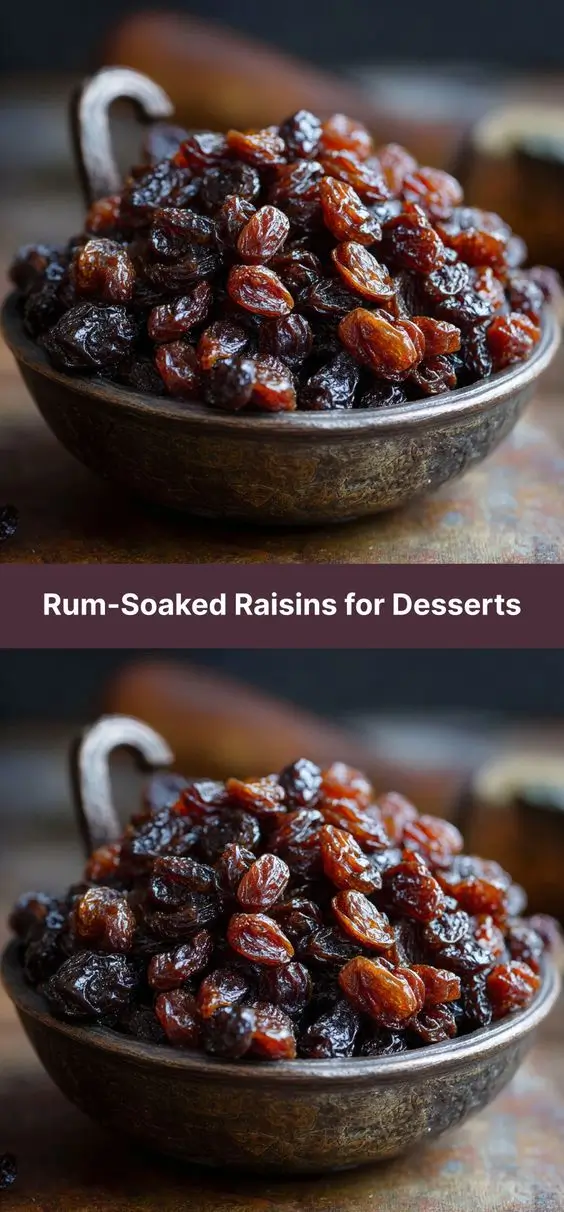
Rum-Soaked Raisins for Desserts: A Luxurious Ingredient to Elevate Your Sweet Creations
Introduction
Rum-soaked raisins are a decadent, aromatic addition to an array of desserts, bringing depth, moisture, and a sophisticated warmth that elevates even the simplest recipes. Whether folded into cakes, stirred into puddings, or used as a garnish for ice cream, these plump, spirit-infused morsels deliver a burst of flavor that balances sweetness with a subtle boozy complexity. Far more than just a soaked fruit, rum-soaked raisins represent a centuries-old tradition of preserving and enhancing dried fruits through alcohol infusion—a method that not only improves shelf life but also intensifies taste. In this comprehensive guide, we’ll explore everything you need to know about making, using, customizing, and enjoying rum-soaked raisins in your dessert repertoire.
The History
The practice of soaking dried fruits in alcohol dates back to medieval Europe, where preservation was key before refrigeration. Dried fruits like raisins, currants, and figs were prized for their long shelf life and concentrated sugars, making them ideal candidates for storage in spirits such as brandy, rum, or fortified wines. Rum, in particular, became closely associated with raisins due to the historical trade routes between the Caribbean—where sugarcane and rum production flourished—and Europe.
During the 17th and 18th centuries, British sailors and traders brought Caribbean rum back to England, where it quickly found its way into kitchens and pantries. The combination of rum and raisins became a staple in traditional English desserts like Christmas pudding, sticky toffee pudding, and fruitcakes. These desserts often required weeks—or even months—of aging, during which time the dried fruits would slowly absorb the alcohol, deepening in flavor and softening in texture.
Over time, the technique evolved beyond mere preservation into a culinary art form. Today, rum-soaked raisins are celebrated not only for their practical benefits but also for their ability to add luxury and complexity to both classic and modern desserts. From haute patisserie to home baking, this simple infusion continues to inspire chefs and bakers around the world.
Ingredients Breakdown
Creating perfect rum-soaked raisins requires attention to each component. While the recipe is simple, the quality of ingredients plays a crucial role in the final outcome.
- Raisins: Choose high-quality, plump raisins without added oils or preservatives. Dark seedless raisins are most commonly used, but golden raisins (sultanas) can offer a lighter, slightly tangier profile. Organic or sun-dried varieties often have a richer flavor and better texture.
- Rum: The type of rum significantly influences the flavor. Dark rum, aged in oak barrels, imparts notes of molasses, caramel, vanilla, and spice—ideal for deep, complex desserts. Light (white) rum offers a cleaner, subtler taste, suitable for delicate applications. Spiced rum adds extra warmth with cinnamon, clove, and nutmeg, enhancing holiday-themed treats. For an authentic touch, consider using Jamaican or Puerto Rican rums known for their distinctive character.
- Sugar (optional): While raisins are naturally sweet, a small amount of sugar or honey can be added to balance acidity or enhance syrup formation, especially if using a dry or sharp rum.
- Flavor Enhancers (optional): To elevate the infusion, consider adding citrus zest (orange or lemon), whole spices (cinnamon stick, star anise, cloves), or a splash of vanilla extract. These elements steep alongside the raisins, infusing the mixture with layered aromatics.
- Water or Juice (optional): If you’re concerned about the intensity of pure rum, you can dilute it slightly with water, orange juice, or apple cider to moderate the alcohol content while still allowing absorption.
Step-by-Step Recipe
Follow this detailed process to make perfectly infused rum-soaked raisins at home:
- Prepare the Raisins: Measure 1 cup of raisins and spread them on a clean kitchen towel or parchment paper. Pick through them to remove any stems, debris, or shriveled pieces. If desired, give them a quick rinse under cool water to remove surface dust, then pat dry thoroughly.
- Choose Your Vessel: Select a clean glass jar with a tight-sealing lid—such as a mason jar or airtight container. Ensure it’s large enough to hold the raisins and liquid with room for expansion.
- Add Flavor Elements (Optional): Place 1 strip of orange zest, 1 cinnamon stick, and 2 whole cloves into the jar for additional aroma. Avoid overloading; you want enhancement, not overpowering spice.
- Pour the Rum: Add ½ to ¾ cup of dark rum, depending on how strong you want the flavor and how moist you want the raisins. The liquid should just cover the raisins. Stir gently to coat all surfaces.
- Seal and Store: Close the jar tightly and label it with the date. Store in a cool, dark place—such as a pantry or cupboard—away from direct sunlight and heat sources.
- Steeping Time: Let the mixture steep for a minimum of 24 hours for immediate use. For deeper flavor, allow it to sit for 3–7 days, shaking the jar gently once daily to redistribute the liquid and ensure even soaking.
- Check Consistency: After several days, the raisins will swell and become juicy, having absorbed much of the rum. They should feel soft and plump when squeezed. If they appear dry, add another tablespoon or two of rum.
- Drain or Use Wet: Depending on your recipe, you may drain excess rum before using, reserving the liquid for sauces, glazes, or cocktails. Alternatively, use the raisins wet for extra moisture in batters and doughs.
Tips
- Use Room Temperature Raisins: Cold raisins from the fridge absorb liquid more slowly. Allow them to come to room temperature before soaking.
- Warm Infusion Option: For faster results, gently warm the rum with spices over low heat, remove from stove, add raisins, and let cool completely while covered. This speeds up absorption but may result in a slightly softer texture.
- Avoid Metal Containers: Always use glass or ceramic vessels to prevent any chemical reaction between alcohol and metal.
- Label and Date: Especially if storing long-term, clearly mark the jar with contents and preparation date.
- Shelf Life: Properly stored in a sealed container, rum-soaked raisins can last up to 6 months at room temperature or over a year in the refrigerator. The alcohol acts as a natural preservative.
- Freezing Option: Spread soaked raisins on a tray, freeze individually, then transfer to a bag. They can be added directly to baked goods from frozen.
- Basting Tip: When using in cakes or breads, spoon some of the reserved rum liquid over the finished product while warm to lock in moisture and boost flavor.
Variations and Customizations
Rum-soaked raisins are incredibly versatile and can be customized to suit different flavor profiles and dessert styles:
- Brandy or Whiskey Soak: Substitute rum with cognac, bourbon, or Scotch for a different depth—brandy brings fruity richness, while whiskey adds smokiness.
- Liqueur Infusions: Try Grand Marnier, Amaretto, Kahlúa, or Frangelico for gourmet twists tailored to specific desserts.
- Tropical Version: Combine coconut rum with golden raisins and a splash of pineapple juice for a tropical flair, perfect for banana bread or coconut cake.
- Spice-Infused: Add cardamom pods, allspice berries, or fresh ginger slices to the soak for a warmly spiced version ideal for holiday baking.
- Citrus Zest Boost: Lemon, lime, or grapefruit zest can brighten the infusion, cutting through sweetness and adding vibrancy.
- Different Dried Fruits: Mix in dried cherries, apricots, cranberries, or figs along with raisins for a gourmet fruit medley.
- Non-Alcoholic Alternative: Simmer raisins in strong brewed tea, fruit juice, and a touch of vanilla for a kid-friendly version (though without the preserving effect).
Health Considerations and Nutritional Value
While delicious, rum-soaked raisins should be enjoyed in moderation due to their sugar and alcohol content. Here’s a closer look at their nutritional aspects:
- Raisins: Naturally rich in fiber, potassium, iron, and antioxidants like resveratrol. They provide quick energy due to natural sugars (fructose and glucose), making them beneficial in small portions for active individuals.
- Rum: Contains zero carbohydrates or fat but contributes empty calories from alcohol (about 64 kcal per ounce). Chronic excessive intake may affect liver health and blood sugar regulation.
- Combined Impact: The soaking process does not remove sugar from raisins; instead, it concentrates flavors. One tablespoon of rum-soaked raisins contains roughly 40–50 calories, depending on rum quantity absorbed.
- Alcohol Retention: Even after baking, a portion of the alcohol remains. According to USDA data, flambéing removes about 75%, while prolonged baking (over 2.5 hours) reduces retention to around 5%. For children, pregnant women, or those avoiding alcohol, non-alcoholic versions are recommended.
- Glycemic Index: Raisins have a moderate GI (~60), so people managing diabetes should consume them cautiously and monitor portion sizes.
- Benefits of Moderation: When consumed occasionally as part of balanced desserts, rum-soaked raisins can contribute to enjoyment and satiety without significant harm. Their antioxidant properties from both raisins and aged rum may offer mild cardiovascular benefits in controlled amounts.
Ingredients
- 1 cup dark seedless raisins (or golden raisins)
- ½ to ¾ cup dark rum (preferably aged)
- Zest of 1 orange (optional)
- 1 cinnamon stick (optional)
- 2–3 whole cloves (optional)
- 1 teaspoon brown sugar or honey (optional)
- 1 teaspoon vanilla extract (optional)
Directions
- In a medium bowl or directly in a glass jar, combine raisins, orange zest, cinnamon stick, and cloves if using.
- Pour rum over the raisins until they are fully submerged. Add sugar or honey and vanilla if desired.
- Stir gently to combine, ensuring all raisins are moistened.
- Cover the container tightly and store in a cool, dark place for at least 24 hours.
- For best results, let steep for 3 to 7 days, shaking the jar every day.
- After soaking, either drain the raisins (reserving the liquid) or use them with some of the rum syrup, depending on your recipe needs.
- Store unused portion in the refrigerator for extended freshness.
FAQ
Q: How long do rum-soaked raisins last?
A: When stored properly in a sealed container in a cool, dark place, they can last up to 6 months. Refrigeration extends their life to over a year.
Q: Can I reuse the soaking liquid?
A: Absolutely! The leftover rum infusion is packed with flavor and can be used in sauces, glazes, milkshakes, cocktails, or brushed onto cakes.
Q: Are there any substitutes for rum?
A: Yes—try brandy, bourbon, wine, or non-alcoholic alternatives like fruit juice, herbal tea, or syrup with vanilla.
Q: Do rum-soaked raisins need to be refrigerated?
A: Not necessarily, thanks to the preservative nature of alcohol. However, refrigeration slows evaporation and maintains consistency longer.
Q: Can I cook with rum-soaked raisins?
A: Definitely! They’re excellent in oatmeal, pancakes, scones, muffins, bread pudding, rice pudding, tarts, and cheesecake fillings.
Q: Why aren’t my raisins plumping up?
A: They may need more time or additional liquid. Older raisins absorb slower—ensure they’re fully covered and check after 48 hours.
Q: Can I freeze rum-soaked raisins?
A: Yes, freeze them in portions for future baking. Thaw in the fridge or use directly in recipes.
Summary
Rum-soaked raisins are a simple yet transformative ingredient that adds moisture, depth, and elegance to countless desserts. With a rich history, easy preparation, and endless customization options, they are a must-have in any baker’s arsenal.