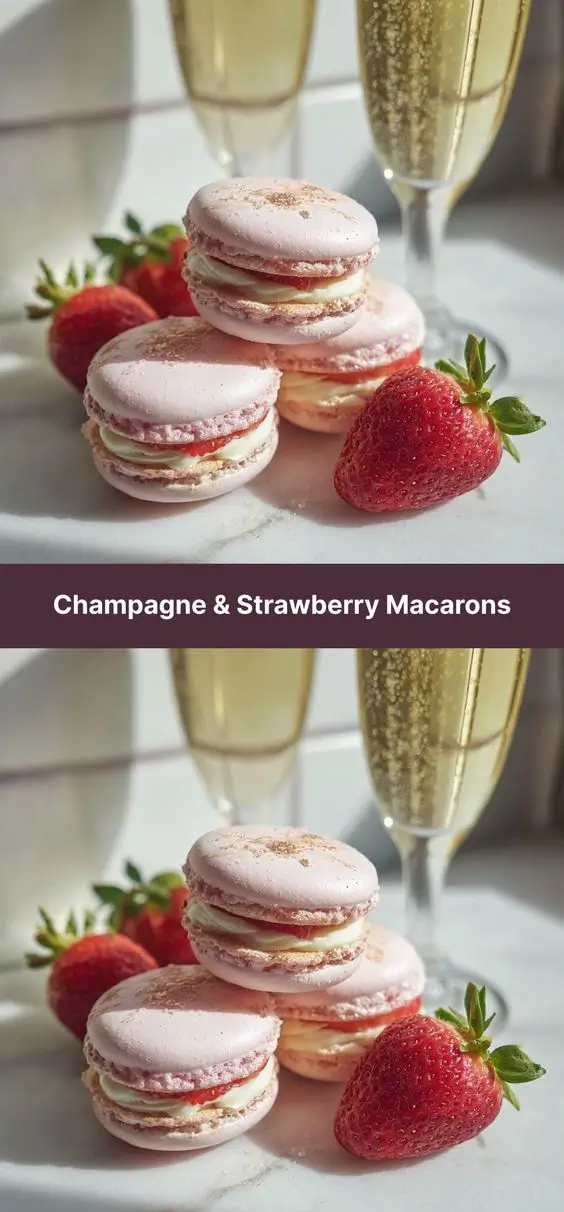
Champagne & Strawberry Macarons
The History of Macarons
The delicate and elegant macaron has a rich and storied history that traces back several centuries. While often associated with French patisseries today, the origins of the macaron can be traced to Italy during the Renaissance period. It is believed that Catherine de’ Medici brought the early version of the almond meringue cookie to France in 1533 when she married King Henry II. These simple, single-layered almond cookies evolved over time.
It wasn’t until the 20th century that the modern macaron—two delicate shells sandwiched with a creamy filling—was invented by famed Parisian pastry chef Pierre Hermé or his contemporary at Ladurée, Claude Gerbet. This “French macaron” quickly gained popularity for its smooth top, ruffled “foot” (or pied), and vibrant colors. Today, macarons are celebrated worldwide as both a symbol of French sophistication and a canvas for culinary creativity.
The Champagne & Strawberry Macaron is a modern twist on this classic treat, combining the effervescence of champagne with the sweetness of fresh strawberries. It reflects a trend toward adult-oriented, flavor-forward desserts that balance luxury with playful innovation. Perfect for bridal showers, romantic dinners, or celebratory events, these macarons elevate the traditional recipe with sophisticated flavors reminiscent of summer soirées and sparkling toastings under open skies.
Ingredients Breakdown
Creating flawless Champagne & Strawberry Macarons requires precision and high-quality ingredients. Each component plays a vital role in achieving the perfect texture, flavor, and appearance. Below is a detailed breakdown:
For the Macaron Shells:
- Almond Flour (100g): Must be finely ground and sifted to avoid lumps. Blanched almond flour ensures a smooth shell without speckles.
- Powdered Sugar (200g): Provides sweetness and structure. Sifted with almond flour to ensure a lump-free batter.
- Egg Whites (aged, 100g): Room temperature and preferably aged (left uncovered for 24 hours) to reduce moisture and improve stability.
- Granulated Sugar (50g): Used in the meringue for added strength and shine.
- Pink Gel Food Coloring (a few drops): Enhances the strawberry-champagne aesthetic. Avoid liquid coloring to prevent altering batter consistency.
For the Champagne-Infused Strawberry Buttercream Filling:
- Fresh Strawberries (1 cup, puréed and reduced): Choose ripe, sweet berries. Simmered to concentrate flavor and remove excess water.
- Dry Champagne or Prosecco (¼ cup): Adds effervescent aroma and subtle tang. Reduce by half to intensify flavor and eliminate alcohol if desired.
- Unsalted Butter (½ cup, softened): High-fat European-style butter yields creamier texture.
- Powdered Sugar (1 cup): Sweetens and thickens the buttercream.
- Pinch of Salt: Balances sweetness and enhances overall flavor.
- Optional: Edible gold luster dust or shimmer spray: For a luxurious finish that mimics champagne sparkle.
Step-by-Step Recipe
Step 1: Prepare the Strawberry-Champagne Reduction
- In a small saucepan, combine freshly puréed strawberries (strained of seeds) and champagne.
- Simmer over low heat for 15–20 minutes until reduced by half and syrupy. Stir frequently to prevent burning.
- Cool completely before using. This reduction will infuse the buttercream with intense flavor while minimizing moisture.
Step 2: Age and Measure Egg Whites
- Separate egg whites 24 hours in advance and store uncovered in the fridge. Allow to come to room temperature before use.
- Weigh precisely 100g of egg whites to ensure accuracy.
Step 3: Sift Dry Ingredients
- In a large bowl, sift together almond flour and powdered sugar twice. This ensures a smooth, lump-free texture critical for shiny shells.
- Discard any coarse remnants left in the sifter.
Step 4: Make the French Meringue
- In a grease-free mixing bowl, beat egg whites on medium speed until foamy.
- Gradually add granulated sugar, one tablespoon at a time, increasing speed to high.
- Whip until stiff, glossy peaks form (about 5–7 minutes). The meringue should not droop when the whisk is lifted.
- Add pink gel food coloring and mix briefly until evenly tinted.
Step 5: Macaronage (Folding the Batter)
- Transfer meringue to the bowl with sifted dry ingredients.
- Using a silicone spatula, fold gently in a circular motion, scraping the sides. This process, called macaronage, deflates the meringue slightly to achieve lava-like consistency.
- Fold about 50–60 times until the batter flows slowly and ribbons off the spatula, forming a trail that disappears after 10 seconds.
- Overmixing causes flat shells; undermixing results in cracked surfaces.
Step 6: Pipe the Shells
- Fit a piping bag with a round tip (½ inch). Transfer batter and pipe 1.5-inch circles onto parchment-lined or silicone-mat-covered baking sheets.
- Lift the bag straight up to prevent spreading. Tap trays firmly on the counter 3–5 times to release air bubbles.
- Use a toothpick to pop any visible bubbles for smooth tops.
Step 7: Rest and Develop the Skin
- Let piped shells sit at room temperature for 30–60 minutes until they form a skin—a light touch should not leave an imprint.
- This step is crucial for developing the signature “foot” during baking.
Step 8: Bake to Perfection
- Preheat oven to 300°F (150°C). Use an oven thermometer for accuracy.
- Bake one tray at a time in the center rack for 17–20 minutes. Rotate halfway through.
- Shells are done when they lift easily from the mat without sticking. Cool completely before filling.
Step 9: Prepare the Champagne-Strawberry Buttercream
- In a stand mixer with paddle attachment, beat softened butter on medium until creamy (2 minutes).
- Gradually add powdered sugar, salt, and 2 tablespoons of cooled strawberry-champagne reduction.
- Mix on high for 3–4 minutes until fluffy and pale pink.
- Taste and adjust sweetness or tartness as needed. Add more reduction if flavor intensity is desired.
Step 10: Assemble the Macarons
- Pair cooled shells by size. Flip half of them over.
- Fill a piping bag with buttercream and pipe a swirl onto the flat side of each base shell.
- Gently press the matching top shell to adhere. Do not twist.
- Place assembled macarons in an airtight container and refrigerate for 24–48 hours to mature—this allows flavors to meld and texture to soften (known as “aging”).
Tips for Success
- Consistent Oven Temperature: Even slight fluctuations can ruin macarons. Use an oven thermometer and avoid opening the door during baking.
- Humidity Matters: High humidity makes macarons sticky and prevents proper skin formation. Choose a dry day or use a dehumidifier.
- Sifting is Non-Negotiable: Skipping this step leads to bumpy, uneven shells.
- Aged Egg Whites Improve Stability: They produce stronger meringue and reduce collapse risk.
- Pipe Uniform Sizes: Use a template under your parchment paper to keep circles consistent for even baking and pairing.
- Patience During Aging: Matured macarons have a superior texture—moist, chewy interior with crisp exterior.
- Freeze Extra Shells: Unfilled shells can be frozen for up to 3 months. Thaw before filling.
Variations and Customizations
The Champagne & Strawberry Macaron is wonderfully adaptable. Here are creative ways to personalize your batch:
- Rosé Wine Variation: Substitute champagne with dry rosé for a fruitier, berry-forward profile.
- Non-Alcoholic Version: Replace champagne with white grape juice or sparkling apple cider, reduced similarly.
- Chocolate-Dipped Edges: Melt white or dark chocolate and dip the rim of assembled macarons for elegance and contrast.
- Edible Glitter or Gold Leaf: Brush shells lightly with clear piping gel and apply shimmer for a glamorous, celebratory look.
- Herb Infusion: Add a hint of fresh thyme or basil to the buttercream for a sophisticated herbal note.
- Fruit Swaps: Try raspberry, peach, or mango purée instead of strawberry for seasonal twists.
- Champagne Soaked Raspberries: Place a tiny piece of champagne-soaked berry inside before closing for a juicy surprise.
- Mini Macarons:
: Pipe smaller shells (1 inch) for bite-sized treats ideal for parties or wedding favors.
Health Considerations and Nutritional Value
While undeniably indulgent, Champagne & Strawberry Macarons can be enjoyed mindfully. Here’s what you should know:
Nutritional Profile (Per Macaron, Approximate):
- Calories: 110–130 kcal
- Fat: 6–8g (mostly from almond flour and butter)
- Saturated Fat: 3–4g
- Carbohydrates: 12–15g (primarily sugars)
- Protein: 1–2g
- Sodium: 20–30mg
Health Notes:
- Gluten-Free: Naturally gluten-free due to almond flour base—ideal for those with celiac disease or gluten sensitivity (ensure all ingredients are certified GF).
- Nut Allergy Warning: Contains almonds. Not suitable for individuals with tree nut allergies.
- Sugar Content: High in refined sugars. Diabetics should consume sparingly or explore low-glycemic substitutes like erythritol (though texture may vary).
- Cholesterol: Present in egg whites and butter. Moderate intake advised for those monitoring cholesterol.
- Alcohol Content: Most alcohol evaporates during reduction, but trace amounts may remain. Omit or substitute for children or non-drinkers.
Consider serving one macaron per guest alongside tea or sparkling water to balance sweetness. Pairing with fresh fruit or Greek yogurt can create a more balanced dessert experience.
Ingredients
Macaron Shells:
- 100g almond flour (finely ground, blanched)
- 200g powdered sugar
- 100g aged egg whites (about 3 large eggs)
- 50g granulated sugar
- 3–5 drops pink gel food coloring
Champagne-Strawberry Buttercream:
- 1 cup fresh strawberries, hulled and puréed (approx. 150g)
- ¼ cup dry champagne or prosecco
- ½ cup (1 stick) unsalted butter, softened
- 1 cup powdered sugar
- Pinch of salt
- Optional: Edible gold luster dust, white chocolate for drizzling
Directions
- Reduce Strawberry-Champagne Mixture: In a small saucepan, combine strawberry purée and champagne. Simmer over low heat for 15–20 minutes until reduced by half. Cool completely.
- Prepare Dry Ingredients: Sift almond flour and powdered sugar together twice. Set aside.
- Whip Meringue: Beat egg whites until foamy. Gradually add granulated sugar and whip to stiff, glossy peaks. Mix in pink gel color.
- Fold in Dry Ingredients: Gently fold meringue into dry mix using macaronage technique until batter flows like magma.
- Pipe Shells: Transfer to piping bag and pipe 1.5-inch rounds on lined baking sheet. Tap tray and pop bubbles.
- Rest Shells: Allow to sit uncovered for 30–60 minutes until surface is dry to the touch.
- Bake: Preheat oven to 300°F. Bake one tray at a time for 17–20 minutes. Cool completely.
- Make Buttercream: Beat butter until creamy. Add powdered sugar, salt, and 2 tbsp reduced strawberry-champagne syrup. Whip until fluffy.
- Fill Macarons: Pair shells, pipe filling on base, and gently attach top shell.
- Aging: Refrigerate filled macarons in airtight container for 24–48 hours before serving for optimal taste and texture.
FAQ
Why did my macaron shells crack?
Cracking usually occurs due to trapped air bubbles, insufficient resting time, or oven temperature being too high. Always tap the tray and allow shells to form a skin before baking.
Can I make macarons without a piping bag?
You can use a resealable plastic bag with the corner snipped off, though a reusable piping bag offers better control.
How long do Champagne & Strawberry Macarons last?
When stored in an airtight container in the refrigerator, they last 5–7 days. For longer storage, freeze unfilled shells for up to 3 months.
Can I use frozen strawberries?
Yes, but fresh strawberries yield better flavor and less water content. If using frozen, thaw and drain excess liquid thoroughly before reducing.
Why do macarons need to age?
Aging allows moisture to distribute evenly, enhancing chewiness and deepening flavor fusion between shell and filling.
Can I make these vegan?
A fully vegan version is challenging due to the reliance on egg whites, but aquafaba (chickpea brine) can be used as a substitute with adjusted ratios and techniques.
What’s the best champagne to use?
A dry, brut champagne or prosecco works best—avoid sweet varieties to prevent overly sugary filling.
Summary
Champagne & Strawberry Macarons blend the elegance of French pastry with the joyful essence of summer berries and sparkling wine, creating a dessert that’s as beautiful as it is delicious. With careful technique and a touch of patience, these delicate treats offer a luxurious, flavor-rich experience perfect for celebrations or intimate indulgences.