Introduction
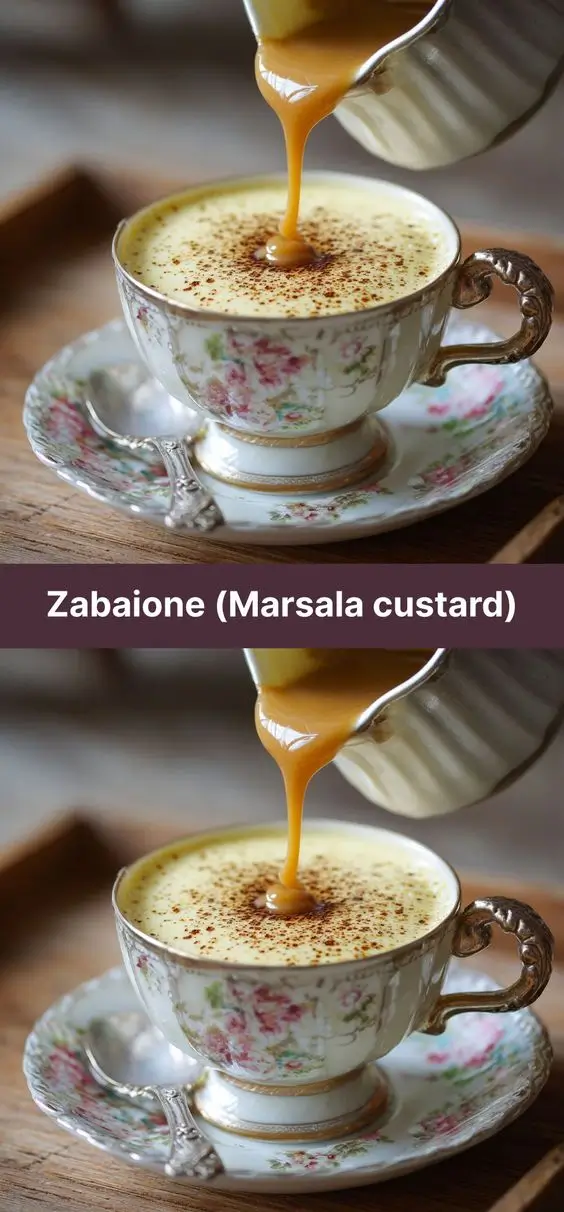
Zabaione, also spelled zabaglione or sabayon depending on the region and language, is one of Italy’s most beloved dessert classics. Known for its rich, velvety texture and delicate sweetness, this luxurious custard is made from just a few simple ingredients: egg yolks, sugar, and sweet Marsala wine. Revered for its elegant simplicity and sumptuous flavor, Zabaione has graced Italian tables for centuries, often served warm as a comforting end to a hearty meal. Its light, frothy consistency—achieved through careful whisking over gentle heat—makes it not only a dessert in its own right but also a versatile base for parfaits, sauces, and even cocktail enhancements. Whether enjoyed solo in a glass, poured over fresh berries, or used to elevate a slice of cake, Zabaione remains a timeless symbol of Italian culinary artistry.
The History
The origins of Zabaione are steeped in mystery and regional pride, with several Italian cities laying claim to its invention. The earliest documented references date back to the late 15th century, though some food historians believe it may have existed even earlier. One popular theory attributes its creation to the court of Duke Galeazzo Maria Sforza in Milan around 1470, where it was allegedly concocted to celebrate a military victory—named after a general named “Giovanni Baio” or “Jacopo da Bagnolo,” hence “Zabaione.” However, others argue that it originated in Piedmont, particularly around Turin, where Marsala wine became widely available through trade routes from Sicily.
The use of Marsala wine—a fortified wine from the western coast of Sicily—links Zabaione more concretely to southern Italy, yet its popularity spread rapidly throughout the country during the Renaissance. By the 18th and 19th centuries, Zabaione had become a staple in aristocratic households and later in trattorias across Italy. It also found favor beyond Italian borders, inspiring French chefs who adapted it into their own version called “sabayon,” and influencing desserts across Europe and the Americas.
Historically, Zabaione wasn’t always consumed as a dessert. In earlier times, it was considered a tonic or restorative drink, often given to the ill, elderly, or nursing mothers due to the perceived health benefits of raw eggs and alcohol. Over time, as perceptions of food evolved and refrigeration improved safety standards, Zabaione transitioned into a celebratory sweet treat. Today, it is recognized globally as an emblem of Italian gastronomy, celebrated for both its historical depth and sensory delight.
Ingredients Breakdown
The magic of Zabaione lies in its minimalist ingredient list, each component playing a crucial role in achieving the perfect balance of flavor, texture, and stability:
- Egg Yolks: The foundation of Zabaione, egg yolks provide richness, color, and emulsifying power. They contain lecithin, which helps stabilize the foam as it’s whipped. Only yolks are used to avoid the thinning effect of egg whites and to maintain a creamy consistency.
- Granulated Sugar: Adds sweetness and aids in stabilizing the foam. As sugar dissolves into the yolks during whisking, it increases viscosity and helps the mixture hold air, contributing to the signature light and airy texture.
- Marsala Wine: A key flavor agent, Marsala is a fortified wine from Sicily with notes of caramel, dried fruit, nuts, and vanilla. There are two main types: dolce (sweet) and secco (dry). For traditional Zabaione, sweet Marsala (Marsala Dolce) is preferred, though dry versions can be used for a more sophisticated, less cloying result.
- Optional Enhancements: While purists stick to the classic trio, many modern variations include a splash of vanilla extract, a twist of lemon zest, or even a dash of liqueur such as brandy, rum, or amaretto to deepen complexity.
The ratio of these ingredients is vital. Too little sugar results in a fragile foam; too much marsala can prevent proper thickening. A typical proportion is 3 egg yolks to 2–3 tablespoons of sugar and 1/3 to 1/2 cup of Marsala per serving, ensuring a balanced, pourable custard that holds soft peaks when properly prepared.
Step-by-Step Recipe
Creating authentic Zabaione requires patience, attention, and gentle heat. Follow these detailed steps for a flawless result:
- Gather Equipment: You’ll need a heatproof mixing bowl (preferably stainless steel or glass), a hand whisk or electric mixer, a saucepan for creating a double boiler, and a serving dish or wine glasses if serving immediately.
- Prepare the Double Boiler: Fill a medium saucepan with 1–2 inches of water and bring it to a gentle simmer over medium-low heat. Ensure the bottom of your mixing bowl will sit above—not touching—the water when placed on top.
- Combine Ingredients: In the mixing bowl, add 3 large egg yolks, 3 tablespoons of granulated sugar, and 1/3 cup (80 ml) of Marsala wine. Whisk briefly to blend.
- Begin Cooking: Place the bowl over the simmering water, making sure no steam escapes underneath. Start whisking vigorously by hand or using an electric mixer on medium speed.
- Whisk Continuously: This is the heart of the process. Keep whisking without pause. At first, the mixture will appear pale yellow and liquid. Gradually, it will thicken, increase in volume, and turn into a silky, foamy custard. This typically takes 8–12 minutes with hand whisking, slightly less with an electric mixer.
- Monitor Temperature: The ideal temperature for Zabaione is between 150°F and 160°F (65°C–71°C)—hot enough to cook the eggs safely without scrambling them. If you have a thermometer, use it. Otherwise, test by lifting the whisk: the custard should leave a trail and form soft peaks.
- Check for Doneness: Properly cooked Zabaione will be pale golden, thick like softly whipped cream, and coat the back of a spoon. It should feel warm, not hot, and smell richly of Marsala and vanilla.
- Serve Immediately (or Chill): For warm Zabaione, ladle into dessert glasses and serve right away. For chilled versions, remove from heat and continue whisking briefly to cool slightly, then cover and refrigerate for 1–2 hours before serving.
Tips
- Use Fresh Eggs: Since Zabaione involves heating eggs but not fully cooking them to hard temperatures, using the freshest, highest-quality eggs possible is essential for both safety and flavor.
- Room Temperature Eggs: Let the egg yolks sit at room temperature for 15–20 minutes before starting. This helps them incorporate more easily and whip up fluffier.
- Don’t Rush the Whisking: Consistent, steady whisking is non-negotiable. Pausing can cause the mixture to break or scramble. If using a hand whisk, take short breaks to avoid fatigue, but keep the motion going.
- Control the Heat: Keep the water at a bare simmer. Boiling water can overheat the bowl and curdle the yolks. Adjust the stove to low or medium-low as needed.
- Bowl Material Matters: Glass bowls retain heat well but can get too hot; stainless steel offers better temperature control. Avoid plastic or thin metal bowls.
- Sugar Dissolution: Make sure the sugar is fully dissolved. You shouldn’t feel any grittiness when rubbing the mixture between your fingers.
- For Extra Stability: Some chefs add a tiny pinch of cream of tartar or a few drops of lemon juice to help stabilize the foam, especially in humid conditions.
- Serving Warm vs. Cold: Traditional Italian Zabaione is served warm, almost like a dessert soup. Chilled versions resemble mousse and pair beautifully with fruits.
Variations and Customizations
While classic Marsala Zabaione is divine on its own, countless creative adaptations exist across Italy and the world:
- Fruit-Infused Zabaione: Fold in pureed strawberries, peaches, or raspberries after cooling for a fruity twist. Alternatively, serve over macerated seasonal fruit.
- Chocolate Zabaione: Melt a small amount of dark chocolate and whisk it in at the end for a decadent chocolate-Marsala fusion.
- Coffee Zabaione: Replace part of the Marsala with strong espresso or add a teaspoon of instant coffee for a tiramisu-inspired version.
- Liqueur Variations: Substitute Marsala with other fortified wines like Madeira, sherry, or port. You can also enhance with a tablespoon of Grand Marnier, amaretto, sambuca, or Frangelico.
- Non-Alcoholic Zabaione: Use grape juice, apple cider, or strong tea instead of wine. Add a splash of vanilla and a bit more sugar to compensate for lost depth.
- Whipped Cream Layering: Gently fold in lightly whipped cream after cooling to create a lighter, cloud-like texture—ideal for parfaits.
- Savory Applications: Rare but innovative—some chefs use reduced balsamic vinegar and herbs to make a savory version for drizzling over roasted fruits or pears.
- Sabayon Style (French): Prepare similarly but serve cold and layer with ladyfingers and fruit in a trifle-style dessert.
Health Considerations and Nutritional Value
Zabaione is undeniably indulgent, so understanding its nutritional profile and potential concerns is important:
- Calories: A single serving (about 1/2 cup) contains approximately 220–280 calories, primarily from fats (egg yolks) and sugars.
- Fat Content: High in saturated fat due to egg yolks, but also contains beneficial monounsaturated fats and cholesterol. Moderate consumption is advised for those monitoring heart health.
- Protein: Provides about 5–6 grams of high-quality protein per serving from egg yolks.
- Alcohol Content: Although cooked, some alcohol remains—typically around 70–85% of the original content depending on cooking time. A standard serving retains roughly 0.5 to 1 ounce of alcohol. Those avoiding alcohol should opt for non-alcoholic substitutes.
- Raw Egg Risk: Traditional recipes rely on gently heated eggs, not fully pasteurized ones. Immunocompromised individuals, pregnant women, young children, and the elderly should consider using pasteurized eggs or heating the mixture to 160°F to ensure safety.
- Dietary Modifications: Can be adapted for lower sugar diets using erythritol or monk fruit sweeteners (though texture may vary). Vegan versions are challenging but possible using aquafaba (chickpea brine) and plant-based yolks—though authenticity is compromised.
- Occasional Treat: Best enjoyed in moderation as part of a balanced diet. Its richness means a little goes a long way.
Ingredients
- 3 large egg yolks (preferably pasteurized or very fresh)
- 3 tablespoons granulated sugar
- 1/3 cup (80 ml) Marsala wine (dolce or secco, based on preference)
- 1/4 teaspoon pure vanilla extract (optional)
- Grated zest of 1/2 lemon (optional, for brightness)
- Whipped cream or fresh berries, for serving (optional)
Directions
- In a heatproof bowl, combine egg yolks, sugar, Marsala wine, vanilla, and lemon zest (if using). Whisk until smooth and uniformly blended.
- Set a saucepan with 1–2 inches of water over medium-low heat and bring to a gentle simmer.
- Place the mixing bowl over the saucepan, ensuring the bottom doesn’t touch the water.
- Begin whisking the mixture vigorously by hand or with an electric mixer on medium speed.
- Continue whisking constantly for 8–12 minutes, until the mixture triples in volume, becomes pale golden, and forms soft peaks when the whisk is lifted.
- Test by dipping a spoon—the custard should coat it thickly and feel warm but not scalding.
- Remove from heat and serve immediately in dessert glasses while warm.
- Alternatively, let cool slightly, cover with plastic wrap (touching the surface to prevent skin), and chill for 1–2 hours before serving cold.
- Garnish with a dusting of cocoa powder, grated nutmeg, fresh berries, or a dollop of whipped cream.
FAQ
Can I make Zabaione without alcohol?
Yes, substitute Marsala with white grape juice, apple cider, or chamomile tea. Add a splash of vanilla and a pinch of cinnamon to mimic the warmth of fortified wine.
Why did my Zabaione curdle?
Curdling usually occurs due to excessive heat or insufficient whisking. Ensure the water is simmering, not boiling, and whisk continuously to distribute heat evenly.
Can I make Zabaione ahead of time?
Yes, but it will deflate slightly when chilled. Re-whip gently before serving. For best texture, prepare close to serving time.
Is it safe to eat raw eggs in Zabaione?
The eggs are gently cooked during preparation, reaching a safe temperature if done correctly. Using pasteurized eggs adds extra safety, especially for sensitive groups.
Can I use an electric mixer?
Absolutely—hand mixers or stand mixers with a whisk attachment work well and reduce effort. Just monitor closely to avoid over-whipping.
What kind of Marsala should I use?
For sweetness and depth, choose Marsala Dolce. For a drier, more complex profile, go with Marsala Secco. Avoid “cooking Marsala” as it often contains salt and additives.
Can I freeze Zabaione?
Freezing is not recommended—it will separate and lose its airy texture upon thawing.
How do I serve Zabaione?
Serve warm in stemmed glasses, over sponge cake, with biscotti for dipping, or chilled with fresh fruit. It also pairs wonderfully with poached pears or gelato.
Summary
Zabaione is a luscious Italian custard made from egg yolks, sugar, and Marsala wine, whisked over gentle heat into a velvety, aromatic delight. Elegant yet simple, it embodies the essence of Italian dessert tradition—one spoonful at a time.