Champagne Cheesecake Mousse: A Luxurious Fusion of Elegance and Flavor
The History
The Champagne Cheesecake Mousse is a modern culinary masterpiece that fuses two beloved dessert traditions: the rich, creamy indulgence of New York-style cheesecake and the effervescent sophistication of French champagne. While traditional cheesecake dates back to ancient Greece—where it was served to athletes during the first Olympic Games—the mousse variation emerged in 20th-century France, celebrated for its airy texture and delicate balance of flavors.
The concept of incorporating champagne into desserts likely originated in the Champagne region of France, where winemakers often experimented with using their sparkling wine in confections to enhance flavor and celebrate special occasions. Over time, pastry chefs began blending the tangy richness of cream cheese with the bright acidity and subtle fruit notes of champagne, creating a dessert that was both light and decadent. The Champagne Cheesecake Mousse evolved as a contemporary take on this tradition—a perfect centerpiece for weddings, anniversaries, New Year’s Eve celebrations, and other upscale events where elegance is paramount.
In recent years, food bloggers, gourmet bakers, and high-end restaurants have popularized this dessert by refining techniques such as stabilizing the mousse with gelatin, folding in whipped cream for airiness, and pairing the dish with complementary garnishes like fresh berries and edible gold leaf. Today, it stands as a symbol of refined taste and culinary innovation, bridging the gap between classic dessert forms and modern gastronomy.
Ingredients Breakdown
Every element in a Champagne Cheesecake Mousse plays a crucial role in achieving the perfect harmony of texture, flavor, and visual appeal. Here’s an in-depth look at each ingredient and its purpose:
- Cream Cheese (full-fat): The foundation of any cheesecake mousse, full-fat cream cheese provides the dense, velvety base that gives the dessert its signature richness. It must be softened to room temperature to ensure smooth blending without lumps.
- Granulated Sugar: Adds sweetness and helps stabilize the mixture when beaten with cream cheese. It also enhances the mouthfeel and balances the tartness of dairy components.
- Vanilla Extract: A pure, high-quality vanilla extract deepens the flavor profile with warm, aromatic notes that complement both the cheese and the champagne.
- Unflavored Gelatin: Essential for structure, gelatin prevents the mousse from collapsing or becoming too runny. It’s typically bloomed in cold water before being dissolved over low heat and gently folded into the mixture.
- Champagne (dry brut recommended): The star ingredient. A good quality dry champagne contributes subtle apple, pear, citrus, and yeasty undertones. Avoid sweet champagnes, which can overpower the delicate balance. About 1/4 to 1/3 cup is used, reduced slightly by simmering to concentrate flavor and remove excess alcohol.
- Sour Cream or Crème Fraîche: Adds tanginess and silkiness, cutting through the richness and lending a more complex flavor akin to traditional baked cheesecakes.
- Heavy Whipping Cream: Whipped to soft peaks and folded in last, this ingredient gives the mousse its cloud-like texture. Its high fat content ensures stability and luxurious mouthfeel.
- Lemon Juice and Zest: Brightens the overall flavor, enhancing the champagne notes and preventing the dessert from tasting overly heavy.
- Graham Cracker Crumbs: Used for the crust layer (if included), these provide a buttery, slightly sweet crunch that contrasts beautifully with the smooth mousse.
- Unsalted Butter (for crust): Binds the graham cracker crumbs together and adds richness. Melted and mixed evenly, it creates a firm yet crumbly base.
- Pinch of Salt: Enhances all other flavors, bringing depth and balance to the sweet and tart elements.
Optional enhancements include a splash of orange liqueur (like Cointreau) for added complexity, edible flowers, gold leaf flakes, or a coulis made from raspberries or strawberries drizzled on top for contrast.
Step-by-Step Recipe
- Prepare the Crust (Optional but Recommended): In a bowl, combine 1 ½ cups graham cracker crumbs with ¼ cup granulated sugar and 6 tablespoons melted unsalted butter. Mix until the texture resembles wet sand. Press firmly into the bottom of a springform pan or individual serving glasses. Chill in the refrigerator for at least 30 minutes to set.
- Reduce the Champagne: Pour ⅓ cup of chilled brut champagne into a small saucepan. Simmer over low heat until reduced by half—about 5–7 minutes. This concentrates the flavor and removes some alcohol while preserving the essence. Let cool completely.
- Bloom the Gelatin: Sprinkle 1 packet (about 2 ¼ tsp) of unflavored gelatin over 3 tablespoons of cold water in a small bowl. Allow it to sit for 5–7 minutes until it becomes spongy and opaque.
- Dissolve the Gelatin: Place the bloomed gelatin over a double boiler or microwave in 5-second bursts until fully liquefied. Do not boil. Set aside to cool slightly.
- Beat the Cream Cheese Mixture: In a large mixing bowl, beat 16 oz (2 packages) softened cream cheese with ½ cup granulated sugar using an electric mixer on medium speed until smooth and fluffy (about 2–3 minutes). Scrape down the sides as needed.
- Add Flavor Components: Mix in 1 tsp vanilla extract, 1 tbsp fresh lemon juice, 1 tsp lemon zest, and a pinch of salt. Blend until fully incorporated.
- Incorporate Sour Cream: Add ¼ cup sour cream or crème fraîche and mix until uniform. This step improves texture and adds tang.
- Blend in Reduced Champagne and Gelatin: Slowly pour the cooled reduced champagne into the cream cheese mixture while mixing on low. Then gradually add the dissolved gelatin, ensuring even distribution. Stop once combined—overmixing at this stage can lead to deflation later.
- Whip the Cream: In a separate clean bowl, whip 1 cup of cold heavy cream to soft peaks. Use a chilled bowl and beaters for best results.
- Fold in Whipped Cream: Gently fold one-third of the whipped cream into the cheese mixture to lighten it. Then carefully fold in the remaining cream in two additions, using a spatula and rotating the bowl to maintain volume. The final mixture should be glossy, light, and airy.
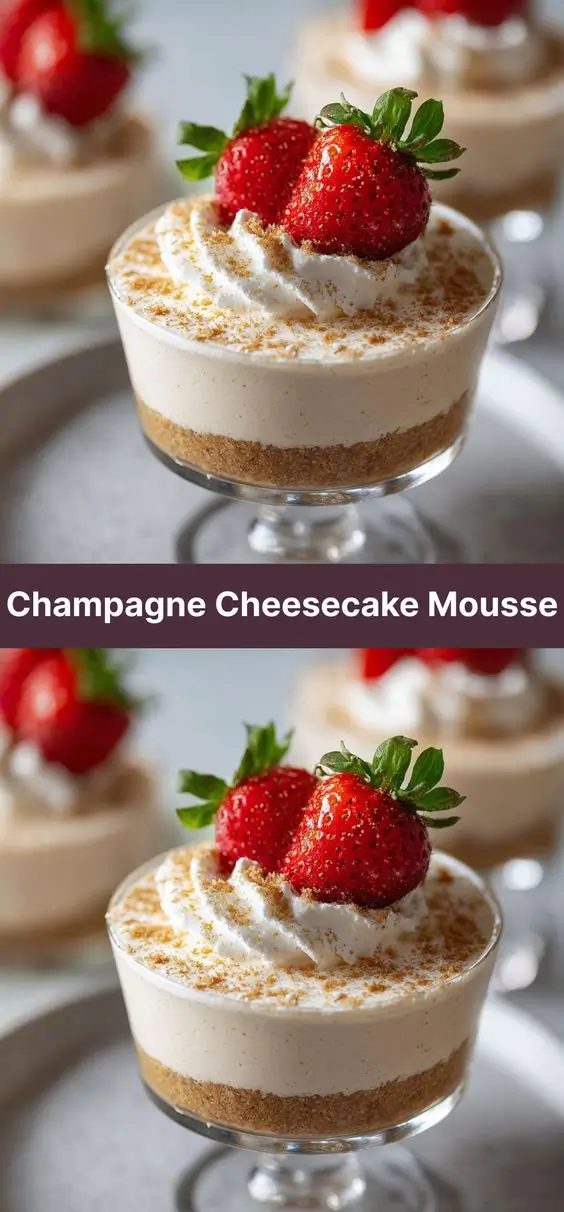
- Assemble the Dessert: Spoon or pipe the mousse over the chilled crust in a springform pan or divide among parfait glasses, wine coupes, or martini glasses for individual servings.
- Chill Thoroughly: Cover with plastic wrap and refrigerate for at least 4 hours, preferably overnight. This allows the gelatin to fully set and the flavors to meld.
- Garnish Before Serving: Top with fresh berries (raspberries, strawberries, blackberries), a drizzle of raspberry coulis, mint leaves, edible flowers, or a sprinkle of lemon zest. For extra flair, add a few drops of champagne just before serving or a shard of white chocolate.
Tips
- Use Room Temperature Cream Cheese: Cold cream cheese leads to lumps. Take it out of the fridge at least 1 hour before starting.
- Don’t Overwhip the Cream: Stop whipping once soft peaks form. Stiff peaks can make the mousse dense when folded.
- Fold Gently: Always use a silicone spatula and cut through the center, folding the mixture over itself. Rotate the bowl to preserve air.
- Chill Serving Dishes: Pre-chilling ramekins or glasses helps the mousse set faster and maintain shape.
- Choose Quality Champagne: Since its flavor is concentrated, use a bottle you’d actually drink—avoid cheap “cooking champagne.”
- Reduce Champagne Carefully: Simmer gently; boiling may alter the delicate flavor. Cool completely before adding to avoid melting the whipped cream.
- Avoid Freezing: This mousse contains dairy and gelatin, which do not freeze well. Texture will become grainy or separated upon thawing.
- Serve Chilled: Remove from the refrigerator about 10 minutes before serving for optimal creaminess.
- Layer Creatively: Alternate mousse layers with berry compote or crushed macarons for visual appeal and textural interest.
- Wipe the Bowl: After beating cream cheese, scrape the paddle and sides thoroughly before folding in whipped cream to prevent streaks.
Variations and Customizations
The Champagne Cheesecake Mousse is wonderfully adaptable to different tastes, dietary needs, and seasonal themes. Consider these creative twists:
- Berry-Infused Version: Swirl in a seedless raspberry or strawberry purée before chilling. You can also layer the mousse with fresh berries for a festive appearance.
- Prosecco or Cava Alternative: Substitute champagne with another dry sparkling wine like Italian Prosecco or Spanish Cava for a similar effect at a lower cost.
- Luxury Gold Edition: Add edible gold leaf flakes or dust for a glamorous touch ideal for weddings or milestone birthdays.
- Chocolate Swirl: Melt white or dark chocolate and lightly swirl into the mousse before chilling for a marbled effect.
- Almond Crust: Replace graham crackers with finely ground almond cookies (like amaretti) or a mix of almonds and dates for a gluten-free, nutty base.
- Tropical Twist: Add a hint of passionfruit purée or mango nectar to complement the champagne’s brightness.
- Citrus Variants: Substitute lemon with blood orange or yuzu for a unique aromatic twist.
- Boozy Upgrade: Add 1–2 tablespoons of Grand Marnier, Chambord, or elderflower liqueur to deepen the flavor profile.
- No-Crust Parfait Style: Skip the base entirely and serve in elegant glassware with alternating layers of mousse and fruit compote.
- Vegan Adaptation: Use vegan cream cheese (e.g., Kite Hill), coconut cream instead of dairy cream, and agar-agar as a plant-based gelatin substitute. Sweeten with maple syrup or agave.
- Keto-Friendly Version: Replace sugar with erythritol or monk fruit sweetener, use a low-carb crust (almond flour + butter), and ensure all other ingredients are keto-compliant.
- Mini Tarts: Pipe into pre-baked mini tart shells lined with white chocolate for bite-sized elegance.
- Seasonal Themes: For Valentine’s Day, add rosewater and garnish with pomegranate seeds. For Christmas, infuse with a drop of cranberry reduction and cinnamon.
Health Considerations and Nutritional Value
While undeniably indulgent, the Champagne Cheesecake Mousse can be enjoyed in moderation as part of a balanced diet. Here’s a nutritional breakdown per serving (assuming 8 servings from a standard 9-inch pan):
| Nutrient | Amount per Serving |
|---|---|
| Calories | ~320 kcal |
| Total Fat | 26g |
| Saturated Fat | 15g |
| Cholesterol | 75mg |
| Sodium | 220mg |
| Total Carbohydrates | 16g |
| Dietary Fiber | 0.5g |
| Sugars | 12g |
| Protein | 5g |
| Calcium | 5% DV |
| Vitamin A | 10% DV |
Health Notes:
- This dessert is high in saturated fat and calories due to cream cheese, butter, and heavy cream. Those managing heart health or weight should consume it sparingly.
- The inclusion of real champagne means trace amounts of alcohol remain unless fully cooked off (though most evaporate during reduction).
- Lactose-intolerant individuals may experience discomfort; lactose-free cream cheese and whipping alternatives (e.g., oat or soy-based) can help.
- Gelatin is animal-derived, making it unsuitable for vegetarians. Agar-agar is a suitable replacement.
- Despite its richness, the mousse contains protein and calcium from dairy, contributing modestly to daily nutrient intake.
- To reduce sugar, consider using a natural zero-calorie sweetener, though texture may vary slightly.
Ingredients
- 16 oz (2 packages) full-fat cream cheese, softened
- ½ cup granulated sugar
- 1 tsp pure vanilla extract
- 1 packet (2 ¼ tsp) unflavored gelatin
- 3 tbsp cold water
- ⅓ cup dry brut champagne
- ¼ cup sour cream or crème fraîche
- 1 tbsp fresh lemon juice
- 1 tsp lemon zest
- Pinch of salt
- 1 cup heavy whipping cream, cold
- 1 ½ cups graham cracker crumbs (for crust)
- 6 tbsp unsalted butter, melted
- Optional: Fresh berries, edible flowers, gold leaf, raspberry coulis
Directions
- Make the crust by combining graham cracker crumbs, sugar, and melted butter. Press into a 9-inch springform pan or serving dishes. Chill for 30 minutes.
- Simmer champagne in a small saucepan until reduced to 3 tablespoons. Let cool completely.
- Bloom gelatin in 3 tablespoons cold water for 5–7 minutes. Then dissolve gently over a double boiler or in short microwave bursts.
- In a large bowl, beat cream cheese and sugar until smooth and creamy. Add vanilla, lemon juice, lemon zest, salt, and sour cream; mix well.
- Gradually blend in the cooled reduced champagne, then slowly stir in the dissolved gelatin until fully incorporated.
- In a separate bowl, whip heavy cream to soft peaks.
- Fold one-third of whipped cream into the cheese mixture to lighten, then gently fold in the rest until no streaks remain.
- Pour or pipe the mousse over the prepared crust. Smooth the tops with a spatula.
- Cover and refrigerate for at least 4 hours, or preferably overnight.
- Before serving, garnish with fresh berries, a drizzle of coulis, mint, or edible decorations.
- Slice with a warm knife for clean edges if using a springform pan. Serve chilled.
FAQ
Can I make this ahead of time?
Yes! This mousse actually benefits from being made 12–24 hours in advance. The flavors develop and the texture sets perfectly after extended chilling.
Can I use frozen berries?
You can, but thaw and drain them well to avoid excess moisture. Fresh berries are preferred for garnish due to their firm texture and vibrant color.
Why did my mousse deflate?
Overmixing after adding whipped cream or adding warm gelatin can collapse the air bubbles. Always fold gently and ensure all ingredients are cooled before combining.
Is there alcohol in the final product?
Only trace amounts remain after reducing the champagne. Most alcohol evaporates during simmering, but those avoiding alcohol entirely should skip this recipe or use non-alcoholic sparkling grape juice (note: flavor will differ).
Can I use a different type of gelatin?
Sheet gelatin works equally well—just follow package conversion instructions. For vegetarian options, use agar-agar (1 tsp agar powder replaces 1 packet gelatin), but note it sets firmer and faster.
How long does it keep in the fridge?
Up to 3 days when tightly covered. Beyond that, texture may degrade and separation can occur.
Can I freeze Champagne Cheesecake Mousse?
Not recommended. Freezing disrupts the emulsion of fats and proteins, leading to a grainy, watery texture upon thawing.
What champagne is best?
Opt for a dry (brut) champagne with crisp acidity and notes of green apple, citrus, or brioche. Avoid sweet (doux) varieties, which make the dessert cloying.
My mousse isn’t setting—what went wrong?
Possible causes: expired gelatin, insufficient chilling time, warm ingredients during mixing, or over-dilution with too much liquid. Ensure gelatin is properly activated and the dessert chills for at least 6 hours.
Can I make it without a mixer?
Technically yes, but it requires vigorous hand beating and careful folding. An electric mixer ensures a smoother, lump-free base and properly whipped cream.
Summary
The Champagne Cheesecake Mousse is an exquisite dessert that marries the creamy richness of classic cheesecake with the refined effervescence of fine champagne, resulting in a light, luxurious treat perfect for celebrations. With its silky texture, elegant flavor, and stunning presentation, it’s sure to impress guests and elevate any occasion.