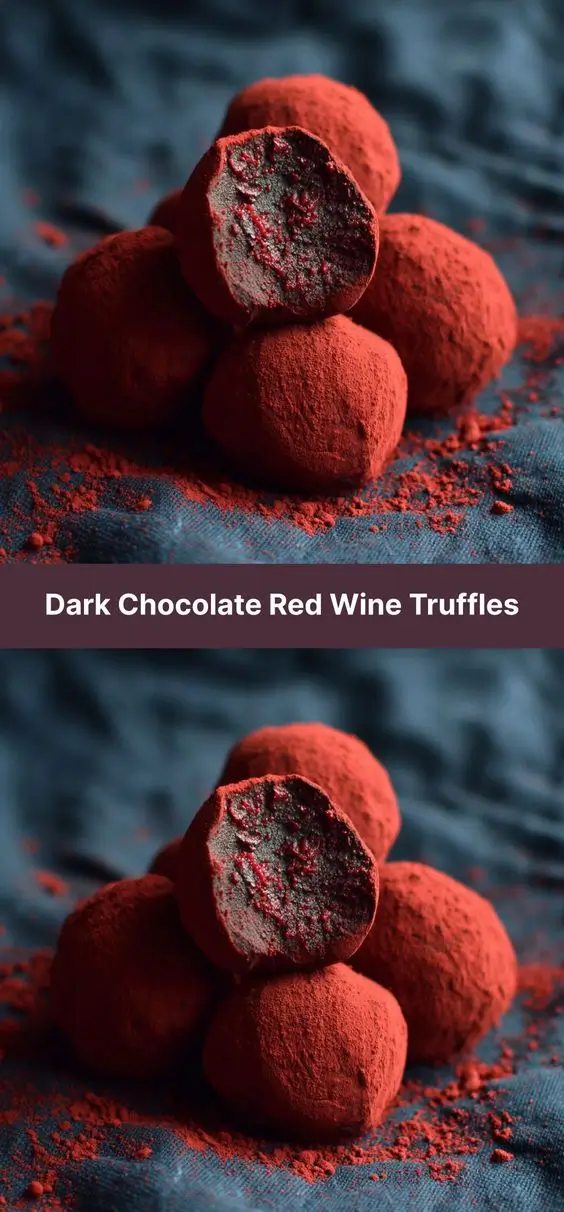
Dark Chocolate Red Wine Truffles are an elegant fusion of rich, velvety dark chocolate and the deep, complex notes of red wine—creating a dessert that’s both luxurious and surprisingly simple to make. These truffles are perfect for gifting, special occasions, or indulging in a moment of quiet decadence with a glass of wine in hand. With their smooth ganache centers, glossy chocolate shells, and optional wine-infused dusting, each bite delivers a harmonious blend of bitterness, sweetness, and subtle fruitiness.
The History
Truffles as confections were first created in France during the 19th century, inspired by the rare and prized fungi known as truffles due to their similar shape and earthy elegance. The classic French chocolate truffle typically consists of a ganache center made from chocolate and cream, rolled into balls and coated with cocoa powder, nuts, or more chocolate. Over time, chocolatiers began experimenting with flavor infusions—liqueurs, spices, fruits, and even wines—to elevate the sensory experience.
The concept of incorporating red wine into chocolate truffles emerged from the natural affinity between wine and chocolate, particularly full-bodied reds like Cabernet Sauvignon, Merlot, or Malbec, which complement the boldness of dark chocolate. This combination gained popularity in European patisseries and upscale chocolatier boutiques in the early 2000s, where artisanal techniques met modern flavor profiles. Today, Dark Chocolate Red Wine Truffles symbolize a marriage of old-world craftsmanship and contemporary culinary creativity, often featured at wine tastings, romantic dinners, and gourmet gift baskets.
Ingredients Breakdown
The magic of these truffles lies in the quality and balance of ingredients. Each component plays a vital role in achieving the perfect texture, flavor depth, and mouthfeel:
- Dark Chocolate (70% cacao or higher): Provides richness and structure. High-cocoa chocolate ensures a deep, slightly bitter base that balances the sweetness and enhances the wine’s complexity.
- Heavy Cream: Forms the foundation of the ganache, adding creaminess and helping emulsify the chocolate for a silky texture.
- Red Wine (dry, full-bodied): Adds acidity, fruit notes, and aromatic depth. A bold red like Syrah or Pinot Noir works beautifully, but avoid sweet wines which can overpower the ganache.
- Unsalted Butter: Enhances smoothness and gives the truffle a melt-in-the-mouth quality. It also helps stabilize the ganache when chilled.
- Cocoa Powder (Dutch-processed or natural): Used for rolling the truffles; adds a dry contrast and intensifies the chocolate experience.
- Sea Salt (flaky or fine): A pinch elevates all flavors and cuts through sweetness.
- Optional Additions: Vanilla extract, espresso powder (to deepen chocolate flavor), orange zest, or crushed nuts for coating.
Using high-quality, fresh ingredients is crucial—especially the chocolate and wine. Since this recipe uses real wine, not cooking wine, choose one you’d happily drink by the glass.
Step-by-Step Recipe
- Prepare Your Workspace: Line a baking sheet with parchment paper and set aside. Have small scoops or a melon baller ready. Chill two mixing bowls—one for whipping cream (if making a variation), and one for the ganache later.
- Reduce the Red Wine: In a small saucepan over medium heat, pour ½ cup of red wine. Simmer gently until reduced to about 2–3 tablespoons (15–20 minutes). This concentrates the flavor and removes excess alcohol while preserving fruity and tannic notes. Let cool completely.
- Heat the Cream: In a heavy-bottomed saucepan, warm 1 cup of heavy cream just until it begins to simmer (small bubbles form around the edges). Do not boil.
- Chop and Combine Chocolate: Finely chop 8 oz (225g) of dark chocolate and place in a large heatproof bowl.
- Pour Cream Over Chocolate: Slowly pour the hot cream over the chopped chocolate. Let sit undisturbed for 2–3 minutes to allow the chocolate to melt.
- Emulsify the Ganache: Using a silicone spatula or whisk, stir gently from the center outward until smooth and glossy. Avoid introducing air bubbles.
- Incorporate Wine Reduction and Butter: Stir in the cooled wine reduction, followed by 2 tablespoons of softened unsalted butter, cut into pieces. Add a pinch of sea salt and optional vanilla or espresso powder. Mix until fully blended.
- Cool the Mixture: Cover the surface directly with plastic wrap to prevent a skin from forming. Refrigerate for 2–4 hours, or until firm enough to scoop (not rock solid).
- Scoop and Shape: Use a small cookie scoop or teaspoon to portion the ganache. Roll quickly between clean, lightly oiled hands into 1-inch balls. Work swiftly to prevent melting. Place on the prepared baking sheet.
- Chill Again: Freeze truffles for 15–20 minutes to harden before coating.
- Coat the Truffles: Melt additional dark chocolate (tempered or carefully melted and cooled) and dip each truffle using a fork or dipping tool. Alternatively, roll in sifted cocoa powder, crushed almonds, or finely chopped pistachios.
- Final Set: Return coated truffles to parchment and let set at room temperature or in the fridge for 10–15 minutes.
- Optional Garnish: Sprinkle with flaky sea salt, edible gold dust, or a drop of reserved wine reduction before the outer shell sets.
Tips
- Use Room Temperature Tools: Ensure bowls and utensils are at room temperature unless chilling is required. Sudden temperature shifts can cause condensation and affect texture.
- Don’t Rush the Wine Reduction: Low and slow reduction preserves delicate aromas and avoids bitterness. Stir occasionally and watch closely near the end.
- Wear Food-Grade Gloves When Rolling: Prevents body heat from melting the ganache and keeps hands clean.
- Double Dip for Extra Protection: For longer shelf life or shipping, dip truffles twice—chilling between coats—for a thicker chocolate shell.
- Keep Cocoa Powder Dry: Sift it before rolling to avoid clumps. Use a separate bowl for used and fresh powder to maintain cleanliness.
- Work in Batches: If making large quantities, keep ganache chilled between shaping sessions to maintain consistency.
- Avoid Water at All Costs: Even a few drops can cause melted chocolate to seize. Always use dry tools when handling tempered chocolate.
Variations and Customizations
- White Wine Truffles: Substitute red wine with a crisp white like Sauvignon Blanc or Chardonnay for a lighter, citrusy twist. Pair with white or milk chocolate.
- Port Wine Variation: Use ruby port instead of dry red for a sweeter, fruit-forward profile. Ideal for holiday gifting.
- Spiced Wine Truffles: Infuse the cream with cinnamon sticks, star anise, or cardamom pods before heating, then strain. Complements Zinfandel or Shiraz reductions.
- Boozy Boost: Add 1 tsp of cognac, brandy, or cherry liqueur along with the wine reduction for extra warmth.
- Coconut Oil Shell: For a vegan version, coat truffles with a mix of melted dark chocolate and coconut oil, then roll in shredded coconut.
- Nut Coatings: Crush toasted hazelnuts, pecans, or macadamias for a crunchy exterior that contrasts the soft center.
- Dusted Elegance: Roll in matcha powder, powdered freeze-dried raspberry, or edible lavender for visual flair and flavor accents.
- Layered Centers: Insert a small piece of dried fig, orange peel, or almond inside the ganache ball before chilling.
Health Considerations and Nutritional Value
While undeniably indulgent, Dark Chocolate Red Wine Truffles do offer some health benefits when enjoyed in moderation:
- Antioxidants: Both dark chocolate (rich in flavonoids) and red wine (source of resveratrol) contain powerful antioxidants linked to heart health and reduced inflammation.
- Mood Enhancement: Dark chocolate stimulates serotonin production, while moderate wine consumption may promote relaxation.
- Lower Sugar Options: By using high-cacao chocolate (70% or more) and minimizing added sugars, these truffles can be less sweet than commercial candies.
- Portion Control: Each truffle is small—typically 60–80 calories—making them satisfying without overindulgence.
However, they are still high in saturated fat (from cream and butter) and calories. Individuals monitoring cholesterol, blood sugar, or alcohol intake should consume cautiously. Pregnant individuals or those avoiding alcohol entirely should note that while most alcohol evaporates during reduction, trace amounts may remain. For a non-alcoholic version, substitute wine with reduced grape juice or tart cherry juice concentrate.
Nutrition estimate per truffle (based on 18 truffles): ~70 calories, 5g fat (3g saturated), 6g carbohydrates, 1g protein, 2g sugar, 1g fiber. Values vary based on chocolate type and additions.
Ingredients
- 8 oz (225g) high-quality dark chocolate (70% cacao), finely chopped
- 1 cup (240ml) heavy cream
- ½ cup (120ml) dry red wine (e.g., Cabernet Sauvignon, Merlot, or Syrah)
- 2 tbsp (30g) unsalted butter, softened
- Pinch of sea salt
- ¼ cup (20g) cocoa powder (for rolling)
- Optional: ½ tsp vanilla extract, ⅛ tsp espresso powder, zest of ½ orange
Directions
- In a small saucepan, reduce ½ cup red wine over medium heat until syrupy—about 2–3 tablespoons remain. Cool completely.
- Warm 1 cup heavy cream in a saucepan until steaming (just below boiling).
- Place chopped chocolate in a heatproof bowl. Pour hot cream over chocolate; let sit 2–3 minutes.
- Stir gently until smooth and glossy.
- Add cooled wine reduction, butter, salt, and any optional flavorings. Stir until fully incorporated.
- Cover surface with plastic wrap and refrigerate 2–4 hours, or until firm enough to scoop.
- Scoop into 1-inch balls and roll between oiled palms. Place on parchment-lined tray.
- Freeze for 15–20 minutes.
- Melt additional chocolate (8–10 oz) and dip each truffle, or roll in cocoa powder.
- Set on parchment until firm. Store in an airtight container.
FAQ
Can I make these truffles without alcohol?
Yes! Replace the wine with reduced grape juice, pomegranate juice, or strong brewed black tea for a similar depth without alcohol.
How long do these truffles last?
Stored in an airtight container in the refrigerator, they last up to 2 weeks. For longer storage, freeze for up to 2 months—thaw in the fridge before serving.
Why did my ganache split?
This can happen if the cream is too hot, or if water gets into the mixture. To fix, add a splash of warm cream and whisk vigorously. Ensure all tools are completely dry.
Can I use milk or white chocolate?
Absolutely. Adjust the amount of wine reduction slightly (white chocolate is sweeter), and consider pairing with a fruitier wine like Merlot or Lambrusco.
Do these truffles taste strongly of wine?
No—the wine is subtle, enhancing the chocolate rather than dominating it. The reduction process mellows the flavor, leaving behind nuanced berry, oak, and spice notes.
Can I gift these?
Yes! Package in mini cupcake liners inside a decorative box. Include a tasting note: “Best served slightly chilled with a glass of red wine.”
Summary
Indulge in the sophisticated allure of Dark Chocolate Red Wine Truffles—silky ganache infused with reduced red wine, enrobed in rich chocolate or dusted with cocoa. A perfect harmony of luxury, flavor, and artistry in every bite.