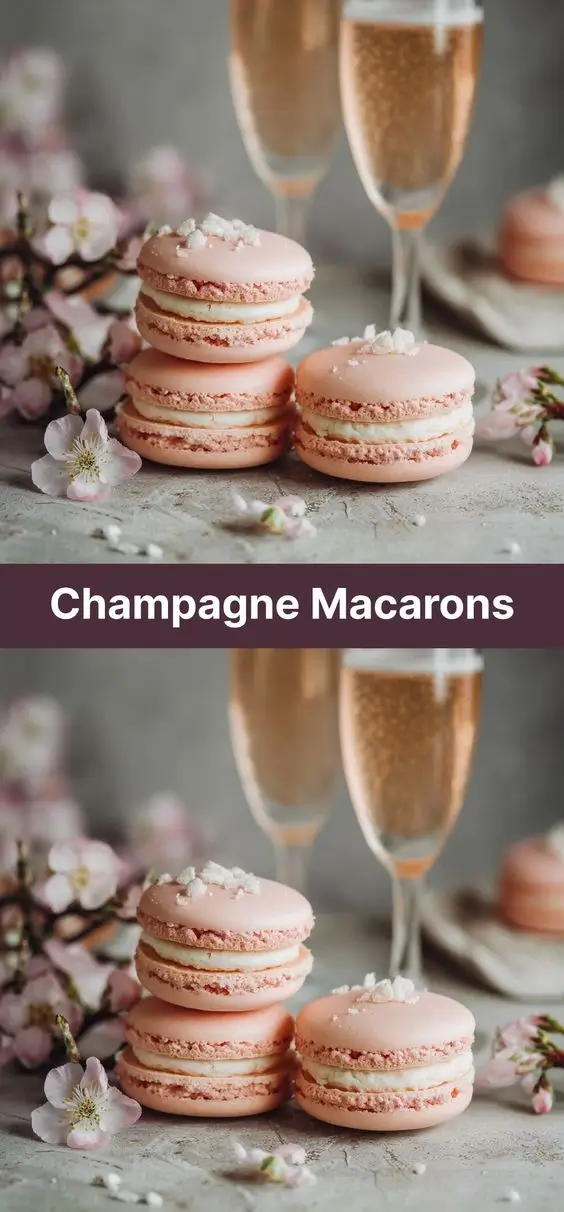
Champagne Macarons: A Luxurious Delight for Special Occasions
The History of Champagne Macarons
The story of the macaron traces back to the 8th century, with roots in Italy before making its way into French culinary tradition. Originally simple almond meringue cookies, macarons evolved over centuries into the delicate, colorful confections we know today. The modern double-decker macaron—two tender shells filled with ganache, buttercream, or jam—was popularized in Paris during the early 20th century by famed pastry chef Pierre Desfontaines of Ladurée. Since then, macarons have become synonymous with French elegance and refinement.
Enter the Champagne Macaron, a contemporary twist that marries two icons of celebration: the effervescent sparkle of champagne and the sophisticated charm of French pastries. While traditional macarons often feature flavors like rose, vanilla, or pistachio, the Champagne Macaron emerged as a favorite among bakers seeking to elevate desserts for weddings, anniversaries, bridal showers, and New Year’s Eve celebrations. The infusion of real champagne—not just artificial flavoring—adds depth, aroma, and a subtle tang that balances the sweetness of the shell and filling. Though no single origin point can be pinpointed for this variation, its popularity soared in the early 2000s as artisanal patisseries began experimenting with adult-oriented, alcohol-infused treats.
Today, Champagne Macarons are more than just a dessert—they’re a symbol of indulgence, sophistication, and culinary artistry. From Michelin-starred restaurants to home bakers on social media, these shimmering bites continue to captivate taste buds around the world.
Ingredients Breakdown: What Makes Champagne Macarons Unique?
Creating perfect Champagne Macarons requires precision, high-quality ingredients, and an understanding of how each component contributes to texture, flavor, and structure. Below is a detailed breakdown of every ingredient used:
For the Macaron Shells:
- Almond Flour (Finely Ground): The foundation of any macaron, providing richness, moisture, and nuttiness. It must be sifted thoroughly to avoid lumps and ensure a smooth batter. Blanched almond flour yields the best color and consistency.
- Powdered Sugar (Icing Sugar): Adds sweetness and helps create the signature crisp exterior while contributing to the formation of the “skin” before baking. Sifted with almond flour for uniformity.
- Egg Whites (Aged, Room Temperature): Provide the structural base when whipped into a meringue. Aging egg whites (left uncovered for 24 hours) reduces moisture content, leading to more stable shells and better feet development.
- Granulated Sugar: Used in the Italian meringue method to stabilize the egg whites. Dissolved completely in hot sugar syrup to prevent graininess.
- Champagne (Dry, Brut Variety Preferred): Not merely for flavor—the champagne is reduced into a concentrated syrup to intensify its essence without adding excess liquid. Using too much un-reduced wine can disrupt the delicate balance of the batter. A dry, crisp brut champagne works best to avoid overwhelming sweetness.
- Tartaric Acid (or Cream of Tartar): Stabilizes the egg white foam during whipping, preventing overbeating and collapse.
- Food Coloring (Optional – Pearl or Gold Gel): Enhances visual appeal, giving the macarons a celebratory shimmer reminiscent of bubbly in a glass. Liquid colors should be avoided as they alter the batter’s consistency.
For the Champagne Buttercream Filling:
- Unsalted Butter (High Fat Content, European Style Preferred): Creates a rich, velvety base for the filling. Must be softened but not melted.
- Powdered Sugar: Sweetens and thickens the buttercream. Sifted to eliminate clumps.
- Reduced Champagne Syrup: The same reduction used in the shells enhances continuity of flavor throughout the cookie.
- Heavy Cream or Crème Fraîche (Optional): Adds silkiness and slight tang, balancing the butter’s richness.
- Vanilla Extract (Pure, Not Imitation): Complements the champagne with warm undertones.
- Edible Gold Dust or Luster Powder (Optional): For garnish, enhancing the luxurious aesthetic.
Step-by-Step Recipe: How to Make Perfect Champagne Macarons at Home
Making macarons is both science and art. Follow these meticulous steps to achieve flawless, restaurant-quality Champagne Macarons.
Step 1: Prepare the Reduced Champagne Syrup
- Pour ½ cup (120 ml) of dry brut champagne into a small saucepan.
- Simmer over low heat until reduced by half—about 10–15 minutes. Stir occasionally to prevent burning.
- Cool completely before use. You should have approximately ¼ cup of concentrated syrup. This step is crucial: raw champagne contains too much water and will ruin your meringue.
Step 2: Age the Egg Whites (Do This 24 Hours Ahead)
- Separate 4 large egg whites from yolks carefully—no yolk contamination allowed.
- Place in a clean glass or plastic container, cover with a paper towel or cheesecloth, and leave at room temperature for 24 hours. This allows excess moisture to evaporate, improving stability.
Step 3: Sift Dry Ingredients
- Sift together 1 cup (100g) powdered sugar and ¾ cup (75g) almond flour twice into a bowl. Use a fine-mesh sieve and press through any clumps.
- Set aside. This ensures a smooth, lump-free shell texture.
Step 4: Make the Italian Meringue
- In a stand mixer fitted with a whisk attachment, begin whipping aged egg whites on medium speed until foamy.
- Add a pinch of cream of tartar and continue whipping until soft peaks form.
- In a separate saucepan, combine ¼ cup (50g) granulated sugar with 2 tablespoons water. Heat without stirring until the syrup reaches 240°F (116°C) on a candy thermometer (soft-ball stage).
- With the mixer running on medium-high, slowly pour the hot sugar syrup down the side of the bowl into the egg whites.
- Continue beating until the meringue is glossy, cool to the touch, and forms stiff, shiny peaks (about 7–10 minutes).
- Gently fold in 1 tablespoon of cooled champagne reduction and optional gel food coloring (pearl white or pale gold recommended).
Step 5: Macaronage – Folding the Batter
- Add the sifted dry ingredients to the meringue in two batches.
- Using a silicone spatula, gently fold the mixture in a circular motion, scraping the sides and bottom. This process, called macaronage, deflates the meringue slightly to achieve the right consistency.
- Fold until the batter flows like magma—when lifted, it should fall off the spatula in a continuous ribbon that disappears into itself after about 10 seconds.
- Overmixing leads to flat cookies; undermixing results in cracked tops. Practice makes perfect.
Step 6: Pipe the Shells
- Transfer the batter into a piping bag fitted with a round tip (½ inch / 1.2 cm diameter).
- Line baking sheets with parchment paper or silicone mats. Outline circles (1.5 inches wide) as guides if needed.
- Hold the bag vertically and pipe even rounds, lifting quickly to prevent tails.
- Tap the trays firmly on the counter 3–5 times to release air bubbles. Use a toothpick to pop any visible bubbles for a smooth finish.
Step 7: Rest Before Baking
- Let the piped shells sit at room temperature for 30–60 minutes, until a skin forms on the surface. They should not feel sticky when lightly touched.
- This step is essential for developing “feet”—the ruffled base that signals proper expansion during baking.
Step 8: Bake to Perfection
- Preheat oven to 300°F (150°C). Convection mode preferred for even heat distribution.
- Bake one tray at a time in the center rack for 16–18 minutes. Rotate halfway if necessary.
- Shells are done when they lift easily off the mat without sticking. No browning should occur.
- Cool completely on wire racks before removing from parchment.
Step 9: Make the Champagne Buttercream
- Cream ½ cup (115g) softened unsalted butter on high speed until pale and fluffy (3–5 minutes).
- Gradually add 1 cup (120g) sifted powdered sugar and beat until incorporated.
- Mix in 1½ teaspoons reduced champagne syrup, ½ teaspoon pure vanilla extract, and a splash of heavy cream (if using) until smooth and spreadable.
- If the buttercream splits, keep beating—it will come together. Add more powdered sugar if too runny, or a bit of cream if too thick.
Step 10: Assemble the Macarons
- Pair cooled shells by size.
- Pipe a circle of buttercream around the inner edge of one shell, then fill the center with a small dollop.
- Gently press the matching shell on top to create a sandwich. Do not twist.
- For best texture, refrigerate assembled macarons in an airtight container for 24–48 hours before serving—this allows flavors to meld and shells to soften (a process known as “maturing”).
- Optional: Brush edges with edible gold luster dust mixed with clear alcohol (like vodka) for a gilded effect.
Expert Tips for Success
- Use a Scale: Volume measurements vary. Always weigh ingredients (especially almond flour and sugar) for accuracy.
- Control Humidity: Avoid making macarons on rainy or humid days. Moisture in the air affects drying and baking.
- Invest in Tools: A silicone mat (like Matfer or Koppert), candy thermometer, stand mixer, and sifter make all the difference.
- Don’t Skip Aging Egg Whites: This small step greatly improves success rate.
- Practice Patience During Macaronage: Fold slowly and test frequently. The ideal batter flows smoothly but holds shape momentarily.
- Rotate Trays Mid-Bake: Ensures even cooking, especially in ovens with hot spots.
- Store Properly: Keep unfilled shells in a sealed container for up to 2 days. Filled macarons last 5–7 days refrigerated, though best after 24-hour maturation.
- Freeze for Later: Fully assembled macarons can be frozen for up to 2 months. Thaw overnight in the fridge, then bring to room temperature before serving.
Variations and Customizations
While classic Champagne Macarons are elegant on their own, there are countless ways to personalize them for different occasions and palates:
Flavor Twists:
- Rosé Champagne Macarons: Use rosé wine reduction instead for pink-hued shells and a berry-forward profile.
- Prosecco or Cava Version: Substitute other sparkling wines for regional flair. Each brings unique notes—Prosecco is fruitier, Cava more earthy.
- Champagne & Raspberry: Fill with raspberry jam or ganache for a tart contrast.
- Champagne & White Chocolate: Incorporate melted white chocolate into the buttercream for added creaminess.
- Lemon-Champagne Fusion: Add lemon zest and a touch of juice to the filling for a bright citrus lift.
Dietary Adaptations:
- Gluten-Free: Naturally gluten-free—just ensure all ingredients (especially food coloring and extracts) are certified GF.
- Nut-Free Alternative: Technically impossible since almond flour is essential, but some experiment with sunflower seed flour (results vary significantly).
- Lower-Sugar Option: Replace part of the powdered sugar with erythritol-based sweetener in both shell and filling (note: may affect texture).
- Alcohol-Free Version: Simmer non-alcoholic sparkling grape juice into a syrup. Flavor won’t be identical, but visually similar.
Decorative Ideas:
- Ombré Effect: Gradually blend food coloring into batter for gradient shades.
- Marble Design: Swirl two colors gently after piping.
- Edible Glitter Spritz: Mix edible glitter with clear alcohol and spray lightly for a sparkling finish.
- Hand-Painted Details: Use edible paints or luster dust to draw vines, bubbles, or monograms.
- Mini Size
: Pipe smaller shells (1 inch) for bite-sized party favors.
Health Considerations and Nutritional Value
Champagne Macarons are undeniably a treat meant for occasional enjoyment rather than daily consumption. Here’s what you need to know:
Nutritional Profile (Per Macaron, Approximate):
- Calories: 80–100 kcal
- Total Fat: 5–6g (mostly from almonds and butter)
- Saturated Fat: 2–3g
- Carbohydrates: 9–11g (primarily sugars)
- Sugars: 8–10g
- Protein: 1–2g
- Sodium: 10–15mg
- Alcohol Content: Less than 0.5% per macaron (due to reduction and baking); most ethanol evaporates during cooking, but trace amounts remain.
Dietary Notes:
- Not Suitable for Nut Allergies: Contains almond flour—avoid entirely if allergic.
- Not Vegan: Relies on egg whites and dairy butter.
- High in Sugar: Not recommended for diabetics without modification.
- Gluten-Free: Yes, provided all ingredients are certified gluten-free.
- Kosher/Halal: Depends on alcohol content. Some interpretations prohibit any trace of alcohol; others allow it if fully cooked. Consult religious guidelines accordingly.
Enjoy Responsibly:
Due to residual alcohol, serve Champagne Macarons only to adults unless made with non-alcoholic substitutes. Pregnant women and those avoiding alcohol should consume cautiously or opt for mock versions.
Full Ingredient List Recap
For the Shells (Makes ~24 Macarons):
- 1 cup (100g) powdered sugar
- ¾ cup (75g) blanched almond flour
- 4 large egg whites (aged, room temperature)
- ¼ cup (50g) granulated sugar
- ½ cup (120ml) dry brut champagne
- Pinch of cream of tartar
- Optional: Pearl or gold gel food coloring
For the Champagne Buttercream Filling:
- ½ cup (115g) unsalted butter, softened
- 1 cup (120g) powdered sugar, sifted
- 1½ tsp reduced champagne syrup (from above)
- ½ tsp pure vanilla extract
- 1–2 tsp heavy cream (optional, for consistency)
- Edible gold luster dust (optional, for decoration)
Detailed Directions Summary
To reiterate the full process concisely:
- Reduce champagne to a syrup and cool.
- Aging egg whites 24 hours ahead for optimal performance.
- Sift almond flour and powdered sugar together.
- Create Italian meringue with hot sugar syrup and egg whites.
- Fold in food coloring and champagne reduction.
- Incorporate dry ingredients via macaronage technique.
- Pipe evenly onto lined trays and rest until skinned.
- Bake at 300°F (150°C) for 16–18 minutes.
- Cool completely before handling.
- Prepare champagne buttercream by creaming butter, sugar, and flavorings.
- Fill and pair shells, then mature in the fridge for 24–48 hours.
- Serve chilled or at room temperature, optionally decorated with gold accents.
Frequently Asked Questions (FAQ)
Can I use prosecco instead of champagne?
Yes! Prosecco, cava, or any dry sparkling wine can be used. Keep in mind that each has distinct flavor profiles—prosecco tends to be fruitier, while champagne is drier and more complex.
Why did my macarons crack?
Cracking usually occurs due to trapped air bubbles, insufficient resting time, or uneven oven heat. Tap trays well after piping and ensure shells form a skin before baking.
Do Champagne Macarons contain alcohol?
Trace amounts remain after baking, but most of the ethanol evaporates during reduction and cooking. Still, they are not completely alcohol-free.
Can I make them without a stand mixer?
It’s extremely difficult. Hand mixers can work for meringue, but achieving the stiffness required for Italian meringue is challenging. A stand mixer is highly recommended.
How long do they last?
Unfilled shells keep for 2 days at room temperature or 1 month frozen. Filled macarons last 5–7 days refrigerated, but peak in flavor after 24–48 hours of maturation.
Why aren’t my macarons developing feet?
Possible causes include undermixed batter, lack of rest time, incorrect oven temperature, or humidity. Double-check your technique and environment.
Can I freeze Champagne Macarons?
Yes. Freeze unfilled shells between layers of parchment in an airtight container. Thaw before filling. Assembled macarons also freeze well—wrap tightly and thaw slowly in the fridge.
What kind of champagne should I use?
Choose a dry, brut champagne without excessive sweetness. Avoid cheap, overly acidic brands. You don’t need vintage Dom Pérignon, but pick something drinkable and balanced.
Can I add actual bubbles to the batter?
No. Carbonation would destabilize the meringue. The flavor comes from reduced syrup, not fizzy liquid.
Are macarons supposed to be chewy?
Yes. When properly made, macarons have a crisp outer shell and a slightly chewy, soft interior. Maturation enhances this texture.
Summary
Champagne Macarons are exquisite confections that blend the elegance of French patisserie with the celebratory spirit of sparkling wine, resulting in a dessert perfect for weddings, anniversaries, and refined gatherings. With precise technique, quality ingredients, and a touch of patience, you can master these delicate treats and impress guests with both flavor and finesse.