Introduction
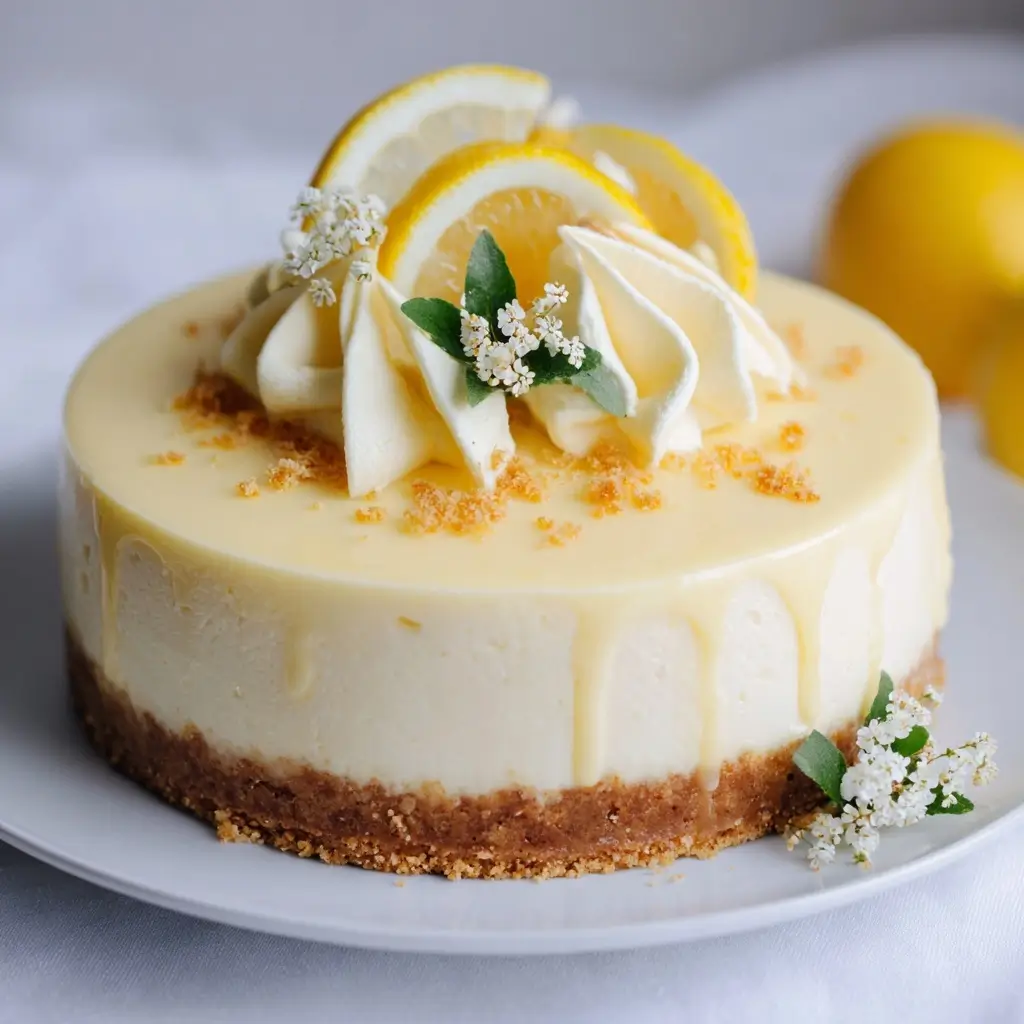
Imagine the perfect harmony of bright, zesty lemon and warm, floral vanilla—now luxuriously folded into a velvety, cloud-like cheesecake. The Lemon Vanilla Cheesecake is not just a dessert; it’s a sensory experience that balances tartness and sweetness with elegant sophistication. Unlike traditional New York–style cheesecakes that lean heavily on cream cheese richness alone, this version introduces a luminous citrus lift and aromatic depth from real vanilla bean—creating a dessert that feels both nostalgic and refreshingly modern. Whether served at a spring brunch, a summer garden party, or as an elegant finale to a holiday meal, this cheesecake delights with its silky texture, delicate crumb, and unforgettable fragrance. Its gentle acidity cuts through the richness, while the vanilla adds complexity and warmth—making every bite feel intentional, balanced, and deeply satisfying.
The History
The evolution of the Lemon Vanilla Cheesecake is a fascinating tapestry woven from centuries of culinary innovation. Cheesecake itself traces its origins to ancient Greece, where early versions made with honey-sweetened cheese and flour were served to athletes during the first Olympic Games in 776 BCE. By the Roman Empire, recipes evolved to include eggs and crushed cheese, and by the Middle Ages, European monasteries preserved and refined cheesecake techniques using local dairy and seasonal fruits. Lemon entered European baking more widely after the Crusades, when citrus fruits were introduced from the Middle East—though lemons remained rare and expensive until the 18th century. Vanilla, native to Mesoamerica and sacred to the Totonac and later Aztec civilizations, was brought to Europe by Spanish conquistadors in the early 1500s but wasn’t widely cultivated outside Mexico until the 19th century, following Edmond Albius’s groundbreaking discovery of hand-pollination in 1841. The fusion of lemon and vanilla in cheesecake likely emerged in mid-20th-century American home kitchens—where bakers, inspired by the popularity of lemon meringue pie and classic vanilla bean desserts, began experimenting with layered flavor profiles. Food magazines like Bon Appétit and Gourmet featured early iterations in the 1960s and ’70s, and the rise of artisanal baking in the 2000s cemented the Lemon Vanilla Cheesecake as a signature crowd-pleaser—especially among chefs emphasizing clean, pronounceable ingredients and botanical nuance. Today, it stands as a testament to cross-cultural culinary dialogue: Greek structure, Mexican vanilla, Mediterranean citrus, and American innovation—all united in one sublime slice.
Ingredients Breakdown
Every ingredient in this Lemon Vanilla Cheesecake has been carefully selected—not only for flavor but for function, texture, and balance. Below is a deep-dive analysis of each component:
- Graham Cracker Crust Base (1 ½ cups finely crushed graham crackers): Provides structural integrity and a subtle caramelized sweetness. Graham crackers contain whole wheat flour and molasses, contributing nuttiness and moisture retention—critical for preventing crust separation during baking and chilling.
- Unsalted Butter (6 tbsp, melted): Acts as a binder and enricher. Using unsalted butter gives precise control over sodium levels and ensures freshness—avoiding any off-notes that aged salted butter might introduce.
- Granulated Sugar (¼ cup): Enhances browning (Maillard reaction) in the crust and contributes to crispness without overwhelming sweetness.
- Cream Cheese (24 oz / three 8-oz blocks, full-fat, room temperature): The cornerstone of texture. Full-fat, brick-style cream cheese (like Philadelphia or Vermont Creamery) delivers optimal fat content (33–36%) for stability, smoothness, and tang. Room temperature is non-negotiable—it prevents lumps and ensures even emulsification.
- Full-Fat Sour Cream (1 cup): Adds acidity, moisture, and a subtle tang that complements lemon while tenderizing the protein network—yielding a melt-in-your-mouth crumb instead of rubbery density.
- Heavy Whipping Cream (½ cup, cold): Introduces additional fat and air-holding capacity. When folded in *after* mixing (not before), it contributes to a lighter, more aerated interior without compromising structure.
- Large Eggs (4, room temperature): Serve dual roles—binding agents and leaveners. Their proteins coagulate gradually during slow baking, creating a stable yet delicate matrix. Room temperature eggs incorporate more evenly and reduce the risk of curdling.
- Granulated Sugar (1 ¼ cups): Not merely sweetener—the sugar crystals gently abrade cream cheese particles during mixing, aiding smoothness. It also delays coagulation, allowing for even heat distribution and minimizing cracks.
- Pure Vanilla Extract (2 tsp): A high-quality Madagascar bourbon vanilla extract provides robust, creamy notes. For maximum impact, we recommend supplementing with scraped seeds from 1 whole vanilla bean (see Tips section).
- Fresh Lemon Zest (from 3 large organic lemons): Contains volatile citrus oils (limonene, citral) concentrated in the flavedo—the colorful outer peel. Zesting *before* juicing maximizes yield and aroma. Organic lemons are preferred to avoid wax or pesticide residue.
- Fresh Lemon Juice (⅓ cup, approximately 3–4 lemons): Provides essential acidity to balance fat and sugar. Freshly squeezed juice contains natural pectin and vitamin C, which interact with dairy proteins to enhance set and brightness. Bottled juice lacks enzymatic complexity and often includes preservatives that dull flavor.
- Plain Full-Fat Greek Yogurt (¼ cup): An optional but transformative addition—adds subtle tang, extra protein for stability, and lactic acid that further softens texture and enhances shelf life in refrigeration.
- Real Salt or Fine Sea Salt (¼ tsp): A “flavor amplifier” that heightens sweetness and tames acidity without tasting salty—essential for dimensional perception.
- Optional Garnishes: Lemon verbena leaves, edible violets, candied lemon slices, crème fraîche rosettes, or a whisper of vanilla bean specks atop each serving.
Step-by-Step Recipe
This meticulously engineered method prioritizes precision, patience, and process-driven success—no shortcuts, no guesswork. Follow each stage exactly for crack-free, luxuriously textured results:
- Prepare the Crust (Day Before or Morning Of): Preheat oven to 350°F (175°C). Pulse graham crackers in a food processor until fine crumbs form—no visible chunks. Add melted butter and sugar; pulse until mixture resembles wet sand. Press firmly and evenly into the bottom and 1 inch up the sides of a 9-inch springform pan lined with parchment on the bottom. Use the flat bottom of a measuring cup to compact thoroughly—this prevents crumbling and slippage. Bake for 10 minutes until fragrant and lightly golden. Cool completely on a wire rack (minimum 45 minutes)—do not skip cooling; warm crust + hot filling = steam separation and soggy base.
- Prep Your Pan & Oven (Critical Setup): Wrap the *outside* of the cooled springform pan tightly with two overlapping layers of heavy-duty aluminum foil—ensure no gaps at the seam or base. This prevents water seepage during the essential water bath. Place the wrapped pan inside a larger roasting pan. Set aside. Position oven rack in the lower third. Preheat oven to 325°F (163°C)—lower temperature prevents rapid expansion and surface fissures.
- Beat Cream Cheese Base (Low Speed Only): In a large stand mixer fitted with paddle attachment, beat room-temp cream cheese on low speed (2–3 on KitchenAid) for 2 minutes until completely smooth and glossy—scraping bowl and beater frequently. Overbeating incorporates excess air and causes cracking. Add sugar gradually in three additions, beating 30 seconds after each—until fully dissolved and lump-free. Scrape bowl thoroughly.
- Incorporate Dairy & Flavorings: Add sour cream and beat on low 1 minute. Add cold heavy cream and beat 30 seconds—just until streaks disappear. Add eggs one at a time, mixing *only until yolk disappears* (approx. 15 seconds each). Overmixing eggs creates gluten-like elasticity and toughness. Stir in vanilla extract, scraped vanilla bean seeds, lemon zest, lemon juice, Greek yogurt (if using), and salt by hand with a silicone spatula—folding gently 12–15 strokes. Do not use mixer for this step—mechanical agitation destabilizes emulsion.
- Strain & Pour: Strain batter through a fine-mesh sieve into a large pourable container—removing any undissolved sugar granules, zest clumps, or egg bits. Slowly pour into cooled crust, tapping pan sharply 4–5 times on counter to release air bubbles. Smooth top with offset spatula.
- Water Bath Baking (The Secret to Silk): Carefully place filled springform pan into roasting pan. Pour hot (not boiling) water into roasting pan until it reaches halfway up the springform’s exterior (about 1–1.5 inches). Avoid splashing water inside the pan. Gently slide into preheated oven. Bake 1 hour 25 minutes–1 hour 35 minutes. Cake is done when edges are set and center jiggles *slightly*—like firm Jell-O—not liquid. A toothpick inserted 1 inch from edge should come out clean; center will remain moist.
- Gradual Cooling (Non-Negotiable): Turn oven OFF. Crack oven door open 2 inches with a wooden spoon. Let cake cool in turned-off oven for 1 hour—this prevents thermal shock and collapse. Remove from oven and water bath. Run thin knife around inner edge to loosen. Cool on wire rack at room temperature for 1 hour more. Refrigerate uncovered for minimum 12 hours—or ideally 24–48 hours—to fully set, deepen flavors, and achieve ideal sliceability.
- Unmolding & Serving: Chill cake thoroughly. Run warm towel around pan exterior for 15 seconds to soften butter in crust. Release springform clasp. Slide thin metal spatula between crust and parchment, then lift onto serving plate. Peel off parchment. For clean slices, dip sharp knife in hot water, wipe dry, and cut—repeating between each slice.
Tips
- Room Temperature Is Everything: Cream cheese, eggs, and sour cream must all be at true room temperature (68–72°F / 20–22°C)—not just “out of the fridge for 30 minutes.” Place cream cheese unwrapped on plate 3 hours ahead; eggs in warm water (not hot) for 10 minutes before use.
- Vanilla Bean Upgrade: Split 1 plump Madagascar vanilla bean lengthwise, scrape seeds into batter with the back of a knife, and add the pod to your sugar jar for future use—infusing it with aromatic magic.
- Zest First, Juice Second: Always zest lemons before juicing—they’re easier to handle and you’ll get more vibrant, oil-rich zest. Use a microplane, not a box grater, to avoid bitter pith.
- No Substitutions for Sour Cream: Greek yogurt can replace *part* of it (¼ cup), but full-fat sour cream is irreplaceable for its unique fat-acid-protein ratio. Low-fat or non-dairy versions cause graininess and poor setting.
- Crack Prevention Protocol: Besides water bath and gradual cooling: avoid opening oven door during first 75 minutes; do not overmix; ensure springform pan is perfectly level on oven rack; never cool cake rapidly (no fridge until fully room-temp).
- Chill Time Is Flavor Time: Don’t rush refrigeration. The 24-hour chill allows citric acid to mellow, vanilla to bloom, and proteins to fully hydrate—transforming good into transcendent.
- Freezing for Longevity: Unfrosted, fully chilled cake freezes beautifully for up to 3 months. Wrap tightly in plastic, then foil. Thaw overnight in fridge—never at room temp—to preserve texture.
- Perfect Slice Every Time: Use a non-serrated, thin-bladed knife (like a chef’s or boning knife). Heat under hot tap water, dry completely, cut, repeat. Wipe blade clean between slices to prevent dragging.
- Acidity Calibration: If your lemons are exceptionally tart, reduce juice by 1 tsp and add ½ tsp more sugar. Taste batter (yes—just a tiny bit!) before baking to assess balance.
- Crust Reinforcement Trick: After blind-baking, brush warm crust lightly with egg white and return to oven 2 minutes—creates a moisture barrier against filling saturation.
Variations and Customizations
This foundational recipe is endlessly adaptable—whether you’re accommodating dietary needs, celebrating seasons, or elevating presentation. All variations maintain structural integrity and flavor coherence:
- Lemon Vanilla Swirl Cheesecake: Reserve 1 cup batter. Mix with 2 tbsp lemon curd + 1 tsp vanilla paste. Spoon alternating dollops over base batter. Drag a toothpick in figure-8 pattern for marbled elegance.
- Blueberry-Lemon Vanilla Compote Layer: Simmer 1 cup fresh blueberries + 3 tbsp sugar + 1 tsp lemon juice + 1 tsp cornstarch slurry until thick. Cool completely. Spread ¾ cup over baked-and-cooled crust before adding batter.
- Earl Grey Infused Version: Steep 2 tbsp loose-leaf Earl Grey in ½ cup hot heavy cream for 10 minutes. Strain, cool to room temp, then substitute for plain heavy cream. Adds bergamot brightness and tannic depth.
- Gluten-Free Adaptation: Replace graham crackers with 1 ½ cups GF gingersnap or almond flour cookie crumbs + 2 tbsp coconut flour (for absorbency) + same butter/sugar. Ensure all other ingredients are certified GF.
- Vegan Lemon Vanilla Cheesecake: Use soaked raw cashews (2 cups), coconut cream (1 cup), lemon zest/juice, maple syrup (⅔ cup), vanilla bean, and 3 tbsp lemon juice–activated agar-agar. Requires high-speed blender and chilled setting (4+ hours).
- Mini Jar Versions: Pour batter into 8 oz mason jars (¾ full). Place jars in roasting pan with 1 inch hot water. Bake at 325°F for 35–40 minutes. Chill 8+ hours. Perfect for gifts or portion control.
- Herbal Infusion Twist: Steep 1 tbsp fresh lemon balm or lavender buds in warm cream for 20 minutes, strain, and use infusion in place of plain cream. Pair with edible flowers for garnish.
- Speculoos Crust Variation: Replace graham crackers with speculoos cookies (Biscoff) for warm spice notes that complement lemon-vanilla beautifully—add ¼ tsp cinnamon and pinch of ground cloves to crust.
- White Chocolate–Lemon Vanilla: Melt 4 oz high-cacao white chocolate, cool to 90°F, fold into batter after eggs. Adds creamy sweetness and luxurious mouthfeel without overpowering citrus.
- Brûléed Top Finish: After full chilling, sprinkle top evenly with 2 tbsp turbinado sugar. Use kitchen torch until caramelized and glassy. Rest 5 minutes before serving—adds dramatic contrast and crackling texture.
Health Considerations and Nutritional Value
While undeniably indulgent, this Lemon Vanilla Cheesecake offers surprising nutritional nuance when enjoyed mindfully—and can be adapted for various wellness goals. A standard slice (1/12th of 9-inch cake, approx. 180g) contains roughly:
- Calories: 420–450 kcal
- Total Fat: 31–34g (19–21g saturated)
- Carbohydrates: 32–35g (26–28g sugars, naturally occurring + added)
- Protein: 7–8g
- Calcium: ~12% DV (from dairy sources)
- Vitamin C: ~15% DV (from fresh lemon)
- Probiotics (if using live-culture sour cream/yogurt): Supports gut microbiome diversity
Key Health Notes:
- Lemon Benefits: Rich in flavonoids (hesperidin, naringenin), vitamin C, and D-limonene—shown in studies to support antioxidant defense, collagen synthesis, and healthy digestion. Citric acid may aid mineral absorption.
- Vanilla Phytonutrients: Contains vanillin, which exhibits anti-inflammatory and neuroprotective properties in emerging research—and contributes to satiety signaling via olfactory pathways.
- Dairy Fat Context: Full-fat dairy in moderation is associated with neutral or even beneficial cardiovascular outcomes in recent meta-analyses (e.g., The Lancet Global Health, 2018), especially when paired with whole-food matrices like this cheesecake.
- Sugar Awareness: While refined sugar is present, the inclusion of fiber-rich graham crust (if whole grain) and acidity from lemon slows glucose absorption—resulting in a lower glycemic impact than many fruit-based desserts.
- Adaptations for Wellness Goals:
- Lower-Sugar Option: Reduce granulated sugar to ¾ cup and add 2 tbsp inulin (chicory root fiber) for bulk and prebiotic benefit—maintains texture without blood sugar spikes.
- Higher-Protein Boost: Add 2 scoops unflavored collagen peptides (hydrolyzed) to batter before straining—adds 10g bioavailable protein per slice, supports skin/joint health.
- Dairy-Reduced Version: Substitute ¼ cup of cream cheese with silken tofu (blended smooth) —lowers saturated fat by ~25% while preserving creaminess.
- Anti-Inflammatory Focus: Add 1 tsp finely ground turmeric + ¼ tsp black pepper to crust—enhances bioavailability and adds earthy nuance.
- Mindful Enjoyment Guidelines: Serve smaller portions (1/16th slice), pair with herbal tea (peppermint or ginger), savor slowly, and consider it part of a balanced day—not “cheating.” One slice fits comfortably within most dietary patterns, including Mediterranean and DASH.
Ingredients
- 1 ½ cups (150g) finely crushed graham cracker crumbs (about 12 full sheets)
- 6 tablespoons (85g) unsalted butter, melted
- ¼ cup (50g) granulated sugar
- 24 ounces (680g) full-fat brick-style cream cheese, room temperature
- 1 cup (240g) full-fat sour cream, room temperature
- ½ cup (120ml) cold heavy whipping cream
- 4 large eggs, room temperature
- 1 ¼ cups (250g) granulated sugar
- 2 teaspoons pure Madagascar vanilla extract
- 1 whole vanilla bean, split and seeds scraped
- Zest of 3 large organic lemons (about 2 tbsp finely grated)
- ⅓ cup (80ml) freshly squeezed lemon juice (from 3–4 lemons)
- ¼ cup (60g) plain full-fat Greek yogurt (optional but recommended)
- ¼ teaspoon fine sea salt or Real Salt
Directions
- Position oven rack in lower third. Preheat oven to 350°F (175°C). Lightly grease bottom and sides of a 9-inch springform pan, then line bottom with parchment paper.
- In food processor, pulse graham crackers until fine crumbs form. Add melted butter and ¼ cup sugar; pulse until mixture resembles wet sand. Press firmly and evenly into bottom and 1 inch up sides of prepared pan. Bake 10 minutes until golden and fragrant. Cool completely on wire rack (45+ minutes).
- Reduce oven temperature to 325°F (163°C). Wrap *outside* of cooled springform pan tightly with two layers of heavy-duty aluminum foil—sealing seams well. Place pan inside large roasting pan. Set aside.
- In stand mixer with paddle attachment, beat cream cheese on low speed 2 minutes until smooth and glossy. Add sugar in three additions, beating 30 seconds after each until fully incorporated and lump-free. Scrape bowl thoroughly.
- Add sour cream; mix on low 1 minute. Add cold heavy cream; mix 30 seconds until just combined. Add eggs one at a time, mixing only until yolk disappears (≈15 sec each). Scrape bowl after each addition.
- By hand, gently fold in vanilla extract, vanilla bean seeds, lemon zest, lemon juice, Greek yogurt (if using), and salt—12–15 strokes with silicone spatula. Do not overmix.
- Strain batter through fine-mesh sieve into large measuring cup or bowl. Pour into cooled crust. Tap pan sharply 4–5 times on counter to release air bubbles. Smooth top.
- Carefully place roasting pan with springform inside onto oven rack. Pour hot (not boiling) water into roasting pan until halfway up springform’s exterior (≈1–1.5 inches).
- Bake 1 hour 25 minutes–1 hour 35 minutes, until edges are set and center jiggles slightly when gently shaken. Toothpick inserted 1 inch from edge should come out clean.
- Turn oven OFF. Crack oven door open 2 inches with wooden spoon. Let cake cool in oven 1 hour. Remove from water bath and oven. Run thin knife around edge. Cool on wire rack 1 hour.
- Refrigerate uncovered for minimum 12 hours—or ideally 24–48 hours—before unmolding and serving.
- To serve: Run warm towel around pan exterior for 15 seconds. Release clasp. Slide thin spatula under crust to lift onto serving plate. Peel off parchment. Slice with hot, wiped knife.
FAQ
- Can I make this without a water bath?
- No—water bath is essential for even, gentle heat transfer and crack prevention. Skipping it risks uneven baking, dome collapse, and dry, crumbly edges. If you lack a roasting pan, use a large disposable aluminum pan or double-layered heavy foil as a makeshift vessel.
- Why did my cheesecake crack?
- Most common causes: oven door opened too early; cooling too quickly (not using oven-off method); overmixing batter; water bath temperature too cold or water level too low; insufficient chilling time before unmolding. Refer to “Crack Prevention Protocol” in Tips section.
- Can I use low-fat cream cheese or sour cream?
- Strongly discouraged. Reduced-fat dairy contains higher water content and altered protein structures—leading to weeping, graininess, and failure to set. For best results, use full-fat, high-quality brands only.
- How long does it keep?
- Refrigerated (covered tightly): up to 5 days. Frozen (well-wrapped): up to 3 months. Never store at room temperature longer than 2 hours.
- Can I add lemon curd on top?
- Absolutely—but only *after* full chilling. Warm or room-temp curd melts into the surface. Chill curd separately, then pipe or spread in swirls just before serving. Or bake a thin layer *under* batter for a surprise ribbon.
- Is there a way to make it ahead for an event?
- Yes—this cake improves with time. Bake and chill 2–3 days ahead. Keep covered in fridge. Add fresh garnishes (zest, herbs, berries) the morning of service for vibrancy.
- My batter looks lumpy—what do I do?
- Stop mixing immediately. Lumps usually mean cream cheese wasn’t fully softened or was too cold. Let batter sit at room temperature 10–15 minutes, then gently whisk by hand with balloon whisk—do not use mixer. Straining will catch remaining lumps.
- Can I use bottled lemon juice?
- Not recommended. Bottled juice lacks volatile oils, contains preservatives (sodium benzoate), and tastes flat or bitter. Fresh juice is fundamental to the character of this dessert.
- What if I don’t have a springform pan?
- You may use a regular 9-inch cake pan, but unmolding will be extremely difficult. Line with *two* overlapping strips of parchment (bottom + tall sides) for lifting. Expect minor cosmetic imperfections—but flavor remains intact.
- Can kids help make this?
- Yes—with supervision! Children can zest lemons (with safety grater), crush graham crackers (in zip-top bag with rolling pin), stir batter by hand, measure ingredients, and decorate finished cake. A joyful, educational baking experience.
Summary
The Lemon Vanilla Cheesecake is a masterclass in balance—where vibrant citrus acidity dances with the deep, floral warmth of real vanilla, all enrobed in a luxuriously smooth, crack-free custard built upon a butter