Introduction
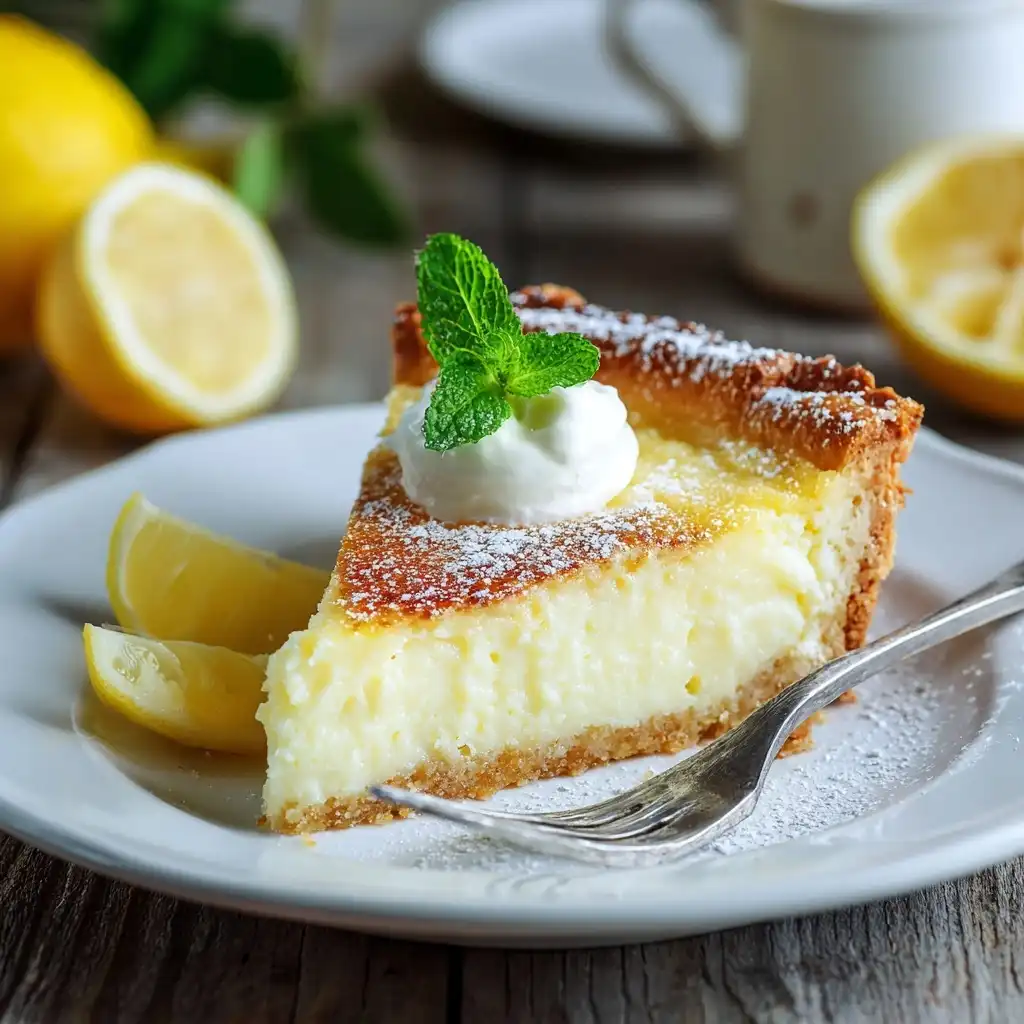
Lemon Ricotta Pie is a luscious, velvety dessert that masterfully bridges the bright, zesty tang of fresh lemons with the luxuriously creamy, subtly sweet richness of ricotta cheese. Unlike traditional custard or cream-based pies, this Italian-American classic boasts a uniquely airy-yet-substantial texture—light enough to feel refreshing, yet decadent enough to satisfy even the most discerning sweet tooth. Its golden, slightly crackled surface gives way to a tender, cloud-like filling that melts on the tongue, while a buttery shortbread or graham cracker crust provides the perfect crisp, crumbly counterpoint. Whether served chilled with a dollop of whipped cream or at room temperature with a drizzle of lemon-infused honey, Lemon Ricotta Pie is more than just a dessert—it’s a celebration of simplicity, balance, and seasonal brightness. It’s the kind of pie that feels equally at home on a rustic farmhouse table during Sunday brunch, a sun-drenched summer patio gathering, or an elegant holiday spread where its citrus lift cuts beautifully through richer fare.
The History
The origins of Lemon Ricotta Pie trace back to the sun-drenched regions of Southern Italy—particularly Sicily and Calabria—where ricotta, a byproduct of sheep’s or cow’s milk cheese-making, has been cherished for centuries as a staple ingredient in both savory and sweet preparations. Traditional ricotta dolce desserts like cassata siciliana and pastiera napoletana laid the cultural groundwork, emphasizing ricotta’s delicate sweetness and ability to absorb bright citrus notes. However, the modern American iteration of Lemon Ricotta Pie emerged prominently in the mid-20th century, buoyed by post-war Italian immigration and the growing availability of domestic ricotta in U.S. grocery stores. Home cooks—especially Italian-American grandmothers (nonne) across New York, New Jersey, and Pennsylvania—began adapting old-world recipes for accessible ingredients and American appliances, swapping labor-intensive baked ricotta cakes for streamlined, single-crust pies baked in standard 9-inch pie plates. The addition of lemon zest and juice was both practical (leveraging abundant citrus) and palate-driven (introducing acidity to temper ricotta’s mild lactic tang). Over time, the pie gained regional variations: Brooklyn versions often feature a vanilla-scented shortbread crust and a generous dusting of powdered sugar; Chicago-style renditions sometimes incorporate a touch of cornstarch for extra stability; and West Coast interpretations may highlight organic Meyer lemons and local goat-milk ricotta. Today, Lemon Ricotta Pie stands as a beloved heirloom dessert—revered in food magazines, featured in James Beard-nominated bakeries, and passed down through generations via handwritten recipe cards stained with lemon juice and butter.
Ingredients Breakdown
Every exceptional Lemon Ricotta Pie begins with thoughtful, high-quality ingredients—each playing a distinct and indispensable role in flavor, texture, and structure:
- Ricotta Cheese (2 cups, whole-milk, well-drained): The soul of the pie. Opt for fresh, moist, whole-milk ricotta—not the dry, grainy supermarket variety. Italian-imported ricotta (like Galbani or Calabro) or artisanal local brands yield superior creaminess and subtle sweetness. Draining excess whey (via cheesecloth-lined sieve for 30+ minutes) is non-negotiable—it prevents a watery, curdled filling and ensures dense, smooth cohesion.
- Granulated Sugar (1 cup, plus 1 tbsp for crust): Provides balanced sweetness without overpowering lemon. A portion is reserved for the crust to enhance browning and caramelization. For refined depth, substitute up to ¼ cup with light brown sugar—its molasses notes add warmth and complexity.
- Large Eggs (3, room temperature): Act as binders and leavening agents. Their proteins coagulate gently during baking, lending structure and a delicate rise. Room temperature eggs emulsify more smoothly into the ricotta mixture, minimizing lumps and air pockets.
- Fresh Lemon Zest (from 2–3 large lemons) & Juice (¼ cup, strained): Zest delivers concentrated aromatic oils—the true essence of lemon—while juice adds vibrant acidity and moisture. Always zest before juicing; use a microplane for fine, fragrant ribbons without bitter pith. Avoid bottled juice—it lacks brightness and contains preservatives that dull flavor.
- Heavy Cream (½ cup) or Whole Milk: Adds fat and fluidity, yielding a silkier, more luxurious mouthfeel. Heavy cream contributes richness and helps create a subtle custard-like set; whole milk offers a lighter alternative without sacrificing tenderness.
- Unsalted Butter (¼ cup, melted and cooled): Enriches flavor and improves crumb structure. Melted (not hot) butter integrates seamlessly and prevents curdling when mixed with eggs and ricotta.
- Pure Vanilla Extract (1 tsp) and Fine Sea Salt (¼ tsp): Vanilla rounds out acidity and enhances floral notes; salt heightens all flavors and balances sweetness. Use Madagascar bourbon vanilla for best results.
- Citrus Enhancers (Optional but recommended): A pinch of ground cardamom (⅛ tsp) or a few drops of orange blossom water (⅛ tsp) can elevate aromatic nuance without straying from authenticity.
Crust Notes: While many versions use a simple graham cracker or shortbread base, a classic all-butter shortcrust (1¼ cups flour, ½ cup cold butter, 1 tbsp sugar, ¼ tsp salt, 3–4 tbsp ice water) offers superior flakiness and buttery sophistication. Pre-baking (blind baking) for 12–15 minutes at 375°F ensures a crisp, non-soggy foundation.
Step-by-Step Recipe
- Prepare the Crust: In a food processor, pulse flour, sugar, and salt. Add cold, cubed butter; pulse until pea-sized crumbs form. Drizzle in ice water, 1 tbsp at a time, pulsing just until dough clings together. Flatten into a disk, wrap in plastic, and chill 1 hour. Roll out on a floured surface to 12-inch circle; fit into 9-inch pie dish, trim edges, crimp decoratively. Freeze 15 minutes. Preheat oven to 375°F. Line crust with parchment and pie weights; bake 15 minutes. Remove weights and parchment; bake 5–7 more minutes until golden. Cool completely on a wire rack.
- Drain the Ricotta: Line a fine-mesh sieve with two layers of cheesecloth or a clean linen napkin. Place over a bowl and add ricotta. Refrigerate uncovered for at least 30 minutes—or ideally 1–2 hours—to remove excess whey. Discard liquid.
- Preheat & Prep: Adjust oven rack to center position. Preheat oven to 325°F (convection off). Position a rimmed baking sheet on the lower rack to catch potential spills and promote even heat circulation.
- Make the Filling: In a large bowl, whisk drained ricotta vigorously for 1 minute until smooth and glossy. Add granulated sugar and whisk 2 more minutes until fully dissolved and slightly thickened. One at a time, whisk in eggs—fully incorporating each before adding the next. Whisk in melted butter, heavy cream, lemon zest, lemon juice, vanilla, and salt until homogenous. For ultra-smooth texture, press mixture through a fine-mesh sieve into a clean bowl—this eliminates any residual ricotta granules.
- Pour & Smooth: Gently pour filling into cooled crust. Tap pan firmly on counter 2–3 times to release air bubbles. Use an offset spatula to smooth the top and eliminate streaks.
- Bake with Precision: Place pie on preheated baking sheet. Bake at 325°F for 55–65 minutes. The pie is done when the edges are puffed and lightly golden, the center jiggles only slightly (like set Jell-O) when gently shaken, and an instant-read thermometer inserted 1 inch from center reads 160–165°F. Do not overbake—the pie will continue to set as it cools.
- Cool Gradually: Turn off oven. Crack door open 1 inch with a wooden spoon; let pie rest inside for 15 minutes. Then transfer to a wire rack. Cool at room temperature for 2 hours, then refrigerate uncovered for at least 6 hours—or preferably overnight—for optimal texture, flavor development, and clean slicing.
- Finish & Serve: Before serving, run a thin knife around the edge to loosen. Dust generously with powdered sugar using a fine-mesh sieve. Optional garnishes: additional lemon zest, edible violets, candied lemon slices, or a quenelle of lemon-infused mascarpone.
Tips
- Temperature Matters: Bring all dairy and eggs to room temperature (68–72°F) before mixing. Cold ingredients cause separation, lumpiness, and uneven baking.
- Drain Thoroughly—Then Drain Again: After initial draining, give the ricotta a gentle press with the back of a spoon to extract every last drop of whey. Excess moisture = weeping, cracking, or collapse.
- Whisk, Don’t Beat: Overmixing after adding eggs incorporates too much air, leading to puffing, cracking, or sinking. Whisk methodically but gently—just until uniform.
- Water Bath? Not Required—but Helpful: While not traditional, baking the pie in a shallow water bath (place pie dish inside a larger roasting pan filled with 1 inch of hot water) yields unparalleled silkiness and prevents surface cracks. Cover crust edges with foil to prevent over-browning.
- Resist the Slice: Cutting into a warm or insufficiently chilled pie guarantees smearing and structural failure. Overnight chilling firms the proteins and allows flavors to harmonize—making each slice clean, cohesive, and deeply flavorful.
- Crust Insurance: Brush the pre-baked crust with a thin layer of beaten egg white before adding filling—this creates a moisture barrier and reinforces crispness.
- Oven Thermometer Essential: Many ovens run hot or cold. An accurate oven thermometer prevents under- or over-baking—a critical factor given the pie’s narrow doneness window.
- Freeze for Future Joy: Fully baked, cooled, and wrapped tightly in plastic + foil, Lemon Ricotta Pie freezes beautifully for up to 3 months. Thaw overnight in the fridge—never at room temperature—to preserve texture.
Variations and Customizations
Lemon Ricotta Pie is remarkably adaptable—offering endless opportunities for creativity while honoring its core identity:
- Lemon-Lavender: Infuse ½ cup heavy cream with 1 tsp culinary-grade dried lavender (simmer 2 minutes, steep 15, strain) before adding to filling. Garnish with crystallized lavender.
- Berry Swirl: Fold ½ cup seedless raspberry or blackberry jam (slightly warmed and thinned with 1 tsp lemon juice) into the filling in loose ribbons just before pouring. Creates stunning marbled effect and bursts of tart-sweet contrast.
- Herbal Citrus: Substitute 1 tbsp lemon zest with finely minced fresh basil or lemon verbena—adds surprising aromatic sophistication.
- Almond-Ricotta: Replace ¼ cup ricotta with almond paste (whisked until smooth), and add ½ tsp almond extract. Top with toasted sliced almonds before baking.
- Maple-Glazed: Replace ¼ cup granulated sugar with pure maple syrup; reduce cream by 1 tbsp. Finish with maple–lemon glaze (2 tbsp powdered sugar + 1 tsp maple syrup + ½ tsp lemon juice).
- Gluten-Free: Use a GF graham cracker or almond flour crust (1½ cups blanched almond flour, ¼ cup coconut sugar, 6 tbsp cold butter, ¼ tsp xanthan gum). Ensure all other ingredients are certified GF.
- Vegan Adaptation: Substitute ricotta with blended firm tofu (14 oz, pressed) + ¼ cup raw cashews (soaked & blended) + 2 tbsp lemon juice + 2 tbsp maple syrup + 1 tsp apple cider vinegar. Use flax eggs and coconut oil in crust. Note: Texture shifts toward denser cheesecake—but still delicious!
- Mini Individual Pies: Bake in buttered 4-inch tart pans or muffin tins (lined with paper liners) for 25–32 minutes. Perfect for parties and portion control.
Health Considerations and Nutritional Value
A 1/8-slice serving (approx. 160g) of classic Lemon Ricotta Pie made with whole-milk ricotta, butter, and granulated sugar contains approximately:
- Calories: 320–360 kcal
- Total Fat: 18–21g (11–13g saturated)
- Carbohydrates: 32–36g (24–27g sugars)
- Protein: 9–11g
- Calcium: ~15% DV (thanks to ricotta’s natural calcium content)
- Vitamin C: ~10% DV (from fresh lemon)
Nutritional Highlights: Ricotta is a high-quality protein source rich in whey and casein—supporting muscle synthesis and satiety. It also provides selenium, phosphorus, and B12. Lemon contributes bioflavonoids (like hesperidin) and antioxidants linked to reduced inflammation and improved vascular health. The moderate sugar content (compared to many fruit pies or chocolate desserts) and absence of artificial additives make it a relatively wholesome indulgence.
Considerations for Dietary Needs:
- Lactose Sensitivity: Ricotta is naturally low in lactose (<1g per ½ cup), making it often tolerable—even for many with mild lactose intolerance. Using lactose-free ricotta or adding lactase drops pre-baking further reduces traces.
- Lower-Sugar Option: Reduce sugar to ¾ cup and add 1–2 tbsp inulin or erythritol blend. Increase lemon zest to 3 tbsp to maintain perceived brightness.
- Higher-Protein Boost: Add 1 scoop (25g) unflavored collagen peptides or whey isolate powder—blends seamlessly and adds satiating protein without altering taste or texture.
- Heart-Healthy Tweaks: Substitute half the butter with avocado oil; use part-skim ricotta (though texture becomes slightly less rich); and boost fiber with a whole-wheat or oat-based crust.
As with all desserts, moderation is key—but Lemon Ricotta Pie’s nutrient density, absence of refined oils or trans fats, and reliance on whole-food ingredients make it a notably nourishing choice within the sweets category.
Ingredients
Makes one 9-inch pie (8 servings)
- For the Shortbread Crust:
• 1¼ cups (150g) all-purpose flour
• ¼ teaspoon fine sea salt
• ½ cup (1 stick / 113g) unsalted butter, cold and cubed
• 1 tablespoon granulated sugar
• 3–4 tablespoons ice water - For the Lemon Ricotta Filling:
• 2 cups (480g) whole-milk ricotta cheese, well-drained (see Tips)
• 1 cup (200g) granulated sugar
• 3 large eggs, room temperature
• ¼ cup (60ml) fresh lemon juice (from ~2–3 lemons), strained
• 2 tablespoons finely grated lemon zest (from same lemons)
• ½ cup (120ml) heavy cream or whole milk
• ¼ cup (60g) unsalted butter, melted and cooled to room temperature
• 1 teaspoon pure vanilla extract
• ¼ teaspoon fine sea salt - For Finishing:
• Powdered sugar, for dusting
• Extra lemon zest or candied lemon slices, optional garnish
Directions
- Make the Crust: In a food processor, combine flour, salt, and 1 tbsp sugar. Pulse to mix. Add cold butter cubes; pulse until mixture resembles coarse meal with some pea-sized pieces. Drizzle in ice water, 1 tablespoon at a time, pulsing just until dough begins to clump. Turn dough onto a lightly floured surface; gather and press into a 5-inch disk. Wrap tightly in plastic wrap and refrigerate for at least 1 hour (or up to 2 days).
- Roll & Blind-Bake: On a lightly floured surface, roll chilled dough into a 12-inch circle, about ⅛-inch thick. Carefully transfer to a 9-inch pie plate. Trim overhang to ½ inch; fold under and crimp edges decoratively. Prick bottom and sides with a fork. Freeze for 15 minutes. Preheat oven to 375°F. Line crust with parchment paper and fill with pie weights or dried beans. Bake for 15 minutes. Carefully remove parchment and weights; bake 5–7 more minutes until golden and dry. Cool completely on a wire rack—minimum 45 minutes.
- Drain Ricotta: While crust chills, line a fine-mesh sieve with double-layer cheesecloth. Place over a bowl and add ricotta. Refrigerate uncovered for 1–2 hours. Discard whey.
- Preheat Oven: Adjust oven rack to center position. Preheat oven to 325°F. Place a rimmed baking sheet on the lower rack.
- Prepare Filling: In a large bowl, whisk drained ricotta vigorously for 1 minute until smooth and creamy. Whisk in sugar until fully dissolved and mixture thickens slightly (~2 minutes). Add eggs one at a time, whisking thoroughly after each addition. Whisk in melted butter, heavy cream, lemon zest, lemon juice, vanilla, and salt until completely smooth and uniform. For ultimate silkiness, press mixture through a fine-mesh sieve into a clean bowl.
- Bake: Pour filling into cooled crust. Tap pan firmly on counter to release air bubbles. Smooth top. Place pie on preheated baking sheet. Bake 55–65 minutes—until edges are puffed and golden, center jiggles slightly when nudged, and internal temperature reaches 160–165°F. Rotate halfway through for even browning.
- Cool & Chill: Turn off oven. Crack door open 1 inch with a wooden spoon; let pie sit inside for 15 minutes. Remove and cool on wire rack for 2 hours at room temperature. Refrigerate uncovered for at least 6 hours—or preferably overnight—for ideal texture and flavor.
- Serve: Run a thin knife around inner edge. Dust generously with powdered sugar. Slice with a sharp, hot knife (dip blade in hot water and wipe dry between cuts) for clean, beautiful slices. Serve chilled or at cool room temperature.
FAQ
- Why did my pie crack on top?
- Cracking usually results from rapid temperature changes (opening oven too soon), overbaking, or cooling too quickly. Solution: Avoid opening oven during first 45 minutes; cool gradually in turned-off oven with cracked door; always refrigerate overnight before slicing.
- Can I use part-skim or low-fat ricotta?
- You can—but expect a drier, grainier, less creamy texture and muted flavor. Whole-milk ricotta is strongly recommended for authentic richness and proper binding.
- My filling looks curdled—what went wrong?
- Curdling occurs when eggs are added to hot butter or ricotta, or when ingredients are too cold. Always use room-temperature components and add eggs one at a time, whisking thoroughly before next addition.
- How do I prevent a soggy bottom crust?
- Ensure crust is fully pre-baked and completely cooled before adding filling. Brushing pre-baked crust with egg white creates an effective moisture barrier. Also, drain ricotta meticulously.
- Can I make this ahead for Thanksgiving or Easter?
- Absolutely—and it’s highly encouraged! This pie tastes even better on Day 2. Bake it 1–2 days in advance, refrigerate covered, and bring to cool room temperature 30 minutes before serving.
- Is there a no-bake version?
- Not authentically—but you can create a chilled no-bake “lemon ricotta mousse tart” using stabilized whipped cream, gelatin, and lemon curd folded into drained ricotta. Texture and structure differ significantly.
- What’s the best way to store leftovers?
- Cover tightly with plastic wrap or place in an airtight container. Refrigerate for up to 5 days. Do not freeze slices already cut—only whole, uncut pie freezes well.
- Can I substitute lime or orange for lemon?
- Yes—with caveats. Lime yields a sharper, more tropical profile—reduce juice to 3 tbsp and increase zest to 3 tbsp to avoid bitterness. Orange offers milder, floral sweetness—use ¼ cup juice + 3 tbsp zest, and consider adding ¼ tsp orange blossom water for depth.
Summary
Lemon Ricotta Pie is a timeless, luminous dessert where vibrant lemon essence and luxuriously creamy, subtly sweet ricotta unite in perfect harmony—elevated by a buttery shortbread crust and finished with ethereal simplicity.
With meticulous attention to ingredient quality, precise temperature control, and patient chilling, this pie transforms humble staples into an unforgettable celebration of balance, brightness, and comforting elegance—equally at home in Nonna’s kitchen or a Michelin-starred pastry program.