Introduction
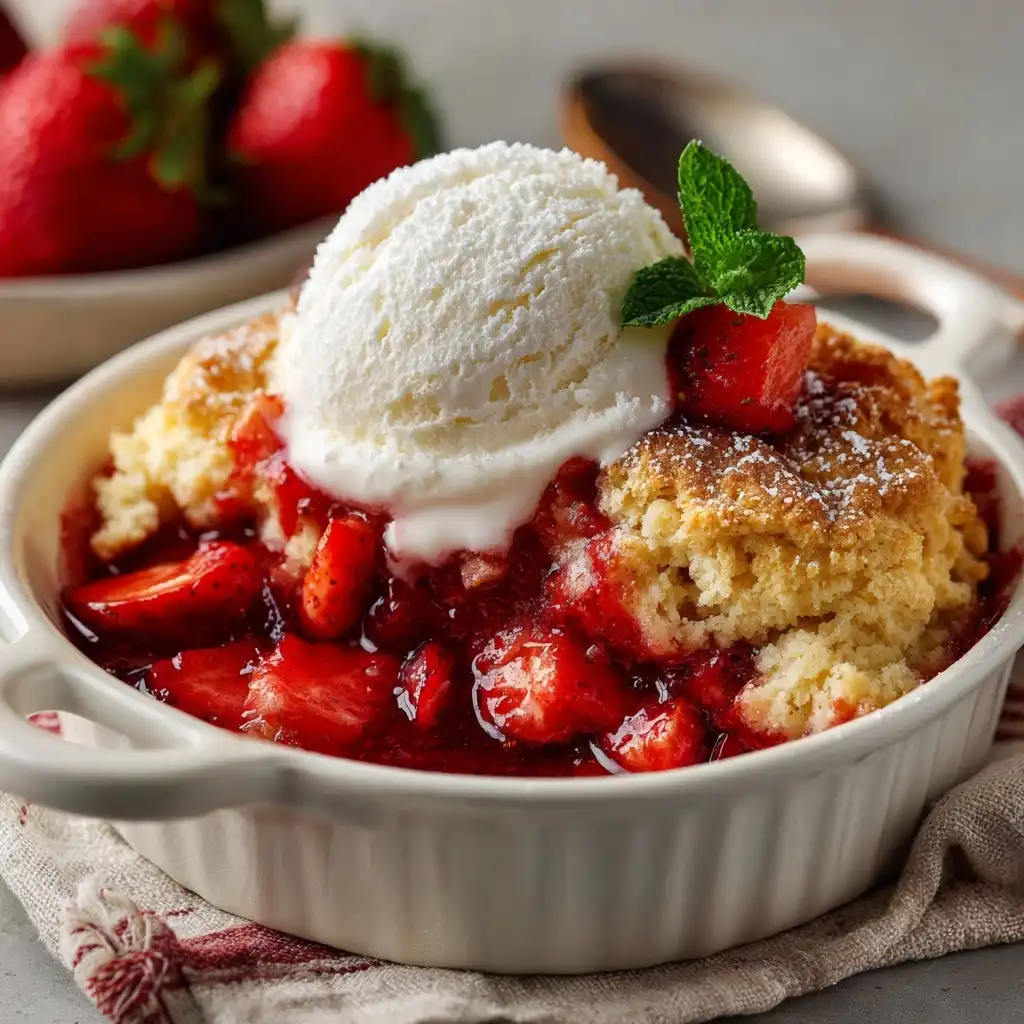
Strawberry Shortcake Cobbler is a beloved American dessert that joyfully marries the classic elegance of traditional strawberry shortcake with the rustic, comforting charm of a Southern-style cobbler. Unlike its biscuit-topped or cake-layered counterpart, this hybrid version features tender, buttery shortcake dumplings or a golden, slightly crisp biscuit-like topping that bakes directly over a bubbling, jewel-toned strawberry filling—creating an irresistible textural contrast of soft, cakey peaks and juicy, syrupy fruit beneath. It’s a celebration of peak-season strawberries, simplicity, and soul-warming nostalgia—equally at home on a sun-dappled picnic table, a holiday dessert spread, or a cozy weeknight treat served warm with a generous scoop of vanilla bean ice cream.
The History
The origins of Strawberry Shortcake Cobbler are delightfully tangled—a delicious confluence of regional traditions, ingredient availability, and culinary improvisation across centuries. At its core lies two distinct lineages: strawberry shortcake, which dates back to 16th-century England, where “shortcake” referred to a crumbly, butter-rich pastry (often unleavened or lightly leavened) served with macerated berries and cream; and cobbler, a uniquely American frontier dessert born in the late 1700s among early settlers who lacked pie tins or rolling pins but had cast-iron skillets, flour, lard, and seasonal fruit. These resourceful cooks dropped spoonfuls of biscuit dough over stewed fruit—resembling “cobbled” stones—hence the name.
By the mid-19th century, as railroads expanded and refrigerated transport improved, fresh strawberries became more widely available beyond local harvests—sparking a nationwide obsession. Cookbooks from the 1880s through the 1920s began documenting “strawberry cobblers,” often using soda biscuits or drop-biscuit toppings. The modern Strawberry Shortcake Cobbler emerged more distinctly in the post-WWII era, particularly across the South and Midwest, as home bakers sought quicker, more forgiving alternatives to layered shortcakes—opting instead for one-dish convenience without sacrificing richness or tradition. Today, it stands as a testament to American dessert evolution: humble in technique, generous in flavor, and deeply rooted in seasonal reverence and communal comfort.
Ingredients Breakdown
Every exceptional Strawberry Shortcake Cobbler begins with intentionality—not just in measurement, but in understanding *why* each ingredient matters:
- Fresh Strawberries: The undisputed star. Choose ripe, fragrant, deep-red berries with glossy skin and vibrant green caps. Their natural pectin, acidity, and sweetness drive both structure and balance in the filling. Underripe berries lack flavor and require excessive sugar; overripe ones can turn mushy. Opt for local, in-season berries (typically May–July in most U.S. regions) for optimal aroma and texture.
- Granulated Sugar: Serves dual roles: draws out juices (via osmosis) to create the luscious syrup, and balances the berries’ bright acidity. A portion is also incorporated into the shortcake topping to enhance browning and tenderness.
- Cornstarch (or Tapioca Starch): Acts as the essential thickener—binding the strawberry juices into a glossy, clingy, non-runny sauce that coats each bite without gumminess. Cornstarch offers clarity and neutral flavor; tapioca yields a slightly more translucent, glossy, and resilient gel ideal for longer baking or make-ahead applications.
- Lemon Juice & Zest: Brightens the entire dessert, cutting through sweetness and amplifying strawberry perfume. Lemon zest adds aromatic oils that elevate complexity far beyond juice alone.
- Unsalted Butter: Used both in the filling (for richness and sheen) and generously in the topping (for flakiness, tenderness, and golden color). Unsalted ensures precise control over sodium levels.
- All-Purpose Flour: Provides structure to the shortcake topping. For extra tenderness, many bakers substitute up to ¼ cup with cake flour or cornstarch.
- Baking Powder & Baking Soda: Leavening agents work in tandem—baking powder delivers reliable lift, while a tiny amount of baking soda (activated by the lemon juice’s acid) enhances browning and creates subtle airiness.
- Heavy Cream (or Buttermilk): Adds moisture, fat, and richness to the batter. Heavy cream yields a luxurious, dense-yet-tender crumb; buttermilk introduces gentle tang and activates leaveners more fully for a slightly lighter, more open texture.
- Vanilla Extract (Pure, not imitation): Deepens warmth and rounds out fruit notes. Bourbon-vanilla or Madagascar-grade extract adds nuanced floral and caramel undertones.
- Salt: Not merely for seasoning—it heightens all other flavors, controls gluten development, and balances sweetness with quiet sophistication.
- Optional Enhancements: A splash of Grand Marnier or Chambord for grown-up depth; a pinch of freshly ground black pepper to accentuate berry brightness; a dusting of finely grated orange zest for citrus complexity.
Step-by-Step Recipe
- Prep & Preheat: Position oven rack in the lower third. Preheat oven to 375°F (190°C). Lightly grease a 9×13-inch glass or ceramic baking dish (or a deep 3.5-quart Dutch oven for even heat distribution).
- Prepare the Strawberry Filling: Hull and slice 2 lbs (about 6 cups) of fresh strawberries. In a large bowl, combine berries, ¾ cup granulated sugar, ¼ cup cornstarch, 1 tbsp fresh lemon juice, 1 tsp lemon zest, 2 tbsp unsalted butter (cut into small cubes), and a generous pinch of fine sea salt. Gently fold until evenly coated. Let macerate at room temperature for 15–20 minutes—this draws out juices and begins the thickening process.
- Make the Shortcake Topping Batter: In a medium bowl, whisk together 2 cups all-purpose flour, ¼ cup granulated sugar, 1½ tsp baking powder, ¼ tsp baking soda, and ½ tsp fine sea salt. Using a pastry cutter or fingertips, cut in 6 tbsp cold unsalted butter until mixture resembles coarse crumbs with some pea-sized pieces remaining. Stir in 1 tsp pure vanilla extract. Gradually pour in ¾ cup heavy cream (or buttermilk), stirring with a fork just until a shaggy, slightly sticky dough forms—do not overmix. Dough should hold together when pinched but remain soft and moist; add 1–2 tsp more cream if too dry, or 1 tsp flour if excessively wet.
- Assemble the Cobbler: Pour the macerated strawberry mixture—including all accumulated juices—into the prepared baking dish, spreading evenly. Drop the shortcake batter by heaping tablespoonfuls over the fruit in close rows, leaving minimal gaps (they’ll expand and join during baking). For rustic elegance, use an ice cream scoop for uniform mounds. Gently press down any overly tall peaks to encourage even baking.
- Bake to Perfection: Place dish on a parchment- or foil-lined baking sheet (to catch potential bubbling over). Bake for 45–55 minutes, rotating halfway through, until the topping is deeply golden brown, puffed, and firm to the touch, and the filling bubbles vigorously around the edges with thick, glossy syrup. A toothpick inserted into the center of a shortcake mound should emerge clean or with moist crumbs (not wet batter). If topping browns too quickly, loosely tent with aluminum foil after 30 minutes.
- Cool & Set: Remove from oven and let rest on a wire rack for *at least 30 minutes*—this crucial step allows the filling to thicken fully and prevents a soupy collapse when serving. The cobbler will continue to set as it cools.
- Serve Warm: Scoop generous portions into bowls. Serve immediately with cold, high-quality vanilla ice cream (French vanilla or Madagascar bean preferred), a drizzle of reserved strawberry syrup, or a dollop of freshly whipped cream sweetened lightly with vanilla and a whisper of powdered sugar.
Tips
- Strawberry Prep Matters: Hull berries *before* slicing—they’re easier to handle and less likely to crush. Use a paring knife or dedicated huller. Avoid washing berries until *immediately* before prepping; excess moisture dilutes flavor and hinders maceration.
- Maceration Is Non-Negotiable: Don’t skip the 15–20 minute rest! This jumpstarts syrup formation and ensures the cornstarch disperses evenly—preventing gritty pockets or thin, watery filling.
- Butter Temperature Is Key: For the topping, butter must be *cold*—straight from the fridge. Warm butter melts too quickly, creating greasy, dense dumplings instead of tender, flaky layers.
- Mix Topping Gently: Overmixing develops gluten, leading to tough, chewy shortcake. Stir only until *just combined*. Lumps and streaks of flour are perfectly acceptable—and desirable.
- Don’t Peek Too Soon: Resist opening the oven door during the first 35 minutes. Heat loss disrupts rising and can cause the topping to fall or bake unevenly.
- Test for Doneness Correctly: Visual cues (golden color, bubbling edges) are vital—but always verify with a toothpick in the *center of the topping*, not the fruit. If it comes out wet, bake 5 more minutes and retest.
- Cooling Is Part of Baking: Serving too soon results in a runny, fragmented dessert. That 30-minute rest transforms texture and cohesion. Patience rewards.
- Room-Temp Ingredients Help Uniformity: While butter stays cold, ensure your cream and eggs (if using) are at room temperature—this promotes even mixing and better emulsification.
- Use the Right Pan: Glass or ceramic distributes heat gently and evenly, promoting consistent cooking. Avoid thin metal pans, which can scorch the bottom or cause uneven browning.
- Double the Batch? Scale Thoughtfully: For larger servings, increase ingredients by 1.5x and use a 9×13-inch dish—but extend baking time by 8–12 minutes and check doneness carefully. Avoid doubling in the same pan—it won’t bake through properly.
Variations and Customizations
This recipe is a canvas—celebrating flexibility without compromising integrity. Here are inspired, tested adaptations:
- Blueberry-Lemon Shortcake Cobbler: Substitute 2 cups fresh blueberries + 1 cup sliced strawberries. Increase lemon zest to 2 tsp and add ½ tsp dried lavender buds (culinary grade) to the filling for floral harmony.
- Strawberry-Rhubarb Revival: Replace half the strawberries (3 cups) with 3 cups diced, peeled rhubarb. Increase sugar to 1 cup and add ¼ tsp ground ginger to complement rhubarb’s tartness.
- Gluten-Free Shortcake Cobbler: Swap all-purpose flour with a 1:1 certified gluten-free blend (like King Arthur or Bob’s Red Mill). Add ½ tsp xanthan gum if not included in the blend. Use GF-certified cornstarch. Results are tender and indistinguishable to most palates.
- Vegan Strawberry Shortcake Cobbler: Use plant-based butter (Miyoko’s or Earth Balance sticks), full-fat coconut milk (canned, stirred well) or oat milk + 1 tsp apple cider vinegar (as buttermilk substitute), and flax egg (1 tbsp ground flax + 3 tbsp water, rested 5 min). Thicken filling with arrowroot instead of cornstarch.
- Whole Grain & Honey Sweetened: Replace ½ cup flour with whole wheat pastry flour. Substitute ½ cup raw honey or maple syrup for ½ cup sugar in the topping (reduce liquid by 1 tbsp). Use honey in filling sparingly—it can overpower; stick to maple for subtlety.
- Herb-Infused Elegance: Stir 1 tbsp finely chopped fresh basil or mint into the macerating strawberries. Or infuse the cream for the topping with 2 sprigs of thyme (steep 10 min, cool, then strain).
- Spiced Shortcake Topping: Add ½ tsp ground cardamom + ¼ tsp ground cinnamon to the dry ingredients. Complements strawberries with warm, exotic depth.
- Mini Individual Cobblers: Divide filling and topping among six 6-oz ramekins. Bake at 375°F for 32–38 minutes. Perfect for portion control and elegant presentation.
- No-Bake Strawberry Compote Layer: For a shortcut twist, prepare a quick stovetop compote (simmer berries, sugar, lemon, and cornstarch 5–7 min), cool completely, then layer with store-bought shortcake squares or pound cake cubes—top with whipped cream. Not a cobbler, but captures the spirit.
- Brunch Cobbler Upgrade: Add 2 beaten eggs to the shortcake batter for richer structure. Stir ¼ cup toasted slivered almonds or chopped pistachios into the batter before dropping. Serve with crème fraîche instead of ice cream.
Health Considerations and Nutritional Value
While Strawberry Shortcake Cobbler is inherently a celebratory dessert—not a health food—it can be enjoyed mindfully with thoughtful adjustments that preserve pleasure while enhancing nutritional merit. A standard serving (⅙ of a 9×13-inch cobbler, approx. 1 cup filling + 2 shortcake mounds) contains roughly:
- Calories: ~420–480 kcal (varies by sugar/butter amounts and serving size)
- Carbohydrates: 58–65g (primarily from natural fruit sugars and refined flour)
- Sugar: 32–38g total (of which ~22–26g are added sugars; remainder is intrinsic fructose/glucose from strawberries)
- Fat: 18–22g (mostly unsaturated from butter; minimal saturated fat if using grass-fed or cultured butter)
- Fiber: 4–5g (naturally occurring from strawberries—1 cup provides ~3g fiber; enhanced with whole grain variations)
- Vitamin C: Exceptionally high—1 cup fresh strawberries supplies over 100% of the Daily Value (DV), supporting immunity and collagen synthesis.
- Phytonutrients: Strawberries are rich in anthocyanins (antioxidants giving red pigment), ellagic acid (linked to cellular protection), and quercetin (anti-inflammatory flavonoid).
- Calcium & Vitamin D: Minimal naturally, but boosted significantly when served with fortified dairy or plant-based ice cream/cream.
Considerations for Sensitive Diets:
- Diabetes-Friendly Options: Reduce added sugar by 25–30%, rely on ripe berries’ natural sweetness, and pair with protein/fat (e.g., Greek yogurt instead of ice cream) to moderate glycemic response. Monitor portions closely.
- Heart Health: Use unsalted butter in moderation; consider swapping 1–2 tbsp with heart-healthy avocado oil in the topping. Emphasize berries’ potassium and antioxidant benefits.
- Digestive Sensitivity: The fiber content supports gut motility—but those with IBS may prefer peeled, seedless strawberries (blanch briefly to loosen skins) and reduced cornstarch (substitute 1 tbsp chia seeds soaked in 2 tbsp water for 10 min).
- Allergen Awareness: Naturally nut-free and egg-free (in base recipe), making it accessible for many common allergies—always verify ingredient labels on store-bought items like vanilla or starch.
Remember: Nutrition is holistic. Sharing this cobbler at a family gathering, savoring it slowly with gratitude, or baking it as an act of love contributes meaningfully to emotional and social well-being—dimensions no label can quantify.
Ingredients
- For the Strawberry Filling:
- 2 pounds (about 6 cups) fresh, ripe strawberries, hulled and sliced ¼-inch thick
- ¾ cup granulated sugar (plus more to taste, depending on berry sweetness)
- ¼ cup cornstarch (or tapioca starch for clearer, glossier syrup)
- 1 tablespoon fresh lemon juice (preferably from organic lemons)
- 1 teaspoon finely grated lemon zest
- 2 tablespoons unsalted butter, cut into small cubes
- ¼ teaspoon fine sea salt
- For the Shortcake Topping:
- 2 cups all-purpose flour (or 1¾ cups AP + ¼ cup cake flour for extra tenderness)
- ¼ cup granulated sugar
- 1½ teaspoons baking powder
- ¼ teaspoon baking soda
- ½ teaspoon fine sea salt
- 6 tablespoons cold unsalted butter, cubed
- 1 teaspoon pure vanilla extract
- ¾ cup heavy cream (or full-fat buttermilk for tang and tenderness)
- For Serving (Optional but Highly Recommended):
- High-quality vanilla bean ice cream
- Freshly whipped cream (sweetened lightly with powdered sugar and vanilla)
- Extra fresh strawberry slices or mint leaves for garnish
- A drizzle of reduced strawberry syrup (simmer ½ cup reserved filling + 1 tsp honey 5 min, cool)
Directions
- Preheat & Prep: Preheat oven to 375°F (190°C). Lightly grease a 9×13-inch baking dish (glass or ceramic preferred). Line a rimmed baking sheet with parchment paper or foil and set aside.
- Macerate the Berries: In a large mixing bowl, combine sliced strawberries, ¾ cup sugar, cornstarch, lemon juice, lemon zest, cubed butter, and salt. Gently fold with a silicone spatula until evenly distributed. Let sit at room temperature for 15–20 minutes, stirring once halfway through, until berries release abundant ruby-red juices and mixture thickens slightly.
- Make the Shortcake Batter: In a separate medium bowl, whisk together flour, ¼ cup sugar, baking powder, baking soda, and salt. Add cold cubed butter. Using a pastry cutter or your fingertips, work butter into flour until mixture resembles coarse meal with scattered pea-sized butter pieces. Stir in vanilla extract. Gradually pour in heavy cream, stirring with a fork *just until* a soft, shaggy dough forms. Do not overmix—some dry streaks are fine. Dough should be moist enough to hold together when squeezed but not sticky.
- Assemble: Pour the macerated strawberry mixture—including every drop of juice—into the greased baking dish. Spread evenly. Drop shortcake batter by heaping tablespoonfuls (or use a 2-tablespoon cookie scoop) over the fruit in staggered rows, covering surface as completely as possible. Gently press down any tall peaks to ensure even baking.
- Bake: Place baking dish on the prepared rimmed sheet. Bake for 45–55 minutes, rotating dish halfway through, until topping is deeply golden brown, puffed, and springs back when lightly pressed, and filling bubbles thickly and steadily around the edges. If topping browns too quickly, loosely tent with foil after 30 minutes.
- Cool & Set: Remove from oven and place on a wire rack. Let cool undisturbed for *at least 30 minutes*—this allows the syrup to fully thicken and the shortcake to settle. Do not skip this step.
- Serve: Scoop warm portions into bowls. Top generously with vanilla ice cream or whipped cream. Garnish with extra strawberry slices or a mint leaf. Drizzle with a spoonful of the rich, glossy syrup from the dish for maximum impact.
FAQ
- Can I use frozen strawberries?
- Yes—but with caveats. Thaw completely in a colander, then press gently to remove *excess* liquid (reserve 2 tbsp for syrup depth). Increase cornstarch to ⅓ cup, as frozen berries release more water and have softer cell structure. Expect slightly less vibrant color and texture than fresh, but flavor remains excellent.
- Why does my cobbler turn out soggy or runny?
- Most often due to insufficient cooling time, under-baking (especially center topping), or inadequate thickener. Ensure full 30+ minute rest, verify doneness with a toothpick in the topping (not fruit), and never reduce cornstarch below ¼ cup for 6 cups fruit. Also, avoid stirring the cobbler after baking—disturbing the set syrup causes weeping.
- Can I make this ahead of time?
- Absolutely. Assemble up to 1 day ahead: macerate berries and refrigerate covered; make shortcake batter, cover tightly, and refrigerate. Bring both to cool room temp (15 min) before assembling and baking. Fully baked cobbler keeps refrigerated for 4 days—reheat covered with foil at 325°F for 20–25 minutes until warmed through and syrup simmers again.
- What’s the best way to reheat leftovers?
- Individual portions: Microwave 60–90 seconds on medium power, covered, until hot and syrupy. Full dish: Cover tightly with foil and bake at 325°F for 25–35 minutes. Avoid high heat—it dries the topping.
- My shortcake topping is tough or dense. What went wrong?
- Overmixing the batter (develops gluten), using warm butter (melts prematurely), or substituting low-fat dairy (lacks necessary fat for tenderness) are top culprits. Also, ensure your baking powder is fresh—test by adding ½ tsp to ¼ cup hot water; it should fizz vigorously within seconds.
- Can I freeze Strawberry Shortcake Cobbler?
- Yes—best frozen *unbaked*. Assemble completely (filling + topping), wrap dish *very tightly* in plastic wrap, then foil, and freeze up to 3 months. To bake: Do NOT thaw. Preheat oven to 375°F. Remove plastic, loosely cover with foil, and bake 75–85 minutes. Remove foil for last 15 minutes to brown topping. Cool fully before serving.
- Is there a lower-sugar version that still tastes great?
- Reduce sugar in filling to ½ cup and rely on peak-season berries. Boost flavor with 2 tsp lemon zest, 1 tsp balsamic vinegar (adds depth, not sourness), and a pinch of cinnamon. Use monk fruit or erythritol blends *designed for baking* (not stevia drops) if avoiding all sugar—adjust liquids slightly, as substitutes vary in absorption.
- What kind of vanilla should I use?
- Pure, double-fold Madagascar bourbon vanilla extract is ideal for warmth and complexity. For special occasions, scrape 1 vanilla bean into the strawberry filling and add seeds to the cream for the topping—transformative aroma and visual speckling.
- Can I add other fruits to the strawberry filling?
- Yes—introduce complementary fruits in moderation. Try 1 cup blackberries or raspberries (add with strawberries), or ½ cup diced ripe peaches (toss with 1 tsp cornstarch first to prevent excess juice). Avoid watery fruits like watermelon or citrus segments—they destabilize the syrup.
- Why does my topping sink into the fruit?
- Usually caused by pouring hot, unthickened filling into the dish—or letting macerated berries sit too long (>30 min) at room temp, causing premature breakdown. Always use room-temp (not hot) filling, and bake promptly after assembly. Also, ensure batter isn’t overly wet—adjust cream carefully.
Summary
Strawberry Shortcake Cobbler is a masterful fusion of nostalgic American dessert traditions—marrying the delicate sweetness of peak-season strawberries with the hearty, golden comfort of a tender shortcake topping baked directly over bubbling, glossy fruit.
With mindful ingredient selection, precise technique (especially maceration and gentle mixing), and room for creative customization, it delivers unparalleled warmth, texture, and seasonal joy—best savored slow, shared generously, and crowned with cold vanilla ice cream.